Thursday, 2 November 2023

Bill will force N.B. Power to buy pricier electricity from small modular reactors


Bill will force N.B. Power to buy pricier electricity from small modular reactors

Power from first 2 nuclear units will be exempt from requirement utility buy cheapest supply available

The Higgs government will force N.B. Power to buy electricity from the first pair of small modular nuclear reactors even if that costs the utility more than other sources of electricity.

Legislation introduced this week would not only exempt the first two SMRs from an existing law that forces the corporation to buy the cheapest source possible.

It goes further, requiring the utility to choose nuclear-generated electricity once the reactors are up and running.

Energy Minister Mike Holland said the first units built by ARC Clean Energy and Moltex Energy Canada will be more expensive to produce than subsequent units.

A man in a suit and tie faces away from the camera. Energy Minister Mike Holland says electricity purchases from any subsequent ARC or Moltex reactors would be subject to the usual lowest-cost requirement. (Jacques Poitras/CBC)

As a result, the cost of the electricity they generate would likely be too expensive, given N.B. Power's legal requirement to buy power at the lowest possible cost. 

"Therefore the utility would be precluded from buying it," Holland said. 

"This legislation allows them to purchase that, even though it doesn't fit within that requirement of the least-cost option."

In fact, the amendment goes further than "allowing" the utility to buy power from the first two SMRs. It says N.B. Power "shall ensure" that some of its electricity comes from the units. 

Electricity purchases from any subsequent ARC or Moltex reactors would be subject to the usual lowest-cost requirement, Holland said.

Green Leader David Coon says forcing N.B. Power to buy more expensive electricity is another reason to question the wisdom of SMRs.

"I think it's a recognition from government that they're uneconomic, that the power will be unaffordable," he said.

A man wearing a suit and tie standing in front of a wooden staircase, with a microphone being held out to him at chest level. Green Party Leader David Coon says it remains to be seen what effect the law will have on the EUB's role in approving N.B. Power rates. (Jacques Poitras/CBC)

Coon called it bizarre for the government to order the utility to buy electricity from a specific kind of technology and pointed out the legislation will give the provincial cabinet the power to set the maximum price N.B. Power can pay.

The Green leader said it remains to be seen what effect the law will have on the Energy and Utilities Board's role in approving the rates N.B. Power charges to customers.

ARC Clean Energy said earlier this year that its first 100-megawatt SMR will be ready to operate at Point Lepreau, west of Saint John, by 2030.

Moltex Energy Canada's proposed SMR, also to be located at Lepreau, would generate 300 megawatts, but is not expected to be up and running by that date. 

ABOUT THE AUTHOR


Jacques Poitras

Provincial Affairs reporter

Jacques Poitras has been CBC's provincial affairs reporter in New Brunswick since 2000. He grew up in Moncton and covered Parliament in Ottawa for the New Brunswick Telegraph-Journal. He has reported on every New Brunswick election since 1995 and won awards from the Radio Television Digital News Association, the National Newspaper Awards and Amnesty International. He is also the author of five non-fiction books about New Brunswick politics and history.

CBC's Journalistic Standards and Practices


140 Comments


David R. Amos
We are helping them to build and promote these things and yet they want to stick it to us with their rates?


David R. Amos
New Brunswick awards additional funding for SMR development

Wed, Feb 17, 2021, 9:00AM Nuclear News

New Brunswick Premier Blaine Higgs announces C$20 million in funding for the ARC-100 small modular reactor. Photo: ARC Canada

The Canadian province of New Brunswick has awarded C$20 million (about $15.7 million) to ARC Clean Energy Canada (ARC Canada) to support the development of the proposed ARC-100 advanced small modular reactor. The premier of New Brunswick, Blaine Higgs, announced the award during his state of the province address on February 10.

ARC Canada, headquartered in Saint John, New Brunswick, is a subsidiary of U.S.-based ARC Clean Energy, formerly known as Advanced Reactor Concepts. The company’s ARC-100 is a 100-MWe integrated sodium-cooled fast reactor that uses a metallic uranium alloy fuel. Based on Argonne National Laboratory’s Experimental Breeder Reactor-II, the reactor is designed to operate for 20-plus years without refueling.

In October 2019, ARC Canada announced that it had completed the first phase of the Canadian Nuclear Safety Commission’s (CNSC) vendor design review. (While the phase-one assessment provides detailed feedback regarding a vendor’s understanding of the CNSC’s requirements for a nuclear power plant in Canada, it does not certify the design or license the reactor.)

ARC covenants: ARC Clean Energy—along with U.K.-based Moltex Energy, developer of the Moltex Stable Salt Reactor—received C$5 million (about $3.9 million) from New Brunswick in 2018 as part of an agreement to work on SMR development in the province. The agreement also envisioned the deployment of ARC and Moltex demonstration units by 2030 at NB Power’s Point Lepreau plant, currently home to one 660-MWe CANDU-6 pressurized heavy-water reactor.

 
David R. Amos
Reply to David R. Amos   
In addition, in November of last year, ARC announced the signing of a memorandum of understanding with NB Power and Moltex “to create synergies by establishing a small modular reactor vendor cluster in New Brunswick.” This initiative, ARC stated, would allow ARC Canada to collaborate with the other parties in areas such as supply chain development, shared technology education, trades initiatives, and common research and development.

What they’re saying: “The $20 million of funding being provided by the province of New Brunswick is conditioned on ARC Canada providing matching funding to increase economic impact,” said Donald Wolf, ARC Canada’s chairman. “ARC Canada intends to obtain the required C$30 million of matching funds from private investors. This funding milestone will play an integral role in the deployment of our proven, inherently safe clean energy technology in the late 2020s.”

Mike Holland, New Brunswick’s natural resources and energy development minister, added, “We believe that the best way to ensure that Canada, specifically New Brunswick, becomes a leader in advanced small modular reactor development and deployment is through continued engagement and partnerships. We feel that this technology can be developed in New Brunswick, putting our province on the map as a global emissions reduction leader.”

 
Ben Haroldson  
Reply to David R. Amos
Wouldn't be any sitting politicians personally invested in those entities though, would there? 
 
 
David R. Amos
Reply to Ben Haroldson 
Trust that you cannot read everything I posted
 
 
Don Corey

Reply to David R. Amos 
Interesting also is the fact that we now have several NB First Nations communities investing a total of some $3 Million in SMR's (ARC and Moltex).


David R. Amos

7 First Nations in N.B invest in small modular nuclear reactors

North Shore Mi’kmaq Tribal Council buys $3 million in shares in 2 Saint John-based companies

Mia Urquhart · CBC News · Posted: Sep 25, 2023 5:28 PM ADT 


David R. Amos
Go Figure

Comprehensive review will take place for small modular reactor project

03 August 2023

FREDERICTON (GNB) – Environment and Climate Change Minister Gary Crossman has determined a comprehensive Environmental Impact Assessment (EIA) is needed for a proposed small modular reactor project at the NB Power property on the Lepreau Peninsula.

“The EIA review process is a long-standing mechanism for the environmental review of projects in New Brunswick,” said Crossman. “The technology behind small nuclear reactors is new and that is why it is important to have such a thorough review.”

NB Power, with support from ARC Clean Technology Inc., is planning the construction and operation of one advanced small modular reactor to the west of the existing Point Lepreau Nuclear Generating Station.

“To transition to a cost-effective, clean and secure energy supply, we are exploring new ways of delivering energy to customers,” said Lori Clark, CEO of NB Power. “Small modular reactors are part of the solution to reach our target of being net-zero by 2035 and ensure that we are meeting the needs of New Brunswickers today and into the future.”

Crossman said the EIA review has been a proactive approach to environmental management in New Brunswick for 35 years by ensuring each project is given the thorough assessment needed to be implemented effectively and safely. 


David R. Amos
Reply to David R. Amos   
Proposed nuclear facility – NB Power’s ARC-100 Project at the Point Lepreau Nuclear Generating Station site

New Brunswick Power (NB Power), in partnership with ARC Clean Technology Canada, is proposing to deploy one ARC-100 small modular reactor (SMR) at the Point Lepreau Nuclear Generating Station site in New Brunswick. In June 2023, CNSC staff received an application for a licence to prepare site for the proposed SMR, and the application is currently undergoing regulatory review under the Nuclear Safety and Control Act, which will include an environmental protection review.

The proposed project is also undergoing a comprehensive environmental impact assessment (EIA) by the Government of New Brunswick. CNSC staff are providing technical support throughout the provincial EIA process as members of the Technical Review Committee.

In December 2022, the federal Minister of Environment and Climate Change responded to a designation request for the project and concluded that the project did not warrant designation pursuant to subsection 9(1) of the Impact Assessment Act.
 
 
David R. Amos
Reply to David R. Amos   
Nuclear opponents taking 'best shot' to slow approval of N.B.'s small reactors

Minister says momentum growing for non-emitting technology

Jacques Poitras · CBC News · Posted: Dec 08, 2022 6:00 AM AST
 
 
David R. Amos
Reply to David R. Amos   
The Conservation Council of New Brunswick says it is concerned about the lack of costing for small modular reactors (SMRs) in the NB Power Integrated Resource Plan, which aims to see the province be net zero by 2035

SMRs are new technology in the nuclear power sphere. A single small modular reactor is capable of producing 300 megawatts

Moe Qureshi, the CCNB’s manager of climate solutions, said the IRP focused heavily on SMRs despite their relative newness and left out a key component to using them in the future – the cost

“Every pathway shows that SMRs are needed towards getting to net zero but what was strange was a lot of data was missing to justify some of these claims, primarily the cost of SMRs,” he said

The IRP shows 16 pathways to getting New Brunswick to net-zero emissions by the target year, but a report by Energy + Environment Economics shows SMRs are the most expensive option

In fact, Qureshi said data shows it can take up to a decade to develop a single SMR and the cost for a 300-megawatt SMR is almost $2.1 billion

“We really expect some lower-cost options to be pushed forward rather than expensive ones,” he said in an interview on Thursday

He said considering NB Power’s overwhelming debt and the levels of energy poverty in both New Brunswick and Atlantic Canada, he expected more rigorous inspection of the cost associated with this type of solution

As of 2023, NB Power has $5.4 million in debt

It also applied to the Energies and Utilities Board for a nearly nine per cent rate hike for customers across all rate classes, citing ongoing inflationary costs and buying power.

It said at the time that the hike wouldn’t be enough to begin servicing the debt.

“It’s weird to put so much faith into something that we don’t know if it will work,” Qureshi said.



nancy malachowski 
Wonder if Higgs will apply a rebate to help offset the burden of the higher cost for residential customers the same as the fed's carbon tax rebate for oil. 
 
 
David R. Amos
Reply to nancy malachowski 
I wonder if he reads these comments 


Al Clark 
Fortunately he and his silly policies will be gone a year from now, long before Smrs exist. 
 
 
David R. Amos
Reply to Al Clark 
His buddy Allain will follow suit 


Jos Allaire
What's in it for Higgs and his cronies❓
 
 
Rosco holt
Reply to Jos Allaire
Most likely them own the exempt SRM reactors. 
 
 
David R. Amos
Reply to Jos Allaire   
You tell me  


Archie MacDaniel 
So the PCs have something coming into effect in 2030 without any of us knowing what costs might be at the time. If costs are higher, then isn't it still a good thing since it is green technology? Funny how it changes today with JT making fossil fuels costs higher and wanting people to go green, but for some reason it does not apply. 
 
 
Jos Allaire 
Reply to Archie MacDaniel 
Nuclear is not green a single bit. And it's dangerous. 
 
 
David R. Amos
Reply to Jos Allaire  
Oh so true 
 
 
Samual Johnston  
Reply to Jos Allaire   
No source of power is green 
 
 
David R. Amos
Reply to Samual Johnston  
Ever been sailing? 


Archie MacDaniel 
It would be so satisfying if people actually read the article and then sat back and fully comprehended it and the implications before posting. Take in all facts and research anything you may be unsure of, is that so much to ask. Of course, it would eliminate many posts from both sides but 4 or 5 Higgs critics would never be heard from again. 
 
 
David R. Amos
Reply to Archie MacDaniel 
Check my work 


Mark O'Brien  
Conservative politicians and those politicians who come from business tell us government should be run like a business. So 'successful' Irving Oil businessman Higgs feels it is good business to buy expensive electricity rather than less expensive? 
 
 
Pat Holland 
Reply to Mark O'Brien 
Would you rather coal or diesel? They are cheaper 
 
 
Christine Martinez  
Reply to Mark O'Brien  
This is, in part, driven by the federal governments' requirements for clean energy. Can't get to net zero using the old methods 
 
 
Mike Jones 
Reply to Mark O'Brien 
Yawn. 
 
 
Rosco holt 
Reply to Christine Martinez  
Wrong, the provincial government always goes for the expansive things if it benefits their friends.
 
 
Don Corey
Reply to Rosco holt 
It's also known to be an extremely popular approach for our very own federal government. 
 
 
David R. Amos

Reply to Don Corey
I am not as wise as the lawyer guys but no doubt they agree that its just another case of dumb versus dumber that they can get even more wealthy arguing 


Louis Leblanc
Sounds like Lepreau, orimulsion and Bricklin wrapped up in one fiasco.
 
 
Allan Marven 
Reply to Louis Leblanc
Right out of the fed gov't playbook. Force your vision. 
 
 
Fred Brewer
Reply to Louis Leblanc
Don't forget about the lampshade boys who were going to defy the laws of physics and make electricity out of seawater. 
 
 
Louis Leblanc
Reply to Fred Brewer  
OMG that's so funny!! 
 
 
Fred Brewer
Reply to Louis Leblanc
The truth is often funnier than fiction. 
 
 
David R. Amos
Reply to Louis Leblanc 
Welcome to the circus


Farmer Denies Giving ‘Save the Children Convoy’ Land to Build a ‘Permanent Community’ Outside Ottawa

https://pressprogress.ca/farmer-denies-giving-save-the-children-convoy-land-to-build-a-permanent-community-outside-ottawa/

Farmer Denies Giving ‘Save the Children Convoy’ Land to Build a ‘Permanent Community’ Outside Ottawa

thumb-2023-010-04-save-the-children
News

Convoy leaders misled supporters and donors by claiming they are building a permanent, self-sustaining community at a local farm

When an old friend told Chet Wiggins a group of travellers were offering to fix his barn, the 59-year-old Eastern Ontario farmer could not believe his good luck.

“They’re going to fix that for me?” Chet recalled. “I told him you got to be kidding.”

To be sure, Chet hasn’t been on a lucky streak these last few years.

After sinking his life savings into building a dog kennel on his farm to support him and his wife in retirement, Chet was diagnosed with cancer a year ago. Then an extreme weather event swept-down from the Ottawa Valley and damaged his barn.

“One side’s caved-in,” Chet told PressProgress. “I’m missing parts of it that ripped off.”

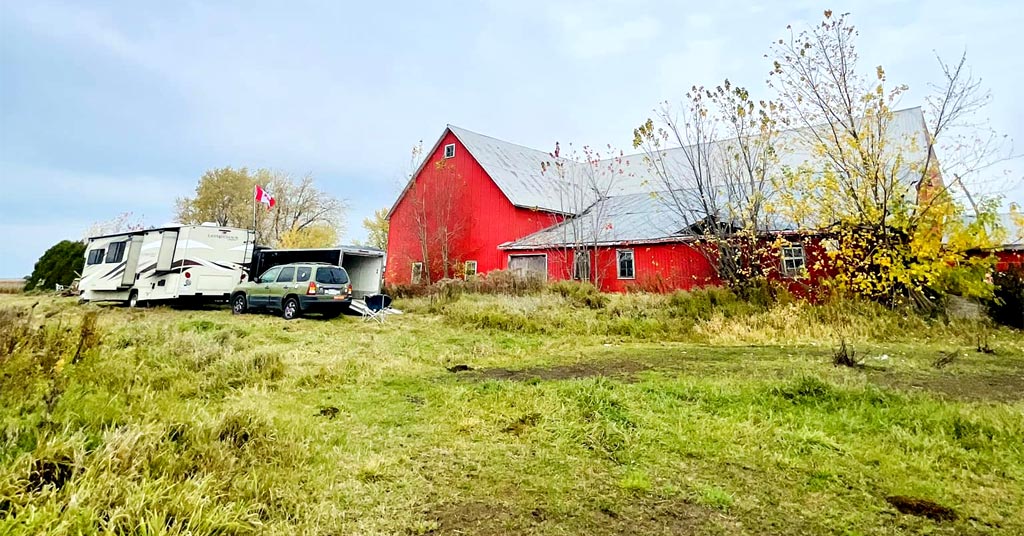
Chet is apologetic about how he pronounces words, explaining that his doctors had to remove half of his tongue to stop his cancer from spreading. While recent MRI scans have given him a hopeful prognosis, he now faces physical and financial challenges maintaining the hundred year old hobby farm where he’s lived for two decades and cares for 24 rescue animals.

“I told them I can’t afford to do it,” Chet said, explaining that the group of travelling men made him a deal he couldn’t possibly decline: “We could use a place to stay for awhile and in return, we’ll help fix-up your place.”

Chet hasn’t heard of the “Save the Children Convoy,” and doesn’t talk politics with his guests, though he’s aware the men were camping out in a field around the corner from his farm along with “maybe 60 or 70 campers” for the last three weeks.

“I didn’t know anything about it, I wasn’t involved with them,” Chet said. “I don’t know if they’re Freedom Convoy and to be honest with you, it doesn’t matter to me as long as they’re not violent people.”

Chet was unaware his guests have explicitly called for arresting politicians and installing a new government or that their own supporters expressed concerns about potential violence. A number of other Save the Children Convoy members have faced recent criminal charges in connection with their chaotic protests in downtown Ottawa.

He’s also seemingly unaware of the Save the Children Convoy’s messages revolving around anti-LGBTQ+ paranoia and far-right pedophile conspiracies.

The leaders of the Save the Children Convoy announced plans this week to relocate their base camp near Casselman two kilometres down the road to a new “permanent” location where they will live “all-year round” and stage daily convoys into Ottawa.

That “permanent” location is Chet’s farm.

“We got a permanent camp now,” convoy influencer Tyson Billings, who is also known as “Freedom George,” said in a recent livestream video. “We’re going to build a community.”

“They want to build a permanent camp to gather at for protests,” Freedom George added in a different livestream video. “This farmer wants to build it there and he’s given up his land and a barn and of course things have to be worked on and they’re actually going to build a camp – a permanent one – so it can go all-year round.”

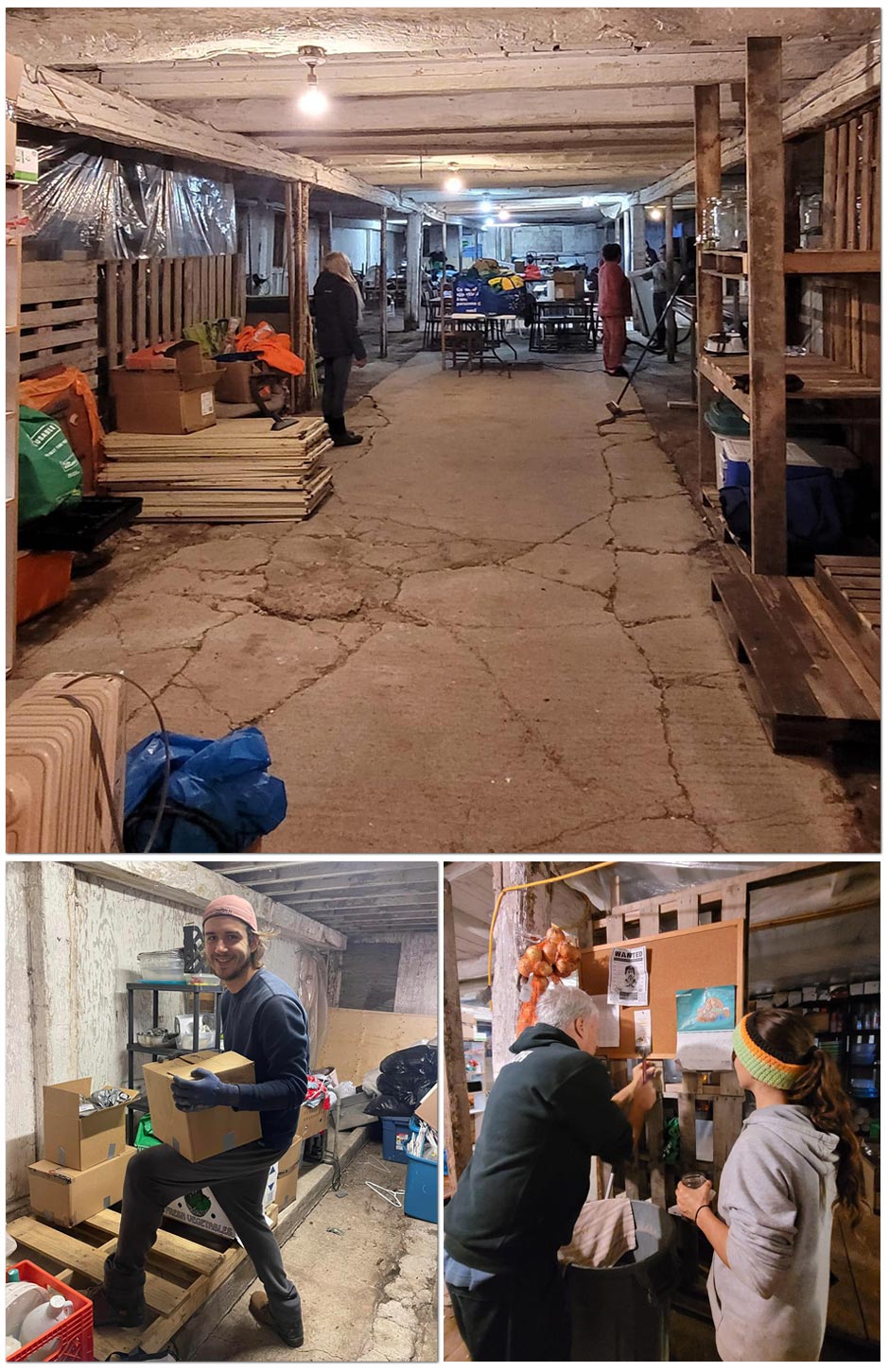
Photos posted in the Save the Children Convoy’s private Facebook group show convoy members stockpiling food and supplies in the basement of Chet’s barn, where a wanted poster featuring a mugshot of Justin Trudeau is hanging.

Another video shows convoy members clearing dirt from the rafters without use of a respirator mask.

Inside the basement of Chet Wiggins’ barn (Sherry Bailey, Facebook)

Freedom George even suggested that come spring, the convoy could use the farm to “plant seeds and garden.”

“The fellow that owns this, we’re not going to say any names, he actually wants us to stay and build a community here, a safe place, so come spring time, there’s going to be gardens being planted and stuff like that,” Freedom George said on a convoy podcast.

“This could be a generational thing that we have,” added convoy podcaster Jason Lavigne, before making an appeal to “support the camp financially.”

Chet couldn’t say for sure what Freedom George and other convoy leaders are talking about and insists he never agreed to building “any hippie communes” in his backyard.

“They’re not staying permanently,” Chet clarified. “They’re here to help me out, there’s lots of work to be done.”

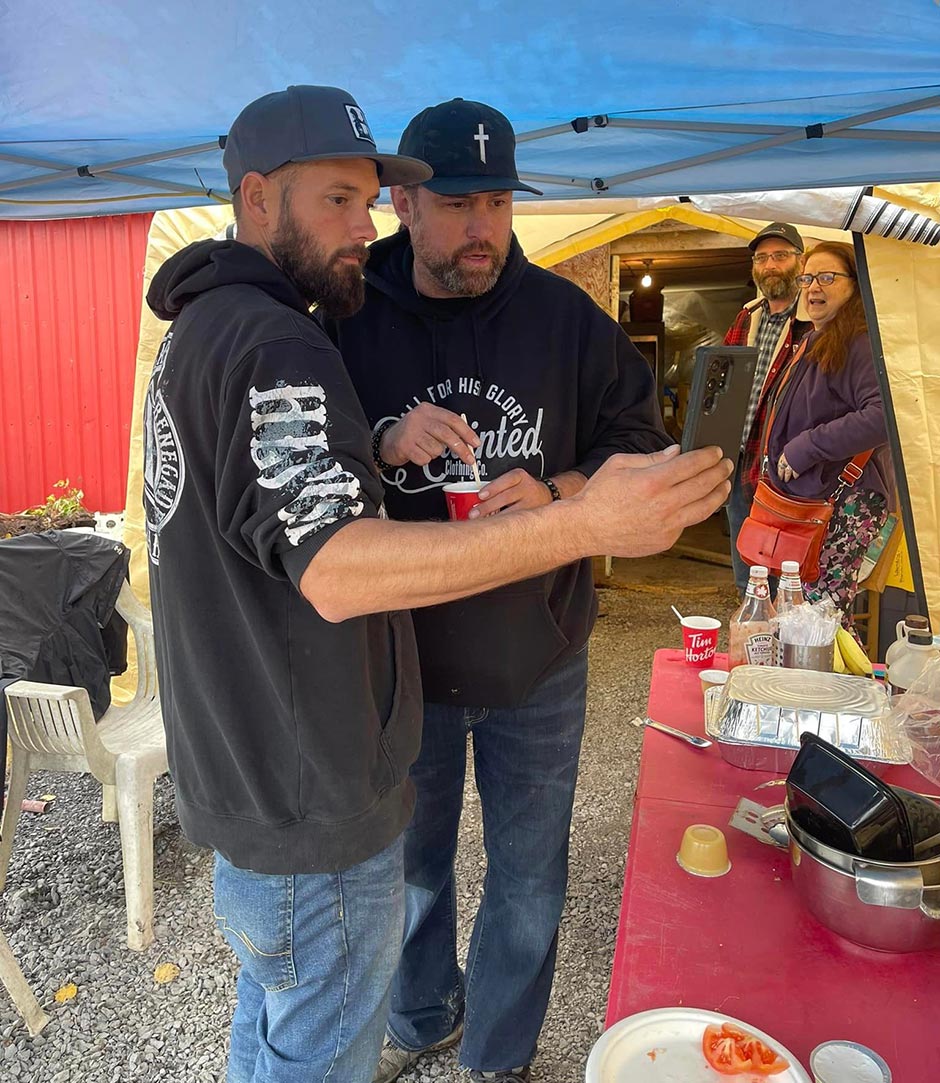
Freedom George and Norman Blanchfield at Chet Wiggins’ farm (Sherry Bailey, Facebook)

“I’m not sure exactly what they’re doing, they just said they’d come and help me and when there’s no more work for them, they said they’d be on their way.”

“I don’t plan to have 100 people in the barn sleeping in it,” Chet added, laughing. “If I could do that, I’d be a slumlord.”

Chet anticipates only a “dozen” people will be staying at his farm while the rest remain at the existing base camp two minutes down the road.

One possible explanation for the mixed-messages could be simple miscommunication – Save the Children Convoy leaders are widely advertising Chet’s home address online and currently organizing a convoy from Québec to bring in reinforcements next week.

A Facebook event page lists over 130 individuals who have already confirmed or expressed interest in joining the convoy to Chet’s farm.

Facebook

Chet also concedes it’s possible his guests aren’t the Good Samaritans they present themselves to be, but says he simply can’t afford not to roll the dice and take a chance — “I’m at the end of my rope.”

“It’s been hell just trying to cut my grass over the summer,” Chet said. “They said they’re going to fix my big shed and they’re going to help me do the roof on my house.”

“Maybe I’m taking a risk, I’ve done it before, sorry my language, I’ve been f—ked before.”

Whatever the Save the Children Convoy is planning to do with his farm, Chet hopes it helps him get back on his feet so he can look after the dogs. He notes with “good pride” that a local health inspector once told him his kennel was “by far the nicest that she’s ever seen” during her 23 years on the job.

The kennel features spacious log cabin themed enclosures for dogs. “The big ones, we call them cottages and the smaller ones are called cabins,” Chet explained, noting “it cost me almost $40,000 to do it.”

“It’s a labour of love,” Chet said.


Our journalism is powered by readers like you.

We’re an award-winning non-profit news organization that covers topics like social and economic inequality, big business and labour, and right-wing extremism.

Help us build so we can bring to light stories that don’t get the attention they deserve from Canada’s big corporate media outlets.

Trudeau names 5 new senators, including long-time Liberal Rodger Cuzner


Trudeau names 5 new senators, including long-time Liberal Rodger Cuzner

Trudeau's Senate picks now number 75, with 11 remaining vacancies

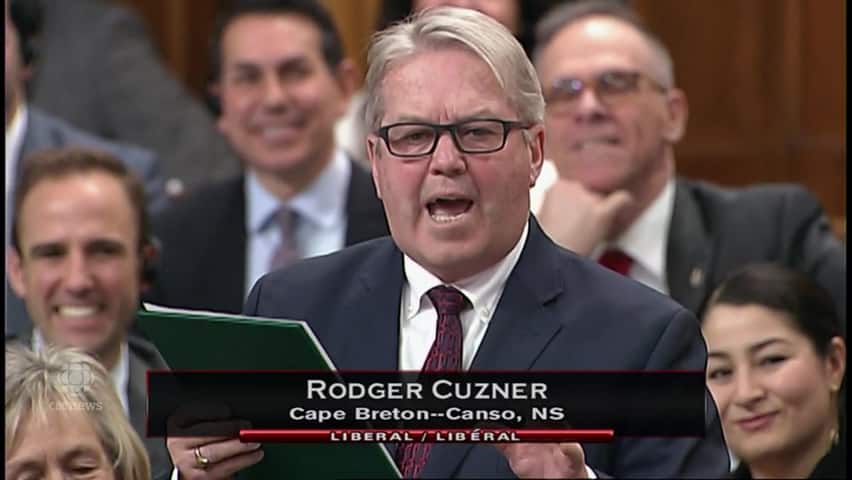
Prime Minister Justin Trudeau named five new senators Tuesday, choosing long-time Liberal Rodger Cuzner and two other Liberals to the Red Chamber. 

"I am confident that, with diverse leadership experience and impressive track records serving their communities, they will be strong voices for New Brunswick and Nova Scotia in the Upper House," Trudeau said in a statement. 

The new faces in the Senate are:

  • Joan Kingston, John McNair and Krista Ross, who will be representing New Brunswick.
  • Réjean Aucoin and Rodger Cuzner, who will be representing Nova Scotia.

Tuesday's announcement brings the number of independent senators chosen by Trudeau to 75, in the 105-seat Senate, with 11 more vacancies yet to be filled. 

Once appointed, senators choose to sit as a non-affiliated senator or to join one of the four groups in the chamber: the Independent Senators Group, which currently has 39 members; the Conservative or Canadian Senators groups, each with 15 members; or the Progressive Senate Group, which has 11 members.

Former Liberal MP Cuzner was first elected to the House of Commons in 2000 and represented two Cape Breton ridings in Nova Scotia during his 19 years.

While in Ottawa, Cuzner held a number of key roles, including chief opposition whip and parliamentary secretary to former prime minister Jean Chrétien.

Cuzner was well-known for his annual Christmas poem in the House of Commons in which he poked fun at all sides of the House with his sharp wit and sense of humour. 

WATCH | MP Rodger Cuzner reads his annual Christmas poem:

MP Rodger Cuzner reads his annual Christmas poem

Duration 1:52
The Cape Breton MP continues his tradition of reading a political parody of 'Twas the Night Before Christmas in the House of Commons.

From 1995 to 1999, Kingston served as a Liberal member of the Legislative Assembly in New Brunswick, representing the provincial riding of New Maryland and holding a number of ministerial positions including Labour, Environment and Human Rights.

A registered nurse and health advocate, Kingston is the chair of her province's Community Action Group on Homelessness and past president of the Nurses Association of New Brunswick.

Another former Liberal being elevated to the Senate is McNair, a lawyer who served as the executive director of the New Brunswick Liberal Association (provincial and federal).

Ross, a business woman and former head of the Fredericton Chamber of Commerce, also served as a commissioner with the Electoral Boundaries and Representation Commission for New Brunswick.

Réjean Aucoin, a lawyer and former journalist from Chéticamp, N.S., is an accomplished leader from the Acadian community and founder of the Association of French-speaking Jurists of Nova Scotia.

Joan Kingston Joan Kingston, a registered nurse, is a former member of the Legislative Assembly of New Brunswick. (CBC)


https://www.cbc.ca/news/canada/new-brunswick/new-brunswick-covid-19-roundup-jan-13-1.6313303 


Businesses get their rapid tests back, but under different rules

Rapid tests will only be available to symptomatic employees, those required to get tested

Chambers of commerce are again able to supply rapid tests to businesses after a week on hold, but there are changes to how they're used and who gets to use them.

Krista Ross, CEO of the Fredericton Chamber of Commerce, said previously that the chambers were giving businesses two tests per employee per week.

But as of Wednesday, according to Public Health directives, tests were only to be given to symptomatic employees and to workers required by the province's emergency order to be tested regularly.

"The numbers are going to decrease significantly," Ross told Shift New Brunswick. "We'll be providing three tests per employee per month for those under 50."

She said those over 50 will be getting PCR tests through the province.

These new rules are in line with the province's overall changes to testing. Last week, the province said people under 50 will not be getting PCR tests unless they're immunocompromised, and should only take a rapid test if symptomatic.

David Duplessis of the Saint John Chamber of Commerce said the chambers are effectively distribution centres for rapid tests, and they follow the province's rules. He said there will be some transitional confusion as people get used to the new rules.

"That's going to cause some confusion because in the past there was a lot of rapid testing going on in the businesses,  and they were testing people that didn't have symptoms," he said.

John Wishart with the Greater Moncton Chamber of Commerce said rapid tests have been "vital" for businesses.

"Business owners and managers were certainly looking for a way to keep their workplaces safe," he said. "I think the tests, especially the twice-a-week, gave them a certain level of confidence that they were doing whatever they could do to make that happen."

John Wishart, CEO of the Chamber of Commerce for Greater Moncton, says there could be some confusion as businesses adjust to the new rules. (Shane Magee/CBC)

All three chambers have seen many email and calls over the last week, asking when they can get more tests.

The province is expecting up to 5,500 cases per day in the coming week, and urging people to stay in as much as possible. However, the province has not mandated businesses to close under Level 2, the current level of the winter plan for managing the pandemic.

Duplessis said rising case numbers are adding to the challenges to businesses, but a full lockdown would be worse.

"We have to keep them open," he said. "We can't go into lockdown again. We can't shut the economy down. We have to do everything we can to keep our small businesses in particular open."

With files from Shift New Brunswick

CBC's Journalistic Standards and Practices


https://www.cbc.ca/news/canada/nova-scotia/rodger-cuzner-appointment-consul-general-boston-cape-breton-1.5783318 


Former Cape Breton Liberal MP appointed consul general to Boston

Rodger Cuzner served 6 terms as MP for Cape Breton-Canso.

Rodger Cuzner has been appointed Canada's consul general to Boston. 

The announcement was made in a release from the Office of the Minister of Foreign Affairs, which also listed five other diplomatic appointments.

Cuzner, 64, was born in Glace Bay and attended St. Francis Xavier University in Antigonish. 

He entered federal politics in 2000 when he was elected MP for Cape Breton-Canso. He went on to serve five more terms.

He garnered 74 per cent of the popular vote to earn re-election in 2015.

Cuzner served as parliamentary secretary to former prime minister Jean Chrétien in 2003. He has also served as chair of the Nova Scotia caucus and party whip.

In 2019, he announced that he would not seek re-election, telling reporters he was "tired and cranky."

Cuzner worked in the private sector as senior adviser at Rubicon Strategy in Ottawa prior to the new appointment.

ABOUT THE AUTHOR


Vernon Ramesar

Reporter/Editor

Vernon Ramesar is a reporter and video and radio journalist originally based in Trinidad. He now lives in Halifax.

CBC's Journalistic Standards and Practices


https://www.cbc.ca/news/canada/nova-scotia/lawyer-makes-case-for-second-riding-in-county-of-inverness-1.4972125 


Lawyer promotes creating a new Acadian riding in Inverness County

Réjean Aucoin of Chéticamp says another riding offers chance to have bilingual leader

A second Nova Scotia riding in Inverness County would be good for everyone in the area, not just Acadians, according to lawyer Réjean Aucoin of Chéticamp.

Aucoin will present his arguments at a public meeting Saturday hosted by the Nova Scotia Electoral Boundaries Commission.

"This would give us an opportunity to have someone who is bilingual, where we can bring our requests whether in French or English, its an advantage to everyone," said Aucoin.

"We would have a very small riding and we would have two MLAs for Inverness County, so it's a plus."

In its interim report released in November, the commission recommended the restoration of protected seats for the Acadian and African-Nova Scotian communities.

It also included an option to create an extra riding for the Chéticamp area.

Aucoin said the riding should cover the area from Meat Cove, at the northern tip of Cape Breton, south to East Margaree. 

"Yes, it will split the Margarees if that is accepted," Aucoin said. "But you will have two MLAs to work for the Margaree area. To me, it's still an advantage to everyone."

Aucoin said creating a second riding in the county is better than electing two MLAs, one who is Acadian, for the whole of Inverness County.

"That poses all sorts of problems," he said. "How do you decide what's an Acadian? There are not many advantages."

Aucoin worked with the province's Acadian federation in 2012 when it challenged the decision by the former NDP government to do away with the seats.

There are 2,585 electors within the proposed boundaries of the Chéticamp district, which would make it the smallest riding in Nova Scotia, and perhaps in Canada.

"This is breaking new ground, for sure," he said.

The electoral boundaries commission will hold a public hearing from 2-4 p.m. at Le Club des Retraités at 15108 Cabot Trail in Chéticamp.

Simultaneous interpretation services will be available.

ABOUT THE AUTHOR

Yvonne LeBlanc-Smith has been reporting news in Cape Breton since 1981. You can follow her on Twitter @leblancsmith and reach her at yvonne.leblanc-smith@cbc.ca

CBC's Journalistic Standards and Practices


Province banning N.B. Power from selling electricity to crypto mines


Province banning N.B. Power from selling electricity to crypto mines

Operations consume huge amounts of power as utility faces questions about generation capacity

The New Brunswick government is banning N.B. Power from providing electricity service to new cryptocurrency mining operations.

Energy Minister Mike Holland introduced legislation Tuesday that, once passed, would turn what has been a temporary freeze into a permanent legal ban.

The Higgs government quietly issued a moratorium on the utility servicing new crypto facilities in March 2022, after it received several large-scale requests for electricity supply.

"The cryptocurrency sector is an area that has a significant ... draw or demand as it relates to electricity," Holland said.

"We can't compromise the existing rate base so we need to make sure that we have capacity." 

A picture inside a bitcoin mining facility shows long walls on either side of a concrete floor. The walls are filled with tiny computers. Hive Blockchain Technologies has a bitcoin mining facility in Saint-André, now part of Grand Falls. (Shane Fowler/CBC News)

Crypto mines are made up of thousands of computers that run 24 hours a day trying to earn units of the cryptocurrency, consuming vast amounts of electricity in the process. 

Hive Blockchain Technologies is operating a 70-megawatt bitcoin mine in Grand Falls, and a second proposed facility owned by Chief Fuels won approval, and an electricity supply, before the moratorium went into effect.

The combined annual electricity consumption of the two mines, 96 megawatts, would be close to the yearly generation of the small modular nuclear reactor model being developed by Arc Clean Energy of Saint John.

Put another way, it's the equivalent of two and a half months of output from N.B. Power's Belledune generating station. 

More crypto mines would put a strain on N.B. Power's capacity as it faces questions about its generating capacity due to federal climate policies and the age of some power stations.

At the same time, the utility could face greater demand for electricity from a growing population.

Twice this year, in February and July, the utility came close to not being able to meet the demand for power with its existing plants. 

"We came very close to the lights not even being able to turn on with the existing generation we have," Holland said. "We're at the line right there now." 

Opposition Liberal Leader Susan Holt said it was important for the province to proceed with caution on an industry that uses a huge amount of electricity with very little job-creation impact, but she wanted to know more.

"It's a slippery slope. If that sector is affected, which others will be and how did they determine that one doesn't deserve electricity when others do?" she said.

ABOUT THE AUTHOR


Jacques Poitras

Provincial Affairs reporter

Jacques Poitras has been CBC's provincial affairs reporter in New Brunswick since 2000. He grew up in Moncton and covered Parliament in Ottawa for the New Brunswick Telegraph-Journal. He has reported on every New Brunswick election since 1995 and won awards from the Radio Television Digital News Association, the National Newspaper Awards and Amnesty International. He is also the author of five non-fiction books about New Brunswick politics and history.

CBC's Journalistic Standards and Practices


47 Comments


David R. Amos
 "Twice this year, in February and July, the utility came close to not being able to meet the demand for power with its existing plants.

"We came very close to the lights not even being able to turn on with the existing generation we have," Holland said. "We're at the line right there now."

That should make for an interesting yuletide season


Pension deal with province in 2014 did not plan for large cost-of-living increases


"The Vestcor managers are the ones sitting pretty in all of this public pension stuff."


Moore, Rob - M.P.

<Rob.Moore@parl.gc.ca>
Thu, Nov 2, 2023 at 9:07 AM
To: David Amos <david.raymond.amos333@gmail.com>

*This is an automated response*


Thank you for contacting the Honourable Rob Moore, P.C., M.P. office. We appreciate the time you took to get in touch with our office.


If you did not already, please ensure to include your full contact details on your email and the appropriate staff will be able to action your request. We strive to ensure all constituent correspondence is responded to in a timely manner.


If your question or concern is time sensitive, please call our office: 506-832-4200.


Again, we thank you for taking the time to share your thoughts and concerns.


~*~*~*~*~*~*~*~

Office of the Honourable Rob Moore, P.C., M.P.

Member of Parliament for Fundy Royal

rob.moore@parl.gc.ca


David Amos

<david.raymond.amos333@gmail.com>
Thu, Nov 2, 2023 at 9:06 AM
To: "Bill.Hogan" <Bill.Hogan@gnb.ca>, "Gary.Crossman" <Gary.Crossman@gnb.ca>, deputymayor.salgado@hampton.ca, brmacd@nbnet.nb.ca, rolyj@nb.sympatico.ca, oliviadonovan85@gmail.com, matt.garnett@nbliberal.ca, "Bill.Oliver" <Bill.Oliver@gnb.ca>, megan.mitton@gnb.ca, "bruce.fitch" <bruce.fitch@gnb.ca>
Cc: info@faytene.tv, "blaine.higgs" <blaine.higgs@gnb.ca>, "Tammy.Scott-Wallace" <Tammy.Scott-Wallace@gnb.ca>, "Ross.Wetmore" <Ross.Wetmore@gnb.ca>, "rob.moore" <rob.moore@parl.gc.ca>, "Robert. Jones" <Robert.Jones@cbc.ca>, "robert.mckee" <robert.mckee@gnb.ca>, "robert.gauvin" <robert.gauvin@gnb.ca>


Pension deal with province in 2014 did not plan for large cost-of-living increases

Weakened inflation protection in teachers' shared-risk pension plan eroding retiree income

Krista Richard retired from 36 years of teaching in Moncton two years ago and although she says she hasn't noticed the effects yet, the value of her pension has already been slowly eroding.

"I'm doing fine, said Richard.

"I've always watched my finances. I don't smoke, I don't drink, I save my money. My car is paid off. I sold my house and bought a little townhouse. So, so far it's been livable."

Since Richard left work in mid-2021, the cost of living in New Brunswick has increased more than 12 per cent, an escalation the province's pension plan for teachers was not designed to deal with.

A teacher stands before children seated in a classroom. New Brunswick teachers negotiated weaker inflation protections for their retirees than civil servants did when pensions were converted to shared-risk plans in 2014. (Ben Nelms/Radio-Canada)

Under the terms of the teachers' shared-risk pension plan, which was negotiated with the New Brunswick government in 2014, retirees like Richard will receive a partial cost-of-living increase in their pension in January. That will cover 64 per cent of the inflation that has occurred in the past year.

It's the second year in a row that the cost of living increase paid to retired teachers will fall below 70 per cent of the inflation rate.

By contrast, retired New Brunswick government civil servants — including retired MLAs and cabinet ministers — will receive pension adjustments in January that cover 95 per cent of the inflation rate. 

Larry Jamieson is chair of the board of trustees of the teachers' pension plan. During an October information meeting for teachers, he explained that although inflation adjustments for retirees have been well below the cost of living for the last two years, they are all that is allowed under the plan teachers agreed to back in 2014. 

"This is the maximum that can be provided based upon the plan's cap, per the governing documents of the plan," said Jamieson.

Glass building in Fredericton New Brunswick teachers have a $6.4-billion pension fund that is managed by Vestcor, which operates out of this Fredericton office building. Over the past 10 years, the fund has earned an annual average return of 7.3 per cent. That's average for Canadian pension funds but a full per cent below returns earned by the Ontario teacher's pension fund, which this year is paying its retired teachers a full cost of living increase (Joe McDonald/CBC)

New Brunswick has two major pension plans for government employees, including one specifically for teachers and one for civil servants, crown corporation employees, MLAs and a variety of other employees.

A number of smaller plans serve other employee groups.

In 2014, the New Brunswick government, led by then-finance minister Blaine Higgs, pushed to transform the plans into what was called a "shared-risk" model, where government would no longer be required to fund pension deficits if the cost of retirement benefits outstripped the plans' ability to pay for them.

The larger civil service plan was set up first and includes full inflation protection for retirees, if funding levels in the pension plan remain high enough to afford it.  

However, the teachers' plan agreed to limit cost of living protections for their retirees to 75 per cent of the rate in inflation. They also agreed to a hard cap of 3.56 per cent on an inflation increase in any year that inflation exceeds 4.75 per cent.

A man in a blue suit and tie raises his fist in a crowd. Blaine Higgs was New Brunswick's finance minister in 2014 when he negotiated a new pension deal with teachers that watered down the right to inflation increases for retired educators. (Paul Hantiuk/CBC)

In explaining how that difference was arrived at, Higgs told the legislature in 2014 that teachers themselves pushed to water down inflation protections for retirees to preserve other benefits in their plan, such as early retirement provisions.

"The teachers came with a solution that would work for them and with a plan for their priorities and where they wanted to place them," said Higgs during debate of the bill that created the new shared-risk pension for teachers.

"You will see that what they accepted was an intergenerational solution that the retirees were prepared to work with because they, too, wanted to be part of this solution."

During those 2014 negotiations, interest rates had been hovering below one per cent. During last year's information meeting with teachers, Jamieson acknowledged those who worked on the pension deal with the province did not plan for a high inflation scenario.

"At the time of conversion, in fact for the past 30 years, we've not been in a period of high inflation like we've been for the last year or so. It wasn't a high priority item at the time," he said.

That decision is now having a significant effect on pension values. 

In January, retired New Brunswick teachers will see a 3.56 per cent increase in benefits to offset a 5.59 per cent increase in the cost of living, as measured between June 2022 and June 2023.

Last January, they received the same 3.56 per cent increase to offset an almost identical inflationary increase of 5.56 per cent from a year earlier.

Meanwhile retired civil servants, crown corporation employees, MLAs and others in the civil service plan received a 5.24 per cent inflation increase last January and are scheduled to receive 5.32 per cent this January, amounts that are both just short of full inflation. 

That means a retired teacher with an average $35,000 annual pension in 2022 will see that increased by $2,236 in 2024. That's well behind the $3,793 increase retired civil servants who had the same $35,000 pension in 2022 have been awarded.

Richard said she finds it difficult to complain about that because she is grateful to have a pension when so many others don't and said if it continues lose value over time, she will deal with that as best she can.

"I can't predict what's going to happen next year or two years. I just take it as it comes," she said.

ABOUT THE AUTHOR


Robert Jones

Reporter

Robert Jones has been a reporter and producer with CBC New Brunswick since 1990. His investigative reports on petroleum pricing in New Brunswick won several regional and national awards and led to the adoption of price regulation in 2006.

CBC's Journalistic Standards and Practices


87 Comments


David R. Amos
Perhaps some folks will finally listen to me before things get worse

 
Lou Bell
Reply to David R. Amos   
The public employees who took Higgs advice and accepted the shared risk plan are very satisfied with their investments and returns . Those who didn't ? Not so much .
 
 
Le Wier 
Reply to Lou Bell  
The teachers are in a shared risk pension plan that was offered by Higgs in 2014 “Under the terms of the teachers' shared-risk pension plan, which was negotiated with the New Brunswick government in 2014” why do you say otherwise?
 
 
Rosco holt 
Reply to Lou Bell  
It wasn't negotiated for most, more like forced. 


Don Corey  
Interesting (but not surprising) to see a story attempting to stir up controversy over an issue that was negotiated 9 years ago.

Just a few points:

1. Jacques' simple arithmetic is incorrect. The $35,000 pension assumption would have provided the teacher with a total inflation adjustment of $2536 over the past two years; not the $2236 in the story.

2. The maximum the plan provides for is 75% of inflation (with a fully funded plan).

That would have amounted to a two year increase of $2,987 (as compared to the actual of $2536).

So, the teacher in the example is receiving the grand total of $37.60/month less than the maximum provided by her plan.

And we are expected to feel sorry for her?

3. Most retirees (other than former government employees) can only dream about an inflation indexed pension plan.

4. Contrary to a few comments here, the government is respecting the provisions of the 2014 agreement.

5. It's hard to believe that those who agreed to the indexing changes back in 2014 did not expect that, at some point, we would be back to a high inflation environment.

6. Great job by Higgs to introduce the shared risk plan. It's still a defined benefit plan, but with a 50/50 risk sharing provision if the plan is not adequately funded.

The objective was to reduce taxpayer's obligations to 100% fund plans that were in a deficit situation.

 
David R. Amos

Reply to Don Corey 
A deal is a deal even if it is between dumb and dumber 


Spikes Harvey
You get what you are contracted for. Nothing more - nothing less. It's not an injustice: it's an agreement, and you signed it, now live with it. Otherwise, put your money were your mouth is and try and renegotiate.

Good luck!


David R. Amos

Reply to Spikes Harvey
I concur
 
 
Rosco holt
Reply to Spikes Harvey
Problem government (Higgs) like many other governments before didn't respect the contracts signed. 


michael levesque

like donomic cardy use to say when he was leader of he NDP "the only good job in NB is a government job"


David R. Amos
Reply to michael levesque
The truth hurts


Pete Spence

Retired New Brunswick government civil servants — including retired MLAs and cabinet ministers — will receive pension adjustments in January that cover 95 per cent of the inflation rate.

They ensure their nests are well-feathered.

We should all be so lucky...


David R. Amos
Reply to Pete Spence
Amen
 
 
Lou Bell 
Reply to Pete Spence
Teachers had the same option , but refused . They assured their nests were emptier than it could have been . Complain to their union leaders , they made the inferior deal all on their own . Then complained about salaries .
 
 
Rosco holt 
Reply to Pete Spence
Some civil servants receive 95% most don't. 


Alan Birch
Early retirement benefits vs inflation protection. What could possibly go wrong?

None to blame but those who brought the proposal and those who voted in favour.


David lutz.
Reply to Alan Birch
Exactly, I'm on a shared Risk pension plan and can't retire until 65, obviously the teachers traded inflation protection for the ability to retire earlier. They rolled the dice and lost. You can't get a 2nd roll at a casino.


David R. Amos

Reply to David lutz
Clearly you are not the lawyer I know


Shawn Tabor

Reply to David R. Amos
Now thats funny 


Clive Gibbons

Join the club. My paycheque is slowly eroding too.


Terri Baxter

Reply to Clive Gibbons
Ditto!


Jake Quinlan
Reply to David R. Amos
The Vestcor managers are the ones sitting pretty in all of this public pension stuff. Lowball return projections, count the bonus money for all the brilliant work in surpassing them.

surpassing them.


Rosco holt

Reply to Jake Quinlan
They are not surpassing their lowball projections.They don't even reach it.


David R. Amos
Reply to Jake Quinlan
Imagine their pension plan 


Wednesday, 1 November 2023

Higgs could reverse Tuesday changes to MLA committee roles


Higgs could reverse Tuesday changes to MLA committee roles

Motion removed outspoken PC member from 5 committees, excluded ex-health minister from COVID session

A day after booting a former cabinet minister off five legislative committees amid a broader shakeup, the Higgs government is suggesting it could reverse itself and change committee memberships again.

With a motion Tuesday, the government overhauled the lineup on 11 committees, a move made necessary by the promotion of several Progressive Conservative MLAs to cabinet in June and the firing or resignation of four ministers.

As a general rule, ministers don't sit on legislative committees, which scrutinize government policies, bills and operations.

Tuesday's changes included removing Fundy-The Isles-Saint John West MLA Andrea Anderson-Mason from five of the seven committees she was sitting on.

The government also opted to not put former health minister Dorothy Shephard on the public accounts committee, which is scheduled to question Dr. Jennifer Russell, the chief medical officer of health, on Thursday about COVID-19.

Asked Wednesday about the rationale for those changes, government House leader Glen Savoie suggested they may be reversed or changed again soon.

"Committees are almost like a living document," he told reporters. "They can change at any time, so all I can tell you is stay tuned, because changes are coming.

A woman with short white hair wearing a zebra-print blouse. Former health minister Dorothy Shephard isn't on the public accounts committee, which is to question Jennifer Russell, the chief medical officer of health, on Thursday about the province's response to COVID-19. (Michel Corriveau/Radio-Canada)

On Tuesday, Opposition Liberal Leader Susan Holt suggested Premier Blaine Higgs was punishing MLAs who have been outspoken or asked tough questions during committee sessions.

Now that Savoie is signalling a possible reversal, Holt said it's a sign of "further instability and indecision from this government. Like: Who's on first? Who's on committee?"

Holt said the government is "all over the place, and I think New Brunswickers are frustrated that they're not working on priorities like access to health care and instead playing around with committee membership." 

Committee work carries a $125 pay upgrade for each day MLAs take part. But it also requires extra work and travel to Fredericton.

Four ministers who quit cabinet or were shuffled out after rebelling in June against Higgs's changes to Policy 713, the gender-identity policy for schools, found themselves available for committee duty this fall.

At the same time, five MLAs promoted to cabinet no longer had the time to participate.

A grid of six individuals. Three on the top row: a woman, a man, and another woman. Three on the bottom row are all men. The six PC MLAS who rebelled against the premier in June over changes to Policy 713, clockwise from top left, Andrea Anderson-Mason, Trevor Holder, Dorothy Shephard, Jeff Carr, Ross Wetmore and Daniel Allain were given different levels of committee duties with Tuesday's overhaul. (Jacques Poitras/CBC)

Two other former ministers who rebelled in June but who were shuffled out of cabinet in 2020, Anderson-Mason and Gagetown-Petitcodiac MLA Ross Wetmore, have been serving on committees for three years.

The changes unveiled Tuesday handed different levels of committee workload to the six MLAs who rebelled. 

Shephard was put on four committees, Jeff Carr was put on three, Trevor Holder was put on seven and Daniel Allain was put on seven.

Anderson-Mason was left on only two committees, one of which meets rarely and one which she sits on automatically because of her position as deputy speaker. 

"We serve at the pleasure of the premier," Anderson-Mason said of her removal from five committees. 

In September, the lawyer and two-term MLA got officials to admit during a committee session that they don't know where the money is going from an extra "carbon adjustor charge" that the government imposed earlier this year. 

Holder, Carr and Shephard all filled in on the public accounts committee in September as temporary members, pending Tuesday's motion.

Holt said not putting Shephard on that committee permanently will mean she won't be able to apply her "intimate knowledge" of the Health Department to Russell's appearance Thursday. 

"It seems like [Higgs] doesn't want that perspective being brought to bear on questions for the chief medical health officer." 

Green Leader David Coon said it was "tremendous" that Holder, Carr and Shephard used their experience to ask effective questions on public accounts in September.

"The premier clearly doesn't like the fact that he's got members on the committee who are functioning as parliamentarians, doing their job as committee members. He wants them as marionettes." 

Wetmore keeps five of his previous committee assignments under Tuesday's changes. He was taken off two committees but added to another one, for a total of six.

Savoie pointed out that the rules allow any MLA, including Shephard, to pose questions at a committee session even if they aren't able to vote as committee members. 

"If they have salient questions and points to make, they're welcome to make them," he said.

ABOUT THE AUTHOR


Jacques Poitras

Provincial Affairs reporter

Jacques Poitras has been CBC's provincial affairs reporter in New Brunswick since 2000. He grew up in Moncton and covered Parliament in Ottawa for the New Brunswick Telegraph-Journal. He has reported on every New Brunswick election since 1995 and won awards from the Radio Television Digital News Association, the National Newspaper Awards and Amnesty International. He is also the author of five non-fiction books about New Brunswick politics and history.

CBC's Journalistic Standards and Practices


59 Comments


David R. Amos
 "We serve at the pleasure of the premier," Anderson-Mason said of her removal from five committees.

Serve Who?

 
Wilbur Ross
Reply to David R. Amos   
Said the quiet part loud me thinks. 
 
 
Marcel Belanger 
Reply to David R. Amos 
In most instances it would be "serve the public". However with this premier it’s more like "serve Blaine Higgs".
 
 
marc lapointe 
Reply to Wilbur Ross 
Nessey paw again ???
 
 
David R. Amos   
Reply to Marcel Belanger  
C'est Vrai
 
 
David R. Amos   
Reply to marc lapointe 
Mais Oui