Standing Committee on Official Languages - May 28, 2026
The Secretariat of Official Languages promotes the Official Languages Act and administers its full implementation.
The Secretariat has three main functions:
- Coordination - to provide advice and work with government institutions regarding the Act; meet the needs of the two linguistic communities; to develop, review, and evaluate the implementation plan required by the Act; prepare an annual report on outcomes based on the activities undertaken as part of the Act; evaluate the Act on a continual basis and make recommendations for amendments, as required.
- Support - to provide the appropriate support to government employees so they can work in an environment conducive to the use and learning of both official languages as stipulated in the Language of Service Policy and Guidelines, and the Language of Work Policy Guidelines.
- Promotion - to undertake public outreach campaigns to promote respect, knowledge and communication between the two linguistic communities and the economic benefits of bilingualism in the province; and to ensure regular consultation with various stakeholders from both linguistic communities.
Cooperation agreements
- Federal-Provincial-Territorial Agreements in Education (publication)
- Quebec-New Brunswick Cooperation Agreement (publication)
- Manitoba-New Brunswick Cooperation Agreement (PDF 148 KB)
- Program on the Provision of Official-Language Services 2024-2028 (POLS)
- New Brunswick bilingualism support program (NBBSP)
More information
- Oral language proficiency scale
- Ministers’ Council on the Canadian Francophonie
- Report on the 2021 Review of Official Languages Act for New Brunswick (publication)
- 2021 Review of the Official Languages Act of New Brunswick – Report on second-language learning
- Official Languages Act
- International Francophonie
- Support for Translation and Interpretation Program
Contact us
Intergovernmental Affairs
Address:
Chancery Place
675 King Street
Fredericton, New Brunswick
E3B 1E9
Mailing address:
Chancery Place
675 King Street
Fredericton, NB
E3B 1E9
Canada
Monday-Friday
Phone: 506-453-6930
Fax: 506-453-2995
Email: IGA.Correspondence@gnb.ca
Myths and Realities about Official Languages
When it comes to official languages, myths abound. One example: all government jobs require bilingualism. False. Let’s debunk these myths. Read Official Languages: Myths and Realities.
Shirley C. MacLean, K.C.
Commissioner of Official Languages for New Brunswick
Shirley C. MacLean is from Baddeck, Cape Breton. After obtaining a Bachelor of Arts degree from St. Francis Xavier University in 1984, she attended Laval University in Quebec City to study French.
In 1990, Shirley MacLean obtained her law degree from University of New Brunswick. She practised law with Hanson Hashey in Fredericton and then joined the Law Society of New Brunswick in 1994 as the Director of Admissions. In 2003, Ms. MacLean became the Society’s Assistant Executive Director and Registrar of Complaints.
In December 2013, Shirley MacLean was appointed Queen’s Counsel. In 2016 Ms. MacLean became the Chair of the Mental Health Tribunal in Fredericton since 2016.
Very involved in her community, Shirley MacLean is a board member of the Healing and Cancer Foundation, member of a patent navigator pilot project in oncology with Horizon Health, is a member of a Syrian Refugee Sponsorship Committee. She is a board member of the New Brunswick Highland Games Festival, and she has started playing tenor drum with a local competition pipe band.
Shirley MacLean was appointed Commissioner of on January 2, 2020, for a seven-year term, she is the third person and the first anglophone to hold this position.
The Commissioner of Official Languages for New Brunswick is an independent officer of the Legislative Assembly. Her role is to investigate, report on and make recommendations with regard to compliance with the Official Languages Act. She is also responsible for the promotion of the advancement of both official languages in the province.

2025 Sponsors
Céud míle fáilte!
The above greeting is a common Gaelic salutation meaning “A hundred thousand welcomes”. We thought this would be an appropriate way to welcome you to the possibilities of being part of the premier annual Scottish festival in New Brunswick.
The New Brunswick Highland Games Festival is a not-for-profit organization that is run completely by a dedicated group of volunteers. July 25-27th, 2025 will mark the 42nd edition of this established festival and is one of the longest running events of its kind in the Atlantic Region.
We are more than just kilts and bagpipes. We pride ourselves on being able to offer competitors and spectators an opportunity to sample and participate in a variety of Scottish and Celtic cultural activities.
Your sponsorship would allow us to broaden our entertainment and expand our programming with the goal of capturing a wider audience.
We would welcome the opportunity to further explore opportunities in how your organization could benefit from this partnership.
Contact devin@highlandgames.ca for more information about how you can support one of the longest running events of its kind in the Atlantic Region.
Organizing Committee
Executive
| Chair | Devin Patterson |
| Vice President | Alanna Macfarlane |
| Vice President | Peter Cashin |
| Treasurer | Kelsey Hovey |
| Secretary | Shirley MacLean |
| Past-President | Chris Gallant |
Site Logistics
| Chair | Alanna MacFarlane |
| Assistant Logistics Coordinator | Sam Mason |
Partnerships
| Friends | Christine Wile |
| Corporate | Cameron McNeil |
Highland Games
| Piping and Drumming | Amy Boyer Cheryl Gallant |
| Highland Dancing | Nicole Odo Vicki Odo |
| Heavy Events | Scott McHugh |
| Awards Ceremonies / Trophies / Medals |
NB Highland Games Festival Expands to Two Nights of Concerts at Officers’ Square for 2026
February 19, 2026
Fredericton, NB — The New Brunswick Highland Games Festival is turning up the volume in 2026, expanding its downtown concert series at Officers’ Square to two full nights of live music following the overwhelming success of last year’s show featuring Alan Doyle.
The expanded concert series marks a significant evolution for the Festival, pairing nationally recognized East Coast talent with the full Highland Games experience in the heart of Fredericton.
The 2026 Festival takes place July 24–26th and features traditional Highland athletics, piping and drumming, cultural programming, food vendors, and family-friendly activities at Government House throughout the day, alongside evening entertainment at Officers’ Square. The Festival draws visitors from across Canada, the Eastern United States, and beyond, and continues to grow as one of New Brunswick’s signature summer events.
“We are thrilled to bring two nights of world-class music to downtown Fredericton,” said Devin Patterson, Chairman of the New Brunswick Highland Games Festival. “This year’s lineups celebrate the best of Atlantic Canada’s musical talent — from legendary icons like Jimmy Rankin to rising stars like Mary Frances Leahy, and the powerhouse energy of Joel Plaskett Emergency, The Stanfields, and Vishtèn. It’s going to be an unforgettable weekend for everyone.”
Friday, July 24
Headlining Friday night is Cape Breton icon Jimmy Rankin, one of Atlantic Canada’s most enduring and respected songwriters. With his acclaimed album Harvest Highway, Rankin continues to blend Celtic tradition, rich storytelling, and the warm East Coast sound that has earned him 5 JUNO Awards, 7 Canadian Country Music Awards, and 27 East Coast Music Awards.
From solo favourites like “Followed Her Around” and “Morning Bound Train” to helping define East Coast folk as a member of The Rankin Family — including beloved classics “Mull River Shuffle” and the JUNO Award-winning “Fare Thee Well” — Rankin’s music remains woven into the fabric of Maritime culture.
Joining him in the Friday night lineup is rising star Mary Frances Leahy, one of Canada’s most exciting next-generation musicians. By age twenty, Leahy has already performed more than 800 shows across Canada and internationally. Rooted in Celtic tradition but boldly expanding her artistic voice, she fuses driving fiddle and piano with Latin rhythmic influences. Her debut album First Light showcases a vibrant and contemporary take on traditional music.
Saturday, July 25
Headlining July 25: Joel Plaskett Emergency
— Nova Scotia songwriter, rock architect, and one of the most
influential voices in Canadian music. From Thrush Hermit to Joel
Plaskett Emergency, from Massey Hall to orchestral stages, Joel has
spent over 30 years evolving while staying proudly anchored in East
Coast tradition. In 2025, some of Canada’s biggest artists — including
Arkells, Sloan, Bahamas and City and Colour — honoured his songwriting
on Songs From The Gang – A Celebration of Joel Plaskett.
Also performing Saturday are East Coast favourites The Stanfields, known for their high-energy blend of hard rock and traditional roots, and award-winning Acadian group Vishtèn, whose fiery mix of tradition and innovation continues to carry Acadian culture forward.
Early bird passes and tickets will go on sale on February 25th at highlandgames.ca(Opens in a new window)
MEDIA CONTACT
Devin Patterson, Chairman
New Brunswick Highland Games Festival
506-292-3093
devin@highlandgames.ca
From: Premier of Ontario | Premier ministre de l’Ontario <Premier@ontario.ca>
Date: Wed, May 27, 2026 at 5:40 PM
Subject: Automatic reply: You are welcome Premier Gallant and Premier Ford Please notice that two years later I finally got my Barring notice in English ONLY
To: David Amos <david.raymond.amos333@gmail.com>
From: Poilievre, Pierre - M.P. <pierre.poilievre@parl.gc.ca>
Date: Wed, May 27, 2026 at 5:40 PM
Subject: Acknowledgement – Email Received / Accusé de réception – Courriel reçu
To: David Amos <david.raymond.amos333@gmail.com>
On behalf of the Hon. Pierre Poilievre, we would like to thank you for contacting the Office of the Leader of the Official Opposition.
Mr. Poilievre greatly values feedback and input from Canadians. We wish
to inform you that the Office of the Leader of the Official Opposition
reads and reviews every e-mail we receive. Please note that this
account receives a high volume of e-mails, and
we endeavour to reply as quickly as possible.
If you are a constituent of Mr. Poilievre in the riding of Battle River - Crowfoot and you have an urgent matter to discuss, please contact his constituency office at:
Phone: 1-780-608-4600
Fax: 1-780-608-4603
Hon. Pierre Poilievre, M.P.
Battle River – Crowfoot
4945 50 Street
Camrose, Alberta T4V 1P9
Once again, thank you for writing.
Sincerely,
Office of the Leader of the Official Opposition
_____________________________
Au nom de l’honorable Pierre Poilievre, nous tenons à vous remercier d’avoir communiqué avec le Bureau du chef de l’Opposition officielle.
M. Poilievre accorde une grande importance aux commentaires et aux suggestions des Canadiens. Nous tenons à vous informer que le Bureau du chef de l’Opposition officielle lit et examine tous les courriels qu’il reçoit. Veuillez noter que ce compte reçoit un volume important de courriels et que nous nous efforçons d’y répondre le plus rapidement possible.
Si vous êtes un électeur de M. Poilievre dans la circonscription de Battle River - Crowfoot et que vous avez une question urgente à discuter, veuillez contacter son bureau de circonscription :
Téléphone :
Télécopieur :
L’honorable Pierre Poilievre, député
Battle River – Crowfoot
4945, 50 Street
Camrose (Alberta) T4V 1P9
Encore une fois, merci de votre message.
Veuillez agréer nos salutations distinguées,
Bureau du chef de l’Opposition officielle
---------- Original message ---------
Date: Wed, May 27, 2026 at 5:40 PM
Subject: Re: You are welcome Premier Gallant and Premier Ford Please notice that two years later I finally got my Barring notice in English ONLY
To: <premier@gnb.ca>, <premier@ontario.ca>, premier <premier@gov.nl.ca>, pierre.poilievre <pierre.poilievre@parl.gc.ca>, pm <pm@pm.gc.ca>, premier <premier@gov.pe.ca>, Office of the Premier <scott.moe@gov.sk.ca>, PREMIER <PREMIER@gov.ns.ca>, premier <premier@leg.gov.mb.ca>, David Amos <myson333@yahoo.com>, <BrianThomasMacdonald@gmail.com>, <Davidc.Coon@gmail.com>, <dcardy@gmail.com>, <jbosnitch@gmail.com>, <Jacques.Poitras@cbc.ca>, <andre@jafaust.com>, <COCMoncton@gmail.com>, <dg@cdene.ns.ca>, <michel@consortia.ca>, <bruno.gelinas-faucher@unb.ca>, <Robert.Gauvin@gnb.ca>, <chuck.chiasson@gnb.ca>
Cc: <Sherry.Wilson@legnb.ca>, <Rob.Weir@legnb.ca>, <Kevin.Russell@legnb.ca>, <Don.Monahan@legnb.ca>, <Bill.Oliver@legnb.ca>, <Ian.Lee@legnb.ca>, <Tammy.Scott-Wallace@legnb.ca>, <Susan.Holt@gnb.ca>, <Michelle.Conroy@legnb.ca>, <Richard.Ames@legnb.ca>, <Glen.Savoie@legnb.ca>, <Mary.Wilson@legnb.ca>, <Kris.Austin@legnb.ca>, <Ryan.Cullins@legnb.ca>
Is Susan Holt right?? One million bucks to the Blue Jays or shutting down our Tourists Attractions?
 Charles Leblanc
 Ministers of the Susan Holt Government are confronted by Pain in the Ass Blogger of what's more important??? One million bucks to the Blue Jays or shutting down our Tourists Attractions???

From: David Amos <david.raymond.amos333@gmail.com>
Date: Wed, May 27, 2026 at 11:39 AM
Subject: Fwd: You are welcome Premier Gallant and Premier Ford Please notice that two years later I finally got my Barring notice in English ONLY
To: <communications@sanb.ca>, <cpfnb@cpfnb.net>, <maxime@bourgeois-chiasson.com>, <maxime.o.bourgeois@gmail.com>, <communication@nbanh.com>, <Mary.Robinson@sen.parl.gc.ca>, <pierre.foucher4@gmail.com>, <Allister.Surette@sen.parl.gc.ca>, <Rosemay.Poirier@sen.parl.gc.ca>, <Rene.Cormier@sen.parl.gc.ca>, <robert.mckee@gnb.ca>, <association@ajefnb.nb.ca>, <erik.labelle.eastaugh@umoncton.ca>, <AlexandreCedric.Doucet@gnb.ca>, <vamosi@rpi.edu>
From: David Amos <david.raymond.amos333@gmail.
Date: Wed, May 27, 2026 at 1:29 AM
Subject: Fwd: You are welcome Premier Gallant and Premier Ford Please notice that two years later I finally got my Barring notice in English ONLY
To: <premier@gnb.ca>, <premier@ontario.ca>, premier <premier@gov.nl.ca>, pierre.poilievre <pierre.poilievre@parl.gc.ca>, pm <pm@pm.gc.ca>, premier <premier@gov.pe.ca>, Office of the Premier <scott.moe@gov.sk.ca>, PREMIER <PREMIER@gov.ns.ca>, premier <premier@leg.gov.mb.ca>, David Amos <myson333@yahoo.com>, <BrianThomasMacdonald@gmail.
Risk and reward for Holt Liberals as they reopen bilingualism debate in N.B.
Committee of MLAs will travel the province to hear from the public — the first such consultation in 4 decades

Premier Susan Holt’s Liberals are putting their commitment to listening to a major political test, inviting New Brunswickers to speak up on one of the province’s most delicate issues: official bilingualism.
A committee of MLAs held the first of three weeks of hearings at the legislature this week as part of a review of the Official Languages Act.
Next month, the committee will go on the road to hear directly from New Brunswickers in nine communities around the province, from Caraquet and Grand Falls to Woodstock and Saint John.
It’s a major shift from the secretive approach used in the last two reviews of the act.
Language issues can flare up easily in New Brunswick, as they did the last time a major public consultation took place four decades ago.
 Language law hearings go public with Holt Liberals
“The risk is there, I agree, but I think also the reward is greater,” said Liberal MLA Benoît Bourque, who is chairing the committee.
“Because of that, I think it’s worth doing it. I think the good news is there is a majority of New Brunswickers that feel that bilingualism and the Official Languages Act is a positive thing.”
The 2002 Official Languages Act requires a mandatory review every 10 years.
The 2021 review by Blaine Higgs’s Progressive Conservative government involved quiet consultations with stakeholders behind the scenes.
In 2012, a committee of MLAs held hearings, but behind closed doors, a decision that Marie-Claude Blais, the PC attorney general at the time, said was justified.
"This is not an easy subject,” she said. “We all know in past history how this can bring out — people have different positions.”
 Denis
Lavoie and Pascale Rioux-Doucet of the Association des juristes
d’expression française du Nouveau-Brunswick were part of the committee's
hearings. (Jacques Poitras/CBC)
Denis
Lavoie and Pascale Rioux-Doucet of the Association des juristes
d’expression française du Nouveau-Brunswick were part of the committee's
hearings. (Jacques Poitras/CBC)She was referring to language hearings in the 1980s on a government-commissioned report that recommended an expansion of language duality in provincial institutions beyond the school system.
The government of Richard Hatfield opted not to implement the report after hearings by an independent commission were marked by hostile comments, shouting and, in one case, someone throwing an egg at the commissioners.
The three days of hearings at the legislature this week were considerably different.
Several francophone stakeholder groups and others called for updates to the act with no hot-button exchanges or polarizing moments.
Suggestions from francophone organizations include giving enforcement powers for the official languages commissioner, requiring all court decisions be published in both English and French, and clarifying how the act applies to nursing homes.
 The committee under the Holt government is being held openly. (New Brunswick Legislature Livestream)
Nicole Arseneau Sluyter, the Acadian Society of New Brunswick president, said as a francophone living in Saint John, she did not expect to get nursing home services in her mother tongue in the future.
And Richard Losier, the New Brunswick Association of Nursing Homes CEO, warned against “a blanket approach” of requiring bilingual services in all homes.
“For some people, it’s very simple in their minds,” he told MLAs. “But it’s not as simple as that.”
Denis Lavoie, the president of an association of French-speaking lawyers, said holding these hearings in full public view was the right choice.
“Look, it’s super. I think it needs to be publicly addressed. It’s important for all citizens of New Brunswick, whatever first language is yours, I think it’s a must, and it helps to educate the citizens of the issues that are present.”
The push for changes to the act follows six years of frustration from francophone groups that felt former premier Higgs wasn’t sympathetic to their concerns.
Higgs argued in 2022 that “no one has lost anything, not one single thing” as a result of the independent review he commissioned.
His PC government created an official languages secretariat within the civil service but took a pass on substantive changes to the law itself.
The 2021 review also recommended reviews every five years, a suggestion Holt promised to implement during the last election.
With a large contingent of francophones in Holt’s Liberal caucus, there are now higher expectations.
“There seems to be a larger opening of minds in relation to this issue,” Lavoie said.
There are risks for the Liberals, however.
When bilingualism is thrust back into the public eye, any controversy can be made into a language issue.
At least one PC MLA has accused the Liberals of favouring francophone areas of the province with their decisions on tourism funding cuts.
“I think she’s trying to be divisive, to create a division between the French and the English,” Albert-Riverview MLA Sherry Wilson said recently.
She was commenting on increased spending for the Village Historique Acadien and Parlee Beach at the same as cuts to Cape Enrage in her riding.
Wilson declined a request this week to elaborate on her comments.
In 2018, then-premier Brian Gallant said he regretted not tackling the language issue more directly during his four years in power, which were marked by several bilingualism controversies.
“I should have talked more about its benefits to our economy and to our social fabric,” Gallant said in his final speech in the legislature as premier before losing a confidence vote.
“I also should have acknowledged more frequently the concerns of some with regard to how they felt bilingualism was impacting their lives in a negative way, while also publicly busting some of the myths about bilingualism.”
Bourque said this week the committee wants to have “most people heard properly … in an open and transparent fashion.”
Following this week’s hearings at the legislature, the remaining sessions will take place from June 16 to 26 in Grand Falls, Campbellton, Petit-Rocher, Caraquet, Rogersville, Moncton, Saint John, Fredericton and Woodstock.
ABOUT THE AUTHOR

Head Office

Chief Executive Officer
1809 Barrington StreetOffice 1104
Halifax, NS B3J 3K8
Tel.: 902-424-3970
Fax: 902-424-6002
dg@cdene.ns.ca
From: David Amos <david.raymond.amos333@gmail.com>
Date: Wed, May 27, 2026 at 11:56 AM
Subject: Fwd: You are welcome Premier Gallant and Premier Ford Please notice that two years later I finally got my Barring notice in English ONLY
To: <michelle.robichaud@atlanticaenergy.org>

| CNB - Multimedia | Home | Français |

| ||||
| ||||
 July 7, 2008 - MonctonSupply and ServicesOffice of the Premier July 7, 2008 - MonctonSupply and ServicesOffice of the PremierWork to restore the Petitcodiac River will begin with $20 million in funding from the province over the next two years, Premier Shawn Graham announced today. From left: Moncton East MLA Chris Collins; Beauséjour MP Dominic LeBlanc; Minister of Health Michael Murphy; Tim Van Hinte, Petitcodiac Riverkeeper; Daniel LeBlanc, past chair, Petitcodiac Riverkeeper; Graham; and Michel Desjardins, chair, Petitcodiac Riverkeeper. | ||||

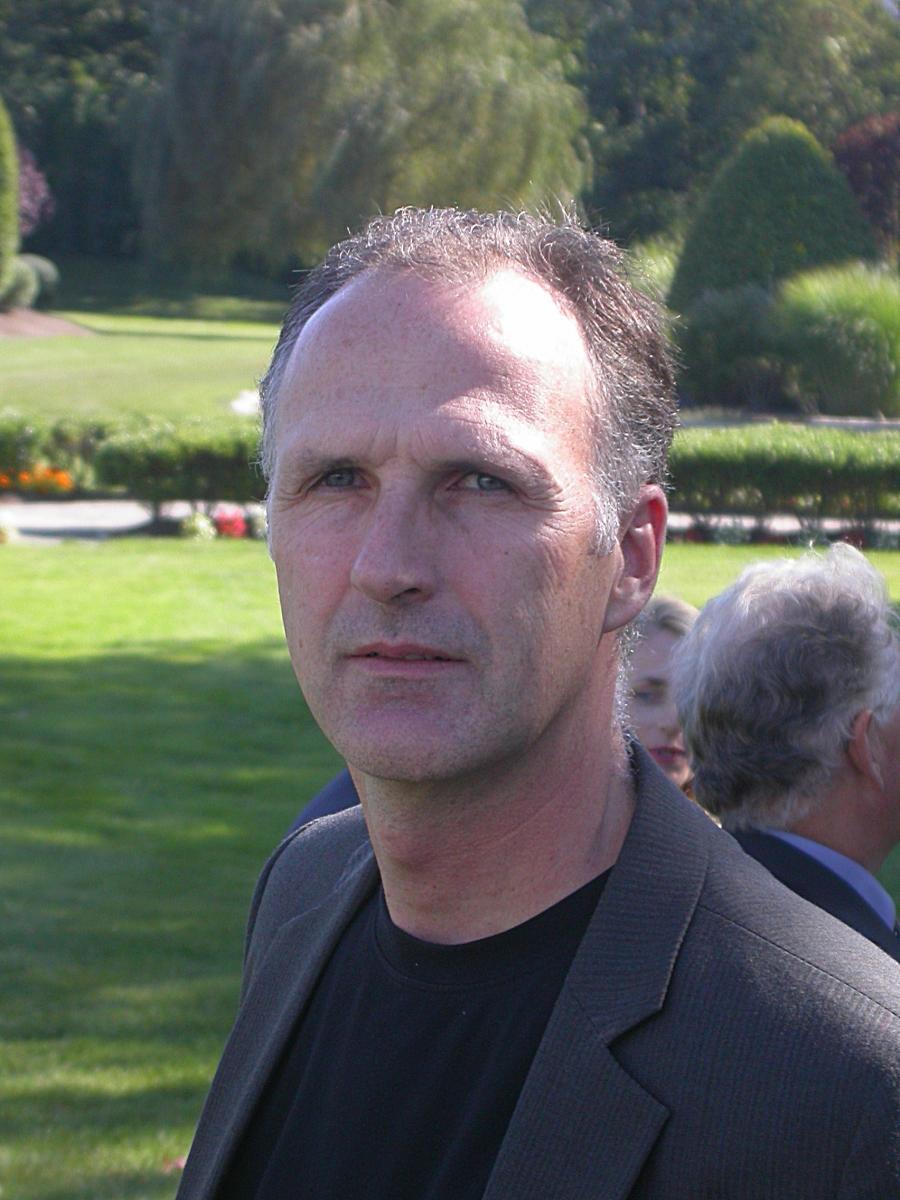
Michel Desjardins is the founder and President of Consortia Development Group, a Moncton-based community research and consulting firm.
Fluent in three languages (French, English, Spanish), Michel has over 25 years of experience in public, non-profit and private organizations. He has worked in senior leadership positions at the New Brunswick Association of Nursing Homes and the Greater Moncton Chamber of Commerce. He has also worked as the Premier of New Brunswick's Senior Economic and Social Policy Advisor. As a consultant, Michel Desjardins specializes in community research, organisational development and writing.
Michel is a dedicated volunteer, serving on many local and national boards. Among others, he completed two terms as Vice-chair of Canada World Youth and as President of Petitcodiac Riverkeeper. He co-founded Post Carbon Greater Moncton, an organization dedicated to reducing the community's reliance on fossil fuels. He holds a three-year general bachelors degree (Economics) from Ottawa University and a Juris Doctor degree from L'Université de Moncton.

355 Hillsborough Road
Riverview, New Brunswick E1B 1S5
Tel: 506-387-7977
Fax: 506-387-7389
E-mail: information@transaqua.ca
Bruno Gélinas-Faucher
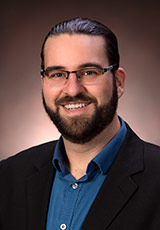
Bruno Gélinas-Faucher joins UNB Law from the Université de Moncton, where he has been an Assistant Professor since 2022. He is a doctoral candidate at the University of Cambridge, where he was a Commonwealth Scholar. Prof. Gélinas-Faucher received an LL.M. with First-Class Honours, also from the University of Cambridge.
He clerked for the Hon. Thomas Cromwell at the Supreme Court of Canada, and was a Judicial Fellow at the International Court of Justice. He received civil and common law degrees from the University of Ottawa, both summa cum laude. Prof. Gélinas-Faucher’s teaching and research interests include public international law and dispute resolution. Active in public interest litigation, he has appeared as counsel at all levels of court, including the Supreme Court of Canada.
702 Main Street, Suite 5, Petit-Rocher, NB E8J 1V1
(506) 783-4205
ac.bnas@ofni
Ali Chaisson
GENERAL MANAGER
With a bachelor's degree in social sciences, specializing in political science, from the University of Moncton, Mr. Chaisson has spent most of his career working for the Francophone community in Newfoundland and Labrador and across Canada. A native of Cape St. George, Newfoundland and Labrador, Ali has expertise in Canadian politics and strategic studies, with a particular interest in the Canadian Charter of Rights and Freedoms and its impact on minorities. Mr. Chaisson also has extensive volunteer experience with Francophone organizations such as the Fédération de la jeunesse canadienne-française (French Canadian Youth Federation), the Société nationale de l'Acadie (Secretary-Treasurer from 2009 to 2016), and worked for several years in the oil industry. An avid traveler, he is an amateur cook who appreciates fine food and wine. He enjoys hiking and jogs out of necessity.
The SANB appears for the first time before the Standing Committee on Official Languages of the Legislative Assembly
Petit-Rocher, New Brunswick, Tuesday, May 19, 2026 — The Société de l'Acadie du Nouveau-Brunswick (SANB) appeared before the Standing Committee on Official Languages of the New Brunswick Legislative Assembly on Tuesday, May 19, 2026, at 1 p.m., as part of the review of the New Brunswick Official Languages Act. This was the SANB's first appearance before this committee since its creation.
The SANB had 20 minutes to present eight recommendations relating in particular to the language of work, care homes, the Commissioner of Official Languages, immigration, related amendments to other laws, the implementation of the Act and the improvement of services and communications with the public.
These recommendations, while not exhaustive, aim to modernize the Official Languages Act and better protect the vitality of Francophone communities in New Brunswick.
“This review of the Act represents an important opportunity to advance real equality between the two linguistic communities of the province. For us, remaining inactive is not an option, because when we stop moving forward on official languages, it is the Francophone communities that suffer the consequences,” says SANB President Nicole Arseneau-Sluyter.
The creation of this permanent committee was in fact part of the demands made by the SANB for several years, since 2017, in order to allow a real political debate on the linguistic issues affecting our province.
For the SANB, this first appearance before the Standing Committee on Official Languages marks an important step. The organization considers this committee an essential tool for ensuring that the realities and concerns of Acadian and Francophone civil society are heard. However, we believe that the role and operation of the committee should be formally incorporated into the Official Languages Act to define its role and enable it to fulfill its function effectively.
-30-
For more information or to arrange an interview, please contact:
Ulrika Lucia Obama
Director of Communications at SANB
communications@sanb.ca
Cell phone: 506-233-5624
SANB 2026 Presidential Election: Candidate Biography
Petit-Rocher (New Brunswick), Monday, April 27 – The electoral committee of the Société de l'Acadie du Nouveau-Brunswick (SANB) announces to members that only one candidacy was received following the closing of the call for nominations for the presidency on April 13, 2026, namely that of Mr. Gérald Arseneault.
The nomination was received within the prescribed time limits and was deemed valid by the electoral committee. Gérald Arseneault will therefore be elected by acclamation at the 53rd Annual General Meeting of the SANB, which will take place on June 14, 2026 at the Centre Maillet in Edmundston.
To better understand his aspirations for the organization representing Acadians and Francophones in New Brunswick for the next two years, please find below the content of his application letter:
Originally from Kedgwick and a resident of Petit-Rocher, Gérald Arseneault is running for president of the SANB with a deep commitment to the French language, Acadian culture, and the defense of linguistic rights. A deeply engaged Acadian, he has dedicated over thirty years to advancing the Francophonie, education, and community development in New Brunswick.
A graduate of the University of Moncton in physical education, Gérald Arseneault began his career as a teacher before moving into leadership positions. His nearly thirty years of teaching and experience in school administration have allowed him to develop a deep understanding of the challenges related to education in a minority Francophone community.
His involvement in the community is extensive and deeply rooted. For over three decades, he has chaired various associations, served on numerous boards of directors, and contributed to community, educational, and cultural initiatives across the province.
As part of his candidacy, Gérald Arseneault aims to act as a bridge between Acadian communities, organizations, and political bodies in New Brunswick. He is counting on a strong, credible, and proactive representation of collective interests, as well as on strengthening cohesion between the province's Acadian and Francophone communities.
Its priorities include the defense and promotion of the French language, active and visible representation with governments, support for initiatives promoting cultural and educational vitality, and strengthening collaboration between the various Acadian communities.
With a background rooted in education, culture and community leadership, Gérald Arseneault wishes to contribute to increasing the visibility, cohesion and influence of the Acadian community, both within New Brunswick and beyond.
“Acadian to the core, I want to be a strong bridge between the communities, the non-profit sector, and the political institutions of New Brunswick. I am ready to dedicate all my energy and heart to this role.” — Gérald Arseneault
If you are not already a member of SANB, please register before May 14, 2026 in order to be able to exercise your right to vote in the board elections.
To join SANB, follow this link: www.sanb.ca/inscription . Become a member, get involved, it's free and rewarding!
We encourage you to stay informed by following the news from your organization. Your active participation is crucial to the success of this process.
Important dates to remember:
- Become a member before: May 14, 2026 to have voting rights.
- SANB's 53rd Annual General Meeting Ceremony: June 12, 2026
- Annual general meeting and inauguration of the president: Sunday, June 14, 2026.
-30-
For more information or to arrange an interview, please contact:
Ulrika Lucia Obama
Director of Communications at SANB
communications@sanb.ca
Cell phone: 506-233-5624
Written briefs sought by standing committee on official languages
Release
Legislative Assembly of New Brunswick
February 17, 2026
FREDERICTON (GNB) – The standing committee on official languages is inviting written briefs from the public as it begins the first phase of a consultation exercise.
The all-party committee has been mandated by the house to undertake a review of the Official Languages Act and recommendations in the Report of the 2021 Review of the Official Languages Act of New Brunswick, and to present its recommendations to the legislative assembly by Dec. 31.
The committee is seeking opinions on the implementation of the 2021 report and any factors since its publication that should be taken into account when revising the act.
“The Official Languages Act is fundamental to who we are as New Brunswickers,” said Beausoleil-Grand-Bouctouche-Kent MLA Benoît Bourque, who chairs the committee. “As we begin this review, our committee wants to hear directly from citizens, organizations and stakeholders across the province. The 2021 report sets out important recommendations, and this consultation is an opportunity to reflect on the progress made and the work still ahead. I encourage New Brunswickers to share their perspectives and help ensure our Official Languages Act continues to protect and strengthen our province’s unique bilingual character for generations to come.”
Briefs will be accepted until April 8. It is recommended that they be original submissions and not exceed 1,000 words. They may be submitted by email to leg-consultations@legnb.ca or by mail to: Office of the Clerk, Legislative Assembly of New Brunswick, P.O. Box 6000, Fredericton, N.B., E3B 5H1.
More information about the committee and its work is available online.
Related topics
Media Contact(s)
John-Patrick McCleave, clerk assistant and clerk of committees, Legislative Assembly of New Brunswick, 506-453-6215, jp.mccleave@legnb.ca.
Kate Elman Wilcott MLA Saint John West-Lancaster's Post

'/%3E%3Cpath d='M16.0001 7.9996c0 4.418-3.5815 7.9996-7.9995 7.9996S.001 12.4176.001 7.9996 3.5825 0 8.0006 0C12.4186 0 16 3.5815 16 7.9996Z' fill='url(%23paint1_radial_15251_63610)'/%3E%3Cpath d='M16.0001 7.9996c0 4.418-3.5815 7.9996-7.9995 7.9996S.001 12.4176.001 7.9996 3.5825 0 8.0006 0C12.4186 0 16 3.5815 16 7.9996Z' fill='url(%23paint2_radial_15251_63610)' fill-opacity='.5'/%3E%3Cpath d='M7.3014 3.8662a.6974.6974 0 0 1 .6974-.6977c.6742 0 1.2207.5465 1.2207 1.2206v1.7464a.101.101 0 0 0 .101.101h1.7953c.992 0 1.7232.9273 1.4917 1.892l-.4572 1.9047a2.301 2.301 0 0 1-2.2374 1.764H6.9185a.5752.5752 0 0 1-.5752-.5752V7.7384c0-.4168.097-.8278.2834-1.2005l.2856-.5712a3.6878 3.6878 0 0 0 .3893-1.6509l-.0002-.4496ZM4.367 7a.767.767 0 0 0-.7669.767v3.2598a.767.767 0 0 0 .767.767h.767a.3835.3835 0 0 0 .3835-.3835V7.3835A.3835.3835 0 0 0 5.134 7h-.767Z' fill='%23fff'/%3E%3Cdefs%3E%3CradialGradient id='paint1_radial_15251_63610' cx='0' cy='0' r='1' gradientUnits='userSpaceOnUse' gradientTransform='rotate(90 .0005 8) scale(7.99958)'%3E%3Cstop offset='.5618' stop-color='%230866FF' stop-opacity='0'/%3E%3Cstop offset='1' stop-color='%230866FF' stop-opacity='.1'/%3E%3C/radialGradient%3E%3CradialGradient id='paint2_radial_15251_63610' cx='0' cy='0' r='1' gradientUnits='userSpaceOnUse' gradientTransform='rotate(45 -4.5257 10.9237) scale(10.1818)'%3E%3Cstop offset='.3143' stop-color='%2302ADFC'/%3E%3Cstop offset='1' stop-color='%2302ADFC' stop-opacity='0'/%3E%3C/radialGradient%3E%3ClinearGradient id='paint0_linear_15251_63610' x1='2.3989' y1='2.3999' x2='13.5983' y2='13.5993' gradientUnits='userSpaceOnUse'%3E%3Cstop stop-color='%2302ADFC'/%3E%3Cstop offset='.5' stop-color='%230866FF'/%3E%3Cstop offset='1' stop-color='%232B7EFF'/%3E%3C/linearGradient%3E%3C/defs%3E%3C/svg%3E)
'%3E%3Cpath d='M15.9963 8c0 4.4179-3.5811 7.9993-7.9986 7.9993-4.4176 0-7.9987-3.5814-7.9987-7.9992 0-4.4179 3.5811-7.9992 7.9987-7.9992 4.4175 0 7.9986 3.5813 7.9986 7.9992Z' fill='url(%23paint0_linear_15251_63610)'/%3E%3Cpath d='M15.9973 7.9992c0 4.4178-3.5811 7.9992-7.9987 7.9992C3.5811 15.9984 0 12.417 0 7.9992S3.5811 0 7.9986 0c4.4176 0 7.9987 3.5814 7.9987 7.9992Z' fill='url(%23paint1_radial_15251_63610)'/%3E%3Cpath d='M7.9996 5.9081c-.3528-.8845-1.1936-1.507-2.1748-1.507-1.4323 0-2.4254 1.328-2.4254 2.6797 0 2.2718 2.3938 4.0094 4.0816 5.1589.3168.2157.7205.2157 1.0373 0 1.6878-1.1495 4.0815-2.8871 4.0815-5.159 0-1.3517-.993-2.6796-2.4254-2.6796-.9811 0-1.822.6225-2.1748 1.507Z' fill='%23fff'/%3E%3C/g%3E%3Cdefs%3E%3CradialGradient id='paint1_radial_15251_63610' cx='0' cy='0' r='1' gradientUnits='userSpaceOnUse' gradientTransform='matrix(0 7.9992 -7.99863 0 7.9986 7.9992)'%3E%3Cstop offset='.5637' stop-color='%23E11731' stop-opacity='0'/%3E%3Cstop offset='1' stop-color='%23E11731' stop-opacity='.1'/%3E%3C/radialGradient%3E%3ClinearGradient id='paint0_linear_15251_63610' x1='2.3986' y1='2.4007' x2='13.5975' y2='13.5993' gradientUnits='userSpaceOnUse'%3E%3Cstop stop-color='%23FF74AE'/%3E%3Cstop offset='.5001' stop-color='%23FA2E3E'/%3E%3Cstop offset='1' stop-color='%23FF5758'/%3E%3C/linearGradient%3E%3CclipPath id='clip0_15251_63610'%3E%3Cpath fill='%23fff' d='M-.001.0009h15.9992v15.9984H-.001z'/%3E%3C/clipPath%3E%3C/defs%3E%3C/svg%3E)

Canadian Parents for French-New Brunswick
Canadian Parents for French (CPF) is a national network of volunteers which values French as an integral part of Canada and is dedicated to the promotion and creation of French-second-language learning opportunities for young Canadians. CPF New Brunswick is a non-profit charitable organization and is the provincial branch of the national organization, Canadian Parents for French.
CPF New Brunswick has numerous local Chapters across the province which organize and deliver activities that support FSL learning both inside and outside of the classroom. CPF holds French immersion camps each summer for students to practice their French out of the school environment.
The Canadian Parents for French (New Brunswick) website is a great resource for a variety of useful information and resources to support all Canadians including parents, educators and students. Visit the website for information regarding research, tools, programs and tutors.
Amy Boudreau Chief Operating Officer

Amy joined LearnSphere in 2011, as coordinator for an international development project. That role evolved into project management on both international and domestic fronts. In 2019, Amy was promoted to Chief Operating Officer. Fully bilingual and well-versed in results-based management, Amy has extensive experience managing the complete project cycle, from design and development through to implementation and reporting.
Prior to joining LearnSphere, Amy worked as a Protocol Officer for the Government of Saskatchewan. In that role, she orchestrated high-profile events and ceremonies and was responsible for coordinating and executing official visits to the province by various visiting dignitaries and diplomats.
Amy holds a Bachelor of Arts with a Major in French from the University of Regina. While completing her B.A., Amy studied abroad for a year, in Montpellier, France, in order to perfect her French.
Little known fact about Amy:
At 16, Amy moved from her native Regina, SK to Winnipeg, MB to pursue her dream of becoming a professional ballerina with the Royal Winnipeg Ballet Company. She danced professionally and toured internationally before quitting at the age of 20. Although that particular chapter of her life is closed, she still dabbles in dance.
Maxime O. Bourgeois

506 758 9315
maxime@bourgeois-chiasson.com
491 Centrale Street
Memramcook NB E4K 3R3
Mr. Bourgeois is chairman of the Memramcook Chamber of Commerce, and member of the Board of Directors of Dialogue New Brunswick. Furthermore, he is the president and chief executive director or Synergy Fr Inc., a company at the service of francophone communities and associations.
Liberals win key ridings, lose big one in eastern New Brunswick
Kevin Vickers loses, Robert Gauvin wins and the Greens return
CBC News · Posted: Sep 15, 2020 1:52 AM EDTMemramcook-Tantramar
The band's back together for the Greens, who will see the same three MLAs return to the New Brunswick legislature. In one of the last ridings to be called, Megan Mitton was elected with 3,425 votes, a slight improvement over 2018.
 Green Megan Mitton was re-elected in Memramcook-Tantramar. (CBC News file photo)
Liberal Maxime Bourgeois led in the riding for a portion of Monday night, but ultimately fell short with 2,902 votes. PC Carole Duguay was third with 1,678 votes.
Heather Collins, who was dropped from the Alliance slate last week for offensive online comments about Muslims, received 192 votes and Independent Jefferson George Wright received 34 votes.
Memramcook
| Memramcook | |||
|---|---|---|---|
| Position to fill | # Positions to fill | # Candidates | Status |
| Mayor | 1 | 1 | (No Election) |
| Councillor | 6 | 8 | (Election) |
| Memramcook | |
|---|---|
| Name | Optional Contact Information |
| Mayor (1 to elect) | |
| Maxime O. Bourgeois (inc./sort.) (accl.) | Telephone : 506-758-9315 Email : maxime.o.bourgeois@gmail.com |
| Councillor (6 to elect) | |
| Marc Boudreau (inc./sort.) | Telephone : 506-381-3260 Email : mpboudreau@hotmail.ca |
| Jean Cormier | Telephone : 506-852-0091 Email : jean@jeancormier.ca |
| Robert Cormier | Telephone : 506-866-1995 Email : Robcorm59@gmail.com |
| Mariane Cullen (inc./sort.) | Telephone : 506-384-8986 Email : mariane_cullen@hotmail.com |
| Normand Dupuis (inc./sort.) | Telephone : 506-852-1015 Email : nhdupuis@gmail.com |
| Etienne Gaudet (inc./sort.) | Telephone : 506-962-7770 Email : eg811@hotmail.com |
| Gille LeBlanc | Telephone : 506-874-8916 Email : gille1965@hotmail.com |
| Yanic Vautour (inc./sort.) | Telephone : 506-875-0932 Email : info@yanicvautour.com |

Jonathan Chiasson
Partner
Native of Saint-Simon, in the Acadian Peninsula, Jonathan Chiasson obtained a Bachelor of Music and a Health Sciences Diploma before pursuing his studies in law at Université de Moncton. During his years at the law faculty, Mr. Chiasson maintained a high academic performance, which earned him several merit scholarships and prizes. His devotion to his studies also allowed him to partake in the Laskin Moot Court Competition, a national competition in administrative and constitutional law. Furthermore, he had the honor to work under the supervision of Madam Justice Kathleen A. Quigg of the Court of Appeal of New Brunswick for the writing of a research paper in family law.
Mr. Chiasson was admitted to the Law Society of New Brunswick in June 2015. He offers legal services in French and in English.
Our Vision: Leading Excellence in Long Term Care.
Our Values: Innovation - Collaboration - Responsiveness - Inclusiveness – Accountability
In an environment of trust, respect and integrity.
Our Mission: To lead member homes through a united voice advocating excellence in Long Term Care and service delivery in New Brunswick.
Please see the Strategic Plan.
Over the coming months, our team will be working diligently to develop a new three-year strategic plan that reflects and advances our vision, values, and mission.
NBANH employees and the Board of Directors work to provide the following member services:
Communication
NBANH strives to provide on-going two-way communication with our members.
Networking
NBANH hosts and supports various events. We maintain a membership in the Canadian Association for Long Term Care (CALTC).
Member Benefits
NBANH oversees the management of the pension plans, and the health and benefits plan for member homes. In addition, we coordinate the Wellness Program, which includes the Employee and Family Assistance Program.
Clinical Innovation
We support nursing homes to improve the quality of life for their residents; including support for best practices such as the Appropriate Use of Antipsychotics initiative and the data driven improvements made possible by the interRAI LTCF. We continue to support sustainability of these improvements.
Legal and Labour Relations Services
On behalf of the nursing home sector, NBANH negotiate employment contracts, act in an advisory role for HR Management and provide interpretation of relevant legislation for member homes.
Education
NBANH host an Annual General Meeting and Convention that has an education focus and facilitates various education opportunities annually.
Awards
NBANH gives awards at the Annual General Meeting recognizing our member’s dedication to excellence.
OUR TRUSTED TEAM

Richard Losier, Chief Executive Officer (CEO)
Justin Wies, Chief Operating Officer (COO) - Legal Counsel
Gilles A. Gauthier, Director of Communications & Media Liaison
Melanie McCashion, Wellness Coordinator
Monica Doyle, Legal Counsel
Nicole Delamere, Executive Assistant
Tom Mann, Negociation consultant (interim)
Mike Keating, Legal Counsel (interim)
IN THE NEWS
Fredericton, NB | October 29th, 2024 - The Board of Directors of the New Brunswick Association of Nursing Homes (NBANH) is pleased to announce the selection of Richard Losier as our Chief Executive Officer. His appointment was effective on the 22nd of October 2024.
Pauline Roy, President of the New Brunswick Association of Nursing Homes says “Mr. Losier’s extensive experience in senior management in the New Brunswick health care sector will be very much an asset as we move forward. NBANH is extremely pleased to tap into that experience and welcome Mr. Losier to our sector.”
With over 25 years of progressive leadership in the New Brunswick healthcare landscape, Richard brings a wealth of experience. He spent more than a decade at Vitalité Health Network, where he held multiple roles including Chief Operating Officer for Zone 1B and Vice President of Professional Practice, Research, and Academic Affairs. Additionally, he served as the CEO of EM/ANB for five years. Most recently, he was the Member of the Legislative Assembly for Dieppe from 2023 until this year, when he chose not to seek re-election.
Mr. Losier states “As our population ages, nursing homes play an increasingly important role. After lifetimes contributing to and building our society, it is society’s turn to give back to our residents. This is very important work and I am excited and looking forward to work with the members of the NBANH.”
Justin M. Wies 206-1133 Regent St. Fredericton, New Brunswick E3B 3Z2
 Shirley C. MacLean, K.C.
Commissioner of Official Languages for New Brunswick
Shirley C. MacLean is from Baddeck, Cape Breton. After obtaining a Bachelor of Arts degree from St. Francis Xavier University in 1984, she attended Laval University in Quebec City to study French.
In 1990, Shirley MacLean obtained her law degree from University of New Brunswick. She practised law with Hanson Hashey in Fredericton and then joined the Law Society of New Brunswick in 1994 as the Director of Admissions. In 2003, Ms. MacLean became the Society’s Assistant Executive Director and Registrar of Complaints.
In December 2013, Shirley MacLean was appointed Queen’s Counsel. In 2016 Ms. MacLean became the Chair of the Mental Health Tribunal in Fredericton since 2016.
Very involved in her community, Shirley MacLean is a board member of the Healing and Cancer Foundation, member of a patent navigator pilot project in oncology with Horizon Health, is a member of a Syrian Refugee Sponsorship Committee. She is a board member of the New Brunswick Highland Games Festival, and she has started playing tenor drum with a local competition pipe band.
Shirley MacLean was appointed Commissioner of on January 2, 2020, for a seven-year term, she is the third person and the first anglophone to hold this position.
The Commissioner of Official Languages for New Brunswick is an independent officer of the Legislative Assembly. Her role is to investigate, report on and make recommendations with regard to compliance with the Official Languages Act. She is also responsible for the promotion of the advancement of both official languages in the province.
Office of the Commissioner of Official Languages for New Brunswick
440 King StreetKing Tower, #646
Fredericton NB E3B 5H8
Telephone (TYY): 506-444-4229
Toll free (TYY): 1-888-651-6444
Facsimile: 506-444-4456
Email: commissioner@officiallanguages.nb.ca
Benoît Bourque
- Deputy Speaker of the Legislative Assembly
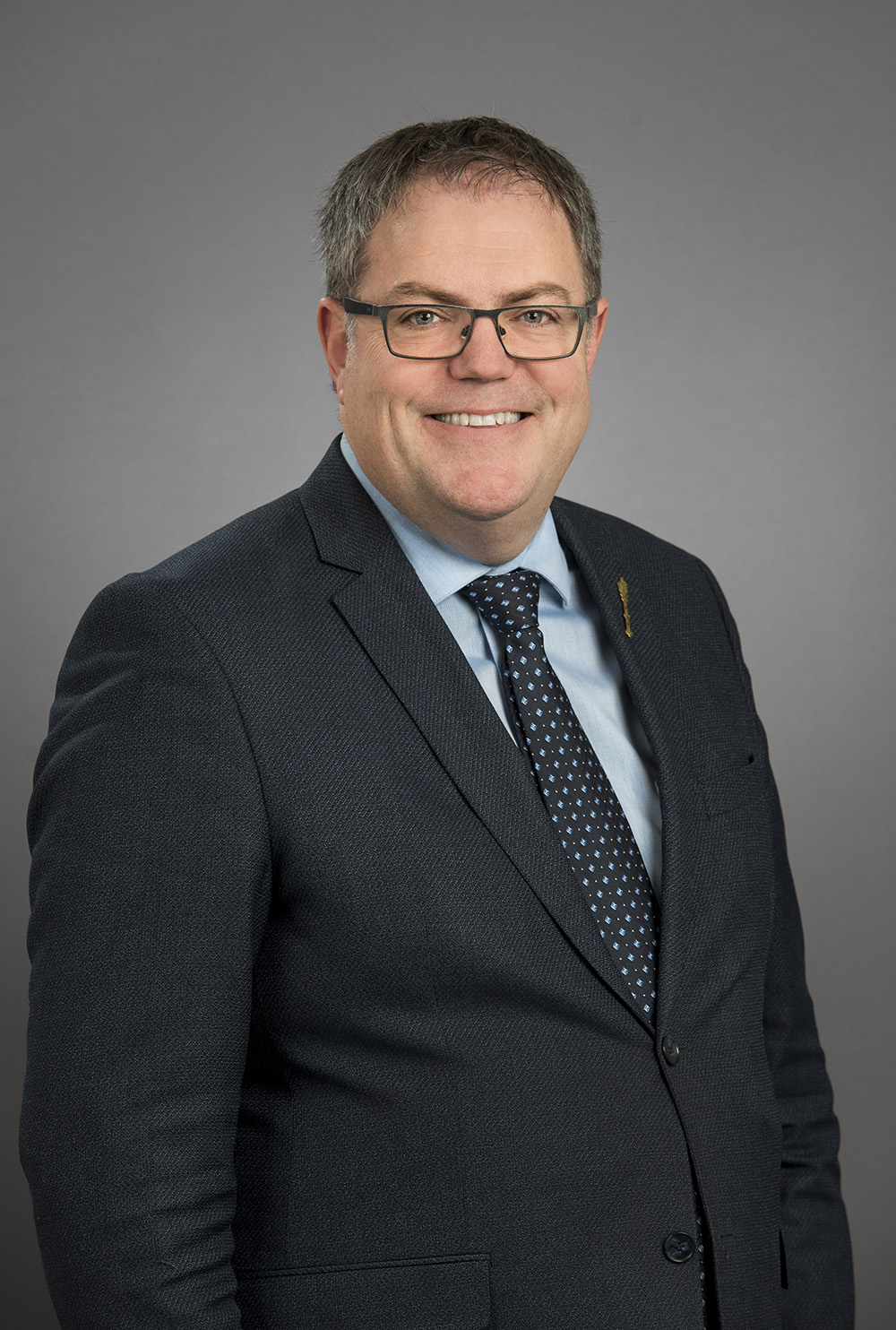
Benoît Bourque was first elected to the Legislative Assembly in the September 2014 provincial election, and he was re-elected in 2018 and 2020 as member for Kent South. He was re-elected in 2024 as member for the new riding of Beausoleil—Grand-Bouctouche—Kent. He was Minister of Health from September 2017 to November 2018. He was also Minister responsible for Service New Brunswick from May 2018 to November 2018, in addition to briefly (October and November 2018) serving as Acting Minister of Aquaculture and Fisheries. In 2017, he was Chair of the Select Committee on Cannabis. He also serves or has served on many standing committees and was appointed Chair of the new Standing Committee on Official Languages in 2024.
Mr. Bourque has a bachelor’s degree in secondary education from the Université de Moncton and a master’s degree in international relations from the Université Laval. He has considerable training and teaching experience, which he gained as a school teacher, a facilitator for various workshops and training sessions, and a lecturer at the Université de Moncton.
He worked for about 15 years in international relations and cooperation in the public, parapublic, and private sectors. He was, among other things, director of the international relations office at the Université de Moncton from 2003 to 2012 and director of Concordia International at Concordia University, in Montreal, in 2012. In addition to visiting and working in about 30 countries, he worked for an extended period in Indonesia, Tunisia, and Romania.
Mr. Bourque lives in Grand-Bouctouche, New Brunswick, where he has a strong record of community service.
Constituency Office
| Mainline Phone | (506) 743-0335 |
| Address |
30 Évangéline Street, Centre J.K. Irving Bouctouche E4S 3E4 |
Committee
- Standing Committee on Economic Policy
- Standing Committee on Estimates and Fiscal Policy
- Legislative Administration Committee
- Standing Committee on Procedure, Privileges and Legislative Officers
- Standing Committee on Social Policy
- Standing Committee on Official Languages
Kate Wilcott
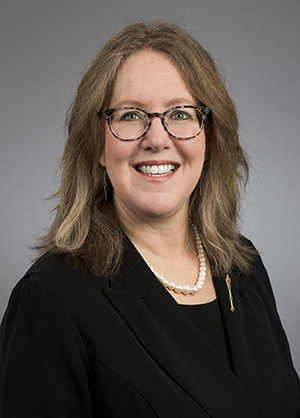
Kate Elman Wilcott was born and raised in Saint John West-Lancaster and was elected as MLA for the riding in October 2024. She brings with her a deep understanding of life in the riding and a passion for advocacy and problem solving.
Previous to serving as the MLA, Ms. Wilcott was the Arts and Culture Coordinator for the City of Saint John, and a recognized leader in community development within the region as a result of her 25-year career as a teaching artist, producer, director, and facilitator. She is the founder of a registered charity that provided arts programming for children, and in this leadership role was able to provide opportunities to thousands of youth and their families. Her professional and volunteer experience includes policy development, lecturing at universities, developing public safety protocol, organizing community events, and advocacy. She has toured with Symphony New Brunswick, facilitated intergenerational programming in schools and seniors’ homes, developed youth mental health initiatives, produced industry videos, acted on stage and film, and has been active in initiatives for Newcomers and ethnocultural communities.
Ms. Wilcott studied at the University of New Brunswick, holds a degree from Dalhousie University and along with her two children are graduates of New Brunswick’s French Immersion Programs, she being part of the inaugural late immersion program. She and her family are passionate about the arts, advocacy for youth and seniors, and building community.
Constituency Office
| Mainline Phone | (506) 643-6978 |
| Address |
640 Manawagonish Road Saint John E2M 3W5 |
| Hours of Operation |
|
Committee
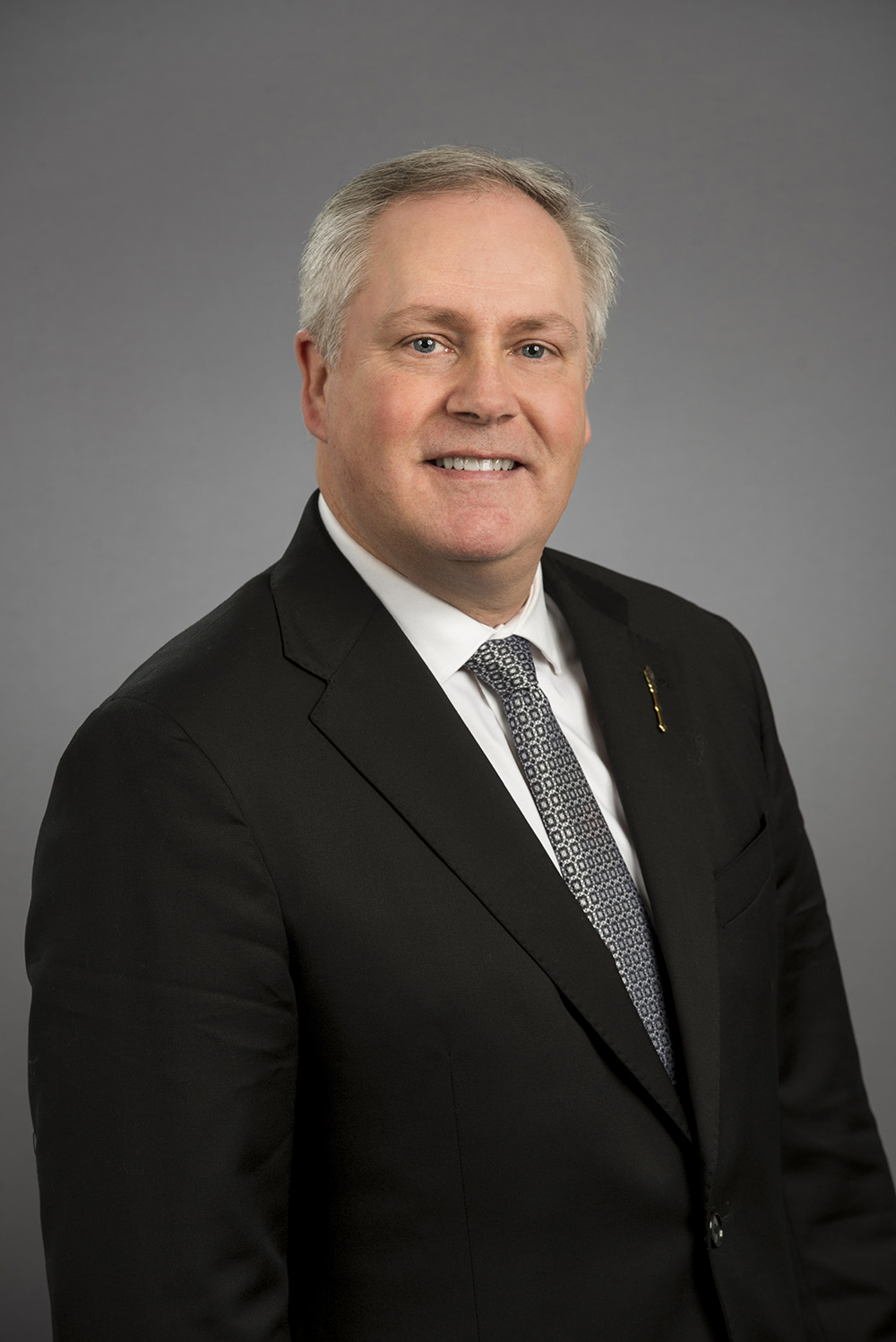
Glen Savoie
- Leader of the Official Opposition
Constituency Office
| Mainline Phone | (506) 658-6333 |
| Address |
8 Stonehammer Court Saint John E2J 0L3 |
Committee
Margaret Johnson
- Official Opposition House Leader
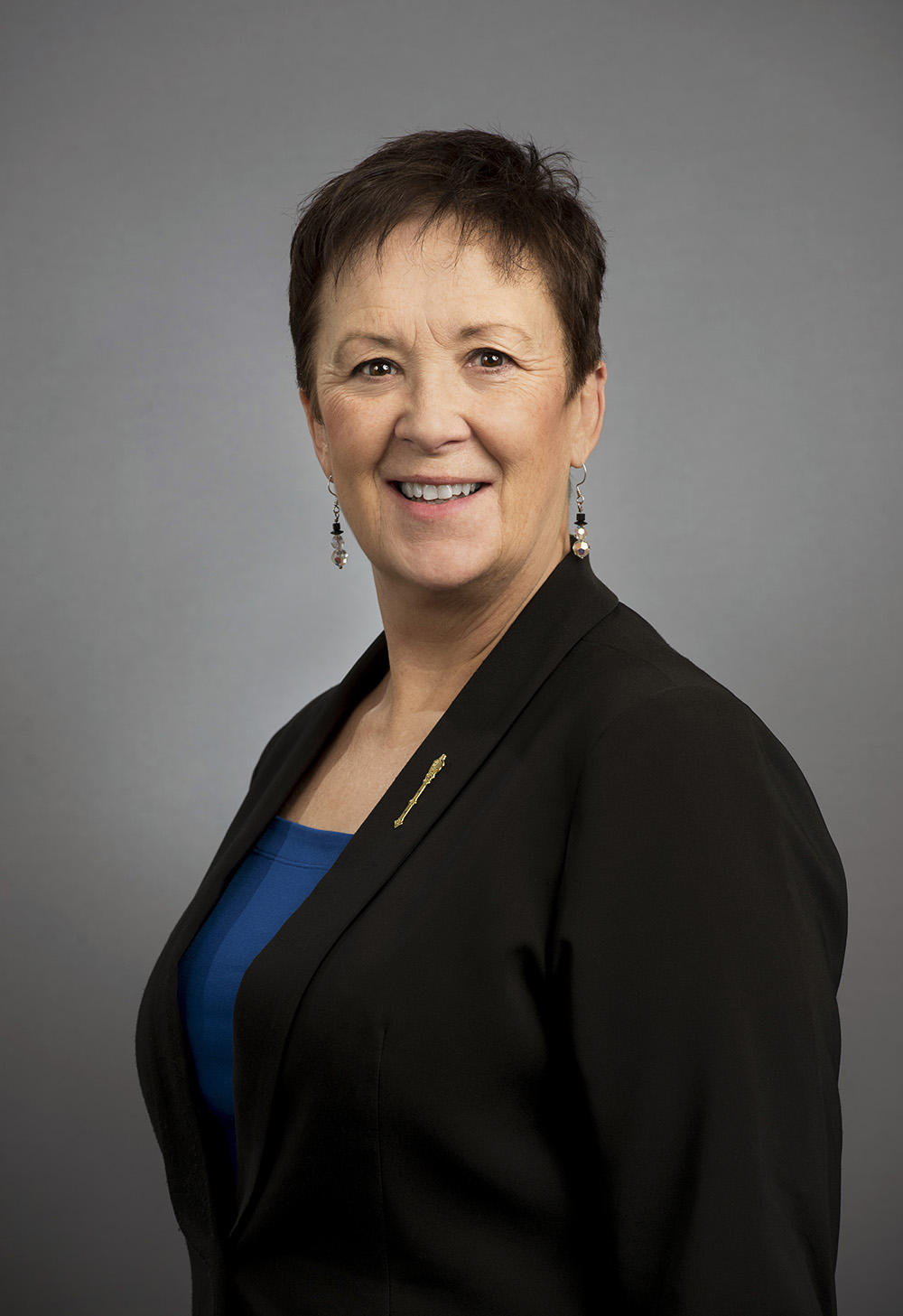
Margaret Johnson was elected for a first time to the 60th Legislative Assembly on September 14th, 2020 for the riding of Carleton-Victoria. She was appointed as the Minister of Agriculture, Aquaculture, and Fisheries on September 29th, 2020.
A resident of Carleton County for nearly five decades, Ms. Johnson was re-elected to represent Carleton-Victoria in 2024.
She is active in her community through teaching Sunday school, leading Sparks and Brownies, fundraising for Children’s Wish and Relay for Life, organizing prom, promoting the arts, being a Rotarian and managing hockey teams.
As a lifelong teacher, Ms. Johnson remains involved in schools after retiring from teaching full time.
Constituency Office
| Mainline Phone | (506) 276-4045 |
| Address |
836 Central Street Centreville E7K 2E7 |
| Hours of Operation | Monday to Friday 8:30 a.m. – 4:30 p.m.
Please note that Monday and Friday are by appointment |
Committee
Constituency Office
| Mainline Phone | (506) 277-6020 |
| Address |
639 Main Street Woodstock E7M 2C7 |
| Hours of Operation |
|
Committee
Hon. Luke Randall
- Minister responsible for Opportunities NB
- Minister responsible for Economic Development and Small Business
- Minister responsible for NB Liquor and Cannabis NB
- Minister responsible for the Regulatory Accountability and Reporting Act
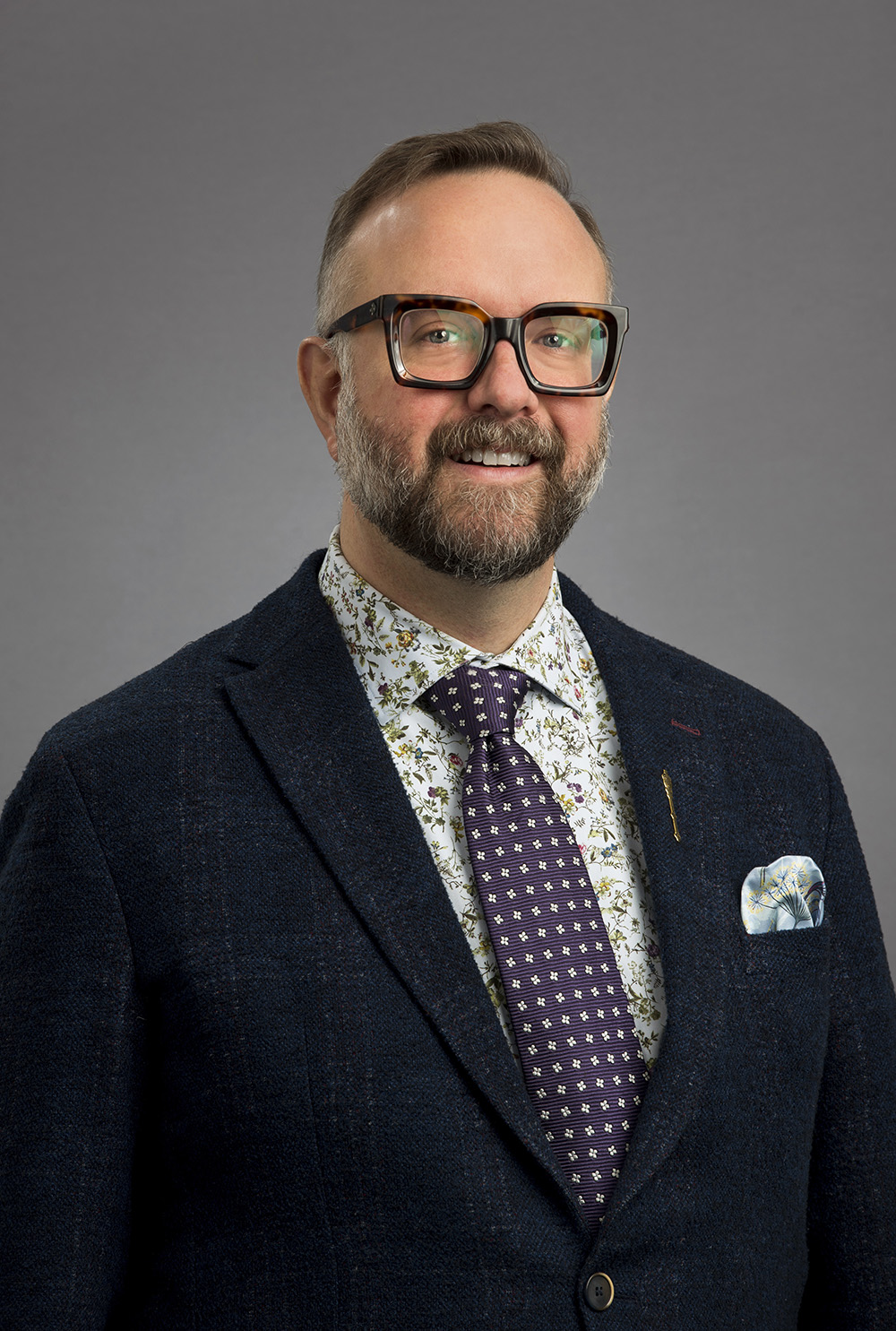
Luke Randall was elected as the MLA for Fredericton North in 2024 and was sworn in as Minister responsible for Opportunities NB, Economic Development and Small Business, NB Liquor and Cannabis NB on November 2.
A lifelong resident of Fredericton's Northside, Mr. Randall has spent his career building and supporting local businesses. At just 18, he opened Endeavours The Artist Shop in downtown Fredericton and later launched ThinkPlay, specializing in board games and specialty toys. In 2008, the two businesses merged under the name Endeavours & ThinkPlay, which continues to thrive today under the leadership of his husband, Tyler.
Beyond his own business, Mr. Randall has been an active advocate for local entrepreneurs. He has mentored new business owners both formally through Futurpreneur Canada and informally, helping them navigate the challenges of entrepreneurship. He has also served on the executive for Downtown Fredericton and played a key role in iAMart, North America’s largest buying group for art material stores, where he contributed as both a committee and executive member, supporting independent retailers across the continent. In addition, he has served on several arts boards, working to strengthen the cultural and creative communities that play a vital role in local economies.
His firsthand experience navigating the challenges of business ownership—from international logistics to financial planning—gives him a unique perspective on economic development. He understands what it takes to build something from the ground up and is committed to ensuring that New Brunswick’s entrepreneurs, creators, and small business owners have the tools they need to succeed.
Mr. Randall remains deeply connected to his community, working to foster strong local economies, champion local businesses, and create opportunities that help New Brunswick grow.
Constituency Office
| Mainline Phone | (506) 260-6326 |
| Address |
150 Cliffe Street Fredericton E3A 0A1 |
Committee
Marco LeBlanc
- Government House Leader
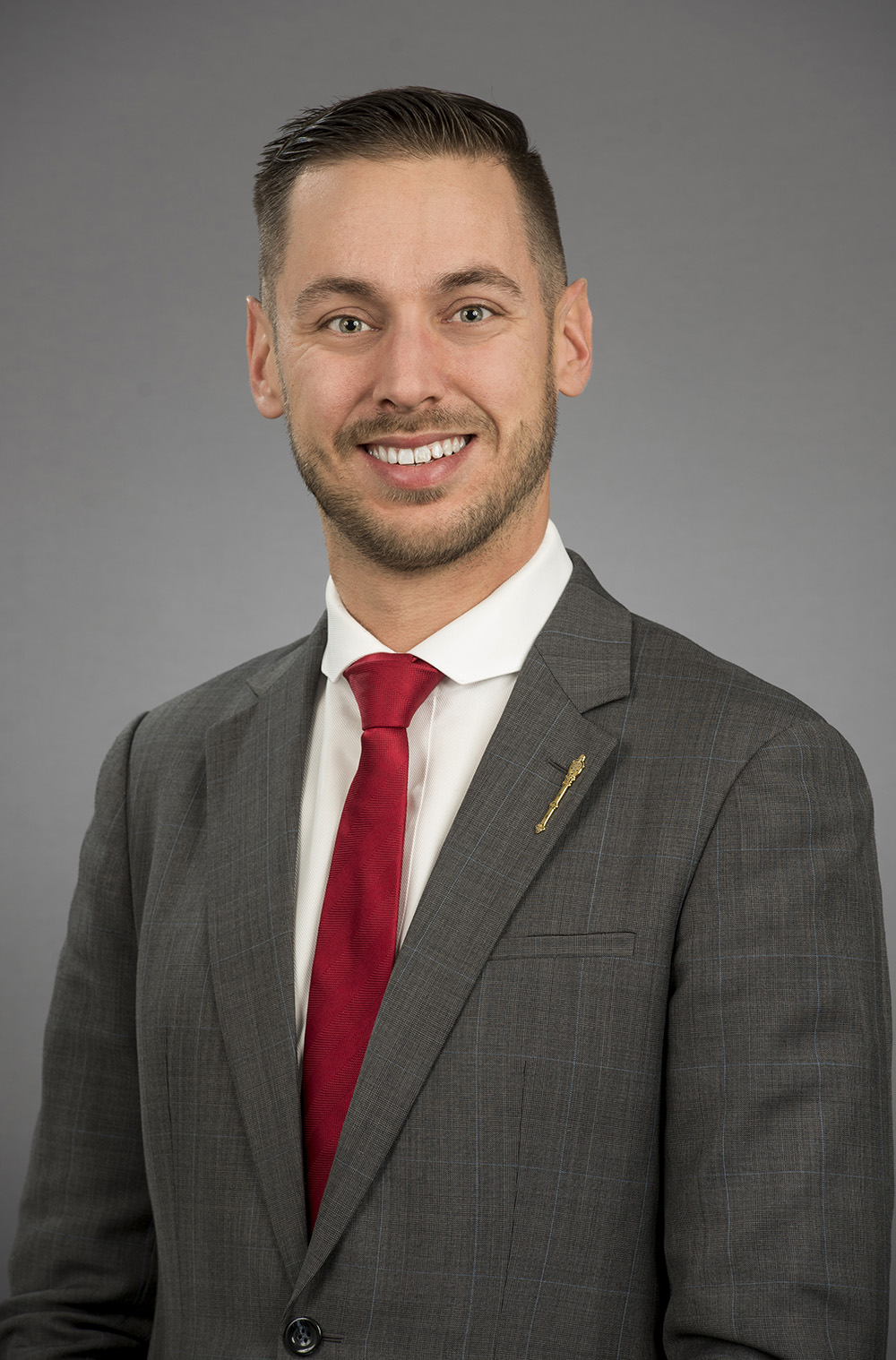
Marco LeBlanc est député provincial de la circonscription de Belle-Baie-Belledune à l’Assemblée législative du Nouveau-Brunswick. Élu pour la première fois lors de l’élection partielle du 24 avril 2023, il a été réélu lors de l’élection générale suivante, obtenant un fort appui de la population de sa circonscription.
Originaire de Petit-Rocher, M. LeBlanc est reconnu pour son engagement profond envers les communautés du nord de la province et pour son approche rigoureuse des enjeux économiques, sociaux et institutionnels. Il cumule plus de dix ans d’expérience au sein des gouvernements provincial et fédéral, où il a occupé divers postes stratégiques en planification, en communications et en relations avec les parties prenantes.
Titulaire d’un baccalauréat en administration des affaires de l’Université de Moncton, il s’est distingué dès ses études par son leadership et son esprit d’initiative. Il a notamment cofondé des organisations étudiantes, participé à des projets entrepreneuriaux et assumé des rôles de direction dans des événements jeunesse à portée provinciale et nationale.
Avant son entrée en politique, M. LeBlanc a agi à titre de conseiller politique auprès de ministres du gouvernement, contribuant à l’élaboration de politiques publiques, à la coordination des travaux parlementaires et à la rédaction de discours stratégiques. Cette expérience lui a permis d’acquérir une compréhension approfondie du fonctionnement de l’État et du processus législatif.
À l’Assemblée législative, il occupe la fonction de leader parlementaire du gouvernement et siège à plusieurs comités permanents, notamment ceux portant sur les changements climatiques, les langues officielles, la politique sociale et la modification des lois. Dans ces rôles, il œuvre à favoriser un dialogue constructif et à faire progresser des politiques axées sur l’intérêt public.
Très présent sur le terrain, M. LeBlanc demeure activement engagé auprès des citoyens, des municipalités, des organismes communautaires et des acteurs économiques de sa région. Il défend avec conviction des priorités telles que l’amélioration de l’accès aux soins de santé, le soutien à l’éducation, la vitalité des communautés francophones et le développement économique durable du nord du Nouveau-Brunswick.
Constituency Office
| Mainline Phone | (506) 252-5258 |
| Address |
702 Principale Street, Suite 227 Petit-Rocher E8J 1V1 |
Committee
- Standing Committee on Climate Change and Environmental Stewardship
- Standing Committee on Law Amendments
- Legislative Administration Committee
- Standing Committee on Procedure, Privileges and Legislative Officers
- Standing Committee on Public Accounts
- Standing Committee on Social Policy
- Standing Committee on Official Languages
Tania Sodhi
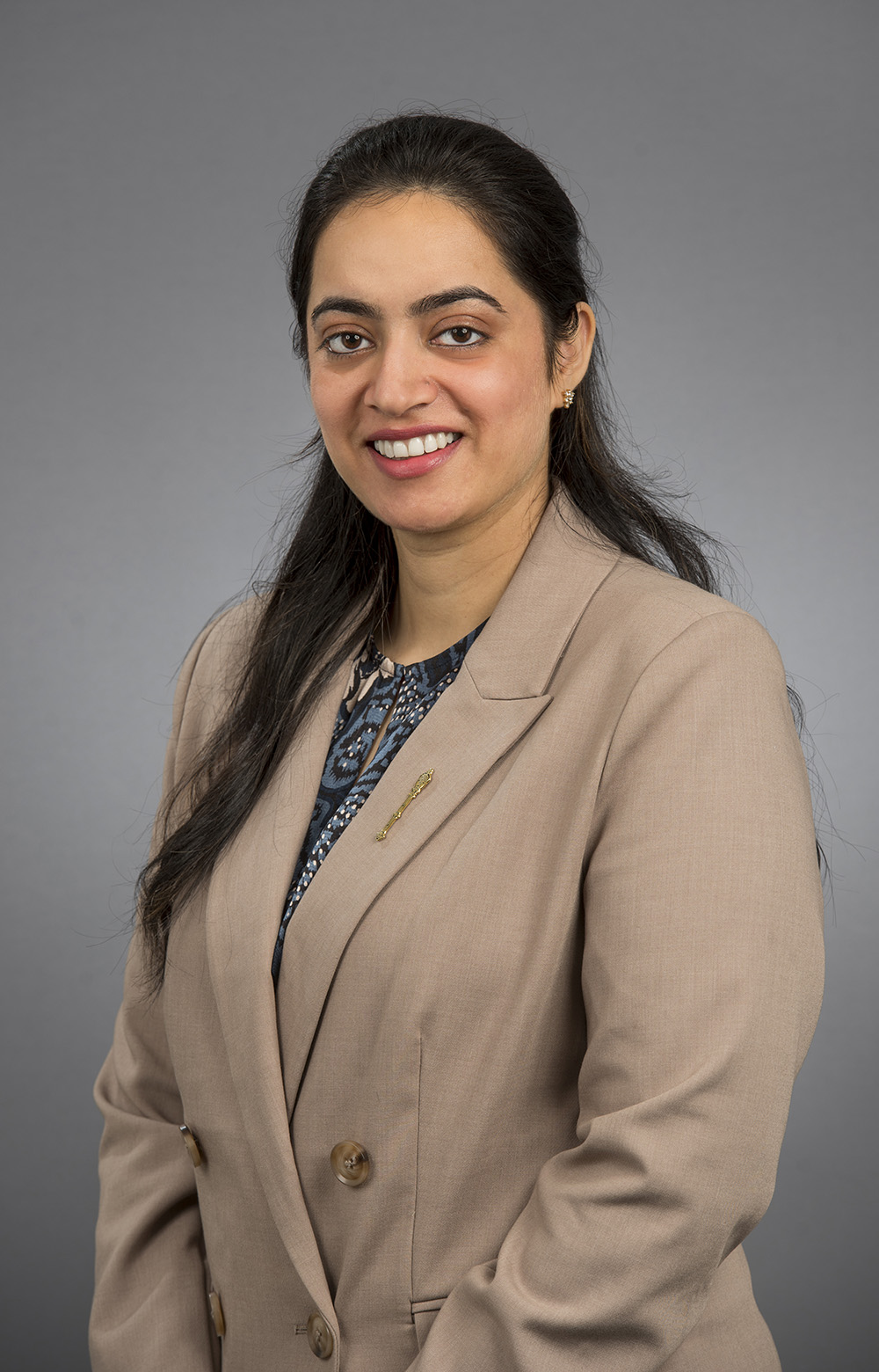
Tania Sodhi was first elected to the Legislative Assembly of New Brunswick to represent the riding of Moncton Northwest in the 2024 provincial election.
As a mother of two young girls, Ms. Sodhi understands the challenges of parenthood and is deeply committed to creating a better future for all families in her community. Ms. Sodhi is not only a successful realtor, giving her profound insights into the housing needs in her community of Moncton Northwest, but she also manages a local daycare, where she nurtures and educates young minds, fostering the next generation of leaders.
Her journey began in India, where she practiced law, bringing valuable professional experience and a diverse perspective to her role in public service. Tania’s unique blend of skills and experiences equips her to be a strong advocate for her community, ensuring that the voices of Moncton Northwest are heard and represented.
As a dedicated community member, Ms. Sodhi works hard to serve the residents of Moncton Northwest and working tirelessly to improve the lives of families in her community
Constituency Office
| Mainline Phone | (506) 233-5991 |
| Address |
1633 Mountain Road, Unit 8B Moncton E1G 1A5 |
| Hours of Operation | Monday to Friday 12 p.m. – 4 p.m. |
Committee
- Standing Committee on Climate Change and Environmental Stewardship
- Standing Committee on Economic Policy
- Standing Committee on Estimates and Fiscal Policy
- Standing Committee on Law Amendments
- Standing Committee on Private Bills
- Standing Committee on Social Policy
- Standing Committee on Official Languages
David Coon
- Leader of the Third Party
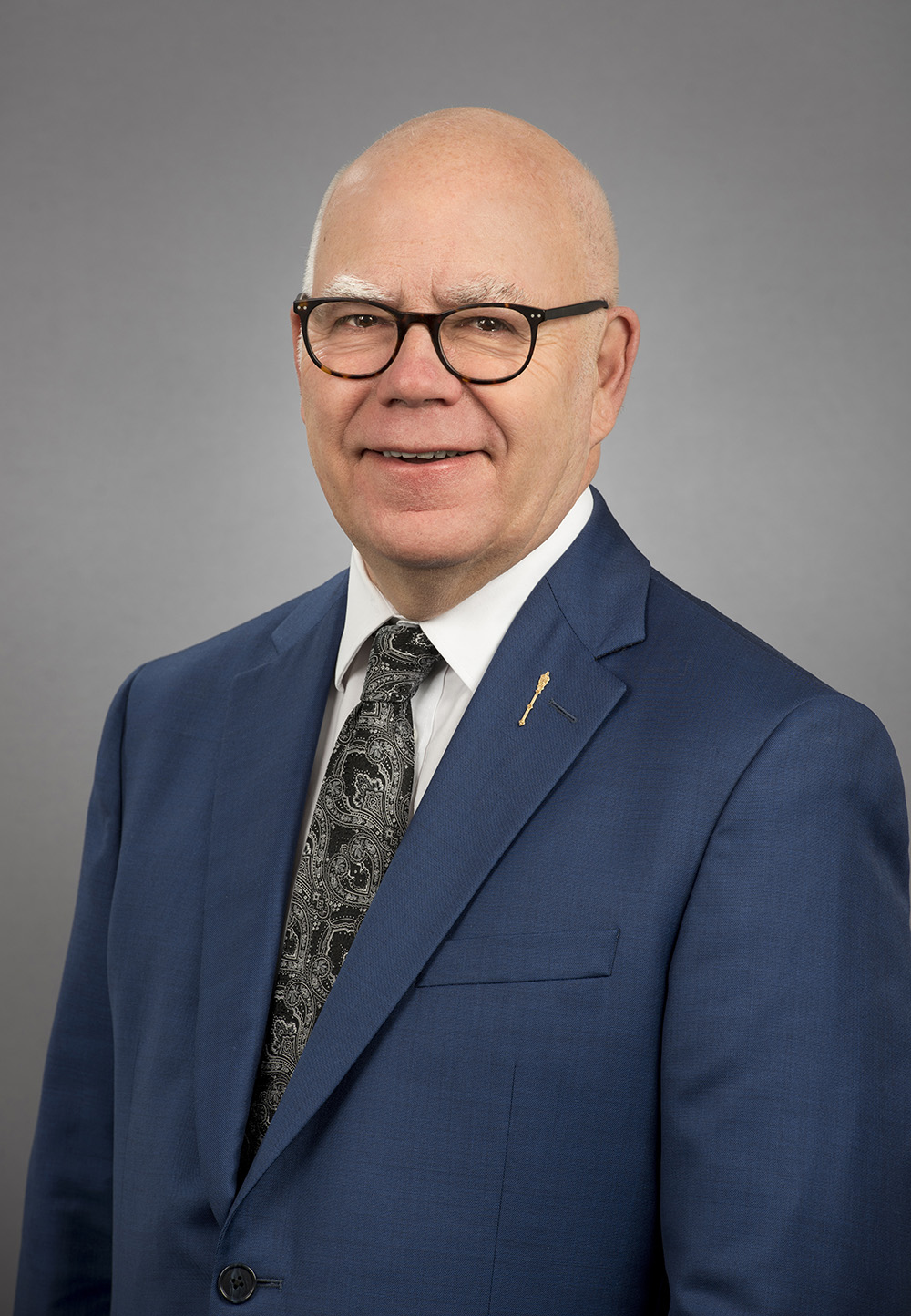
David Coon became the first Green Party MLA elected to the Provincial Legislature in 2014, representing the people of Fredericton South. He was re-elected as the MLA for Fredericton South in 2018 and 2020. Most recently he was elected as the MLA for the new riding of Fredericton Lincoln on October 21, 2024. He has served as the Leader of the New Brunswick Green Party since 2012.
In the Legislative Assembly, Mr. Coon has introduced bills to improve social assistance, strengthen tenant protections, establish a rent cap, expand the use of renewable energy, establish fair access to the lumber market for woodlot owners, end glyphosate spraying on Crown lands, ban fracking, enhance property tax fairness, boost local food security, lower the voting age, and protect citizens from frivolous lawsuits.
Mr. Coon garnered all-party support for his proposal to create a code of conduct for MLAs. His bill to amend the Education Act to ensure public school students learn about historical and contemporary relationships with First Nations was adopted unanimously on his second attempt. He was also successful in having the Legislative Assembly officially recognize both Truth & Reconciliation Day and Emancipation Day in New Brunswick.
To ensure he effectively represents their concerns, Mr. Coon established a seniors’ round table in his riding. He holds community meetings in each of the neighborhoods in his riding to stay up to date on issues in his constituency.
Before he became involved in politics, Mr. Coon earned a science degree at McGill University and had a 32-year career as an environmental advocate – most of it at the Conservation Council of New Brunswick. His work to protect drinking water led to the creation of New Brunswick’s Clean Water Act. His work in advancing public policy on climate change earned him a silver medallion at the Canadian Environmental Achievement Awards.
Mr. Coon and his wife, Janice Harvey, have two daughters and live in Fredericton’s Skyline Acres neighborhood.
Constituency Office
| Mainline Phone | (506) 455-0936 |
| Address |
346 Queen Street, Suite 102 Fredericton E3B 1B2 |
| Hours of Operation |
|
Committee
Alexandre Cédric Doucet
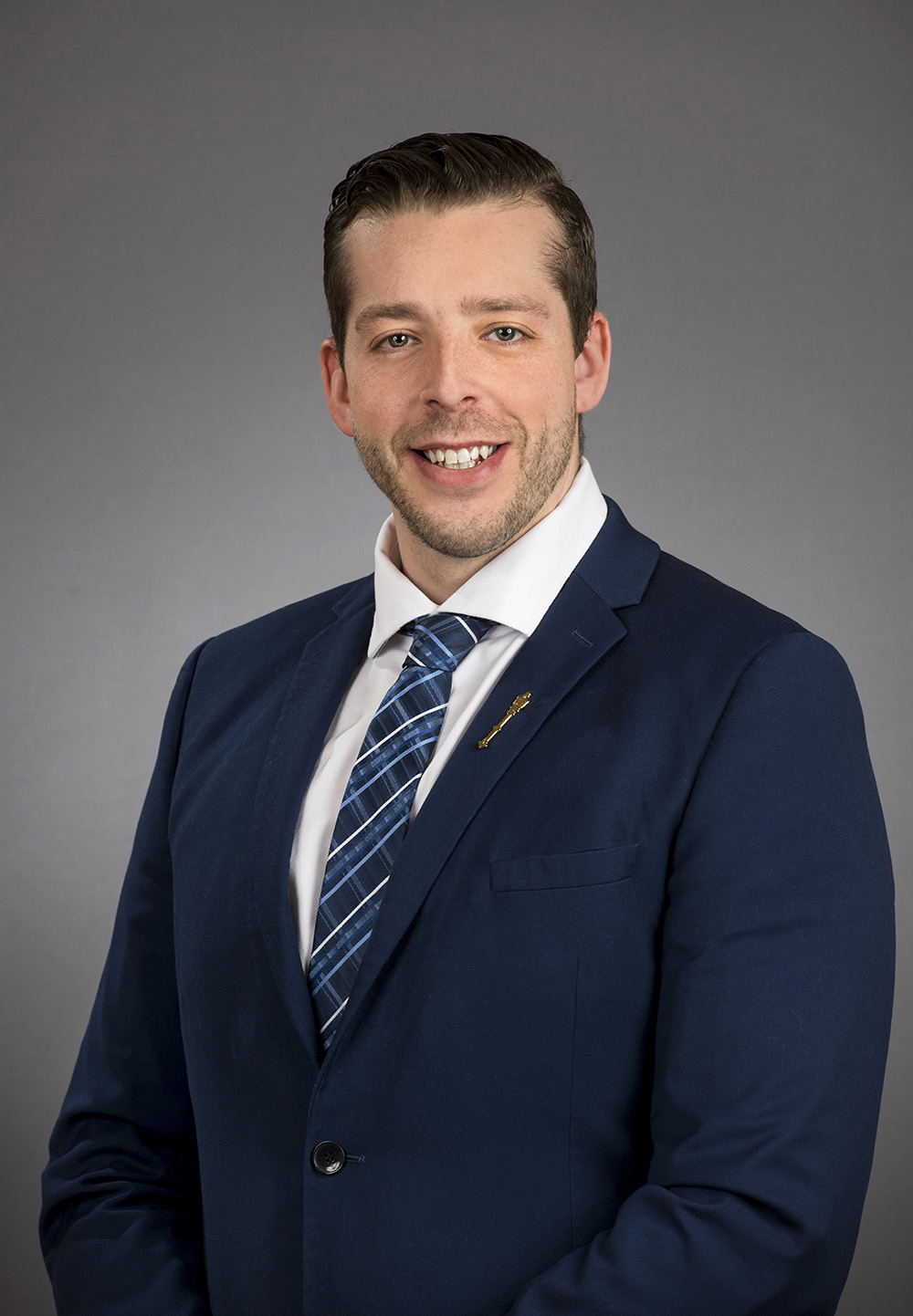
Alexandre Cédric Doucet was elected on October 21, 2024, to represent the riding of Moncton East in the 61st legislature.
The father of two children, Jacob and Florence, he is married to Pascale Rioux-Doucet.
He graduated from École secondaire Népisiguit and holds a bachelor’s degree in political science and a Juris Doctor from the Université de Moncton. During his studies, he had the opportunity to sit on the executive council, as president, of the Fédération étudiante du Campus universitaire de Moncton (FÉCUM) for three years. In addition, he sat on the board of the Université de Moncton.
He is a lawyer by profession. He is also the owner of his own law firm. He practises constitutional law, language law, property law, labour law, municipal law, and administrative law.
He is very involved in the community and was president of the Société de l’Acadie du Nouveau-Brunswick (SANB) for nearly four years. He has sat on the boards of directors of several organizations, including CAFi, the Coalition for Pay Equity, the Fédération des communautés francophones et acadienne du Canada (FCFA), and the Société nationale de l’Acadie (SNA).
As a result of his involvement, he was recognized as one of the most influential Francophones in the province by Acadie Nouvelle in 2020 and 2021.
Constituency Office
| Mainline Phone | (506) 227-3696 |
| Address |
3 Cross Street, Office B Moncton E1A 3C3 |
Committee
https://www.legnb.ca/en/webcasts/1228?audiolang=eng
Université de Moncton – Faculty of Law
Web site: https://www.umoncton.ca/
Representative: Érik Labelle Eastaugh
Dean, Faculty of Law, Université de Moncton
Email: erik.labelle.eastaugh@umoncton.ca
Mailing address:
Université de Moncton
Pavillon Adrien-J. Cormier
18 Antonine Maillet Avenue
Moncton, New Brunswick E1A 3E9
Lundi 12 juin 2023
Érik Labelle Eastaugh est nommé doyen de la Faculté de droit
Le Conseil de l’Université a procédé à la nomination d’Érik Labelle Eastaugh à titre de doyen de la Faculté de droit de l’Université de Moncton. Érik Labelle Eastaugh est professeur à la Faculté de droit de l’Université de Moncton, campus de Moncton, depuis 2017. Il est titulaire d’un doctorat en droit constitutionnel et d’une maîtrise en droit comparé de l’Université d’Oxford. Il a obtenu sa Licence en droit civil à l’Université d’Ottawa, en 2006. Depuis 2021, le professeur Labelle Eastaugh est directeur de l’Observatoire international des droits linguistiques de la Faculté de droit de l’Université de Moncton. |  |
Grand connaisseur et défenseur des droits linguistiques, celui-ci concentre ses recherches sur le sujet. Il a été co-directeur (avec Éric Forgues, Lorraine O’Donnell, Patrick Donovan) de l’ouvrage: « 50 ans de législation en matière de langues officielles au Canada : bilan et perspectives ». Engagé dans son expertise, il est souvent convoité comme expert-conseil et siège sur des conseils d’administration tels que celui de l’Institut canadien de recherche sur les minorités linguistiques et l’Association des juristes d’expression française du Nouveau-Brunswick M. Labelle Eastaugh entrera en fonction le 1er juillet 2023 pour un mandat régulier de cinq ans. | |
Biography of the Rector and Vice-Chancellor
Dr. Denis Prud'homme has been Rector and Vice-Chancellor of the University of Moncton since July 1, 2020 .
Professor, researcher, and administrator, Dr. Prud'homme has over 30 years of experience in academia, at Université Laval and the University of Ottawa, while continuing to practice sports medicine part-time. He holds a medical degree, a certificate in family medicine, and a master's degree in exercise science.
In academia, Dr. Prud'homme was initially a professor at the School of Human Kinetics. From 2003 to 2013, he was the principal investigator of an interdisciplinary and interinstitutional research team funded by the Canadian Institutes of Research, studying the effects of menopause on cardiometabolic risk factors. He is affiliated with several research teams and has nearly 300 publications to his credit on the effects of physical activity, nutrition, and medication in individuals with conditions such as obesity, metabolic syndrome, diabetes, and/or mental health issues.
In 2002, he was appointed Dean of the Faculty of Health Sciences at the University of Ottawa, a position he held for ten years. During those years, he created and chaired the Canadian Association of Deans of Faculties of Health Sciences.
In 2013, Dr. Prud'homme was appointed Associate Vice President of Research and Scientific Director of the Montfort Knowledge Institute and, in June 2019, he combined the role of interim Chief Executive Officer of this institute and Academic Vice President of the Montfort Hospital.
On the medical front, he was, among other things, the chief physician of the Canadian medical team at the Francophonie Games in Paris, and was active in the prevention of doping in sport.
Dr. Prud'homme's work at the Institut du Savoir Montfort led him, among other things, to create a research group to study the impacts of the language barrier on the quality and safety of care in official language minority communities.
In addition to his role as rector and vice-chancellor, Dr. Prud'homme is a member of the Universities Canada Governance Committee, treasurer of the Association of Colleges and Universities of the Canadian Francophonie, vice-president of the Association of Atlantic Universities and chair of the Atlantic University Sport Committee.
https://www.ourcommons.ca/documentviewer/en/44-1/LANG/meeting-32/evidence

Standing Committee on Official Languages
|
l |
|
|
l |
|
|
EVIDENCE
Tuesday, October 4, 2022
[Recorded by Electronic Apparatus]
[Translation]
[English]
[Translation]
[English]
[Translation]
1,011 Comments


 ?
? 
JM Denis Lavoie
works as Senior Counsel for Public Prosecution Service of Canada.JM Denis can be reached at 506-851-7431
- First name
- JM Denis
- Last name
- Lavoie
- Title
- Senior Counsel
- Telephone Number
- 506-851-7431
- Alternate Number
-
- Fax Number
- 506-851-2409
-
- Street Address
- Place Bell, 160 Elgin Street, 12th Floor (view on map)
- Country
- Canada
- Province
- Ontario
- City
- Ottawa
- Postal Code
- K2P 2C4
- Department
- PPSC-SPPC
-
- Public Prosecution Service of Canada
- Organization
- ARO-BRA
-
- Atlantic Regional Office
Conseil d'administration
2025-2026

J.M. DENIS
LAVOIE
Président

SAMUEL
GAGNON
Vice-président

BRIGITTE
OUELLETTE
Secrétaire/trésorière

ALEXANDRE
VIENNEAU
Représentant de la région
Chaleur

TINA
LAGACÉ-RIVARD
Représentante de la région Victoria/Carleton

MARIE-EVE
NOWLAN
Représentante de la région Westmorland

HAROLD
MICHAUD
Représentant de la région
Péninsule acadienne

BIONCA
BASTARACHE
Représentante de la région
Fundy

MONICA
PLOURDE
Représentante de la région
Madawaska

MARILYNE
ST-LAURENT
Représentante de la région Restigouche

STÉPHANIE
LUCE
Représentante de la région
Miramichi/Kent

SUE
DUGUAY
Représentante de la région
Fredericton

PIERRE
FOUCHER
Représentant des
services juridiques

SAMUEL
LEBLANC
Représentant du
corps professoral

DAMIEN
LAHITON
Juriste issu de
l'immigration francophone

PIERRE-VINCENT
GUIGNARD
Représentant des étudiant.e.s
Standing Committee on Official Languages
Committee Members
Chair

Vice-Chairs


Members


|
l |
|
|
l |
|
|
EVIDENCE
Thursday, February 28, 2019
[Recorded by Electronic Apparatus]
[Translation]
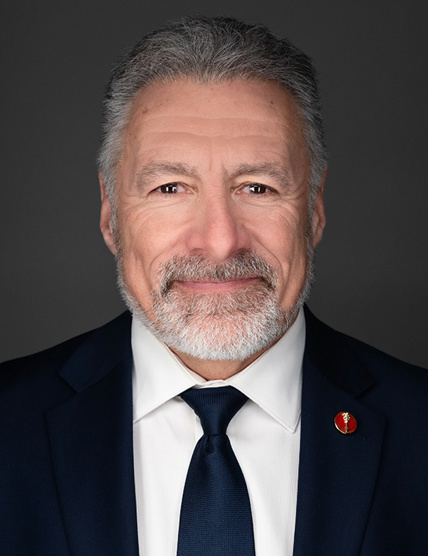
Senator Allister Surette
- Province: Nova Scotia
- Affiliation: Independent Senators Group
- Telephone: 343-991-4120
- Email: Allister.Surette@sen.parl.gc.ca Electronic card
- Staff: Anthony Lamoureux; Sylvain Bérubé
Biography
Allister Surette is a respected leader and executive with over 30 years of experience in education, politics and governance. He has long been a champion of francophone and Acadian communities.
Born and raised in West Pubnico, Nova Scotia, Mr. Surette was elected to the Legislative Assembly of Nova Scotia in 1993, representing the constituency of Argyle. Over his five years in office, he held a number of important portfolios, including special advisor on Acadian and francophone governance within the province’s public school system; Minister of Human Resources; Minister responsible for the Office of Acadian Affairs; and Deputy House Leader.
From 1998 to 2003, Mr. Surette served as President and Chief Executive Officer of the Collège de l’Acadie, the only francophone community college in Nova Scotia. When he arrived in 1998, he oversaw the implementation of a new strategic direction and a new operational structure in order to better position the Collège for the 21st century.
Beginning in April 2000, Mr. Surette played a key role in creating and developing the Université Sainte-Anne of today, a French-language post-secondary institution resulting from a merger between the Collège de l’Acadie and the former Université Sainte-Anne. In 2003, he was appointed its Vice-President of Development and Partnerships, a position he held until he became the President and Vice-Chancellor in 2011. He served in this role from July 2011 to June 30, 2024.
He was a founding member and chair of the organizing committee for the third World Acadian Congress, which took place in Nova Scotia in 2004; a founding member and chair of the Conseil de développement économique de la Nouvelle-Écosse (CDÉNÉ); and a founding member and the first Chair of the Board of Directors of the Western Regional Enterprise Network (WREN). He has also served as Chair of the Council of Nova Scotia University Presidents (CONSUP) and of the Association of Atlantic Universities, and as Co-Chair of the Association des collèges et universités de la francophonie canadienne (ACUFC). In July 2019, Mr. Surette completed his term as Chair of the Board of Directors of the Landscape of Grand-Pré, a UNESCO World Heritage Site. From 2007 to 2018, he was a member of Assumption Life’s Board of Directors. From September 2000 to November 2002, Mr. Surette chaired the Board of Directors of the Réseau des cégeps et des collèges francophones du Canada (RCCFC).
Mr. Surette has served as President of the Canadian Foundation for Cross-Cultural Dialogue (2018-2023), Chair of the CDÉNÉ (2005–2008 and 2019–2023) and Chair of the organizing committee for the 2024 World Acadian Congress in southwestern Nova Scotia.
In December 2003, Mr. Surette was appointed facilitator by the Canadian Minister of Fisheries and Oceans to lead discussions between herring fishers from Prince Edward Island and New Brunswick, as well as with the provincial governments of these two provinces, to seek solutions to the conflict in the herring fishery in the southern Gulf of St. Lawrence. In March 2006, again appointed by the Canadian Minister of Fisheries and Oceans, Mr. Surette facilitated an independent process to resolve a dispute between fishers from Prince Edward Island and the Magdalen Islands regarding lobster fishing on MacLeod’s Ledge.
In October 2020, he was appointed by the Canadian Minister of Fisheries and Oceans and the Canadian Minister of Crown-Indigenous Relations and Northern Affairs as a special representative of the federal government, a neutral third party with a mission to communicate with commercial and Indigenous fishers in Atlantic Canada, as well as with Indigenous representatives of communities in the Maritimes and the Gaspé Peninsula of Quebec that hold treaty rights, in order to rebuild trust between them.
In recognition of his contributions, Mr. Surette has received numerous awards, including the Ordre de la Pléiade (Commander) and the Léger-Comeau Certificate of Merit of the Fédération acadienne de la Nouvelle-Écosse. He is also a member of the Ordre des francophones d’Amérique, a Knight in the Ordre des Palmes académiques, and an honorary member of the Executive Council of Nova Scotia.
He has served in the Senate of Canada since December 2024.
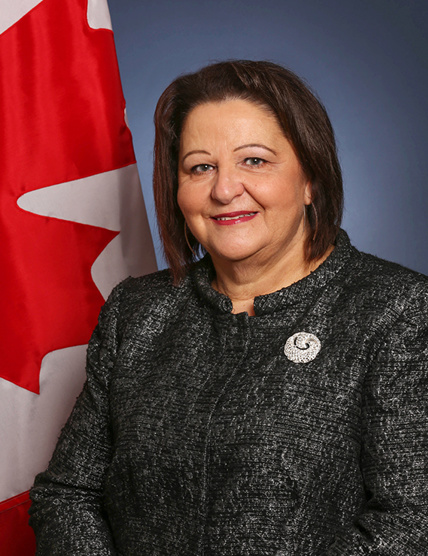
Senator Rose-May Poirier
- Province: New Brunswick (Saint-Louis-de-Kent)
- Affiliation: Conservative Party of Canada
- Telephone: 613-943-4027
- Fax: 613-943-4026
- Email: Rosemay.Poirier@sen.parl.gc.ca Electronic card
- Staff: Jeffrey Poirier; Lou-Anne Begin
- Personal Website: https://rosemaypoirier.sencanada.ca/
Biography
Prior to entering provincial politics, Rose-May Poirier was a successful businessperson, working as an insurance representative for Assomption Vie and as an executive VIP manager for Tupperware Canada. During her career, she received numerous distinctions as a sales leader, manager and recruiter, including leading one of the top sales teams in Canada and as one of the best salespeople in North America.
Her political career began at the municipality level where she served two terms on the Saint-Louis de Kent town council. In 1999, Rose-May Poirier made the jump to provincial politics, representing the people of Rogersville-Kouchibouguac for three terms. As a MLA of the Progressive - Conservative Party, Senator Rose-May Poirier was the 1st woman to chair the P.C. caucus. Upon her re-election on June 9, 2003, she was appointed Minister of the Office of Human Resources and 2 years later, in February 2006, she was named Minister of Local Government and Minister responsible for Aboriginal Affairs.
Appointed to the Senate in 2010, Senator Poirier served as the Senate Conservative Caucus Chair and the Vice Chair of the National Conservative Caucus from 2011 to 2015. She recently took back the role as the Senate Conservative Caucus Chair in December 2019.
Senator Poirier currently sits on the Standing Committee on Official Languages as Deputy Chair.
In her community, Senator Poirier has given a lot of her time to various causes: Child Find, Children’s Wish Foundation, Heart and Stroke Foundation, George L. Dumont Tree of Hope campaign and the Friends of the Moncton Hospital as well as economic development for the Kent region.
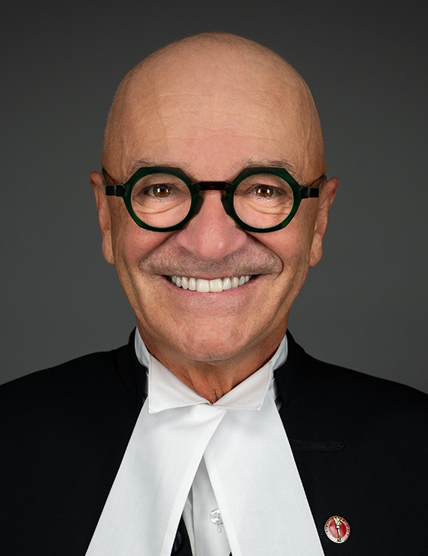
Senator René Cormier
- Province: New Brunswick
- Affiliation: Independent Senators Group
- Telephone: 613-996-2247
- Email: Rene.Cormier@sen.parl.gc.ca Electronic card
- Staff: Luc Bourgeois; Chantal Robitaille; Inouk Touzin
- Follow:
Biography
The Honourable René Cormier joined the Senate of Canada on November 10, 2016, as an independent senator from New Brunswick.
Since his appointment to the Senate of Canada, the Honourable René Cormier is committed to defending and promoting arts and culture, language rights, and human rights. He currently sits on the Standing Senate Committee on Official Languages, which he chaired for more than seven years, also serves on the Standing Senate Committee on Transport and Communications and sits on the Artwork and Heritage Advisory Working Group.
The Honourable René Cormier played an active role in parliamentary associations, interparliamentary groups and friendship groups. Senator Cormier acts as First Vice-President for North America on the Open Parliament Network of ParlAmericas. Senator Cormier also served as Vice-Chair of the Canada-Africa and Canada-France Interparliamentary Associations.
The Honourable René Cormier is a founding member of the Acadian Association of Canadian Parliamentarians (AACP), a friendship group dedicated to strengthening and increasing the political influence of the Acadian people within the Canadian federation. Senator Cormier is also a member of the Canadian Pride Caucus, of which he was one of the founding members and one of its first two co-chairs. This Caucus is composed of Canadian Senators and Members of Parliament from different political parties. The main objective of the Caucus is to work in a non-partisan manner to advance the rights of 2SLGBTQIA+ in Canada and around the world.
A committed man of action, Senator Cormier has an impressive professional record in the field of arts and culture. Educated in music at l’Université du Québec à Montréal and in theatre at l’École internationale Jacques LeCoq, in Paris, this multidisciplinary artist has held several positions within Canada’s cultural ecosystem, including that of artistic director, director, actor, musician, composer, cultural manager, and announcer.
A recognized leader, Senator Cormier chaired several national and international organizations, including the Commission internationale du théâtre francophone (CITF), the Fédération culturelle canadienne-française (FCCF), l’Association des théâtres francophones du Canada (ATFC), the New Brunswick Arts Council and the Société Nationale de l’Acadie (SNA), the representative organization for the Acadian people in Atlantic Canada, nationally and internationally. He has also sat on several boards of directors, including that of TV5 Québec-Canada, the Canadian Conference of the Arts, and the Atlantic Visual Arts Festival.
Throughout his career, he has led countless cultural organizations and events, including providing direction for and presenting a number of variety shows on Radio-Canada television, providing artistic and general direction at the Théâtre populaire d’Acadie, artistic direction for the National Arts Centre biennial Zones Théâtrales, artistic direction for the 2009 Congrès mondial acadien, and management of the États généraux des arts et de la culture dans la société acadienne au Nouveau-Brunswick within the Association acadienne des artistes professionnel.le.s du Nouveau-Brunswick. In that role, Senator Cormier worked with his colleagues on bringing together various linguistic and cultural communities in his native province.
Senator Cormier is recognized for his integrity, his professionalism, his ability to bring people together, and his motivational skills. He has earned many recognitions throughout his career including Knight of the Legion of Honour (2025), The King Charles III Coronation Medal (2024), The Queen Elizabeth II Platinum Jubilee Medal (2023), an honorary doctorate in arts and culture from the Université de Moncton (2018), l’Ordre des francophones d’Amérique (2008), Knight of the Order of Arts and Letters of France (2003), the Jean-Claude Marcus Award for his contribution to francophone theatre in Canada (2005), the Economic Council of New Brunswick manager of the year Award in 2000, and the Éloize Award for theatre artist of the year (1998).
On June 5, 2025, Senator Cormier was elected Speaker pro tempore of the Senate for the 1st session of the 45th Parliament.
Senator Cormier lives in Caraquet, New Brunswick, a vibrant Acadian municipality known as the cultural capital of Acadie.
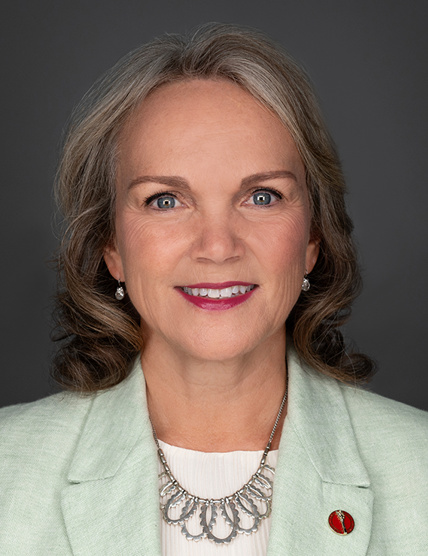
Senator Mary Robinson
- Province: Prince Edward Island
- Affiliation: Canadian Senators Group
- Telephone: 613-943-3003
- Email: Mary.Robinson@sen.parl.gc.ca Electronic card
- Staff: Mehek Noorani; Karine Leroux
- Follow:
Biography
The Honourable Mary Robinson is proud to represent her home province of Prince Edward Island in the Senate of Canada. Leading up to her appointment in January 2024, Senator Robinson had spent her life involved in many facets of agriculture including agronomy, primary production, marketing, processing, and advocacy.
For the past three decades, she has been a managing partner of a 6th generation Prince Edward Island family farm and agribusiness. She started her advocacy as a county representative within the Prince Edward Island Federation of Agriculture board of directors. She has served as President of the PEIFA, as the first female Chair of the Canadian Agriculture Human Resource Council and as first female President of the Canada’s largest farm lobby group, the Canadian Federation of Agriculture. Senator Robinson was elected as the Vice President of the World Farmers’ Organization in May of 2023.
While building and running her business, Senator Robinson also played an active role in her community for many years. She was a founding member of a community band, member of Home and School, and volunteer for her children’s sporting events.
Senator Robinson and her husband live in Charlottetown, Prince Edward Island and have two university age children.
Pierre FOUCHER
18, avenue Antonine-Maillet
Moncton New Brunswick E1A 3E9
A Moncton woman avoided jail on Monday for selling drugs to an undercover police officer four years ago.
“Hopefully you’ll prove me right for taking a chance on you,” provincial court Judge Luc Labonté told Paula Anne-Marie Goguen, 57, at her sentencing. “You’re on the right path, keep it up.”
Goguen was one of approximately 19 people charged as part of the RCMP’s Operation J Transformer, in which undercover police bought drugs from street-level traffickers in 2021 and 2022. She pleaded not guilty to trafficking crystal meth on Nov. 10, 2022, and was to stand trial but instead pleaded guilty the day it was to start.
Prosecutor Damien Lahiton asked for two years in prison. He said while she only sold one gram of meth on one occasion for $50, it’s a highly addictive and deadly substance. He said people often go to prison for trafficking meth, though sometimes their circumstances lead to a community-based sentence.
Defence lawyer Michel DesNeiges asked for a conditional sentence order with house arrest
followed by a curfew. He said his client has health problems and has had a difficult life, dealing with drug addiction and abuse.
DesNeiges said his client is in a drug rehab program, has a place to live, and helps other people who had been in her situation. He said she has shown real change in the almost four years since she sold meth to the Mountie.
“She’s doing much better today than she was in 2022,” he said.
Working against the offender was a criminal record with many breaches of probation and court orders, leading the judge to wonder if she will follow conditions if she serves her time at home.
While many drug traffickers do go to prison, they aren’t all incarcerated. Even within the J Transformer prosecutions, while many went to prison - Lahiton said the sentencing range was 1840 months - at least two served their sentences in the community, though the specific details of those cases that led to such sentences were not known on Monday.
Goguen asked the court for a chance.
“I regret my actions, doing what I did,” she said.
She added that she was trying to save money to buy a tombstone for a family member who had died and had planned to stop selling once that was done.
The judge determined that her crime deserved 12 months in jail, but he made it 18 months and will allow her to serve it at home, with the first year on house arrest and the rest on curfew. Labonté said that places the onus on her, because if she follows all her conditions she avoids jail, but if she breaches them she could serve the rest in jail, resulting in a longer jail term than if he had just sent her away for 12 months.
Goguen also has to pay a $50 fine as a way of repaying the money the undercover cop gave her.
Police said in a news release that in the fall of 2021 the Codiac Regional RCMP Crime Reduction Unit, along with the New Brunswick Integrated Enforcement Unit, began an investigation targeting street level drug trafficking in the greater Moncton area. During the investigation, police seized quantities of cocaine, Shady 8 pills, fentanyl, crystal methamphetamine, hydromorphone pills, $27,000 in cash, two restricted firearms and a non-restricted firearm.
Charges were laid in late 2023 and early 2024.
Irishtown roofing company fined for unsafe worksite
G. B. Roofing and Guy Boudreau were charged with violating the Occupational Health and Safety Act
Damien Lahiton
works as Legal Counsel for Public Prosecution Service of Canada.Damien can be reached at 506-851-2188
- First name
- Damien
- Last name
- Lahiton
- Title
- Legal Counsel
- Telephone Number
- 506-851-2188
- Alternate Number
- Fax Number
- 506-851-2409
- Street Address
- Suite 400, 777 Main Street (view on map)
- Country
- Canada
- Province
- New Brunswick
- City
- Moncton City & Local Guides
- Postal Code
- E1C 1E9
- Department
- PPSC-SPPC
- Public Prosecution Service of Canada
- Organization
- ARO-BRA
- Atlantic Regional Office
Thursday, 20 April 2017
Unbelievable is the only word for this malicious nonsense
From: Premier of Ontario | Premier ministre de l’Ontario <Premier@ontario.ca>
Date: Fri, 30 Aug 2019 20:00:57 +0000
Subject: Automatic reply: YO Mario Dion Unbelievable is the only word
for this malicious nonsense N'esy Pas?
To: David Amos <david.raymond.amos333@gmail.
Thank you for your email. Your thoughts, comments and input are greatly valued.
You can be assured that all emails and letters are carefully read,
reviewed and taken into consideration.
There may be occasions when, given the issues you have raised and the
need to address them effectively, we will forward a copy of your
correspondence to the appropriate government official. Accordingly, a
response may take several business days.
Thanks again for your email.
______
Merci pour votre courriel. Nous vous sommes très reconnaissants de
nous avoir fait part de vos idées, commentaires et observations.
Nous tenons à vous assurer que nous lisons attentivement et prenons en
considération tous les courriels et lettres que nous recevons.
Dans certains cas, nous transmettrons votre message au ministère
responsable afin que les questions soulevées puissent être traitées de
la manière la plus efficace possible. En conséquence, plusieurs jours
ouvrables pourraient s’écouler avant que nous puissions vous répondre.
Merci encore pour votre courriel.
Date: Tue, Feb 25, 2020 at 3:58 PM
Subject: ReThe SANB versus Higgs and I and Section 300 of the Criminal code I just called SNB again we shall if the CBC and the RCMP will reveal who this Marc Martin character and his buddy Deschamps truly are and wheter I am crazy or not
To: <pascale.bergeron@snb.ca>, marc.martin <marc.martin@snb.ca>, Mark.Blakely <Mark.Blakely@rcmp-grc.gc.ca>, ian.fahie <ian.fahie@rcmp-grc.gc.ca>, Bill.Blair <Bill.Blair@parl.gc.ca>, Newsroom <Newsroom@globeandmail.com>, premier <premier@ontario.ca>, premier <premier@gov.ab.ca>, Office of the Premier <scott.moe@gov.sk.ca>, kris.austin <kris.austin@gnb.ca>, Jacques.Poitras <Jacques.Poitras@cbc.ca>, steve.murphy <steve.murphy@ctv.ca>, Nathalie Sturgeon <sturgeon.nathalie@brunswicknews.com>
Cc: motomaniac333 <motomaniac333@gmail.com>, carl.urquhart <carl.urquhart@gnb.ca>, Anderson-Mason, Andrea Hon. (JAG/JPG) <Andrea.AndersonMason@gnb.ca>, premier <premier@gnb.ca>, blaine.higgs <blaine.higgs@gnb.ca>, robert.mckee <robert.mckee@gnb.ca>, greg.byrne <greg.byrne@gnb.ca>, Brenda.Lucki <Brenda.Lucki@rcmp-grc.gc.ca>, barbara.massey <barbara.massey@rcmp-grc.gc.ca>, <barb.whitenect@gnb.ca>, <sylvie.gadoury@radio-canada.ca>
https://www.cbc.ca/news/canada
ER controversy hurts P.C.'s already diminished standing in francophone
New Brunswick
The party already had marketing issues in the north, now they're worse off
Jacques Poitras · CBC News · Posted: Feb 25, 2020 6:00 AM AT
286 Comments
Robert G. Holmes
Face it; Too many provincial admin costs! Only one Health System, and
one Education System, (for starters), is affordable in the Atlantic
Region. Think of the benefits. Think sustainably. Get the Politicians
out of Education and Health.
David Amos
Reply to @Robert G. Holmes: I agree
Marguerite Deschamps
Reply to @David Amos: Give this man his Medicare card!
Marc Martin
Reply to @Marguerite Deschamps: His current job as Santa Claus is the
reason why they wont allow it...
Marguerite Deschamps
Reply to @Marc Martin: The poor man needs to see a shrink real bad!
Marc Martin
Reply to @Marguerite Deschamps: I know, he now wants to send a sheriff
to some Marc Martin across the province...
David Amos
Reply to @Marguerite Deschamps: More libel???
Marguerite Deschamps
Reply to @David Amos: You wouldn't know what libel is if it stared you
right in the face.
David Amos
Reply to @Marguerite Deschamps: We shall see if the RCMP agrees with you or not
Mack Leigh
Poor, poor Jacques Poitras ! His " Liberal " is showing yet again...
Just another piece slanted in the hopes of garnering more Liberal
support... Remember Gallant ? Remember Graham ? This province has had
more than enough Liberal governments to last a lifetime.
David Amos
Reply to @Mack Leigh: YUP
Marc Martin
Reply to @Mack Leigh: I have had enough of incompetent CoRservatives
so what do you sugest ?
David Amos
Reply to @Marc Martin: Methinks you know as well as i that I suggested
that if Higgy were a wiseguy he would have fired you a long time ago
N'esy Pas?
Marc Martin
Reply to @David Amos: That's why he does not listen to you, he would
have fired the wrong guy...
David Amos
Reply to @Marc Martin: Nope
Archie Levesque
Reply to @Marc Martin: What is a CORservative? Is that the same as an
SANB Liberal but just a different color?
Marc Martin
Reply to @David Amos: Then call/write to him again .
Marc Martin
Reply to @Archie Levesque: They are affiliated with PANB you should know this...
David Amos
Reply to @Marc Martin: Why not send a sheriff to your home to serve a summons?
Fred Brewer
Reply to @Marc Martin: Green or Purple would be a good choice.
Marc Martin
Reply to @David Amos: Go ahead...
Marc Martin
Reply to @Fred Brewer: I would vote green, but for you to sugest I
vote for an anti-French group is hilarious.
Marc Martin
Reply to @David Amos: *Why not send a sheriff to your home to serve a
summons?* I am still waiting....
Cleve Gallant
The liberals caused this mess and now they’re upset with Higgs because
he hasn’t got a magic wand to make things better,
Marc Martin
Reply to @Cleve Gallant: Yeah blame it on the Liberals...The Liberals
didn't go with the recommendations tough now did they?
Cleve Gallant
Reply to @Marc Martin: Some people are scared to hear the truth,Now
that’s a proven fact especially with SANB,
Marc Martin
Reply to @Cleve Gallant: What does SANB have to do with this ?
Archie Levesque
Reply to @Marc Martin: So you prefer the Liberal solution of - do
nothing and hope it resolves itself?
Cleve Gallant
Reply to @Marc Martin: Duh,Try everything that that has to do with duplication,
Marc Martin
Reply to @Cleve Gallant: How about closing 1 hospital in Moncton for
then night, its not like they are busy anyways they have a 2 hr wait
compared to other regions.
Cleve Gallant
Reply to @Marc Martin: You should really do your research before
stating something, Two hour wait? Try eight to twelve hour wait thanks
to the liberals,
Marc Martin
Reply to @Cleve Gallant: I know people who live in Moncton its a known
fact they don't need the second hospital at night lets save money !!!
Cleve Gallant
Reply to @Marc Martin: Than close the DUMONT,Maybe that will make you happy,
Marc Martin
Reply to @Cleve Gallant: Oh I see, so your are for closing every
hospitals that are French oriented, that explains all.
Cleve Gallant
Reply to @Marc Martin: English the universal language of the world,
That must be hard for you to swallow,
Mack Leigh
Reply to @Marc Martin: All hospitals in this province are " French
oriented " and that is in and of itself a large part of the
problem..Incessant pandering to one group where only 3 to 5 % do not
speak English is absolutely ludicrous and an blatant waste of
taxpayers money that would be well spent elsewhere.
Marc Martin
Reply to @Mack Leigh: I live in Fredericton they don't even have
French services at front, so obviously you have no idea what your
talking about. *blatant waste of taxpayers money that would be well
spent elsewhere. * And ? Where are these numbers ? How much money
would be saved ?
David Amos
Reply to @Mack Leigh: Methinks Marc Baby is a very nervous camper
today N'esy Pas?
Marc Martin
Reply to @Mack Leigh: *You are more than capable of addressing
non-francophones in English so what is the problem* I cannot have the
same rights then you do ? What if someone only spoke to you in French
? *your German ? Your Arabic ? Your Korean ?* We are in Canada where
there is only 2 official languages.
Marc Martin
Reply to @David Amos: Yeah I am so nervous......I do feel entertained
that I have triggerd a bunch here .
David Amos
Reply to @Marc Martin: How many other Marc Martins do you know who are
camped in Fat Fred City?
Marc Martin
Reply to @David Amos: Why would you ask me ? I don't go around and
stalk people under false pretentions.
Mack Leigh
Reply to @Marc Martin: Oh, did not realize that German was being
included as a " Official " language.
Marc Martin
Reply to @Mack Leigh: Its not, only French and English are. There is a
solution for you there is a whole country that speaks German.....
David Amos
Reply to @Marc Martin: Did you just libel me again?
Marc Martin
Reply to @David Amos: Are you sure your talking to the right Marc Martin ?
David Amos
Reply to @Marc Martin: Methinks you will know for certain if I opt to
serve you a summons in person because the cops won't do their job You
cannot deny that libel is a criminal act under section 300 N'esy Pas?
Marc Martin
Reply to @David Amos: Go ahead...I am waiting.
Marc Martin
Reply to @David Amos: I am still waiting....
Marc Martin
Reply to @David Amos: Davis ?
---------- Forwarded message ----------
From: David Amos <david.raymond.amos333@gmail.c
Date: Thu, 20 Feb 2020 21:09:55 -0400
Subject: YO Mr Higgs you and the Health Care CEOs should not deny that
I just caught Krissy Baby Austin being a LIAR on Rogers TV and they
cut me off TRUE or FALSE???
To: "blaine.higgs" <blaine.higgs@gnb.ca>, dale.morgan@rcmp-grc.gc.ca,
"Mark.Blakely" <Mark.Blakely@rcmp-grc.gc.ca>, "Roger.Brown"
<Roger.Brown@fredericton.ca>, "martin.gaudet"
<martin.gaudet@fredericton.ca>
<Brenda.Lucki@rcmp-grc.gc.ca>, "barbara.massey"
<barbara.massey@rcmp-grc.gc.ca
<barb.whitenect@gnb.ca>
Cc: "Robert. Jones" <Robert.Jones@cbc.ca>, David Amos
<motomaniac333@gmail.com>, "Holland, Mike (LEG)"
<mike.holland@gnb.ca>, lclark@nbpower.com,
colleen.dentremont@atlanticaen
<Bill.Morneau@canada.ca>, premier <premier@ontario.ca>, Office of the
Premier <scott.moe@gov.sk.ca>, premier <premier@gov.ab.ca>, wharrison
<wharrison@nbpower.com>, gthomas <gthomas@nbpower.com>,
Andrea.AndersonMason@gnb.ca, jesse <jesse@viafoura.com>, news
<news@dailygleaner.com>, nben@nben.ca, premier <premier@gnb.ca>,
"dominic.leblanc.c1" <dominic.leblanc.c1@parl.gc.ca
<Dominic.Cardy@gnb.ca>, "jeff.carr" <jeff.carr@gnb.ca>,
oldmaison@yahoo.com, andre <andre@jafaust.com>,
"Ginette.PetitpasTaylor" <Ginette.PetitpasTaylor@parl.g
"Sherry.Wilson" <Sherry.Wilson@gnb.ca>, "Ross.Wetmore"
<Ross.Wetmore@gnb.ca>, megan.mitton@gnb.ca, "David.Coon"
<David.Coon@gnb.ca>, "Arseneau, Kevin (LEG)"
<Kevin.A.Arseneau@gnb.ca>, Newsroom <Newsroom@globeandmail.com>,
Nathalie Sturgeon <sturgeon.nathalie@brunswickne
<mary.wilson@gnb.ca>, "steve.murphy" <steve.murphy@ctv.ca>,
"nick.brown" <nick.brown@gnb.ca>, "robert.mckee"
<robert.mckee@gnb.ca>, "Kevin.Vickers" <Kevin.Vickers@gnb.ca>,
"Tim.RICHARDSON" <Tim.RICHARDSON@gnb.ca>, "Trevor.Holder"
<Trevor.Holder@gnb.ca>, "rick.desaulniers" <rick.desaulniers@gnb.ca>,
"michelle.conroy" <michelle.conroy@gnb.ca>, "Mike.Comeau"
<Mike.Comeau@gnb.ca>, "carl. davies" <carl.davies@gnb.ca>,
"carl.urquhart" <carl.urquhart@gnb.ca>, "Cathy.Rogers"
<Cathy.Rogers@gnb.ca>, "robert.gauvin" <robert.gauvin@gnb.ca>,
"Roger.L.Melanson" <roger.l.melanson@gnb.ca>, "ron.tremblay2"
<ron.tremblay2@gmail.com>, philippe@dunsky.com,
Steven_Reid3@carleton.ca, "darrow.macintyre"
<darrow.macintyre@cbc.ca>, "Chuck.Thompson" <Chuck.Thompson@cbc.ca>,
"sylvie.gadoury" <sylvie.gadoury@radio-canada.c
---------- Forwarded message ----------
From: "Higgs, Premier Blaine (PO/CPM)" <Blaine.Higgs@gnb.ca>
Date: Fri, 21 Feb 2020 00:51:52 +0000
Subject: Automatic reply: I just caught Krissy Baby being a LIAR on
Rogers TV and they cut me off
To: David Amos <david.raymond.amos333@gmail.c
[Le français suit.]
Dear Sir/Madam:
Thank you for taking the time to write to us. Due to the high volume
of emails that we receive daily, please note that there may be a delay
in our response.
Thank you for your understanding.
If this is a Media Request, please contact the Premier’s office at
(506) 453-2144
Thank you
------------------------------
Bonjour,
Nous vous remercions d’avoir pris le temps de nous écrire. Tenant
compte du volume élevé de courriels que nous recevons quotidiennement,
il se peut qu’il y ait un délai dans notre réponse.
Nous vous remercions de votre compréhension.
S’il s’agit d’une demande des médias, veuillez communiquer avec le
Cabinet du premier ministre au 506-453-2144.
Merci.
Office of the Premier/Cabinet du premier ministre
P.O Box/C. P. 6000 Fredericton New-Brunswick/Nouveau-Brunswic
Tel./Tel. : (506) 453-2144
Email/Courriel: premier@gnb.ca/premier.ministr
---------- Forwarded message ----------
From: "Cameron, Melanie Dawn (HorizonNB)" <MelanieDawn.Cameron@horizonnb
Date: Fri, 21 Feb 2020 01:02:48 +0000
Subject: Automatic reply: I just caught Krissy Baby being a LIAR on
Rogers TV and they cut me off
To: David Amos <david.raymond.amos333@gmail.c
I will be away from the office returning on Monday, February 24th
Melanie Cameron
Executive Assistant
506-465-4433
------- Horizon Health Network Disclaimer -------
This e-mail communication (including any or all attachments) is intended
only for the use of the person or entity to which it is addressed and may
contain confidential and/or privileged material. If you are not the intended
recipient of this e-mail, any use, review, retransmission, distribution,
dissemination, copying, printing, or other use of, or taking of any action in
reliance upon this e-mail, is strictly prohibited. If you have received this
e-mail in error, please contact the sender and delete the original and any
copy of this e-mail and any printout thereof, immediately. Your
co-operation is appreciated.
Le présent courriel (y compris toute pièce jointe) s'adresse uniquement à
son destinataire, qu'il soit une personne ou un organisme, et pourrait
comporter des renseignements privilégiés ou confidentiels. Si vous n'êtes
pas le destinataire du courriel, il est interdit d'utiliser, de revoir, de
retransmettre, de distribuer, de disséminer, de copier ou d'imprimer ce
courriel, d'agir en vous y fiant ou de vous en servir de toute autre façon.
Si vous avez reçu le présent courriel par erreur, prière de communiquer
avec l'expéditeur et d'éliminer l'original du courriel, ainsi que toute copie
électronique ou imprimée de celui-ci, immédiatement. Nous sommes
reconnaissants de votre collaboration.
---------- Forwarded message ----------
From: "Info (VitaliteNB)" <Info@vitalitenb.ca>
Date: Fri, 21 Feb 2020 01:02:42 +0000
Subject: Réseau de santé Vitalité Health Network
To: David Amos <david.raymond.amos333@gmail.c
Nous accusons réception de votre courriel. Un suivi sera fait dès que possible.
Veuillez prendre note que les messages reçus à cette adresse
électronique sont vérifiés seulement durant les heures d'ouverture de
nos bureaux, soit de 8 heures à 16 heures du lundi au vendredi. Si
vous avez besoin d'une aide immédiate, composez le 911 ou communiquez
avec l'hôpital le plus près.
Merci!
We acknowledge receipt of your e-mail. A follow-up will be done as
soon as possible.
Please note that messages received at this e-mail address will be
checked during our office hours only, i.e. between 8 a.m. and 4 p.m.,
Monday through Friday. If you need immediate assistance, dial 911 or
contact the nearest hospital.
Thank you!
On 2/20/20, David Amos <david.raymond.amos333@gmail.c
> https://www.youtube.com/watch?
>
> Kris Austin, People's Alliance - Voice of the Province - February 20, 2020
> 19 watching now
>
> Rogers tv
> 32.1K subscribers
>
>
> David AmosToo too Funny
> David AmosAsk Chucky why i was barred from the leg 2 years before he was
> David AmosAsk Austin what he thought of the email everyone including
> Chucky got on Feb 14th
> David AmosAsdk Austin what he thinks of my lawsuit against the Crown
> David AmosChucky did attend one of the hearings because he and
> Vickers are mentioned in the lawsuit
> David AmosI take false arrest very personally
>
> ---------- Forwarded message ----------
> From: David Amos <david.raymond.amos333@gmail.c
> Date: Tue, 18 Feb 2020 15:59:18 -0400
> Subject: Fwd: YO Mr Higgs Re My right to MEDICARE and NO MORE false
> imprisonment Just as I get another bill from Vitalité I hear Horizon
> want the RCMP to arrest me AGAIN TRUE or FALSE??? (Out of Office )
> To: Rhonda.Brown@globalnews.ca, pm <pm@pm.gc.ca>, "Gerald.Butts"
> <Gerald.Butts@pmo-cpm.gc.ca>, "geoff.regan" <geoff.regan@parl.gc.ca>,
> "Katie.Telford" <Katie.Telford@pmo-cpm.gc.ca>, "Ian.Shugart"
> <Ian.Shugart@pco-bcp.gc.ca>, "ian.fahie" <ian.fahie@rcmp-grc.gc.ca>,
> "andrew.scheer" <andrew.scheer@parl.gc.ca>
> Cc: motomaniac333 <motomaniac333@gmail.com>, david.akin@globalnews.ca
>
> Need I say that I am tired of being called a perennial candidate on TV?
>
>
> http://davidraymondamos3.blogs
>
>
> Monday, 22 May 2017
>
> Before writs were dropped in BC and NS The VERY UNETHICAL "Journalist"
> David Akin scores a new job as CHIEF POLITICAL CORRESPONDENT Global
> News???
> Methinks that by now mindless David Akin would have figured out that
> just like one of my favourite artists Gordy Lightfoot I am still alive
> and kicking. However if you scroll to the bottom of this blog you will
> see byway of his Tweets Davey Boy continues to ignore my emails even
> after I talk to his lawyer and send them both a Hell of an email. Go
> figure why I am not surprised. EH Commissioner Bobby Paulson of the
> RCMP?
>
> Do tell does the CBC or the CRTC or CTV or Roger TV or even CPAC or
> anyone else recall back in 2015 when I stress tested the ethics of
> David Boy Akin and his gal pal Kady Baby O'Malley about voting etc
> during and after the election of the 42nd Parliament? I did that years
> after I talked to Akin the first in in 2004 when he worked for CTV and
> about 2 years or so after Kady had blocked me within Twitter when she
> and her snobby buddies such as Jesse Brown, Jian Ghomeshi, Greg Weston
> and Evan Solomon used to work for CBC too.
>
> https://globalnews.ca/author/r
>
> Rhonda Brown
> Supervising Producer
> 902 481 4440
>
> Rhonda is a journalist with more than 24 years experience in the
> television industry.
>
> As Supervising Producer, she works with news staff in Halifax and New
> Brunswick in the gathering the day’s stories and getting them to air
> on Global News at 6 pm.
>
> Born in Newfoundland and raised in Ottawa, she’s lived in Halifax for
> more than 22 years.
>
> She’s held a variety of roles with both Global News and CBC over her
> career, with a brief foray into public relations.
>
> A perennial candidate is a political candidate who frequently runs for
> an elected office and rarely, if ever, wins. The term is the opposite
> of an incumbent politician who repeatedly defends their seats
> successfully.
>
> Perennial candidates can vary widely in nature. Some are independents
> who lack the support of the major political parties in an area or are
> members of alternative parties (such as third parties in the United
> States). Others may be mainstream candidates who can consistently win
> a party's nomination, but because their district is gerrymandered or a
> natural safe seat for another party, the candidate likewise never gets
> elected (thus these types are often paper candidates). Still others
> may typically run in primary elections for a party's nomination and
> lose repeatedly. Numerous perennial candidates, although not all, run
> with the full knowledge of their inability to win elections and
> instead use their candidacy for satire, to advance non-mainstream
> political platforms, or to take advantage of benefits afforded
> political candidates (such as campaign financing, name recognition,
> and television advertising benefits).
>
>
>
>
>
> ---------- Forwarded message ----------
> From: Rédaction <nouvelle@acadienouvelle.com>
> Date: Tue, 18 Feb 2020 09:17:12 -0800
> Subject: Re: Fwd: YO Mr Higgs Re My right to MEDICARE and NO MORE
> false imprisonment Just as I get another bill from Vitalité I hear
> Horizon want the RCMP to arrest me AGAIN TRUE or FALSE??? (Out of
> Office )
> To: david.raymond.amos333@gmail.co
>
> Nous avons reçu votre message. Au besoin, nous communiquerons avec
> vous pour plus de détails. Si vous avez des informations
> supplémentaires à fournir, s'il vous plaît, répondez à ce courriel.
> Merci de votre intérêt envers l'Acadie Nouvelle.
>
>
> --
>
> Salle des nouvelles
> Acadie Nouvelle
> [image]
>
>
> ---------- Forwarded message ----------
> From: David Amos <david.raymond.amos333@gmail.c
> Date: Tue, 18 Feb 2020 13:17:08 -0400
> Subject: Fwd: YO Mr Higgs Re My right to MEDICARE and NO MORE false
> imprisonment Just as I get another bill from Vitalité I hear Horizon
> want the RCMP to arrest me AGAIN TRUE or FALSE??? (Out of Office )
> To: "jordan.gill" <jordan.gill@cbc.ca>, info@vitalitenb.ca,
> info@chautva.com, Annie.Levasseur@chautva.com,
> nouvelle@acadienouvelle.com, darsenault@allnovascotia.com,
> huras.adam@brunswicknews.com, bajer.erica@brunswicknews.com,
> dgnews@brunswicknews.com, restigouche@acadienouvelle.com
> <news@chco.tv>, nouvelles@cimt.ca, mike.cameron3@bellmedia.ca,
> "steve.murphy" <steve.murphy@ctv.ca>, callum.smith@globalnews.ca,
> megan.yamoah@globalnews.ca, silas.brown@globalnews.ca,
> travis.fortnum@globalnews.ca, cbcnb@cbc.ca, "Bill.Morneau"
> <Bill.Morneau@canada.ca>, "sylvie.gadoury"
> <sylvie.gadoury@radio-canada.c
> <Newsroom@globeandmail.com>, news <news@kingscorecord.com>,
> "bruce.northrup" <bruce.northrup@gnb.ca>
> Cc: motomaniac333 <motomaniac333@gmail.com>, "Michael.Duheme"
> <Michael.Duheme@rcmp-grc.gc.ca
> "Serge.Cormier" <Serge.Cormier@parl.gc.ca>, "robert.gauvin"
> <robert.gauvin@gnb.ca>, media@horizonnb.ca, Kevhache@nb.sympatico.ca
>
> CHAU-TV
> 324 boulevard St-Pierre Ouest
> Caraquet, New Brunswick,
> E1W 1A3
> Annie Levasseur
> Email : info@chautva.com
> Annie.Levasseur@chautva.com
> Phone : (506) 727-4417
>
>
> L'Acadie Nouvelle - Bureau de Caraquet
> 476, boulevard Saint-Pierre ouest
> C.P. 5536
> Caraquet, Nouveau-Brunswick,
> E1W 1B7
> Mathieu Roy-Comeau
> Téléphone : 506 450-6103 (bureau)
> Téléphone : 506 470-2413
> nouvelle@acadienouvelle.com,
>
> Vitalité Health Network
> 275 Main Street, Suite 600
> Bathurst NB E2A 1A9
> Telephone: 506-544-2133
> Toll-free: 1-888-472-2220
> Fax: 506-544-2145
> info@vitalitenb.ca
>
> https://www.cbc.ca/news/canada
>
> Vitalité CEO stands behind postponed emergency room proposals
>
>
> Proposals 'were very good, were very sound, were evidence based,' said
> Gilles Lanteigne
>
> Jordan Gill · CBC News · Posted: Feb 18, 2020 10:33 AM AT
>
> 28 Comments
>
> David Amos
> Methinks Gilles Lanteigne and I should finally have a long talk ASAP N'esy
> Pas?
>
>
> ---------- Forwarded message ----------
> From: Barbara Massey <Barbara.Massey@rcmp-grc.gc.ca
> Date: Fri, 14 Feb 2020 19:30:16 -0500
> Subject: Re: YO Mr Higgs Re My right to MEDICARE and NO MORE false
> imprisonment Just as I get another bill from Vitalité I hear Horizon
> want the RCMP to arrest me AGAIN TRUE or FALSE??? (Out of Office )
> To: David Amos <david.raymond.amos333@gmail.c
>
> I am out of the office until Tuesday, February 18 and have
> intermittent access to Email. For any urgencies, please contact
> Jennifer Duggan, General Counsel, at 613 825 2981, or my admin
> assistant, Sandra Lofaro 613 843 3540..
>
> ------------------------------
>
> Je suis absent du bureau jusqu'à mardi 18 février, et j'aurai un accès
> intermittent aux courriéls. Pour toute urgence,.vous pouvez
> communiquer avec Jennifer Duggan, Avocate générale, au 613 825 2981,
> ou avec mon adjointe admin. Sandra Lofaro 613 843 3540.
>
>
>>>> David Amos <david.raymond.amos333@gmail.c
>
> Methinks it must be because of my recent comments in CBC about your
> nonsense about emergency Rooms etc N’esy Pas???
>
> Here is just a few that are recorded within my blog etc
>
>
> https://davidraymondamos3.blog
>
>
> Wednesday, 12 February 2020
>
> Deputy premier must decide whether to fall in line on health-care
> reforms, Higgs says
>
>
>
> https://www.cbc.ca/news/canada
>
>
> Doctor shortage forces overnight closure at Sackville ER
>
> More er closures are possible before hours are permanently reduced on March
> 11
>
> CBC News · Posted: Feb 13, 2020 11:32 AM AT
>
>
>
> 57 Comments
> Commenting is now closed for this story.
>
>
> David Amos
> Content disabled
> Go Figure These are obviously not my Tweets but I did run against the lady
>
>
> Chisholm Pothier
> @chisholmp
> ·
> Feb 10
> The plan hasn’t even been announced yet and it’s already being
> condemned. We know one thing for sure - we cannot keep delivering
> Health the way we have. It isn’t sustainable with an aging population
> and needs have changed with demographic change anyway. #nbpoli /1
>
> Quote Tweet
> Alaina Lockhart
> @AlainaLockhart
> · Feb 9
> Premier @BlaineHiggs you can’t grow NB by reducing services in rural
> areas. NB needs strong rural comms to thrive. The @townofsussex is key
> to the region. You need to start thinking about the people impacted in
> your quest to improve the bottom line.
> https://twitter.com/nsteinbach
>
>
> David Amos
> Content disabled
> Reply to @David Amos: Chisholm Pothier no longer speaks for the
> government Correct?
>
>
>
>
>
>
>
>
>
> David Amos
> Need I say I got a few calls after supper last night and the people
> who called could tell I was pretty cranky about something? Trust that
> what I heard on CBC this morning did not help my mood any..
>
>
>
>
>
>
> David Amos
> Methinks the real problem is that Higgy and Flemming can't get enough
> bilingual folks who want to work within our Health Care System N'esy
> Pas?
>
> David Amos
> Reply to @David Amos: Methinks everybody knows since the time of
> Trudeau The Elder New Brunswick has been a great place to grow up and
> get an education but to find work most of our young ones must head
> west somewhere on the far side of Quebec. If the truth hurts so be it
> N'esy Pas?
>
>
>
>
>
>
>
> David Amos
> On CBC this morning I heard our mindless Health Minister direct folks
> to the emergency room in another province. Methinks we have not heard
> that last about that N'esy Pas??
>
>
>
>
>
>
>
> Jim Cyr
> The people of New Brunswick are some of the silliest people in the
> world. It’s been hilarious to see almost all of them completely turn
> off their brains and freak out over Higgs’ emergency rooms plan. The
> people will now vote out the PCs, of course......just as their silly
> media masters tell them to do. And so the NB medical/fiscal/poverty
> situation will just get worse and worse and worse than it already is..
> You can’t make this kind of stuff up, folks!! Amazing to see.
> Mind-numbingly predictable and monotonous. It’s like kubuki theater at
> this point.. BAD kubuki theater.....lol
>
> David Amos
> Reply to @Jim Cyr: Methinks you may be cluing in as to why I call this
> a circus If you can't find fun in the madness then you will go crazy
> like they claim I am. Yea I'm crazy alright. Some say I'm crazy like a
> fox others say I am just another narcissistic fool Hard telling not
> knowing for sure but one thing is for certain I am having fun laughing
> at all the people who laughed at me N'esy Pas?
>
> However I can be as crazy as i want to be Higgy should ask the shinks
> in the loonie bin of the DECH what they did with the wiretap tape of
> the mob that I gave them in 2008 that the RCMP refuse to investigate.
>
> Terry Tibbs
> Reply to @Jim Cyr:
> Silly? It's just plain "goofy". And once the CONServatives are gone,
> having been exchanged for the Liberals, the process will repeat
> itself, over and over.
> Not one among us able to figure out the only end result is our pocket
> remain empty.
>
>
>
>
>
>
>
>
>
> Michael Durant
> We need to begin serious talks with Doctors Without Boarders
>
> David Amos
> Reply to @Michael durant: Try again That one went over like a lead balloon
>
> Ben Haroldson
> Reply to @Michael durant: borders
>
>
>
>
>
>
>
>
> Yves Savoie
> Get your popcorn ready!!! The circus has begun....
>
> David Amos
> Reply to @Yves Savoie: Wanna trade some of your popcorn for peanuts?
>
> Methinks Trump and everybody knows I have been enjoying the circuses
> on both sides of the 49th for many years from the peanut galley.
> Trump's minions know that just before July 4th, 2002 within a
> statement of Claim against an incredible number of Yankee lawyers I
> promised that I would run in the next Election in Canada. I have
> remained true to my word and have run 7 times thus far. I joined the
> clowns in the centre ring no only to to add my two bits worth and but
> to witness the high diving acts up close and personal. Trust that
> Harper and Higgy et al know that i dearly love the splash just my kids
> and I did at Sea World a long long time ago N'esy Pas?
>
> Ben Haroldson
> Reply to @David Amos: Kudos to that, and if you were in my riding you
> would get my vote, fed or prov.
>
> Lou Bell
> Reply to @Ben Haroldson: That would give him 14 votes
>
> Lou Bell
> Reply to @David Amos: " Methinks trumps and everybody knows I have
> been enjoy.. .... ...... " !!! You really think trump knows who you
> are ?? Seriously ???????????
>
> David Amos
> Reply to @Lou Bell: Do you want his lawyers cell number?
>
> David Amos
> Reply to @Lou Bell: Better yet do you want me to give them yours so
> you can say hey to your Yankee heroes who locked me up in 2004?
>
> David Amos
> Reply to @Ben Haroldson: Thanks for the vote of confidence
>
>
>
>
>
>
>
>
>
> Ben Haroldson
> The Doctors are just helping to move things along. No sense waffling
> if things are that dire.
>
> David Amos
> Reply to @Ben Haroldson: So you say
>
>
>
>
>
>
>
> Terry Tibbs
> What do you *think*? Coincidence, or not?
>
> David Amos
> Reply to @Terry Tibbs: Methinks we all know the wicked game by now N'esy
> Pas?
>
> David Amos
> Reply to @David Amos: BTW I was born in the Sackville Hospital in 1952
> and it saved my butt 3 years later when I went into a coma for a
> month. Methinks for that reason alone I should raise hell to defend
> it. Methinks it should be rather obvious that I quite simply don't
> care what my cousin Megan Mitton and all her Green Party pals say or
> do about it N'esy Pas?
>
> Holly Mossing
> Reply to @Terry Tibbs: Not coincidence: ERs and Labour and Delivery
> units have been randomly closing for years due to staffing issues.
> That’s part of the problem, and this move will be part of the
> solution. Government being responsible by listening to the health
> authorities.
>
>
>
>
>
>
>
>
>
>
> SarahRose Werner
> How is the pool of doctors who provide nighttime ER coverage supplied?
> Are these doctors who also work day jobs? Does staffing the ER
> overnight make doctors less accessible to patients who seek service
> during the day?
>
> Elaine MacDonald
> Reply to @SarahRose Werner: Overnight Doctors come from the family
> practice doctors; so while some work the ER during the day, those who
> work nights will also work office hours during the day before their
> night shift starts. After midnight, the ER is emergencies only, so you
> will be triaged by a nurse, then depending on the triage, you may or
> may not see a doctor.
>
> This Friday, from how it seems, there will be no doctor at all; I'm
> not sure if a tirage nurse will assess people however.
>
> SarahRose Werner
> Reply to @Elaine MacDonald: Apparently not, because the ER will be
> closed entirely. Which makes sense because triage is a sorting
> procedure, not a treatment procedure. The word "triage" comes from the
> process of sorting battlefield patients into three levels: those will
> recover even without treatment, those who will even if treated and
> those for whom treatment will make a difference. If there's no one
> available to provide treatment, there's no point doing triage.
>
> SarahRose Werner
> Reply to @Elaine MacDonald: "Overnight Doctors come from the family
> practice doctors; so while some work the ER during the day, those who
> work nights will also work office hours during the day before their
> night shift starts." - I'm not surprised that doctors who've already
> worked during the day are averse to taking overnight shifts as well.
>
> Terry Tibbs
> Reply to @SarahRose Werner:
> Why would they be "adverse"? If the "stories" told to us are true,
> after supper the family practice doctor heads out to the ER for 7pm,
> taking paperwork, or reading material, to catch up on.
> Right around maybe 10, or 11pm they pull up a bed and have a snooze,
> because there "might" be only 5 patients overnight, (this is "the
> claim") maybe only one needing his/her attention, so the nurse can
> wake him/her up as required. 7am the shift ends, doctor leaves fully
> rested,12 hours pay richer.
> In some cases, if the doctor lives real close, they go home, coming in
> only if needed.
>
> Holly Mossing
> Reply to @SarahRose Werner: Yes, it does, which is part of the
> problem. These are great shifts for doctors to pick up (quiet and pay
> very well), but don’t help the health of local people overall because
> the doc may see 5 urgent patients overnight but not be able to work at
> see *25* the next day. That’s a big capacity issue.
>
> David Amos
> Reply to @Elaine MacDonald: Its a pity that nobody in Sackville would
> listen to me this week
>
> David Amos
> Reply to @David Amos: However I will disclose that the Office of the
> CEO of one of our Health Care systems called me a few days before
> Flemming's big announcement in order to reach an understanding as to
> why I am going to file a lawsuitin order to get my Medicare Card and
> other things. I have heard nothing but crickets since. Methinks they
> think I am bluffing Others know I am not N'esy Pas?
>
>
>
>
>
>
>
>
>
>
>
> Ian Scott
> It would help if the management would outline what it takes to have an
> ER open 24/7. I do not think a lot of the public has a clue as to what
> it means to open an ER to all comers and the staff then needed to
> cover all reasonable issues. You cannot confuse the public and
> ambulances etc where to go each night if staffing gets short. It makes
> it worse. If you staff with general practice then they must have
> extended training in ER issues. Otherwise the next thing is the
> complaint that things were not done . Then comes the standard
> equipment needed for stroke trauma etc, like CT scanners etc. Even
> appendectomy becomes an issue without ultrasound or CT. Its really a
> standard of practice and it requires a service level that is very
> difficult to reach in small centers. Otherwise you just end up
> shipping people out again and delaying diagnostics and the right
> treatment, some of which are time related. Would you want surgery for
> something that is not needed? Or have blood thinners given when you
> actually have a brain bleed etc.
>
> SarahRose Werner
> Reply to @Ian Scott: One thing I've been reading in comments on
> stories on this issue is that people mention being "stabilized" in a
> smaller centre before being shipped out to a larger one. Not being a
> medical professional, I don't know what resources and skills are
> required to "stabilize" patients. Is this something that could be
> achieved in some other way, for example, by expanded and improved
> paramedic service?
>
> Ian Scott
> Reply to @SarahRose Werner: That is the care in bigger centers, well
> trained paramedics to stabilize at site and transport. Still most
> stroke issues need CT before treatment. Heart issues may be
> "stabilized" with drugs etc but transfer really is key for assessment
> . Trauma , (major) , needs a trauma center. I am not sure how many
> paramedics can intubate in the field at this point in NB but even an
> acute asthma or allergic issue might need it. Its what has been
> suggested. The numbers are small in many of these towns.Even having
> those staff may prove difficult down the road. Helicopter Air
> ambulance is another issue, complex and expensive but out there.
> Freddy is a trauma center for a certain level , but even it only has a
> snowfield for landing.
>
> SarahRose Werner
> Reply to @Ian Scott: Okay, so if someone has a heart attack, acute
> allergic attack, stroke, etc. in Sussex in the middle of the night and
> that person needs some sort of immediate treatment to tide them over
> until they get to the Saint John Regional, how is that provided? To
> me, that's the crux of the issue here. I agree that 24/7 ER service in
> all locations is not the answer. What are other possible answers?
>
> Elaine MacDonald
> Reply to @SarahRose Werner: In that situation, the patient will be
> sent on to Saint John/Moncton (not sure which hospital in regards to
> Sussex) regardless if they are stable or not.
>
> SarahRose Werner
> Reply to @Elaine MacDonald: Are there increased to the patient if
> they're sent on without stabilization? What are those? What will be
> done to ameliorate those risks?
>
> Holly Mossing
> Reply to @SarahRose Werner: There is a great study on this that showed
> that cardiac patients who were “stabilized” at a small center then
> transferred had worse outcomes and a higher death rate than patients
> who bypassed their local ER and were brought directly to where they
> could receive specialized care, for example. (
> https://www.ncbi.nlm.nih.gov/m
> paramedics need to be normalized in New Brunswick and supported to
> make health care as safe as possible. I’ve never voted Conservative
> but in this case Higgs’ government is doing absolutely the responsible
> thing. We need to make sure they follow through with increased daytime
> services.
>
> David Amos
> Content disabled
> Reply to @SarahRose Werner: Methinks you must have read some of my
> comments N'esy Pas?
>
> David Amos
> Reply to @SarahRose Werner: Hmmmm
>
>
>
>
>
>
>
>
>
>
> Donald Smith
> There has to be a reason, or reasons why NB Cannot attract them ???????
>
> Mack Leigh
> Reply to @Donald Smith: There definitely is however no one is allowed
> to talk about the " Elephant " in the room.
>
> Ian Scott
> Reply to @Mack Leigh: Major centers are not really having that issue
> except for OR constraints for time for some specialists and no beds
> because of acute care bed blockers. Bathurst has excellent docs as
> does Edmonston and they are better at language issues than the south.
> Freddy and SJ and the Moncton centers also attract excellent staff.
> Its in between that is the issue , and medicine has changed , as have
> expectations and the standard of care. An ER is just that , all
> comers, not a clinic. One has to meet rigid standards of care. And
> those are hard to meet in 4k population or less towns and villages.
> Aging issues are one of the biggest issues and its being met poorly.
> Billing numbers are a thing of the past so not in the question. There
> could certainly be some concern I suppose of young docs worried about
> potential language issues but low.
>
> Elaine MacDonald
> Reply to @Ian Scott: What people seem to forget is that Sackville,
> while a population of 5000 including Mt. Allison students, also
> services Dorchester, Memramcook, Port Elgin, Murry Corner as well as
> we get patients from the Cape like Cocagne, Cap Pele, Shediac. We've
> had people from Moncton and surrounding area come to our hospital in
> increasing numbers over the past two years, even as far as Anagance,
> AND we get people from NS as well like River Hebert and Amherst. It
> isn't just NB, but NS we serve too.
>
> So no, we don't have a 4K or less patient possibility, we have much
> more than that.
>
> SarahRose Werner
> Reply to @Elaine MacDonald: Then maybe NS would like to contribute
> some money to pay for overnight service at the ER.
>
> Terry Tibbs
> Reply to @SarahRose Werner:
> Don't you believe for a moment they don't.
> Show an out of province medicare card at a NB hospital and the eyes
> light up like a one armed bandit hitting a jackpot.
>
> David Amos
> Reply to @Donald Smith: Everybody knows the reasons
>
> David Amos
> Reply to @Mack Leigh: I do
>
>
>
>
>
>
>
>
> Brian Robertson
> This is just the logical next step in the deterioration of healthcare
> under the thumb of a government administered monopoly.
> When you have no money and no Doctors and costs are still increasing
> because all your workers are members of public service unions that can
> hold the public hostage; what else can happen?
> The viability of single payer healthcare is based on the metering of
> services in order to control costs.
> Public needs and individual abilities to pay simply do not factor into
> the equation.
>
> Terry Tibbs
> Reply to @Brian Robertson:
> Hold the phone, Just STOP, and *think* for a moment, you have been
> misdirected just like you are supposed to be.
> EVERY other province, or territory, has "evil" union belonging health
> professionals, this is not a NB only "thing".
> We are supposed to be short of 100, maybe 200, health professionals
> needed per capita (a different number pops out whenever those in
> charge are asked).
> We know the pay and benefits in NB are "short" hence the shortage of
> health professionals.
> Yet the cost of healthcare is higher (per capita) than every other
> province, or territory.
> So, either EVERYONE in NB is constantly sick, or the extra cost is
> somewhere else other than with the health professionals.
> I respectfully *think* you should be looking elsewhere.
>
> Brian Robertson
> Reply to @Terry Tibbs:
> All Provincial healthcare systems are following the same pattern
> decline; except possibly Quebec who enjoys a lucrative infusion of
> Federal transfer payments annually. New Brunswick just seems to be
> ahead of the curve in terms of declining services and wait times.
> There is more than enough blame to go around for this spiral trip
> around the drain. Yes, and that includes your healthcare
> professionals.
>
> David Amos
> Reply to @Terry Tibbs: Methinks he knows you are correct Quebec is a
> UNILINGUAL Province Hence its costs are less N'esy Pas?
>
>
>
>
>
> John Pokiok
> There you have it no Doctor wants to live in rural setting it's a hard
> core fact.
>
> Ian Scott
> Reply to @John Pokiok: Thats not really true. Being an ER doc is a
> different fish from a GP office setting. It requires an extension of
> training.If you open an ER then you have every issue from Intubation
> to trauma to poisoning, heart attack stroke, delivery etc. ER trained
> docs are a separate entity . You are asking a GP to be everything and
> have little backup and extended hours and then have a practice in the
> community. It takes a serious block of staff to do this around the
> clock. And to have surgical backups for obstetrics etc.And to then
> live in communities with 4K people is not easy.
>
> David Amos
> Reply to @John Pokiok: Many do when they retire
>
> Elaine MacDonald
> Reply to @John Pokiok: And yet we just had *2* doctors from US
> background move to Sackville to practice. It's not a matter of no
> doctors wanting to move to rural areas.
>
> David Amos
> Reply to @Elaine MacDonald: Maybe they are willing to cover the midnight
> shift
>
Date: Wed, May 27, 2026 at 1:32 AM
Subject: Automatic reply: You are welcome Premier Gallant and Premier Ford Please notice that two years later I finally got my Barring notice in English ONLY
To: David Amos <david.raymond.amos333@gmail.com>
From: Office of the Premier <scott.moe@gov.sk.ca>
Date: Wed, May 27, 2026 at 1:32 AM
Subject: Thank you for your email
To: David Amos <david.raymond.amos333@gmail.com>
This is to acknowledge that your email has been received by the Office of the Premier.
We appreciate the time you have taken to write.
NOTICE: This e-mail was intended for a specific person. If it has reached you by mistake, please delete it and advise me by return e-mail. Any privilege associated with this information is not waived. Thank you for your cooperation and assistance.
Avis: Ce message est confidentiel, peut être protégé par le secret professionnel et est à l'usage exclusif de son destinataire. Il est strictement interdit à toute autre personne de le diffuser, le distribuer ou le reproduire. Si le destinataire ne peut être joint ou vous est inconnu, veuillez informer l'expéditeur par courrier électronique immédiatement et effacer ce message et en détruire toute copie. Merci de votre cooperation.
From: Premier of Manitoba <premier@manitoba.ca>
Date: Wed, May 27, 2026 at 2:00 AM
Subject: Premier’s Automatic Acknowledgment
To: David Amos <david.raymond.amos333@gmail.com>
On behalf of The Honourable Wab Kinew, Premier of Manitoba, we would like to acknowledge the receipt of your email. Please note that this is an automated response to let you know that your email has been received.
Thank you for taking the time to write.
Premier’s Correspondence Team
******************************
Au nom de Wab Kinew, premier ministre du Manitoba, nous accusons réception de votre courriel. Veuillez noter qu’il s’agit d’un message automatique qui confirme que nous avons bien reçu votre message.
Nous vous remercions d’avoir pris le temps de nous écrire.
L’Équipe chargée de la correspondance du premier ministre
From: Premier <PREMIER@novascotia.ca>
Date: Wed, May 27, 2026 at 1:32 AM
Subject: Thank you for your email
To: David Amos <david.raymond.amos333@gmail.com>
Thank you for contacting the Office of the Premier. This is an automatic confirmation that your message has been received.
Please note that the Premier receives a tremendous volume of e-mails and letters every week. If your message requires an answer, we will get back to you as soon as possible.
To get you the best answer possible and ensure accurate information, your message may be shared with other Ministers or appropriate government officials to respond on the Premier’s behalf. We appreciate your patience and understanding.
Here are some helpful resources:
- Nova Scotia is Canada's capital of defence. To learn more, please visit:
https://novascotia.ca/proud-
to-defend/ - To learn more about Wind West, Canada's first offshore wind development, please visit:
https://novascotia.ca/wind-
west/ - For more information on the newly expanded Nova Scotia School Lunch Program and to order an affordable, nutritious lunch for your public school student, please visit: https://nslunch.ca/
- To discover Nova Scotia Loyal and learn how to identify, buy, and support local Nova Scotian products, please visit: https://nsloyal.ca/
- To learn more and sign up for the Nova Scotia Guard to rise to the occasion in the wake of an emergency, please visit: https://nsguard.ca/
- To
book health services, get secure access to your own health records, or
find the right care option for you, please download the YourHealthNS app or visit: https://yourhealthns.
ca/
Stay informed with NSGov News. Sign up for a
monthly newsletter with information about community programs, services,
and news that matters to you, delivered straight to your inbox.
Subscribe at:
https://newsletter.novascotia.
For the most up-to-date information from the Government of Nova Scotia, please visit: https://novascotia.ca/.
Thank you,
The Premier’s Correspondence Team
From: Poilievre, Pierre - M.P. <pierre.poilievre@parl.gc.ca>
Date: Wed, May 27, 2026 at 1:32 AM
Subject: Acknowledgement – Email Received / Accusé de réception – Courriel reçu
To: David Amos <david.raymond.amos333@gmail.com>
On behalf of the Hon. Pierre Poilievre, we would like to thank you for contacting the Office of the Leader of the Official Opposition.
Mr. Poilievre greatly values feedback and input from Canadians. We wish to inform you that the Office of the Leader of the Official Opposition reads and reviews every e-mail we receive. Please note that this account receives a high volume of e-mails, and we endeavour to reply as quickly as possible.
If you are a constituent of Mr. Poilievre in the riding of Battle River - Crowfoot and you have an urgent matter to discuss, please contact his constituency office at:
Phone: 1-780-608-4600
Fax: 1-780-608-4603
Hon. Pierre Poilievre, M.P.
Battle River – Crowfoot
4945 50 Street
Camrose, Alberta T4V 1P9
Once again, thank you for writing.
Sincerely,
Office of the Leader of the Official Opposition
_____________________________
Au nom de l’honorable Pierre Poilievre, nous tenons à vous remercier d’avoir communiqué avec le Bureau du chef de l’Opposition officielle.
M. Poilievre accorde une grande importance aux commentaires et aux suggestions des Canadiens. Nous tenons à vous informer que le Bureau du chef de l’Opposition officielle lit et examine tous les courriels qu’il reçoit. Veuillez noter que ce compte reçoit un volume important de courriels et que nous nous efforçons d’y répondre le plus rapidement possible.
Si vous êtes un électeur de M. Poilievre dans la circonscription de Battle River - Crowfoot et que vous avez une question urgente à discuter, veuillez contacter son bureau de circonscription :
Téléphone :
Télécopieur :
L’honorable Pierre Poilievre, député
Battle River – Crowfoot
4945, 50 Street
Camrose (Alberta) T4V 1P9
Encore une fois, merci de votre message.
Veuillez agréer nos salutatios distinguées,
Bureau du chef de l’Opposition officielle
From: David Amos <david.raymond.amos333@gmail.com>
Date: Wed, May 27, 2026 at 1:29 AM
Subject: Fwd: You are welcome Premier Gallant and Premier Ford Please notice that two years later I finally got my Barring notice in English ONLY
To: <premier@gnb.ca>, <premier@ontario.ca>, premier <premier@gov.nl.ca>, pierre.poilievre <pierre.poilievre@parl.gc.ca>, pm <pm@pm.gc.ca>, premier <premier@gov.pe.ca>, Office of the Premier <scott.moe@gov.sk.ca>, PREMIER <PREMIER@gov.ns.ca>, premier <premier@leg.gov.mb.ca>, David Amos <myson333@yahoo.com>, <BrianThomasMacdonald@gmail.com>, <Davidc.Coon@gmail.com>, <dcardy@gmail.com>, <jbosnitch@gmail.com>, <Jacques.Poitras@cbc.ca>, <andre@jafaust.com>, <COCMoncton@gmail.com>
Does anyone read CBC as much as I do?
Risk and reward for Holt Liberals as they reopen bilingualism debate in N.B.
Committee of MLAs will travel the province to hear from the public — the first such consultation in 4 decades

Premier Susan Holt’s Liberals are putting their commitment to listening to a major political test, inviting New Brunswickers to speak up on one of the province’s most delicate issues: official bilingualism.
A committee of MLAs held the first of three weeks of hearings at the legislature this week as part of a review of the Official Languages Act.
Next month, the committee will go on the road to hear directly from New Brunswickers in nine communities around the province, from Caraquet and Grand Falls to Woodstock and Saint John.
It’s a major shift from the secretive approach used in the last two reviews of the act.
Language issues can flare up easily in New Brunswick, as they did the last time a major public consultation took place four decades ago.

“The risk is there, I agree, but I think also the reward is greater,” said Liberal MLA Benoît Bourque, who is chairing the committee.
“Because of that, I think it’s worth doing it. I think the good news is there is a majority of New Brunswickers that feel that bilingualism and the Official Languages Act is a positive thing.”
The 2002 Official Languages Act requires a mandatory review every 10 years.
The 2021 review by Blaine Higgs’s Progressive Conservative government involved quiet consultations with stakeholders behind the scenes.
In 2012, a committee of MLAs held hearings, but behind closed doors, a decision that Marie-Claude Blais, the PC attorney general at the time, said was justified.
"This is not an easy subject,” she said. “We all know in past history how this can bring out — people have different positions.”

She was referring to language hearings in the 1980s on a government-commissioned report that recommended an expansion of language duality in provincial institutions beyond the school system.
The government of Richard Hatfield opted not to implement the report after hearings by an independent commission were marked by hostile comments, shouting and, in one case, someone throwing an egg at the commissioners.
The three days of hearings at the legislature this week were considerably different.
Several francophone stakeholder groups and others called for updates to the act with no hot-button exchanges or polarizing moments.
Suggestions from francophone organizations include giving enforcement powers for the official languages commissioner, requiring all court decisions be published in both English and French, and clarifying how the act applies to nursing homes.

Nicole Arseneau Sluyter, the Acadian Society of New Brunswick president, said as a francophone living in Saint John, she did not expect to get nursing home services in her mother tongue in the future.
And Richard Losier, the New Brunswick Association of Nursing Homes CEO, warned against “a blanket approach” of requiring bilingual services in all homes.
“For some people, it’s very simple in their minds,” he told MLAs. “But it’s not as simple as that.”
Denis Lavoie, the president of an association of French-speaking lawyers, said holding these hearings in full public view was the right choice.
“Look, it’s super. I think it needs to be publicly addressed. It’s important for all citizens of New Brunswick, whatever first language is yours, I think it’s a must, and it helps to educate the citizens of the issues that are present.”
The push for changes to the act follows six years of frustration from francophone groups that felt former premier Higgs wasn’t sympathetic to their concerns.
Higgs argued in 2022 that “no one has lost anything, not one single thing” as a result of the independent review he commissioned.
His PC government created an official languages secretariat within the civil service but took a pass on substantive changes to the law itself.
The 2021 review also recommended reviews every five years, a suggestion Holt promised to implement during the last election.
With a large contingent of francophones in Holt’s Liberal caucus, there are now higher expectations.
“There seems to be a larger opening of minds in relation to this issue,” Lavoie said.
There are risks for the Liberals, however.
When bilingualism is thrust back into the public eye, any controversy can be made into a language issue.
At least one PC MLA has accused the Liberals of favouring francophone areas of the province with their decisions on tourism funding cuts.
“I think she’s trying to be divisive, to create a division between the French and the English,” Albert-Riverview MLA Sherry Wilson said recently.
She was commenting on increased spending for the Village Historique Acadien and Parlee Beach at the same as cuts to Cape Enrage in her riding.
Wilson declined a request this week to elaborate on her comments.
In 2018, then-premier Brian Gallant said he regretted not tackling the language issue more directly during his four years in power, which were marked by several bilingualism controversies.
“I should have talked more about its benefits to our economy and to our social fabric,” Gallant said in his final speech in the legislature as premier before losing a confidence vote.
“I also should have acknowledged more frequently the concerns of some with regard to how they felt bilingualism was impacting their lives in a negative way, while also publicly busting some of the myths about bilingualism.”
Bourque said this week the committee wants to have “most people heard properly … in an open and transparent fashion.”
Following this week’s hearings at the legislature, the remaining sessions will take place from June 16 to 26 in Grand Falls, Campbellton, Petit-Rocher, Caraquet, Rogersville, Moncton, Saint John, Fredericton and Woodstock.
ABOUT THE AUTHOR

Provincial Affairs reporter
Jacques Poitras has been CBC's provincial affairs reporter in New Brunswick since 2000. He grew up in Moncton and covered Parliament in Ottawa for the New Brunswick Telegraph-Journal. He has reported on every New Brunswick election since 1995 and won awards from the Radio Television Digital News Association, the National Newspaper Awards and Amnesty International. He is also the author of five non-fiction books about New Brunswick politics and history.
From: David Amos <david.raymond.amos333@gmail.
Date: Sun, Sep 9, 2018 at 2:28 PM
Subject: Fwd: You are welcome Premier Gallant and Premier Ford Please notice that two years later I finally got my Barring notice in English ONLY
To: <medias@gnb.ca>, oldmaison <oldmaison@yahoo.com>, dan. bussieres <dan.bussieres@gnb.ca>, Gilles.Blinn <Gilles.Blinn@rcmp-grc.gc.ca>, Gilles.Cote <Gilles.Cote@gnb.ca>, Mark.Blakely <Mark.Blakely@rcmp-grc.gc.ca>, brian.gallant <brian.gallant@gnb.ca>, davidcoon <davidcoon@greenpartynb.ca>, Davidc.Coon <Davidc.Coon@gmail.com>, BrianThomasMacdonald <BrianThomasMacdonald@gmail.
Cc: David Amos <david.raymond.amos@gmail.com>
Do tell has anyone heard of the Charter or my lawsuit about the
Crown's evil nonsense?
---------- Original message ----------
From: "Gallant, Premier Brian (PO/CPM)" <Brian.Gallant@gnb.ca>
Date: Sun, 9 Sep 2018 16:48:36 +0000
Subject: RE: Meet the Evil Acadian Herménégilde Chiasson yapping on
CBC 14 years to the day after he and Danny Boy Bussieres and Kevin
Vickers of the RCMP had me Barred from the legislature in New
Brunswick
To: David Amos <motomaniac333@gmail.com>
Thank you for writing to the Premier of New Brunswick. Please be
assured that your email will be reviewed.
If this is a media request, please forward your email to
media-medias@gnb.ca<mailto:med
******************************
Nous vous remercions d’avoir communiqué avec le premier ministre du
Nouveau-Brunswick. Soyez assuré(e) que votre courriel sera examiné.
Si ceci est une demande médiatique, prière de la transmettre à
media-medias@gnb.ca<mailto:med
---------- Original message ----------
From: Premier of Ontario | Premier ministre de l’Ontario <Premier@ontario.ca>
Date: Sun, 9 Sep 2018 16:49:20 +0000
Subject: Automatic reply: Meet the Evil Acadian Herménégilde Chiasson
yapping on CBC 14 years to the day after he and Danny Boy Bussieres
and Kevin Vickers of the RCMP had me Barred from the legislature in
New Brunswick
To: David Amos <motomaniac333@gmail.com>
Thank you for your email. Your thoughts, comments and input are greatly valued.
You can be assured that all emails and letters are carefully read,
reviewed and taken into consideration.
There may be occasions when, given the issues you have raised and the
need to address them effectively, we will forward a copy of your
correspondence to the appropriate government official. Accordingly, a
response may take several business days.
Thanks again for your email.
______
Merci pour votre courriel. Nous vous sommes très reconnaissants de
nous avoir fait part de vos idées, commentaires et observations.
Nous tenons à vous assurer que nous lisons attentivement et prenons en
considération tous les courriels et lettres que nous recevons.
Dans certains cas, nous transmettrons votre message au ministère
responsable afin que les questions soulevées puissent être traitées de
la manière la plus efficace possible. En conséquence, plusieurs jours
ouvrables pourraient s’écouler avant que nous puissions vous répondre.
Merci encore pour votre courriel.
---------- Original message ----------
From: David Amos <motomaniac333@gmail.com>
Date: Sun, 9 Sep 2018 12:48:29 -0400
Subject: Meet the Evil Acadian Herménégilde Chiasson yapping on CBC 14
years to the day after he and Danny Boy Bussieres and Kevin Vickers of
the RCMP had me Barred from the legislature in New Brunswick
To: oldmaison <oldmaison@yahoo.com>, "dan. bussieres"
<dan.bussieres@gnb.ca>, "Gilles.Blinn" <Gilles.Blinn@rcmp-grc.gc.ca>,
"Gilles.Cote" <Gilles.Cote@gnb.ca>, "Mark.Blakely"
<Mark.Blakely@rcmp-grc.gc.ca>, "brian.gallant" <brian.gallant@gnb.ca>,
davidcoon <davidcoon@greenpartynb.ca>, "Davidc.Coon"
<Davidc.Coon@gmail.com>, BrianThomasMacdonald
<BrianThomasMacdonald@gmail.
<Tim.RICHARDSON@gnb.ca>, "tim.turner" <tim.turner@gov.ab.ca>,
"brian.hodgson" <brian.hodgson@assembly.ab.ca>
<premier@gnb.ca>, premier <premier@ontario.ca>, premier
<premier@gov.ab.ca>, Kevhache <Kevhache@nb.sympatico.ca>,
"serge.rousselle" <serge.rousselle@gnb.ca>, "Brenda.Lucki"
<Brenda.Lucki@rcmp-grc.gc.ca>, "Larry.Tremblay"
<Larry.Tremblay@rcmp-grc.gc.ca
<Jacques.Poitras@cbc.ca>, dcardy <dcardy@gmail.com>
Cc: David Amos <david.raymond.amos@gmail.com>
<COCMoncton@gmail.com>, markandcaroline <markandcaroline@gmail.com>,
andre <andre@jafaust.com>, jbosnitch <jbosnitch@gmail.com>
https://www.cbc.ca/radio/
The Sunday Edition Podcast for June 24, 2018
Michael's essay - What would Mr. Rogers say? (0:37); Meet Herménégilde
Chiasson (5:58); Mail: Slow news (36:00); Doc: Just to Have Had You
(43:27); Why Canada doesn't have a national pharmacare program
(1:10:51); A wearable medical device that could help Canadians move
again (1:32:17); Trinity Western University Supreme Court of Canada
ruling (1:48:12); Mike Check (2:10:58).
Download The Sunday Edition Podcast for June 24, 2018
http://davidraymondamos3.
Friday, 18 September 2015
David Raymond Amos Versus The Crown T-1557-15
Court File No. T-1557-15
FEDERAL COURT
BETWEEN:
DAVID RAYMOND AMOS
Plaintiff
and
HER MAJESTY THE QUEEN
Defendant
STATEMENT OF CLAIM
The Parties
1. HER MAJESTY THE QUEEN (Crown) is Elizabeth II, the Queen of
England, the Protector of the Faith of the Church of England, the
longest reigning monarch of the United Kingdom and one of the
wealthiest persons in the world. Canada pays homage to the Queen
because she remained the Head of State and the Chief Executive Officer
of Canada after the Canada Act 1982 (U.K.) 1982, c. 11 came into force
on April 17, 1982. The standing of the Queen in Canada was explained
within the 2002 Annual Report FORM 18-K filed by Canada with the
United States Securities and Exchange Commission (SEC). It states as
follows:
“The executive power of the federal Government is vested in the
Queen, represented by the Governor General, whose powers are exercised
on the advice of the federal Cabinet, which is responsible to the
House of Commons. The legislative branch at the federal level,
Parliament, consists of the Crown, the Senate and the House of
Commons.”
“The executive power in each province is vested in the Lieutenant
Governor, appointed by the Governor General on the advice of the
federal Cabinet. The Lieutenant Governor’s powers are exercised on the
advice of the provincial cabinet, which is responsible to the
legislative assembly. Each provincial legislature is composed of a
Lieutenant Governor and a legislative assembly made up of members
elected for a period of five years.”
2. Her Majesty the Queen is the named defendant pursuant to
sections 23(1) and 36 of the Crown Liability and Proceedings Act. Some
of the state actors whose duties and actions are at issue in this
action are the Prime Minister, Premiers, Governor General, Lieutenant
Governors, members of the Canadian Forces (CF), and Royal Canadian
Mounted Police (RCMP), federal and provincial Ministers of Public
Safety, Ministers of Justice, Ministers of Finance, Speakers, Clerks,
Sergeants-at-Arms and any other person acting as Aide-de-Camp
providing security within and around the House of Commons, the
legislative assemblies or acting as security for other federal,
provincial and municipal properties.
3. Her Majesty the Queen’s servants the RCMP whose mandate is to
serve and protect Canadian citizens and assist in the security of
parliamentary properties and the protection of public officials should
not deny a correspondence from a former Deputy Prime Minister who was
appointed to be Canada’s first Minister of Public Safety in order to
oversee the RCMP and their cohorts. The letter that helped to raise
the ire of a fellow Canadian citizen who had never voted in his life
to run for public office four times thus far is quoted as follows:
“Mr. David R. Amos
Jan 3rd, 2004
153Alvin Avenue
Milton, MA U.S.A. 02186
Dear Mr. Amos
Thank you for your letter of November 19th, 2003, addressed to
my predecessor, the Honourble Wayne Easter, regarding
your safety.
I apologize for the delay in responding.
If you have any concerns about your personal safety, I can only
suggest that you contact the police of local
jurisdiction. In addition, any
evidence of criminal activity should be brought to
their attention since the
police are in the best position to evaluate the
information and take action
as deemed appropriate.
I trust that this information is satisfactory.
Yours sincerely
A. Anne McLellan”
4. DAVID RAYMOND AMOS (Plaintiff), a Canadian Citizen and the
first Chief of the Amos Clan, was born in Sackville, New Brunswick
(NB) on July 17th, 1952.
5. The Plaintiff claims standing in this action as a citizen
whose human rights and democratic interests are to be protected by due
performance of the obligations of Canada’s public officials who are
either elected or appointed and all servants of the Crown whose
mandate is to secure the public safety, protect public interests and
to uphold and enforce the rule of law. The Crown affirms his right to
seek relief for offences to his rights under section 24(1) of the
Canadian Charter of Rights and Freedoms (Charter). Paragraphs 6 to 13
explain the delay in bringing this action before Federal Court and
paragraphs 25 to 88 explain this matter.
6. The Plaintiff states that pursuant to the democratic rights
found in Section 3 of the Charter he was a candidate in the elections
of the membership of the 38th and 39th Parliaments in the House of
Commons and a candidate in the elections of the memberships of the
legislative assemblies in Nova Scotia (NS) and NB in 2006.
7. The Plaintiff states that if he is successful in finding a
Chartered Accountant to audit his records as per the rules of
Elections Canada, he will attempt to become a candidate in the
election of the membership of the 42nd Parliament.
8. The Plaintiff states that beginning in January of 2002, he
made many members of the RCMP and many members of the corporate media
including employees of a Crown Corporation, the Canadian Broadcasting
Corporation (CBC) well aware of the reason why he planned to return to
Canada and become a candidate in the next federal election. In May of
2004, all members seated in the 37th Parliament before the writ was
dropped for the election of the 38th Parliament and several members of
the legislative assemblies of NB and Newfoundland and Labrador (NL)
knew the reason is the ongoing rampant public corruption. Evidence of
the Plaintiff’s concerns can be found within his documents that the
Office of the Governor General acknowledged were in its possession ten
years ago before the Speech from the Throne in 2004. The Governor
General’s letter is as follows:
“September 11th, 2004
Dear Mr. Amos,
On behalf of Her Excellency the Right Honourable Adrienne
Clarkson,
I acknowledge receipt of two sets of documents and CD
regarding corruption,
one received from you directly, and the other forwarded to
us by the Office of
the Lieutenant Governor of New Brunswick.
I regret to inform you that the Governor
General cannot intervene in
matters that are the responsibility of elected officials
and courts of Justice of
Canada. You already contacted the various provincial
authorities regarding
your concerns, and these were the appropriate steps to take.
Yours sincerely.
Renee
Blanchet
Office
of the Secretary
to the
Governor General”
9. The Plaintiff states that the documents contain proof that the
Crown by way of the RCMP and the Minister of Public Safety/Deputy
Prime Minister knew that he was the whistleblower offering his
assistance to Maher Arar and his lawyers in the USA. The Governor
General acknowledged his concerns about the subject of this complaint
and affirmed that the proper provincial authorities were contacted but
ignored the Plaintiff’s faxes and email to the RCMP and the Solicitor
General in November of 2003 and his tracked US Mail to the Solicitor
General and the Commissioner of the RCMP by way of the Department of
Foreign Affairs and International Trade (DFAIT) in December of 2003
and the response he received from the Minister of Public Safety/Deputy
Prime Minister in early 2004. One document was irrefutable proof that
there was no need whatsoever to create a Commission of Inquiry into
Maher Arar concerns at about the same point in time. That document is
a letter from the US Department of Homeland Security (DHS) Office
Inspector General (OIG complaint no. C04-01448) admitting contact with
his office on November 21, 2003 within days of the Plaintiff talking
to the office of Canada’s Solicitor General while he met with the US
Attorney General and one day after the former Attorney General of New
York (NY) and the former General Counsel of the SEC testified at a
public hearing before the US Senate Banking Committee about
investigations of the mutual fund industry.
10. The Plaintiff states that another document that the Plaintiff
received during the election of the 39th Parliament further supported
the fact he was a whistleblower about financial crimes. In December of
2006 a member of the RCMP was ethical enough to admit that he
understood the Plaintiff’s concerns and forwarded his response to the
acting Commissioner of the RCMP and others including a NB Cabinet
Minister Michael B. Murphy QC. The Crown is well aware that any member
sitting in the last days of the 37th Parliament through to the end of
the 41st Parliament could have stood in the House of Commons and asked
the Speaker if the Crown was aware of the Plaintiff’s actions. All
parliamentarians should have wondered why his concerns and that of Mr.
Arar’s were not heard by a committee within the House of Commons in
early 2004. Instead, the Crown created an expensive Commission to
delay the Arar matter while he sued the governments of Canada and the
USA and his wife ran in the election of the 38th Parliament. In 2007,
Arar received a $10-million settlement from the Crown and the Prime
Minister gave him an official apology yet the US government has never
admitted fault. A month after the writ was dropped for the election of
the 42nd Parliament and CBC is reporting Syrian concerns constantly,
Mr. Arar’s lawyer announced that the RCMP will attempt to extradite a
Syrian intelligence officer because it had laid a charge in absentia
and a Canada-wide warrant and Interpol notice were issued. The
Plaintiff considers such news to be politicking practiced by the
Minister of Public Safety. He noticed the usually outspoken Mr. Arar
made no comment but his politically active wife had lots to say on
CBC. Meanwhile, the RCMP continues to bar a fellow citizen from
parliamentary properties because he exercised the same democratic
rights after he had offered his support to Arar by way of his American
lawyers. The aforementioned letter about financial crimes was from the
Inspector General for Tax Administration in the US Department of the
Treasury. Mr Arar’s lawyers, the RCMP, the Canadian Revenue Agency and
the US Internal Revenue Service still refuse to even admit TIGTA
complaint no. 071-0512-0055-C exists. However, the Commissioner of
Federal Court, the Queen’s Privy Council Office and other agencies
were made well aware of it before the Speech from the Throne in 2006.
11. The Plaintiff states that from June 24, 2004 until the day he
signed this complaint he has diligently tried to resolve the breach of
his rights under the Charter that are the subject of this complaint
with any public official in Canada whom he believed had the mandate or
the ability to request that the Crown investigate and correct the
malicious actions and inactions of the RCMP, Sergeants-at-Arms and
Aides-de-Camp in all jurisdictions. Until June 16, 2006 the Plaintiff
did not have irrefutable proof to support this complaint. Time did not
permit him to address it immediately in Federal Court in 2006 because
his slate was full. For instance on June 16, 2006 while dealing with
deeply troubling private family matters, he was running against the
Attorney General for his seat in the NS provincial election while
arguing members of the RCMP about strange calls he got from someone in
Ottawa who claimed the Department of Public Safety as her client,
dealing with many liberal party members who were about to witness in
Moncton NB the first debate of all those who wished to become their
new leader, assisting a farmer in his attempt to get some authority to
properly investigate the demise of his cattle and discussing with
members of the Saint John NB City Council the actions of a sergeant in
the Saint John Police Force who was calling friends of the Plaintiff
and claiming that he was drug dealing member of a bike gang that they
should stay away from while he was preparing to intervene in pipeline
matter that was about to heard by the National Energy Board in Saint
John .
etc etc etc
Sunday, 9 September 2018
You are welcome Premier Gallant and Premier Ford Please notice that two years later I finally got my Barring notice in English ONLY

David Raymond Amos @DavidRayAmos
Methinks my letter about Rotten Ralphy and the LIEbranos in 2004 should be considered as comic relief brought to Parliament by a couple of pigheaded Maritimers from
https://www.cbc.ca/news/

NDP, Liberals put contrasting electoral ambitions on display in caucus gatherings
The NDP's choice signals caution, while the Liberals' suggests ambition

Julie Haywood

Methinks many folks would agree that the statement below was very ridiculous yet most appropriate for the Circus overseen by Trudeau The Younger N'esy Pas?
"Meanwhile, if the Liberals start winning in places like Saskatoon, they might start winning in a lot of places they haven't won before — and might be on track for 200 or more seats. That doesn't seem likely based on their current standing in the polls."
Methinks you may enjoy my letter about Ralph and the boyz in 2004 which can be found at the bottom of this file. Methinks it should be considered as comic relief brought to Parliament by a couple of pigheaded Maritimers from the opposite side of the fence in the same town N'esy Pas?
https://www.scribd.com/doc/
Phil Jenson
“I went to one of Singh’s meetings in Regina and was totally underwhelmed,” Nystrom said. “Someone asked him about the economy and he ended up talking about love and courage.”
So you are saying his economic know how is exactly the same as Pierre's son?
James Watson

Don Cameron
The NDP will be planning how to avoid being obliterated.

I think Canadians are smart and cynical enough to realize that there has never been a government which fulfilled all of their promises unless those promises helped the 1%.
Methinks they always want more more more N'esy Pas?
Doug markham
Did they not just lose a federal by election in Quebec , a seat they held for over 12 years in the last 20, only for it to be taken by the Conservatives, a seat that they have not held in over 20 years?
YUP But
Methinks history proves that the self described "Natural Governing Party Of Canada" can always count one seat to start rebuilding from just like Chretien did years ago before he obliterated the PC party and made his own deal with Yankees over NAFTA N'esy Pas?
https://www.cbc.ca/news/
Clark Unrau
I know you are joking but must I disagree Methinks things have come pretty easy for Trudeau The Younger his whole life Even Trump's malicious nonsense has only served to make Mr Dressup appear to be wonderful in comparison. CBC keeps telling us it is so on a daily basis N'esy Pas?
Joan MacDonald


Kevan Cleverbridge (Hill 70)
Richard Dekkar
That leaves Atlantic Canada for the Liberals - no big deal - and of course parts of Toronto that are still beholden to big government.
Methinks you should leave your bad attitude home and visit the Maritimes sometime to breath some fresh air in order to clear your head of Harper's nonsense about us being defeatists N'esy Pas?
Jaime Gonzalez
https://twitter.com/
David Raymond Amos @DavidRayAmos
Methinks if Mayor Tory were a wiseguy he would Google Premier Ford, Caroline Mulroney, David Raymond Amos ASAP then tell Doug and his Attorney General that I said Hey N'esy Pas?
Alberta, Manitoba premiers spar over treaty rights and separatism at conference conclusion
Alberta's decision to call October referendum hangs over meeting of western leaders

Premier Danielle Smith and her Manitoba counterpart Wab Kinew got into a spat over separation and treaty rights Tuesday at the conclusion of the Western Premiers’ Conference in Kananaskis, Alta.
Smith, who called a referendum on Alberta’s future in Canada for Oct. 19, has mused that Section 35 of the Canadian Constitution, which affirms the rights of Indigenous people, requires a second look.
She said the duty to consult should be applied to major projects, but she believes the courts need to decide whether it should apply to a citizen initiative petition.
“We want to make sure that we have a very clear understanding of what the duty to consult really means and what it doesn't mean,” Smith told the news conference. “And I think at the moment there's a lack of clarity on that.”
Earlier this month, an Alberta judge quashed a potential separation question from separatist group Stay Free Alberta. The judge ruled that Alberta didn’t properly execute its duty to consult with First Nations.
Alberta intends to appeal the decision, with Smith noting Tuesday that she expects the issue to reach the Supreme Court of Canada.
Her statement prompted a swift reaction from Kinew, who said he met on Monday with representatives from First Nations in Alberta.
“I think we know that is not correct, a lot of what you just said there, Premier Smith,” said Kinew, who is Anishinaabe.
“It is not up to the petition gatherers to fulfil the duty to consult. It is up to you, as the Alberta government, to fulfil the duty to consult.”
 Alberta and Manitoba premiers clash over duty to consult
Kinew said he agreed with the May 13 ruling from Justice Shaina Leonard, and added that First Nations should be thanked for “hitting the pause button” on the issue.
The application to Leonard was brought by four First Nations in Alberta: the Athabasca Chipewyan First Nation, Blood Tribe, Piikani Nation and Siksika First Nation.
Troy Knowlton, chief of the Piikani Nation, told CBC News that about 20 Treaty 6, 7 and 8 chiefs and proxies joined Kinew at the Calgary airport for a ceremonial and cultural gathering.
Knowlton said the majority of the discussion focused on Alberta separatism, resource governance and the United Nations Declaration on the Rights of Indigenous Peoples.
“He wanted to hear directly from the chiefs,” Knowlton said in an interview with CBC News on Monday evening.
“What he said to us was he’s very sympathetic and that he would carry some of our messages to [Smith] and [other] meetings with the prime minister.”
'Let's work together'
Kinew also urged Smith and other political leaders to delay discussions about a referendum for at least a year to see if Canada can get pipelines built.
“Now the rest of Canada, let's work together and show Alberta just how appreciated they are in the rest of this country.”
At Tuesday's news conference, Eby reiterated concerns he'd expressed the previous day about Smith's decision to call a referendum on Alberta’s future in Canada at a time where the country needs to stand together against the United States.
While emphasizing the respect he said he had for Smith, Eby noted that he believes the tanker ban on the north coast must continue.
"One of the things that I do appreciate about my relationship with Premier Smith is even in the depths of significant disagreement on major priorities, we're still able to come together and have frank and civil conversations," Eby said.
 Premiers
model matching Team Canada soccer jerseys on Tuesday morning at a
meeting of western premiers in Kananaskis, Alta. From left: Northwest
Territories Premier R.J. Simpson, Yukon Premier Currie Dixon, Alberta
Premier Danielle Smith, Manitoba Premier Wab Kinew, Saskatchewan Premier
Scott Moe and B.C. Premier David Eby. (Jeff McIntosh/The Canadian Press)
Premiers
model matching Team Canada soccer jerseys on Tuesday morning at a
meeting of western premiers in Kananaskis, Alta. From left: Northwest
Territories Premier R.J. Simpson, Yukon Premier Currie Dixon, Alberta
Premier Danielle Smith, Manitoba Premier Wab Kinew, Saskatchewan Premier
Scott Moe and B.C. Premier David Eby. (Jeff McIntosh/The Canadian Press)The joint communique from the western and northern leaders didn't mention the Alberta referendum, instead focusing on economic, trade, energy, major projects and Arctic sovereignty and security.
The premiers urged Ottawa to situate a planned Defence, Security and Resilience Bank in Vancouver. Montreal, Ottawa and Toronto are also vying to be the home of the new facility.
They also asked the federal government to change certification rules so that former military aircraft can be used to help fight fires.
The premiers called on the federal government to resolve the softwood lumber dispute with the United States that continues to hurt western Canadian workers, as well as tariffs on Canadian seafood, pork and canola imposed by China.
ABOUT THE AUTHOR
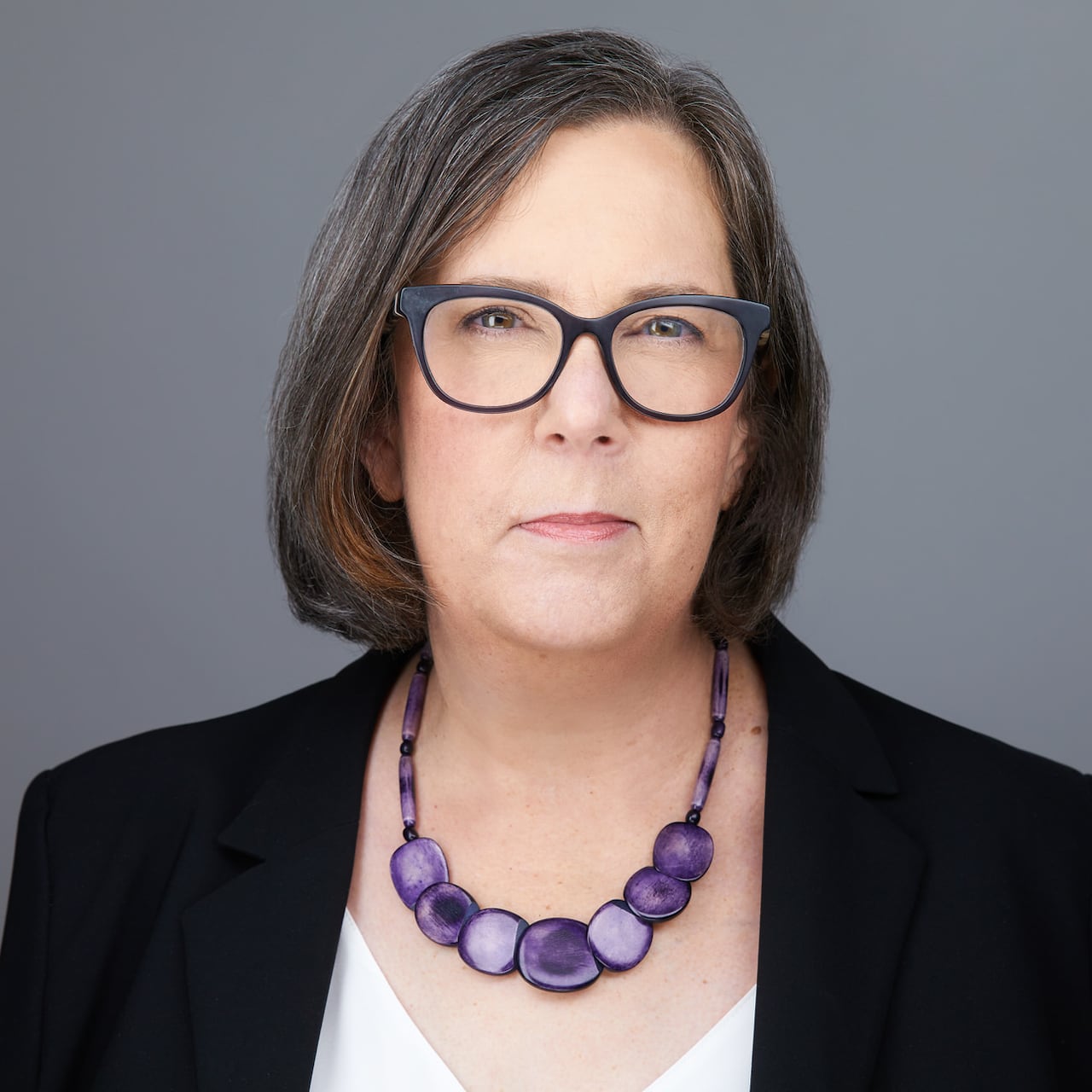
With files from Janet French and Cameron MacCuish
Liberal MP Steven Guilbeault to resign: sources
Former environment minister and longtime environmentalist is leaving the House

Steven Guilbeault is resigning as a member of Parliament, CBC News has learned.
The Montreal MP and former environment minister is expected to break the news to his colleagues at the Liberal caucus meeting on Wednesday, sources told CBC News and Radio-Canada.
A source with knowledge of his decision said Guilbeault will also speak in the House of Commons Wednesday afternoon to inform his constituents of Laurier-Sainte-Marie about his decision.
Guilbeault, a prominent environmental activist, is quitting the federal Liberals after a series of moves by Prime Minister Mark Carney to roll back key pillars of Canada's climate and environmental policy.
But in his speech in the Commons, Guilbeault is expected to stop short of blasting the Carney government's environmental rollbacks and instead strike an optimistic and hopeful tone.
He has kept the Prime Minister's Office informed of his planned departure, the sources say.
According to a source, Guilbeault was approached about crossing the floor to join another party or even sit as an Independent. He is expected to remain as an MP until the House rises for the summer.
CTV News and the Globe and Mail first reported some of the details of Guilbeault's departure.
A year into the Carney government's mandate, it has repealed the consumer carbon tax, eliminated the EV sales mandate, signalled the end of the oil and gas emissions cap and reversed the Liberal promise to end fossil fuel subsidies.
Ottawa is also advancing a number of major projects which are expected to increase planet-warming carbon pollution at home and abroad, including a bitumen pipeline to Canada's West Coast and numerous LNG export terminals. Those projects are also expected to generate massive provincial royalties, boost the national GDP and help Canada diversify trade from the U.S.
Many of these reversals included policies that Guilbeault either was involved in championing or spearheaded during his nearly four years as Canada's environment and climate change minister.
 Liberals’ proposed changes to pipeline reviews ‘take us back decades’: Guilbeault
But all of this seemed to come to a head in November when Carney and Alberta Premier Danielle Smith signed a memorandum of understanding for a new energy accord that included a commitment to suspend federal clean electricity regulations which would have had the most impact in Alberta.
"When I entered politics, it was because I had a deep conviction that I could make a difference in fighting climate change and protecting our environment," Guilbeault wrote in the letter announcing his resignation from Carney's cabinet soon after that memorandum was signed.
"My commitment to leaving a better world for the future of our children and our planet remains unchanged."
No longer at the cabinet table, Guilbeault still attempted to create change from within. A source tells CBC News that Guilbeault assisted the government as it crafted its enhanced nature strategy and extended its commitment to international climate finance.
He also attempted to influence the direction of the negotiations of the Alberta MOU. He vocally urged the government to not compromise on industrial carbon pricing and undermine other climate commitments.
In May, both governments released an implementation agreement that delayed the ramp up of the price on big emitters.
"I'm a good friend of Steven. I've worked a lot to bring him into politics and he will always be a good friend," said Industry Minister Mélanie Joly. "But I also think that what we've done with the MOU makes sense."
 Steven Guilbeault to resign as MP: sources
"I really want him to stay. I think he is a great guy. I rather have him in caucus saying what he thinks," said Ontario Liberal MP Marcus Powlowski.
Some independent estimates state that Canada is not on track to achieve its near term nor longer term net-zero targets by 2050.
Guilbeault entered federal politics in 2019. Before that, he was a prominent environmental activist, founding Equiterre and leading campaigns for Greenpeace.
He captured headlines in 2001 by scaling the CN Tower and unfurling a banner that read "Canada and Bush Climate Killers" — a protest of both Canada and the U.S. failing to ratify the 1997 Kyoto agreement to cut greenhouse gas emissions. Canada ultimately ratified the treaty the following year.
A Greenpeace spokesperson called Guilbeault's resignation "a red flag" larger than that protest banner.
"[It's] deeply concerning and underlines what we've been saying for months: Mark Carney is prioritizing what is good for oil companies over what is good for regular Canadians," said Keith Stewart, Greenpeace Canada's senior energy strategist.
Guilbeault's resignation is not the only vacancy left on the Liberal benches.
B.C. MP Jonathan Wilkinson and Toronto MP Nate Erskine-Smith have both announced they will be leaving.
The Liberals will need to win those seats back to maintain their parliamentary majority. But with the with House of Commons rising for the summer in June that is not an immediate worry for the Carney government.
ABOUT THE AUTHOR

14 Liberal MPs pen letter to Carney raising concerns over environmental backslide
Letter was sent to PM prior to latest pipeline agreement with Alberta

Liberal MP Steven Guilbeault may be the most outspoken, but he's not the only member of his party unhappy with Prime Minister Mark Carney's environmental rollbacks.
Carney signed a new agreement with Alberta Premier Danielle Smith last week that could see construction on an oil pipeline to the West Coast start as early as September 2027. It also includes a plan to increase Alberta's industrial carbon price, though at a slower pace than previously projected.
Fourteen Liberal MPs sent a letter to the prime minister at the end of April, before the agreement with the Alberta government was even signed, to offer some recommendations — but also to express their unease with the situation.
Despite signing their names at the bottom of the letter, the MPs do not want to be publicly identified, stating that their approach is intended to be constructive and respectful.
"We remain deeply concerned; the government's credibility will be seriously compromised," said the signatories of the letter, which was obtained by Radio-Canada.
Liberals’ proposed changes to pipeline reviews ‘take us back decades’: GuilbeaultThe 14 MPs come from across the country, including Quebec and British Columbia.
Specifically in response to the concessions being granted to Alberta, the elected officials reiterated the importance of “supporting the clean electricity regulations.” And more generally, they emphasized that “climate change remains the greatest threat of our time.”
At the time of writing, the Prime Minister's Office had not responded to a request for comment.
Bloc Québécois calls on disgruntled MPs to speak out
The Bloc Québécois is aiming to use the few remaining weeks of the parliamentary sitting before the summer recess to convince Liberals who are sensitive to climate issues to speak out.
“We will use all the parliamentary tools at our disposal to make the voices of those who haven't disappeared, who remain concerned about the climate crisis, heard,” Bloc MP Patrick Bonin said in a French interview.
So far, only Guilbeault — who left Carney's cabinet after the initial MOU Carney and Smith signed last fall — has publicly voiced his criticism of Carney's most recent proposals to weaken environmental regulations in order to attract an investor for a potential pipeline in Alberta.
But Bonin said he hopes more Liberals come forward publicly.
“We obviously hope that there are people within the Liberals who will stand up and say, no, you were not elected on a platform that is essentially the agenda of the oil and gas companies, which is currently being implemented,” the Bloc environment critic said.
ABOUT THE AUTHOR

Caroline Mulroney resigning from Ford government's cabinet, Ontario legislature
PC MPP and cabinet minister Caroline Mulroney announced Monday she will step down on June 5

Ontario cabinet minister Caroline Mulroney has announced that she is resigning, citing a desire to start a new chapter.
Mulroney was elected in 2018 as part of Premier Doug Ford's first government and has served in a number of cabinet portfolios, including attorney general, transportation, francophone affairs, and currently president of the Treasury Board.
In a public letter Monday, Mulroney said her decision comes two years after losing her father, former prime minister Brian Mulroney, and now as she and her husband are empty nesters.
"Together, they have led me to the conclusion that now is the right time to step back from elected life and begin a new chapter, one I am genuinely excited about," Mulroney wrote.
During question period Monday, Mulroney took a moment to acknowledge her resignation and thank her colleagues at Queen's Park.
"Serving this house has been one of the greatest privileges of my life," she said. "I am so proud of all the important work we have accomplished together on behalf of Ontarians."
Ford said in a statement that Ontario is lucky to have benefitted from Mulroney's calm and steady leadership.
"Politics is in Caroline's blood," he wrote. "The Ontario PC Party and our conservative movement will no doubt continue to benefit from her ideas and ideals."
He has tapped Finance Minister Peter Bethlenfalvy to serve as interim president of the Treasury Board once Mulroney's resignation takes effect on June 5. Long-Term Care Minister Natalia Kusendova-Bashta will take over as minister of francophone affairs, Ford's office said in a separate statement.
Mulroney's resignation will trigger a byelection in her riding of York-Simcoe, in addition to one in Scarborough Southwest that Ford must call by the end of summer.
 Ontario
Premier Doug Ford released a statement Monday, calling Caroline
Mulroney a close, personal friend who provided the province with calm,
steady leadership. (Frank Gunn/The Canadian Press)
Ontario
Premier Doug Ford released a statement Monday, calling Caroline
Mulroney a close, personal friend who provided the province with calm,
steady leadership. (Frank Gunn/The Canadian Press)Ford said Mulroney leaves a record she can be proud of, including a funding agreement for the largest expansion of public transit in North America.
Mulroney reflected fondly in her letter on her time as francophone affairs minister, a portfolio she held through the full eight years, though it began with a bumpy start, presiding over some funding cuts in 2018.
"There is an old line in politics that the worst day in elected life is better than the best day outside of it," she wrote in closing her letter.
"I'm not sure that's true, but I do know that I will miss the people I have worked with over the past eight years more than you know."

No comments:
Post a Comment