 Questioned
by the NDP at a legislative committee session in April, Nova Scotia
Labour Minister Jill Balser says the government is starting a review of
the workers' compensation system. (CBC)
Questioned
by the NDP at a legislative committee session in April, Nova Scotia
Labour Minister Jill Balser says the government is starting a review of
the workers' compensation system. (CBC)From: Michelle Thompson <michellethompsonmla@gmail.com>
Date: Thu, Feb 26, 2026 at 4:55 PM
Subject: Thank you for your email Re: My heart goes out to Melissa Ellsworth
To: <david.raymond.amos333@gmail.com>
Automatic Reply: You have reached the Antigonish Constituency Office.
If your matter is a health related issue and you are from outside the
Antigonish
Constituency, your email will be forwarded to Health.Minister@novascotia.ca
and the appropriate people at Department of Health and Wellness can
assist you with your concern. Emails containing abusive language or
threats will not be responded to
Thank you for reaching out. You have reached the constituency office
for Antigonish.
.
Thank you.
Plus about 20 more replies
---------- Original message ---------
From: David Amos <david.raymond.amos333@gmail.com>
Date: Thu, Feb 26, 2026 at 4:54 PM
Subject: Re: My heart goes out to Melissa Ellsworth
To:
<barbadamsmla@gmail.com>, <mlascottarmstrong@gmail.com>,
<hello@digbyannapolis.ca>, <barkhousemla@gmail.com>,
<Info@trevorboudreau.ca>, <mladavidbowlby@gmail.com>,
<info@rickburnsmla.ca>, <briancomermla@gmail.com>,
<MentalHealth.Minister@novascotia.ca>,
<MIN-LSI@novascotia.ca>, <brianwongmla@gmail.com>,
<DianneTimminsMLA@gmail.com>, <mla@northsidewestmount.ca>,
<Tom.Taggartmla@gmail.com>,
<contact@damianstoilovmla.com>, <info@nickhilton.ca>,
<toryrushtonmla@bellaliant.com>,
<Johnwhitemla@outlook.com>,
<susancorkumgreekmla@gmail.com>,
<adegoke@adegokefadare.ca>, <mlatwilagrosse@gmail.com>,
<timhalmanmla@gmail.com>, <mlabradjohns@gmail.com>,
<info@coltonleblanc.ca>, <johnlohrmla@gmail.com>,
<mlahantseast@gmail.com>, <dannymla@bellaliant.com>,
<info@marcomacleod.com>, <mla@kylemacquarrie.ca>,
<brendan@brendanmaguire.ca>, <women@novascotia.ca>,
<lnuaffairsminister@novascotia.ca>,
<leahmartinmla@gmail.com>, <Kim.maslandmla@gmail.com>,
<bradmcgowanMLA@gmail.com>, <gregmorrow4gt@gmail.com>,
<timouthitmla@gmail.com>, <chrispalmermla@gmail.com>,
<mlaritcey@gmail.com>, <info@claremla.ca>,
<melissa.mlaoffice@gmail.com>, <mla@esmithmccrossinmla.com>
Cc:
<speaker@novascotia.ca>, <PCcaucus@novascotia.ca>,
<rodwilson@nsmla.ca>, <paulwozney@nsmla.ca>,
<susanleblanc@nsmla.ca>, <lisalachance@nsmla.ca>,
<suzyhansen@nsmla.ca>, <linahamid@nsmla.ca>,
<kristagallagher@nsmla.ca>, <kendracoombes@nsmla.ca>,
<info@iainrankin.ca>, <info@mombourquette.ca>,
<info@beckydruhan.ca>, <michellethompsonmla@gmail.com>,
<Gary.Anand@parl.gc.ca>,
<Yves-Francois.Blanchet@parl.gc.ca>,
<pierre.poilievre@parl.gc.ca>, <mlajulievanexan@gmail.com>,
<PREMIER@novascotia.ca>, <nolan.young@shelburnemla.ca>,
<michael.gorman@cbc.ca>
Dispersing the Fog -E49- Olympics, USSC re: Tariffs, John Risley, Guest Dave Moore on AI for Ports
 Adam Rodgers - Nova Scotia Lawyer
 26 Comments

Rod Wilson

Rod Wilson was first elected to the Nova Scotia House of Assembly as MLA for Halifax Armdale in 2024.
Mr. Wilson has over thirty years experience as a nurse, physician, and health care executive. He has also held leadership roles with the College of Physicians and Surgeons of NS, Doctors NS, NS Department of Health and served on the governing council of the Nova Scotia Barrister Society. Mr. Wilson is a longtime volunteer, working with NS AIDS Commission, Mental Health Foundation NS, Hospice Halifax, Canadian Mental Health Association NS Division, Adsum Women and Children, and Shelter Nova Scotia.
He is a member of the Private and Local Bills and Health Committees.
Constituency office
2625 Joseph Howe Drive, Suite 21
Halifax, NS
B3L 4G4
Phone: 902-943-0221
E-mail: rodwilson@nsmla.ca
Business address
NDP Caucus Office
BMO Building
5151 George Street, Suite 1402
Halifax, NS B3J 1M5
From: Michelle Thompson <michellethompsonmla@gmail.com
Date: Mon, Feb 16, 2026 at 3:05 PM
Subject: Thank you for your email Re: My heart goes out to Melissa Ellsworth
To: <david.raymond.amos333@gmail.
Automatic Reply: You have reached the Antigonish Constituency Office.
If your matter is a health related issue and you are from outside the
Antigonish
Constituency, your email will be forwarded to Health.Minister@novascotia.ca
and the appropriate people at Department of Health and Wellness can
assist you with your concern. Emails containing abusive language or
threats will not be responded to
Thank you for reaching out. You have reached the constituency office
for Antigonish.
.
Thank you.
---------- Original message ---------
Date: Mon, Feb 16, 2026 at 3:06 PM
Subject: Automatic reply: My heart goes out to Melissa Ellsworth
To: David Amos <david.raymond.amos333@gmail.
-
Full name
-
Address, including postal code
-
Telephone number
-
Brief details of your situation
-
Nom complet
-
Adresse, y compris le code postal
-
Numéro de téléphone
-
Brève description de votre situation
Date: Mon, Feb 16, 2026 at 3:06 PM
Subject: Réponse automatique : My heart goes out to Melissa Ellsworth
To: David Amos <david.raymond.amos333@gmail.
(Ceci est une réponse automatique)
(English follows)
Bonjour,
Nous avons bien reçu votre courriel et nous vous remercions d'avoir écrit à M. Yves-François Blanchet, député de Beloeil-Chambly et chef du Bloc Québécois.
Comme nous avons un volume important de courriels, il nous est impossible de répondre à tous individuellement. Soyez assuré(e) que votre courriel recevra toute l'attention nécessaire.
Nous ne répondons pas à la correspondance contenant un langage offensant.
L'équipe du député Yves-François Blanchet
Chef du Bloc Québécois
Thank you for your email. We will read it as soon as we can.
We do not respond to correspondence that contains offensive language.
Date: Mon, Feb 16, 2026 at 3:06 PM
Subject: Acknowledgement – Email Received / Accusé de réception – Courriel reçu
To: David Amos <david.raymond.amos333@gmail.
On behalf of the Hon. Pierre Poilievre, we would like to thank you for contacting the Office of the Leader of the Official Opposition.
Mr. Poilievre greatly values feedback and input from Canadians. We wish to inform you that the Office of the Leader of the Official Opposition reads and reviews every e-mail we receive. Please note that this account receives a high volume of e-mails, and we endeavour to reply as quickly as possible.
If you are a constituent of Mr. Poilievre in the riding of Battle River - Crowfoot and you have an urgent matter to discuss, please contact his constituency office at:
Phone: 1-780-608-4600
Fax: 1-780-608-4603
Hon. Pierre Poilievre, M.P.
Battle River – Crowfoot
4945 50 Street
Camrose, Alberta T4V 1P9
Once again, thank you for writing.
Sincerely,
Office of the Leader of the Official Opposition
______________________________
Au nom de l’honorable Pierre Poilievre, nous tenons à vous remercier d’avoir communiqué avec le Bureau du chef de l’Opposition officielle.
M. Poilievre accorde une grande importance aux commentaires et aux suggestions des Canadiens. Nous tenons à vous informer que le Bureau du chef de l’Opposition officielle lit et examine tous les courriels qu’il reçoit. Veuillez noter que ce compte reçoit un volume important de courriels et que nous nous efforçons d’y répondre le plus rapidement possible.
Si vous êtes un électeur de M. Poilievre dans la circonscription de Battle River - Crowfoot et que vous avez une question urgente à discuter, veuillez contacter son bureau de circonscription :
Téléphone :
Télécopieur :
L’honorable Pierre Poilievre, député
Battle River – Crowfoot
4945, 50 Street
Camrose (Alberta) T4V 1P9
Encore une fois, merci de votre message.
Veuillez agréer nos salutations distinguées,
Bureau du chef de l’Opposition officielle
From: Julie Vanexan <mlajulievanexan@gmail.com>
Date: Tue, Feb 17, 2026 at 2:07 PM
Subject: Re: Fwd: My heart goes out to Melissa Ellsworth
To: <david.raymond.amos333@gmail.com>
**This is an automated response**
Thank you for your email, it has been received.
If you could please make sure your full name, phone number, and address are
attached to this email. We do prioritize our constituency emails, and try
to respond in a timely manner.
--
Julie Vanexan
MLA for Kings South
8789 Commercial St.
New Minas, NS, B4N 3C5
Phone: 902-365-6210 <+19023656210>
Email: mlajulievanexan@gmail.co <mlajulievanexan@gmail.com>m
Website: mlajulievanexan.ca
Sign up for our monthly Newsletter
<https://lb.benchmarkemail.com
From: Premier <PREMIER@novascotia.ca>
Date: Mon, Feb 16, 2026 at 3:06 PM
Subject: Thank you for your email
To: David Amos <david.raymond.amos333@gmail.
Thank you for contacting the Office of the Premier. This is an automatic confirmation that your message has been received.
Please note that the Premier receives a tremendous volume of e-mails and letters every week. If your message requires an answer, we will get back to you as soon as possible.
To get you the best answer possible and ensure accurate information, your message may be shared with other Ministers or appropriate government officials to respond on the Premier’s behalf. We appreciate your patience and understanding.
Here are some helpful resources:
- To learn more about Wind West, Canada's first offshore wind development, please visit:
https://novascotia.ca/wind-
west/ - For more information on the newly expanded Nova Scotia School Lunch Program and to order an affordable, nutritious lunch for your public school student, please visit: https://nslunch.ca/
- To learn more and apply for the $750 Seniors Care Grant to help with the costs of household and health services, including home heating, please visit: https://novascotia.ca/
seniors-care-grant/. To learn more and apply for the Heating Assistance Rebate Program, please visit: https://www.novascotia. ca/apply-heating-assistance- rebate-heating-assistance- rebate-program. - To discover Nova Scotia Loyal and learn how to identify, buy, and support local Nova Scotian products, please visit: https://nsloyal.ca/
- To learn more and sign up for the Nova Scotia Guard to rise to the occasion in the wake of an emergency, please visit: https://nsguard.ca/
- To
book health services, get secure access to your own health records, or
find the right care option for you, please download the YourHealthNS app or visit: https://yourhealthns.
ca/
Stay informed with NSGov News. Sign up for a
monthly newsletter with information about community programs, services,
and news that matters to you, delivered straight to your inbox.
Subscribe at:
https://newsletter.novascotia.
For the most up-to-date information from the Government of Nova Scotia, please visit: https://novascotia.ca/.
Thank you,
The Premier’s Correspondence Team
Party leaders point fingers as Nova Scotia debt continues to climb
Premier says he's responding to deferred needs, opposition says government can't manage a budget
 Party leaders point fingers as Nova Scotia debt continues to climb
Nova Scotia’s debt has increased by about $10 billion since Premier Tim Houston and his team formed government and the latest budget being debated at Province House shows the number will continue to climb.
The premier says it’s because his government is making up for inaction by past governments, while opposition leaders say it has more to do with a government incapable of managing budgets.
When Houston and the Progressive Conservatives came to power in 2021, the debt stood at about $17 billion. The 2026-27 budget tabled Monday pegs the debt at almost $28 billion and projects it will hit almost $36 billion by 2029-30.
The premier told reporters on Tuesday that his government’s record spending on things such as health-care, long-term care beds, roads and housing has been out of necessity.
“Significant infrastructure needs were facing our province,” he said.
“So we had a choice: we could do what has been done and just put our heads in the sand and pretend it didn’t exist and ignore it, or we could invest in the infrastructure that is around the province that is needed to keep people safe and to really improve our quality of life.”
 NDP Claudia Chender speaks to reporters at Province House. (Michael Gorman/CBC)
That record spending has also seen the government spend all the extra money it received during each of the last five years in the form of federal transfer payments and tax revenue related to the population boom the province experienced.
While that boom has subsided, the commitments the government locked itself into with labour agreements and major infrastructure projects continue. Now the government finds itself looking for a solution.
The 2026-27 budget includes $304 million in cuts that will affect jobs across the public service and discretionary program grants, and promises for even larger cuts in the subsequent three years. Even with that, department spending is up this year by 7.7 per cent, or $1.3 billion.
NDP Leader Claudia Chender said Houston and his government have been “terrible fiscal managers.”
Chender said the record spending has come without sufficient transparency because of the government’s track record of spending billions of dollars outside its own budget.
“They will use our money however they want, they will not stay within their budget and they won’t even tell us how they’re spending it,” she told reporters.
“It’s a fundamental problem. The debt servicing costs are enormous.”
 Interim Liberal Leader Iain Rankin speakers to reporters at Province House. (Michael Gorman/CBC)
Debt servicing costs in the 2026-27 budget come in at about $1 billion and are projected to reach almost $1.5 billion by 2029-30.
When he tabled his budget Monday, Finance Minister John Lohr said the current numbers do not reflect potential economic windfalls that could be earned through natural resource development projects and increased defence spending by the federal government. Lohr and Houston have remained bullish on the potential of each.
Whether there could be financial help around the corner or not, Interim Liberal Leader Iain Rankin said Houston and his government are where they are because they’ve been unable to say ‘no’ and live within their means.
“We haven’t seen this kind of mismanagement in a long time,” said Rankin, himself a former premier and member of a previous Liberal government that got into protracted labour battles in an effort to balance the budget.
Rankin said the government he was a part of addressed a financial deficit and still managed to find ways to make infrastructure investments such as highway twinning and repairs to schools.
ABOUT THE AUTHOR

From: David Amos <david.raymond.amos333@gmail.com>
Date: Tue, Feb 17, 2026 at 2:06 PM
Subject: Fwd: My heart goes out to Melissa Ellsworth
To: <MIN-LSI@novascotia.ca>, <nolan.young@shelburnemla.ca>, <brianwongmla@gmail.com>, <mlajulievanexan@gmail.com>, <DianneTimminsMLA@gmail.com>, <mla@northsidewestmount.ca>, <Tom.Taggartmla@gmail.com>, <contact@damianstoilovmla.com>, <melissa.mlaoffice@gmail.com>, <info@claremla.ca>, <mlaritcey@gmail.com>, <chrispalmermla@gmail.com>, <timouthitmla@gmail.com>, <gregmorrow4gt@gmail.com>, <bradmcgowanMLA@gmail.com>, <Kim.maslandmla@gmail.com>, <leahmartinmla@gmail.com>, <lnuaffairsminister@novascotia.ca>, <women@novascotia.ca>, <brendan@brendanmaguire.ca>, <mla@kylemacquarrie.ca>, <info@marcomacleod.com>, <dannymla@bellaliant.com>, <mlahantseast@gmail.com>, <johnlohrmla@gmail.com>, <info@coltonleblanc.ca>, <mlabradjohns@gmail.com>, <timhalmanmla@gmail.com>, <mlatwilagrosse@gmail.com>, <adegoke@adegokefadare.ca>, <susancorkumgreekmla@gmail.com>
Cc: <Johnwhitemla@outlook.com>, <PCcaucus@novascotia.ca>, <toryrushtonmla@bellaliant.com>, <info@nickhilton.ca>
Nick Hilton was first elected to the Nova Scotia House of Assembly as MLA for Yarmouth in 2024.
He is the ministerial assistant to the Minister of Health and Wellness.
Mr. Hilton is a former municipal councillor and nurse. He is a long-time community volunteer.
He is a member of the Veterans Affairs and Health Committees.
https://nslegislature.ca/
Current cabinet responsibilities
Bills
Contact details
Constituency office
Civic address:
164 Water Street
Shelburne, NS
B0T 1W0
Phone: 902-875-6362
E-mail: nolan.young@shelburnemla.ca
Business address
Department of Labour, Skills and Immigration
1505 Barrington Street
Halifax, NS
B3J 3K5PO Box 697
Halifax, NS
B3J 2T8
Phone: 902-424-5301
E-mail: MIN-LSI@novascotia.ca
---------- Original message ---------
From: David Amos <david.raymond.amos333@gmail.com>
Date: Tue, Feb 17, 2026 at 12:44 PM
Subject: Fwd: My heart goes out to Melissa Ellsworth
To: barbadamsmla@gmail.com, mlascottarmstrong@gmail.com, hello@digbyannapolis.ca,
barkhousemla@gmail.com, Info@trevorboudreau.ca, mladavidbowlby@gmail.com,
info@rickburnsmla.ca, briancomermla@gmail.com, MentalHealth.Minister@novascotia.ca
Cc: speaker@novascotia.ca, PCcaucus@novascotia.ca, rodwilson@nsmla.ca,
Rod Wilson

Rod Wilson was first elected to the Nova Scotia House of Assembly as MLA for Halifax Armdale in 2024.
Mr. Wilson has over thirty years experience as a nurse, physician, and health care executive. He has also held leadership roles with the College of Physicians and Surgeons of NS, Doctors NS, NS Department of Health and served on the governing council of the Nova Scotia Barrister Society. Mr. Wilson is a longtime volunteer, working with NS AIDS Commission, Mental Health Foundation NS, Hospice Halifax, Canadian Mental Health Association NS Division, Adsum Women and Children, and Shelter Nova Scotia.
He is a member of the Private and Local Bills and Health Committees.From: David Amos <david.raymond.amos333@gmail.
Date: Tue, Feb 17, 2026 at 11:29 AM
Subject: Re: My heart goes out to Melissa Ellsworth
To: <mla@esmithmccrossinmla.com>
Your office just called me Correct?
https://www.facebook.com/
https://nslegislature.ca/
Elizabeth Smith-McCrossin

Elizabeth Smith-McCrossin was first elected to the Nova Scotia House of Assembly as a Progressive Conservative MLA for Cumberland North in 2017 and was re-elected in 2021 and 2024 as an Independent.
She was an owner of 4 businesses and she has been a registered nurse since 1991.
Constituency office
Civic address:
5 Ratchford Street, 2nd Floor
Amherst, NS
B4H 1X2
Phone: 902-661-2288
Fax: 902-661-0114
E-mail: mla@esmithmccrossinmla.com
From: Michelle Thompson <michellethompsonmla@gmail.com
Date: Mon, Feb 16, 2026 at 3:05 PM
Subject: Thank you for your email Re: My heart goes out to Melissa Ellsworth
To: <david.raymond.amos333@gmail.
Automatic Reply: You have reached the Antigonish Constituency Office.
If your matter is a health related issue and you are from outside the
Antigonish
Constituency, your email will be forwarded to Health.Minister@novascotia.ca
and the appropriate people at Department of Health and Wellness can
assist you with your concern. Emails containing abusive language or
threats will not be responded to
Thank you for reaching out. You have reached the constituency office
for Antigonish.
.
Thank you.
---------- Original message ---------
Date: Mon, Feb 16, 2026 at 3:06 PM
Subject: Automatic reply: My heart goes out to Melissa Ellsworth
To: David Amos <david.raymond.amos333@gmail.
-
Full name
-
Address, including postal code
-
Telephone number
-
Brief details of your situation
-
Nom complet
-
Adresse, y compris le code postal
-
Numéro de téléphone
-
Brève description de votre situation
Date: Mon, Feb 16, 2026 at 3:06 PM
Subject: Réponse automatique : My heart goes out to Melissa Ellsworth
To: David Amos <david.raymond.amos333@gmail.
(Ceci est une réponse automatique)
(English follows)
Bonjour,
Nous avons bien reçu votre courriel et nous vous remercions d'avoir écrit à M. Yves-François Blanchet, député de Beloeil-Chambly et chef du Bloc Québécois.
Comme nous avons un volume important de courriels, il nous est impossible de répondre à tous individuellement. Soyez assuré(e) que votre courriel recevra toute l'attention nécessaire.
Nous ne répondons pas à la correspondance contenant un langage offensant.
L'équipe du député Yves-François Blanchet
Chef du Bloc Québécois
Thank you for your email. We will read it as soon as we can.
We do not respond to correspondence that contains offensive language.
Date: Mon, Feb 16, 2026 at 3:06 PM
Subject: Acknowledgement – Email Received / Accusé de réception – Courriel reçu
To: David Amos <david.raymond.amos333@gmail.
On behalf of the Hon. Pierre Poilievre, we would like to thank you for contacting the Office of the Leader of the Official Opposition.
Mr. Poilievre greatly values feedback and input from Canadians. We wish to inform you that the Office of the Leader of the Official Opposition reads and reviews every e-mail we receive. Please note that this account receives a high volume of e-mails, and we endeavour to reply as quickly as possible.
If you are a constituent of Mr. Poilievre in the riding of Battle River - Crowfoot and you have an urgent matter to discuss, please contact his constituency office at:
Phone: 1-780-608-4600
Fax: 1-780-608-4603
Hon. Pierre Poilievre, M.P.
Battle River – Crowfoot
4945 50 Street
Camrose, Alberta T4V 1P9
Once again, thank you for writing.
Sincerely,
Office of the Leader of the Official Opposition
______________________________
Au nom de l’honorable Pierre Poilievre, nous tenons à vous remercier d’avoir communiqué avec le Bureau du chef de l’Opposition officielle.
M. Poilievre accorde une grande importance aux commentaires et aux suggestions des Canadiens. Nous tenons à vous informer que le Bureau du chef de l’Opposition officielle lit et examine tous les courriels qu’il reçoit. Veuillez noter que ce compte reçoit un volume important de courriels et que nous nous efforçons d’y répondre le plus rapidement possible.
Si vous êtes un électeur de M. Poilievre dans la circonscription de Battle River - Crowfoot et que vous avez une question urgente à discuter, veuillez contacter son bureau de circonscription :
Téléphone :
Télécopieur :
L’honorable Pierre Poilievre, député
Battle River – Crowfoot
4945, 50 Street
Camrose (Alberta) T4V 1P9
Encore une fois, merci de votre message.
Veuillez agréer nos salutations distinguées,
Bureau du chef de l’Opposition officielle
From: Premier <PREMIER@novascotia.ca>
Date: Mon, Feb 16, 2026 at 3:06 PM
Subject: Thank you for your email
To: David Amos <david.raymond.amos333@gmail.
Thank you for contacting the Office of the Premier. This is an automatic confirmation that your message has been received.
Please note that the Premier receives a tremendous volume of e-mails and letters every week. If your message requires an answer, we will get back to you as soon as possible.
To get you the best answer possible and ensure accurate information, your message may be shared with other Ministers or appropriate government officials to respond on the Premier’s behalf. We appreciate your patience and understanding.
Here are some helpful resources:
- To learn more about Wind West, Canada's first offshore wind development, please visit:
https://novascotia.ca/wind-
west/ - For more information on the newly expanded Nova Scotia School Lunch Program and to order an affordable, nutritious lunch for your public school student, please visit: https://nslunch.ca/
- To learn more and apply for the $750 Seniors Care Grant to help with the costs of household and health services, including home heating, please visit: https://novascotia.ca/
seniors-care-grant/. To learn more and apply for the Heating Assistance Rebate Program, please visit: https://www.novascotia. ca/apply-heating-assistance- rebate-heating-assistance- rebate-program. - To discover Nova Scotia Loyal and learn how to identify, buy, and support local Nova Scotian products, please visit: https://nsloyal.ca/
- To learn more and sign up for the Nova Scotia Guard to rise to the occasion in the wake of an emergency, please visit: https://nsguard.ca/
- To
book health services, get secure access to your own health records, or
find the right care option for you, please download the YourHealthNS app or visit: https://yourhealthns.
ca/
Stay informed with NSGov News. Sign up for a
monthly newsletter with information about community programs, services,
and news that matters to you, delivered straight to your inbox.
Subscribe at:
https://newsletter.novascotia.
For the most up-to-date information from the Government of Nova Scotia, please visit: https://novascotia.ca/.
Thank you,
The Premier’s Correspondence Team
---------- Original message ---------
From: David Amos <david.raymond.amos333@gmail.
Date: Mon, Feb 16, 2026 at 3:05 PM
Subject: My heart goes out to Melissa Ellsworth
To:
<PREMIER@novascotia.ca>, <michellethompsonmla@gmail.com
Cc: <tom.ayers@cbc.ca>,
<claudiachendermla@gmail.com>, <ca@zachchurchill.com>,
<sean.fraser@parl.gc.ca>, <mark.carney@parl.gc.ca>,
<lenametlege.diab@parl.gc.ca>, <Patty.Hajdu@parl.gc.ca>,
<dominic.leblanc@parl.gc.ca>, <don.davies@parl.gc.ca>,
<news957@rogers.com>, <pierre.poilievre@parl.gc.ca>,
<gary.anandasangaree@parl.gc.

 ep599 - TOLERANCE IS DEAD

6 Comments
Cape Breton woman seeks MAID over lengthy workers' compensation delays
N.S. government plans wide-ranging WCB review, but NDP labour critic worries it won't come soon enough

A Cape Breton woman who has been fighting for more than a decade for benefits from Nova Scotia's Workers' Compensation Board says she will continue to push ahead as long as she can.
But Melissa Ellsworth said she can't wait any longer for pain relief and has applied for medical assistance in dying, also known as MAID.
Ellsworth said workplace injuries while nursing in 2006 and working as a corrections officer in 2009 have left her with constant pain and unable to eat properly.
The 54-year-old has been off work since 2010, and has shrunk a couple of inches in height and now weighs under 100 pounds.
"I can't live with this type of pain and I'm disintegrating to nothing, and the options that I have for quality of life are there, but workers' comp is refusing to provide them, so I have no option really but to apply for MAID," she said.
Won 10 of 11 appeals
Ellsworth was first injured when a psychiatric patient in a Halifax hospital threw a chair and hit her in the head. The second injury came when an inmate assaulted her, dislocating her shoulder and eventually leaving her with post-traumatic stress disorder.
Despite diagnoses of trigeminal neuralgia — also known as the suicide disease because of the severe facial pain it causes — and PTSD, Ellsworth said WCB case managers have denied her claims for treatment.
She has appealed those decisions to the board's tribunal and won 10 of 11 decisions there. Four years ago, Ellsworth won a battle for medical cannabis treatment.
 Ellsworth
says the WCB denied her pain injections in 2010. They were finally
approved in 2015 by an appeal tribunal, but by then the injections were
no longer helpful. (Robert Short/CBC)
Ellsworth
says the WCB denied her pain injections in 2010. They were finally
approved in 2015 by an appeal tribunal, but by then the injections were
no longer helpful. (Robert Short/CBC)Ellsworth has continued to fight for other benefits. For example, her jaw has not worked properly for years, so the WCB approved liquid meal replacements. But Ellsworth said after 10 years, her body can't tolerate the supplements anymore.
She said she has asked for a chewable meal replacement that would help her retain some use of her jaw — rather than submit to a permanent feeding tube that would mean never being able to eat properly again — but the board won't approve the alternative.
In addition, the WCB denied injections for pain in 2010 that were finally approved in 2015 after an appeal tribunal overturned the initial decision, Ellsworth said, but by then the injections were no longer helpful.
She's now getting palliative treatment with pain pills and medical cannabis, but Ellsworth said the strength of the cannabis prescription is too low and the board won't change it.
She said she is speaking out not only to improve her case, but because she wants the WCB completely overhauled.
According to its most recent annual report, the Workers' Compensation Appeals Tribunal overturned 56 per cent of all cases last year where someone questioned a WCB case manager's decision to deny benefits.
Slowly starving to death
Ellsworth said she is not giving up the fight, but she no longer has any quality of life.
She has anxiety and depression on top of her other diagnoses, which have led to her decision to apply for medical assistance in dying.
Ellsworth said she's slowly starving to death anyway.
"I love food, but can you imagine being hungry, but not being able to ... I can't even eat hamburgers," she said. "I can't open my mouth far enough. And now I'm living across the street from my parents who get to watch this with their own eyes, day in and day out.
"So in my case it's more of I plan to leave this world with what little dignity that workers' compensation leaves me with, and right now, it's not a lot."
 Kendra
Hill says she suffered two injuries while nursing at the Cape Breton
Regional Hospital and has been battling for workers' compensation
benefits ever since. (Tom Ayers/CBC)
Kendra
Hill says she suffered two injuries while nursing at the Cape Breton
Regional Hospital and has been battling for workers' compensation
benefits ever since. (Tom Ayers/CBC)Ellsworth's friend Kendra Hill, also 54, said she has also had difficulty getting WCB benefits after suffering back injuries as a nurse at the Cape Breton Regional Hospital in 2006 and 2013.
Hill said she has had surgery on her back and neck, but her mobility is progressively being affected and she also has chronic pain. Being off work permanently has also led to PTSD, she said.
"One day you are at work and you have your job to go to," Hill said. "You have your colleagues. You have your regular daily life. You have your full paycheque.
"Then all of a sudden, your pay is cut in half. You don't have that social life that's connected to work. When all of that is gone from your life, it's traumatic."
System designed to deny or delay, Hill says
Hill said the workers' compensation system is designed to deny or delay benefits, and like Ellsworth, she has also struggled to receive such things as massage therapy and an occupational therapy assessment of her home, despite orders for those from a doctor.
"This is your life now and you've missed all of that and now on top of that, you have to deal with this monstrous bureaucratic entity that seems to want to squash you at every turn," Hill said.
Questioned
by the NDP at a legislative committee session in April, Nova Scotia
Labour Minister Jill Balser says the government is starting a review of
the workers' compensation system. (CBC)Ellsworth said the fact that 56 per cent of cases that went to the tribunal last year were overturned on appeal shows the system is an "epic fail" that is making people suffer for years before granting benefits.
At a legislative committee in April, Labour Minister Jill Balser revealed the government is planning a wide-ranging review of the workers' compensation system.
She declined an interview request, saying she cannot comment on individual cases, but said in an email that the government must to balance the needs of workers and employers and that it would be sharing details of the review in the fall.
NDP labour critic Kendra Coombes, who questioned the minister in April about the proposed review, said she hopes it will result in positive changes.
 NDP
labour critic Kendra Coombes says she hopes for a positive outcome, but
fears a review of Nova Scotia's workers' compensation system will come
too late for Ellsworth. (Jeorge Sadi/CBC)
NDP
labour critic Kendra Coombes says she hopes for a positive outcome, but
fears a review of Nova Scotia's workers' compensation system will come
too late for Ellsworth. (Jeorge Sadi/CBC)"The problem is with Melissa [Ellsworth] and her health, my fear is that it will come too late for her," Coombes said. "My fear is that she either will have died, or the damage would be too far gone for her to get healthy again."
She also said having more than half of WCB case manager decisions overturned on appeal is a clear sign that something is wrong with the system.
"It's not acceptable that we're seeing that many overturned," Coombes said.
"That means that mistakes happened, and due to how long these things can take, how long was that worker going through the system without WCB supports?"
ABOUT THE AUTHOR

Reporter/Editor
Tom Ayers has been a reporter and editor for 40 years. He has spent the last 22 covering Cape Breton and Nova Scotia stories. You can reach him at tom.ayers@cbc.ca.
Code critical: N.S. woman commutes 5 hours to see her family doctor to avoid a waitlist
In a province where more than 156,000 people are on the waitlist for a family doctor, Melissa Ellsworth counts herself lucky she has one.
The problem is, she now lives more than 400 km away in Cape Breton, while her doctor of 20 years is in Halifax.
“I have to keep my family doctor in Halifax, there’s no doctors here,” Ellsworth said from her home in Dominion, N.S.
When she moved to Cape Breton two years ago — where her extended family lives — she was worried about not being able to find a doctor on the island. She decided to keep her doctor in Halifax to ensure she would have a health-care provider.
As a patient with complex needs, she’s hesitant to register for the doctor waitlist to see if there’s a provider closer to home.
“I did think about it but then I had an appointment with a doctor, and the doctor said, ‘Forget about trying to get a doctor here. Because of the complexity of your situation they probably won’t take you on,'” she said.
Dispersing the Fog - E48 Tumbler Ridge, Fed Gov't Picks RCMP, Magic or Sex, Guest Melissa Ellsworth
Adam Rodgers - Nova Scotia Lawyer Feb 15, 2026
This week, we bring a special guest, who's name most will not recognize. Melissa Ellsworth was a forensics nurse and correctional guard who suffered a head injury trying to save an elderly woman from a dangerous patient. She has been battling Workers Compensation ever since, and has now been approved for Medical Assistance in Dying (MAiD). She tells her story.
17 Comments
How workers compensation is being dragged into the world of medical marijuana
Provincial bodies have been slow to support injured workers who are prescribed cannabis for pain

As Melissa Ellsworth drops several grams of dried cannabis into her Magical Butter machine to be ground into oil, she pauses to reflect on how long it took the Workers' Compensation Board of Nova Scotia to start paying for her medical marijuana.
Five years and one tribunal appeal later, she was finally approved in January 2018. The tribunal decision stated there was "sufficient evidence to conclude that the worker is entitled to medical aid in the form of medical marijuana."
She says that ruling saved her life.
"I can function every day like a normal human being instead of being crippled up in pain," said Ellsworth. "I went from 26 pills a day to cannabis."
For almost a decade, Ellsworth was on a mixture of opioids, benzodiazepines and sedatives.
She suffers from chronic pain in her neck, head, jaw and shoulders after being struck in the head with a chair while working as a licensed practical nurse in 2006 at the Nova Scotia Hospital, a psychiatric facility in Dartmouth, N.S. She has been off work since 2010.
 Several
grams of cannabis are dropped into a Magical Butter machine to make
oil. Ellsworth uses the liquid in her food and coffee as well as creams
and bath bombs. (Craig Paisley/CBC)
Several
grams of cannabis are dropped into a Magical Butter machine to make
oil. Ellsworth uses the liquid in her food and coffee as well as creams
and bath bombs. (Craig Paisley/CBC)Her tribunal victory comes as workers compensation boards across the country are being forced to revise their restrictive policies around medical cannabis as more patients look for forms of pain relief other than opioids.
Last year, New Brunswick was the first province to introduce cannabis guidelines. It was followed by P.E.I. and Ontario. Nova Scotia is expected to release its guidelines in early April.
Number of claims
But getting cannabis coverage approved through a WCB still isn't an easy process in any province.
Ellsworth is one of 10 workers in Nova Scotia who have qualified. P.E.I. and Alberta have similar numbers. Of the provinces that disclose how many workers are compensated for medical marijuana, New Brunswick has the highest number of claims at 71.
Half of the provincial bodies would not say how many cannabis prescriptions are paid. In all regions, coverage is reviewed on a case-by-case basis.
In comparison, Veterans Affairs Canada approved more than 7,000 veterans at a cost of $50 million in 2017-18.
Cannabis guidelines
In Nova Scotia, the chief medical officer for the WCB admits the position on cannabis has traditionally been a firm "no." But that has changed in the last year, according to Dr. Manoj Vohra.
"We're starting to see that more evidence is coming, more workers are asking for it and so now we're starting to develop criteria on guidelines," he said.
Vohra said the medical evidence shows that cannabis, especially cannabidiol (CBD) — the non-impairing compound — can help people with chronic illnesses such as cancer and HIV, as well as those suffering from neuropathic pain.
"If cannabis does help them in those areas where there is evidence, then we're more than open to trying to see how we can do that," he said. "The challenge always comes in with harm. There's not enough clinical trials that actually go through. What are the side-effects?"
 Dr.
Manoj Vohra, chief medical officer for the Workers' Compensation Board
of Nova Scotia, says there is a reluctance to overprescribe a medication
such as cannabis that hasn't been fully researched. He says doctors are
especially wary after witnessing the fallout from the ongoing opioid
epidemic. (Robert Short/CBC)
Dr.
Manoj Vohra, chief medical officer for the Workers' Compensation Board
of Nova Scotia, says there is a reluctance to overprescribe a medication
such as cannabis that hasn't been fully researched. He says doctors are
especially wary after witnessing the fallout from the ongoing opioid
epidemic. (Robert Short/CBC) Dr. Vohra said there is a collective fear among his colleagues about overprescribing a medication that hasn't been fully researched. He points to the ongoing opioid epidemic as a prime example.
"What's happened 10 to 15 years down the road is we've realized that there's harm that occurs," Vohra said. "And so we want to make sure we don't repeat those mistakes from the past and that we use it and understand what are the risks, what are the contraindications to using it."
In February 2017, 1,543 workers had the cost of their opioid prescriptions covered by the WCB in Nova Scotia. In February 2019, that number dropped to 1,315 workers.
Long overdue
Dr. Mary Lynch, a pain specialist and cannabis researcher in Halifax, said the introduction of cannabis guidelines for injured workers is "long overdue."
"If first- and second-line treatments aren't working, then we will sometimes recommend a medical cannabinoid, depending on the patient's specific presentation," Lynch said.
"And for those who do benefit, we have run into difficulties with the workers compensation board agreeing to cover the cost."
Lynch is a founding member of the cannabis research startup Panag Pharma Inc., which she and other academic researchers incorporated in 2014 to access research grants.
She hopes Nova Scotia's new guidelines will give weight to a doctor's prescription.
"I'm hoping that the policy will be written in a way that as long as a physician has recommended it, the access will be reasonable, just like it is with any other prescription medication."
As it stands, only Quebec depends on medical advice from the worker's doctor. All other provinces, including ones with guidelines, have their own team of doctors to evaluate claims from injured workers.
Continuous struggle
For Ellsworth, the struggle continues even though she is one of the few who have successfully lobbied for medical marijuana coverage in Nova Scotia.
She was originally prescribed four grams per day. Last August, her family doctor increased her dose to five grams, but that has not been approved by WCB.
"My only job as an injured worker is to take the best care of myself to prevent further injury. I'm trying to do everything I can possible by avoiding addictive medications and everything else. And they're fighting me. They're making it very hard to do," said Ellsworth.
She has appealed her claim to have that extra gram covered, knowing that it will likely lead to another tribunal — a process she has been through eight times for various issues over the years.
"I mean, I've won eight tribunals. How many more do I have to win?" she said.
"Every time I go through a tribunal, I have to live through all that again. And I will be honest, between my employer, workers compensation and everything ... it was a nightmare. An absolute nightmare that I would rather not relive again."
Varying doses
Guidelines developed by New Brunswick, P.E.I. and Ontario have set a maximum dose of three grams per day. While Lynch agrees that is an appropriate limit, she also believes some patients may need more.
"You do need to take each of these things on an individual basis, and these days many people are using topical products where you put the agent into a cream, and in that case you do need access to a bit more of the product," the pain specialist said.
The
Workers' Compensation Board of Nova Scotia pays for 10 cannabis
prescriptions. Of the provinces that disclosed how many workers are
compensated for medical marijuana, New Brunswick has the highest number
of claims at 71. (Robert Short/CBC) When it comes to THC levels, the Maritimes set a limit of no higher than one per cent. Ontario allows up to nine per cent. THC is reported to have therapeutic effects but also to be chiefly responsible for the psychotropic effects of cannabis, according to the Workplace Safety and Insurance Board of Ontario.
"I know that each province has to come up with their own answers," Lynch said.
"One would hope, though, that things will move forward within a reasonable length of time [and] perhaps the wheel doesn't need to be reinvented in every province."
ABOUT THE AUTHOR

Reporter
Angela MacIvor is a consumer reporter with the CBC Atlantic investigative unit. She has been with CBC since 2006 as a reporter and producer in all three Maritime provinces. All news tips welcome. Send an email to cbcnsinvestigates@cbc.ca
New Brunswick tackles issue of medical cannabis for injured workers
Province was first in Canada to spell out when cannabis for injured workers would be covered

Annette Balkam isn't sure whether she would be alive today if she hadn't discovered medical cannabis.
The Moncton woman said she slipped and fell on the job as a security guard in 2011, severing two ligaments and developing a neurological disorder that's left her in "constant pain."
Six years ago, she decided to try medical cannabis. Balkam said she was taking too many pills, including addictive opioids, and nothing seemed to help.
Now, Balkam said, she has stopped taking opioids. She feels more alert and is able to function better.
- How workers' compensation is being dragged into the world of medical marijuana
- N.L. not weighing big changes to medical cannabis coverage for injured workers
But she said it took months to persuade WorkSafeNB back in 2014 to cover the costs of her medical cannabis.
"We're not drug addicts," Balkam said. "We're not looking to get high. We're looking to relieve our pain."
Now, there is a clearer path forward for injured workers like Balkam.
Last spring, WorkSafeNB became the first workers compensation body in the country to develop a policy that spells out situations where an injured worker can have the costs of cannabis covered as a medical aid, according to WorkSafe chief medical officer Dr. Paul Atkinson.
The board was seeing an increase in requests to cover cannabis and costs were mounting.
 Dr.
Paul Atkinson, chief medical officer at WorkSafeNB, says New Brunswick
was the first workers' compensation organization in the country to
develop a policy on medical cannabis. (Joe McDonald/CBC)
Dr.
Paul Atkinson, chief medical officer at WorkSafeNB, says New Brunswick
was the first workers' compensation organization in the country to
develop a policy on medical cannabis. (Joe McDonald/CBC)"We felt that there was a lack of guidance, especially when varied practice was noticed in that there were varied amounts, dosages, for different indications," Atkinson said.
One year later, only three workers' compensation bodies in Canada have developed policies that spell out when, and how much, cannabis is appropriate for injured workers.
In addition to New Brunswick, Ontario and Prince Edward Island also have policies. Nova Scotia has been consulting with New Brunswick as it develops its own policy.
"Others perhaps will try something slightly different.," Atkinson said.
"Some may follow what we've done. I think, over time, we will see which works best and probably reach a consensus."
WorkSafe won't cover 'smoked' cannabis
New Brunswick's policy applies to "plant, dried and oil forms" of cannabis.
There are only a handful of situations where WorkSafe will approve the use of cannabis as a medical aid.
They include treating symptoms encountered in a palliative or "end of life care setting," treating nausea, vomiting or loss of appetite related to treatment for diseases such as cancer or AIDS, for spasms related to a nervous system injury or, in Balkam's case, for chronic neuropathic pain.
When the policy is approved, WorkSafe will only pay for cannabis prescriptions high in cannabidiol or CBD, a component of marijuana that can provide medicinal benefits, and low in THC, the component that can cause impairment.
"We have a very clear policy of not approving THC-containing cannabis," Atkinson said.
 Doctors
must fill out a 10-page authorization form to ask WorkSafeNB to approve
a patient's cannabis prescription. (Jon Collicott/CBC)
Doctors
must fill out a 10-page authorization form to ask WorkSafeNB to approve
a patient's cannabis prescription. (Jon Collicott/CBC)According to Atkinson, CBD can have an anti-inflammatory effect and can help with neurological conditions but won't get you high.
WorkSafe also won't cover cannabis that will be smoked, but in some cases, may cover the costs of dried product that can be inhaled using a vapourizer.
The Crown corporation will pay for up to three grams per day, the same upper limit set by Veterans Affairs Canada.
At least 71 patients have been approved to have cannabis covered by WorkSafe.
Moving away from opioids
WorkSafe "may also consider" covering cannabis as a harm reduction tool for people who are trying to stop using addictive prescription medication such as opioids.
In that case, the injured worker has to be part of a "monitored program" where their opioid use and function is being tracked to see if they're improving.
Atkinson estimated about 1,100 injured workers in New Brunswick have the costs of their opioid prescriptions covered, down from about 1,500 only two years ago.
 In some cases, WorkSafe NB may approve medical cannabis as an aid for
someone to get off addictive medication such as opioids. (Mark
Lennihan/Associated Press)
In some cases, WorkSafe NB may approve medical cannabis as an aid for
someone to get off addictive medication such as opioids. (Mark
Lennihan/Associated Press) WorkSafe has also lowered the maximum dose of opioids it will cover, following new national opioid-prescribing guidelines created in the wake of a national opioid overdose crisis.
"It was becoming very apparent that many of the workers are receiving doses of opioids that were beyond what was recommended," Atkinson said.
While opioids can help a person feel less pain, there's no evidence that long-term opioid use helps a person function better, Atkinson said.
Doctor says policy should go further
Dr. Douglas Smith, a specialist in physical medicine and rehabilitation, has been prescribing medical marijuana for the last 14 years.
He's also the medical director of Tidal Health Solutions, a licensed medical cannabis producer based in St. Stephen. He said he plans to phase out his medical practice.
Smith has seen positive outcomes for his patients using medical cannabis, starting with a man in 2005 who had back pain and was taking high doses of opioids. Smith said the patient was able to get off all the opioids he'd been taking once he started using medical marijuana.
"I've seen many patients who have been very reclusive who have become more sociable, who've returned to gainful employment, less time lost from work, better family relationships," Smith said.
He said WorkSafe should be "applauded" for its cannabis policy, but he believes it should go even further.
 Dr.
Douglas Smith, a Fredericton-based physical medicine and rehabilitation
specialist, is applauding WorkSafe NB for its medical cannabis policy,
but he would like to see the policy go even further. (Jon Collicott/CBC)
Dr.
Douglas Smith, a Fredericton-based physical medicine and rehabilitation
specialist, is applauding WorkSafe NB for its medical cannabis policy,
but he would like to see the policy go even further. (Jon Collicott/CBC) Smith describes the restriction on approving smoked cannabis as an "overreaction." He said the risks of inhalation are greatest in people who also smoke tobacco and believes it can be an effective tool for people who need immediate relief from their symptoms.
The doctor recently filled out his first WorkSafe cannabis authorization application for a patient. The form is 10 pages long and took more than a half an hour to fill out.
"It is a very tedious document to work through and would tend to discourage most physicians from participating and result in patients not receiving approval for their medical cannabis," Smith said.
Atkinson said WorkSafe will review the policy within the next year, looking at such issues as whether the three-gram-per-day limit is appropriate.
ABOUT THE AUTHOR

Karissa Donkin is a reporter with CBC Sports who covers the PWHL, women's hockey and lots more. You can reach her at karissa.donkin@cbc.ca.
With files from Angela MacIvor
From: Michelle Thompson <michellethompsonmla@gmail.com>
Date: Mon, Feb 16, 2026 at 3:05 PM
Subject: Thank you for your email Re: My heart goes out to Melissa Ellsworth
To: <david.raymond.amos333@gmail.com>
Automatic Reply: You have reached the Antigonish Constituency Office.
If your matter is a health related issue and you are from outside the
Antigonish
Constituency, your email will be forwarded to Health.Minister@novascotia.ca
and the appropriate people at Department of Health and Wellness can
assist you with your concern. Emails containing abusive language or
threats will not be responded to
Thank you for reaching out. You have reached the constituency office
for Antigonish.
.
Thank you.
---------- Original message ---------
Date: Mon, Feb 16, 2026 at 3:06 PM
Subject: Automatic reply: My heart goes out to Melissa Ellsworth
To: David Amos <david.raymond.amos333@gmail.com>
-
Full name
-
Address, including postal code
-
Telephone number
-
Brief details of your situation
-
Nom complet
-
Adresse, y compris le code postal
-
Numéro de téléphone
-
Brève description de votre situation
Date: Mon, Feb 16, 2026 at 3:06 PM
Subject: Réponse automatique : My heart goes out to Melissa Ellsworth
To: David Amos <david.raymond.amos333@gmail.com>
(Ceci est une réponse automatique)
(English follows)
Bonjour,
Nous avons bien reçu votre courriel et nous vous remercions d'avoir écrit à M. Yves-François Blanchet, député de Beloeil-Chambly et chef du Bloc Québécois.
Comme nous avons un volume important de courriels, il nous est impossible de répondre à tous individuellement. Soyez assuré(e) que votre courriel recevra toute l'attention nécessaire.
Nous ne répondons pas à la correspondance contenant un langage offensant.
L'équipe du député Yves-François Blanchet
Chef du Bloc Québécois
Thank you for your email. We will read it as soon as we can.
We do not respond to correspondence that contains offensive language.
Date: Mon, Feb 16, 2026 at 3:06 PM
Subject: Acknowledgement – Email Received / Accusé de réception – Courriel reçu
To: David Amos <david.raymond.amos333@gmail.com>
On behalf of the Hon. Pierre Poilievre, we would like to thank you for contacting the Office of the Leader of the Official Opposition.
Mr. Poilievre greatly values feedback and input from Canadians. We wish to inform you that the Office of the Leader of the Official Opposition reads and reviews every e-mail we receive. Please note that this account receives a high volume of e-mails, and we endeavour to reply as quickly as possible.
If you are a constituent of Mr. Poilievre in the riding of Battle River - Crowfoot and you have an urgent matter to discuss, please contact his constituency office at:
Phone: 1-780-608-4600
Fax: 1-780-608-4603
Hon. Pierre Poilievre, M.P.
Battle River – Crowfoot
4945 50 Street
Camrose, Alberta T4V 1P9
Once again, thank you for writing.
Sincerely,
Office of the Leader of the Official Opposition
______________________________
Au nom de l’honorable Pierre Poilievre, nous tenons à vous remercier d’avoir communiqué avec le Bureau du chef de l’Opposition officielle.
M. Poilievre accorde une grande importance aux commentaires et aux suggestions des Canadiens. Nous tenons à vous informer que le Bureau du chef de l’Opposition officielle lit et examine tous les courriels qu’il reçoit. Veuillez noter que ce compte reçoit un volume important de courriels et que nous nous efforçons d’y répondre le plus rapidement possible.
Si vous êtes un électeur de M. Poilievre dans la circonscription de Battle River - Crowfoot et que vous avez une question urgente à discuter, veuillez contacter son bureau de circonscription :
Téléphone :
Télécopieur :
L’honorable Pierre Poilievre, député
Battle River – Crowfoot
4945, 50 Street
Camrose (Alberta) T4V 1P9
Encore une fois, merci de votre message.
Veuillez agréer nos salutations distinguées,
Bureau du chef de l’Opposition officielle
From: Premier <PREMIER@novascotia.ca>
Date: Mon, Feb 16, 2026 at 3:06 PM
Subject: Thank you for your email
To: David Amos <david.raymond.amos333@gmail.com>
Thank you for contacting the Office of the Premier. This is an automatic confirmation that your message has been received.
Please note that the Premier receives a tremendous volume of e-mails and letters every week. If your message requires an answer, we will get back to you as soon as possible.
To get you the best answer possible and ensure accurate information, your message may be shared with other Ministers or appropriate government officials to respond on the Premier’s behalf. We appreciate your patience and understanding.
Here are some helpful resources:
- To learn more about Wind West, Canada's first offshore wind development, please visit:
https://novascotia.ca/wind-
west/ - For more information on the newly expanded Nova Scotia School Lunch Program and to order an affordable, nutritious lunch for your public school student, please visit: https://nslunch.ca/
- To learn more and apply for the $750 Seniors Care Grant to help with the costs of household and health services, including home heating, please visit: https://novascotia.ca/
seniors-care-grant/. To learn more and apply for the Heating Assistance Rebate Program, please visit: https://www.novascotia. ca/apply-heating-assistance- rebate-heating-assistance- rebate-program. - To discover Nova Scotia Loyal and learn how to identify, buy, and support local Nova Scotian products, please visit: https://nsloyal.ca/
- To learn more and sign up for the Nova Scotia Guard to rise to the occasion in the wake of an emergency, please visit: https://nsguard.ca/
- To
book health services, get secure access to your own health records, or
find the right care option for you, please download the YourHealthNS app or visit: https://yourhealthns.
ca/
Stay informed with NSGov News. Sign up for a
monthly newsletter with information about community programs, services,
and news that matters to you, delivered straight to your inbox.
Subscribe at:
https://newsletter.novascotia.
For the most up-to-date information from the Government of Nova Scotia, please visit: https://novascotia.ca/.
Thank you,
The Premier’s Correspondence Team
---------- Original message ---------
From: David Amos <david.raymond.amos333@gmail.com>
Date: Mon, Feb 16, 2026 at 3:05 PM
Subject: My heart goes out to Melissa Ellsworth
To:
<PREMIER@novascotia.ca>, <michellethompsonmla@gmail.com>,
<kent.smith@novascotia.ca>,
<ragingdissident@protonmail.com>
Cc: <tom.ayers@cbc.ca>,
<claudiachendermla@gmail.com>, <ca@zachchurchill.com>,
<sean.fraser@parl.gc.ca>, <mark.carney@parl.gc.ca>,
<lenametlege.diab@parl.gc.ca>, <Patty.Hajdu@parl.gc.ca>,
<dominic.leblanc@parl.gc.ca>, <don.davies@parl.gc.ca>,
<news957@rogers.com>, <pierre.poilievre@parl.gc.ca>,
<gary.anandasangaree@parl.gc.ca>,
<Yves-Francois.Blanchet@parl.gc.ca>,
<AWaugh@postmedia.com>, <mike.dawson@parl.gc.ca>,
<pm@pm.gc.ca>, <Chris.dEntremont@parl.gc.ca>
Cape Breton woman seeks MAID over lengthy workers' compensation delays
N.S. government plans wide-ranging WCB review, but NDP labour critic worries it won't come soon enough

A Cape Breton woman who has been fighting for more than a decade for benefits from Nova Scotia's Workers' Compensation Board says she will continue to push ahead as long as she can.
But Melissa Ellsworth said she can't wait any longer for pain relief and has applied for medical assistance in dying, also known as MAID.
Ellsworth said workplace injuries while nursing in 2006 and working as a corrections officer in 2009 have left her with constant pain and unable to eat properly.
The 54-year-old has been off work since 2010, and has shrunk a couple of inches in height and now weighs under 100 pounds.
"I can't live with this type of pain and I'm disintegrating to nothing, and the options that I have for quality of life are there, but workers' comp is refusing to provide them, so I have no option really but to apply for MAID," she said.
Won 10 of 11 appeals
Ellsworth was first injured when a psychiatric patient in a Halifax hospital threw a chair and hit her in the head. The second injury came when an inmate assaulted her, dislocating her shoulder and eventually leaving her with post-traumatic stress disorder.
Despite diagnoses of trigeminal neuralgia — also known as the suicide disease because of the severe facial pain it causes — and PTSD, Ellsworth said WCB case managers have denied her claims for treatment.
She has appealed those decisions to the board's tribunal and won 10 of 11 decisions there. Four years ago, Ellsworth won a battle for medical cannabis treatment.
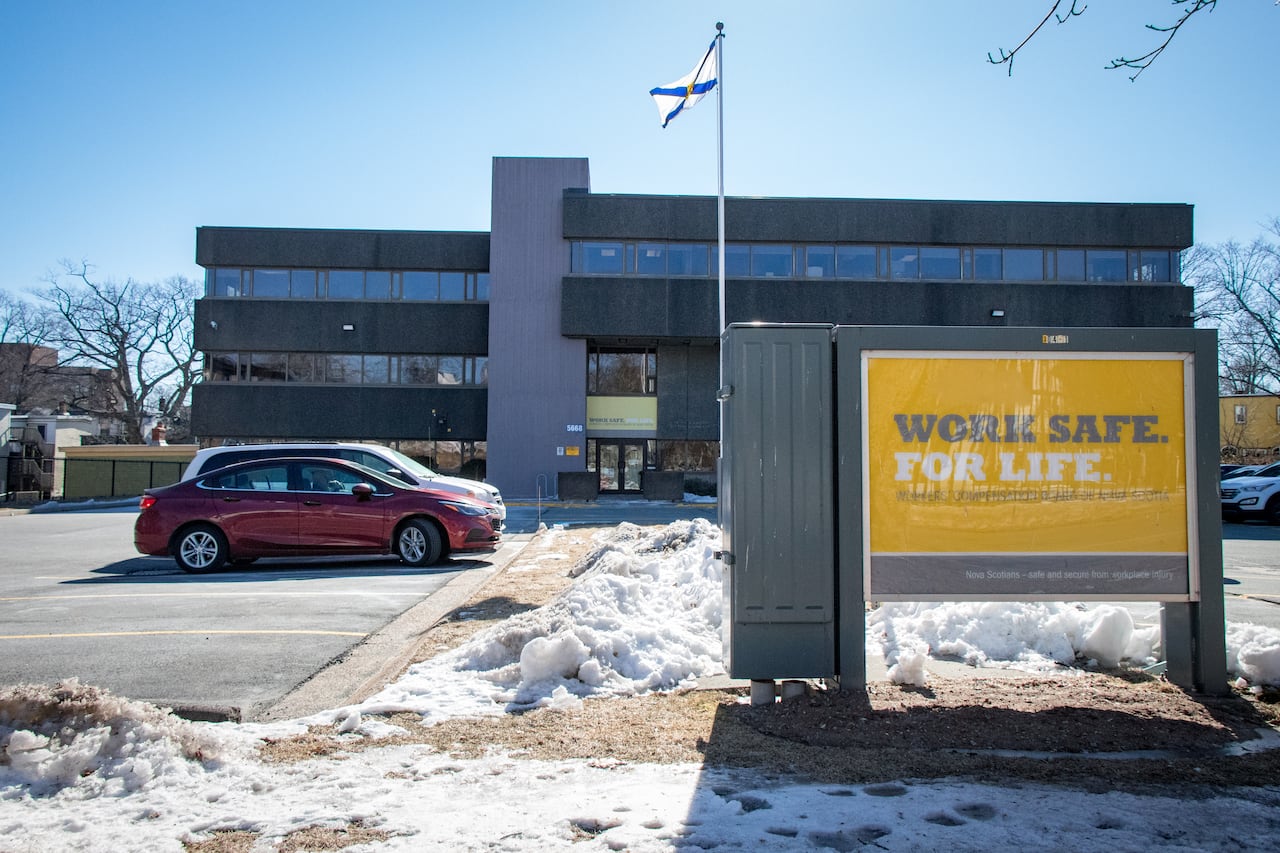 Ellsworth
says the WCB denied her pain injections in 2010. They were finally
approved in 2015 by an appeal tribunal, but by then the injections were
no longer helpful. (Robert Short/CBC)
Ellsworth
says the WCB denied her pain injections in 2010. They were finally
approved in 2015 by an appeal tribunal, but by then the injections were
no longer helpful. (Robert Short/CBC)Ellsworth has continued to fight for other benefits. For example, her jaw has not worked properly for years, so the WCB approved liquid meal replacements. But Ellsworth said after 10 years, her body can't tolerate the supplements anymore.
She said she has asked for a chewable meal replacement that would help her retain some use of her jaw — rather than submit to a permanent feeding tube that would mean never being able to eat properly again — but the board won't approve the alternative.
In addition, the WCB denied injections for pain in 2010 that were finally approved in 2015 after an appeal tribunal overturned the initial decision, Ellsworth said, but by then the injections were no longer helpful.
She's now getting palliative treatment with pain pills and medical cannabis, but Ellsworth said the strength of the cannabis prescription is too low and the board won't change it.
She said she is speaking out not only to improve her case, but because she wants the WCB completely overhauled.
According to its most recent annual report, the Workers' Compensation Appeals Tribunal overturned 56 per cent of all cases last year where someone questioned a WCB case manager's decision to deny benefits.
Slowly starving to death
Ellsworth said she is not giving up the fight, but she no longer has any quality of life.
She has anxiety and depression on top of her other diagnoses, which have led to her decision to apply for medical assistance in dying.
Ellsworth said she's slowly starving to death anyway.
"I love food, but can you imagine being hungry, but not being able to ... I can't even eat hamburgers," she said. "I can't open my mouth far enough. And now I'm living across the street from my parents who get to watch this with their own eyes, day in and day out.
"So in my case it's more of I plan to leave this world with what little dignity that workers' compensation leaves me with, and right now, it's not a lot."
 Kendra
Hill says she suffered two injuries while nursing at the Cape Breton
Regional Hospital and has been battling for workers' compensation
benefits ever since. (Tom Ayers/CBC)
Kendra
Hill says she suffered two injuries while nursing at the Cape Breton
Regional Hospital and has been battling for workers' compensation
benefits ever since. (Tom Ayers/CBC)Ellsworth's friend Kendra Hill, also 54, said she has also had difficulty getting WCB benefits after suffering back injuries as a nurse at the Cape Breton Regional Hospital in 2006 and 2013.
Hill said she has had surgery on her back and neck, but her mobility is progressively being affected and she also has chronic pain. Being off work permanently has also led to PTSD, she said.
"One day you are at work and you have your job to go to," Hill said. "You have your colleagues. You have your regular daily life. You have your full paycheque.
"Then all of a sudden, your pay is cut in half. You don't have that social life that's connected to work. When all of that is gone from your life, it's traumatic."
System designed to deny or delay, Hill says
Hill said the workers' compensation system is designed to deny or delay benefits, and like Ellsworth, she has also struggled to receive such things as massage therapy and an occupational therapy assessment of her home, despite orders for those from a doctor.
"This is your life now and you've missed all of that and now on top of that, you have to deal with this monstrous bureaucratic entity that seems to want to squash you at every turn," Hill said.
 Questioned
by the NDP at a legislative committee session in April, Nova Scotia
Labour Minister Jill Balser says the government is starting a review of
the workers' compensation system. (CBC)
Questioned
by the NDP at a legislative committee session in April, Nova Scotia
Labour Minister Jill Balser says the government is starting a review of
the workers' compensation system. (CBC)Ellsworth said the fact that 56 per cent of cases that went to the tribunal last year were overturned on appeal shows the system is an "epic fail" that is making people suffer for years before granting benefits.
At a legislative committee in April, Labour Minister Jill Balser revealed the government is planning a wide-ranging review of the workers' compensation system.
She declined an interview request, saying she cannot comment on individual cases, but said in an email that the government must to balance the needs of workers and employers and that it would be sharing details of the review in the fall.
NDP labour critic Kendra Coombes, who questioned the minister in April about the proposed review, said she hopes it will result in positive changes.
 NDP
labour critic Kendra Coombes says she hopes for a positive outcome, but
fears a review of Nova Scotia's workers' compensation system will come
too late for Ellsworth. (Jeorge Sadi/CBC)
NDP
labour critic Kendra Coombes says she hopes for a positive outcome, but
fears a review of Nova Scotia's workers' compensation system will come
too late for Ellsworth. (Jeorge Sadi/CBC)"The problem is with Melissa [Ellsworth] and her health, my fear is that it will come too late for her," Coombes said. "My fear is that she either will have died, or the damage would be too far gone for her to get healthy again."
She also said having more than half of WCB case manager decisions overturned on appeal is a clear sign that something is wrong with the system.
"It's not acceptable that we're seeing that many overturned," Coombes said.
"That means that mistakes happened, and due to how long these things can take, how long was that worker going through the system without WCB supports?"
ABOUT THE AUTHOR

Code critical: N.S. woman commutes 5 hours to see her family doctor to avoid a waitlist
In a province where more than 156,000 people are on the waitlist for a family doctor, Melissa Ellsworth counts herself lucky she has one.
The problem is, she now lives more than 400 km away in Cape Breton, while her doctor of 20 years is in Halifax.
“I have to keep my family doctor in Halifax, there’s no doctors here,” Ellsworth said from her home in Dominion, N.S.
When she moved to Cape Breton two years ago — where her extended family lives — she was worried about not being able to find a doctor on the island. She decided to keep her doctor in Halifax to ensure she would have a health-care provider.
As a patient with complex needs, she’s hesitant to register for the doctor waitlist to see if there’s a provider closer to home.
“I did think about it but then I had an appointment with a doctor, and the doctor said, ‘Forget about trying to get a doctor here. Because of the complexity of your situation they probably won’t take you on,'” she said.
Dispersing the Fog - E48 Tumbler Ridge, Fed Gov't Picks RCMP, Magic or Sex, Guest Melissa Ellsworth
Adam Rodgers - Nova Scotia Lawyer Feb 15, 2026
This week, we bring a special guest, who's name most will not recognize. Melissa Ellsworth was a forensics nurse and correctional guard who suffered a head injury trying to save an elderly woman from a dangerous patient. She has been battling Workers Compensation ever since, and has now been approved for Medical Assistance in Dying (MAiD). She tells her story.
17 Comments
How workers compensation is being dragged into the world of medical marijuana
Provincial bodies have been slow to support injured workers who are prescribed cannabis for pain

As Melissa Ellsworth drops several grams of dried cannabis into her Magical Butter machine to be ground into oil, she pauses to reflect on how long it took the Workers' Compensation Board of Nova Scotia to start paying for her medical marijuana.
Five years and one tribunal appeal later, she was finally approved in January 2018. The tribunal decision stated there was "sufficient evidence to conclude that the worker is entitled to medical aid in the form of medical marijuana."
She says that ruling saved her life.
"I can function every day like a normal human being instead of being crippled up in pain," said Ellsworth. "I went from 26 pills a day to cannabis."
For almost a decade, Ellsworth was on a mixture of opioids, benzodiazepines and sedatives.
She suffers from chronic pain in her neck, head, jaw and shoulders after being struck in the head with a chair while working as a licensed practical nurse in 2006 at the Nova Scotia Hospital, a psychiatric facility in Dartmouth, N.S. She has been off work since 2010.
 Several
grams of cannabis are dropped into a Magical Butter machine to make
oil. Ellsworth uses the liquid in her food and coffee as well as creams
and bath bombs. (Craig Paisley/CBC)
Several
grams of cannabis are dropped into a Magical Butter machine to make
oil. Ellsworth uses the liquid in her food and coffee as well as creams
and bath bombs. (Craig Paisley/CBC)Her tribunal victory comes as workers compensation boards across the country are being forced to revise their restrictive policies around medical cannabis as more patients look for forms of pain relief other than opioids.
Last year, New Brunswick was the first province to introduce cannabis guidelines. It was followed by P.E.I. and Ontario. Nova Scotia is expected to release its guidelines in early April.
Number of claims
But getting cannabis coverage approved through a WCB still isn't an easy process in any province.
Ellsworth is one of 10 workers in Nova Scotia who have qualified. P.E.I. and Alberta have similar numbers. Of the provinces that disclose how many workers are compensated for medical marijuana, New Brunswick has the highest number of claims at 71.
Half of the provincial bodies would not say how many cannabis prescriptions are paid. In all regions, coverage is reviewed on a case-by-case basis.
In comparison, Veterans Affairs Canada approved more than 7,000 veterans at a cost of $50 million in 2017-18.
Cannabis guidelines
In Nova Scotia, the chief medical officer for the WCB admits the position on cannabis has traditionally been a firm "no." But that has changed in the last year, according to Dr. Manoj Vohra.
"We're starting to see that more evidence is coming, more workers are asking for it and so now we're starting to develop criteria on guidelines," he said.
Vohra said the medical evidence shows that cannabis, especially cannabidiol (CBD) — the non-impairing compound — can help people with chronic illnesses such as cancer and HIV, as well as those suffering from neuropathic pain.
"If cannabis does help them in those areas where there is evidence, then we're more than open to trying to see how we can do that," he said. "The challenge always comes in with harm. There's not enough clinical trials that actually go through. What are the side-effects?"
 Dr.
Manoj Vohra, chief medical officer for the Workers' Compensation Board
of Nova Scotia, says there is a reluctance to overprescribe a medication
such as cannabis that hasn't been fully researched. He says doctors are
especially wary after witnessing the fallout from the ongoing opioid
epidemic. (Robert Short/CBC)
Dr.
Manoj Vohra, chief medical officer for the Workers' Compensation Board
of Nova Scotia, says there is a reluctance to overprescribe a medication
such as cannabis that hasn't been fully researched. He says doctors are
especially wary after witnessing the fallout from the ongoing opioid
epidemic. (Robert Short/CBC) Dr. Vohra said there is a collective fear among his colleagues about overprescribing a medication that hasn't been fully researched. He points to the ongoing opioid epidemic as a prime example.
"What's happened 10 to 15 years down the road is we've realized that there's harm that occurs," Vohra said. "And so we want to make sure we don't repeat those mistakes from the past and that we use it and understand what are the risks, what are the contraindications to using it."
In February 2017, 1,543 workers had the cost of their opioid prescriptions covered by the WCB in Nova Scotia. In February 2019, that number dropped to 1,315 workers.
Long overdue
Dr. Mary Lynch, a pain specialist and cannabis researcher in Halifax, said the introduction of cannabis guidelines for injured workers is "long overdue."
"If first- and second-line treatments aren't working, then we will sometimes recommend a medical cannabinoid, depending on the patient's specific presentation," Lynch said.
"And for those who do benefit, we have run into difficulties with the workers compensation board agreeing to cover the cost."
Lynch is a founding member of the cannabis research startup Panag Pharma Inc., which she and other academic researchers incorporated in 2014 to access research grants.
She hopes Nova Scotia's new guidelines will give weight to a doctor's prescription.
"I'm hoping that the policy will be written in a way that as long as a physician has recommended it, the access will be reasonable, just like it is with any other prescription medication."
As it stands, only Quebec depends on medical advice from the worker's doctor. All other provinces, including ones with guidelines, have their own team of doctors to evaluate claims from injured workers.
Continuous struggle
For Ellsworth, the struggle continues even though she is one of the few who have successfully lobbied for medical marijuana coverage in Nova Scotia.
She was originally prescribed four grams per day. Last August, her family doctor increased her dose to five grams, but that has not been approved by WCB.
"My only job as an injured worker is to take the best care of myself to prevent further injury. I'm trying to do everything I can possible by avoiding addictive medications and everything else. And they're fighting me. They're making it very hard to do," said Ellsworth.
She has appealed her claim to have that extra gram covered, knowing that it will likely lead to another tribunal — a process she has been through eight times for various issues over the years.
"I mean, I've won eight tribunals. How many more do I have to win?" she said.
"Every time I go through a tribunal, I have to live through all that again. And I will be honest, between my employer, workers compensation and everything ... it was a nightmare. An absolute nightmare that I would rather not relive again."
Varying doses
Guidelines developed by New Brunswick, P.E.I. and Ontario have set a maximum dose of three grams per day. While Lynch agrees that is an appropriate limit, she also believes some patients may need more.
"You do need to take each of these things on an individual basis, and these days many people are using topical products where you put the agent into a cream, and in that case you do need access to a bit more of the product," the pain specialist said.
The
Workers' Compensation Board of Nova Scotia pays for 10 cannabis
prescriptions. Of the provinces that disclosed how many workers are
compensated for medical marijuana, New Brunswick has the highest number
of claims at 71. (Robert Short/CBC) When it comes to THC levels, the Maritimes set a limit of no higher than one per cent. Ontario allows up to nine per cent. THC is reported to have therapeutic effects but also to be chiefly responsible for the psychotropic effects of cannabis, according to the Workplace Safety and Insurance Board of Ontario.
"I know that each province has to come up with their own answers," Lynch said.
"One would hope, though, that things will move forward within a reasonable length of time [and] perhaps the wheel doesn't need to be reinvented in every province."
ABOUT THE AUTHOR

New Brunswick tackles issue of medical cannabis for injured workers
Province was first in Canada to spell out when cannabis for injured workers would be covered

Annette Balkam isn't sure whether she would be alive today if she hadn't discovered medical cannabis.
The Moncton woman said she slipped and fell on the job as a security guard in 2011, severing two ligaments and developing a neurological disorder that's left her in "constant pain."
Six years ago, she decided to try medical cannabis. Balkam said she was taking too many pills, including addictive opioids, and nothing seemed to help.
Now, Balkam said, she has stopped taking opioids. She feels more alert and is able to function better.
- How workers' compensation is being dragged into the world of medical marijuana
- N.L. not weighing big changes to medical cannabis coverage for injured workers
But she said it took months to persuade WorkSafeNB back in 2014 to cover the costs of her medical cannabis.
"We're not drug addicts," Balkam said. "We're not looking to get high. We're looking to relieve our pain."
Now, there is a clearer path forward for injured workers like Balkam.
Last spring, WorkSafeNB became the first workers compensation body in the country to develop a policy that spells out situations where an injured worker can have the costs of cannabis covered as a medical aid, according to WorkSafe chief medical officer Dr. Paul Atkinson.
The board was seeing an increase in requests to cover cannabis and costs were mounting.
 Dr.
Paul Atkinson, chief medical officer at WorkSafeNB, says New Brunswick
was the first workers' compensation organization in the country to
develop a policy on medical cannabis. (Joe McDonald/CBC)
Dr.
Paul Atkinson, chief medical officer at WorkSafeNB, says New Brunswick
was the first workers' compensation organization in the country to
develop a policy on medical cannabis. (Joe McDonald/CBC)"We felt that there was a lack of guidance, especially when varied practice was noticed in that there were varied amounts, dosages, for different indications," Atkinson said.
One year later, only three workers' compensation bodies in Canada have developed policies that spell out when, and how much, cannabis is appropriate for injured workers.
In addition to New Brunswick, Ontario and Prince Edward Island also have policies. Nova Scotia has been consulting with New Brunswick as it develops its own policy.
"Others perhaps will try something slightly different.," Atkinson said.
"Some may follow what we've done. I think, over time, we will see which works best and probably reach a consensus."
WorkSafe won't cover 'smoked' cannabis
New Brunswick's policy applies to "plant, dried and oil forms" of cannabis.
There are only a handful of situations where WorkSafe will approve the use of cannabis as a medical aid.
They include treating symptoms encountered in a palliative or "end of life care setting," treating nausea, vomiting or loss of appetite related to treatment for diseases such as cancer or AIDS, for spasms related to a nervous system injury or, in Balkam's case, for chronic neuropathic pain.
When the policy is approved, WorkSafe will only pay for cannabis prescriptions high in cannabidiol or CBD, a component of marijuana that can provide medicinal benefits, and low in THC, the component that can cause impairment.
"We have a very clear policy of not approving THC-containing cannabis," Atkinson said.
 Doctors must fill out a 10-page authorization form to ask WorkSafeNB to approve a patient's cannabis prescription. (Jon Collicott/CBC)
According to Atkinson, CBD can have an anti-inflammatory effect and can help with neurological conditions but won't get you high.
WorkSafe also won't cover cannabis that will be smoked, but in some cases, may cover the costs of dried product that can be inhaled using a vapourizer.
The Crown corporation will pay for up to three grams per day, the same upper limit set by Veterans Affairs Canada.
At least 71 patients have been approved to have cannabis covered by WorkSafe.
Moving away from opioids
WorkSafe "may also consider" covering cannabis as a harm reduction tool for people who are trying to stop using addictive prescription medication such as opioids.
In that case, the injured worker has to be part of a "monitored program" where their opioid use and function is being tracked to see if they're improving.
Atkinson estimated about 1,100 injured workers in New Brunswick have the costs of their opioid prescriptions covered, down from about 1,500 only two years ago.
 In some cases, WorkSafe NB may approve medical cannabis as an aid for someone to get off addictive medication such as opioids. (Mark Lennihan/Associated Press)
 WorkSafe has also lowered the maximum dose of opioids it will cover, following new national opioid-prescribing guidelines created in the wake of a national opioid overdose crisis.
"It was becoming very apparent that many of the workers are receiving doses of opioids that were beyond what was recommended," Atkinson said.
While opioids can help a person feel less pain, there's no evidence that long-term opioid use helps a person function better, Atkinson said.
Doctor says policy should go further
Dr. Douglas Smith, a specialist in physical medicine and rehabilitation, has been prescribing medical marijuana for the last 14 years.
He's also the medical director of Tidal Health Solutions, a licensed medical cannabis producer based in St. Stephen. He said he plans to phase out his medical practice.
Smith has seen positive outcomes for his patients using medical cannabis, starting with a man in 2005 who had back pain and was taking high doses of opioids. Smith said the patient was able to get off all the opioids he'd been taking once he started using medical marijuana.
"I've seen many patients who have been very reclusive who have become more sociable, who've returned to gainful employment, less time lost from work, better family relationships," Smith said.
He said WorkSafe should be "applauded" for its cannabis policy, but he believes it should go even further.
 Dr.
Douglas Smith, a Fredericton-based physical medicine and rehabilitation
specialist, is applauding WorkSafe NB for its medical cannabis policy,
but he would like to see the policy go even further. (Jon Collicott/CBC)
Dr.
Douglas Smith, a Fredericton-based physical medicine and rehabilitation
specialist, is applauding WorkSafe NB for its medical cannabis policy,
but he would like to see the policy go even further. (Jon Collicott/CBC) Smith describes the restriction on approving smoked cannabis as an "overreaction." He said the risks of inhalation are greatest in people who also smoke tobacco and believes it can be an effective tool for people who need immediate relief from their symptoms.
The doctor recently filled out his first WorkSafe cannabis authorization application for a patient. The form is 10 pages long and took more than a half an hour to fill out.
"It is a very tedious document to work through and would tend to discourage most physicians from participating and result in patients not receiving approval for their medical cannabis," Smith said.
Atkinson said WorkSafe will review the policy within the next year, looking at such issues as whether the three-gram-per-day limit is appropriate.
ABOUT THE AUTHOR

With files from Angela MacIvor
A sex offender receives full gender surgery. Should she be transferred to a women’s prison?
Transgender woman goes to court after Corrections Canada refuses transfer, citing risk to female inmates

A transgender woman incarcerated as a dangerous offender since 2001 for sex offences against multiple women wants a judge to order Correctional Service of Canada to transfer her from the men’s prison system to a women’s institution following her recent gender surgery.
Correctional officials have opposed requests from Amanda Joy Cooper, 58, to be moved to a women’s prison, citing in court records her risk to reoffend and history of “obsessive attachments” to female staff, concluding she would pose a “very high risk to the safety” of the other inmates.
A hearing in the case is set for next week in Federal Court, with her Nova Scotia lawyer arguing that Cooper should be sent to a women’s prison because her sex, post-surgery, is now female as defined in correctional policy, and she fears for her safety in a men’s facility.
While the placement of offenders who identify as transgender women has been a source of debate for years, Cooper is one of the few currently in federal custody who have had full gender surgery, and one of an even smaller number of post-operative inmates denied transfer to women's prison.
“I think it's complicated,” said Rosemary Ricciardelli, a professor at Memorial University in Newfoundland who has researched transgender prison policy, including a study involving interviews with dozens of federal correctional officers.
“I think it's really, really complicated, because each human being has rights and we have to adhere and do our best to meet those rights. So meeting one person's rights can't compromise another, and vice versa.”
Applying for transfer
The current federal policy dictates that transgender inmates can apply to transfer to a men’s or women’s prison according to their gender identity or expression. Requests are examined on a case-by-case basis, including an assessment of needs, risks, and health and safety concerns.
Over an eight-year period up to March 2025, there were 129 requests from inmates assigned male at birth to be placed or transferred into women's institutions, according to figures provided by Corrections Canada. About three dozen were approved, with the remainder either denied (72) or withdrawn (22).
Gender-diverse offenders represent about one per cent of federal inmates. As of October, there were 90 who identified as transgender women, including no more than a dozen who have had gender surgery. Seventeen were housed in women’s facilities and the remaining 73 in men’s prisons.
 Jessica
Rose, a lawyer with PATH Legal who represents Amanda Cooper, is shown
in her Dartmouth, N.S., office on Monday, Jan. 12, 2026. (Paul Poirier/CBC)
Jessica
Rose, a lawyer with PATH Legal who represents Amanda Cooper, is shown
in her Dartmouth, N.S., office on Monday, Jan. 12, 2026. (Paul Poirier/CBC)Cooper was born in Montreal in 1967 and committed numerous sex offences in the area as a man before being sentenced as a dangerous offender. A psychiatrist noted Cooper’s sadistic urges, and the judge in the case said the offender “does not hesitate to use his strength, weight, and size to control his victims.”
Cooper is currently incarcerated at Millhaven Institution, a men’s maximum security prison located west of Kingston, Ont. According to an affidavit she filed in court, she was assessed for gender dysphoria in 2017 and began identifying as a woman three years later.
She underwent gender surgery in September 2024. She now has a vagina and breasts. She has no penis. Her correctional records now list her sex as female.
Since her surgery, Cooper has been in what she described as self-imposed isolation in a structured intervention unit, the term used by Corrections Canada for units that replaced solitary confinement in 2019.
According to her affidavit, she has been bullied and threatened by male inmates, and one grabbed her buttocks. She said she fears physical and sexual violence, and has been repeatedly called a derogatory term. She said she only leaves her cell to make phone calls, for health care, education and programs, and for meetings.
“On average, I am out of my cell only a couple hours per day at most,” she said in the affidavit. “On weekends, sometimes I am out of the cell only 20-30 minutes per day. As a result, I have very little meaningful social interaction.”
'You think I'm safe here?'
At the hearing next week, Cooper’s lawyer, Jessica Rose, will ask a judge to order that Cooper be sent immediately to a women’s prison, even before her full judicial review in the case is decided.
At the heart of the argument in favour of transfer, Rose points to a Correctional Service of Canada commissioner’s directive issued in 2022 that states the sex of an offender “is determined solely by their current genitalia.”
Even if Corrections Canada is reluctant to move an inmate who requests a transfer based on their gender identity, Rose argues the directive indicates officials should house them based on their current sex.
“From our perspective, Amanda's gender identity and her genitals align. She is physically a woman, she identifies as a woman,” Rose said in an interview at her Dartmouth, N.S., office where she does work for PATH Legal, a law firm associated with the Elizabeth Fry Society of Mainland Nova Scotia.
“She is post-gender confirmation affirmation surgery at top and bottom. So from our perspective, there's no legal basis for CSC to be maintaining her in a men's prison, regardless of whatever security or safety considerations they may be relying on.”
The lawyer added: “Her message to us and her message to the court is, ‘I'm a woman with a vagina in a men's prison. You think I'm safe here?’”
Major concerns
But Corrections Canada has major concerns, outlined in internal records and court affidavits, if Cooper were to be transferred to a women’s prison.
Up until 2018, much of her time in federal custody was spent in the Special Handling Unit, a super-maximum men’s prison in Quebec, where she was sent in 2002 after threatening to sexually assault and kill female staff, according to records.
In an affidavit from last September, a parole officer said Cooper had been “increasingly verbally abusive” toward female staff in recent months, and there were a number she was not allowed to have contact with.
“Overall, CSC believes that the applicant’s gender identity, hormone treatments, and gender affirming surgery have in no way mitigated her risk to reoffend,” the affidavit said.
“She denies that the offence cycle that currently exists is accurate, believing that the offence cycle belongs to her dead self. This claim does not show accountability from the offender as she places the blame on her dead identity rather than her current self.”
The correctional service argues women’s prisons are run differently than men’s, with most female inmates living in congregated settings and under less supervision. Introducing Cooper to a women’s prison would require so much security it could “create apprehension and fear” among the other inmates.
The documents note Cooper has been provided with women’s clothing while in men’s prison, as well as accessories such as nail polish. She is also only to be strip-searched by female officers.
History of sex offences
Parole and court documents detail a history of multiple sex offences, committed when Cooper went under a different name and identified as male.
Cooper’s offending began in early adolescence, sexually assaulting women in the street. It culminated in 1998 when, over the course of several days following release from prison for sex crimes, Cooper grabbed and threatened to rape a 12-year-old girl in a parking lot, and sexually assaulted two women.
One of the women, who had parked at a mall, managed to flee her car following a struggle with Cooper, letting out what witnesses later described as a “death cry.”
In 2018, shortly after being transferred out of the Special Handling Unit, Cooper sexually assaulted a female prison worker, according to court documents.
Heather Mason, a former federal inmate who co-founded an organization now suing the federal government over its policy allowing what the group calls “trans-identifying male inmates” to move into women’s prison, said Cooper should not be granted the transfer she seeks.
Mason’s organization, Canadian Women’s Sex-Based Rights, advocates for spaces such as washrooms and locker-rooms to be segregated by sex.
“Sexual violence isn't prevented by surgery,” Mason said of the Cooper case. “Correctional Service of Canada has already said that this individual's behaviour and history make them a high risk to women. That assessment matters far more than anatomy.”
Prison operates very differently from the outside world, she said. It’s close, confined quarters that an inmate can’t leave, and many incarcerated women have themselves been victims in the past. It doesn’t matter the intentions of a transgender prisoner, Mason said, female inmates will not view them as a woman.
She said an alternative is for Corrections Canada to dedicate a wing of a prison to gender-diverse inmates, where they can receive programs and support tailored to them.
Corrections Canada declined to do an interview about the transfer of transgender inmates. In a statement, a spokesperson said its policy “reflects CSC’s commitment to respecting gender identity and expression, in accordance with the Canadian Human Rights Act.”
“If health or safety concerns are identified and cannot be effectively mitigated, the placement or transfer request may be denied,” the statement said. “In all cases, measures are implemented to support the person’s gender-related needs where they reside.”
The statement noted inmates unhappy with the decision can turn to Corrections Canada’s internal complaints and grievance process, and to external bodies such as the Canadian Human Rights Commission and the Office of the Correctional Investigator.
MORE TOP STORIES
ABOUT THE AUTHOR


No comments:
Post a Comment