Emory Bryan is a general assignment reporter for News On
6. He began his news career covering the school board for his hometown
radio station and worked on the newspaper staff in college before making
the switch to television. Emory joined the News On 6 team in 1994.
01:01
01:05:09
Podcast: Play in new window | Download
Subscribe: Apple Podcasts | Android | | More
In
this episode of Gangland Wire, retired Tulsa homicide detective Mike
Huff joins host Gary Jenkins to break down one of the most shocking mob
hits in U.S. history. Det. Huff tells about the 1981 murder of
businessman Roger Wheeler at Southern Hills Country Club and the
investigation that ended in the arrest of Boston F.B.I. agent Paul Rico.
You can learn more about this story by reading Mike’s book, Killing My Father: The Inside Story of the Biggest FBI Corruption Scandal in History.
What started as a local homicide case quickly unraveled into a
national organized crime conspiracy involving Florida Jai Alai gambling,
the Winter Hill Gang, and notorious Boston mob boss Whitey Bulger. Huff
shares how he uncovered links to FBI corruption, the Dixie Mafia, and
hitman John Martorano, who eventually confessed to the killing.
Huff also opens up about working with Roger Wheeler’s son, David, the
emotional toll of the investigation, and how their joint efforts
finally exposed the truth. His book Killing My Father reveals even more about this decades-long fight for justice.
Transcript
[0:00] Well, hey, all you wiretappers, good to be back here in the
studio of Gangland Wire. I have another former cop, a retired copper
from not too far away from Tulsa, Oklahoma, and he has a heck of a
story. He’s written a book about it, but it’s a heck of a story. Down in
Tulsa, Oklahoma, they’ve got a mob murderer. Well, now, mob murders
don’t just go down every day in Tulsa, Oklahoma, and it’s a really
interesting story that ties clear back to to the highlight business down
in florida to the winter hill gang in uh boston massachusetts uh to
whitey bulger really and and a hit man named john moderano and to a one
of the infamous corrupt fbi agents out of boston you know they seem to
have had a problem in the boston fbi for a period of years there and a
couple three of their guys end up going to jail uh over probably being a
little bit overly uh that they forgot where the line was it looks to me
like but anyhow it was uh it’s a retired detective mike huff welcome
mike, Well, hey, welcome to U2. Thank you for doing this. All right,
Mike. Now, tell us a little bit about your career. You know, how did you
come up through the ranks in Tulsa PD? Well, I started in January of
1975.
[1:20] I got promoted to a detective in 1980. I didn’t much like it.
It wasn’t enough action. I had a good career on the street. But I like
my supervisor a lot. So I stuck with this being a detective.
[1:39] In May of 81, May 27th, you know, I just got to work. I was
checking on a guy that I had shot three weeks earlier who was in
intensive care. We’re just sitting there and we’re talking about we’re
going to eat supper. And I was on the phone with the hospital. Checking
on this guy’s condition, and police radio came on and said, we need all
the homicide detectives to head out to Southern Hills Country Club on a
shooting. I guess 5-0s that night, you know, we hit it out there, and,
you know, Southern Hills, even at that time, before a lot of all the
major golf tournaments they’ve since had, was a very, well, it was the
kind of place that I wasn’t familiar with.
[2:34] Everybody with money was part of that country club, and I
wasn’t one of that crowd. There’s a middle-aged man swamped over in a
seated car. He’d been shot between the eyes. It was a little bit foreign
to me. You know, I’d been a homicide detective for a year and had been
to a good bunch of homicides, but most of them were, you know, street
murders or domestics, things like that. And so I knew this one was going
to be a bit different, but I didn’t know how different this was going
to be. I think I was 25 at the time. My supervisor told me this was
going to be my being in charge of the scene. So we started making
assignments. Very little evidence of the scene. There were four live
rounds laying right outside the opened doorway of Mr. Wheeler’s
Cadillac. You know, that was pretty puzzling. This one’s right near one
of the…
[3:40] Really nice swimming pools out there, and we found a few
witnesses. People had seen this car. It looked out of place. I don’t
know why anybody hadn’t had somebody check it out. A couple guys sitting
in the car. Mike, tell us a little bit about how did you figure out who
this guy was? He was pretty well-known in Tulsa, and that’s a pretty
well-known country club guy. Just for your information, the Southern
Hills Country Club is a primo, premier golf course here in the Midwest.
And it’s nothing but high-end, rich oil people in Tulsa, I believe,
mainly went to that. And so tell us about how you figured out who this
victim was. He had a nice car. Well, the people were abuzz and said, you
know,
[4:31] you don’t know who this guy is. He owns a telex corporation.
Well, that didn’t mean a whole lot to me, other than they said, you
know, he employs thousands of people. You know, this was a time that was
before Google or the Internet or cell phones or anything. I think I had
a police radio, and I don’t even think pagers were invented yet.
[5:02] Communication was tough. You know, the word started trickling
in of who he was. I guess we were probably out at the scene for six or
seven hours and documenting it and getting our pictures and all that
kind of scene work. We went back to the station, detective area, we
called it the bullpen. The bullpen was filled with brass, people they’d
called in and whatever. The word was there was going to be a 13-man task
force formed on this deal, and they started breaking that out. Boy, for
some reason, I sure thought I wanted to be on it. And I got the word to
the sergeant that there is a scene in the book that we wrote. This
sergeant, Roy Hunt, was a legend. He had solved murders for decades. I
really liked him. He liked me. He pulled me to the side and he said,
hey, if you get involved in this, it’s probably going to change your
life. And he said, you’ve got a pretty good career down here. So, you
know, this is probably going to screw it up, you know, if it doesn’t
kill you. I mean, I was so young, green, that I said, oh, man, I don’t
want to do this. He said, all right, let’s drink to it. So he pulled out
a bottle of whiskey and a couple of shot glasses from his desk. The
good old days.
[6:29] And so we need a, We had a drink about it. You know, I wasn’t
the only guy involved. I mean, involved in that task force. After about a
couple weeks, the lead started dwindling. It boiled down to me and a
really good fellow named Dick Bishop. We got assigned a case. You know,
it was a good learning experience for me. I had Dick Bishop. I had my
sergeant. You know, we were, for some reason, 1981, that was a big
homicide year for Tulsa. We had close to 80 homicides. I was working
around the clock. You know, I mean, I’d pick up a grounder here or there
on top of this.
[7:11] And so we stayed busy, but we got a call from the state police
in Massachusetts. And they said, hey, I need to be up here. Actually,
Dick and Sergeant Walter Hunt went to Boston. I didn’t make that trip.
But I just worked another homicide. Let me ask you a question here. At
this point in time, I know a red ball like that, a hot case like that,
where the phones light up at first with all kinds of bad leads and crazy
leads, and everybody’s running down all these leads. But you mentioned
that there was a car in the lot that somebody mentioned was suspicious.
Was that, had you figured out that was the car that had been occupied by
whoever killed Roger Wheeler? Yes, sir. It was the late 70s, probably a
79 or 80, four-door, LTD, four-door. Two guys with beards were in the
car and they were And somebody got a partial tag. That partial tag, I
mean, we had conflicting information about even the partial tag.
[8:22] I mean, we had a couple of witnesses with different partial tag numbers.
[8:27] These guys were pros. They had stole the tag off a similar
car. It was a huge dead end, but it took so much effort to follow that
lead. This was a time, well, you know, it was just tell times. You
couldn’t sit down in front of the computer and do anything because there
weren’t computers. You know, that was a lead that we worked on. We also
got a lead very early on that put us on to the Dixie Mafia, and those
were some bad guys. The main guy, or the guy that was suggested as a
shooter, resembled a composite drawing. We had an artist do a composite,
and they were great composites. But somebody said, hey, that looks like
Pat Early, Dixie Mafia guy. And he was the kind of guy that he would
travel to do violence, got involved in labor disputes, things of that
nature. And he lived down in southern Oklahoma. The other guy was
believed to be a bondsman in Oklahoma City. We took off on that lead and
I spent close to.
[9:55] A couple months off and on three or four days a week in
Oklahoma City we did surveillance on these guys we’re trying to catch
them up short doing something they were also dealing some, or smuggling
some pretty good quantities of drugs we worked on that for with the
state narcotics unit for months until we finally got them dirty with a
pretty good load of drugs.
[10:29] That’s interesting, Mike, how you start in a murder
investigation, and I’ve seen this happen here. You start in a murder
investigation, and all of a sudden, you know, somebody, something else
comes in that may have something to do with it and may not, but then you
get sidetracked onto that, then it looks good. And you stay on that for
a while and then you have to come back. When you go to Boston, you have
very little leads. You’ve got this car and this composites and a bunch
of other dead ends that weren’t that. Did you have anything at that
point in time that led you to believe that this reached outside of
Oklahoma City or in that area? No, we had nothing. I mean, we had just a
few phone calls. Other people knew more about our case and how it
hooked to Boston than we did. There was no way to research it.
[11:26] What about Roger Wheeler? What about Roger Wheeler? Did you
know about his connection to the High Lie down in Florida at that point
in time? He was a big businessman, but he had invested in this world
highlight business in Florida.
[11:41] When we started looking at this thing, of course, the brass
was making decisions. Of course, that never helps out when you’re a
detective trying to find the truth and the brass stick who knows in it.
But the brass sat down with the FBI. They said, hey, this Dixie Mafia
lead looks pretty good. And we’re going to follow that lead. We know
about Wheeler and this parimutuel gambling business.
[12:21] Highline, which if people don’t know what that is, if they
ever watched the first of Miami Vice, there was a spot in the trailer on
that. And it was filmed at World Highlight down in Miami, and these
guys have these big baskets hooked to their arms, and they’re on a court
with a granite wall, and they catch this ball with this basket, and
then with the weight or force of their entire body, they hurl this very
hard ball called a palata up against this wall. And they’re basically
playing handball and you know the crowd sits behind the screen there’s
huge amounts of money bet on that too.
[13:15] Yes, there was a lot of money. Roger Wheeler had taken some
of his money that he’d made in these other businesses and bought this
whole High Lie organization, World High Lie, which ran the games. And
then also, were they involved in the parimutuel betting on that and the
gambling on that? Yes. World High Lie had five, they call them frontons.
They’re about the size of a pretty good-sized indoor arena. And there
are four of them in Florida, and there was one in Hartford, Connecticut.
We stuck our nose into it and started looking at it. And the brass
says, hey, we made a deal with the FBI. The FBI is going to handle all
the potential organized crime leads. And you guys stick on this stuff
local. Or nearly local. Didn’t like it at all. You know, I was a
25-year-old kid. Yeah, what are you going to do? Now, you had a call
from the Massachusetts Highway Patrol. I interrupted you back then. And
this is going to start leading you outside of Tulsa back to Florida and
to Boston. So what was that about?
[14:34] Yeah, we went up there, and they told us about this Irish
mob. It’s a loose-knit organized crime group. They said, here’s some
guys to take a look at. Because I was coordinating a deal where we were…
[14:56] Going through boxes and boxes of paper records from every
hotel in Tulsa, looking for something that stood out, maybe a tag number
or an out-of-state reference to where somebody came from that we would
follow up on those leads. They gave us some names for us to look for
also, like somebody used their true name, checking into a hotel where
they’re doing a mob hit. But I did what I was told. I was buried in
boxes of paper when I wasn’t down in Oklahoma City chasing these drug
dealers. You know, this Pat Earley, he worked for a guy that bought bad
debt markers from, oh, I think it was Caesar’s Palace in Las Vegas. And
he’d go out and break legs and stuff.
[16:05] Here we had two different angles, or actually even more than
that, because Mr. Wheeler was a complicated man and was involved in a
lot of businesses. There was a lot of stuff going on. I was like a kid
in a toy store with all these things. You know, here I’m chasing the
drug smuggler. Here I’m chasing the guy. And let me tell this about Pat
Early and this Dixie Mafia. And the Dixie Mafia were responsible for
shooting up Buford Pusser and killing Buford Pusser’s wife.
[16:43] Buford Pusser was the McNary County, Tennessee sheriff that
they made a movie of. Called walking tall yeah and so they shot him up
killed his wife i mean there was just so many crimes that that we were
coming across that uh i can speak for myself we lacked focus because
there’s so much stuff going on uh i still wanted uh i was still a little
bit upset about the fbi was going to handle the highlight angle, but
checking for airplanes. This guy that Pat Earley worked for, he owned a
company that specialized in outfitting airplanes for international drug
smuggling. And, I mean, you couldn’t spit without hitting some other
motive.
[17:41] You know how that goes. You just get in the crowd. How did
you get your focus back, and how did you end up on this highlight
connection? Was that because of the FBI or because of the
Boston-Massachusetts Highway Patrol? How did you get back to that? Well,
we got involved with the state police in Boston a little bit. We didn’t
know how we could do this. Boston was, you know, they said, well, we’ll
check and see. And if anything comes up, we’ll tell you. Well, then we
got hooked up with the Connecticut State Police.
[18:20] Who were overseeing the investigations on Highline in
Connecticut, where Wheeler owned a facility. So I was still just on the
fringes of Highline. And then in the fall, I believe it was, of 81, Dick
and I are sitting at our desk one evening. Somebody barges into the
detective vision, told the receptionist that, hey, I want to see the
detective who’s working my dad’s murder case. My name’s David Wheeler.
They called me back there and said, this irate guy wants to talk to you.
So I did that. I brought him back to the bullpen. We sat down. I’ve
been waiting for you to come talk to me, but all that’s been coming out
of the woodwork is FBI agents. I said, well, we were told that the FBI
would handle you as their source of information. They haven’t really
said very much about it. We have meetings with them, but nothing really
comes out. I think World High got my dad killed, and I think a retired
FBI agent was involved in it. And I’ve told the FBI that.
[19:39] And they won’t listen to me. So here I am. My psychiatrist
told me to come talk to you. Now this Wheeler, his son, he helped you
write that book. He had some input
[19:52] into that book, correct? Oh, he had a lot of input into this
book. So in that book, you’re going to have the personal side. You’re
going to have the law enforcement side of the murder of Roger Wheeler.
Yes. Okay. We found, as we started dealing with him, that Mr. Wheeler
was just a busy millionaire businessman, self-made businessman. You
know, he might have had his flaws, but he wasn’t a crook. He had
legitimate businesses. He just had made so much money on a pipeline
business that he had a big, big amount of money that he could invest.
And so he had gone to somebody that he had dealt with before, the Bank
of Boston, and said, Hey, find me something to invest in that I’d make
money and just bring me whatever it is. And I’ll take a look at it. They
offered him a casino. They offered Hi-Li. So he started looking at
this, and he had sent his son, David.
[21:07] Down to look at these businesses and put together some sort
of computer program. David did, and it came back that Highline had the
most potential to make money, and the tax incentives were there in that
business. So his dad said, I’m going to buy this one. That was in the
late 70s. What had happened, the business was run by a guy from Boston, a
CPA. It turned out that he hired several retired FBI agents, one of
them was a fellow by the name of Paul Rico, to allegedly keep the
business clean from organized crime. Paul Rico was a legendary FBI agent
that had developed many mob informants while they were trying to stamp
out the Italian mob. And so as he was nearing retirement, he had moved
to Florida for his last year or two, was hired by World High Line before
Mr. Wheeler owned it. and that was something that attracted Mr.
Wheeler. He felt safe with these FBI agents working there. And then
immediately it started not.
[22:35] Making the money that they thought it should make. It was a
real, real problem. Then it turns out that a runner, a world highlight, a
guy named John Callahan, a Connecticut State Police figured out that he
was hooked up with the Winter Hill game in Boston. He had to resign,
and he was replaced by his business partner, a guy named Dick Donovan,
another CPA.
[23:04] Wheeler was stuck with this guy because as a part of the Bank
of Boston and proving that loan, they said, we want Donovan to stay on
as president. By early 1981, things were just not looking good in the
business. He was arguing a lot with Donovan. David Wheeler had planned
to fire Donovan and Paul Rico, and that was just relayed from Wheeler to
his son just a couple weeks before the murder.
[23:39] Now, Mike, this Paul Rico, I was looking up a little bit
about him. By the time he retired or maybe shortly after, it came out
that he was involved with an informant named Joe the Animal of Barboza
who had done a murder of a guy named Teddy Deegan.
[23:57] But Rico wanted a guy named Peter Lamone and three other
members of the Italian La Cosa Nostra mob to go to jail for this Teddy
Deegan, and Rico stood back and allowed Barboza to perjure himself and
let these guys go down. Now, in the end, they’ll end up getting released
from prison when it all comes out several years later and get like a, I
don’t know, a multi-million dollar lawsuit against the FBI and the
Department of Justice because of that case. So he was, you know, he had a
history and plus Boston FBI, you know, that’s the place where John
Connolly, the FBI agent who came along after RICO.
[24:41] Uh, uh, was, was there, we say Rico like Rico law, but H Paul
Rico and John Conley was a kind of a junior agent that then moved in
and had all these informants and the Irish mob continued going after,
going after the Italian mob. And then he ends up going to prison behind
all that. So that was, uh, I tell you that Boston FBI was a, uh, was a
snake’s nest. Uh, it was not good at all. And so Rico is now working in
the Winter Hill Gang, who he’s been protecting and using his informants
over the years to get the Italian mob. They’re they’re siphoning money
out of that. They’re what are they embezzling money out of the High
Line, World High Line? For the sake of the charge, we proved that they
were just trying to take control.
[25:32] World High Life, so they could really get the money. We just
hadn’t figured out how the money was coming out at that time. That was a
big hang-up on filing charges. I mean, this thing, we’re
fast-forwarding ahead close to 20 years until we get to this point. But,
you know, we suspected Rico was involved. May of 1982, a couple of guys
get gunned down in Boston. One of them’s named Brian Halloran. The
other was Michael Donahue, who was just giving Halloran a ride. And
Donahue’s dad was sergeant on the Boston Police Department.
[26:12] We didn’t hear about it. Nobody told us about this.
[26:16] Until finally, a reporter called the police department and
said, hey, you guys need to know this. That’s how we learned about it.
And that’s how we dove into the Boston angle at this time. Wait a
minute. Remind me, how did that murder in Boston connect to the Hi-Li
and Roger Wheeler? Right. Well, I found out after a couple months, Brian
Halloran had gone to the FBI and said, hey, I got offered this hit out
in Tulsa. I got thinking about it, and I decided I didn’t want to do it.
It was a hit for Paul Rico. He wanted Wheeler dead. John Callahan, the
former president of World High Line, wanted Wheeler dead. He declined
the hit. They gave him $20,000, said get your mouth shut. And he got
jammed up in another murder in January of 1982 in Boston. And that was
his ticket was the Wheeler murder. An FBI agent might have been the guy
behind it. So the FBI never told us that. By this time, we had figured
out, of course, the FBI was screwing us over every day. And, you know,
we learned that from David Wheeler back in the fall of 81.
[27:44] And the police department told me, he said, get to know this
guy, figure out if he’s crazy or what, because he had a passion. His dad
was dead, murdered, and the FBI wouldn’t listen to him. And so he
turned to us, and the police department turned to me, and I was the
rookie detective closer to David Wheeler’s age. Dick Bishop was older
and had no patience, as we all get.
[28:18] But I’ve got to say, Dick was a great guy. We came back after
meeting with Wheeler for days, and we met with the brass, the chief,
and everybody else said, hey, the FBI’s screwing us. We got to get into
this ourselves because the FBI is hiding this stuff from us. Within a
couple months, Halloran got over. We went to Boston. You know, we met
with all these state police and stuff up there, and they were doing
their best to help us as much as they could. But this was a rat’s nest
of corruption and disputes between agencies. The FBI hated everybody.
Everybody else hated the FBI. Nobody could trust anybody. They were
trying to do wiretaps. They were getting burned on wiretaps, you know,
against these Winter Hill monsters. So they said, I don’t know how
you’re going to solve this. So I said, well, let’s just go to what they
called a strike force prosecutor that handled his section, handled all
the organized crime prosecutions, federal prosecutions in New England.
They said, well, he’s got to be involved in this deal with Howard.
[29:39] He’d be the guy. I said, well, let’s go. Let’s go talk to
him. And little did I know that in Boston, you could drink a couple
beers sometimes. A shift and get by with it they didn’t have that
problem so we had a couple beers at lunchtime.
[29:55] And we went over to the federal courthouse and said hey we’re
here to to meet with a fellow by the name of jeremiah o’sullivan who
was the strike force the head uh strike force prosecutor department of
justice so it went in there we were getting stonewalled by him taking
notes like crazy, throwing stuff at him, saying we had information that
the corruption had infiltrated into the FBI in Boston. John Conley, like
he said, this guy was around during Rico’s time. He said, well, Rico
was connected with the Winnerville game. Well, we know what that means
when you’re a cop. You know, if somebody says they’re connected to
something else, That means they’re part of them. And he said, you know,
Rico liked to carouse and gamble and play cards to these mobsters when
he was on the job. So I’m hearing this. I mean, I’m a young kid. At this
point in time, I didn’t know how to, even that people fix tickets
occasionally.
[31:02] And I’m hearing them talk about carousing with mobsters and
stuff. And I said, well, I just want to know who made the decision to
cut Brian Howard loose and not tell us about it. He said, well, that was
my decision. By this time, I was just getting pissed. I said, well,
that was a bad decision. He’s dead. It’s our case. Who gave you the
right to make a decision about our case? It just went downhill from
there. Myself and a couple other detectives, wonderful reports, which
quoted him verbatim. Which later came back to bite him as we both were
testifying before Congress. My reports caught him in a lie. He both got
charged with lying to Congress. He tried to turn the tables on me, and a
good police report’s the only thing that saved me. So for the young
cops out there, making a good police report is paramount to what you do
when you’re trying to prove a murder. So I told him, I said, well, we’re
up here and we’re going to find John Callahan, the former president of
World Highline. I said, we’re going to make him snitch. I have no idea
why I said it that way.
[32:19] And everybody else was looking at me like, what the hell are
you saying? I can imagine. I mean, I had no business to open my mouth in
that meeting as a young guy. So we were looking for Callahan up in
Boston. Went everywhere. Had a drink. About every bar we went to, we had
a drink for about three days, which I’m sorry I’m saying that. You
know, I just followed the crowd. We stayed there for a week or so. We
headed back to Tulsa. So I walked in my door and I am walking in my door
with my suitcase in my hand and the phone was ringing. So I answered
him and somebody said, hey, is this Detective Mycuff? Yes, sir. He said,
are you looking for John Callahan? I said, I just came in the door from
looking and we’ve been up in Boston looking for him for about a week.
And he goes, well, I’ve got him. I said, well, great. Where are you? He
said, I’m at the Miami International Airport. He had introduced himself
as a detective from the Metro, dead police, John Parmenter. And he said,
I’m at the airport.
[33:35] I got him in the trunk of his car, and he’s got a dime on his
chest. And he was all shot up, and he’s dead. Oh, wow. The first thing
that came to my mind is, you know, I just told the head of the strike
force, this high-level Department of Justice prosecutor, that we were
going to make him a snitch. And less than a week later, he’s dead in the
trunk of a car in Miami. I mean, I just, it just about knocked me over.
I felt like I was potentially responsible for his death. I didn’t like
the feeling at all. And as a 25-year-old kid, 26, this was just too much
for me to process. So I immediately went down to the station, met with
the chief and all the brass. Dick Bishop, obviously.
[34:27] He’d come from home, too, because we’d just got home. So I
said, hey, we got a problem. They said, it sounds like you need to be in
Miami. So we started putting together a trip to Miami, met the
detective that was down there. When I got that phone call, I believe on
August 3, 1982, when they said Callahan was dead, I said, well, let me
talk to the detective that’s going to work the case. They said, well,
he’s on his way to Boston. Can you get a message to him? I was thinking,
get a hold of him at a hotel or whatever. They said, well, he’s not
going to be at a hotel. He’s made arrangements to stay at an FBI agent’s
house that’s working on his case up there in Boston. I said, oh, my
God, he cannot stay at an FBI agent’s house. They’re in this up to their
eyeballs. Turned out, made a handwritten note, laid it on his desk,
knowing he’s probably not going to be back for a week. And that’s where
that note stayed until he had spent a week with the FBI up there you
know he was a great guy Shelton Merritt we called him Grits.
[35:37] So I met him down in Miami and, He’s just shaking his head,
and I’m shaking my head. Everybody’s shaking their head. We’re not, we
have no clue what we’re going to do. At this point in time, the brass of
all these agencies had just pretty much given us carte blanche and
said, go do what you need to do. And Dick, being a lot wiser than I was,
said, well, they just set us up for failure, and And so we’re going to
wind up getting screwed on this deal because they’re not going to take
any blame for anything that goes wrong. And without a doubt, something’s
going to go wrong. And boy, was that true. We dug into this. We got
everybody to come out to Tulsa and have a meeting. We arranged an
informal task force amongst Miami, the Florida Department of Law
Enforcement, the Connecticut State Police, and the Massachusetts State
Police. We were just shaking our heads trying to figure out what to do.
[36:42] Spending taxpayers’ money like it was going out of style.
Everybody’s flying around here and there. We kind of put the logistics
together, who was going to investigate what, who we were going to
target, try to get some information out of. Within a couple months after
that, the FBI gave us a call, and they’re dealing with David Wheeler
and saying, oh, this isn’t going to be connected to the FBI. We’re going
to drop this case. And then the next thing you know, we would do
something, and they would come back into the case because they were
trying to figure out what we were doing.
[37:21] And so they decided they wanted to bring all the detectives
together from all these states to Oklahoma. They said they wanted to
have an information-sharing meeting. They put us up in Nice’s Hotel, put
everybody else up in Nice’s Hotel in Tulsa. I mean, the food and the
liquor slowed for about three days. We were just trying to avoid the
FBI, talk with all these guys in this little informal task force. And so
finally, on the last day of this meeting, which was held at the federal
courthouse here in Tulsa, a guy from FBI headquarters, and he was a
very high-level guy named Sean McLean, stood up and said, we have to
know everything incriminating that you have on Paul Rico. By this time,
if we’d had rocks or bottles or something, they would have been thrown
at him. And we said, we got nothing to tell you because we can’t trust
you. He said, well, here’s the deal. Paul Rico…
[38:37] Came out of retirement, and did a favor for the FBI. He went
undercover to a corrupt federal judge by the name of L.C. Hastings, and
we’re going to arrest him, L.C. Hastings. We have to turn everything
that you have over in discovery.
[39:01] To whoever Hastings’ lawyer is going to be. So, I mean, that
disbanded that meeting as quick as it could. Well, I said, we’ve got
nothing to say to you. People left. I mean, people were going to a phone
trying to get their airline reservations changed, go get a suitcase. I
mean, it was just, it looked like a bunch of guys running from a stolen
car after a pursuit.
[39:31] I mean, these guys just ran out of there. great analogy it
turns out that he did arrest alcee hastings and he was acquitted he
later became a u.s senator in florida yeah so i mean uh the the high
level stuff that that we were dealing with it just put a stain on what’s
going on i mean there was no way i mean i was i was looking at all this
stuff and i said there is no way that i am smart enough even being this
room, I probably need to go back to patrol. Mike, at this point in
time, I mean, you’re almost like stymied. That was ingenious on their
part. Now, if I see a conspiracy theory here, I could see that Rico knew
people were after him and he wanted to know what you knew and you
weren’t speaking to the FBI so he could volunteer to go work a case on a
corrupt judge and then have to know everything you got on him for
discovery i mean that’s they could potentially had got court orders from
a judge in that criminal trial to say you know bring it to tulsa and
all the other different.
[40:45] Jurisdictions and say you have to give us that and you had to
give us then he would have known so it’s uh i don’t know that’s a
conspiracy theory that maybe it’s a leap too far it’s pretty
sophisticated, but I think it’s possible, don’t you? Oh, yes, sir, Gary.
[41:03] My head was spinning. I can imagine. I went to my dad March
14th, 1983. I went to my dad and I said, I think I got to step back,
maybe volunteer to go back to a police car because I’m in way over my
head. My dad said, no, there’s no way you can step back because you are
in way over your head and you can’t run from this. You know, he said,
you’re right in the middle of a cesspool of corruption. You can’t.
[41:36] You can’t do this. You can’t walk away from it. Well, that
was the last time I talked to my dad because the next afternoon he was
taking a nap and he got a heart attack in his sleep. That is something I
detail in this book, along with many other things. But, you know, when
we were writing the book, I talked about that story. And not until then
did I really soak in that my dad’s funeral was on St. Patrick’s Day and I
was right in the middle of all this Irish corruption, Irish mob. A
friend of mine just said, hey, that was a sign you were just too stupid
to realize it. You know, I believe he’s right. From that point on, I
never thought about leaving this case. Of course, a few years later,
this case caused me a little bit of a divorce.
[42:37] And I needed to make a little bit more money, so I promoted
to sergeant, but I had made a deal with the brass. When I made sergeant
that I’d have to go back to patrol for a little bit to learn how to be a
sergeant, They’d bring them back in to run the homicide squad when it
all worked out. Can’t give away everything that’s in the book. I know
there’s a lot more that’s going to happen to get to Paul Rico, and you
end up getting to him. And so, guys, you’ve got to get this book. Now, I
have one last question here about this George Monterano, who eventually
will admit to this murder. And eventually it comes out that this murder
does tie back to the Winter Hill gang, And the guy that did it admitted
to it and is out there today running around free. Yeah, it’s John
Mariano. Boy, there are so many stories, just like you said, Jerry, so
many stories in this book.
[43:38] It’s just so hard to share this trivia that comes through
here. In 1995, I had learned that some young state policemen who started
working a loan sharking case came up with enough to charge Whitey
Bulger with some racketeering. So I heard about that, and I said, well,
I’m going to make it. I took 60 pounds of reports. I mean, I made, I
just stood in front of a copy machine for a couple days. And I had
reports that were Boston Intel guys from back in the 70s that they had
to purge. And so they were no longer in, but I didn’t have to purge
them. I didn’t know them.
[44:38] So I took all these reports up there. I had a suitcase with a
roller attachment to it. I rolled in these reports to the U.S.
Attorney’s Office to a guy named Fred Wyshack. I’m from Tulsa, and I’m
working this case, and I just want you to know that you’re getting ready
to step into knee-deep corruption. So I got these reports that I’d like
to share with you because you’re going to come across my case in it. So
it turns out that, you know, we started working with them a little bit
back in the late 80s. I had a call from some TV people. And they said,
hey, we’re from a TV show. Joe, we’d like to put you on our pilot show,
our very first one, and it’s called Unsolved Mysteries. We’d like to
feature your case. You know, that was a time when there were just, you
know, three major networks.
[45:47] There wasn’t a reality show. There weren’t all these crime
shows, podcasts, anything. We went up and down the ladder on that. Roger
Wheeler’s widow tried to block us from doing that. chief made a good
decision and said, we’re going to do it. So in that, I learned of John
Margarano. It even went back to some information back when our first
trip to Boston in 1981.
[46:14] So Margarano had a felony warrant out for a horse race fixing
conspiracy that they had worked up on him in the late 70s. So, um, I
showed his picture on this Unsolved Mysteries and, uh.
[46:37] That was probably 86 or 87. Years later, in 1995.
[46:44] After this thing started unraveling up in Boston, somebody’s
watching a rerun of Unsolved Mysteries, a fellow down in South Florida.
And he sees me show this picture of Marano. And he said, hey, he don’t
go by that name, but that guy is a loan shark. And I’ve paid some money
to him. That’s how Marano’s arrest came about, off of that guy calling
in and saying that. I wish he had called me, but he had called the state
police. That’s how Marano got arrested. Once he gets arrested, I go
visit him down in Latuna, Texas. He was staying in what they called the
Veloce Suites. It was a suite of rooms where Joe Vellacci lived out his
life when he became a witness against the mob. I guess they used this
suite for the most important witnesses that they have need protection
for and whatever. But, I mean, Margarano had his own small little
kitchen. He had access to a toll-free phone, and he had private access
to the rooftop exercise area. It was something. It was better than the
first apartment I lived in.
[48:09] So, you know, me and Marno kind of hit it off. He told me, he
said, you know, Unsolved Mysteries came out in the late 80s. He said, I
was in Hawaii on vacation watching TV and I saw you come on holding up
my picture.
[48:26] And he said, I knew right then and there, he said, I’ve been
worried about this murder, but I knew right then and there we were going
to meet someday. You know, it was interesting.
[48:38] Marano, I mean, I talked to him, you know, multiple times,
but the first time I talked to him, I spent three days with him. He had a
story that went for decades, you know, his involvement in organized
crime, how he got involved in organized crime. As we were working
through this, we brought him out to Tulsa, but yes, Marshall’s dead.
[49:02] And we had a small army put together. Me and him were in the
car. I said, you know, this is 20 years almost after this happened. And I
said, tell me what you can remember. He said, well, let’s go out there
to that country club. As we’re going, you know, he’s saying, turn left
here up at this light. And it’s right up here on the right. And as you
pull in, there’s a garden shack that nobody was at the day it happened.
And here’s where we parked. I mean, and what I did was I just went
through, and every sentence or word that he said that would prove that
this guy was the guy, every bit of corroboration, I totaled him up.
There were 167 points of corroboration that only the killer would know.
So, you know, then we went past the Wheeler’s house and he goes, yeah, I
didn’t like this one right here because their circle drive kind of
comes out onto a busier street. I didn’t want to get jammed up, you
know, sitting there waiting to get out in traffic. And, oh, here was
this parking space at Telex. It had its name on it.
[50:28] And sure enough, it did at the time. and he goes, oh, and
there’s a Catholic school across the street and I didn’t like this one
because I’m Catholic and I didn’t want to do it right in front of a
Catholic school. I mean, just stuff like that. Yeah. That really showed
me, I mean, by this time I’m kind of a decent investigator. So I’m
seeing the level of a report that I was doing And comparing it to a
level of a report that, say, the FBI or some other agency was doing,
they were just pounding square pegs into round holes on their cases, and
we were intricate with facts and details. I mean, that was…
[51:17] Something I really recognized at the time. Did Monterano, did
he then give up Rico? Yes, he did give up Rico. And he gave up Stevie,
the rifleman, Flemmie. He told us that Joe McDonald was the driver. And I
tell you, if you ever watch that movie, Bullet, Joe McDonald became
close to a movie maker. And the movie maker was making a mob movie. And
so he wanted somebody to tell him what it was like to be in the mob, so
McDonald told him. Eventually, that guy made a movie called Bullet. And
in that big chase scene in Bullet, Joe McDonald was the passenger in the
car being chased by Steve McQueen in the movie. He was the actor. The
car getting chased, he was the guy with the shotgun. That was Joe
McDonald. I’ll be darned. So what happened to him? Did he go down behind
him? Well, he died in 1982. Okay.
[52:19] He, uh, he got caught coming back from, uh, Florida on, uh,
Amtrak. Uh, he got caught, somebody snitched him off on the way, but he
got caught in New York and he had a machine gun in a suitcase. Case, me
and Dick Bishop, we had our bags packed and getting ready to head out
the door to the airport. And I got a call from the cops up in New York
City, and they said, you can stay at home because he ain’t talking to
anybody.
[52:52] And we asked him if he would talk to you guys, and he said, I’m especially not going to talk to those guys.
[52:58] So he was a getaway driver on the Wheeler case. So Margot
Long gave up Rico, gave up Flemmie. Finally, we got Flemmie to talk.
Crob-ranked the Rico story.
[53:14] And we decided we had enough to arrest Rico. It took me
forever to get the DA in Tulsa to file a charge. A little side issue
that’s in the book, I had, over the years, had heard that there was a
guy in Boston that actually put the guns on a bus. And Marano and
McDonald picked up the guns at a bus station in downtown Tulsa to use.
So I tried for several years to get that guy to talk to me. And he had a
lawyer, and I talked to a lawyer every couple months and me the same
answer. So finally, the last time that I tried, I said, hey, tell that
guy. And this guy was a very huge Irish supporter. He had been arrested
for smuggling guns to the IRA in Ireland.
[54:19] And he’s something. And there’s a bit about him in the book. I
said, hey, tell Pat that my great-great-granddad came from Ireland
through Boston and made his way out this way to Kansas before he slipped
down into Indian territory. Just tell him that my
great-great-granddad’s buried in the Indian cemetery about 20 miles from
my house. And he came over from Dublin. and within an hour.
[54:54] Literally he said hey as soon as you can get out here he’ll
talk to you what we did it’s myself and my partner at that time we got
the chief to make a phone call we got sworn in as u.s marshals so we
headed out to that that was the final piece that we needed to get the da
to file a charge we had a deal with da that he was going to keep this
under wraps nobody was going to know about it until we got there and got
in place to arrest Paul Rico. We went out there, got with the Marshal’s
Task Force out. We all went to Rico’s Miami Beach condominium about six
in the morning. We just confirmed that the warrant was active, which is
all good. So I beat on the door. And over the years, I had kind of gone
toe-to-toe with Rico at least half a dozen times. So I’m beating on his
door at 6 in the morning. He said, who is it? I said, hey, it’s
Sergeant Mike Uffman Toss Place. I heard his wife say, what do you need?
We’ve talked to you enough times.
[56:06] And I said, well, you need to open the door. So I opened the
door. I got a warrant for first-degree murder. He got under arrest for
the murder of Roger Wheeler. And he kind of stumbled back to the chair,
fell down. and he was in his boxer shorts and stuff. I said, you need to
go in your bedroom. We’ll take you in there and put some clothes on
because you’re going to jail. I told his wife, I said, does he have some
medicine he needs to take with him? He goes, yeah, he’s diabetic. And
so she got a handful of pill bottles, put them in a sack. I said, well,
if he’s diabetic, he might need to eat something for breakfast because
you might not get some at the jail. And his wife said, hey, put your
World Highlight cashmere sweater on. They’ll get a kick out of that. And
I said, well, we’re going to get a kick out of it. But this is no joke.
This is a big deal that’s happening here. You need to realize that.
[57:09] So we took him to Dade County jail. We go in there, and that
smells like a third-world country in there. I mean, you know, it’s a big
city jail. Yeah. We’re standing in line waiting to get booked in. There
is some sort of foreigner standing right in front of us, and he had a
goiter on his neck about the size of a cantaloupe, and it was leaking
pus. Oh, my gosh. And he smelled terrible, like he hadn’t had a bath for
weeks.
[57:41] Rico turned around and looked at him. I mean, he said, are
you really doing this to me? And I said, well, you kind of did it to
yourself. As soon as we get you up to the front of the line, we’ll be
through with you. And I’ll see you back in Tulsa. Kind of ends up sad
for H. Paul Rico. He will eventually die while in custody, I guess,
after he got to – he had bad health problems at the time, and he’ll
eventually die in custody when he gets down to Tulsa, if I read this
right. But I’m filling out the booking sheet in a room at Dade County
Homicide Squad on Rico. I’m just asking questions, high weight, all that
kind of stuff, and he kind of sneers at me. How old are your kids? And
it stopped me in with tracks. And I looked up at him and I said, what
the F did you say? And he said, how old are your effing kids? And I
said, look, old man, I don’t have a problem.
[58:47] Hitting you or choking you out because you’re not going to threaten my kids. So that was the end of the band.
[58:55] Interesting. Interesting comment by him. I tell you what, I
just talked about this in a show not too long ago, those kind of a
veiled threats that mob guys do that you can’t really say it’s a threat
by the words alone. Yes, sir. You would have to know the context, the
relationship between the two people talking. and you have to know a
whole lot more than the threat in that. How old are your kids? You know,
we had a guy here in Kansas City that just read off the names and ages
of a guy’s kids.
[59:26] You know, he can say, well, that’s all I’m doing, just
reading off the guy’s, you know, names of his kids and their ages. You
know, I didn’t mean anything by it. I mean, that is so mob. That is the
epitome of the veiled mob threat, their skillful mob threat.
Interesting. All right. Well, I guess I got it across to Rico that I
wasn’t happy with him because he wound up crapping in his pants in that
interview room. Yeah, it’s a sad end for him and his family, but you
play, you got to pay is what I find. run an all-volunteer co-gaze task
force for sheriff’s office. And I tell you, when you walk up to somebody
20 years after they did something and you’re able to arrest them, it’s
better than having a foot chase running down a serial killer. I mean,
it’s for something they thought they got away with decades before.
[1:00:26] You know, and those families, they sure appreciate it.
Yeah. Yeah. And guys, let me tell you something. There’s, I didn’t think
there’s anything better than getting into foot chase and catching the
guy and putting the cuffs on him, but that’s probably is better.
[1:00:43] Yes, sir. It’s fun. All right. Mike Huff, former Tulsa PD. And what’s the name of the book, Mike? Remind me again.
[1:00:51] Killing My Father. And it’s the inside story of the biggest
FBI corruption scandal in history. And it’s by the son, Mike Wheeler,
the son of the man who was killed. Yeah, David Wheeler Me and a guy A
published author by the name of Larry Yadin He has written about 14
books We met him as he got in touch with us While he was writing a dual
biography On Mr. Wheeler and Whitey Bulger Who both grew up in Boston On
different sides of town At the same time I didn’t know that, yes that’s
a good book too it’s called One Murder Too Many because out of all the
murders that Bulger did, and all the crimes this was the one that
brought him down it was one murder too many for him.
[1:01:57] Mike Huff, Mike thanks so much for coming on the show, I
really appreciate it, well thank you for having me well guys that’s been
quite a story hadn’t it I tell you what, there’s nothing like hearing
the real nuts and bolts, the background of a good long homicide
investigation. There are so many little bits and pieces that have to
come together. And a guy, the detective has to have this great memory in
order to when you get somebody that’s confessing or you think might
have done it. They start giving you details about that crime scene that
nobody else could know. That’s when you know you got the right guy. So
so this has been a great show and a really great guest. So check that
book out. And don’t forget, I like to ride motorcycles. So watch out for
motorcycles when you’re out there on the streets, driving your big
F-150s and your vans and all those kinds of things.
[1:02:47] If you have a problem with PTSD and you were in the
service, be sure and go to the VA website. They’ve got a hotline number.
And if you haven’t been in the service and you’ve got any problems with
drugs or alcohol or PTSD, get hold of help with Anthony Ruggiano. You
know, he’s a former Gambino guy in recovery now. He’s a drug and alcohol
counselor. And on his website, he’s got a YouTube channel. He’s got a
hotline number too. Maybe you can go into treatment with Anthony
Ruggiano. That would be cool.
[1:03:16] Uh, you know, I’ve always got things to sell. Uh, you know,
we’ve been selling Mike’s book for a while. You know, I’ve got my book,
uh, leaving Vegas, how FBI wiretaps in and mom domination of Las Vegas
casinos. I’ve got my books that are from my podcast shows, uh, windy
city mafia, the Chicago outfit and big apple mafia stories from the five
families. I’ve got a whole bunch of stories from my old podcast shows
and those books. And, and, uh, you know, you can rent my DVDs on Amazon.
So just go to Amazon and, and run my name, Gary Jenkins and mafia. And
you’ll find all the stuff I got to sale. So, so thanks a lot, guys. I
really appreciate y’all tuning in and be sure and, uh, like, and
subscribe and, and tell your friends about us, you know, make, uh, uh,
share this on your social media. A lot of people like this podcast, I
know. And, and, uh, give us more listeners that we like more listeners.
Thanks guys.




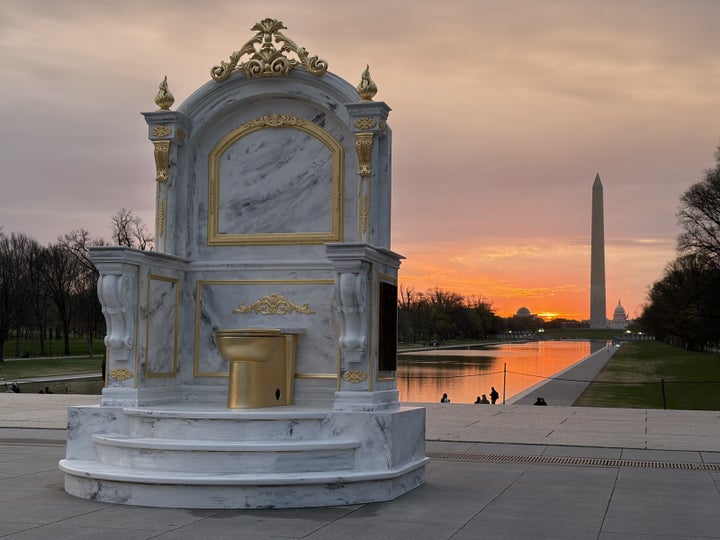 “It
stands as a tribute to an unwavering visionary who looked down, saw a
problem, and painted it gold,” reads the 10-foot-tall throne hailing
Trump for renovating a White House bathroom.
“It
stands as a tribute to an unwavering visionary who looked down, saw a
problem, and painted it gold,” reads the 10-foot-tall throne hailing
Trump for renovating a White House bathroom. 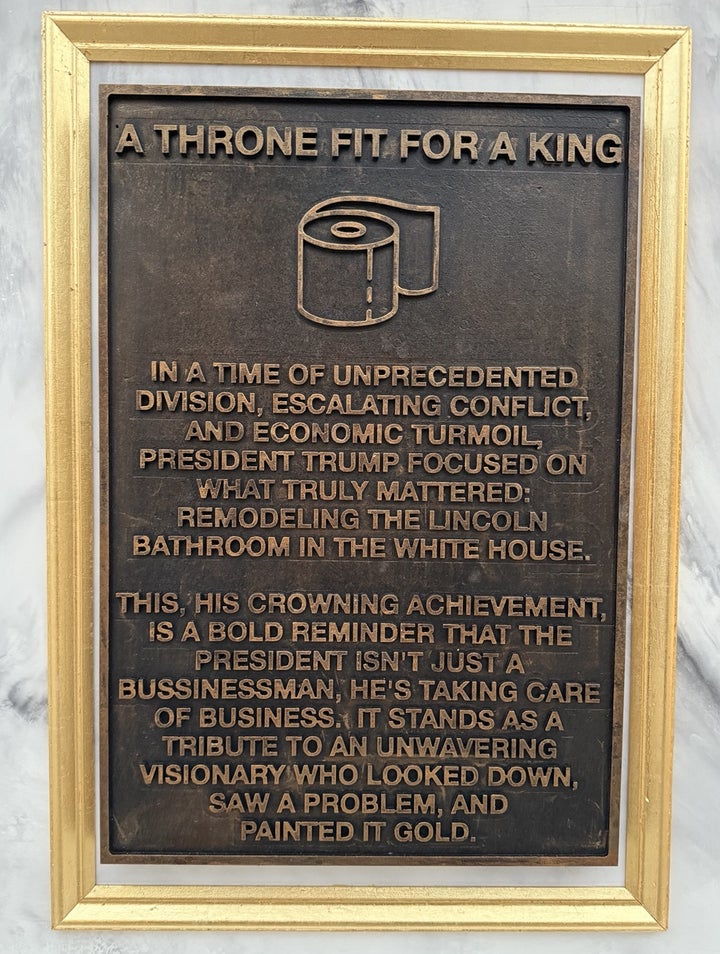 “This,
his crowning achievement, is a bold reminder that the President isn’t
just a businessman, he’s taking care of business,” reads the toilet
monument to Trump.
“This,
his crowning achievement, is a bold reminder that the President isn’t
just a businessman, he’s taking care of business,” reads the toilet
monument to Trump. 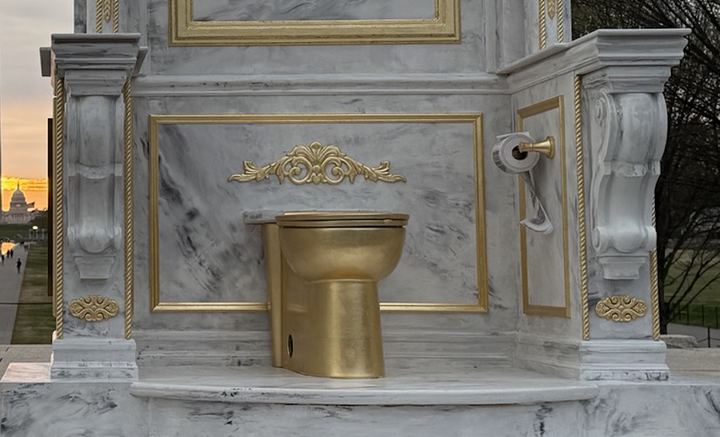 Anonymous
artists installed this massive throne and gold toilet by the Lincoln
Memorial to mock Trump for prioritizing a bathroom renovation at the
White House.
Anonymous
artists installed this massive throne and gold toilet by the Lincoln
Memorial to mock Trump for prioritizing a bathroom renovation at the
White House.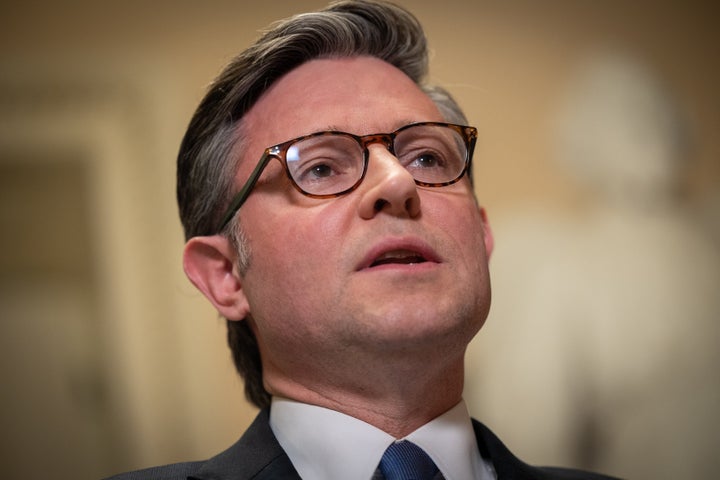 WASHINGTON,
DC, UNITED STATES - MARCH 26: Speaker of the House Mike Johnson (R-LA)
speaks to reporters after a vote to fund the Department of Homeland
Security, at the U.S. Capitol in Washington, DC on March 26, 2026.
(Photo by Nathan Posner/Anadolu via Getty Images)
WASHINGTON,
DC, UNITED STATES - MARCH 26: Speaker of the House Mike Johnson (R-LA)
speaks to reporters after a vote to fund the Department of Homeland
Security, at the U.S. Capitol in Washington, DC on March 26, 2026.
(Photo by Nathan Posner/Anadolu via Getty Images)

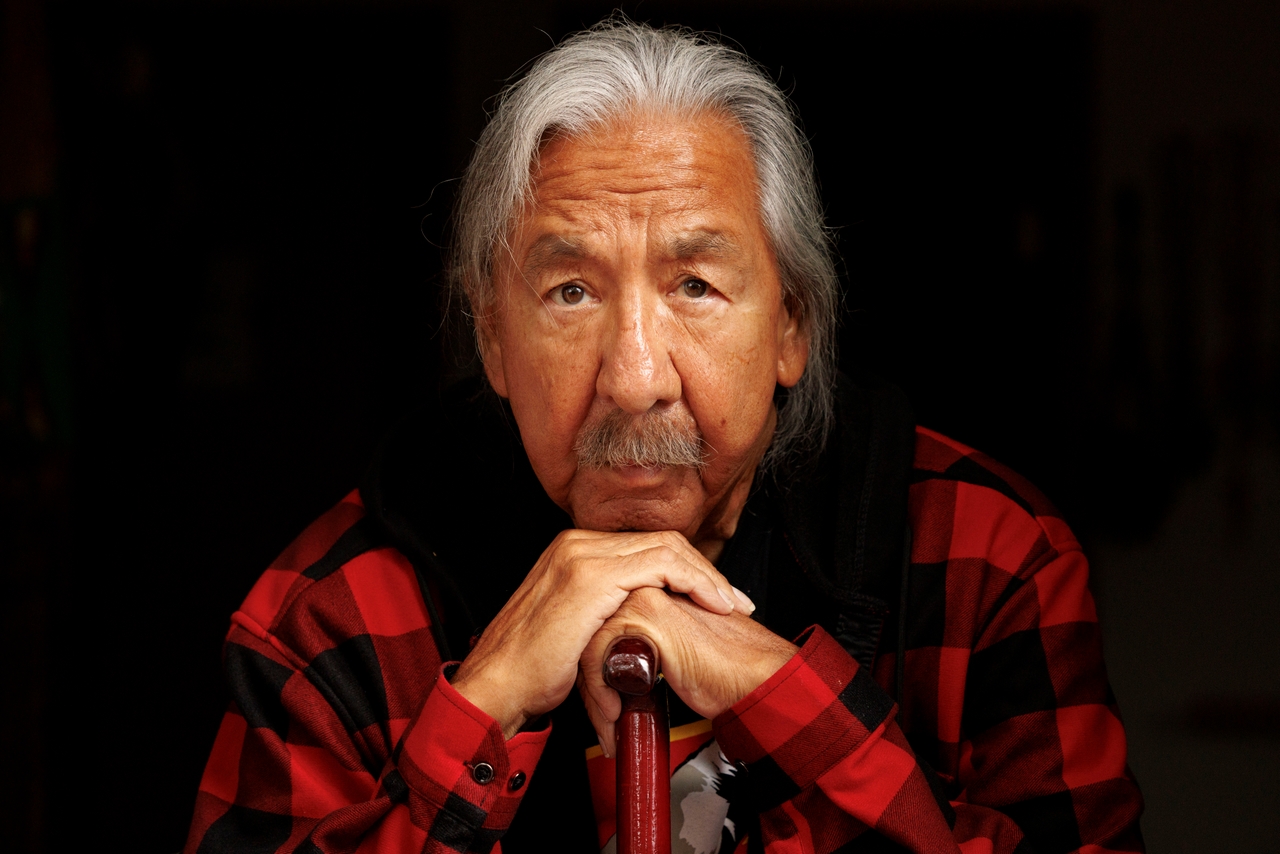
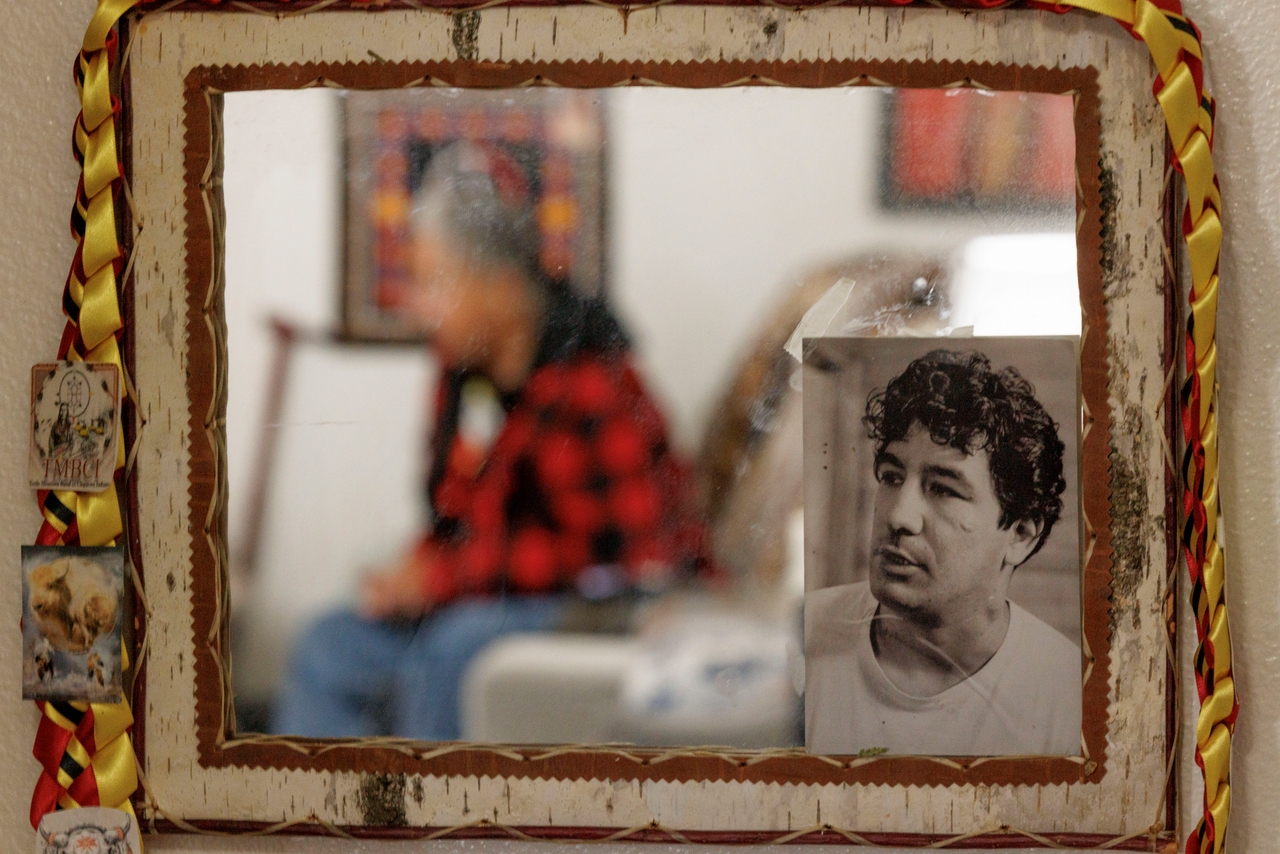 Peltier
went to prison in 1976 and was convicted in 1977, remaining behind bars
until earlier this year, after he was granted clemency by departing
President Joe Biden.
Peltier
went to prison in 1976 and was convicted in 1977, remaining behind bars
until earlier this year, after he was granted clemency by departing
President Joe Biden.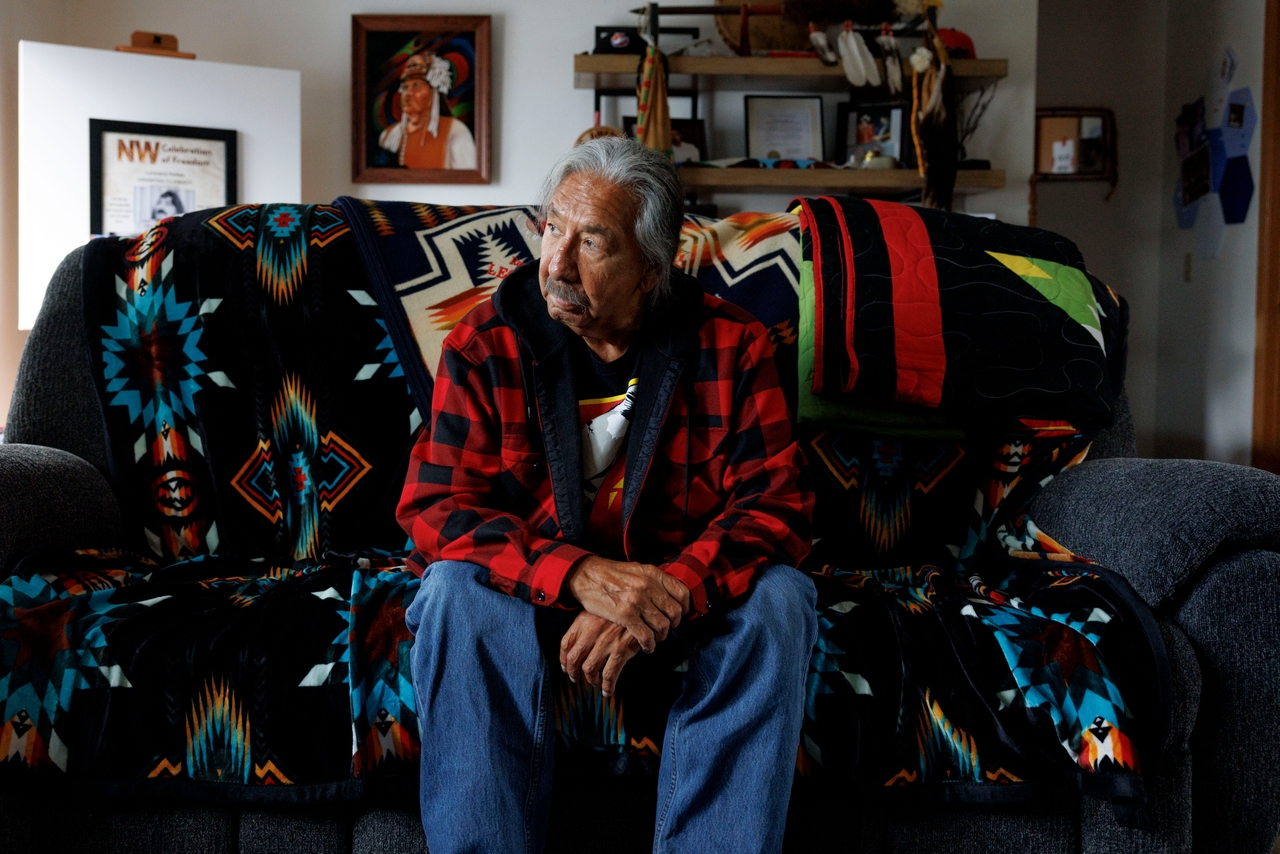 Peltier's supporters collected money to buy him a home on his reservation and a car.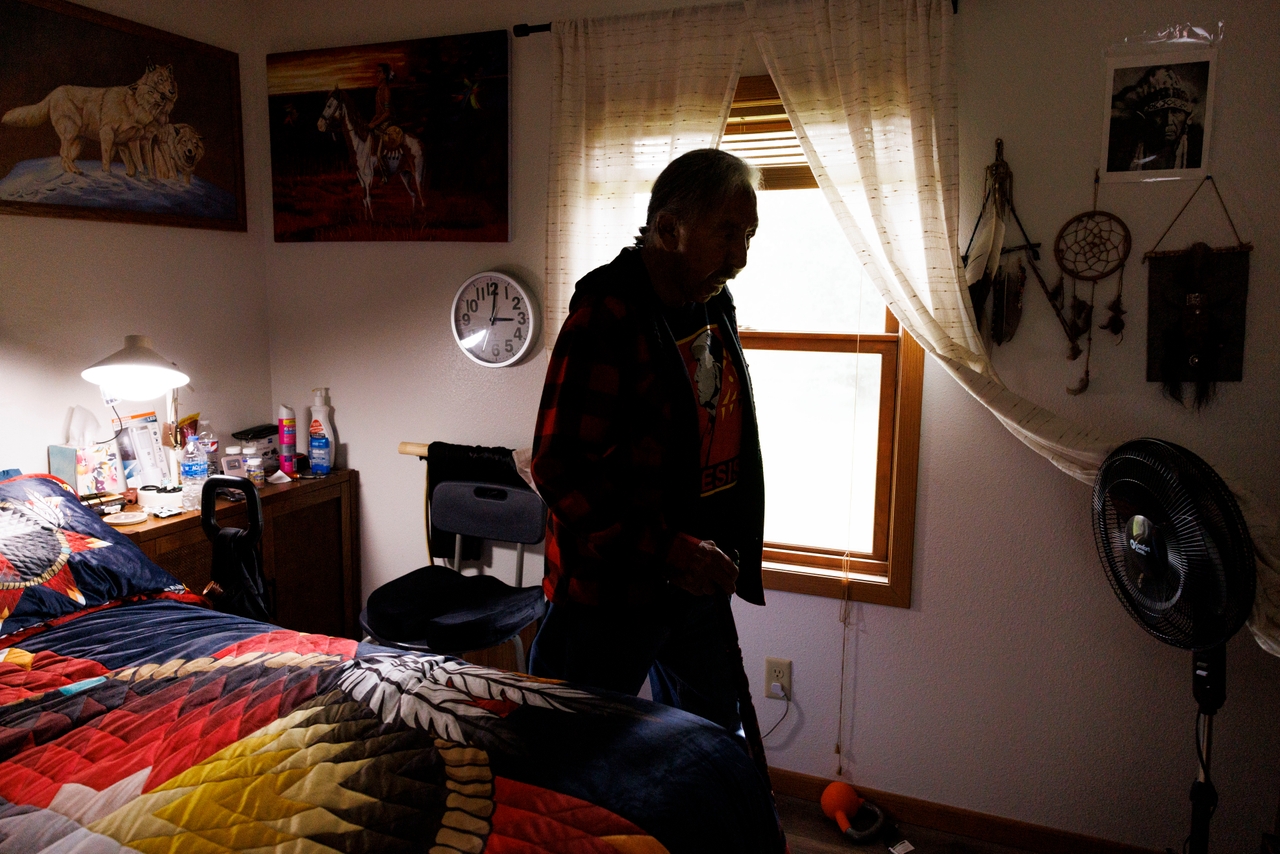
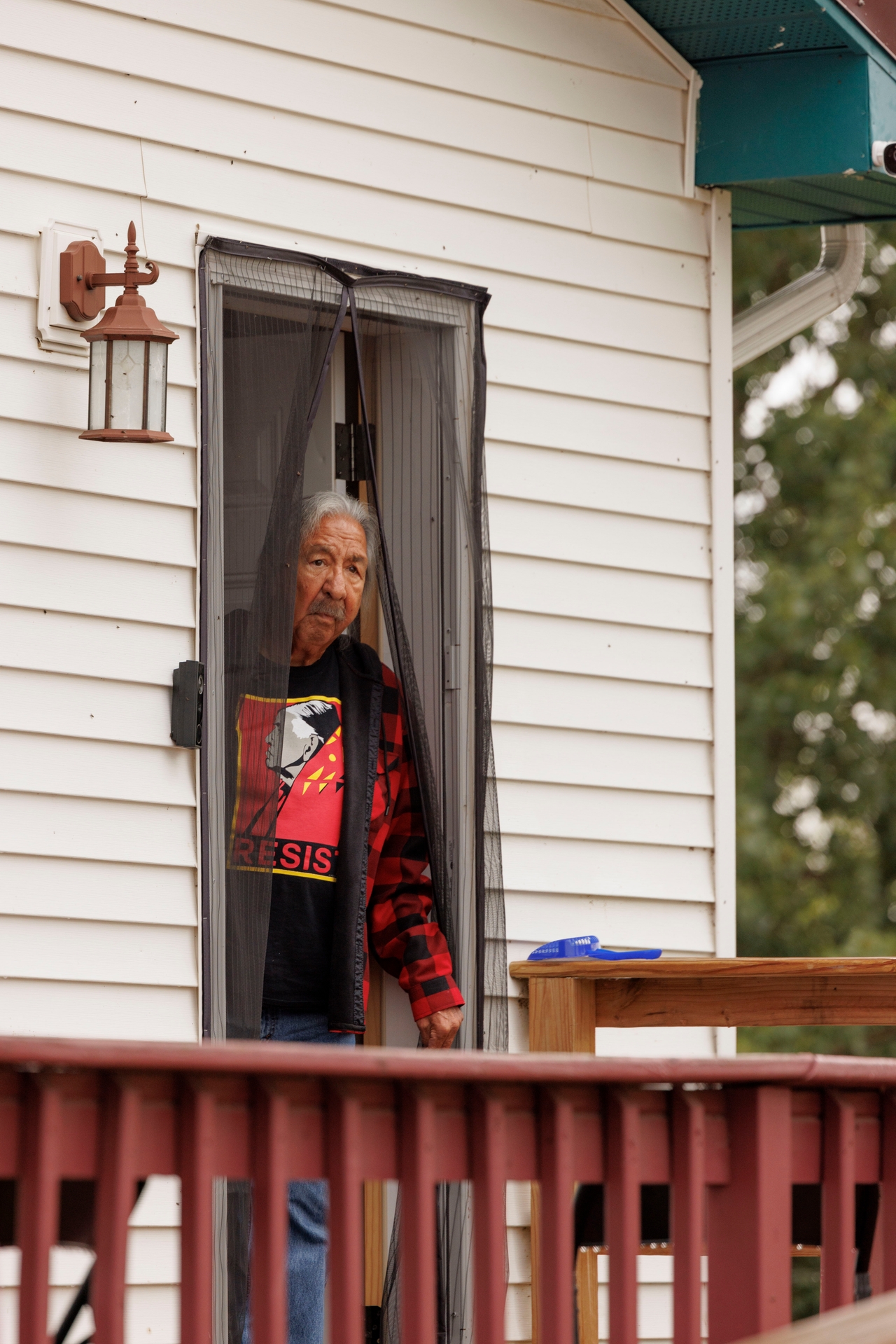
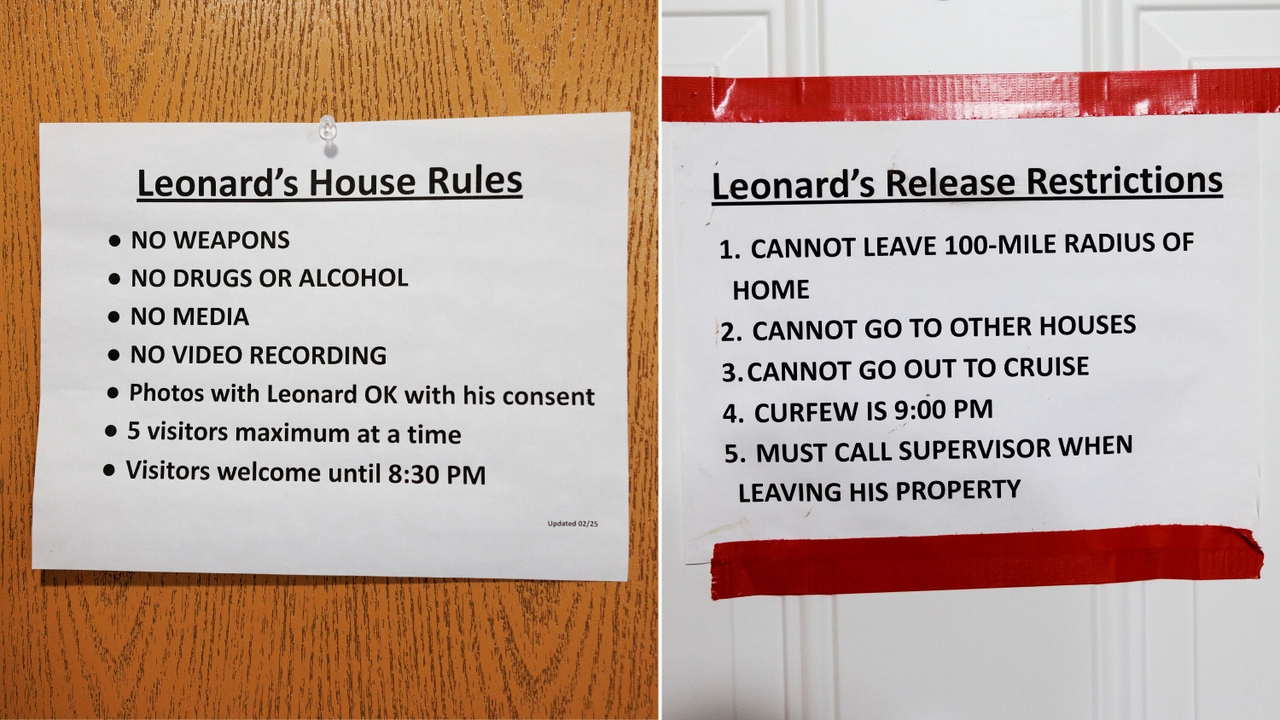
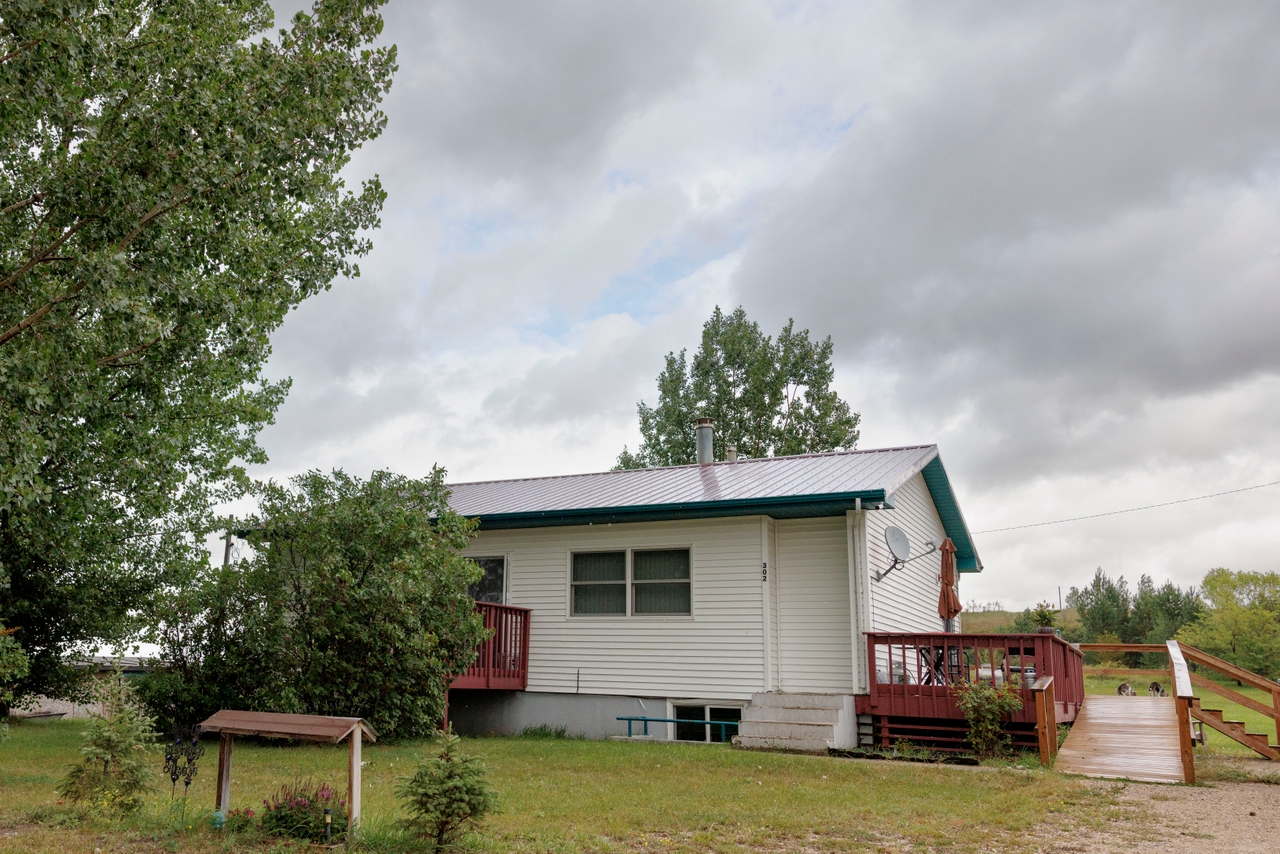 Peltier's home, where he is serving the remainder of his two consecutive life sentences.
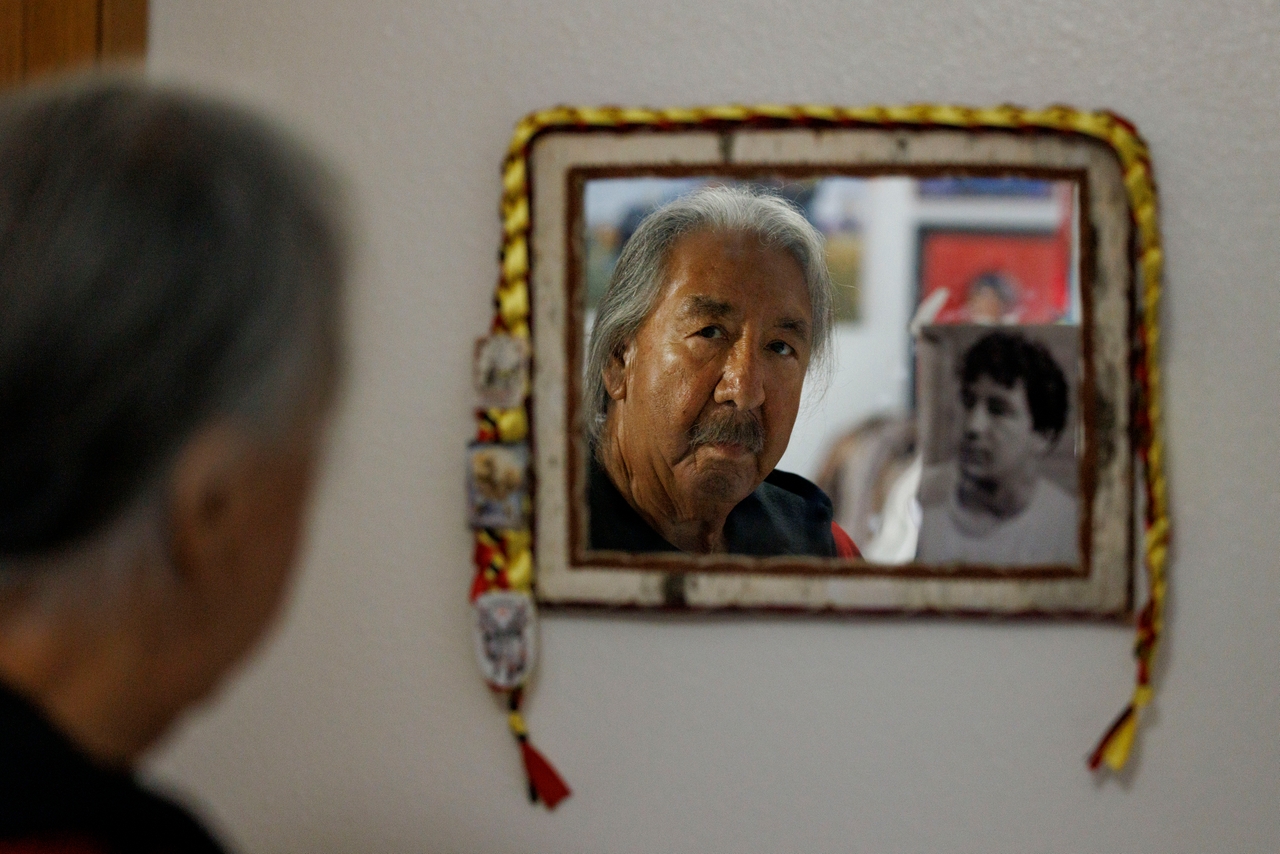 Peltier
said he never considered saying he was guilty of murdering the two FBI
agents just to get out of prison sooner, or falsely accusing others to
free himself. “I took an oath to fight for my people,” he said.
Peltier
said he never considered saying he was guilty of murdering the two FBI
agents just to get out of prison sooner, or falsely accusing others to
free himself. “I took an oath to fight for my people,” he said.














6 Comments