Mark Sutcliffe officially in the running to keep his job as mayor
Incumbent defends himself from critics who say he's unfairly boosting his profile with city-funded ads

Mark Sutcliffe has officially entered the race to keep his job as mayor of Ottawa, and is pushing back against critics who say he’s been unfairly boosting his profile with city-funded ads.
Sutcliffe, who has held the mayor’s seat since 2022, filed his nomination papers at the city elections office on Cyrville Road around noon Monday.
He said he took the city from "gridlock to real progress" after inheriting a toxic and dysfunctional council grappling with a trucker convoy, a pandemic and a light rail inquiry.
"The work isn’t done," he told reporters after filing his papers. "Residents are worried about rising costs, about job cuts and about public safety. At a time like this we can’t afford to make a U-turn and go back to the way things were four years ago. We can’t afford risky ideas that will lead to huge tax increases."
Sutcliffe becomes the fourth candidate to formally enter the race. He had long signalled that he planned to run, but filing his papers allows him to open a campaign bank account to begin raising money and spend it on his bid.
His registration comes as opponents, including challengers Neil Saravanamuttoo and Alex Lawson, have been faulting him for waiting to file.
They say Sutcliffe has been using his status as the incumbent to boost his profile by holding announcements and placing ads paid for out of his taxpayer-funded office budget.
Group says 'election-related' ad violates code
Sutcliffe regularly posts advertisements featuring his photo in newspapers like the Kitchissippi Times and the Glebe Report. His office has confirmed to CBC that those ads are funded by the mayor's office.
A recent ad, which appeared in the May edition of the OSCAR newspaper in Old Ottawa South, said he was "moving Ottawa forward" and "working on your priorities."

An ad that appeared in the May edition of the OSCAR community newspaper. (The OSCAR)
It then went on to list a series of priorities, from "keeping taxes low" to doubling the budget for roads and sidewalks. The ad also linked to Sutcliffe's own website.
On Monday, a left-leaning advocacy group filed a formal complaint about the latest ad, calling it "election-related" and alleging Sutcliffe is contravening council's code of conduct.
The code prohibits council members, including the mayor, from using municipal resources for election-related activity. It does not define election-related activity, but notes that "the prohibition applies to both the promotion and opposition to the candidacy of a person for elected office."
In a complaint to council's integrity commissioner, Horizon Ottawa argues that the OSCAR ad bears "a striking resemblance to popular forms of election campaign advertising" and can be interpreted as making promises.
Sam Hersh, a board member with the group, says the ad is different from those Sutliffe has run previously. He said they're forward-looking and include priorities that could only be implemented should Sutcliffe win election.
He called that unfair to other candidates who have to use limited campaign funds.
"There is some subjectivity here for sure, but to us this clearly looks like it could be a campaign ad," he said.
Laywer calls it a 'grey area'
Sutcliffe said his office checked with the city clerk to make sure that ads were compliant, and she confirmed that they were.
City clerk Caitlin Salter MacDonald told CBC News the advertisement in question does not appear to be a contravention of the rules.
Sutcliffe noted that community newspapers are full of advertisements from city councillors, MPs and MPPs.
"This is normal stuff," he said. "Every elected official advertises so that people know what they’ve been up to."
Sutcliffe added that the 60-day blackout period before the Oct. 26 election has not yet begun. While city resources can never be used on election-related ads that promote or oppose a candidacy, the blackout imposes more stringent rules that ban any ads paid out of constituency budgets.
"This is the registration period. It’s not the election period," Sutcliffe said. "I continue to be the mayor of Ottawa during this entire period."
He said he's maintaining a "clear line" between the campaign and his duties as mayor.
"I’m doing this on my lunch hour," he said of his registration. "I’m going back to work.”
But Jack Siegel, a lawyer who practises election law, said that clear line can be anything but. He said the question of Sutcliffe's ad falls into a "grey area."
He said it would be clearly offside for Sutcliffe to run an ad saying "vote for me," but he called it "routine" for politicians to trumpet their accomplishments while holding office.
He said it will be up to council's integrity commissioner to provide a conclusive answer, but in his view, Sutcliffe has a lot of room to defend himself.
"The question here is: is this promoting priorities and accomplishments of the government of the City of Ottawa today or is it promoting his candidacy?" Siegel said. "I could argue either side of that question."
He said the municipal campaign is different from federal or provincial writ periods, which are much shorter and start with the dissolution of the legislature or Parliament. Sutcliffe, by contrast, is still actively serving as mayor.
"For better or for worse, it’s long been a practice to trumpet your achievements using government funds during your term," said Siegel. "Your term’s not over."
ABOUT THE AUTHOR

Race for mayor off to early start, even as Sutcliffe waits for the 'real campaign'
Pace of launch events and announcements much faster than 2022 campaign

Mayor Mark Sutcliffe says the “real campaign” for his job won’t begin for months.
His challengers clearly have a different view.
Federal and provincial campaigns typically last just a few weeks. Ottawa’s 2022 race for mayor didn’t really get off the ground until well into the summer.
But almost six months before the Oct. 26 municipal election, well-organized campaigns to unseat Sutcliffe have already taken shape and his opponents are rolling out major announcements at a steady clip.
Jeff Leiper, Neil Saravanamuttoo and Alex Lawson all showed up at the election office on May 1, the first day they could submit nomination papers, to officially begin their mayoral runs.
The energy behind their campaigns was already on display that day.
Leiper was there when the office opened, more than six hours before his appointment. Lawson showed up with an entourage of heavyweight players who've worked on national campaigns — showcasing, maybe even flexing, the depth of political organization on his team.
Leiper released a big chunk of his electoral platform that same day, while Saravanamuttoo followed on Monday with two announcements on transit and transparency.
Both men have already held launch events to pump up their volunteers, while Lawson has scheduled a “Rally for Ottawa” for May 23. But he hasn’t waited to make announcements, putting out a five-point housing and homelessness plan.
Compare that to 2022, when Catherine McKenney waited until June to hold their launch event. And while Sutcliffe registered to run that June, his launch event followed months later, in September.
 Mayor Mark Sutcliffe at the mayor's office in city hall. (Arthur White-Crummey/CBC)
'No balloons' at the mayor's office
This time around, Sutcliffe seems to be sticking to that schedule. Though he's repeatedly said he plans to run for re-election, he still hasn’t filed his nomination papers to officially enter the race.
That's created a strange dynamic. Last Monday, Lawson and Sutcliffe both made announcements on homelessness. But while Lawson was clearly campaigning, Sutcliffe insisted he wasn’t.
“I don’t know why you would consider this a campaign-style event,” he said. “You know, there’s no balloons.”
It was an event much like a long list of others he's held at city hall in recent months, from unveiling an action plan for the ByWard Market to talking up efforts to build cricket pitches. This time, Sutcliffe announced a "champion’s table" on youth homelessness, posed with a giant cheque from a mayor’s charity ball fundraiser and promised to raise even more money for at-risk youth by running a marathon.
Some of the other campaigns are bristling at what they see as an unequal playing field, since they have to cover costs for their events out of limited campaign funds and can’t use city communications staff.
Saravanamuttoo accused the mayor of “blurring the lines” between campaign activities and his mayoral duties. He noted that Sutcliffe is still placing advertisements with his picture in community newspapers and saying he’s working “to make life safer, more reliable and more affordable.”
Those same words — safe, reliable, affordable — were part of his pitch to voters in the 2022 campaign.
Sutcliffe's office confirmed that the ads are paid out of the mayor's office budget, but called it a legitimate expense under council policy and "consistent with the advertising done by elected officials at all levels of government while they are in office."
Indeed, numerous advertisements for MPs, MPPs and city councillors feature in those same community newspapers.
But the Lawson campaign is also pushing back, arguing that Sutcliffe’s “action plans” sound a lot like platform planks.
“He has all the resources of his office and none of the rules of a candidate,” said Emrys Graefe, Lawson’s campaign manager.
So what are the rules?
The City of Ottawa prohibits members of council from using city property or staff time to promote or oppose someone's candidacy for elected office.
But Sutcliffe says his events have a different purpose. Under the Municipal Act, he is the CEO of Ottawa, and his job description makes him its leading spokesman. He's getting out the word about city programs, according to that argument, not asking for anybody's vote.
“I’m just doing my job as mayor,” he said. “I have six months left as mayor in this term of council. I don’t think the people of Ottawa elected me to serve them for three and a half years and then start worrying about the next term.”
 An
OC Transpo bus gets a tow after breaking down on Queen Street earlier
this month. Transit is already shaping up to be a big issue in this
year's mayoral campaign. (Arthur White-Crummey/CBC)
An
OC Transpo bus gets a tow after breaking down on Queen Street earlier
this month. Transit is already shaping up to be a big issue in this
year's mayoral campaign. (Arthur White-Crummey/CBC) Transit takes centre stage
The surge of early announcements have focused on a few key issues, including housing and transparency. But as OC Transpo continues to grapple with service disruptions, it’s hardly surprising to see transit vault to the top of the agenda.
Candidates didn’t even wait until the start of the official campaign period to get their views out.
Lawson was first. He sent an open letter to new OC Transpo chief Rick Leary last month. It was, in effect, an ultimatum, one where he demanded improvements to bus reliability numbers by November.
Should that not happen, Lawson threatened “leadership changes” at the top if he becomes mayor.
“That’s not personal, Rick,” he said. “That’s the job.”
His team described it as a “mandate letter,” a term common in federal and provincial politics.
Leiper was next, unveiling his transit plan the day before he filed to run. He announced what he called a “transit service guarantee,” promising to reverse service cuts and add more dedicated bus lanes to improve reliability.
Saravanamuttoo waited until his May 4 launch event. He promised “buck a ride, citywide,” saying he would cut fares to $1 per trip for all riders, with a $40 monthly cap.
Meanwhile, the campaign teams have been filling out their rosters.
The Lawson campaign, which already included national figures like Fred Delorey, Quito Maggi and Jeff Balingall, now includes Kyle Harrietha, who has managed federal Liberal campaigns in Ottawa Centre; Laura Kurkimaki, a deputy campaign manager in the 2021 federal Conservative campaign; and Stephanie Delorme, an Ontario PC vice-president.
Leiper’s team is headed by another seasoned political operator: Stephen Yardy, who has managed more than 25 campaigns across Canada for the NDP. He ran Ottawa West-Nepean MPP Chandra Pasma's 2022 campaign and was campaign director for the New Brunswick NDP in 2014.
Saravanamuttoo has a pair of co-campaign managers, Erin Maher and Aidan Anderson. He called Maher an "advocacy colleague" and policy advisor who has founded several community groups, while Anderson is "a communications professional and campaigner with experience at all three levels of government."
Council races heating up too
The race for mayor has been dominating the headlines, but nominations in key council races are also piling up fast.
In Orléans East-Cumberland, Matt Luloff recently filed to run for re-election, making him one of the last incumbent councillors to reveal his intentions for the race.
That means 21 of 24 incumbents have either registered or signalled a clear intention to do so.
Luloff already has four candidates registered to run against him. And that isn’t even the busiest field to take shape so far. In Stittsville, where incumbent Glen Gower is stepping away from city politics, there are already seven candidates.
Public school trustees are another storyline in the campaign. The Ottawa-Carleton District School Board remains under supervision, and so far, just three candidates have filed to run for any of its 12 trustee seats.
Instead, several incumbent trustees are looking to make the jump to council. Lyra Evans had already announced her intention to run in Rideau-Vanier, and she's since been joined by two others.
Donna Dickson has filed to run in Gloucester-Southgate against incumbent Jessica Bradley while Cathryne Milburn is a candidate in Beacon Hill-Cyrville against incumbent Tim Tierney.
ABOUT THE AUTHOR
3 mayoral candidates have already filed to run against Sutcliffe
Alex Lawson, Jeff Leiper and Neil Saravanamuttoo confirm 2026 Ottawa election bids
 3 mayoral candidates start campaigning for Mark Sutcliffe's job
Three challengers looking to unseat Mark Sutcliffe in this fall’s Ottawa election walked into an east-end strip mall on Friday to formally launch their nearly six-month-long bids for mayor.
It was the first day of the formal campaign period, and Kitchissippi Coun. Jeff Leiper didn’t waste a moment showing up at the City of Ottawa Elections Office on Cyrville Rd.
He was there more than six hours before his appointment. Every hour counts, he said.
"I wanted to be here at 8:30 [and] get that form signed as quickly as possible so we could kick into gear all the things that we need to do," he said.
'Wanted to make the maximum use'
Neil Saravanamuttoo, an economist who worked on Catherine McKenney's 2022 mayoral campaign and helped lead the fight against the latest redevelopment of Lansdowne Park, showed up with his papers just hours later.
Saravanamuttoo had floated his candidacy months earlier, saying he would run if and only if he signed up a thousand supporters. He said he has now exceeded that number and has a motivated campaign team.
On Friday, Saravanamuttoo made it official. He's running for mayor. “It’s a very short election period that we have and we wanted to make the maximum use of it," he said.
It's encouraging to see so many people sign up to run so early, he added.
"The more people in the race, that's a good sign for democracy."
'Hear from the most people possible'
The third mayoral candidate of the day was Alex Lawson, who owns a home building company and has also worked as a lobbyist.
He arrived with his campaign team, a cast of high-profile political hands that has grown since he initially announced his run this winter.
"We're excited to be able to actually get out there and start talking to more people, signing up volunteers, and raising and spending the money necessary to make sure we can hear from the most people possible," Lawson said.
The start of the campaign period marks a big shift in the rules around the race. Candidates can begin collecting donations and spend money on their campaigns.
Leiper said campaigning without even being able to hand out a brochure can be "awkward."
"I can't give them a piece of paper that goes to a website," he said. "So just in terms of being able to solidify that support I've been hearing, this is a big step to take."
With voting day set for Oct. 26, the election will see voters choose a mayor, 24 councillors and trustees for four school boards. Mayor Mark Sutcliffe has said he will run again and his office said he will file his nomination papers “in due course.”
The overwhelming majority of incumbent councillors are also seeking re-election. Aside from Leiper, who cannot simultaneously run for mayor and councillor, only Stittsville Coun. Glen Gower has announced he won’t run again. Two other councillors have not confirmed their intentions to CBC.
Floating a 2030 run
CBC News only spotted one incumbent in the first several hours of registration on Friday: Beacon-Hill Cyrville Coun. Tim Tierney.
Despite some speculation that he might be planning a run for mayor, he said he came to the office to file for his council seat.
Though candidates can change the office they're seeking until the registration deadline, Tierney said he is "absolutely" not planning to do so, barring "something absurd."
If he runs for mayor, he said it would be in 2030.
"You never say no in politics," he said. "Maybe this is something my wife and I will visit in 2030, but at this point my focus is on the area."
For now, Tierney said he's eager for the opportunity to be president of the Federation of Canadian Municipalities, where he's currently first vice president and is set to move up to the top job.
Other early birders
Several challengers also showed up on the first day of nominations. Public servant and Bridlewood Community Association president Erin Coffin was the first to get in to see a city election worker, immediately before Leiper.
"I'm just really keen to start talking to my neighbours," Coffin said.
Ottawa-Carleton District School Board trustee Cathryne Milburn followed shortly after. She's looking to take on Tierney in Beacon Hill-Cyrville. Other early birds were Joanne Chianello in Kitchissippi and Chelsea Walton in Stittsville, two of the few open seats without an incumbent.
Candidates still have plenty of time to file, with the nomination period running until Aug. 21, which is also the last day to withdraw from the election.
ABOUT THE AUTHOR
Homebuilder Alex Lawson plans to run for Ottawa mayor
He says transit, safety and affordability are getting worse and city should 'hit the undo button'
 Why this homebuilder wants to be Ottawa’s next mayor
A candidate with the backing of some big political operators plans to enter this year's race to be Ottawa’s mayor.
Alex Lawson, who owns a local home framing company, said he voted for Mayor Mark Sutcliffe in 2022 but now feels like the city is in worse shape.
“There's a lot of potential in Ottawa, but there's also been a steady decline of services recently,” he said. “I mean, what's working better these days?”
That overlaps with the message of Kitchissippi Coun. Jeff Leiper, another declared candidate to challenge Sutcliffe in October.
But unlike Leiper, an urban councillor who champions progressive causes, Lawson lives in Dunrobin and had a foot in Conservative politics — previously serving on the board of the Kanata-Carleton Conservative Association.
Even so, Lawson said he doesn't view himself as a conservative candidate.
“The nice thing about municipal politics is it's not partisan, because solutions to different problems are going to come from different places,” he said.
Lawson said he plans to bring a "solution-oriented attitude" to priorities like housing, affordability, transit, traffic and public safety.
He said he wants to take Ottawa back to a time where the city worked better.
“Let's get back to the old Ottawa. Let's take a step back. Let's hit the undo button. Let's revert to the saved file of Ottawa, where the transit got you where you needed to go,” he said.
“You weren't stopped by gridlock in traffic if you were trying to go downtown, and when you got there, you weren't scared to be there. It was safe.”
Just this week, Sutcliffe delivered a "state of the city" speech where he highlighted what he views as significant progress over his term, including efforts to cut red tape blocking housing construction while making record investments in transit and police.
Seasoned political team
Lawson grew up in Ottawa's Heron Gate neighbourhood. He said his company, Capital Framers, employs 17 people. He said running a business has taught him how to rely on the right people to get a job done.
But it hasn't taught him how to run a campaign, so he's surrounding himself with a team of seasoned political staff.
“It's political operatives from both sides that have agreed to just bury the hatchet, put away age-old political beefs to get to actually have progress,” he said.
His campaign manager is his half-brother Emrys Graefe, who was deputy director of Stephen Harper’s 2015 national campaign. He’s also worked on campaigns for provincial conservatives such as Ontario's Doug Ford and Alberta's Jason Kenney.
Jeff Ballingall, a Conservative strategist perhaps best known for founding Ontario Proud, is managing the digital campaign. Fred DeLorey, national campaign manager for the federal Conservatives during the 2021 federal election, is a senior advisor.
"We need someone who can actually get things done and fix our massive transit, housing, and affordability failures,” DeLorey said in an email. “That’s why I’m 100 per cent behind Alex Lawson. Enough talk – we need a builder."
Graefe said the team is also reaching out to senior Liberals. Quito Maggi, the CEO of Mainstreet Research and a frequent hand on Liberal campaigns, is Lawson's campaign chair. He cofounded a government relations firm with Graefe.
Maggi said his record is 10 wins and one loss on municipal elections. He called Lawson "real and authentic."
In his view, the public mood is ripe for a change.
Not worried about vote split
The election is Oct. 26. Candidates can’t even begin filing their paperwork to run until May, but Lawson said he wanted to announce quickly.
“The biggest issue that we're going to have is a lack of name recognition. So we want to get out there early and let people know who I am and what I stand for,” he said.
Lawson dismissed any notion that his candidacy could split centrist and right-leaning votes with Sutcliffe, who attracted both Liberal and Conservative support in 2022, though he said he has heard the argument.
"Right off the bat they're saying all you're going to do is split Sutcliffe's vote and Leiper's going to come and win," Lawson said. "I don't think that's the case, once people see what I'm bringing to the table and my solutions."
He said he will share more detailed proposals later on in the campaign, but he gave a few hints about where he stands.
As OC Transpo lurches from one problem to another, Lawson said the first thing he wants to do is get Ottawa moving again.
While he acknowledged that there’s no sense deconstructing a multi-billion dollar train network now, he said the LRT “crippled the transit system.”
He's nostalgic for the old Transitway, saying Route 95 "would get you across town every time."
“Instead of bringing back routes that actually get you where you need to go, we've just been trying to force people onto the train so that it doesn't look like it was a bad idea," he said.
Though he acknowledged that Sutcliffe has made moves to cut red tape on housing, he said the city could do more to support construction, especially the labour force.
"When you understand what it is to have the boots on and actually build the house, you understand a little bit better how to get the houses built," he said.
Lawson also focused on mental health, saying that witnessing the drug problem downtown is part of what convinced him to run.
“We can do more as a city to actually provide supports and make sure that when somebody does decide that they want to turn their life around, the support is there for them,” he said.
Aside from his business and political work, Lawson has also served on the board of West Carleton Disaster Relief and has worked as a lobbyist, focusing on technology and construction.
ABOUT THE AUTHOR
Sea of incumbent Ottawa councillors planning to seek re-election in 2026
With at least 19 incumbents intending to run again, this year's campaign is a departure from 2022
 Most Ottawa city councillors are running again this year
 A solid majority of incumbent Ottawa city councillors are planning to stand for re-election this year.
The municipal election is set for Oct. 26, and candidates have until August to file their nomination paperwork. Plans can shift during those months, but at least 19 of the 24 sitting councillors currently intend to run again.
Mayor Mark Sutcliffe, the 25th member of council, has repeatedly said he is planning to seek re-election.
That has some city hall watchers bracing for a different race than in 2022, when only 13 incumbents were on the ballot.
Twenty-two councillors responded to CBC’s request to confirm their 2026 intentions. Kitchissippi Coun. Jeff Leiper is planning a run for mayor and cannot simultaneously run for his council seat. Of the 21 others, all but two said they are planning to run.
Both Alta Vista Coun. Marty Carr and Stittsville Coun. Glen Gower said they are undeclared.
Several councillors including Barrhaven West’s David Hill, Orléans West-Innes’s Laura Dudas and Riverside South-Findlay Creek’s Steve Desroches told CBC they have unfinished business that they want to see through over the coming term.
Bay ward Coun. Theresa Kavanagh said she wants to be there for the opening of the LRT west extension through her ward.
"It takes a long time to get things done," she said. "I think that’s the reason a lot of councillors have to stick around sometimes. Otherwise, they’re not going to see the results of their work."
Kanata South Coun. Allan Hubley, one of the two longest-serving members of council, is eyeing a fifth straight run.
"My family and community are supportive and my health is good so I will continue organizing and calling supporters to get ready," said Hubley, who was first elected in 2010.
The newest member of council, Isabelle Skalski, has only been in office for seven months after winning a byelection in Osgoode.
Now, she's getting ready to do it all over again. She said the campaign is still so fresh that her mind hasn’t really had time to shift out of election mode.
 Osgoode Coun. Isabelle Skalksi won her seat in a byelection just seven months ago, and is now preparing for another run. (Salah Tebessi/CBC)
In June, she won in an open race. Now, as an incumbent, she’s expecting a different campaign.
"Now you have to defend your record," Skalski said. "So I think right now my focus is to get to deliver as much as I can so that it's an easy check for the person coming to the ballot box."
3rd-party group to target incumbents
The prospect of so many more incumbents seeking re-election this time around is prompting a shift in strategies.
"We're looking at a much different campaign than last time," said Tom Ledgley, co-ordinator of Horizon Ottawa, an advocacy group that typically endorses progressive candidates in city elections.
But instead of choosing one specific candidate to endorse in each ward, Horizon is now planning to canvass against sitting councillors by drawing attention to their voting record, developer donations and public statements.
 Tom Ledgley is co-ordinator of Horizon Ottawa, a municipal advocacy group. (/Michel Aspirot CBC)
Ledgley noted that negative campaigning doesn’t always reflect well on a candidate, so he’s hoping his group can take on that job instead.
"We see a big part of our role in stepping in and sharing some of that information," he said. "So the candidates who are challenging these incumbents don't necessarily have to."
With fewer open seats, Horizon Ottawa is looking to marshal its forces against a few specific candidates.
"There's going to be a lot more focus on unseating incumbents, which is a much greater challenge," he said.
Every one of the 13 incumbents who ran in 2022 won re-election.
"So that's one of the big reasons why we're looking at that more narrow focus on a few specific wards," Ledgley said, "because we think we're going to need to really put as much energy as we can to have a hope of maybe unseating some incumbents."
He said he's expecting to begin canvassing as soon as the warm weather comes. He wouldn’t yet reveal which wards, or which incumbents, the group plans to target.
The first day for candidates to file their paperwork to run for city council is May 1. The last day is Aug. 21.
ABOUT THE AUTHOR
Press Release: Horizon Ottawa Condemns Provincial Supervisor’s Private Sale of Ottawa School
FOR IMMEDIATE RELEASE
February 11, 2026
OTTAWA – The provincially-appointed supervisor of the OCDSB, Bob Plamondon, should not be allowed to move forward with the process of selling Grant Alternative School in Nepean through a private real estate firm according to Horizon Ottawa.
Horizon Ottawa is demanding that the supervisor engage the city so they can consider possible uses and that Mayor Sutcliffe put pressure on the provincial government to stop this process until the municipality has had time to weigh in and consult with local residents.
“A private real estate firm or an unelected supervisor should never be the ones to decide the future use of public land.” said Tom Ledgley, Coordinator for Horizon Ottawa.
Plamondon listed the school for sale through the private firm Avison Young following directions from Ford’s education minister Paul Calandra. This process has been entirely lacking in transparency or opportunities for public input from the Redwood community in Nepean where the school resides.
“This is yet another example of the Ford government trampling over local democracy in their mission to privatize everything they can”, said Ledgley. “Strong mayor powers, appointing school board supervisors, and the numerous pieces of legislation like Bill 66 that erode municipalities’ right to make their own decisions is extremely concerning and anti-democratic. The process must be halted until the community gets the transparency and input they deserve.”
- 30 -
For Media Inquiries:
Tom Ledgley
613-663-7018
Mayor and City Councillors
Find your ward and Councillor
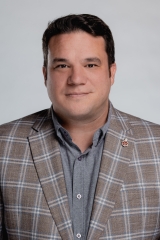
Matthew Luloff
Councillor and Deputy Mayor
- Tel: 613-580-2471
- Fax: 613-580-2511














Nominated candidates
Candidates for Mayor
Electors are encouraged to consult the Candidate information disclaimer page before clicking any external links.
Last updated: May 25, 2026
| Candidate's name | Date Nomination Filed | Date Registered for the Contribution Rebate Program | Telephone | Website or social media account(s) | |
|---|---|---|---|---|---|
| Jeff Leiper | May 1, 2026 | May 1, 2026 | 613-416-7437 | info@leiper2026.ca(link opens email application) | |
| Alex Lawson | May 1, 2026 | Not registered | 613-481-8881 | contact@alexanderlawson.ca(link opens email application) | Not provided |
| Neil Saravanamuttoo | May 1, 2026 | May 1, 2026 | Not provided | Not provided | Not provided |
| Mark Sutcliffe | May 25, 2026 | May 25, 2026 | Not provided | contact@marksutcliffe2026.ca(link opens email application) |

Emrys Graefe
Emrys is a seasoned political strategist with a proven track record in campaign management, and public policy advocacy. With a deep understanding of how political dynamics influence the legislative processes, Emrys has successfully guided numerous campaigns and initiatives, making him a trusted figure in Canadian political circles. His strategic acumen and dedication to ethical governance are cornerstones of Political Intelligence's approach.
Starting in the Conservative Research Group in 2009, Emrys held various positions with Members of Parliament and Conservative Party Headquarters, leading to his position of Deputy Director of Stephen Harper’s 2015 national campaign. Since then, Emrys has played key management roles in campaigns for Doug Ford and Jason Kenney.
Emrys was brought in as the first Vice President of Digital for Rubicon Strategy, a leading government relations firm based in Toronto and Ottawa, and then moved on to take the role of Chief Technology Officer at iPolitics, a Canadian political news site.
Partnering with Quito Maggi of Mainstreet Research, Emrys is a founder of Political Intelligence and is currently on a leave of absence.
Candidates for Ward 10 Gloucester-Southgate
Electors are encouraged to consult the Candidate information disclaimer page before clicking any external links.
Last updated: May 13, 2026
| Candidate’s name | Date nomination filed | Date registered for the Contribution Rebate Program | Telephone | Website or social media account(s) | |
|---|---|---|---|---|---|
| John Redins | May 4, 2026 | Not registered | 613-277-4227 | john@johnredins.com |
|
| Donna Dickson | May 6, 2026 | Not registered | 613-793-4290 | donna.dickson@constituent.ca | Not provided |
| Jessica Bradley | May 8, 2026 | May 8, 2026 | Not provided | Jessica@Bradley2026.ca |
