
Danielle Smith Absolutely HUMILIATES Snarky CBC Host in Brutal Interview
 The National Telegraph - Wyatt Claypool
 Indigenous treaty rights meet Alta. separation fight
It was more than a little ironic that the rogue Alberta separatists who are attempting to trigger a binding referendum were stopped in their tracks by Indigenous treaty rights. Ironic, but entirely justified.
The irony came to the fore in a decision handed down by Alberta Court of King’s Bench Justice Shaina Leonard, who found the province’s chief electoral officer erred in approving a citizen-led initiative to hold a referendum on Alberta independence because it ignored Indigenous treaty rights. The legal challenge to the referendum came from Alberta’s Athabasca Chipewyan First Nation.
Leonard found the separatist campaign — which relied on an Alberta law that compels the government to hold a referendum after collecting signatures from at least 10 per cent of the electorate — violated constitutional “duty to consult” First Nations on any measure that affects treaty rights.
That duty, contained in Section 35 of the Constitution Act, does not prohibit governments from making decisions that impact treaty rights, but it does require prior consultation with First Nations and makes any violations legally actionable.
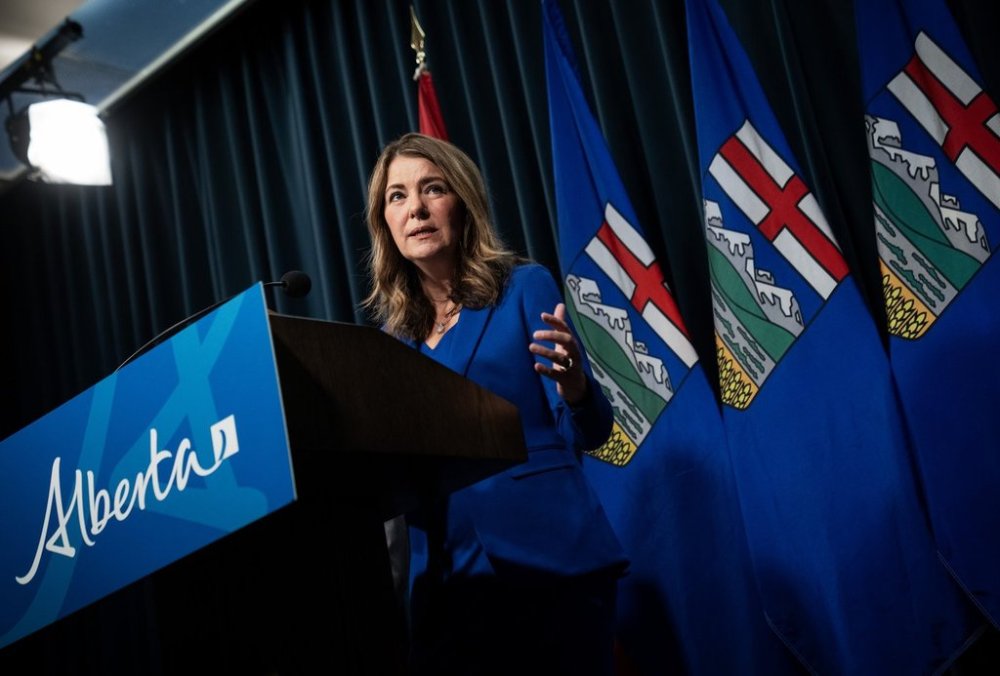
The reaction from Alberta Premier Danielle Smith has been nothing short of scandalous. Smith announced her government would appeal Leonard’s “anti-democratic” ruling to protect the sanctity of the citizens’ referendum law.
Smith occupies an untenable place in the debate over Alberta independence. It was the Smith government that amended the citizen referendum law to lower the number of signatures required to trigger a vote.
And while Smith and her government claim they want to remain in Canada, Alberta wields the threat of separation as a truncheon to get concessions from Ottawa on the approval of new pipelines and to weaken environmental regulations.
Smith apparently sees so much political value in the threat of separation that she has pledged to unilaterally add a question about independence to a roster of other questions she plans on putting before citizens in a special referendum this fall.
The Alberta premier’s posture on independence is erratic, disingenuous and sets the stage for a head-on collision with one of the most important legal concepts in our constitution.
Treaty rights have been given special status in constitutional law as an acknowledgment the land belonged to Indigenous people before Europeans settled here. And that the terms of the treaties remain foundational legal agreements that largely have not been fulfilled by the federal and provincial governments.
Could Indigenous leaders use treaty rights to stop Alberta separation? Failure to consult would create an insurmountable legal barrier to separation. Even if there was consultation, First Nation leaders in Alberta have already said they would use all available legal means to prevent the province from leaving Canada.
It’s important to note that support for Alberta separatism is, according to opinion polls, insufficient to win a referendum vote. It is quite likely Smith, who clearly enjoys needling Ottawa with the threat of separation, doesn’t want the referendum to succeed but also doesn’t want to deny separatist elements in her own party lest they rebel.
That leaves Smith in a weird and untenable position.
Smith has said she will appeal the decision. (Her favourite way to short-circuit Canada’s Charter of Rights, using the notwithstanding clause, doesn’t apply to Section 35 Treaty Rights.)
However, she does so with the full knowledge that a strong majority of Albertans don’t want to leave, and that ultimately, Indigenous treaty rights should and almost certainly would complicate and possibly even halt actual separation.
For asserting their rights and crippling the campaign for Alberta separation, it’s unlikely that Indigenous people want or need the thanks of a grateful nation.
They wouldn’t mind, however, if everyone finally committed to honouring the treaties that may ultimately save this nation.
» Winnipeg Free Press
Alberta Separation: Judge QUASHES Petition, Disenfranchises 300,000+ Voters! w/ Lawyer Jeff Rath

80 Comments

Liberals Fighting Over Alberta Pipeline | Stand on Guard
 Krayden's Right News
33 Comments

Why Won't Danielle Smith Denounce David Parker From Take Back Alberta? 30 Minute Panel Discussion
 Women In Canadian Politics
 Danielle Smith rejects Alberta judge’s ruling against separation petition as "anti-democratic"
 Global News
80 Comments
Alberta separatist group ordered to pull down list with millions of voters' personal information

The Latest
- Elections Alberta won a court order on Thursday to force an Alberta separatist group to pull down a public, searchable database detailing the personal information of millions of Alberta voters.
- Court heard an Elections Alberta investigation determined the electoral list was legitimately provided to the Republican Party of Alberta, a provincial party supporting Alberta independence.
- Centurion Project, a pro-sovereignty group registered as a third-party advertiser in Alberta, posted the database containing the information.
- The group said it has shut down the app and will fully comply with Elections Alberta’s investigation.
Updates
Alberta privacy commissioner calls posting of voter information online 'very serious'
Late Thursday afternoon, the Office of the Information and Privacy Commissioner of Alberta issued a statement about the developments.
"My office is still working to determine the facts of this case," said Commissioner Diane McLeod, who noted her office was informed by Elections Alberta earlier in the day about a potential breach. "However, it appears this matter may fall outside my jurisdiction."
"My office does not have jurisdiction over personal information contained in the List of Electors that may have been disclosed by a political party. This is because the Personal Information Protection Act (PIPA) does not apply to political parties."
McLeod said her office will continue to look to figure out if it has jurisdiction over the Centurion Project and, if it does, it will investigate to determine whether any violations of PIPA occurred.
"What happened here is very serious," she said. "More than 2.9 million Albertans have had their personal information breached. For some of these individuals there is likely a real risk of significant harm given that their home address and phone numbers have been made public.”
McLeod added that she believes there is "a concerning gap in Alberta’s privacy laws as it relates to the collection, use and disclosure of personal information by political parties."
"This incident demonstrates that it is high time for political parties to be made subject to PIPA."
Elections Alberta confirms the database has been removed

In a statement issued this afternoon, Elections Alberta officials said the portion of the Centurion Project website providing access to the electors list is no longer available.
The agency said it's working with other agencies, including law enforcement and the Office of the Information and Privacy Commissioner of Alberta, and is "taking every possible action to protect and recover the information."
The agency also shared this timeline of its response since Monday.
- Monday, April 27: Elections Alberta received information suggesting Centurion was in possession of the List of Electors provided to a registered political party. It launched an investigation.
- Tuesday, April 28: The chief electoral officer sent an email to individuals associated with the Centurion Project advising that if they were accessing a List of Electors, they must immediately "cease and desist."
- Wednesday, April 29: Elections Alberta representatives, accompanied by police, attended a Centurion Project meeting in Edmonton to personally deliver the cease-and-desist letter.
- Thursday, April 30: Elections Alberta and its lawyers successfully applied for a temporary injunction at Court of Kings Bench in Edmonton.
That’s a wrap on our live coverage today, but this is not the end of our reporting on the issue.
We'll continue to provide updates in our story here. We'll also have ongoing coverage at CBC.ca/Edmonton.
The separatist group that posted the database has responded
We’ve just received a statement from The Centurion Project Ltd. about the alleged misuse of voter information:
"The Centurion Project Ltd is a company that was established to help train volunteers on how to be better citizens and to impact the political process. To be clear, the Centurion App is strictly used by volunteers to find people they personally know in a database. They are not given access to any phone numbers or emails and are encouraged only to contact and claim people they already know. We have relied on a third party to provide us with datasets for this tool. We are aware of recent allegations regarding the app’s data. We have taken action to shut down the app until we can ensure that the dataset is compliant with Alberta and federal privacy laws. We plan to fully comply with Elections Alberta’s investigation."
The premier is in U.K. on a trade trip

As details emerge about the alleged misuse of voter information, we have yet to hear an official response from the Alberta government.
Premier Danielle Smith is on a 10-day tour of Europe to promote trade and investment. This morning, she participated in a fireside discussion at Chatham House in London about energy, critical minerals, defence and technology, according to a government news release.
In response to questions about the potential misuse of voter information and privacy implications for vulnerable people, the press secretary for Alberta's justice minister referred questions to the United Conservative Party (UCP).
UCP spokesperson Dave Prisco said the party did not provide the list of electors to any unauthorized outside group or individual, and referred additional questions to Elections Alberta.
Some Albertans are angered by the database
I'm in Calgary's University District getting reaction from people on the street about this story. There's been a common thread among their responses — shock and anger that voter information was shared without permission.
People are confused as to how this information was accessed and they’re not happy that the information was available so easily.
The people I spoke to want to see consequences for those involved in accessing the list of electors.
What the database was going to be used for

In addition to publishing the database, the Centurion Project also posted a set of instructions guiding people in how to use it.
The step-by-step, nine-point guide, posted on the Centurion website, showed users how to search for names and “claim” electors whom they would then survey about their support for Alberta’s independence movement.
According to the guide, the responses of each elector would then be tracked through the digital dashboard.
Its stated purpose was to build lists of electors who could be contacted as supporters.
What's a phone book?
The Centurion Project is led by longtime political organizer David Parker.
Parker has not yet responded to a CBC News request for comment. However, he was posting on X on Thursday.
One post showed a picture of a “white pages” phone book with the caption: "Look everyone! I found names and addresses in a nefarious document called a phone book! Call the cops!"
In 2010, the Yellow Pages Group said residential phone directories — often referred to as the white pages — would only be available upon request in many major Canadian cities, including Edmonton and Calgary.
According to Centurion’s social media accounts, the party’s goal is to “recruit, equip and mobilize a team of community leaders across the province of Alberta to take on the task of winning Alberta's sovereignty.”
The group, which has offices in Calgary, has upcoming “Operation Secure Independence” events throughout the province.
Centurion registered with Elections Alberta as a third-party advertiser on April 24. It is among a number of pro-separatist groups that want Alberta to gain independence from the rest of Canada.
Albertans should be ‘deeply alarmed,’ says NDP leader
I’m a provincial affairs reporter based in Edmonton.
Provincial NDP Leader Naheed Nenshi said Albertans should be angry and “deeply alarmed” by how easy people could access their private information while the database was online.
“There are very, very serious implications for this kind of behaviour,” Nenshi said in response to reporters’ questions at an unrelated news conference in Calgary.
“It's dangerous. It puts people's lives at risk and it puts our democracy at risk.”
Nenshi also pushed back at suggestions from Centurion Project leader David Parker, posted today on X, that the electoral list contains the same information seen in a public phone book. That sentiment was also in posts from other Albertans who support separatism.
Nenshi said the voters’ list includes additional information.
He called on the provincial government to ensure Elections Alberta has enough funding to properly conduct an investigation.
“Every single Albertan who votes has had their personal data breached by these people,” he said. “This is not a joking matter.”
Republican Party leader says it's ‘fully complying’

In an interview with The Canadian Press, the leader of the Republican Party said it hadn't received official communication from Elections Alberta.
Cameron Davies said the party has issued a notice to the Centurion Project that any information the group may have allegedly received — if it came from the party — is not to be used.
"We were proactive on that before the injunction today, and we'll be fully complying with Elections Alberta," Davies told The Canadian Press.
Independence petition underway
Alberta independence has been a hot topic in recent years, with efforts underway to force a referendum on the topic.
A group called Stay Free Alberta has a petition underway that aims to trigger a referendum on the province separating from Canada, using provincial legislation. The group says it has already collected more than the required 178,000 signatures.
The petition has a deadline of May 2 and has not been certified. A judge has ordered a month-long stay preventing Alberta’s chief electoral officer from certifying the results.
Another petition, called Forever Canadian, seeks to make it an official policy for Alberta to stay in Canada. That petition was deemed successful in the fall. Alberta law requires the legislature to refer such successful policy petitions to an all-party legislative committee.
Neither petition has made it onto a referendum ballot.
The province is set to hold a referendum in the fall on several other topics proposed by the government.

No comments:
Post a Comment