Date: Tue, Aug 26, 2025 at 11:35 AM
Subject: Setting up New Office Re: Q for Quest is a Canadian entertainment and information anthology television series which aired on CBC Television from 1961 to 1964.
To: <david.raymond.amos333@gmail.com>
Date: Tue, Aug 26, 2025 at 12:14 PM
Subject: Automatic reply: Q for Quest is a Canadian entertainment and information anthology television series which aired on CBC Television from 1961 to 1964.
To: David Amos <david.raymond.amos333@gmail.com>
Nous vous remercions d’avoir contacté le bureau de l’honorable François-Philippe Champagne, Ministre des Finances et du Revenu national.
Bureau de François-Philippe Champagne
Député de Saint-Maurice–Champlain
Ministre des Finances et du Revenu national
Bureau de circonscription à Shawinigan :
570, avenue de Grand-Mère, bureau 1
Shawinigan QC G9T 2H2
Tél.: 819 538-5291
Téléc.: 819 538-7624
***************************
Thank you for writing to the honorable François-Philippe Champagne, Minister of Finance and National Revenue.
François-Philippe Champagne's Office
MP for Saint-Maurice–Champlain
Minister of Finance and National Revenue
Constituency Office Shawinigan :
570, Grand-Mère Avenue, Office 1
Shawinigan QC G9T 2H2
Tel.: 819 538-5291
Fax: 819 538-7624
Date: Tue, Aug 26, 2025 at 11:36 AM
Subject: Automatic reply: Q for Quest is a Canadian entertainment and information anthology television series which aired on CBC Television from 1961 to 1964.
To: David Amos <david.raymond.amos333@gmail.com>
Please be assured that we appreciate receiving your comments.
Le ministère des Finances Canada accuse réception de votre courriel.
Nous vous assurons que vos commentaires sont les bienvenus.
From: Chassin, Youri (Saint-Jérôme) <Youri.Chassin.STJE@assnat.qc.ca>
Date: Tue, Aug 26, 2025 at 11:43 AM
Subject: Accusé de réception
To: David Amos <david.raymond.amos333@gmail.com>
Bonjour,
Au nom de l’équipe du député de Saint-Jérôme, Monsieur Youri Chassin, nous accusons réception de votre courriel et nous vous en remercions.
Veuillez noter que les courriels anonymes, non signés, et les messages en chaîne non sollicités ne feront pas l’objet d’un suivi personnalisé. L’indication de votre code postal est également requise.
Soyez assuré que votre correspondance recevra toute l’attention qu’elle mérite et sera attribuée aux personnes concernées pour le suivi approprié.
Veuillez recevoir, Madame, Monsieur, nos salutations distinguées.
Cordialement,
L’équipe de Youri Chassin.
L’équipe du bureau de circonscription | Saint-Jérôme
|
|
227, rue Saint-Georges | 2e étage, bureau 205 |
Date: Tue, Aug 26, 2025 at 11:44 AM
Subject: RE:[Ext*]Q for Quest is a Canadian entertainment and information anthology television series which aired on CBC Television from 1961 to 1964.
To: David Amos <david.raymond.amos333@gmail.com>
Bonjour,
Au nom de Paul St-Pierre Plamondon, député de Camille-Laurin et chef du troisième groupe d’opposition, nous accusons réception de votre courriel et nous vous en remercions.
Prenez note que votre message recevra le suivi approprié.
Veuillez agréer l'expression de nos sentiments les meilleurs.
L’équipe de Paul St-Pierre Plamondon
|
|
Député de Camille-Laurin Parti Québécois 8695, rue Hochelaga | 1er étage, bureau 202-E |
Ce message est confidentiel et ne s’adresse qu’au destinataire.
S’il vous a été transmis par erreur, veuillez le détruire et m’en aviser.
Merci.
Date: Tue, Aug 26, 2025 at 11:41 AM
Subject: Automatic reply: Q for Quest is a Canadian entertainment and information anthology television series which aired on CBC Television from 1961 to 1964.
To: David Amos <david.raymond.amos333@gmail.com>
Good day,
Please note that I am currently away from the office and will be returning on Thursday, August 28, 2025.
During my absence Ted Gallivan will be acting on my behalf.
For any assistance, please contact my office at (613) 957-5056.
Thank you
********************
Bonjour,
Veuillez noter que je suis présentement absente du bureau et je serai de retour jeudi le 28 août 2025.
Pendant mon absence Ted Gallivan assumera l'intérim.
Pour toute assistance, veuillez communiquer avec mon bureau au (613) 957-5056.
Merci
Organizations


People8
- Drouin, Nathalie G.; 613-957-5056; Deputy Clerk of the Privy Council and National Security and Intelligence Advisor to the Prime Minister;
- Gallivan, Ted; 613-292-1749; Interim Deputy National Security and Intelligence Advisor to the Prime Minister;
- Filion, Marie-Claude; 613-716-2153; Chief of Staff;
- Desormeaux, Suzanne; 613-668-2725; Advisor to the Chief of Staff;
- Legros, Julie; 613-957-5056; Executive Assistant;
- Borges-Brownrigg, Carina; 343-596-8028; Correspondence Coordinator;
- Régimbald, Denis; 613-618-9061; Driver;
- Guertin, Carole; Scheduling Assistant;
Mandate Letter of the National Security and Intelligence Advisor
Dear Madame Drouin:
Thank you for serving as Deputy Clerk of the Privy Council and my National Security and Intelligence Advisor (NSIA). Canada continues to face serious threats to our safety and security, economic interests, and the integrity of our democratic institutions. Our security context is uncertain and evolving, and the associated threats are becoming more acute and complex. While our national security community works hard to identify, investigate, and mitigate these threats, it must be ready to anticipate and respond to increasing challenges. As it does so, its actions and approach must continue to be guided by respect for rights and freedoms, accountability to the public, and a commitment to be as transparent as possible while protecting critical sources and methods.
An evolving role to better understand, manage, and respond to threats
Your role as my principal advisor on national security and intelligence is critical to achieving the objectives of a better understanding, managing, and responding to threats. Public discussions on foreign interference reaffirm the need for a stronger, more clearly articulated NSIA position that can oversee and guide the intelligence process from collection and assessment, through policy development, to our response and operational coordination. It is a dynamic, ever-changing, and evolving role depending on current affairs and priorities. Enhancing your role will help ensure the right information and intelligence gets to the right people at the right time, and that decision makers are given actionable options and advice. At the same time, we need to improve transparency and dialogue with Canadians, especially those directly impacted by emerging threats, to help raise awareness and enhance our collective ability to respond. This includes better dialogue with Parliamentarians, civil society representatives, diaspora communities, provinces and territories, Indigenous groups, allied partners, industry, and other Canadians. As my National Security and Intelligence Adviser, I expect you to manage the flow of intelligence and analysis necessary for me to effectively fulfill my duties as Prime Minister. In deciding what intelligence and analysis should reach me, as Prime Minister, please take into account Canada’s strategic priorities, urgent issues, and relevant advice from the Clerk of the Privy Council, Ministers, Deputy Ministers and other senior officials in Canada’s national security apparatus.
Ministers and their departments have mandated accountabilities, but I expect you to play a strong coordination role to help steer key national security decisions, particularly those coming out of the National Security Council. This includes giving advice on policy initiatives and gaps, including evaluating existing approaches to determine what is working, what needs adjusting, and providing options to improve the overall functioning of the system. I expect you to lead efforts to enhance awareness among Ministers of current and emerging strategic threats, identify options to mitigate those threats, and ensure a coherent approach and collective response, where appropriate.
When major incidents occur affecting national security interests—in Canada or internationally—I expect you to coordinate the federal national security community to ensure timely, effective operational response and, as necessary, to advise me or the responsible Minister(s) of any impediments to success that may arise during this work. In this capacity, you will also support Cabinet discussions and decision making, ensuring that that all necessary stakeholders are brought to the table, and providing timely response options and advice. This includes taking the lead on convening and coordinating Incident Response Group meetings, as well as leading the strategic communications response that is so critical to engaging other orders of government and Canadians at large.
Secretary to the National Security Council (NSC)
We need to think strategically about our national security priorities and investments, and to be clear-eyed about our current capacities and the effectiveness of our instruments. As NSIA, one of your responsibilities will be to act as Secretary to the NSC, which I chair. In this capacity, while remaining accountable to me and to the Clerk of the Privy Council, you will support members of the NSC with comprehensive intelligence and strategic advice to help meet the ambitious objectives I have set for the committee. As Secretary, you will bring to bear strategic expertise from across the government to enable robust discussions and informed long-term decision-making on national security issues. I expect you to work with implicated deputy heads to ensure that all relevant Ministers, including those who are not regular members of the Council, are appropriately engaged. You will also lead efforts to deliver on the priorities and action items that emerge from NSC discussions.
Key priorities
Our government has taken action to address national security gaps and to better meet evolving needs. Work to respond to the important recommendations of external experts, Commissions of Inquiry, and review bodies is ongoing. I ask that your work on the following priorities be informed by the reports of the Independent Special Rapporteur (ISR) on Foreign Interference and relevant reports from the Public Inquiry on Foreign Interference (PIFI), the National Security and Intelligence Committee of Parliamentarians (NSICOP), the National Security and Intelligence Review Agency (NSIRA), as well as reviews and reports provided by relevant parliamentary and oversight bodies. So, I ask that you focus on delivering results against the following priorities:
- Further to the Defence Policy Update, lead efforts to deliver a renewed National Security Strategy in 2025. This will set out the integrated framework for Canada’s national security, defence, and diplomatic posture, leveraging engagement with Canadians from coast-to-coast-to-coast. I expect you to work through the NSC to develop the Strategy, which is to be reviewed every four years to ensure it remains current and responsive.
- Engage with allies and international partners to reinforce Canada’s strengths as an effective and credible partner globally on issues of national security, foreign, and defence policy while exploring new, modern, bilateral, and multilateral partnerships to maximize Canada’s output on the world stage in support of me and key ministers.
- Lead a refreshed annual process to establish Canada’s intelligence priorities, and work with security agencies to communicate these priorities publicly. I expect you to work through the NSC to ensure these priorities align with the broader strategic direction set by me and the NSC, consistent with a renewed vision for national security.
- Effectively work with the national security community to address recommendations on Foreign Interference emerging from the ISR, PIFI, NSICOP, and NSIRA reports. This work should include putting measures in place to modernize the intelligence assessment function; systematizing the flow of intelligence across government. I expect your work with the national security community to deepen Canadians’ trust in our democratic institutions and processes.
- Improve transparency and stakeholder engagement on national security issues, including by increasing the government’s communication with Canadians, and enhancing engagement with Parliamentarians, civil society representatives, diaspora communities, provinces and territories, Indigenous groups, allied partners and industry to raise awareness and integration, identify and counter threats, improve mitigations, and inform priority setting.
- Support federal efforts to coordinate Canada’s federal emergency preparedness and response capacity and ensure our readiness to meet the growing challenges of the future, including those presented by climate change, rapid technological advancement, and a shifting geopolitical landscape.
- In response to NSIRA and NSICOP’s recommendations, determine whether anything further is required to exercise this mandate.
On behalf of Canadians, I thank you for your continued service, and your commitment to safeguarding Canada while preserving our values and our rights and freedoms.
Sincerely,
Rt. Hon. Justin Trudeau, P.C., M.P.
Prime Minister of Canada
Statement from the Deputy Clerk of the Privy Council and National Security and Intelligence Advisor to the Prime Minister, Nathalie G. Drouin
Statement
“On October 14th, because of a significant and ongoing threat to public safety, the RCMP and officials took the extraordinary step of making public accusations of serious criminal activity in Canada perpetrated by agents of the Government of India.
The Government of Canada has not stated, nor is it aware of evidence, linking Prime Minister Modi, Minister Jaishankar, or NSA Doval to the serious criminal activity within Canada.
Any suggestion to the contrary is both speculative and inaccurate.”
Contacts
Media Relations Office
Privy Council Office
media@pco-bcp.gc.ca
613-957-5420
From: David Amos <david.raymond.amos333@gmail.com>
Date: Tue, Aug 26, 2025 at 11:35 AM
Subject: Q for Quest is a Canadian entertainment and information anthology television series which aired on CBC Television from 1961 to 1964.
To: Chuck.Thompson <Chuck.Thompson@cbc.ca>, <rita.silva@simonandschuster.ca>, <Info@simonandschuster.ca>, <gena.lanzi@simonandschuster.com>, rfife <rfife@globeandmail.com>, ragingdissident <ragingdissident@protonmail.com>, <orders@booksq.com>, davidmylesforfredericton@gmail.com <DavidMylesForFredericton@gmail.com>, <elliot@bizbizshare.com>, <moodier.wish_0l@icloud.com>, <pdaigneault@bizbizshare.com>, <Curtis@kbdinsurance.com>, <info@kbdinsurance.com>, <support@bizbizshare.com>, <info@pmemtl.com>, <info@pmemtlouest.com>, <Francois.Legault.ASSO@assnat.qc.ca>, <Youri.Chassin.STJE@assnat.qc.ca>, <chef.pspp@assnat.qc.ca>, <pspp.CALA@assnat.qc.ca>, <melanie.joly@ised-isde.gc.ca>, fin.minfinance-financemin.fin <fin.minfinance-financemin.fin@canada.ca>, <francois-philippe.champagne@parl.gc.ca>, Robert. Jones <Robert.Jones@cbc.ca>
Cc: pm <pm@pm.gc.ca>, premier <premier@gov.ab.ca>, premier <premier@leg.gov.mb.ca>, Office of the Premier <scott.moe@gov.sk.ca>, premier <premier@gov.nt.ca>, premier <premier@gnb.ca>, premier <premier@ontario.ca>, premier <premier@gov.pe.ca>, premier <premier@gov.bc.ca>, premier <premier@gov.nl.ca>, premier <premier@gov.yk.ca>, Premier <PREMIER@novascotia.ca>, michelle.rempel <michelle.rempel@parl.gc.ca>, rfife <rfife@globeandmail.com>, <thefamoussandhogs@gmail.com>, <info@unitedpartyofcanada.ca>, <michaelharrisformp@gmail.com>, <info@battleriver-crowfoot.ca>, <Media@bonniecritchleyindependent.com>, Wayne.Long <Wayne.Long@parl.gc.ca>, Anita.Anand <Anita.Anand@parl.gc.ca>, Nathalie.G.Drouin <Nathalie.G.Drouin@pco-bcp.gc.ca>, Erik Andersen <twolabradors@shaw.ca>, <grantsabraham@gmail.com>, <ezra@forcanada.ca>, sheilagunnreid <sheilagunnreid@gmail.com>
315 Comments

Bob Dylan with Johnny Cash - Girl from the North Country (Official Audio) ft. Johnny Cash

If you're travelin' in the north country fair
Where the winds hit heavy on the borderline
Remember me to one who lives there
She once was a true love of mine
If you go when the snowflakes storm
When the rivers freeze and summer ends
Please see if she's wearing a coat so warm
To keep her from the howlin' winds
Please see for me if her hair hangs long
If it rolls and flows all down her breast
Please see for me if her hair hangs long
For that's the way I remember her best
I'm a-wonderin' if she remembers me at all
Many times I've often prayed
In the darkness of my night
In the brightness of my day
So, if you're travelin' in the north country fair
Where the winds hit heavy on the borderline
Remember me to one who lives there
She once was a true love of mine

| Quest | |
|---|---|
| Also known as | Q for Quest |
| Created by | Ross McLean |
| Presented by | Andrew Allan (1961) Robert Whitehead (1961–64) |
| Country of origin | Canada |
| Original language | English |
| No. of seasons | 4 |
| Production | |
| Executive producers | Ross McLean (1961) Daryl Duke (1961–1964) |
| Producer | Andrew Allan (1961) |
| Original release | |
| Network | CBC Television |
| Release | 3 January 1961 – 10 March 1964 |
| Related | |
| Eye Opener | |
Quest (initially titled Q for Quest) is a Canadian entertainment and information anthology television series which aired on CBC Television from 1961 to 1964.
Premise
The series began in January 1961 as Q for Quest and featured a variety of documentaries, dramas and musical performances. The series was hosted by Andrew Allan for its first six months. Executive producer Ross McLean described the series as "a free-form exercise in the inventive use of television."[1]
After the initial season ended in June 1961, McLean left CBC for the upstart private CTV Television Network and was replaced by Daryl Duke. Allan was replaced as host by Robert Whitehead.[2] The series title was shortened to Quest when it began its first full season in October 1961. Episode producers included Harvey Hart, George McCowan, Mario Prizek and Whitehead.
In March 1964, Duke left the CBC to work with Steve Allen in the United States after completing an episode featuring musician Bob Dylan for Quest.[3][4] That final episode of Quest was broadcast on 10 March 1964.[5] CBC created a new experimental anthology series Eye Opener which aired from January to March 1965.[6]
Reception
Quest took an experimental and often controversial approach on the productions it aired.[7] The presentation of Jules Feiffer's satirical play Crawling Arnold on the 4 February 1962 episode drew particularly strong public reaction. Edwin William Brunsden, a Member of Parliament, received negative correspondence to this broadcast and denounced the episode in Parliament as "depraved... disgusting... garbage... and a rank violation of the sanctity of the Canadian home and family." The suitability of Quest's subject matter for a broadcast audience was also a concern of CBC management on occasion.[8][9] Ottawa-based Sock 'n' Buskin Theatre Company lodged a different complaint regarding the CBC's promotion of "Crawling Arnold" as a "North American premiere" because the theatre group began its performances of the play three days prior to the broadcast.[10]
Alberta Member of Parliament Clifford Smallwood declared to the 25 February 1964 broadcast of "For Want of Something Better to Do" to be "corrupt and immoral". Smallwood demanded that CBC programming be approved by a House of Commons committee. Ottawa Citizen columnist Frank Penn saw little immorality in that episode, but rather that the play was a challenge to inhumanity.[11]
CBC had received more critical letters from viewers for Quest than for any other program according to Duke during a September 1962 interview.[12]
Episodes
Weeks not listed were usually pre-empted by other programming such as extended editions of Close-Up, CBC Newsmagazine or Stanley Cup playoffs.
Season 1 (1961)
Q for Quest began as a mid-season series, airing Tuesdays at 10:30 p.m. (Eastern).
| Title | Written by | Original release date | |
|---|---|---|---|
| "Burlap Bags" | Len Peterson | 3 January 1961 | |
|
Starring Percy Rodriguez, adapted by Len Peterson from his radio play, Harvey Hart producer[13][14][1] | |||
| "A Canvas for Conversation" | – | 10 January 1961 | |
|
Painter Harold Town hosted an often-fractious discussion with fellow artists Jack Nichols and William Ronald.[7] | |||
| "An Evening without James Reaney" | – | 17 January 1961 | |
|
Jeremy Wilkin's solo performance of James Reaney's work, under the theme
of "Life and Death in Canada". Harvey Hart was the producer.[15] | |||
| "Josef Drenters" | – | 24 January 1961 | |
|
A biographical film by Allan King on Ontario farmer and sculptor Josef Drenters[16] | |||
| "Festival In Puerto Rico" | – | 7 February 1961 | |
|
A documentary on Puerto Rico's Casals Festival where classical singer Maureen Forrester
and her conductor husband Eugene Kash performed. This National Film
Board production also features their three children who also travelled
to the festival. Roman Kroitor directed this.[17] | |||
| "For The Information of Husbands" | Anton Chekov | 14 February 1961 | |
|
Frances Hyland and Larry D. Mann star in this performance of Chekov's story. Adaptation by Mac Shoub, Leo Orenstein producer.[18] | |||
| "The Blues" | – | 21 February 1961 | |
|
A conversation concerning blues music with Ed Bickert, Don Francks, Eve Smith, the Don Thompson Quintet; Daryl Duke producer.[19] | |||
| "Return Journey" | – | 28 February 1961 | |
|
Douglas Rain and Diana Maddox perform an autobiographical play about Dylan Thomas; Paul Almond producer.[20] | |||
| "Bikel Calling" | – | 14 March 1961 | |
|
A feature on performer Theodore Bikel, produced by Stan Harris.[21] | |||
| "Mind of Mingus" | – | 28 March 1961 | |
|
Jazz musician Charles Mingus is featured in this special, originally recorded as a 1961 special by CBC Vancouver.[22][23] | |||
| "Oscar Brown Jr." | – | 11 April 1961 | |
|
American musician Oscar Brown Jr. is featured.[24] | |||
| "The World of S. J. Perelman" | – | 18 April 1961 | |
| "The Wrecker" | – | 9 May 1961 | |
| "Lambert, Hendricks and Ross" | – | 16 May 1961 | |
|
A musical concert with Lambert, Hendricks and Ross, a vocal group who simulates big band instrumentals.[28] | |||
| "Standard of Dying" | Herbert Eisenreich | 23 May 1961 | |
| "It's Harder to be Anybody" | – | 30 May 1961 | |
| "Death in the Barren Ground" | – | 6 June 1961 | |
|
A drama with Douglas Rain about youths in the North attempting to survive, previously broadcast in October 1959 on Explorations.[34] | |||
| "Katherine Mansfield" | Katherine Mansfield | 13 June 1961 | |
|
A dramatic reading from one of Mansfield's stories.[35] | |||
| "The Human Voice" | – | 20 June 1961 | |
|
Norma Renault stars in the adaptation of a Jean Cocteau work[36] | |||
| "A Day in the Life of the Great Scholar Wu" | Bertolt Brecht | 27 June 1961 | |
|
Ted Follows stars in this adaptation of a Brecht work.[37] | |||
The initial 1961 half-season was pre-empted by extended hour-long editions of Close-Up on 31 January, 7 March, 25 April.[38][39] Stanley Cup playoff broadcasts also pre-empted Q for Quest on 21 March and 4 April 1961. The 2 May episode was pre-empted by the special documentary University.[40]
Season 2: 1961–1962
The first full season of Quest aired on Sundays at 10:30 p.m. (Eastern).
| Title | Written by | Original release date | |
|---|---|---|---|
| "The Asylum" | Pierre Gascar | 8 October 1961 | |
|
This drama concerns Rose Schmidt (Elise Charette) who is committed to a
psychiatric hospital. Producer Harvey Hart adapted Gascar's play for
this episode. Victoria Mitchell and Catherine Proctor also star.[41] | |||
| "The Alcoholic Veteran with the Washboard Cranium" | Henry Miller | 15 October 1961 | |
| "Jackie and Roy in Love" | – | 22 October 1961 | |
| "Do Jerry Parker" | Bernard Slade | 5 November 1961 | |
| "Sam" | Norman Klenman | 12 November 1961 | |
|
Suzanne Grossman, Charmion King, Dino Narizzano and Louis Zorich star in
this play about a mentally ill man who attempts to sell the world's
secret to people on the street.[47] | |||
| "The House of the Rising Sun" | – | 19 November 1961 | |
|
Don Francks and Eve Smith perform with the Don Thompson Octet in this blues-based musical set in New Orleans.[48][49] | |||
| "Two From Mansfield" | Katherine Mansfield | 3 December 1961 | |
| "The Last Clock" | James Thurber | 10 December 1961 | |
| "Henry Miller" | – | 17 December 1961 | |
|
This talk show features a discussion between author Henry Miller and his biographer Alfred Perles about their past experiences.[54] | |||
| "Picnic on the Battlefield" | Fernando Arrabal | 24 December 1961 | |
| "Six and One" | – | 31 December 1961 | |
|
Jazz music show featuring Les Double Six and the Wray Downes Trio, hosted by Robert Whitehead and Al Hamel.[57][58] | |||
| "The Morning After Mr. Roberts" | Budd Schulberg | 7 January 1962 | |
|
An actor portrays author Thomas Heggen, author of Mister Roberts, in a staged interview, starring Budd Schulberg as the interviewer.[59] | |||
| "Professor Taranne" | Arthur Adamov | 21 January 1962 | |
|
Mavor Moore and Tony Van Bridge star in this teleplay produced by John Adaskin.[60] | |||
| "On the Road" | Jack Kerouac | 28 January 1962 | |
| "Crawling Arnold" | Jules Feiffer | 4 February 1962 | |
| "Dreams" | – | 18 February 1962 | |
|
The hopes and plans of youths are profiled in this documentary.[64] | |||
| "Sonny Terry and Brownie McGhee" | – | 4 March 1962 | |
|
Blues songs sung by Terry and McGhee.[65] | |||
| "The Neutron and the Olive" | Rudi Dorn | 11 March 1962 | |
|
Drama concerning nuclear war, starring Sharon Acker and Bernard Hayes. Produced by Paul Almond.[66][67] | |||
| "Bedtime Story" | Sean O'Casey | 18 March 1962 | |
|
Play starring Larry Beatty and Frances Hyland.[68] | |||
| "The Eighth Day of the Week" | – | 29 April 1962 | |
|
Play depicting life under communism, starring Sharon Acker, Neil McCallum and Douglas Master.[69] | |||
| "Olatunji – An African in New York" | – | 6 May 1962 | |
|
Featuring Michael Olatunji, a drummer from Nigeria.[70] | |||
| "Border Town" | – | 13 May 1962 | |
|
Tijuana, Mexico is featured in this documentary narrated by Bruno
Gerussi, filmed by Robert Crone and directed by Cliff Solway. The film
explores the various aspects of Tijuana's life as it exists near the
U.S. border.[71] | |||
| "Pedro the Monkey" | Antonio Callado | 27 May 1962 | |
Season 3: 1962–1963
Quest retained its Sunday 10:30 p.m. (Eastern) time slot for its 1962–63 season.
| Title | Written by | Original release date | |
|---|---|---|---|
| "The Trial of Lady Chatterley" | – | 14 October 1962 | |
|
Docudrama of the 1960 British trial in which Penguin Books defended its publication of Lady Chatterley's Lover. The program explores the pros and cons of censorship, and the role of literary experts as trial witnesses. Ivor Barry, Henry Comor and Barry Morse star.[74][75] | |||
| "District Storyville" | – | 21 October 1962 | |
|
This ballet concerns a hat-check boy in Storyville, New Orleans who dreams of becoming a legendary jazz musician. The program features Donald McKayle's dance company accompanied by band members Archie Alleyne, Guido Basso, Dorothea Freitag, Rob McConnell and Robert Van Evera. Music was written by Freitag, production was by Harvey Hart.[76] | |||
| "The Man on His Back" | Karl Fruchtmann | 28 October 1962 | |
| "Protest" | – | 4 November 1962 | |
|
This documentary concerns the nature of modern protesting from the violent riots of New York to the comic dissent of The Second City.[79] | |||
| "Black and White" | – | 18 November 1962 | |
| "Indian" | George Ryga[13] | 25 November 1962 | |
|
Len Birman portrays an indigenous person from Western Canada.[81] | |||
| "One Time Around" | – | 2 December 1962 | |
|
This documentary about Playboy publisher Hugh Hefner was filmed in Chicago, presenting his daily activities and his associates.[82] | |||
| "Evolution of the Blues" | – | 9 December 1962 | |
|
A musical history of blues music presented by Jon Hendricks with Gildo Mahones, "Big" Miller and Eve Smith.[83] | |||
| "Jealousy" | Sacha Guitry | 16 December 1962 | |
|
Drama concerning a man who wrongly believes his wife to be jealous. Starring Peter Donat, Diana Maddon and Douglas Rain.[84] | |||
| "Norman Mailer" | – | 30 December 1962 | |
| "The Suitcase" | – | 13 January 1963 | |
|
A suitcase is left behind in this dramatic play. Mervin Blake, Peter Donat and Hugh Webster star.[86] | |||
| "Gospel" | – | 20 January 1963 | |
| "Kim" | – | 27 January 1963 | |
|
Docudrama produced by Eric Till concerning Kim Malthe-Bruun
who was a member of the Danish resistance during World War II. The
program is based on excerpts from writings by Malthe-Bruun (Garrick
Hagon) who wrote letters to his mother (Sydney Sturgess) and girlfriend
(Heidy Hunt) while he was imprisoned by the Nazis. Other characters
featured include a Gestapo officer (Paul Harding), a sweeper (Sydney
Brown) and a young boy (Peter Kastner). Douglas Rain is the narrator.[89] | |||
| "The Mission of the Vega" | Friedrich Dürrenmatt | 10 February 1963 | |
|
Set 300 years in the future, the planet Venus has become a prison
colony. Western governments wish to attack the east and plot to use
Venus as a launching point for their attack. Western leaders travel to
Venus on the space ship Vega to offer the exiles on Venus a return trip
to Earth in exchange for supporting their plans to attack the east.
Mavor Moore, Bernard Behrens, Orest Ulan, Christopher Newton, Ivor
Barry, Drew Thompson, William Osler, Gillie Fenwick and Claude Ray star
in this Mario Prizek production.[90] | |||
| "Paul Loves Libby" | Philip Roth | 17 February 1963 | |
|
Graydon Gould, Cec Linder, Martha Henry, Larry D. Mann star in this play based on Roth's novel Letting Go.[91] | |||
| "Oppenheimer" | Alan King | 24 February 1963 | |
|
This docudrama concerns the 1954 security hearings of J. Robert Oppenheimer
whose suspension from the Atomic Energy Commission included allegations
that he improperly associated with communists. Fletcher Markle portrays
Oppenheimer; other cast members in this George McCowan production
include John Bethune, Ed McNamara, Ruth Springford and Alexander
Webster.[92] | |||
| "The Wounded Soldier" | George Garrett | 3 March 1963 | |
| "Gallows Humor (part 1)" | Jack Richardson | 17 March 1963 | |
|
This two-part drama concerns Walter (Jack Klugman) who is in jail
awaiting a death sentence, and receives a visit from a woman. Charmion
King and Budd Knapp also star.[95] | |||
| "Gallows Humor (part 2)" | Jack Richardson | 24 March 1963 | |
|
Concluding part of a drama by Jack Richardson.[95] | |||
| "Eulogy" | James Baldwin Wallace Markfield | 14 April 1963 | |
|
This episode presents a pair of eulogies. The first, by James Baldwin from his novel Another Country, concerns a young black man. The other eulogy by Wallace Markfield from To an Early Grave is delivered by a rabbi in commemoration at a boy's funeral. Harvey Hart directed.[94][96] | |||
| "The Establishment" | Unknown | 21 April 1963 | |
|
Features sketches from British satirical group The Establishment.[97] | |||
| "Man Dying" | Cliff Solway | 5 May 1963 | |
| "Morley Callaghan" | Unknown | 12 May 1963 | |
|
Morley Callaghan is featured in a rare interview with Nathan Cohen.[100] | |||
| "That Was the Week That Was" | Unknown | 26 May 1963 | |
|
Sample segments from BBC television series That Was the Week That Was.[101] | |||
Season 4: 1963–1964
The final season of Quest returned to its original Tuesday 10:30 p.m. time slot.
| Title | Written by | Original release date | |
|---|---|---|---|
| "The Establishment, part 2" | – | 1 October 1963 | |
|
More routines from the British comedy review, follow-up of the 21 April 1963 episode.[102] | |||
| "Two Soldiers" | George Ryga[13] | 8 October 1963 | |
|
A play set during peacetime featuring Canadian soldiers, starring John Vernon and Johnathan White.[103] | |||
| "Dave Broadfoot" | – | 15 October 1963 | |
|
Recorded live at a coffee house in Vancouver, this episode features comedy by Dave Broadfoot, later of Air Farce.[104] | |||
| "The Living Premise" | – | 22 October 1963 | |
|
Features material from an off-Broadway musical.[105] | |||
| "Flipside" | Charles Cohen | 5 November 1963 | |
|
A successful disc jockey is the focus of this play.[106] | |||
| "Night of Admission" | Frank Freedman | 19 November 1963 | |
| "The World of Kurt Weill in Song, part 1" | – | 26 November 1963 | |
| "The World of Kurt Weill in Song, part 2" | – | 3 December 1963 | |
|
The concluding part of this musical performance starring Martha Schlamme and Will Holt.[109] | |||
| "O Canada" | – | 10 December 1963 | |
|
Cliff Solway produced this film concerning Quebec separatism.[111] | |||
| "Jealousy" | – | 24 December 1963 | |
|
Rebroadcast from 16 December 1962.[112] | |||
| "New Year's Eve Revue" | – | 31 December 1963 | |
|
New York's The Living Premise, Britain's The Establishment and Toronto's
Village Revue star in the New Year's Eve presentation of satirical
sketches.[113] | |||
| "Bedlam Galore for Two or More" | Eugene Ionesco | 7 January 1964 | |
|
Jack Creley and Norma Renault star in this drama, produced and directed by Mario Prizek.[114] | |||
| "The Bathroom" | Eric Nicol | 14 January 1964 | |
|
Mervyn Blake, Eric House and Ruth Springford star in this humorous play concerning a nursing home in Vancouver.[115] | |||
| "The Brig" | Kenneth H. Brown | 21 January 1964 | |
|
Len Birman, Ed McNamara, Gordon Pinsent and Mel Scott star in this drama set in a military prison.[116] | |||
| "Eli, the Fanatic" | Philip Roth | 28 January 1964 | |
| "Spoon" | – | 11 February 1964 | |
|
Jimmy Witherspoon performs blues music with jazz group Dizzy Reece Sextet. This was an excerpt from Daryl Duke's 1963 production Sixty Minutes With Spoon.[118][119] | |||
| "20,000 Reasons for Courage" | – | 18 February 1964 | |
| "For Want of Something Better To Do" | Maxim Gorky | 25 February 1964 | |
|
Len Birman, Lynn Gorman, Teresa Hughes, Larry D. Mann and Hugh Webster
star in this play set in the Canadian Prairies. George Ryga adapted
Gorky's short story for broadcast.[122] | |||
| "District Storyville (repeat)" | – | 3 March 1964 | |
|
Rebroadcast from 21 October 1962.[11] | |||
| "The Times they Are A-Changin'" | – | 10 March 1964 | |


appearing on a half-hour CBC TV special, Quest, that filmed a disinterested Dylan to a backwoods backdrop even more stilted than the performance. Already, he was hinting at a dissatisfaction with the treadmill of live performance, telling a Toronto journalist, ‘I don’t work that much. I don’t play concerts that much. I’m in this accidentally… because [of] the songs I write.’
Josephine Riesman
Abraham Josephine Riesman | |
|---|---|
| Born | 1985 (age 39–40) Oak Park, Illinois, U.S. |
| Occupation | Reporter, Essayist |
| Education | Harvard University (AB) |
| Notable works | True Believer: The Rise and Fall of Stan Lee |
| Spouse | S.I. Rosenbaum |
| Website | |
| abrahamriesman | |
Abraham Josephine Riesman (born 1985) is an American reporter and essayist based in Providence, Rhode Island. She is the author of two biographies, True Believer: The Rise and Fall of Stan Lee (2021), and Ringmaster: Vince McMahon and the Unmaking of America (2023).
Background and education
Riesman was born and raised in Oak Park, Illinois, a suburb of Chicago.[1] She graduated from Harvard College in 2008 with a degree in Social Studies.[2] After college, she moved to New York City, where she contributed to a variety of publications, including The New York Times, The Washington Post, and The Wall Street Journal.[2]
Career
In 2017, Riesman published her first book, True Believer: The Rise and Fall of Stan Lee. The book is a biography of Stan Lee, the comic book writer, editor, and publisher who is best known for creating Marvel Comics superheroes such as Spider-Man, the X-Men, and the Hulk.[3]
Riesman's second book, Ringmaster: Vince McMahon and the Unmaking of America, was published in 2023. The book is a biography of Vince McMahon, the professional wrestling promoter who is the chairman and CEO of WWE.[4] Ringmaster was a New York Times bestseller,[5] and was described in the New York Times as "magisterial."[6]
Riesman has contributed as a freelance journalist and essayist to numerous publications, including New York Magazine,[7][8] The Washington Post,[9] Slate,[10] and The Daily Beast.[11]
Personal life
Riesman is transgender. [12] She is married to the journalist S.I. Rosenbaum. They live in Providence, Rhode Island.[2]
Young writer Abraham Josephine Riesman is having a Renaissance

“Ringmaster: Vince McMahon and the Unmaking of America” is not your typical biography.
Yes, the subject is the cheesy, soap opera-like world of professional wrestling, but the book is a serious investigation into the WWE showman’s dubious business practices, gothic family roots and covert political influence.
This is a style that the author, Abraham Josephine Riesman, 37, has cultivated over the course of a decade-plus career in journalism. Riesman, who now lives in the East Side of Providence, has experienced a personal renaissance in the past few years, with a young marriage, the publication of two bestselling books, a reevaluation of her gender identity and a growing relationship with her Jewish background.
In person, she is Josey, and she sports curly hair and an arm tattoo reading, “Idea #101: Solve Everything,” an obscure comic-book reference that echoes Riesman’s quixotic ambition. She speaks in robust pronouncements and biting quips, and she credits ADHD for her hairpin turns from topic to topic.
Riesman specializes in complex biographies, including “True Believer: The Rise and Fall of Stan Lee,” about comic-book legend Lee, and the forthcoming “Hollywood Freaks,” about the band Beck. But despite her youth, mapping Riesman’s own life is nearly as difficult. Here are a few little-known highlights:
Raised in the Midwest, with deep New England roots
Riesman grew up in Oak Park, Illinois, but her family history is deeply embedded in the Northeast. Her great-great-grandfather, Philip Riesman, founded an electric company in Boston called Riesman & Sons, which was later the Pawtucket-based Royal Electric Company.
“Our family was a big presence in New England,” says Riesman. “What [Royal Electric] was most notable for – and this is the most Jewish-American thing you can possibly imagine – they made most of their money by selling Christmas lights.”
Her father, Robert Riesman, Jr., chose to forge his own path, and moved to the Chicago area two years before Riesman was born.
She’s a trans woman
“Abraham Josephine Riesman” is a nod to both her first few decades as a biological male and her more recent transition into “she/her” pronouns.
“I never liked being a man,” says Riesman, who now wears more traditionally feminine outfits.
She describes her childhood in the 1990s as a zeitgeist of vicious homophobia, when an “effeminate boy” suffered almost constant hostility.
Riesman has a lifelong affection for women’s fashion, and by 2016 she identified as bisexual. Over the past few years, Riesman has embraced her identity as a woman and is outspoken about the trans experience.
“I want to answer questions,” Riesman says. “It’s very hard to make me uncomfortable with a question about transition. The goal is to save you or others the trouble of asking your coworker, cousin, whatever, a question that might make them uncomfortable. I will take the hit.”
She comes from a long line of Harvard grads
“I am the vector of a bunch of Harvard legacy,” Riesman quips, a legacy that dates back to her great-grandfather, Sylvester Robert Stone, who enrolled in 1920, when Harvard was “really antisemitic.”
Generations of Riesman’s family attended the Ivy League bastion, including Riesman’s own parents, who met on Harvard’s campus. Riesman herself finished her bachelor’s degree at Harvard in 2008.
She originally intended to be an actor
Yes, a teenaged Abraham Riesman was bitten by the acting bug, largely thanks to theater summer camps.
“I intended to get a history degree, and I wanted to act extra-curricularly,” she says of her college days. But then came an exhaustive, two-week audition process for the semester’s plays.
“I remember reaching the end of that week and thinking, ‘I hate this. The people here suck.’ [The scene] was not that roundly different from the theater people in my high school.”
So instead, Riesman followed in the footsteps of her favorite movie critic, Roger Ebert, and signed up to become an arts writer for the century-old school paper, The Harvard Crimson. This was the start of her career in journalism.
“I quickly just fell in love with it,” she says. “It was so much fun.”
South Korea was a turning point
Riesman didn’t know much about Korea, but a Korean-American roommate in college introduced her to this complex diaspora. Riesman was majoring in social anthropology at the time, and she needed to compose a senior thesis.
She won a grant and spent several months in Seoul, researching the Korean Minjok Leadership Academy, which had aggressively cultivated a new brand of “hyper-nationalism.”
Despite her enthusiasm for the project, Riesman’s completed thesis earned a disappointing “cum laude,” with the comment: “This is less a work of academia than it is a work of journalism.”
The condescension hurt, but helped Riesman come to a realization: “I was a journalist trying to do academic stuff.”
Writing about Stan Lee was kind of an accident
In New York City, Riesman wrote for newspapers and eventually landed a position at New York Magazine. In 2015, two years into the magazine job, she volunteered to cover “Amazing, Fantastic, Incredible,” Stan Lee’s autobiography.
Riesman had been a comic-book enthusiast since the sixth grade, and what started as a capsule review quickly evolved into a larger, more critical profile about Lee. Her editor, the acclaimed journalist David Wallace-Wells, encouraged her to “have an opinion.”
“For a long time, I was very afraid of saying anything that might be controversial,” Reisman recalls. “It just wasn’t in my nature. I didn’t want to be principled to take a risk. I just wanted to be right.”
The mammoth, 10,000-word feature was a watershed experience for Riesman, and it would lay the groundwork for her myth-busting first book, “True Believer.”
Israel helped her reconnect with Judaism
Riesman has written eloquently about her grandfather’s Zionism, graphic novelist Art Spiegelman and a controversial rabbi in the West Bank – but she has spent much of her life ambivalent to Jewish themes. Sure, she had attended Hebrew school, celebrated a Bar Mitzvah, and joined a Birthright-like trip in college, but none of these events had really stirred her.
A second trip to Israel, in 2017, changed all that.
“I had this totally life-altering experience,” she says. “I thought, ‘If I’m going to have a positive impact on this place, I have to own my Jewishness.’ After I came back, I was like, ‘I want to write about Jew stuff now.’ ”
Writing biographies has become a kind of catharsis
What do comic books, pro wrestling and Beck all have in common? They were all major passions for a teenaged Riesman, and she has taken great pleasure in dissecting these subjects as an adult writer.
“It’s really gratifying to be able to research something I already like on some level, but can then be critical about, and analytical and investigative about,” she says.
Still, Riesman doesn’t consider her portraits damning: “If you’re reading my books right – and far be it for me to tell anybody how they should read my books – you should have a lot more empathy for the figures after you’re done with them,” she said.
Working on the books has also been a way to bond with her spouse, S.I. Rosenbaum, who is a longtime writer and editor and helped Riesman refine her drafts. Rosenbaum is also a pro wrestling enthusiast and has published articles about these niche athletes.
“She became my frontline editor,” Riesman says of her spouse, before quipping: “She gets 50% of the proceeds anyway, so why not?”
She met her spouse on Twitter and got married on Zoom
Riesman has a storied history of tweeting, and she originally met writer and artist Rosenbaum, 44, on the platform then known as Twitter.
“We were pals online,” Riesman remembers, before they met in real life.
Rosenbaum is a Boston native and former reporter for the Providence Journal. In early 2019, their friendship became a courtship. When COVID descended, they moved into Riesman’s small apartment in Brooklyn, New York, and decided to marry in a virtual ceremony in May 2020.
Coming to Providence was a COVID move
Riesman and Rosenbaum had both lived in New York City for years, but between the pandemic and ever-more-violent street protests, they decided to resettle somewhere calmer. They considered Boston, but it was too expensive, and Chicago, which would require COVID-risky flights.
“We have to go somewhere we can drive, and that’s somewhere affordable, and has family,” Riesman recalls thinking in 2020. “Providence was the only candidate that made sense.”
She won’t write a book about herself – yet
“Autobiography is fiction,” she says. “It would have to be a novel. I would want to do it late in life, because I know way too many people who have written memoirs in their thirties or forties and don’t have perspective on their lives yet. But I do think about it a lot.”
ROBERT ISENBERG (risenberg@jewishallianceri.org) is the multimedia producer for the Jewish Alliance of Greater Rhode Island and a writer for Jewish Rhode Island.

Please be sure to contact the appropriate staff member who can best answer your question or resolve your problem. Thank you very much.
Mailing Address
401 Elmgrove Avenue
Providence, RI 02906
News/Letters to the Editor/Obituaries/Editorial Content
For letters to the editor, story ideas or any other editorial/news questions,
contact editor@jewishallianceri.org or 401-421-4111.
Online orders will be unavailable as of Mon., 8/25 until the new website goes live.
Please call us at 401-331-9097 or email us at orders@booksq.com to place an order.
Meet the Author - Abraham Josephine Riesman

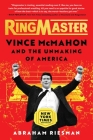
Join us on Thursday, May 4th at 6:00 p.m. for a reading and discussion with Abraham Josephine Riesman, author of Ringmaster.
Ringmaster: Vince McMahon and the Unmaking of America by Abraham Josephine Riesman
"Ringmaster is riveting, essential reading even if, like me, you have no taste for professional wrestling. All you need is an appetite for good stories of how the best--which is to say, the worst--con-men get over. Follow Abraham Riesman through that looking glass, and you even may creep closer to understanding how the U.S. managed to make one president." - Rick Perlstein, New York Times bestselling author of Nixonland and Reaganland
Even if you’ve never watched a minute of professional wrestling, you are living in Vince McMahon’s world.
In his four decades as the defining figure of American pro wrestling, McMahon was the man behind Dwayne “The Rock” Johnson, “Stone Cold” Steve Austin, John Cena, Dave Bautista, Bret “The Hitman” Hart, and Hulk Hogan, to name just a few of the mega-stars who owe him their careers. For more than twenty-five years, he has also been a performer in his own show, acting as the diabolical “Mr. McMahon”—a figure who may have more in common with the real Vince than he would care to admit.
Just as importantly, McMahon is one of Donald Trump’s closest friends—and Trump’s experiences as a performer in McMahon’s programming were, in many ways, a dress rehearsal for the 45th President’s campaigns and presidency. McMahon and his wife, Linda, are major Republican donors. Linda was in Trump’s cabinet. McMahon makes deals with the Saudi government worth hundreds of millions of dollars. And for generations of people who have watched wrestling, he has been a defining cultural force.
Accessible to anyone, regardless of wrestling knowledge, Ringmaster is an unauthorized, independent, investigative chronicle of Vince McMahon’s origins and rise to supreme power. It is built on exclusive interviews with more than 150 people, from McMahon’s childhood friends to those who accuse him of destroying their lives. Far more than just an athletics or entertainment biography, Ringmaster uses Vince’s story as a new lens for understanding the contemporary American apocalypse.
Abraham Josephine Riesman is a journalist and essayist, as well as the author of the biographies Ringmaster: Vince McMahon and the Unmaking of America and True Believer: The Rise and Fall of Stan Lee. She was a longtime staffer at New York magazine and its culture site, Vulture, and her work has also appeared in The Washington Post, The Wall Street Journal, The Boston Globe, VICE, The New Republic, and elsewhere. She lives in Providence, Rhode Island, with her spouse and their cats.
What your metadata says about you
From MIT’s César Hidalgo, a new window on what your e-mail habits reveal
 César Hidalgo (left) with Daniel Smilkov and Deepak Jagdish at the MIT Media Lab.Barry Chin/Globe Staff
As recently as a few weeks ago, “metadata” was an obscure term known mainly to techies and academics. Broadly defined, metadata is data about other data. For the phone company, it might be the time and length of your calls, but not the conversation itself; in the context of e-mail, it means information such as the sender and recipients of a message—basically, everything except what the message actually says.
Then came the revelation that the National Security Agency has been collecting metadata about millions of Americans’ phone calls. Suddenly metadata exploded as a public issue. Is it a harmless way for the government to track dangerous patterns or a tightening net around our lives?
For César Hidalgo, this national conversation about metadata couldn’t come too soon. A professor of media arts and sciences at the MIT Media Lab, Hidalgo has been obsessed with communications metadata for years. To him, metadata isn’t merely a technical issue, or a political one, but an emotional one—a cloud of knowledge about your behavior that, once you confront it, can literally change your life.
To make metadata more visceral, he and a group of graduate students are launching a new online project to help people visualize their own metadata, or at least one small corner of it. The program, called “Immersion,” asks users for their Gmail address and password; it then scans every e-mail in their accounts and scrapes the metadata to create a portrait of their personal network. With the circles and lines of a network diagram, it highlights the 100 people with whom you’ve communicated most, and shows how closely they’re connected to you and how thickly interconnected with one another in your mailbox. Unlike Google, or the NSA, the project also offers an instant deletion option: Remove your name, and it erases your metadata.
The project has already been running in beta form in the Media Lab lobby, and about 500 people have run their networks. Some people have one key person in their inbox, creating a huge circle like the star in a solar system; some people have what Hidalgo calls “the George Costanza”— two distinct clusters of contacts that rarely interact (“Worlds are colliding! George is getting upset!”); and so on. The images are abstract, but once you get a handle on what they mean, it’s eye-opening to see the topography of your personal web.
The project goes public June 30. Users can sign up at immersion.media.mit.edu. Hidalgo spoke with Ideas from the Media Lab.
IDEAS: Should we really see emotional meaning in metadata?
HIDALGO: All of this data is about people. Data basically doesn’t make sense without humans. It’s a very human construct, and, in the past, most of our data was not about people. We had astronomical data, we had a lot of data about animal species or data about materials and their properties.
But more and more, recently, all of this metadata is collected, originally for operational purposes. Whether it’s e-mail data or financial-transaction data, it all involves people. But, more than that, it involves interactions between people. And that’s why I think metadata has this emotional component: because ultimately, those interactions are the ones that we associate emotions with.
IDEAS: When you first saw your own e-mail metadata mapped out, what did you feel?
HIDALGO: When you see it all together, it is, in a way, an out-of-body experience. You’re seeing all of your network and you’re seeing yourself out of it and you’re seeing it from afar and you’re seeing it in one picture.
You start realizing that, eventually, you are not interacting with people—you’re interacting with webs of people. Because all the people you’ve interacted with, they’re actually connected in tens or maybe hundreds of indirect paths between them. They exist in your absence. So that out-of-body experience, I’ve found that it was very powerful.
IDEAS: How do you feel about the way metadata is being discussed since the NSA revelations?
HIDALGO: It’s like the world is catching up to what a fringe group of academics was aware of in 2004 and 2005. Nobody liked [thinking about metadata], and nobody cared about us, and they all thought that working with mobile phone records or e-mails was sort of a curiosity or a stupidity. And we’ve come to a world where, now, it’s completely the opposite. Everybody’s chasing that. So, for me, I think it’s healthy that these kinds of [news stories] come out, because it helps everybody start having conversations that are rich, that are important.
IDEAS: Are there ethical or political lessons about metadata that Immersion teaches?
HIDALGO: What I believe is, if you’re going to make platforms that deal with personal data, you have to develop ways of doing this in such a way that you can be transparent with the user about the data you have, about how you’re handling it, and about how the user can withdraw the data from your system. And I think we don’t have that [in society], because what happens is, all of these things are buried in these user agreements that are longer than the Constitution....Hopefully, [with our deletion policy], we can lead by example, by showing that, when it’s possible to build these platforms, it may be something that people appreciate. It’s a very simple feature on the platform, but it makes a very strong moral point about the way we should deal with data.
IDEAS: How can seeing your own communications metadata change your life?
HIDALGO: If you see a movie where generals are planning a war, they have a little map and little toy soldiers, and that’s how they move around. They don’t have a view of how soldiers see things on the ground. They have this view that is more of a bird’s-eye view, a view from afar. The platforms that we have now, like Facebook and Twitter, provide us a stream—but that stream is not a map. It’s like looking out the car window, but it’s not like looking at the GPS.
From that perspective, I think [metadata visualization] allows us to think a little bit more about who you connect to and why. Are we having healthy relationships? Are there parts of our networks that maybe we’d like to grow more? Are there parts of the network that we’d like to connect with other parts of the network that we have not yet done so?
I do not believe that just connecting more is better. That’s overly simplistic, and I don’t think anybody truly believes that. Eventually, it’s not about having more connections but about having the right connections.
IDEAS: Would the world be a better place if everyone had access to all of their own communications metadata?
HIDALGO: I do think that it might be a world that we want to give a shot. I’d want to explore the opportunity.
To participate in the Media Lab’s “Immersion” project, visit immersion.media.mit.edu.
Abraham Riesman is a writer and documentary filmmaker in New York City. You can see his work at abrahamriesman.com.
Josephine Riesman // Writer

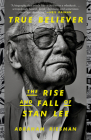
I have written a Hugo- and Eisner-nominated biography for Penguin Random House’s Crown imprint called True Believer: The Rise and Fall of Stan Lee, which is now available for purchase. It’s the first complete and unvarnished account of the life of Stan Lee, the writer/editor who brought Marvel Comics to the world, changed global popular culture, and became an unmistakeable icon, only to watch his life shatter into operatic tragedy.
Based on more than 150 exclusive interviews and thousands of pages of archival material, True Believer’s narrative stretches from Stan’s ancestral trauma in eastern Romania to his shocking final days in Los Angeles. Along the way, it digs into many unsettling questions: Did Stan actually create the characters he gained fame for creating? Was he complicit in millions of dollars’ worth of fraud at his post-Marvel companies? Which members of the cavalcade of grifters who surrounded him were most responsible for the misery of his final days? And, above all, what drove this man to achieve so much, yet always boast of more?
Click here to buy.
Click here for an excerpt.
Click here for the official author interview.
Here’s some praise for the book:
“True Believer is in every imaginable way the biography that Stan Lee deserves—ambitious, audacious, daring, and unflinchingly clear-eyed about the man’s significance, his shortcomings, his transgressions, his accomplishments, and his astonishing legacy.” —Robert Kolker, author of Hidden Valley Road and Lost Girls
“A serious biography … Unfurls a Künstlerroman, a story about the growth of an art form and an artist, who was also a director and a leading man, unable to admit that the show could go on without him.” —The New Yorker
“Has the thunderous sweep of a Kirby epic, beginning with the Romanian pogrom that traumatized Lee’s young father and ending with the pitiful Götterdämmerung of Lee’s last quarter-century … Riesman is relentlessly debunking.” —J. Hoberman, The New York Review of Books
“Illuminating … A well-researched, engrossing and compulsively readable book. It’s also brutal.” —The Los Angeles Times
“Revelatory … One need not be a comics nerd to find Riesman's portrait of the deeply flawed and relatably human pop-culture icon an absorbing read, and some of its revelations are stunning.” —USA Today
“Tantalizing … Riesman puts in the hard yards to separate fact from myth.” —Dorian Lynskey, The Spectator
“Lively and insightful … An excellent dig below the geniality that shows casual fans who he really was.” —The Washington Post
“Riesman is merciless in his documentation of Lee’s untrustworthiness … Yet even at his most critical, Riesman has to acknowledge the charm and chutzpah of the man.” —Roz Kaveney, The Times Literary Supplement
“An illuminating and reliable account of Lee’s improbable odyssey.” —Jacob Heilbrunn, Washington Monthly
“Striking … [Riesman is] a must-read chronicler of the comic book industry.” —The Hollywood Reporter
”Eventful and myth-dispelling … Detailed and clear-eyed … A story that will resonate even for those who don’t know Spider-Man from the Red Skull.” —Publishers Weekly (starred review)
“A book that anyone concerned with the hard truths of human nature and the business of popular culture over the last 80 years needs … A significant contribution to comics history scholarship.” —Forbes
“The best Jewish biography of 5781 … An engrossing must-read for anyone who has interacted with anything Marvel in their life.” —Alma
“About as fair, about as well-researched, and about as well-written as one could ask for from a book about Stan Lee.” —ComicBook.com
“For those who know Stan Lee from his sunny, funny cameos in Marvel films, get ready for an unputdownable deep dive. The man lived a life—warts and all—and Riesman captures the shadow and sunshine in equal measure.” —Patton Oswalt
"It's a book worth getting, kids … Abraham's a really good journalist, so it's not a hit-and-run job, by any stretch of the imagination. But it's definitely a warts-and-all story." —Kevin Smith
“Stan Lee was a mythmaker, both creatively and autobiographically. To reach the truth of his troubled and troubling life story, Riesman has had to peel away layers of quarrel, exaggeration, credit-grabbing, dispute, and faulty memory. The result is an enthralling, vibrantly written portrait of one of American popular culture's great innovators." —Mark Harris, author of Five Came Back and Mike Nichols: A Life
“The story of Stan Lee is a wild ride, sometimes breathtaking, often shocking -- but it is also a wholly American one rooted in the transformation of hardscrabble reality into glorious dreams, of legends into truth, of absence into action, of immigration into assimilation. True Believer is a stunner of a biography that tracks the entirety of Stan Lee's work and life, the glories and the demons, and at heart, the profound sadness underpinning some of the most iconic pieces of entertainment in recent history." —Sarah Weinman, author of The Real Lolita
"Stan Lee was, all at once, a genius, a schlepper, a hack, a huckster, a marvel. Abraham Riesman painstakingly dug into how much credit each of those overlapping personae deserves, and then he spun all those threads into a book that reads with the supple speed of Mr. Fantastic himself. It's a book about a comics universe and its creator, sure, but it's also about twentieth-century New York life, about Jewish America, about faking it till you make it and then maybe faking it a little more, about the creation of a global industry from literal pulp. Face it, reader: You just hit the jackpot!" — Chris Bonanos, author of Flash: The Making of Weegee the Famous
“A life rich with unexpected turns and a biography filled with personality. In looking at a man who created heroic stories for a living, Riesman bravely examines the trace lines underneath the legends of his life. The result is a startling, fresh portrait of a truly American career.” —Nathan Heller, author of The Private Order
“Who was Stan Lee? To answer that question, Abraham Riesman balances warring sources, digs through a conflicted historical record, and pulls together the interwoven history of comics, the Jewish people, and the American culture Lee transformed. Not since the Daily Bugle’s Ben Urich figured out Daredevil’s secret identity in Daredevil #164 has a reporter dug deeper to solve a comics mystery, or woven a better story from the results.” —Isaac Butler, co-author of The World Only Spins Forward
“True Believer is an epic journey from 19th century Romania to 21st century Hollywood, jam-packed with carefully compiled evidence of just how much delectable bullshit, staggering failure, and vicious backbiting goes into the making of a great American genius. I genuinely could not put it down." —Penny Lane, director of Listening to Kenny G
“Take it from someone who has always found comic books alluring but knew next to nothing about the medium’s history before reading True Believer: this book will pull you in no matter what level of knowledge or built-in curiosity you bring to it. Riesman’s rendering of Stan Lee’s life and persona is self-contained in that way: he lays out the stakes with care and patience’, wrings universal truths from the hyper-specific, and maintains an authorial voice that is both friendly and wise. It feels as though Stan Lee and the people with whom he surrounded himself live inside this book – their ambitions, talents, grudges, and petty vanities all coming through with a vividness Riesman clearly earned through his research and reporting.” —Leon Neyfakh, co-creator of Slow Burn and Fiasco
”You can’t understand American culture without understanding Stan Lee, and Abraham Riesman’s dogged reporting uncovers the story of this remarkable huckster, fibber, and genius (of sorts). Riesman is just as canny as I expected him to be about Stan’s skyrocketing early career; what amazed me was the care and good humor with which he researched and told the very weird story of Stan’s latter-decades fizzle. (Not to mention his nearly unbelievable ascendance into the pantheon.) A vivid portrait of the power—and limits—of chutzpah.” —Dan Kois, author of How to Be a Family
“Every truly great American is also truly flawed, but acknowledging those flaws as engines of creativity helps illuminate what drives greatness. With True Believer, Riesman unpacks the brilliant but troubled life of a person who changed our culture, and the world.” —Jason Diamond, author of Searching for John Hughes and The Sprawl
“A remarkable act of reporting, writing, and myth-busting that will surprise even the most obsessive Marvel fan. Abraham Riesman gives us the real Stan Lee, untangling lawsuits, settling feuds, and finding the occasional burst of genius. (No, I'm not talking about Stripperella.)” —David Weigel, author of The Show That Never Ends
“True Believer is a powerhouse biography that doesn’t pull any punches—giving readers a front-row seat to Stan Lee’s many four-color glories and myriad failures. It’s an honest, unsparing, meticulously researched, and masterfully written look at one of the most influential figures in all of pop culture.” —Alex Segura, author of Miami Midnight
“True Believer is not only the closest we’ll ever come to truly understanding the complicated, Lennon/McCartney-esque relationship between Stan Lee and Jack Kirby, but does a brilliant job of dissecting both the triumphs and the hard truths from the myth that is Stan Lee.” —Mike Ryan, senior entertainment writer, Uproxx
BIOGRAPHY IN THE AGE OF FANDOM:
A TRUE BELIEVER CONVERSATION WITH TEGAN O’NEIL
Comics criticism is, as of now, a wounded art form. Too few media outlets even bother to cover comic books in and of themselves, as opposed to merely looking at them as the source material for big-budget movies and shows. But among the remaining people who devote themselves to analysis of the comics medium, few are as sharp as Tegan O’Neil. She is the winner of an Eisner Award (comics’ top honor) for her writing at The AV Club and publishes fascinating essays on her blog, The Hurting, and on her Patreon of the same name. She’s a longtime watcher of all things Stan Lee, and was kind enough to interview me about the making and meaning of True Believer. The following chat appears in abridged form in the paperback edition of the book.
O’NEIL: I’ve been reading Stan, reading about Stan, hearing about Stan, infuriated by Stan, for decades. In a vacuum it’s a topic I’m well sick of, owing to the fact that it’s already been litigated to the grave and beyond in fan and critical circles for over five decades. You do an excellent job of distilling precisely how that started, the origin of the dispute at least inasmuch as we can know at this late remove. As with most tellings, you’ve got a few concrete events around which the facts are beyond dispute surrounded on all sides by inference, hearsay, and circumstance.
These circumstances tend to lead pretty heavily towards one interpretation of the facts. In all fairness, if Stan was a consistently and measurably unreliable narrator to the circumstances of his own life, neither Kirby nor Ditko were able or willing to effectively communicate their sides of the story. You do a good job of drawing out those frustrations, too. They were both strong willed men of principle, albiet in very different ways. Neither of them enjoyed talking out of school and both did so publicly only much later, in disparate venues, after decades of sour memories had compounded. And so perhaps not with the pinpoint accuracy for which we might yearn in hindsight.
Still! With these important caveats very firmly in place, it’s worth repeating again that these disputes were known and discussed in fandom for a very long time. Stan’s reputation took the hit eons ago, before either of us were born. This is an inherited argument three generations deep. Stan has his defenders, certainly, and they even make fair points here and there. But by and large the die was cast for him in comics circles a long time ago: people who knew him also knew and have consistently attested to the fact that he had never been any kind of reliable witness. In any event the facts of the matter without embellishment are that, of the three men who kickstarted Marvel in the early sixties, two of them walked away feeling profoundly screwed and died in relative obscurity while the guy who stuck around became a celebrated folk hero. Given those plain facts Kirby and Ditko have always been the sentimental faves in fandom, despite the grumblings of a small minority who consistently sided with management.
With all that in mind, when and how did you first become aware of the controversy? For my part, I don’t think there was one inciting incident, more just a gradual realization over the course of the years surrounding the formation of Image Comics in the early 90s, after I’d already been reading for a few years. That in turn was a climax of sorts to an industry discussion about creators’ rights that had begun in the early 80s as a reaction to, yes, the beginning of Kirby’s long dispute with Marvel, but also the crusade around Superman’s co-creators in the late 70s. It was in the air and consistently in the fan press for years. Interesting in hindsight that I first learned so much about Kirby, and by extension Lee, because another group of rather self-serving entrepreneurs wanted to drape themselves in the supposed imprimatur of the King. I’m interested how the process began for you.
RIESMAN: To be honest, I’m not one hundred percent sure I remember when I learned that Stan Lee might not have been on the level. I sometimes have a vague memory of an embittered employee at my childhood local comic shop, One Stop Comics in Oak Park, Illinois, telling me that Stan was full of shit, but, unlike Stan, I’m prepared to admit that it may be an inaccurate remembrance. When I met him as an early adolescent, circa 1998, at the Wizard World comic-con in Rosemont, Illinois, I don’t recall thinking Stan was a bad guy.

The author meets Stan Lee, circa 1998. (Courtesy Margaret Ross)
I also don’t recall thinking he was a particularly good guy, at that point, either, insofar as I never worshipped Stan at any point in my life. I don’t say that to condescend to people who did worship him — people have found the Stan Lee myth to be extremely potent and attractive. I can see why people would get seduced. I was more or less neutral on him throughout my life. I loved the characters he was credited with creating, and I found him amusing when he popped up in fourth-wall-breaking comics or in those live-action intros for the early nineties cartoon The Marvel Action Hour, the latter of which was my first exposure to him. But he was never an inspirational or aspirational figure for me.
I didn’t come up reading old issues of The Comics Journal, I’m sad to say, so lots of the industry details were lost on me. That said, I got more details about Stan’s deceptions when I was reading the great comics message boards and blogs of the aughts: Barbelith and Comics Alliance, mainly, may they rest in peace. Then came Sean Howe’s book. I didn’t pick up Marvel Comics: The Untold Story until late 2013, when it had been out a year or so, since I had largely given up on superhero comics from 2006 to 2012 or so. I got back into them as a casual reader, then started pitching stories about them to New York Magazine a few months after I started working there in 2013. Around then, I read a column on Comics Alliance by the writer Chris Sims about Stan that quoted heavily from Sean’s book, and I realized I had to read the whole thing.
I snatched it up and devoured it. I’m being quite earnest when I say it changed my life. The information gave me a foothold for my reporting on the industry, but more importantly, it taught me that comics was an industry worth reporting on. There’s so much meat in there. I do have to take issue with the fact that Sean presented as fact a lot of things that have turned out to be dubious—perhaps most notably Stan’s account of his last encounter with Kirby—but no book is perfect and you can’t travel back in time. You do your best, and he really crushed it. That was the beginning of me having concrete info about Stan’s misdeeds and misdirections. So in 2015, when New York editor David Wallace-Wells plopped a copy of Stan’s graphic memoir on my desk and said I should “do something with it,” I was all too eager to investigate Stan’s life further in a big profile. I immediately started reading Stan Lee and the Rise and Fall of the American Comic Book by Jordan Raphael and the late Tom Spurgeon, which presented me with even more startling information. I didn’t realize until a week later that David had just meant doing a capsule review of the book. But to his credit, he encouraged me to continue with my harebrained scheme, which culminated in a February 2016 profile, which in turn planted the seed for the book. I tried to present all the relevant existing data points about Stan’s creative-credit problems, though I definitely can’t take full credit for unearthing all of it. Sean, Tom, Jordan, and many others did the initial digging.
So, I know it can seem hard at times to see a positive to a lot of this material, steeped as it is in controversy and heartache. But the actual process of sifting through the reams of paper necessary for the book seems like it must have been an interesting experience. Could you describe that process in a little more detail? I’m always curious about effective research methods (partly because I’m terrible at it!), and based on both our conversations and your social media feed, I’d guess that research is something you enjoy quite a bit.
I do and I don’t. My gripes are the inverse of those of the typical writer: I get enormously frustrated during the research stage and have trouble forcing myself to get working, then I have a total ball during the writing stage. I blame my ADHD, which makes staring at books or documents all day a big challenge. On top of that, there was so much material to get through that figuring out where to start on a given day was daunting. As such, I never really developed a system, to be honest. I sort of let my instincts tell me what to do each day during the research phase. It might be making cold calls to old friends of Stan, it might be reading a biography of one of his collaborators, it might be going through the endless scans of documentation from the University of Wyoming Stan Lee archive . . . it might just be reading some old comics! I’d spin the wheel and see where I landed.
That said, the research stage is where I had some of the most thrilling moments of the whole process. A few stick out in my mind. One was my first long interview with Larry Lieber. I’d called him, then had an initial lunch with him, and he’d told me his life story, but—to my great frustration—he wouldn’t let me record it or take notes. He wants to write it all down for his memoir. The eventual interview was monumental, and I’ll always be grateful to Larry for his time. Another was meeting with Keya Morgan after nearly a year of negotiation and getting to hear all the private tapes of Stan with his inner circle. I can’t say it was a happy experience, as the tapes are extremely difficult to listen to. But, as a journalist, you have to be slightly sociopathic, so all that mattered was that I was getting insights into Stan’s life and mind that no journalist had ever obtained before. I hope it was worth it for the reader. But perhaps my favorite part of the research was getting information about Stan’s Jewish background. I’m Jewish, myself, and do a lot of reporting on the Jewish world, so that was a particular delight to indulge in. I hope I didn’t bore anyone.
I can’t remember a time before I knew about Stan. I know there were a couple years there where I must have loved the guy — I saw him at a con in ‘91, after all, when he was at his warm avuncular prime. Signed a couple comics. But as soon as I learned more about Jack Kirby and what had happened to him, and by extension what Stan had done or said about it, it was hard for me to keep that illusion. Problem was I still loved Marvel, and to a greater or lesser degree I sort of still do, although that word encompasses a much more complex network of feelings now than when I was ten. It’s the longest relationship of my life, completely codependent, dysfunctional as all hell . . . similar to loving a bad baseball team, one imagines.
But I grew up with that schism in my mind from a young age, learned both to be a rabid Kirby partisan and then in turn a slightly more circumspect Kirby partisan. One who recognized that most of the legends around the era were most likely apocryphal, even the ones most flattering to my side. I tend to give Stan more credit creatively than many, but that has less to do with anything in the public record and more educated opinion after having read hundreds and hundreds (thousands?) of comics by Lee, Kirby and Ditko together and apart. I’m also aware of my own hypocrisy in the matter by continuing to buy and read long after I should have known better. In other words I’m used to approaching the subject in a circumspect fashion. Nothing is gained by exaggerating one way or another, and I think you would agree in this instance that the facts on their face are most damning of all.
All of which is to say, I’ve been navigating this touchy topic for much of my life and don’t know if I could even begin to adequately explain it to someone off the street cold. Hats off to you for dismantling that live grenade. Now, I would like you to correct me if I am mistaken but, as an interested bystander observing the process from the outside in, it really seemed to me as if you and your book were situated in this instance to be the poster children for “killing the messenger.” The message in this instance wasn’t a particularly new or novel one in the context of the comics industry, but you had the misfortune of being one of the first books over the ridge after Lee died. (I believe you said Danny Fingeroth’s book was out earlier, but that one didn’t attract quite the scrutiny.) Is my perception correct that you received a bit of backlash for being — if not the first person to tell this story, certainly the first person to get any real notoriety in so doing?
In other words, how’d the whole “telling people Santa Claus isn’t real” thing go? People love that one.
Yeah, there were some negative responses, mainly in my Amazon reviews. There are a ton of one-star reviews there, many by people who proudly state that they haven’t read the book. I don’t get too worked up about those, although the cutthroat world of algorithmic rankings makes it such that I wish they’d been nicer. There was one YouTuber who—again, without having read the book, in his case because it wasn’t out yet—said I was trying to “cancel” Stan. I get why you might think that, since the advance marketing copy was largely about debunking and disenchanting. But what’s been gratifying is hearing from Stan fans who were skeptical about or outright hostile toward the book in advance, but then read it and realized it wasn’t a hatchet job. Even if they don’t end up being superfans of me, I appreciate their willingness to alter their opinions, which is something all too rare in the contemporary moment.
The one piece of “how could you do this to Stan?” criticism that seems to have risen above the din was the essay in The Hollywood Reporter that Stan’s protege, Roy Thomas, wrote just after the book was out. I hope I’m not mischaracterizing Roy when I say he had no real factual disputes, just ones about tone and omissions. He felt I didn’t sufficiently highlight the positives of Stan’s time at Marvel, and that this wasn’t the Stan he knew. Fair enough, I suppose: I’m sure I wrote about a Stan—or series of Stans!—that was unfamiliar to him. But that doesn’t mean he didn’t exist. I went out of my way to point out Stan’s unambiguous talents and accomplishments, so I don’t think I made him out to be a monster. He wasn’t a saint, but he wasn’t Satan, and I was trying to flesh him out more than tear him down.
.

Stan in the 1940s. (Stan Lee Papers, Box #77, American Heritage Center, University of Wyoming)
When I was doing research, I had a conversation with the great Peter Guralnick, who, among many other accomplishments, wrote a definitive two-volume biography of Elvis Presley. As it turns out, the Jewish world is small: He went to summer camp with my dad. We connected and chatted, and he said my challenge was going to be to do something bigger than a mere exposé. I had to think bigger than just saying, “Here are things this guy lied about.” No one cares about that on its own. It’s the 2020s—shame over hypocrisy or dishonesty isn’t really a thing anymore. He said the real question is, “What was the story he was telling with his lies?” In other words, the lie, itself, is boring without the context of motivations and impact.
In an early press interview for the book, someone asked me what I thought the core theme of the book was. I used to think it was something about the American Dream, but by the time he asked me, I felt like maybe that wasn’t the case anymore. I surprised myself when I blurted out that the book is about the agony of ambiguity. You can try to glean life lessons from Stan’s arc, but I feel like they’re all relatively obvious: thou shalt not lie, thou shalt not steal, thou shalt not covet, and so on. The harder thing to process is the twofold ambiguity of his life.
There’s the factual ambiguity of who created the Marvel pantheon, which is a dilemma that will probably never be resolved. And then there’s the moral ambiguity of asking whether he was a “good” man or not, which is a similarly unanswerable question, albeit for different reasons. The human mind wants to reject ambiguity; we want to say some things are incontrovertible facts and that the people we like or hate are objectively good or bad. But the reality of existence is uncertainty: constant, chaotic, and infuriating. You can either lie to yourself for certainty—and, to be sure, we all have to do that for certain aspects of life—or you can be honest and confront the answerlessness of the world. It sucks, but without that confrontation, you’ll accept the wildest lies from people who can provide the illusion of certainty.
Man, Roy Thomas — gotta love the guy. He really has done an immense service to comics, not always acknowledged as such, with his fan scholarship for the multiple volumes of Alter Ego. Few people have done more to preserve and compile the primary documentation and testimonials of the earliest generations of comics creators, a project that will only become more important with time. Especially as an increasing number of academics turn their attention to the field. With that said, I was tickled to see he came out blasting against you. Were I him I’d probably feel similarly honorbound, but what do I know? Were I ever on the receiving end of a burn as bad as “Houseroy,” I’d never leave the house again.
Something that really needs to be said more is that writing critically about media does not mean you dislike media. On the one hand this seems to me like a patently absurd thing to say. Why the hell else would anyone ever engage with any art if not from a place of love? And yet. We live in a world where many readers seem to assume animus on the part of people who engage with culture on anything other than a purely complementary level. Over the last few years I’ve taken to writing in more plain language about what I actually do like and appreciate. Partly I’ve done this to remind myself after years of being a churlish grump, because that’s just not a healthy way to engage with media as you age. So to some degree it’s a positive challenge, in terms of actively reminding myself why I care in the first place, when I am critical of many elements. But it’s also partly self-defense. The nature of fandom has changed, and its in my interest as someone who doesn’t enjoy being yelled for a living to try to accommodate that change in my writing. There’s no margin in needless antagonism. I think we both agree it’s not a completely salutary change in culture, focused strongly as it is around parasocial relationships with financially interested individuals and corporations. But it’s also a change that has occurred largely without our input. C’est la vie!
After seeing the reaction to your book I wanted to defend you against accusations of bad faith. I freely acknowledge I feel slightly implicated because I’ve been writing critically about comics for twenty years, not just about Stan and Marvel, but almost every other part of the comics industry as well. Why would I be here — why would you be here — in the first place, if not love? Writing a book about Stan Lee was not a decision you made with the purpose of making your life easier. You care deeply or you'd never have done it, I don't have to ask to know. Something I think we both share is a genuine desire to hold the things we love to account. It’s important to have standards, important to live by those standards and hold ourselves accountable, important to strive to hold important institutions and individuals responsible to those standards. My mom taught me having a long memory is a civic duty. That means remembering the bad and the good both.
Stan was a complicated man. There’s a lot of pathos in his life, and I found him very relatable in your telling — especially in the years leading up to the 1960s. There’s an alternate Earth where he takes a Roman vacation in the late 1950s and stumbles upon the actual market for his goofy photo caption magazines in the Italian fumetti. The essential paradox of his life is that his greatest gift was in facilitating collaboration and yet he was constitutionally incapable of treating collaborators as equals. He deserves a lot of credit for those comics and it’s his own fault people begrudge him the praise. So, with all that said, I'd like to ask you to take off your journalist hat for a minute and reflect on the project as a fan. How has the experience changed the way you look at Marvel? Has your relationship with comics changed? Have you been back to revisit any of the sixties material since you finished the book?
Oh, man. It’s become really, really hard for me to consume superhero media these days. My spouse and I just watched the new DC Comics movie adaptation, The Suicide Squad—not to be confused with Suicide Squad, the 2016 film for which The Suicide Squad is a sequel. Comics, everybody! Oh, wait, I mean movies. Wait, is there a difference anymore? Anyway, I really enjoyed it, but afterward, as I was discussing it with my spouse, I found myself getting increasingly defensive whenever she said I seemed to have liked it. Like, I’d say, “Y’know, the more I think about it, the less I like it,” which wasn’t even true. I couldn’t quite understand why I was having this reaction, and then I realized that it’s because the movie’s writer/director, James Gunn, had dissed my book on Twitter when it came out. It’s truly strange to know that someone of that stature specifically took time out of his day to prevent people from buying my work.
Plus, I know how comparatively little the people who created the Suicide Squad in comics are being remunerated for their efforts, especially compared to Gunn. And honestly, it’s even worse with Marvel movies. At least DC used to have these little equity agreements that allowed creators of characters to get compensated as a matter of course when their creations were used, but Marvel has historically just dicked over anyone and everyone they can, and the Disney era has only made that worse. Ed Brubaker and Steve Epting came up with the idea and design for the Winter Soldier, the subtitular co-star of Captain America: The Winter Soldier. The movie comes out, they toss the two of them a few thousand bucks — which, they remind you, they’re not legally obligated to give — and invite them to the premiere. That’s it. Not even the premiere party — just the premiere, then it’s, “Begone, so the grown-ups can talk.” It’s sadistic — but what do you expect? It’s Marvel and Disney. Entertainment through exploitation has been the name of the game for both of them for nearly a century.
The comics are even harder for me to read, because at least there are a few people involved in the creative process of a movie who get big paydays and union jobs. There are no good comics jobs at Marvel and DC. Hell, if you’re a writer or artist, there are no jobs at Marvel or DC, period, because you’re an independent contractor. America is already an awful enough place to be a freelancer of any kind, what with our lack of universal health care and general disregard for the human spirit, but comics is one of those industries that’s especially bad, insofar as they try to make it seem like they’re doing you a favor by letting you come up with intellectual property for them. The big bosses rely on the fact that there are lots of people in their applicant pool who have been obsessed with Marvel for so long that they’re willing to let their love of these characters and this universe override their instinct for self-preservation. No one sticks around at Marvel if they can afford not to. Seriously, look at the roster! Are there any Marvel “lifers”? No. Even Brian Michael Bendis left! It’s a horrible place to work. Staffers, too! I know so many folks who have worked as editors at Marvel. All of them were miserable.

Stan and Joan Lee at home, circa late 1970s. (Stan Lee Papers, Box #77, American Heritage Center, University of Wyoming)
You can’t lay all of that at Stan’s feet, but he was instrumental in establishing this awful, rapacious state of affairs. He was genial and friendly with lots of his creators, and he would do individual good deeds for them, but there is zero evidence that he tried to fix anything at a systemic level. He was largely fine with none of the other creators having stable jobs, health benefits, or ownership. The only time he got on a soapbox about creator rights was when he was getting jilted over the movie and TV profits and sued Marvel in 2002, and that ended up with him getting screwed out of billions. Chickens, meet roost. So, along those lines: No, I haven’t been revisiting the sixties comics since I finished the book. It’s too painful to think of all the injustice that surrounds them and the industry they created.
You make a point that I think bears emphasizing, partially because I got yelled at once for making it in another context. If you add up all the money that has been made and the power that has been gained with the Marvel characters, Stan really didn’t end up with anything near a just compensation either. He got table scraps, even as he lived a comfortable life with those scraps. At least in comparison to any other creators from his generation. Certainly so much more comfortable than any of the creators he worked with along the way. But just how much money have all those characters made, again? What kind of astronomical number are we talking about? It’s difficult for me to get past the simple fact that if he’d done literally just a handful of things differently at a few key points in his life he would have ended up far richer and even more beloved, and the tone of this very book might even be significantly different. He gave his life and his good name to build a company and a brand and characters that he didn’t own, and his “gold watch” was that he got to stick around as a mascot.
Marvel is still the company Martin Goodman created, whoever else’s hand has ever been on the tiller. The business model is dreadfully simple: chase that dollar, and when you find that dollar you flood the zone. Business 101, I know. But Marvel was always more aggressive than the competition in the shamelessness of their chasing trends and their willingness to crowd the stands with subpar product. They were overwhelmingly racist in the early 40s, a tad racy in the late 40s, and exceedingly gory in the early 50s. The distribution cap under which the Marvel line suffered in the late 50s and most of the 60s was a particularly apt punishment for a company whose business model was predicated on publishing enough books to push rivals off the shelf. Less a corporation than a Viral Marketing Scam of Thesus, Marvel retains the same corporate philosophy today as it did in 1940. That’s how Marvel Studios operates, too. Stan never did own the company, it was Martin’s all along. And it’s still Martin’s to this day.
But I have never stopped reading Marvel, save for brief sabbaticals. Perhaps hypocrisy, I readily acknowledge. I excuse myself sometimes for professional reasons. A big part of the answer is that even when the company is at its worst — most of the time — they still always manage to find good people to make their comic books. Like you say, there’s always someone next in line for the sausage factory. That’s why the labor problem in comics is as acute as it is. But we can scream until we’re blue in the face, good people will still find their way to the company. They will still make their names drawing the X-Men on paper before leaving the industry on their way to draw the same characters for a video game company that pays five times as much money, and it will be our medium’s acute and immeasurable loss every single time.
A hopeful thought to balance the pessimism before we move on: as I’ve mentioned, I spent some time away from comics a little while ago. Not reading anything I wasn’t reviewing. Do you know what brought me back? Other fans. I know it’s been a rough couple years for fandom, but I try to screen out the yelling and focus on where people are enthusiastic. What are people buzzing about, writing about of their own volition? Go after that. It’s the primary reason I’m writing about the X-Men right now. Seeing other peoples’ enthusiasm in regards something that had become, for me, layered with years and years of cynicism and disappointment — well, honestly, it made me jealous. Made me want to get back to that place, and to see if I could still get back to that place without forgetting all the sad shit that made me cynical to begin with.
That community space is where the action in the culture is now, where fandom takes these stories and makes them into something new and most decidedly unowned. Seeing the Black Panther film become a genuine cultural milestone, seeing the degree to which that movie was embraced and beloved and celebrated by a community who was starving for a story just like that . . . it was the first time in my career as a critic I ever felt my standard qualms regarding the provenance and ownership of these characters seemed small. Petty, even. And I realize my saying that is making a huge concession to Disney that they don’t deserve, but that’s the plain cold fact: they do not deserve to own the Black Panther, or Wakanda, or Spider-Man, or the Fantastic Four. They do not deserve to own these things which so many people love and whose creators they have so egregiously harmed at every point. Stan and Jack should have owned the Black Panther and his world, together as he was created, but they did not. In the absence of that ideal we will have to settle for litigating the ghosts — and when and where applicable, to celebrate fandom as a generative force.
Given that these characters aren’t going anywhere, the discourse around these questions isn’t going anywhere either. While my instinct is towards pessimism I also realized on reflection that Walt Disney’s reputation actually has fallen significantly in the years since his death. His name is still on the company and no one gainsays his significant artistic and technical achievements, but its more or less common knowledge that he was a son of a bitch on a scale Stan Lee could barely comprehend. Ub Iwerks should be a household name just as much as Jack Kirby should be, and he’s even more obscure. People remember that Walt broke the unions and they certainly remember he had some salty opinions about race, but none of that means he didn’t also make “Steamboat Willie.” So I think there is some room in our culture, despite public perception, for reality and nuance to take over from myth and sales pitch. Many of our culture wars are fought for the specific purpose of flattening such nuance after it reveals itself. But it takes a while for the issues to cool. Not that there aren’t still people who will fight to the death for Walt’s honor, but the defense rings hollow in an era when his character is the regular butt of sitcom jokes.
Now, as I said, Stan was nowhere near the son of a bitch Walt was, but they shared a similar attitude towards self promotion. It makes perfect sense that their companies ended up marrying one another. Do you think we’ll ever get to someplace like that with Stan, where we can actually talk about the man without having to fight a reflexive desire on the part of many to defend something they don’t understand?
To the extent that anything is foreseeable these days, I don’t think the Stan Myth is going anywhere, because the Mythic Stan isn’t going anywhere. People love the fictional story of Stan as much as they love the man himself. When the book was first being advertised, more than a year before it came out, I had random Stan fans getting furious with me online because the subtitle was “The Rise and Fall of Stan Lee.” The comments were always along the lines of, “Fall? He never fell! He died while Marvel was at the top of its game and he was more famous than he’d ever been!” What’s interesting about such statements is that Stan had a publicly awful final few years. The tales of grift and elder abuse were all over the place, from legitimate sources to tabloids and beyond. He pretty conclusively fell! Even without reading my book, you could know that! But they chose not to. These are people who profess to be Stan diehards, but they were willfully blind to the arc of his story. I think it’s because the Stan myth—the tale of a cheerful and loving man who struggled, then succeeded through hard work and being true to himself, and eventually rode off into the sunset as a champion—has been a huge inspiration and comfort to them. The fact that it’s barely rooted in reality and that easily available information contradicts it is unimportant. We construct our lives and minds around stories, and when someone tries to take our stories away, we get defensive. Disney, Marvel, POW!, the Peter Paul group—they’re all going to keep posthumously milking the Stan myth for as long as they can. Once those companies are gone, maybe the myth will die out and be replaced by the facts, but I don’t think I’ll live to see that day.
Contacting Abraham Riesman
Please direct inquiries to gena.lanzi@simonandschuster.com
https://www.simonandschusterpublishing.com/atria/our-team.html

Gena Lanzi joined Atria in January
2020 focusing on literary, commercial, and debut fiction. She has had
the joy of handling publicity campaigns for many bestselling and
acclaimed novels such as The Antique Hunters Guide to Murder, Miss Morgan’s Book Brigade, The Cloisters (Read with Jenna), The Many Daughters of Afong Moy (Read with Jenna), and Fortunes of Jaded Women (GMA Book Club). Her expertise lies at the intersection of literary and commercial fiction working with authors such as #1 New York Times
bestselling author Fredrik Backman, John Connolly, and Alice Hoffman.
With a special focus on debut authors, Gena has helped launched authors
such as, Liann Zhang (Julie Chan Is Dead), Haley Gelfuso (The Book of Lost Hours), Mai Nguyen (Sunshine Nails), Emily Austin (Everyone in this Room Will Someday Be Dead) and Thea Weiss (The Second Chance Cinema).
Gena
previously worked at William Morrow, an imprint of HarperCollins
Publishers. She is passionate about advocating for authors and books
that add to the ongoing conversation of what it means to be human and
how individual choices can affect the world at large.
https://www.simonandschuster.ca/p/canada-corporate-information
In 2006, with the separation of Viacom and CBS into separate publicly traded companies, Simon & Schuster became a part of the CBS Corporation, and later Paramount Global. In 2023, leading global investment firm KKR acquired Simon & Schuster from Paramount Global.
About Us
SIMON & SCHUSTER CANADA is a division of Simon & Schuster, and publishes a wide range of bestselling fiction and nonfiction books for all readers. Our bestselling authors include Genevieve Graham, Rupi Kaur, Beverley McLachlin, Peter Mansbridge, Kate Morton, Liz Nugent, Neil Pasricha, Tegan & Sara Quin, Kathy Reichs, Iain Reid, Jesse Thistle, Ruth Ware, and many more.
Simon & Schuster is a global leader in general interest publishing, dedicated to providing the best in fiction and nonfiction for readers of all ages, and in all printed, digital, and audio formats. Its distinguished roster of authors includes many of the world’s most popular and widely recognized writers, and winners of the most prestigious literary honors and awards. It is home to numerous well-known imprints and divisions such as Simon & Schuster, Scribner, Atria Books, Gallery Books, Pocket Books, Tiller Press, Adams Media, Threshold Editions, Simon & Schuster Children’s Publishing, and Simon & Schuster Audio and international companies in Australia, Canada, India, and the United Kingdom. Simon & Schuster proudly brings the works of its authors to readers in more than 200 countries and territories.
Simon & Schuster - World Class Publishing
What’s the secret to Simon & Schuster’s success? A history of bringing bestselling and award-winning authors that entertain, educate and inspire to readers worldwide. A tradition that stretches from its entrepreneurial beginnings to present day.
Press Releases
Click here to view the latest press releases from Simon & Schuster Canada.
If you are a Canadian influencer and would like to request a review copy, please visit our NetGalley publisher page. Alternatively, you can sign up to our influencer program by filling out this form.
Employment Opportunities
Simon & Schuster Canada continues to provide exciting employment opportunities for motivated individuals. With career choices relating to editorial, sales, operations, marketing, publicity, and administrative aspects of publishing, we offer exciting opportunities for those ready to contribute, learn, and grow in a positive and energetic environment. If you would like to find out more information about career opportunities at Simon & Schuster Canada please email Human.Resources@SimonandSchuster.ca.
Diversity, Equity & Inclusion Council at Simon & Schuster Canada
The focus of the Diversity, Equity & Inclusion Council is to foster a positive and inclusive work environment. It is our goal that Simon & Schuster Canada becomes an Employer of Choice, so that both prospective employees and authors of varied backgrounds will be attracted to Simon & Schuster Canada and view the company as a superior publisher of quality books.
The Council is comprised of employees from all divisions and levels of the organization, which supports the efforts of the company to develop an inclusive, respectful, and effective cross-cultural workplace. Each council member serves on a core committee and meet regularly to focus on the following initiatives:
- Staffing, Retention and Career Development
- Associates Program
- Community Involvement
- Diversity Events
- Workplace Diversity Awareness

Contact Information
For all inquiries please contact Info@SimonandSchuster.ca.
Simon & Schuster Canada:
166 King Street East, Suite 300Toronto, ON M5A 1J3
PH: (647) 427-8882 | Toll Free: 1 (800) 387-0446
https://www.simonandschuster.ca/c/press-release-love-and-courage
Simon & Schuster Canada announces the publication of Jagmeet Singh’s memoir, Love & Courage
Simon & Schuster Canada is proud to announce the publication of New Democratic Party Leader Jagmeet Singh’s memoir, Love & Courage: My Story of Family, Resilience, and Overcoming the Unexpected, publishing on April 23, 2019.
In this personal and heartfelt memoir, readers are invited to walk with Jagmeet through childhood to adulthood as he learns powerful, moving, and sometimes traumatic lessons about overcoming adversity and the impact of not belonging. This is not a political memoir. It’s a story of family, love, and courage, and how strengthening the connection between us all is the way to build a better world.
Jagmeet Singh was elected leader of the federal NDP in 2017 and, more recently, the Member of Parliament (MP) for the riding of Burnaby South. At a campaign event in September 2017, a disruptive heckler hurled accusations his way. He responded by calmly calling for all Canadians to act with “love and courage” in the face of hate. His response drew widespread attention and praise.
“This book is the story of my family and my personal experiences growing up—sometimes difficult ones. I often felt alone, unworthy, ashamed. I hope this book helps some people feel less alone and know that they deserve love and happiness, no matter what they’ve gone through,” says JagmeetSingh.
Jagmeet Singh is the leader of the New Democratic Party and Member of Parliament for the riding of Burnaby South. Born in Scarborough, Ontario, he lived briefly with his grandparents in his family’s native Panjab, India, as a child before moving with his parents to St. John’s, Newfoundland and Labrador, and later to Windsor, Ontario. He studied law at Osgoode Hall in Toronto, Ontario, and practiced as a criminal defence lawyer in Brampton. He was elected to the Ontario legislature as an MPP in 2011 and became the Ontario NDP deputy leader in 2015. He was elected the leader of the federal NDP in 2017. Singh divides his time between Burnaby and Ottawa. Visit him at loveandcouragebook.com or on Twitter @theJagmeetSingh.
Simon & Schuster Canada is a division of Simon & Schuster, a part of CBS Corporation. Simon & Schuster is a global leader in the field of general interest publishing, dedicated to providing the best in fiction and nonfiction for consumers of all ages, across all printed, electronic, and audio formats. Its divisions include Simon & Schuster Adult Publishing, Simon & Schuster Children's Publishing, Simon & Schuster Audio, Simon & Schuster Digital, and international companies in Australia, Canada, India, the United Kingdom, and the United States. For more information about Simon & Schuster Canada, visit our website at www.simonandschuster.ca.
Contact: Rita Silva, Associate Director of Publicity, rita.silva@simonandschuster.ca

No comments:
Post a Comment