Frank McKenna | |
|---|---|
 McKenna in 2018 | |
| Canadian Ambassador to the United States | |
| In office March 8, 2005 – March 13, 2006 | |
| Monarch | Elizabeth II |
| Preceded by | Michael Kergin |
| Succeeded by | Michael Wilson |
| 27th Premier of New Brunswick | |
| In office October 27, 1987 – October 14, 1997 | |
| Monarch | Elizabeth II |
| Lieutenant Governor | Gilbert Finn Margaret McCain Marilyn T. Counsell |
| Preceded by | Richard Hatfield |
| Succeeded by | Ray Frenette |
| New Brunswick Leader of the Opposition | |
| In office May 4, 1985 – October 27, 1987 | |
| Preceded by | Shirley Dysart |
| Succeeded by | Camille Thériault |
| Leader of the New Brunswick Liberal Association | |
| In office May 4, 1985 – October 13, 1997 | |
| Preceded by | Shirley Dysart |
| Succeeded by |
|
| MLA for Chatham | |
| In office October 12, 1982 – September 11, 1995 | |
| Preceded by | Frank E. Kane |
| Succeeded by | District abolished |
| MLA for Miramichi-Bay du Vin | |
| In office September 11, 1995 – October 13, 1997 | |
| Preceded by | District created |
| Succeeded by | James Doyle |
| Personal details | |
| Born | Francis Joseph McKenna 19 January 1948 Apohaqui, New Brunswick, Canada |
| Party | Liberal |
| Spouse(s) | Julie Friel (1972-present); 3 children |
| Alma mater | St. Francis Xavier University University of New Brunswick |
Francis Joseph McKenna PC OC ONB KC (born January 19, 1948) is a Canadian businessman and former politician and diplomat. He is currently Chair of Brookfield Corporation and Deputy Chairman of the Toronto-Dominion Bank. He served as Canadian Ambassador to the United States from 2005 to 2006.[1] He served as the 27th premier of New Brunswick from 1987 to 1997, winning every seat in the province in his first election.[2]
Early life
Frank McKenna was born on January 19, 1948, in Apohaqui, New Brunswick,[3] one of eight children of Olive and Joseph McKenna. McKenna was raised in his grandparents' home. They lived adjacent to his parents as his large family could not be wholly housed in his parents' home.[citation needed]
Raised Catholic, after completing Sussex High School (in Sussex, New Brunswick), he completed a bachelor's degree in Political Science and Economics at St. Francis Xavier University in Antigonish, Nova Scotia. He began graduate studies at Queen's University in Kingston, Ontario, but after working for a stint with Allan MacEachen, he took MacEachen's advice that most politicians are lawyers and enrolled in law school at the University of New Brunswick (Fredericton).[citation needed]
After earning a law degree, he moved to Chatham and began practicing law. He garnered a place in contemporary Acadian folklore as the defence lawyer in the high-profile widely publicized murder case of famous New Brunswick boxing champion, Yvon Durelle.[4]
New Brunswick politics
 | This section of a biography of a living person needs additional citations for verification. (November 2021) |
A few years later, he entered provincial politics and won a seat in the Legislative Assembly of New Brunswick in the 1982 election to represent Chatham, New Brunswick. He became leader of the provincial Liberals in 1985, and won one of the largest electoral victories in Canadian history in the 1987 election when his party won every seat in the legislature.
McKenna's term in office was viewed mostly as a success. His key priority throughout his term was job creation and he was known to say that the "best social program we have is a job." He encouraged small business growth and tried to entice large companies to invest in the province with tax incentives, often directly calling individual professionals to urge them to bring their talents to New Brunswick. Another of his strategies was to raise the collective self-confidence of New Brunswickers, which he believed would increase productivity. He introduced a sophisticated public relations operation which included the use of controversial video news releases.
McKenna's time as premier, however, also saw some controversy. In his first move as premier, McKenna dismissed several senior public servants in an effort to gain greater control over the province's public service, which some observers perceived as a drastic step away from the integrity of the province's impartial and professional public service.[5]
McKenna was also criticized for increasing the number of communications personnel on the government payroll but countered this complaint by pointing out that the primary government communications agency, Communications New Brunswick, had been depoliticized.
He was also criticized for creating a toll free telephone number to the premier's office which had the number 1-800-MCKENNA, the number was functional throughout North America and was used for both New Brunswick constituents and business interests that were considering moving to the province.
Believing ten years was long enough for a premier to hold office, and having pledged to serve such a term when first elected, McKenna resigned in 1997 – 10 years to the day of the 1987 election.[4]
Business career
After leaving office, McKenna moved to Cap-Pélé, New Brunswick, near Moncton, and returned to the practice of law and sat on numerous corporate boards. He also purchased (with his son, James McKenna), Glenwood Kitchen Ltd., a manufacturer of high-end custom cabinetry in Shediac, New Brunswick. His membership on the Canadian advisory board of the Carlyle Group drew adverse media attention; the media ceased pursuing the issue when McKenna explained that the board was established to advise on a Canadian investment fund that the group never created and that the board had never become active.
Following the announcement of his appointment as Canadian ambassador to Washington, he resigned his position as counsel at law firms including McInnes Cooper and Osler, Hoskin & Harcourt, as well as all positions on corporate boards including his role as interim chairman of the board of CanWest Global Communications, a post he assumed upon the death of its founder and chairman Israel Asper.[6]
Ambassador

| This section of a biography of a living person does not include any references or sources. (November 2021) |
McKenna was mentioned as a possible Ambassador to the US to succeed Michael Kergin after Paul Martin took power. Speculation increased after John Manley turned down Prime Minister Martin's offer. Many in the press commented on McKenna's business connections being an asset, notably as a member of the Carlyle Group and his friendship with former president George H. W. Bush.
On January 5, 2005, Prime Minister Paul Martin's office confirmed that McKenna would be the 21st Ambassador to the United States. On January 14, the posting was formally announced and would be effective on March 1. McKenna became the Ambassador on March 8 when U.S. President George W. Bush accepted his credentials.
On February 22, 2005, McKenna told reporters Canada was already a part of the U.S. National Missile Defense (NMD) (or Ballistic Missile Defense (BMD)) program through an amendment to the NORAD agreement made on August 5, 2004, which granted U.S. access to NORAD's missile warning systems explicitly for use in NMD. However, Martin contradicted this two days later when he announced that Canada would not formally participate in the NMD program but focus on other items of shared defence/security interest. While Canadian defence minister Bill Graham said McKenna was simply misunderstood (as the NORAD agreement and missile defence are separate), this initial contradiction was interpreted by others as evidence of characteristic indecision by the Martin government and was seen to somewhat hamper McKenna's credibility.
As Ambassador, McKenna attracted more media attention than most of his recent predecessors on both sides of the border. In the U.S., his message was one of dispelling common urban legends and misconceptions about Canada, while in Canada he urged Canadians to be more understanding of the American people and culture, particularly following what he argued is their understandable sensitivity after the September 11, 2001 attacks.
McKenna generated controversy after giving a luncheon speech on September 29, 2005, to a Toronto business club. McKenna blasted the U.S. bureaucracy and Congressional system of government saying, "the government of the United States is in large measure dysfunctional." He contrasted it with Canada's government, and praised Canada's strong parliamentary party discipline as being much more "efficient" though sometimes less preferable.
On January 25, 2006, McKenna offered his resignation as Ambassador, writing to Prime Minister-designate Stephen Harper that he wished to be relieved of his duties, but offering to stay on until his successor was chosen. He was succeeded as ambassador by Michael Wilson on March 13, 2006.
Prospective career in federal politics
Since leaving politics in 1997, McKenna served for a brief time on the Security Intelligence Review Committee. He has been touted several times as a potential Atlantic Canadian minister in the cabinets of Jean Chrétien and Paul Martin. He expressed some interest in running in the 2004 federal election but announced he would not do so because of the lack of an available riding in the Moncton, New Brunswick, area. He did not want to push aside any incumbent Liberal member of Parliament.
After resigning the premiership of New Brunswick, McKenna was identified as a potential future leader of the Liberal Party of Canada, and Prime Minister of Canada. A poll released on August 23, 2005, commissioned by the Toronto Star, showed that McKenna was the top choice of the public to succeed Prime Minister Paul Martin. Among the general public, McKenna beat former New Democratic Party Ontario Premier Bob Rae by a margin of 23 to 11 while among self-identified Liberals, McKenna beat former Deputy Prime Minister of Canada John Manley by a margin of 28 to 13.[7] The October 2005 issue of Saturday Night magazine had pollster Darrell Bricker and Liberal strategist Warren Kinsella create odds for potential Liberal leadership candidates. They made McKenna the favourite with 7 to 2 odds beating Scott Brison (8 to 1), Martin Cauchon (10 to 1), Michael Ignatieff and John Manley (each 15 to 1) among others.
On January 30, 2006, McKenna confirmed earlier reports that he was not running for the Liberal leadership to replace Paul Martin, who announced his resignation as party leader on the January 23, 2006 election night. McKenna acknowledged the strength of the Liberal brand stating: "You've got pretty good odds of being the prime minister if you're the leader of the Liberal party" – every leader of the Liberal party since Sir Wilfrid Laurier in 1896 had become prime minister.[8] However, he put an end to his involvement in the 2006 Liberal Party leadership race, explaining his decision by saying that he did not want "his life to become consumed by politics."[9] and that: "I reminded myself of my vow upon leaving office that, having escaped the trap, I wouldn’t go back for the cheese."[10]
Following Stéphane Dion's resignation as federal Liberal leader after the 2008 election, McKenna was once again touted as a possibility to take the helm of the federal Liberal Party. However, on October 28, 2008, McKenna said that he would not be seeking the leadership, saying "Although I have been deeply moved by expressions of support for me from across the country, I have not been persuaded to change my long-standing resolve to exit public life for good," and "My only regret is that I cannot honour the expectations of friends and supporters who have shown enormous loyalty to me."[11]
Banking
McKenna was appointed as Deputy Chair, TD Bank Financial Group effective May 1, 2006.[12] Effective August 2006, McKenna was appointed to the board of Brookfield Corporation (known as Brookfield Asset Management until the spinoff of the operations of the current Brookfield Asset Management in 2022), and he has been the Chair of Brookfield Corporation since August 2010.[13]
McKenna is referenced in the book Clinton Cash by Peter Schweizer. The majority of the reference is regarding the Keystone Pipeline decision-making process. Hillary Clinton serving as secretary of State in the United States, and the monetary involvement with TD Bank in Canada is described in depth. The book describes TD Bank, with McKenna as vice chairman, as having "paid Bill more than any other financial institution for Lectures. More than Goldman Sachs, UBS, JPMorgan, or anyone on Wall Street." Quoting from the book,
TD Bank paid Bill $1.8 million for ten speeches over a roughly two-and-half-year period from late 2008 to mid-2011. ... At several of the speeches, (Bill) Clinton was introduced or interviewed by TD Bank vice chairman Frank McKenna. Frank McKenna is described as a 'good friend of both Bill and Hillary Clinton.' [14]
Distinctions
From: Minister of Finance / Ministre des Finances <minister-ministre@fin.gc.ca>
Date: Tue, Dec 23, 2025 at 11:27 AM
Subject: Automatic reply: YO Christopher Perry here is some of what you did not wish to know
To: David Amos <david.raymond.amos333@gmail.com>
Please be assured that we appreciate receiving your comments.
Le ministère des Finances Canada accuse réception de votre courriel.
Nous vous assurons que vos commentaires sont les bienvenus.
From: Sobotkiewicz, Roger FCAA <Roger.Sobotkiewicz@gov.sk.ca>
Date: Tue, Dec 23, 2025 at 11:24 AM
Subject: Automatic reply: YO Christopher Perry here is some of what you did not wish to know
To: David Amos <david.raymond.amos333@gmail.com>
I am currently out of the office. I will return on January 12, 2026. Please call 306-787-5645 for assistance.
From: Fred.Pretorius <Fred.Pretorius@yukon.ca>
Date: Tue, Dec 23, 2025 at 11:28 AM
Subject: Automatic reply: YO Christopher Perry here is some of what you did not wish to know
To: David Amos <david.raymond.amos333@gmail.com>
I am currently out of the office, returning on December 29, 2025. This mailbox will not be monitored during my absence.
If you require immediate assistance, please contact Kathryne Janz. She can be reached at:
Phone: (867) 455-2977 or
Email: Kathryne.Janz@yukon.ca
Regards
Fred.
From: Harrison, David C <David.Harrison@novascotia.ca>
Date: Tue, Dec 23, 2025 at 11:27 AM
Subject: Automatic reply: YO Christopher Perry here is some of what you did not wish to know
To: David Amos <david.raymond.amos333@gmail.com>
Hello,
I will be out of the office on vacation with no little to email until Janaury 5
I will reply to your email when I return.
Should you need immediate assistance please contact Doug Harris at doug.harris@novascotia.ca
Thank you
David Harrison
From: OSC General Inquiries <INQUIRIES@osc.gov.on.ca>
Date: Tue, Dec 23, 2025 at 11:27 AM
Subject: Automatic reply: YO Christopher Perry here is some of what you did not wish to know
To: David Amos <david.raymond.amos333@gmail.com>
This message is intended only for the use of the addressee and may contain information that is privileged and confidential. If you are not the intended recipient or have received this communication in error, you are hereby notified that any unauthorized use or disclosure is strictly prohibited. Please notify the sender immediately and delete the original without making a copy or disclosing its contents.
Le présent message s'adresse exclusivement à son destinataire et peut contenir des renseignements privilégiés et confidentiels. Si vous n'êtes pas le destinataire de ce document ou si vous l'avez reçu par erreur, vous êtes par la présente avisé qu'il est strictement interdit de le divulguer ou de l'utiliser sans autorisation. Veuillez en avertir l'expéditeur immédiatement et détruire le message original sans le copier ou en révéler le contenu. .
Ontario Securities Commission
From: David Amos <david.raymond.amos333@gmail.com>
Date: Tue, Dec 23, 2025 at 11:21 AM
Subject: Fwd: YO Christopher Perry here is some of what you did not wish to know
To: pm <pm@pm.gc.ca>, Michael.Duheme <Michael.Duheme@rcmp-grc.gc.ca>, washington field <washington.field@ic.fbi.gov>, Boston.Mail <Boston.Mail@ic.fbi.gov>, Anita.Anand <Anita.Anand@parl.gc.ca>, <Jordan.Angus@parl.gc.ca>, <clare.kelly@boston.gov>, jan.jensen <jan.jensen@justice.gc.ca>, Sean.Fraser <Sean.Fraser@parl.gc.ca>, <enforcement@ciro.ca>, <GVingoe@osc.gov.on.ca>, <csa-acvm-secretariat@acvm-csa.ca>, fin.minfinance-financemin.fin <fin.minfinance-financemin.fin@canada.ca>, Frank.McKenna <Frank.McKenna@td.com>, Francois-Phillipe Champagne <francois-philippe.champagne@parl.gc.ca>, <David.harrison@novascotia.ca>, <roger.sobotkiewicz@gov.sk.ca>, <david.cheop@gov.mb.ca>, <stan.magidson@asc.ca>, <bleong@bcsc.bc.ca>, <fred.pretorius@yukon.ca>, <Yves.Ouellet@lautorite.qc.ca>, <sddowling@gov.pe.ca>, <securities@gov.nu.ca>, <valerie.seager@novascotia.ca>, <securitiesregistry@gov.nt.ca>, <matthew.yap@gov.nt.ca>, <LoyolaPower@gov.nl.ca>, <kevin.hoyt@fcnb.ca>, <peter.mackay@mcinnescooper.com>
Cc: rob.moore <rob.moore@parl.gc.ca>, John.Williamson <John.Williamson@parl.gc.ca>, Richard.Bragdon <Richard.Bragdon@parl.gc.ca>, <mike.dawson@parl.gc.ca>, <Chris.dEntremont@parl.gc.ca>, <clifford.small@parl.gc.ca>, <carol.anstey@parl.gc.ca>, <jonathan.rowe@parl.gc.ca>, Erik Andersen <twolabradors@shaw.ca>
From: Minister of Finance / Ministre des Finances <minister-ministre@fin.gc.ca>
Date: Tue, Dec 23, 2025 at 2:34 AM
Subject: Automatic reply: Appointment of Mark Wiseman ?
To: David Amos <david.raymond.amos333@gmail.
Please be assured that we appreciate receiving your comments.
Le ministère des Finances Canada accuse réception de votre courriel.
Nous vous assurons que vos commentaires sont les bienvenus.
From: Poilievre, Pierre - M.P. <pierre.poilievre@parl.gc.ca>
Date: Tue, Dec 23, 2025 at 2:35 AM
Subject: Acknowledgement – Email Received / Accusé de réception – Courriel reçu
To: David Amos <david.raymond.amos333@gmail.
On behalf of the Hon. Pierre Poilievre, we would like to thank you for contacting the Office of the Leader of the Official Opposition.
Mr. Poilievre greatly values feedback and input from Canadians. We wish
to inform you that the Office of the Leader of the Official Opposition
reads and reviews every e-mail we receive. Please note that this
account receives a high volume of e-mails, and
we endeavour to reply as quickly as possible.
If you are a constituent of Mr. Poilievre in the riding of Battle River - Crowfoot and you have an urgent matter to discuss, please contact his constituency office at:
Phone: 1-780-608-4600
Fax: 1-780-608-4603
Sincerely,
______________________________
Au nom de l’honorable Pierre Poilievre, nous tenons à vous remercier d’avoir communiqué avec le Bureau du chef de l’Opposition officielle.
M. Poilievre accorde une grande importance aux commentaires et aux suggestions des Canadiens. Nous tenons à vous informer que le Bureau du chef de l’Opposition officielle lit et examine tous les courriels qu’il reçoit. Veuillez noter que ce compte reçoit un volume important de courriels et que nous nous efforçons d’y répondre le plus rapidement possible.
Si vous êtes un électeur de M. Poilievre dans la circonscription de Battle River - Crowfoot et que vous avez une question urgente à discuter, veuillez contacter son bureau de circonscription :
Téléphone :
Télécopieur :
Encore une fois, merci de votre message.
Veuillez agréer nos salutations distinguées,
Bureau du chef de l’Opposition officielle
From: Blanchet, Yves-François - Député <Yves-Francois.Blanchet@parl.
Date: Tue, Dec 23, 2025 at 2:35 AM
Subject: Réponse automatique : Appointment of Mark Wiseman ?
To: David Amos <david.raymond.amos333@gmail.
(Ceci est une réponse automatique)
(English follows)
Bonjour,
Nous avons bien reçu votre courriel et nous vous remercions d'avoir écrit à M. Yves-François Blanchet, député de Beloeil-Chambly et chef du Bloc Québécois.
Comme nous avons un volume important de courriels, il nous est impossible de répondre à tous individuellement. Soyez assuré(e) que votre courriel recevra toute l'attention nécessaire.
Nous ne répondons pas à la correspondance contenant un langage offensant.
Chef du Bloc Québécois
Thank you for your email. We will read it as soon as we can.
We do not respond to correspondence that contains offensive language.
From: May, Elizabeth - Riding 1 <Elizabeth.May.C1@parl.gc.ca>
Date: Tue, Dec 23, 2025 at 2:34 AM
Subject: Automatic reply: Appointment of Mark Wiseman ?
To: David Amos <david.raymond.amos333@gmail.
Thank you for writing my Constituency Office for Saanich-Gulf Islands. This automated response is to confirm that your message has been received and will be reviewed in a timely manner.
My constituents are my highest priority. If you are a Saanich-Gulf Islands constituent, please ensure that your email includes your full name and street address, including a postal code. You may also call my Sidney, BC office at 250-657-2000 (Mon-Fri, 10:00am-4:00pm).
My Constituency Office is non-partisan. For inquiries and comments directed to the Green Party leader, please email leader@greenparty.ca.
Given the high volume of correspondence sent to my office, I appreciate your patience as I try to respond to each one. For time-sensitive meeting or federal requests, a member of my team may be in touch on my behalf.
If
you are not a constituent, I encourage you to contact your MP's office
for assistance.You can enter your postal code here if you are unsure who
represents you:
https://www.ourcommons.ca/
Best wishes,
Elizabeth
Elizabeth May, O.C.
Member of Parliament
Saanich-Gulf Islands
Working from the traditional territory of the WSANEC People, whose historical relationships with the land continue to this day.
From: Davies, Don - M.P. <don.davies@parl.gc.ca>
Date: Tue, Dec 23, 2025 at 2:35 AM
Subject: Automatic reply: Appointment of Mark Wiseman ?
To: David Amos <david.raymond.amos333@gmail.
*Please do not reply to this email*
Greetings!
I acknowledge receipt of your email. Thank you for taking the time to contact me and express your views.
Our office is open Mondays, Tuesday, Thursdays, and Fridays from 10am-4pm. We are closed Wednesdays for case processing.
While I read all correspondence, the volume of email we receive means that I am not able to respond immediately to every message. Every effort will be made to reply to you as soon as possible. Please note that in most cases, anonymous, cc’d or forwarded items will be read but will not receive a response.
If the information you have sent is about a concern that you have as a constituent, please make sure that you have given your full name, address and telephone number so my office is able to assist you efficiently. If you live outside Vancouver Kingsway please contact your own Member of Parliament for assistance.
You can ensure you are contacting the correct MP by entering your postal code at this website: https://www.ourcommons.ca/
Please be assured that all email sent to this office is treated as confidential.
Should you need further assistance, please contact my office at 604-775-6263.
Sincerely,
Don Davies, MP
Vancouver Kingsway
From: David Amos <david.raymond.amos333@gmail.
Date: Thu, Dec 18, 2025 at 11:43 AM
Subject: Re: YO Christopher Perry here is some of what you did not wish to know
To: <droverd@gov.nl.ca>, <dougtrask@gov.nl.ca>, <PPAIM@gov.nl.ca>, <infoera@gov.nl.ca>, <finance@gov.nl.ca>
Date: Sat, Dec 13, 2025 at 6:32 PM
Subject: Automatic Reply
To: David Amos <david.raymond.amos333@gmail.
Thank you for writing to the Minister of Justice and Attorney General of Canada.
Due to the volume of correspondence addressed to the Minister, please note that there may be a delay in processing your email. Rest assured that your message will be carefully reviewed.
We do not respond to correspondence that contains offensive language.
-------------------
Merci d'avoir écrit au ministre de la Justice et procureur général du Canada.
En raison du volume de correspondance adressée au ministre, veuillez
prendre note qu'il pourrait y avoir un retard dans le traitement de
votre courriel. Nous tenons à vous assurer que votre message sera lu
avec soin.
Nous ne répondons pas à la correspondance contenant un langage offensant.
(PS/SP)" <ps.ministerofpublicsafety-
Date: Thu, 18 Jan 2024 16:17:02 +0000
Subject: Response from Public Safety Canada - LEB-001083 / Réponse de
Sécurité Publique Canada - LEB-001083
To: "david.raymond.amos333@gmail.
Unclassified | Non classifié
Dear David Amos,
This is in response to your correspondence dated July 24, 2019,
addressed to the Right Honourable Justin Trudeau, Prime Minister of Canada, concerning the New Brunswick Police Commission.
We regret to inform you that after examining your correspondence, it has been determined that the subject matter which you raise does not fall under the purview of our department and portfolio agencies. This can be brought to the attention of the Saint John, New Brunswick Police Commission.
Consequently, no response will be provided.
Thank you for taking the time to write.
Ministerial Correspondence Unit
Unclassified | Non classifié
Provincial Government Provides Its First Fall Fiscal and Economic Update
Facebook
- Finance
December 16, 2025
YEA RIGHTThe Honourable Craig Pardy, Minister of Finance, today released the new government’s first fall Fiscal and Economic Update since the October election.
In the first part of his update, Minister Pardy confirmed that the province’s fiscal situation is more challenging than what was previously forecast in Budget 2025.
The provincial deficit is now projected at $948 million, compared to the $372 million forecast in Budget 2025.
However, Minister Pardy also revealed that across multiple economic indicators, Newfoundland and Labrador’s economy is performing better than expected.
- Newfoundland and Labrador is projected to lead all provinces with 5.3 per cent real Gross Domestic Product growth in 2025.
- Employment is expected to remain on par with last year, with 245,600 people employed.
- Household income is forecast to grow by 1.9 per cent largely due to wage gains.
- Housing starts are weaker than in 2024 but remain higher than the 10-year average for the province.
- Both oil and mining production have increased, but capital investment is forecast to decline by 6.3 per cent as major project construction activity has slowed.
- Fisheries and aquaculture have performed well, despite global market conditions.
- Population growth has continued, but at a slower pace as net international migration levels were lower due to reduced federal targets.
- Inflation has slowed and interest rates are lower, down from 2.75 per cent in April to the current rate of 2.25 per cent.
- Retail sales and tourism indicators remain strong.
The 2025 Fiscal and Economic Update is available here.
Quote
“Newfoundland and Labrador’s economy has proven resilient, but our fiscal situation is more serious than we thought. Our government remains firm on its commitments to better healthcare, lower taxes, and safer communities, and will work within the current fiscal parameters to improve life in Newfoundland and Labrador – for all of us.”
Honourable Craig Pardy
Minister of Finance---------- Forwarded message ---------
From: Ted McEnroe <Ted.McEnroe@tbf.org>
Date: Tue, Dec 16, 2025 at 12:22 PM
Subject: Re: Cst Andriana Ravo of RCMP called on private number 1 hour ago
To: David Amos <david.raymond.amos333@gmail.com>
Can you be any more specific?
Ted McEnroe (he/him)
Associate Vice President,
Communications and Digital MediaThe Boston Foundation
617-338-3890 (direct)
207-233-2424 (cell)
---------- Forwarded message ---------
From: Minister of Finance / Ministre des Finances <minister-ministre@fin.gc.ca>
Date: Tue, Dec 16, 2025 at 6:44 PM
Subject: Automatic reply: YO Christopher Perry here is some of what you did not wish to know
To: David Amos <david.raymond.amos333@gmail.com>
The Department of Finance Canada acknowledges receipt of your electronic correspondence.
Please be assured that we appreciate receiving your comments.
Le ministère des Finances Canada accuse réception de votre courriel.
Nous vous assurons que vos commentaires sont les bienvenus.
---------- Original message ---------
From: David Amos <david.raymond.amos333@gmail.com>
Date: Tue, Dec 16, 2025 at 6:43 PM
Subject: YO Christopher Perry here is some of what you did not wish to know
To: <cdp7@ntrs.com>, Ted McEnroe <Ted.McEnroe@tbf.org>
Cc: fin.minfinance-financemin.fin <fin.minfinance-financemin.fin@canada.ca> Christopher PerryNorthern Trust
One International Place
Suite 1600
Boston MA 02110
617-235-1835Sunday, 6 July 2025
Where did all the hearings go???
MFS Investment Mangement
Since 1924, MFS Investment Management 1 has guided investors in the United States through every market condition on record. Today, our exclusive lineup of Sun Life MFS funds brings Canadian investors the power of their deep-rooted expertise and three driving pillars of investment success.
Media Relations Contacts
For press inquires, please contact:
Dan Flaherty (Americas), 617-954-4256, DFlaherty@mfs.com
Cherida Naughton (Europe and Asia), 44-207-429-7426, CNaughton@mfs.com
Kasia Gilewska (Europe), 44-207-429-7356, KGilewska@mfs.comFinancial Information
MFS is a majority-owned subsidiary of Sun Life Financial (SLF), based in Toronto.
Further information can be found under Investor Relations at www.sunlife.com.Investment Strategists, Portfolio Managers and Analysts
Robert Almeida, Global Investment Strategist
Erik Weisman, Chief Economist
Benoit Anne, Investment Solutions Group
Others generally available to comment on investment topics and retirement trends.


Michael W. Roberge, CFA, is chair of MFS Investment Management® (MFS®). He helps set the strategic direction of the firm. He is the chair of the Chairman's Committee, chair of the MFS Board of Directors, and a trustee on the MFS mutual funds board. Michael became chair in 2025 after leading the firm as CEO from 2017 to 2024. In addition, he held the role of chief investment officer from 2010 through 2018. He also previously held the roles of president of MFS from 2010 through 2017 and co-CEO from 2015 through 2016. In 2006, he was appointed chief investment officer -- US Investments and co-director of Global Research. Before that, he was senior vice president and associate director of Fixed Income Research and served as portfolio manager for several MFS fixed income funds. He joined the firm in 1996 as a credit analyst in the municipal fixed income group. Before joining MFS, he was a municipal credit analyst and portfolio manager for the Colonial Group from 1995 to 1996 and a credit analyst with Moody's Investors Service from 1991 to 1994. Michael earned a Bachelor of Science degree from Bemidji State (Minn.) University in 1990 and a Master of Business Administration degree from Hofstra University in 1992. He is a Chartered Financial Analyst and a member of the CFA Society Boston. He is also the vice chair of the board of Horizons for Homeless Children, a Boston-based nonprofit organization dedicated to combatting the negative impact of homelessness on children and families.  Heidi W. Hardin is executive vice president and general counsel at MFS Investment Management® (MFS®). She leads the Legal, Compliance and Enterprise Risk Management departments and is a member of the firm's Enterprise Leadership Team and the Chairman's Committee. Heidi joined MFS in 2017 from Harris Associates, where she had been the general counsel since 2015. She spent the prior 16 years at Janus Capital Group Inc., holding multiple senior legal roles, with her last role being senior vice president and general counsel of Janus Capital Management LLC, the firm's global asset management business. Earlier in her career she was a vice president, senior legal counsel and chief compliance officer for Liberty Funds Group and a litigation associate at Beeler Schad & Diamond P.C. She began her career in the financial services industry in 1993. Heidi earned a Bachelor of Arts degree from DePauw University and a Juris Doctor degree from Chicago- Kent College of Law. She is a member of the board of directors of ICI Mutual Insurance Company and the Advisory Board of The Boston Ballet.Email Leadership@mfs.comAddress BOSTONPhone 1-800-637-8255602 322 8045Angela FaderSr Assist Analyst at MFS Investment ManagementGreater Phoenix Areahttps://www.blbglaw.com/
cases-investigations/mfs- mutual-fund-litigation MFS Mutual Fund Fraud Litigation
Court: United States District Court for the District of Maryland Case Number: 04-md-15863 Class Period: 12/15/1998 - 12/08/2003 Following a hearing on May 3, 2004 in the massive mutual fund litigation, the United States District Court for the District of Maryland appointed BLB&G client the City of Chicago Deferred Compensation Plan as Lead Plaintiff in the securities fraud class action against Massachusetts Financial Services Company ("MFS"), the investment advisor to the MFS Funds, and others.
On March 1, 2006, the Court sustained the Consolidated Amended Class Action Complaint, allowing the case to move forward against certain defendants.
SUMMARY OF ALLEGATIONS:
The Complaint in this litigation alleges that MFS and certain of its senior executives were aware of, engaged in and facilitated "timing" trades in the MFS Funds: a money-making act involving short-term trading in and out of a mutual fund. The technique is designed to exploit inefficiencies in the way mutual fund companies price their shares by allowing certain customers to trade shares at distorted prices that no longer reflect the true value of the fund. As a result, those few customers permitted to engage in market timing typically reap huge profits, the cost of which are borne primarily by the long-term investors in the relevant fund.
The public filings issued by the Defendants stated that, "MFS funds do not permit market-timing or other excessive trading practices that may disrupt portfolio management strategies and may harm fund performance." In reality, however, the Defendants knew, or recklessly disregarded, the fact that trades were being timed and that these timed trades negatively and materially impacted the MFS Funds, thereby causing significant losses to investors in the MFS Funds.
On February 5, 2004, MFS agreed to entry of a cease and desist order by the Securities and Exchange Commission ("SEC") against MFS and John W. Ballen ("Ballen"), MFS's current chief executive officer, and Kevin R. Parke ("Parke"), MFS's current president and chief investment officer ("Cease and Desist Order"). Specifically, the SEC found that MFS, Ballen and Parke allowed widespread market timing trading in certain MFS Funds from at least late 1999 through October 2003, in contravention of the Funds' public disclosures. In particular, MFS explicitly informed certain select brokers in a written memo that "unrestricted" trading would be permitted in certain MFS funds (known internally at MFS as "Unrestricted Funds"), including the Massachusetts Investors Growth Stock Fund, "even if a pattern of excessive trading has been detected." Not only did MFS selectively enforce its market-timing policies, but executives at MFS facilitated the frequent trading in and out of certain MFS Funds by steering select investors to these "Unrestricted Funds." As the Cease and Desist Order confirms, as much as $2 billion in timing money flowed into MFS Funds during the Class Period.
Internal MFS documents and policies acknowledged that market timing was detrimental to long-term shareholders. In fact, as early as June 2000, an internal presentation entitled "Market Timing Wheel of Terror," warned that "[l]ong term investors are being penalized" by market timing activity. Nevertheless, the market timing activity persisted in the MFS "Unrestricted Funds." Moreover, MFS's select enforcement of its trading policies also included late trading, which alone caused well over $100 million in investor losses. And, as further alleged in the complaint, various brokers and financial institutions also participated in the market timing schemes, to the detriment of ordinary investors.
MFS's policy of allowing market-timing and steering select investors to the "Unrestricted Funds" was adopted as a means to increase profits by luring market timing assets so as to increase funds under management, and, therefore, increase fees paid to MFS for investment advisory services. These additional assets under management also resulted in an increased bonus pool from which MFS employees, including Ballen and Parke, were paid excessive compensation. During this period, none of the above detailed material information was disclosed to the members of the Class. In addition to the profits from their market timing, MFS also profited by charging ordinary investors hundreds of millions of dollars in management fees while breaching their fiduciary duties to those very same investors.
On May 20, 2010, the Court preliminarily approved proposed settlements, totaling $75,042,250, that would resolve this litigation. On October 25, 2010, the Court entered Judgments granting final approval to the settlements and entered separate Orders granting Plaintiffs' Counsel's application for an award of attorneys' fees and expenses and approving the Plan of Allocation of the settlement proceeds.
The claims administration process has concluded and the net settlement fund has been fully disbursed. This matter is considered closed.
IN THE UNITED STATES DISTRICT COURT
FOR THE DISTRICT OF MARYLAND
IN RE MUTUAL FUNDS INVESTMENT
LITIGATION
This Document Relates To:
In re MFS
04-md-15863-04
MDL 1586
Case No. 04-MD-15863
(Judge J. Frederick Motz)
BRUCE RIGGS, et al., Individually and
On Behalf of All Others Similarly Situated,
Plaintiff,
v.
MASSACHUSETTS FINANCIAL
SERVICES COMPANY, et al.
Defendants.
Case No. 04-cv-01162-JFM
CONSOLIDATED AMENDED CLASS ACTION COMPLAINT95
Dated: September 29, 2004 BERNSTEIN LITOWITZ BERGER
& GROSSMANN LLP
/s/
ALAN SCHULMAN
ROBERT S. GANS
TIMOTHY A. DeLANGE
JERALD D. BIEN-WILLNER
12544 High Bluff Drive, Suite 150
San Diego, CA 92130
Tel: (858) 793-0070
Fax: (858) 793-0323
-and-
J. ERIK SANDSTEDT
JOSEPH A. FONTI
1285 Avenue of the Americas
New York, New York 10019
Tel: (212) 554-1400
Fax: (212) 554-1444
Lead Counsel
Dated: September 29, 2004 TYDINGS & ROSENBERG LLP
/s/
WILLIAM C. SAMMONS, Fed Bar No. 02366
JOHN B. ISBISTER, Fed Bar No. 00639
100 East Pratt Street, 26th Floor
Baltimore, MD 21202
Tel: (410) 752-9700
Fax: (410) 727-5460
Liaison Counsel---------- Original message ---------
From: Minister of Finance / Ministre des Finances <minister-ministre@fin.gc.ca>
Date: Mon, Jul 7, 2025 at 1:56 PM
Subject: Automatic reply: 617 954 4225 RE Robert Pozen Former executive chairman of MFS Investment Management
To: David Amos <david.raymond.amos333@gmail.com>
The Department of Finance acknowledges receipt of your electronic correspondence. Please be assured that we appreciate receiving your comments.Le ministère des Finances Canada accuse réception de votre courriel. Nous vous assurons que vos commentaires sont les bienvenus.---------- Original message ---------
From: Fraser, Sean - M.P. <Sean.Fraser@parl.gc.ca>
Date: Mon, Jul 7, 2025 at 1:57 PM
Subject: Automatic reply: 617 954 4225 RE Robert Pozen Former executive chairman of MFS Investment Management
To: David Amos <david.raymond.amos333@gmail.com> Thank you for your contacting the constituency office of Sean Fraser, Member of Parliament for Central Nova.
This is an automated reply.
Please note that all correspondence is read, however due to the high volume of emails we receive on a daily basis there may be a delay in getting back to you. Priority will be given to residents of Central Nova.
To ensure we get back to you in a timely manner, please include your full name, home address including postal code and phone number when reaching out.
Thank you.
-------------
Merci d'avoir contacté le bureau de circonscription de Sean Fraser, député de Central Nova. Il s'agit d'une réponse automatisée.
Veuillez noter que toute la correspondance est lue, mais qu'en raison du volume élevé de courriels que nous recevons quotidiennement, il se peut que nous ne puissions pas vous répondre dans les meilleurs délais.
Pour que nous puissions vous répondre dans les meilleurs délais, veuillez indiquer votre nom complet, votre adresse personnelle, y compris le code postal, et votre numéro de téléphone lorsque vous nous contactez.
Nous vous remercions.
Facebook : facebook.com/SeanFraserMP
Twitter : @SeanFraserMP
Instagram : SeanFraserMP
Sans frais : 1-844-641-5886
---------- Original message ---------
From: David Amos <david.raymond.amos333@gmail.com>
Date: Mon, Jul 7, 2025 at 1:53 PM
Subject: Fwd: 617 954 4225 RE Robert Pozen Former executive chairman of MFS Investment Management
To: <bobpozen@mit.edu>, fin.minfinance-financemin.fin <fin.minfinance-financemin.fin@canada.ca>, ministryofjustice <ministryofjustice@gov.ab.ca>, justmin <justmin@gov.ns.ca>, Mike.Comeau <Mike.Comeau@gnb.ca>, <CrownAdminOttawa@ontario.ca>, mcu <mcu@justice.gc.ca>, Sean.Fraser <Sean.Fraser@parl.gc.ca>, pm <pm@pm.gc.ca> ---------- Forwarded message ---------
From: David Amos <david.raymond.amos333@gmail.com>
Date: Mon, Jul 7, 2025 at 1:49 PM
Subject: 617 954 4225 RE Robert Pozen Former executive chairman of MFS Investment Management
To: <Leadership@mfs.com>, <kimc714@mit.edu>Review of Current Investigations and Regulatory Actions Regarding the Mutual Fund Industry
Date: Tuesday, November 18, 2003 Time: 10:00 AM
Topic
The Committee will meet in OPEN SESSION to conduct the first in a series of hearings on the “Review of Current Investigations and Regulatory Actions Regarding the Mutual Fund Industry.”Witnesses
Witness Panel 1
- Mr. William H. Donaldson
ChairmanSecurities and Exchange CommissionWitness Panel 2
- Mr. Matthew P. Fink
PresidentInvestment Company Institute- Mr. Marc Lackritz
PresidentSecurities Industry AssociationReview of Current Investigations and Regulatory Actions Regarding the Mutual Fund Industry
Date: Thursday, November 20, 2003 Time: 02:00 PM
Topic
The Committee will meet in OPEN SESSION to conduct the second in a series of hearings on the “Review of Current Investigations and Regulatory Actions Regarding the Mutual Fund Industry.”Witnesses
Witness Panel 1
- Mr. Stephen M. Cutler
Director - Division of EnforcementSecurities and Exchange Commission- Mr. Robert Glauber
Chairman and CEONational Association of Securities Dealers- Eliot Spitzer
Attorney GeneralState of New YorkReview of Current Investigations and Regulatory Actions Regarding the Mutual Fund Industry: Understanding the Fund Industry from the Investor’s Perspective
Date: Wednesday, February 25, 2004 Time: 10:00 AM
Topic
The Committee will meet in OPEN SESSION to conduct a hearing on “A Review of Current Investigations and Regulatory Actions Regarding the Mutual Fund Industry: Understanding the Fund Industry from the Investor’s Perspective.”Witnesses
Witness Panel 1
- Mr. Tim Berry
TreasurerState of Indiana- Honorable Gary Gensler
ChairmanU.S. Commodity Futures Trading Commission- Mr. James K. Glassman
Resident FellowAmerican Enterprise Institute- Mr. Don Phillips
Managing DirectorMorningstar, Inc- Mr. Jim Riepe
Vice Chairman of the Board of DirectorsT. Rowe Price Group, Inc.Review of Current Investigations and Regulatory Actions Regarding the Mutual Fund Industry: Fund Operations and Governance.
Date: Thursday, February 26, 2004 Time: 02:00 PM
Topic
The Committee will meet in OPEN SESSION to conduct a hearing on “Review of Current Investigations and Regulatory Actions Regarding the Mutual Fund Industry: Fund Operations and Governance.” Rescheduled from February 3rd.Witnesses
Witness Panel 1
- Mr. Jack Bogle
FounderThe Vanguard Group- Ms. Mellody Hobson
PresidentAriel Capital Management- Mr. David Pottruck
President, Chief Executive Officer and a member of the Board of DirectorsCharles Schwab- Mr. David Ruder
Former ChairmenU.S. Securities and Exchange CommissionReview of Current Investigations and Regulatory Actions Regarding the Mutual Fund Industry: The Regulatory Landscape
Date: Wednesday, March 10, 2004 Time: 10:00 AM
Topic
The Committee will meet in OPEN SESSION to conduct the sixth in a series of hearings on "A Review of Current Investigations and Regulatory Actions Regarding the Mutual Fund Industry: The Regulatory Landscape."Witnesses
Witness Panel 1
- Ms. Lori Richards
Director, Office of Compliance, Inspections, and ExaminationsSecurities and Exchange Commission- Mr. Paul Roye
Director, Division of Investment ManagementSecurities and Exchange Commission- Ms. Mary Schapiro
Vice Chairman of NASD and President of NASD Regulatory Policy & OversightNational Association of Securities Dealers- Honorable David M. Walker
Comptroller General of the United StatesReview of Current Investigations and Regulatory Actions Regarding the Mutual Fund Industry: Fund Operations and Governance
Date: Tuesday, March 23, 2004 Time: 10:00 AM
Topic
The Committee will meet in OPEN SESSION to conduct the sixth in a series of hearings on "A Review of Current Investigations and Regulatory Actions Regarding the Mutual Fund Industry: Fund Operations and Governance."Witnesses
Witness Panel 1
- Professor Mercer Bullard
Associate Professor of LawUniversity of Mississippi School of Law- Mr. William D Lutz
Professor of EnglishRutgers University- Mr. Robert Pozen
Non-Executive ChairmanMassachusetts Financial Services Co.- Ms. Barbara Roper
Director of Investor ProtectionConsumer Federation of AmericaReview of Current Investigations and Regulatory Actions Regarding the Mutual Fund Industry: Fund Costs and Distribution Practices
Date: Wednesday, March 31, 2004 Time: 02:30 PM
Topic
The Committee will meet in OPEN SESSION to conduct the nineth in a series of hearings reviewing the current investigations and regulatory actions in the mutual fund industry.Witnesses
Witness Panel 1
- Honorable Daniel K. Akaka (D-HI)
United States Senator- Honorable Susan Collins (R-ME)
United States Senator- Honorable Peter Fitzgerald (R-IL)
United States Senator- Honorable Carl Levin (D-MI)
United States SenatorWitness Panel 2
- Mr. Paul G. Haaga, Jr.
Executive Vice President and Director of Capitol Research and Management Company, and Chairman of the Investment Company Institute- Mr. Chet Helck
President and Chief Operating OfficerRaymond James Financial- Mr. Thomas Putnam
Founder and CEOFenimore Asset Management- Mr. Edward Siedle
Founder and PresidentThe Benchmark Companies- Mr. Mark Treanor
General Counsel and Head of Legal DepartmentWachovia CorporationReview of Current Investigations and Regulatory Actions Regarding the Mutual Fund Industry: The SEC's Perspective
Date: Thursday, April 8, 2004 Time: 10:00 AM
Topic
The Committee will meet in OPEN SESSION to conduct the tenth in a series of hearings regarding a "Review of Current Investigations and Regulatory Actions Regarding the Mutual Fund Industry". This hearing will focus on the views of the Securities and Exchange Commission.Witnesses
Witness Panel 1
- Mr. William H. Donaldson
ChairmanSecurities and Exchange Commission
Saved from 6 Jul 2025 17:01:34 UTC All snapshots from host www.govinfo.gov U.S . GOVERNMENT PRINTING OFFICE
WASHINGTON :
For sale by the Superintendent of Documents, U.S. Government Printing Office
Internet: bookstore.gpo.gov Phone: toll free (866) 512–1800; DC area (202) 512–1800
Fax: (202) 512–2250 Mail: Stop SSOP, Washington, DC 20402–0001
97–186 PDF 2004
S. HRG . 108–711
REVIEW OF CURRENT INVESTIGATIONS
AND REGULATORY ACTIONS REGARDING
THE MUTUAL FUND INDUSTRY
HEARINGS
BEFORE THE
COMMITTEE ON
BANKING, HOUSING, AND URBAN AFFAIRS
UNITED STATES SENATE
ONE HUNDRED EIGHTH CONGRESS
FIRST AND SECOND SESSION
ON
INVESTIGATIONS AND REGULATORY ACTIONS REGARDING THE
MUTUAL FUND INDUSTRY AND INVESTORS’ PROTECTION
NOVEMBER 18, 20, 2003, FEBRUARY 25, 26, MARCH 2, 10, 23, 31, AND
APRIL 8, 2004
Printed for the use of the Committee on Banking, Housing, and Urban Affairs(1)
REVIEW OF CURRENT INVESTIGATIONS
AND REGULATORY ACTIONS REGARDING
THE MUTUAL FUND INDUSTRY
TUESDAY, NOVEMBER 18, 2003
U.S. SENATE,
COMMITTEE ON BANKING, HOUSING, AND URBAN AFFAIRS,
Washington, DC.
The Committee met at 10 a.m. in room SD–538 of the Dirksen
Senate Office Building, Senator Richard C. Shelby (Chairman of
the Committee) presiding.
OPENING STATEMENT OF CHAIRMAN RICHARD C. SHELBY
Chairman SHELBY. The hearing shall come to order.
This hearing is part of the Committee’s ongoing oversight of the
mutual fund industry. Today, the Committee will review current
investigations and enforcement proceedings and examine regu-
latory actions taken to date in order to fully inform and guide the
Banking Committee’s consideration of possible legislative reform.
On September 30, 2003, this Committee first examined the scope
of problems confronting the mutual fund industry. At that time,
Chairman Donaldson testified about the SEC’s ongoing enforce-
ment actions and described the SEC’s regulatory blueprint for
adopting new regulations aimed at improving the transparency of
fund operations and stopping abusive trading practices. Since
Chairman Donaldson’s testimony, we have learned that improper
fund trading practices are a widespread problem that fund insiders,
brokers, and privileged clients have profited from at the expense of
average investors.
In early September, New York Attorney General Spitzer uncov-
ered arrangements through which brokers facilitated improper
trades for their clients in certain prominent mutual funds in ex-
change for large, fee generating investments. Since this initial set-
tlement, we have learned the extent to which both intermediaries,
such as brokers, and fund executives have engaged in illicit trading
activities. We have read about the backhanded ways by which the
brokers colluded with their customers to disguise improper trade
orders to make them appear legitimate, thus evading detection by
mutual fund policing systems.
Even in situations where mutual funds attempted to halt im-
proper trading activity, certain brokers created fictitious names
and account numbers to fool fund compliance officers and to con-
tinue trading. Recent investigations have also revealed that mutual
fund executives and portfolio managers have actively engaged in2
improper trading activity. And these allegations are particularly
troubling because fund executives and portfolio managers have
represented themselves as protecting client assets, but they failed
by either knowingly permitting improper trading by brokers or
actively engaging in illegal trading activities themselves.
Such practices may not only violate prospectus disclosures, but
also violate the fiduciary duties that funds owe to their share-
holders—the duties to treat all shareholders equitably and to pro-
tect shareholder interests. Further, regulators have indicated that
they may soon file charges against funds that have selectively
disclosed portfolio information to certain privileged investors and
fund executives that may have engaged in illegal insider trading by
acting on the basis of nonpublic information.
As this Committee made clear during Chairman William H.
Donaldson’s September 30 appearance here, a regulatory response
to improper trading activities is just one of the many actions that
the SEC must take to address the many troubling issues that have
come to light in the mutual fund industry. This Committee remains
concerned with the transparency of fund operations and ensuring
that investors can learn how their fund is being managed. It has
become very, very apparent that many of the questionable fund
practices that are now being examined are not just the result of a
few bad actors, but are longstanding industry practices that have
largely gone unregulated and not well disclosed to, or understood
by, most investors.
Therefore, this Committee must take a comprehensive look, I be-
lieve, at the industry to determine if the industry’s operations and
practices are consistent with investors’ interests and the greater
interests of the market. It may be that we must consider possible
realignment of interests to ensure that mutual funds are operating
as efficiently and fairly as the market and investors demand. We
will examine fund disclosure practices regarding fees, trading costs,
sales commissions, and portfolio holdings. So, we will continue to
question the conflicts of interest surrounding the relationship be-
tween the investment adviser and the fund and how potential
changes to fund governance and disclosure practices may minimize
these conflicts.
We will also focus on fund sales practices to ensure that brokers
sell suitable investments to their clients, provide adequate disclo-
sure of any sales incentives, and give clients any breakpoint dis-
counts to which they are entitled.
Chairman Donaldson has told this Committee that the SEC has
the necessary statutory authority to reform the mutual fund indus-
try and is in the process of conducting a comprehensive rulemak-
ing. As we have learned in other contexts, however, additional reg-
ulation is not the only answer. Late trading is clearly illegal and
market timing is actively deterred and policed. Despite prohibitions
and warnings, these activities continued unabated because of the
inadequate compliance and enforcement regimes at the SEC, the
mutual funds and the brokers. Whether due to a lack of resources
or other pressing priorities, mutual fund abuses simply did not re-
ceive adequate attention from the SEC. Although recent enforce-
ment actions indicate that priorities have changed, we need tounderstand how the SEC will revise compliance programs to detect
and halt future fund abuses.
Vigorous enforcement remains the key to restoring integrity to
the fund industry, and Attorney General Spitzer’s timely actions
once again demonstrate, I believe, the significant role that States
play in prosecuting fraud and abuse in the securities markets. Re-
gardless of the number of rules or amount of resources, it would
be impractical to expect the SEC to detect every single fraud and
manipulation in the fund industry. Therefore, the mutual funds
and the brokerage houses themselves must proactively adopt new
compliance measures to detect fraud and abuse. For many years,
participants in the mutual fund industry maintain industry ‘‘best
practices.’’ These practices, however, have clearly proven to be in-
adequate as brokers and funds have disregarded conflicts of inter-
est and colluded at the expense of investors without detection.
Although funds and brokers owe different types of duties to their
investors, both groups have an obligation to refrain from knowingly
ignoring their clients’ interests and profiting at their expense.
With over 95 million investors and $7 trillion—yes, $7 trillion—
in assets, mutual funds have always been perceived as the safe
investment option for average investors. America has become a Na-
tion of investors, but there is no doubt that recent revelations
about mutual funds have caused very many to question the per-
ceived fairness of the industry. Many are surprised to learn that
the mutual fund industry is plagued by the same conflict that was
at the root of the Enron scandal and the global settlement—one set
of profitable rules for insiders and another costly set for average
investors.
Beyond the legal concepts of fiduciary duties and transparency,
there is a more fundamental principle that should underlie the
operation of the mutual fund industry and our securities markets
in general.
This principle is that securities firms and mutual funds should
not neglect investors’ interests and knowingly profit at their ex-
pense. Until firms can demonstrate an ability to abide by this
ideal, investors will not trust the markets, nor should they. In our
own way, Congress, the SEC and regulators, and industry partici-
pants must collectively work to reform the mutual fund industry in
order to restore investor confidence. I believe, we must reassure in-
vestors that mutual funds are a vehicle in which they can safely
invest their money and not fall victim to financial schemes. The
mutual fund industry is simply too important to too many Ameri-
cans to do otherwise.
Examining the mutual fund industry is a priority for this Com-
mittee, and I look forward to working with my fellow Committee
Members, especially Senators Enzi, Dodd, and Corzine, all of whom
have already expressed significant interest in this issue.
Our first witness today is Chairman Bill Donaldson, and on the
second panel we will hear from Matthew Fink, President of the In-
vestment Company Institute, and Marc Lackritz, President of the
Securities Industry Association.
Now, I will call on my Members.
Senator Sarbanes.Statement of Robert C. Pozen
Chairman
MFS Investment Management
and
Visiting Professor
Harvard Law School
“REVIEW OF CURRENT INVESTIGATIONS AND REGULATORY ACTIONS
REGARDING THE MUTUAL FUND INDUSTRY:
FUND OPERATIONS AND GOVERNANCE”
COMMITTEE ON BANKING, HOUSING AND URBAN AFFAIRS
UNITED STATES SENATE
March 23, 2004Thank you Chairman Shelby, Ranking Member Sarbanes and other members of the
Committee for this opportunity to present my views on appropriate reforms for the mutual fund
industry.
My name is Robert C. Pozen and I am from Boston, Massachusetts. I am currently
Chairman of MFS Investment Management, which manages approximately $140 billion for
approximately 370 accounts including over 100 mutual funds serving approximately six million
investors. I am also a visiting professor at Harvard Law School and author of the textbook The
Mutual Fund Business (2 ed. Houghton Mifflin 2001).
I commend the Committee for engaging in a deliberative and broad-ranging review of the
operations and regulation of the mutual fund industry. While I welcome questions about any
aspect of the fund industry, I will limit my testimony today to three areas where I believe that MFS is helping to set important new standards for the fund industry:1) maximized shareholder valuethrough fund brokerage;2) individualized reporting of shareholder expenses; and3) structural enhancements for fund governance. We are making changes in these three areas to benefit MFS shareholders and, if followed by the rest of the industry, to benefit all fund shareholders.
I. Reducing Reliance on Soft Dollars
The current system of paying for goods and services with “soft dollars”, taken out of
brokerage commissions, is detrimental to mutual fund shareholders. The use of “soft dollar”
payments makes it virtually impossible for a fund manager to ascertain the true costs of executing trades because execution costs are bundled together with the costs of other goods and services such as research reports and Bloomberg terminals. If these costs were unbundled, then fund managers could pay cash out of their own pockets for independent research or market data, and could negotiate for lower execution prices for fund shareholders.
Currently, if a trader from a mutual fund executes fund trades through a full-service
broker on Wall Street, the trader pays five cents a share for execution plus a broad range of
goods or services from the executing broker or third parties: e.g., securities research, market data and brokerage allocations to promote fund sales. These goods and services are paid in “soft dollars”: that is, they are bundled into the five cents per share charge in a non- transparent
1 of 6manner. If MFS does not accept these ancillary goods or services through “soft dollars”, it will still
be required to pay five cents per share by the full-service broker.
In other words, it is almost impossible to obtain a price discount from a full-service
Wall Street firm for executing a large fund trade. However, that firm is willing to provide an in-kind
discount in the form of soft dollars that can be used to purchase various goods or services. This is
more than a technical pricing oddity. The key point is this: a price discount on the trade (for
example, from five cents to three cents per share) would go directly to the mutual fund and its
shareholders. In-kind services like market data services go directly to the fund management
company and only indirectly to the mutual fund and its shareholders.
MFS has already eliminated the use of “soft dollars” to promote sales of mutual fund
shares. Since January 1, 2004, MFS has been paying cash out of its own pocket to broker-
dealers to promote fund sales. While the SEC has proposed a rule to this effect, MFS has
switched from soft dollars to cash to promote fund sales regardless of whether and when the SEC
adopts its rule.
More dramatically, earlier this month MFS decided to stop using soft dollars to pay for
third-party research1 and market data. Again MFS will pay cash out of its own pocket for these
items. MFS estimates that this decision will cost the management company $10 to $15 million per
year. Yet MFS has agreed not to raise its advisory fees for its funds over the next five years.
Why is MFS willing to take the lead on getting off the addiction to soft dollars and moving to the healthy environment of price discounts?The simple answer is: MFS puts the fund shareholder first. We recognize the need to employ a full-service broker to execute a large block trade (e.g., 500,000 shares in Genzyme); we need their skills and capital to actively work the trade and take up a portion of the trade themselves if necessary. But we want to pay a price in the range of three cents per share for an agency-only trade, though we are willing to pay more for a trade requiring capital to be put at risk by the broker-dealer.
1 We are not stopping the use of “soft dollars” for proprietary research and other services. Only recently has the SEC issued a concept release on accounting for all the elements of a bundled commission. SEC Release IC-26313 (Dec. 19, 2003).
2 of 6The broader answer is that MFS wants to lead the industry to lower and more transparent execution costs. To accomplish this objective, MFS will need support from other asset managers as well as the SEC. Section 28(e) of the Securities Exchange Act provides a safe harbor for asset managers using “soft dollars” for research and brokerage services. Initially, the SEC interpreted this safe harbor narrowly--allowing payment in “soft dollars” only if a good or service or product were not readily available for cash. Several years later, however, the SEC broadened the safe harbor to include any “legitimate” purpose for soft dollars (SEC Exchange Act Release 23170, April 23, 1986). The SEC should move back to its initial narrow interpretation of 28(e) to reduce the reliance on the use of “soft dollars”.
II. Individualized Expense Reporting
MFS will issue an individualized quarterly statement, rather than a general listing of fund expenses in basis points, which will show each fund shareholder a reasonable estimate of his or her actual fund expenses in dollar terms.The MFS design for this individualized quarterly statement is cost effective as a result of one key assumption: that shareholders hold their funds for the whole prior quarter. This assumption is reasonable because over 90% of MFS shareholders fall into this category.
At present, the prospectus of every mutual fund contains an expense table listing the
various categories of fund expenses in basis points. The table might say, for instance:
Advisory Fee 53 bp
Transfer Agency Fee 10 bp
Other Fees 2 bp
12 b-1 Fee 25 bp
Total Expenses 90 bp
In addition, the prospectus of every fund includes a hypothetical example of a $10,000 investment in the fund to show the dollar amount of actual fund expenses paid by such a fund shareholder during the relevant period. The hypothetical example for the mutual fund with the expenses described above, for instance, would show $90 in total fund expenses over the last year.
Nevertheless, some critics have argued that mutual fund investors need customized
expense statements. By that, these critics mean the actual expenses paid by a shareholder in
3 of 6several funds based on his or her precise holding period as well as the fund dividends during that
period. For example, we would have to compute the exact expenses of a shareholder who held
Fund A from January 15 until March 31 without reinvesting fund dividends; another shareholder
who held Fund B for the whole year and reinvested all fund dividends; and yet another
shareholder who held Fund C from February 1 until June 15 as well as from August 22 until
December 11 (during both periods, assuming no record date for fund dividends occurred).
This type of customized expense statement would, in my opinion, involve enormous
computer programming costs. The program would have to track the holdings of every fund
shareholder on a daily basis, take into account whether a fund dividend was reinvested or paid
out to the shareholder, and apply monthly basis point charges to fund balances reflecting monthly
appreciation or depreciation of fund assets. Of course, these large computer costs would
ultimately be passed on to fund shareholders.
At MFS, we will provide every fund shareholder with an estimate of his or her actual
expenses on their quarterly statements.2 We can do this at an affordable cost by making one
reasonable assumption—that the fund holdings of the shareholder at the end of the quarter were
the same throughout the quarter. Although this is a simplifying assumption, it produces a good
estimate of actual fund expenses since most shareholders do not switch funds during a quarter.
Indeed, this assumption will often lead to a slightly higher estimate of individualized expenses
than the actual amount because some shareholders will buy the fund during the quarter and other
shareholders will reinvest fund dividends during the quarter.
In addition, MFS will send its shareholders in every fund’s semi-annual report the
total amount of brokerage commissions paid by the fund during the relevant period as well as the
fund’s average commission rate per share (for example, 4.83 cents per share on average). But
this information on brokerage commissions should be separated from the fund expense table
because all the other items in the table are ordinary expenses expressed in basis points. By
contrast, brokerage commissions are a capital expense added to the tax basis of the securities
held by the fund, and brokerage commissions are expressed in cents per share.
2 These individualized expenses will not include brokerage costs because they are capitalized in the cost of the portfolio
security.
4 of 6II. Enhanced Governance Structure
The mutual fund industry has a unique governance structure: the fund is a separate entity from its external manager. The independent directors of the fund must annually approve the
terms and conditions of the fund’s contract with its external manager. Of course, the independent directors usually reappoint the management company. In an industrial company, how often do the directors throw out the whole management team? But the independent directors of most mutual funds, in my experience, do represent fund shareholders by negotiating for contract terms and monitoring potential conflicts of interest.
At MFS, we believe we have the most advanced form of corporate governance in the
industry. To begin with, over 75% of the board is comprised of independent directors, who elect their own independent chairman. The chairman leads the executive sessions of independent directors, which occur before or after every board meeting. The independent chairman also helps set the board’s agenda for each meeting. A lead independent director could definitely take charge of the executive sessions and a lead director could also help set the board’s agenda. Thus, it
does not matter which title is employed; the key is to insure that a senior independent director
plays these two functions.
In many boards, the independent directors have their own independent counsel, as
the MFS boards do. But the independent directors of the MFS funds are going one step further by
appointing their own compliance officer. This officer will monitor all compliance activities by MFS
as well as supervise the fund’s own activities, and will report regularly to the Compliance
Committee of the Board (which itself is composed solely of independent directors).
On the management company side, MFS is the only company I know of that has a
non-executive chairman reporting to the independent directors of the MFS funds. This is a new
position designed to assure that the management company is fully accountable to the funds’
independent directors.
Finally, MFS as a management company has established the new position of Executive Vice President for Regulatory Affairs, and filled the position with a distinguished industry veteran. In addition, MFS has hired a distinguished law firm partner as its new general
5 of 6counsel. Both will serve on the executive committee of MFS. The new Executive Vice President will be in charge of several regulatory functions—compliance, internal audit and fund treasury.
This high profile position within MFS is more than symbolic; it represents the great significance
given by MFS to these regulatory functions. While these functions are performed in most fund
management companies, it is rare to see the person in charge of these functions having the title of executive vice president and serving on the executive committee of the firm.
Conclusions
In summary, MFS is trying to establish standards of best practices in three important
areas to fund shareholders:1) reduced reliance on “soft dollars”,2) individualized expense reporting, and3) enhanced governance structure. Other management firms are trying to take the lead in setting industry standards in other areas. At the same time, the SEC is in the process of
proposing and adopting a myriad of rules on disclosure requirements and substantive prohibitions or the fund industry—which overlap to a degree with the efforts of the fund management firms.
Because the SEC and the management firms are making such serious efforts to develop
higher behavioral norms for the mutual fund industry, it might be useful for Congress to monitor these efforts before finalizing a bill on mutual fund reforms. These are complex issues that may be better suited to an evolutionary process, led by an expert public agency with the flexibility to address the changing legal and factual environment.
Thank you again for this opportunity to testify on mutual fund reform. I would be pleased
to answer any questions the Chairman or Committee Members might have.6 of 6Robert C. Pozen
- Former president of Fidelity Investments and executive chairman of MFS Investment Management
- Expert who has made hundreds of appearances to companies, television audiences and leaders around the world
- Writer for the New York Times, the Wall Street Journal, the Financial Times, the Harvard Business Review, and more around the globe
Support Staff
Kimberly Crumpton
Get in Touch
- Building E62-483
- bobpozen@mit.edu
- (617) 715-4813
- (617) 258-6855

Financial and Consumer Services Commission
Kevin Hoyt, Chief Executive Officer

Kevin has been employed with the Financial and Consumer Services Commission of New Brunswick since 2004. Since that time, he has held several positions within the Commission, culminating with his appointment as CEO on January 1, 2020.
He is a professional accountant by training and holds numerous designations and certifications. He is an Accredited Corporate Director (ICD.D) of the Institute of Corporate Directors, Rotman School of Management (2022). He is the former Vice – Chair of the Canadian Securities Administrators (CSA) and former member of the Board of Directors of the North American Securities Administrators Association (NASAA). He is a Past Chair of CPA NB and the CPA Atlantic School of Business and a member of the Board of Governors of the University of New Brunswick, where he Chairs the Investments Committee and is a member of the Executive and Nominating Committees. He represents the Canadian Securities Administrators on the Reporting and Assurance Standards Oversight Council.
Contact Financial and Consumer Services Commission
New Brunswick
Alberta Securities Commission
Stan Magidson, Chair and Chief Executive Officer
Mr. Magidson is Chair and Chief Executive Officer (CEO) of the Alberta Securities Commission and possesses extensive experience in corporate governance and securities law and regulation. Before joining the ASC in July 2016, he was President, CEO and director of the Institute of Corporate Directors and Chair of the Global Network of Director Institutes. Prior, Mr. Magidson was a partner for 21 years with a national law firm in the business law group where he advised corporate issuers, investors, financial intermediaries and boards of directors across the country on securities law, corporate finance, mergers and acquisitions and corporate governance matters.
Mr. Magidson currently serves as Chair of the Canadian Securities Administrators.
Mr. Magidson also currently serves on the international board of the Weizmann Institute of Science and the board of Weizmann Canada.
Mr. Magidson holds an LL.M in Corporate Law from New York University and an LL.B from the University of Ottawa.
Contact Alberta Securities Commission
Alberta
British Columbia Securities Commission
Brenda Leong, Chair and Chief Executive Officer

Prior to this appointment, Ms. Leong was the chief operating and chief enforcement officer of the BCSC, responsible for overseeing the financial and administrative affairs of the commission. She has successfully initiated and delivered results for all of the BCSC’s operating divisions, implemented significant service enhancements, and built strong relations with securities regulators in other provinces through the Canadian Securities Administrators. Brenda Leong holds a Bachelor of Commerce in Finance from the University of Alberta, Edmonton and a Bachelor of Laws from Osgoode Hall Law School, Toronto. Before joining the Commission, she practiced corporate and securities law in Vancouver.
Contact British Columbia Securities Commission
British Columbia
Manitoba Securities Commission
David Cheop, Chair and Chief Executive Officer

David Cheop graduated from the University of Toronto with a B.A. (Hons.) and from the University of Manitoba with an LL.B. He was called to the Manitoba Bar in June 1981 and articled and practiced with Norton, Schwartz, McJannet, Weinberg in the area of corporate and commercial law for more than six years. In 1986 he was appointed Counsel and Deputy Director, Legal for The Manitoba Securities Commission and was named Queen’s Counsel in December 1997. In March 1998 he was appointed to the newly created position of Vice-President, Corporate Compliance for Investors Group and served as Chief Compliance Officer for its IIROC and MFDA dealers, its trust company and its insurance distribution subsidiaries, as well as acting as Chief Privacy Officer and Chief Money Laundering Officer. Subsequently he also served as Chief Compliance Officer for two investment fund manager subsidiaries of IGM Financial Inc., namely I.G. Investment Management, Ltd. and Mackenzie Financial Corporation. He has also been a member of the Securities Advisory Committee of The Manitoba Securities Commission, the Policy Advisory Committee of the Mutual Fund Dealers Association of Canada, the Manitoba District Counsel of the Investment Industry Regulatory Organization of Canada as well as acting as Vice-Chair of the Special Regulatory Committee of ICE Futures Canada, Inc. In December 2018 he was appointed Chair and Chief Executive Officer of The Manitoba Securities Commission and Chief Administrative Officer of the Manitoba Financial Services Agency.
Contact Manitoba Securities Commission
Manitoba
Office of the Superintendent of Securities Service Newfoundland and Labrador
Loyola Power, Superintendent

Loyola Power began his public service career over 23 years ago and has held progressive leadership positions with Workplace Newfoundland and Labrador, Newfoundland and Labrador Health Services, the Department of Health and Community Services, and Digital Government and Service Newfoundland and Labrador. Most recently, Mr. Power completed a developmental assignment as a Cabinet Officer in Cabinet Secretariat, Office of the Executive Council. Mr. Power is a Registered Nurse and holds both an undergraduate degree and a master’s degree in post-secondary studies from Memorial University.
Contact Office of the Superintendent of Securities Service Newfoundland and Labrador
Newfoundland and Labrador
Office of the Superintendent of Securities
Matthew F. Yap, Superintendent of Securities
Matthew Yap is a Director of the Department of Justice and the Superintendent of Securities since 2020. Mr. Yap also oversees land titles, business corporations, non-profits, co-operative associations, and personal property security in the Northwest Territories. He serves on several committees and is a voting member of the North American Securities Administrators Association.
Mr. Yap is a graduate of the University of Toronto, University of Southampton, Ontario Institute for Studies in Education (University of Toronto), Osgoode Hall Law School (York University), and the Canadian Army Command & Staff College. Mr. Yap practiced law in Toronto before moving to Yellowknife in 2014 to work for the Government of Northwest Territories.
In addition to practicing law, Mr. Yap is an officer in the Canadian Army, and previously with the British Army. His current posting is with the Canadian Rangers; travelling extensively throughout northern Canada. Mr. Yap volunteers as a Director of the Law Foundation and is an elected member of Executive Committee of the Law Society (Bencher). He is a recipient of the Queen’s Diamond Jubilee Medal.
Contact Office of the Superintendent of Securities
Northwest Territories
Nova Scotia Securities Commission
Valerie Seager, Chair

Valerie Seager was appointed Chair of the Commission in February, 2025. She has been a Commissioner since 2012 and served as Vice-Chair from September 2023 until her appointment as Chair. From 2011 to 2021 Ms. Seager was General Counsel and Vice President, Legal and Regulatory Affairs at the Halifax International Airport Authority. Prior to that she was General Counsel at a publicly traded SEC registered manufacturing company in British Columbia, and before that she was General Counsel of a communications and technology startup. Prior to those roles she practiced securities law for 12 years in private practice in Toronto and Vancouver.
Contact Nova Scotia Securities Commission
Nova Scotia
Office of the Superintendent of Securities Nunavut
Contact Office of the Superintendent of Securities Nunavut
Nunavut
Financial and Consumer Services Division
Steve Dowling, Director
Contact Financial and Consumer Services Division
Prince Edward Island
Autorité des marchés financiers
Yves Ouellet, President and CEO
Yves Ouellet has been President and CEO of the Autorité des marchés financiers (AMF) since August 21, 2023, a position to which he was appointed by the Government of Québec for a five-year term. He also sits as a non-independent member of the organization’s board of directors.
As President and CEO, Mr. Ouellet is responsible for direction and management of the AMF and performs the functions and exercises the powers relating to the administration of all laws governing participants in Québec’s financial sector.
Since entering the public service in 1991, Mr. Ouellet has held multiple strategic positions. He started in 1994 at the Ministère des Finances, where he held management positions beginning in 1997. He became Director, Ongoing Analysis and Strategic Projects at the Ministère du Conseil exécutif in 2001. He was appointed Associate Secretary General, Priorities and Strategic Projects in 2006. He continued in that position until June 2012, when he was appointed Deputy Minister of Natural Resources and Wildlife. He served as Secretary of the Conseil du Trésor from September 2012 to April 2017 and Chief Information Officer from October 2014 to June 2016.
In May 2017, Mr. Ouellet was named President and Chief Executive Officer of the Société québécoise des infrastructures. In October 2018, he was appointed Secretary General and Clerk of the Conseil exécutif, a role he occupied until his appointment to his current position.
Mr. Ouellet holds a bachelor’s degree and master’s degree in economics from the Université du Québec à Montréal (UQAM).
Contact Autorité des marchés financiers
Québec
Financial and Consumer Affairs Authority of Saskatchewan
Roger Sobotkiewicz, Chair and CEO
Roger Sobotkiewicz, K.C., was appointed Chairperson of the Authority on February 4,2016. Prior to that, he held the position of Acting Chairperson since February 1, 2015.
He is also the CEO of the Authority and holds a number of statutory appointments, including:
- Superintendent of Insurance;
- Superintendent of Pensions;
- Superintendent of Financial Institutions; and,
- Registrar of Credit Unions.
Mr. Sobotkiewicz, K.C., acted as legal counsel for the Authority for more than a decade, during which time he led a number of significant policy initiatives. Prior to joining the Authority, he practiced law in private practice and in the Crown sector. He holds a Bachelor of Law from the University of Manitoba.
In 2022, Mr. Sobotkiewicz was awarded the Queen Elizabeth II Platinum Jubilee Medal and was distinguished with the King’s Counsel designation.
Contact Financial and Consumer Affairs Authority of Saskatchewan
Saskatchewan

MOUs
The Financial and Consumer Services Commission has entered into domestic and international Memoranda of Understanding (MOUs) with government and other regulators. In some cases, the MOU establishes a framework for consulting, cooperating and sharing relevant information and can:
- foster collaboration
- promote innovation in financial services
- promote confidence in New Brunswick’s financial markets
The MOU entered into with the Minister of Finance and Treasury Board and the Deputy-Minister of Finance and Treasury Board establishes a framework to enhance the parties' abilities to meet their respective legislative and policy objectives in a collaborative and effective manner.
Date: Wed, Nov 19, 2025 at 12:24 PM
Subject: Automatic reply: YO Franco Terrazzano Need I remind you ands Higgy that some folks have a long memory and keep good records as well?
To: David Amos <david.raymond.amos333@gmail.com>
Please be assured that we appreciate receiving your comments.
Le ministère des Finances Canada accuse réception de votre courriel.
Nous vous assurons que vos commentaires sont les bienvenus.
From: Moore, Rob - M.P. <Rob.Moore@parl.gc.ca>
Date: Tue, Nov 18, 2025 at 10:18 AM
Subject: Automatic reply: YO Franco Terrazzano Need I remind you ands Higgy that some folks have a long memory and keep good records as well?
To: David Amos <david.raymond.amos333@gmail.com>
Thank you for contacting the Honourable Rob Moore, P.C., M.P. office. We appreciate the time you took to get in touch with our office.
If you did not already, please ensure to include your full contact details on your email and the appropriate staff will be able to action your request. We strive to ensure all constituent correspondence is responded to in a timely manner.
If your question or concern is time sensitive, please call our office: 506-832-4200.
Again, we thank you for taking the time to share your thoughts and concerns.
~*~*~*~*~*~*~*~
Office of the Honourable Rob Moore, P.C., M.P.
Member of Parliament for Fundy Royal
 | David Amos <david.raymond.amos333@gmail.com> |
| YO Franco Terrazzano Need I remind you ands Higgy that some folks have a long memory and keep good records as well? |


From: Minister of Finance / Ministre des Finances <minister-ministre@fin.gc.ca>
Date: Tue, Dec 16, 2025 at 6:44 PM
Subject: Automatic reply: YO Christopher Perry here is some of what you did not wish to know
To: David Amos <david.raymond.amos333@gmail.com>
Please be assured that we appreciate receiving your comments.
Le ministère des Finances Canada accuse réception de votre courriel.
Nous vous assurons que vos commentaires sont les bienvenus.
From: David Amos <david.raymond.amos333@gmail.com>
Date: Tue, Dec 16, 2025 at 6:43 PM
Subject: YO Christopher Perry here is some of what you did not wish to know
To: <cdp7@ntrs.com>, Ted McEnroe <Ted.McEnroe@tbf.org>
Cc: fin.minfinance-financemin.fin <fin.minfinance-financemin.fin@canada.ca>
One International Place
Suite 1600
Boston MA 02110
617-235-1835
From: David Amos <david.raymond.amos333@gmail.
Date: Tue, Sep 16, 2025 at 1:04 PM
Subject: Fwd: I called again
To: <board@aicanada.ca>
Terry Dowle P.App., AACI
Tel: +1-613-234-6533
From: David Amos <david.raymond.amos333@gmail.
Date: Tue, Sep 16, 2025 at 12:58 PM
Subject: I called again
To: <info@nbarea.org>, <info@aicanada.ca>
Advocacy group outlines recommendations to bolster economy and housing market – September 15, 2025

The head office of the Appraisal Institute of Canada is located in Ottawa, Ontario.
Appraisal Institute of Canada
403-200 Catherine Street Ottawa,
Ontario CANADA K2P 2K9
Hours of operation:
8:00 am – 4:00 pm ET
Email:

NBAREA is a legislated body under An Act to Incorporate the New Brunswick Association of Real Estate Appraisers – Assented to April 20, 1994. NBAREA objectives include the regulation of the practice of real estate appraisal and governance of its members in accordance with the Act and bylaws in order to serve and protect the public interest.
All appraisers must be registered with NBAREA in order to practice real estate appraisal in the Province of New Brunswick. For more information, visit www.nbarea.org.
403 Regent Street, Suite 204, Fredericton, N.B. E3B 3X6
Phone: 506-450-2016
Toll free: 877-962-2732
Office Hours
Tuesday-Thursday: 9:00 a.m. – 4:00 p.m.
Sans frais : 1-844-641-5886
https://davidraymondamos3.
Sunday, 6 July 2025
Where did all the hearings go???
From: David Amos <david.raymond.amos333@gmail.
Date: Mon, Jul 7, 2025 at 1:53 PM
Subject: Fwd: 617 954 4225 RE Robert Pozen Former executive chairman of MFS Investment Management
To: <bobpozen@mit.edu>, fin.minfinance-financemin.fin <fin.minfinance-financemin.
From: Minister of Finance / Ministre des Finances <minister-ministre@fin.gc.ca>
Date: Mon, Jul 7, 2025 at 1:56 PM
Subject: Automatic reply: 617 954 4225 RE Robert Pozen Former executive chairman of MFS Investment Management
To: David Amos <david.raymond.amos333@gmail.com>
From: Fraser, Sean - M.P. <Sean.Fraser@parl.gc.ca>
Date: Mon, Jul 7, 2025 at 1:57 PM
Subject: Automatic reply: 617 954 4225 RE Robert Pozen Former executive chairman of MFS Investment Management
To: David Amos <david.raymond.amos333@gmail.com>
Thank you for your contacting the constituency office of Sean Fraser, Member of Parliament for Central Nova.
This is an automated reply.
Please note that all correspondence is read, however due to the high volume of emails we receive on a daily basis there may be a delay in getting back to you. Priority will be given to residents of Central Nova.
To ensure we get back to you in a timely manner, please include your full name, home address including postal code and phone number when reaching out.
Thank you.
-------------
Merci d'avoir contacté le bureau de circonscription de Sean Fraser, député de Central Nova. Il s'agit d'une réponse automatisée.
Veuillez noter que toute la correspondance est lue, mais qu'en raison du volume élevé de courriels que nous recevons quotidiennement, il se peut que nous ne puissions pas vous répondre dans les meilleurs délais.
Pour que nous puissions vous répondre dans les meilleurs délais, veuillez indiquer votre nom complet, votre adresse personnelle, y compris le code postal, et votre numéro de téléphone lorsque vous nous contactez.
Nous vous remercions.
Facebook : facebook.com/SeanFraserMP
Twitter : @SeanFraserMP
Instagram : SeanFraserMP
Sans frais : 1-844-641-5886
From: David Amos <david.raymond.amos333@gmail.com>
Date: Mon, Jul 7, 2025 at 1:53 PM
Subject: Fwd: 617 954 4225 RE Robert Pozen Former executive chairman of MFS Investment Management
To: <bobpozen@mit.edu>, fin.minfinance-financemin.fin <fin.minfinance-financemin.fin@canada.ca>, ministryofjustice <ministryofjustice@gov.ab.ca>, justmin <justmin@gov.ns.ca>, Mike.Comeau <Mike.Comeau@gnb.ca>, <CrownAdminOttawa@ontario.ca>, mcu <mcu@justice.gc.ca>, Sean.Fraser <Sean.Fraser@parl.gc.ca>, pm <pm@pm.gc.ca>
From: David Amos <david.raymond.amos333@gmail.
Date: Mon, Jul 7, 2025 at 1:49 PM
Subject: 617 954 4225 RE Robert Pozen Former executive chairman of MFS Investment Management
To: <Leadership@mfs.com>, <kimc714@mit.edu>
Review of Current Investigations and Regulatory Actions Regarding the Mutual Fund Industry
Date: Tuesday, November 18, 2003 Time: 10:00 AM
Topic
Witnesses
Witness Panel 1
-
Mr.
William H.
Donaldson
ChairmanSecurities and Exchange Commission
Witness Panel 2
-
Mr.
Matthew P.
Fink
PresidentInvestment Company Institute
-
Mr.
Marc
Lackritz
PresidentSecurities Industry Association
Review of Current Investigations and Regulatory Actions Regarding the Mutual Fund Industry
Topic
Witnesses
Witness Panel 1
-
Mr.
Stephen M.
Cutler
Director - Division of EnforcementSecurities and Exchange Commission
-
Mr.
Robert
Glauber
Chairman and CEONational Association of Securities Dealers
-
Eliot
Spitzer
Attorney GeneralState of New York
Review of Current Investigations and Regulatory Actions Regarding the Mutual Fund Industry: Understanding the Fund Industry from the Investor’s Perspective
Date: Wednesday, February 25, 2004 Time: 10:00 AM
Topic
Witnesses
Witness Panel 1
-
Mr.
Tim
Berry
TreasurerState of Indiana
-
Honorable
Gary
Gensler
ChairmanU.S. Commodity Futures Trading Commission
-
Mr.
James K.
Glassman
Resident FellowAmerican Enterprise Institute
-
Mr.
Don
Phillips
Managing DirectorMorningstar, Inc
-
Mr.
Jim
Riepe
Vice Chairman of the Board of DirectorsT. Rowe Price Group, Inc.
Review of Current Investigations and Regulatory Actions Regarding the Mutual Fund Industry: Fund Operations and Governance.
Topic
Witnesses
Witness Panel 1
-
Mr.
Jack
Bogle
FounderThe Vanguard Group
-
Ms.
Mellody
Hobson
PresidentAriel Capital Management
-
Mr.
David
Pottruck
President, Chief Executive Officer and a member of the Board of DirectorsCharles Schwab
-
Mr.
David
Ruder
Former ChairmenU.S. Securities and Exchange Commission
Review of Current Investigations and Regulatory Actions Regarding the Mutual Fund Industry: The Regulatory Landscape
Date: Wednesday, March 10, 2004 Time: 10:00 AM
Topic
Witnesses
Witness Panel 1
-
Ms.
Lori
Richards
Director, Office of Compliance, Inspections, and ExaminationsSecurities and Exchange Commission
-
Mr.
Paul
Roye
Director, Division of Investment ManagementSecurities and Exchange Commission
-
Ms.
Mary
Schapiro
Vice Chairman of NASD and President of NASD Regulatory Policy & OversightNational Association of Securities Dealers
-
Honorable
David M.
Walker
Comptroller General of the United States
Review of Current Investigations and Regulatory Actions Regarding the Mutual Fund Industry: Fund Operations and Governance
Topic
Witnesses
Witness Panel 1
-
Professor
Mercer
Bullard
Associate Professor of LawUniversity of Mississippi School of Law
-
Mr.
William D
Lutz
Professor of EnglishRutgers University
-
Mr.
Robert
Pozen
Non-Executive ChairmanMassachusetts Financial Services Co.
-
Ms.
Barbara
Roper
Director of Investor ProtectionConsumer Federation of America
Review of Current Investigations and Regulatory Actions Regarding the Mutual Fund Industry: Fund Costs and Distribution Practices
Topic
Witnesses
Witness Panel 1
-
Honorable
Daniel K.
Akaka (D-HI)
United States Senator
-
Honorable
Susan
Collins (R-ME)
United States Senator
-
Honorable
Peter
Fitzgerald (R-IL)
United States Senator
-
Honorable
Carl
Levin (D-MI)
United States Senator
Witness Panel 2
-
Mr.
Paul G.
Haaga, Jr.
Executive Vice President and Director of Capitol Research and Management Company, and Chairman of the Investment Company Institute
-
Mr.
Chet
Helck
President and Chief Operating OfficerRaymond James Financial
-
Mr.
Thomas
Putnam
Founder and CEOFenimore Asset Management
-
Mr.
Edward
Siedle
Founder and PresidentThe Benchmark Companies
-
Mr.
Mark
Treanor
General Counsel and Head of Legal DepartmentWachovia Corporation
Review of Current Investigations and Regulatory Actions Regarding the Mutual Fund Industry: The SEC's Perspective
Topic
Witnesses
Witness Panel 1
-
Mr.
William H.
Donaldson
ChairmanSecurities and Exchange Commission
archive.today webpage capture | Saved from | |
| All snapshots | from host www.govinfo.gov | |
WASHINGTON :
For sale by the Superintendent of Documents, U.S. Government Printing Office
Internet: bookstore.gpo.gov Phone: toll free (866) 512–1800; DC area (202) 512–1800
Fax: (202) 512–2250 Mail: Stop SSOP, Washington, DC 20402–0001
97–186 PDF 2004
S. HRG . 108–711
REVIEW OF CURRENT INVESTIGATIONS
AND REGULATORY ACTIONS REGARDING
THE MUTUAL FUND INDUSTRY
HEARINGS
BEFORE THE
COMMITTEE ON
BANKING, HOUSING, AND URBAN AFFAIRS
UNITED STATES SENATE
ONE HUNDRED EIGHTH CONGRESS
FIRST AND SECOND SESSION
ON
INVESTIGATIONS AND REGULATORY ACTIONS REGARDING THE
MUTUAL FUND INDUSTRY AND INVESTORS’ PROTECTION
NOVEMBER 18, 20, 2003, FEBRUARY 25, 26, MARCH 2, 10, 23, 31, AND
APRIL 8, 2004
Printed for the use of the Committee on Banking, Housing, and Urban Affairs
REVIEW OF CURRENT INVESTIGATIONS
AND REGULATORY ACTIONS REGARDING
THE MUTUAL FUND INDUSTRY
TUESDAY, NOVEMBER 18, 2003
U.S. SENATE,
COMMITTEE ON BANKING, HOUSING, AND URBAN AFFAIRS,
Washington, DC.
The Committee met at 10 a.m. in room SD–538 of the Dirksen
Senate Office Building, Senator Richard C. Shelby (Chairman of
the Committee) presiding.
OPENING STATEMENT OF CHAIRMAN RICHARD C. SHELBY
Chairman SHELBY. The hearing shall come to order.
This hearing is part of the Committee’s ongoing oversight of the
mutual fund industry. Today, the Committee will review current
investigations and enforcement proceedings and examine regu-
latory actions taken to date in order to fully inform and guide the
Banking Committee’s consideration of possible legislative reform.
On September 30, 2003, this Committee first examined the scope
of problems confronting the mutual fund industry. At that time,
Chairman Donaldson testified about the SEC’s ongoing enforce-
ment actions and described the SEC’s regulatory blueprint for
adopting new regulations aimed at improving the transparency of
fund operations and stopping abusive trading practices. Since
Chairman Donaldson’s testimony, we have learned that improper
fund trading practices are a widespread problem that fund insiders,
brokers, and privileged clients have profited from at the expense of
average investors.
In early September, New York Attorney General Spitzer uncov-
ered arrangements through which brokers facilitated improper
trades for their clients in certain prominent mutual funds in ex-
change for large, fee generating investments. Since this initial set-
tlement, we have learned the extent to which both intermediaries,
such as brokers, and fund executives have engaged in illicit trading
activities. We have read about the backhanded ways by which the
brokers colluded with their customers to disguise improper trade
orders to make them appear legitimate, thus evading detection by
mutual fund policing systems.
Even in situations where mutual funds attempted to halt im-
proper trading activity, certain brokers created fictitious names
and account numbers to fool fund compliance officers and to con-
tinue trading. Recent investigations have also revealed that mutual
fund executives and portfolio managers have actively engaged in
improper trading activity. And these allegations are particularly
troubling because fund executives and portfolio managers have
represented themselves as protecting client assets, but they failed
by either knowingly permitting improper trading by brokers or
actively engaging in illegal trading activities themselves.
Such practices may not only violate prospectus disclosures, but
also violate the fiduciary duties that funds owe to their share-
holders—the duties to treat all shareholders equitably and to pro-
tect shareholder interests. Further, regulators have indicated that
they may soon file charges against funds that have selectively
disclosed portfolio information to certain privileged investors and
fund executives that may have engaged in illegal insider trading by
acting on the basis of nonpublic information.
As this Committee made clear during Chairman William H.
Donaldson’s September 30 appearance here, a regulatory response
to improper trading activities is just one of the many actions that
the SEC must take to address the many troubling issues that have
come to light in the mutual fund industry. This Committee remains
concerned with the transparency of fund operations and ensuring
that investors can learn how their fund is being managed. It has
become very, very apparent that many of the questionable fund
practices that are now being examined are not just the result of a
few bad actors, but are longstanding industry practices that have
largely gone unregulated and not well disclosed to, or understood
by, most investors.
Therefore, this Committee must take a comprehensive look, I be-
lieve, at the industry to determine if the industry’s operations and
practices are consistent with investors’ interests and the greater
interests of the market. It may be that we must consider possible
realignment of interests to ensure that mutual funds are operating
as efficiently and fairly as the market and investors demand. We
will examine fund disclosure practices regarding fees, trading costs,
sales commissions, and portfolio holdings. So, we will continue to
question the conflicts of interest surrounding the relationship be-
tween the investment adviser and the fund and how potential
changes to fund governance and disclosure practices may minimize
these conflicts.
We will also focus on fund sales practices to ensure that brokers
sell suitable investments to their clients, provide adequate disclo-
sure of any sales incentives, and give clients any breakpoint dis-
counts to which they are entitled.
Chairman Donaldson has told this Committee that the SEC has
the necessary statutory authority to reform the mutual fund indus-
try and is in the process of conducting a comprehensive rulemak-
ing. As we have learned in other contexts, however, additional reg-
ulation is not the only answer. Late trading is clearly illegal and
market timing is actively deterred and policed. Despite prohibitions
and warnings, these activities continued unabated because of the
inadequate compliance and enforcement regimes at the SEC, the
mutual funds and the brokers. Whether due to a lack of resources
or other pressing priorities, mutual fund abuses simply did not re-
ceive adequate attention from the SEC. Although recent enforce-
ment actions indicate that priorities have changed, we need to
and halt future fund abuses.
Vigorous enforcement remains the key to restoring integrity to
the fund industry, and Attorney General Spitzer’s timely actions
once again demonstrate, I believe, the significant role that States
play in prosecuting fraud and abuse in the securities markets. Re-
gardless of the number of rules or amount of resources, it would
be impractical to expect the SEC to detect every single fraud and
manipulation in the fund industry. Therefore, the mutual funds
and the brokerage houses themselves must proactively adopt new
compliance measures to detect fraud and abuse. For many years,
participants in the mutual fund industry maintain industry ‘‘best
practices.’’ These practices, however, have clearly proven to be in-
adequate as brokers and funds have disregarded conflicts of inter-
est and colluded at the expense of investors without detection.
Although funds and brokers owe different types of duties to their
investors, both groups have an obligation to refrain from knowingly
ignoring their clients’ interests and profiting at their expense.
With over 95 million investors and $7 trillion—yes, $7 trillion—
in assets, mutual funds have always been perceived as the safe
investment option for average investors. America has become a Na-
tion of investors, but there is no doubt that recent revelations
about mutual funds have caused very many to question the per-
ceived fairness of the industry. Many are surprised to learn that
the mutual fund industry is plagued by the same conflict that was
at the root of the Enron scandal and the global settlement—one set
of profitable rules for insiders and another costly set for average
investors.
Beyond the legal concepts of fiduciary duties and transparency,
there is a more fundamental principle that should underlie the
operation of the mutual fund industry and our securities markets
in general.
This principle is that securities firms and mutual funds should
not neglect investors’ interests and knowingly profit at their ex-
pense. Until firms can demonstrate an ability to abide by this
ideal, investors will not trust the markets, nor should they. In our
own way, Congress, the SEC and regulators, and industry partici-
pants must collectively work to reform the mutual fund industry in
order to restore investor confidence. I believe, we must reassure in-
vestors that mutual funds are a vehicle in which they can safely
invest their money and not fall victim to financial schemes. The
mutual fund industry is simply too important to too many Ameri-
cans to do otherwise.
Examining the mutual fund industry is a priority for this Com-
mittee, and I look forward to working with my fellow Committee
Members, especially Senators Enzi, Dodd, and Corzine, all of whom
have already expressed significant interest in this issue.
Our first witness today is Chairman Bill Donaldson, and on the
second panel we will hear from Matthew Fink, President of the In-
vestment Company Institute, and Marc Lackritz, President of the
Securities Industry Association.
Now, I will call on my Members.
Senator Sarbanes.
Chairman
MFS Investment Management
and
Visiting Professor
Harvard Law School
“REVIEW OF CURRENT INVESTIGATIONS AND REGULATORY ACTIONS
REGARDING THE MUTUAL FUND INDUSTRY:
FUND OPERATIONS AND GOVERNANCE”
COMMITTEE ON BANKING, HOUSING AND URBAN AFFAIRS
UNITED STATES SENATE
Committee for this opportunity to present my views on appropriate reforms for the mutual fund
industry.
My name is Robert C. Pozen and I am from Boston, Massachusetts. I am currently
Chairman of MFS Investment Management, which manages approximately $140 billion for
approximately 370 accounts including over 100 mutual funds serving approximately six million
investors. I am also a visiting professor at Harvard Law School and author of the textbook The
Mutual Fund Business (2 ed. Houghton Mifflin 2001).
I commend the Committee for engaging in a deliberative and broad-ranging review of the
operations and regulation of the mutual fund industry. While I welcome questions about any
aspect of the fund industry, I will limit my testimony today to three areas where I believe that MFS is helping to set important new standards for the fund industry:
The current system of paying for goods and services with “soft dollars”, taken out of
brokerage commissions, is detrimental to mutual fund shareholders. The use of “soft dollar”
payments makes it virtually impossible for a fund manager to ascertain the true costs of executing trades because execution costs are bundled together with the costs of other goods and services such as research reports and Bloomberg terminals. If these costs were unbundled, then fund managers could pay cash out of their own pockets for independent research or market data, and could negotiate for lower execution prices for fund shareholders.
broker on Wall Street, the trader pays five cents a share for execution plus a broad range of
goods or services from the executing broker or third parties: e.g., securities research, market data and brokerage allocations to promote fund sales. These goods and services are paid in “soft dollars”: that is, they are bundled into the five cents per share charge in a non- transparent
1 of 6
be required to pay five cents per share by the full-service broker.
In other words, it is almost impossible to obtain a price discount from a full-service
Wall Street firm for executing a large fund trade. However, that firm is willing to provide an in-kind
discount in the form of soft dollars that can be used to purchase various goods or services. This is
more than a technical pricing oddity. The key point is this: a price discount on the trade (for
example, from five cents to three cents per share) would go directly to the mutual fund and its
shareholders. In-kind services like market data services go directly to the fund management
company and only indirectly to the mutual fund and its shareholders.
MFS has already eliminated the use of “soft dollars” to promote sales of mutual fund
shares. Since January 1, 2004, MFS has been paying cash out of its own pocket to broker-
dealers to promote fund sales. While the SEC has proposed a rule to this effect, MFS has
switched from soft dollars to cash to promote fund sales regardless of whether and when the SEC
adopts its rule.
More dramatically, earlier this month MFS decided to stop using soft dollars to pay for
third-party research1 and market data. Again MFS will pay cash out of its own pocket for these
items. MFS estimates that this decision will cost the management company $10 to $15 million per
year. Yet MFS has agreed not to raise its advisory fees for its funds over the next five years.
Why is MFS willing to take the lead on getting off the addiction to soft dollars and moving to the healthy environment of price discounts?
1 We are not stopping the use of “soft dollars” for proprietary research and other services. Only recently has the SEC issued a concept release on accounting for all the elements of a bundled commission. SEC Release IC-26313 (Dec. 19, 2003).
2 of 6
MFS will issue an individualized quarterly statement, rather than a general listing of fund expenses in basis points, which will show each fund shareholder a reasonable estimate of his or her actual fund expenses in dollar terms.
various categories of fund expenses in basis points. The table might say, for instance:
Advisory Fee 53 bp
Transfer Agency Fee 10 bp
Other Fees 2 bp
12 b-1 Fee 25 bp
Total Expenses 90 bp
Nevertheless, some critics have argued that mutual fund investors need customized
expense statements. By that, these critics mean the actual expenses paid by a shareholder in
period. For example, we would have to compute the exact expenses of a shareholder who held
Fund A from January 15 until March 31 without reinvesting fund dividends; another shareholder
who held Fund B for the whole year and reinvested all fund dividends; and yet another
shareholder who held Fund C from February 1 until June 15 as well as from August 22 until
December 11 (during both periods, assuming no record date for fund dividends occurred).
This type of customized expense statement would, in my opinion, involve enormous
computer programming costs. The program would have to track the holdings of every fund
shareholder on a daily basis, take into account whether a fund dividend was reinvested or paid
out to the shareholder, and apply monthly basis point charges to fund balances reflecting monthly
appreciation or depreciation of fund assets. Of course, these large computer costs would
ultimately be passed on to fund shareholders.
At MFS, we will provide every fund shareholder with an estimate of his or her actual
expenses on their quarterly statements.2 We can do this at an affordable cost by making one
reasonable assumption—that the fund holdings of the shareholder at the end of the quarter were
the same throughout the quarter. Although this is a simplifying assumption, it produces a good
estimate of actual fund expenses since most shareholders do not switch funds during a quarter.
Indeed, this assumption will often lead to a slightly higher estimate of individualized expenses
than the actual amount because some shareholders will buy the fund during the quarter and other
shareholders will reinvest fund dividends during the quarter.
In addition, MFS will send its shareholders in every fund’s semi-annual report the
total amount of brokerage commissions paid by the fund during the relevant period as well as the
fund’s average commission rate per share (for example, 4.83 cents per share on average). But
this information on brokerage commissions should be separated from the fund expense table
because all the other items in the table are ordinary expenses expressed in basis points. By
contrast, brokerage commissions are a capital expense added to the tax basis of the securities
held by the fund, and brokerage commissions are expressed in cents per share.
2 These individualized expenses will not include brokerage costs because they are capitalized in the cost of the portfolio
security.
4 of 6
The mutual fund industry has a unique governance structure: the fund is a separate entity from its external manager. The independent directors of the fund must annually approve the
terms and conditions of the fund’s contract with its external manager. Of course, the independent directors usually reappoint the management company. In an industrial company, how often do the directors throw out the whole management team? But the independent directors of most mutual funds, in my experience, do represent fund shareholders by negotiating for contract terms and monitoring potential conflicts of interest.
industry. To begin with, over 75% of the board is comprised of independent directors, who elect their own independent chairman. The chairman leads the executive sessions of independent directors, which occur before or after every board meeting. The independent chairman also helps set the board’s agenda for each meeting. A lead independent director could definitely take charge of the executive sessions and a lead director could also help set the board’s agenda. Thus, it
does not matter which title is employed; the key is to insure that a senior independent director
plays these two functions.
In many boards, the independent directors have their own independent counsel, as
the MFS boards do. But the independent directors of the MFS funds are going one step further by
appointing their own compliance officer. This officer will monitor all compliance activities by MFS
as well as supervise the fund’s own activities, and will report regularly to the Compliance
Committee of the Board (which itself is composed solely of independent directors).
On the management company side, MFS is the only company I know of that has a
non-executive chairman reporting to the independent directors of the MFS funds. This is a new
position designed to assure that the management company is fully accountable to the funds’
independent directors.
Finally, MFS as a management company has established the new position of Executive Vice President for Regulatory Affairs, and filled the position with a distinguished industry veteran. In addition, MFS has hired a distinguished law firm partner as its new general
5 of 6
This high profile position within MFS is more than symbolic; it represents the great significance
given by MFS to these regulatory functions. While these functions are performed in most fund
management companies, it is rare to see the person in charge of these functions having the title of executive vice president and serving on the executive committee of the firm.
Conclusions
In summary, MFS is trying to establish standards of best practices in three important
areas to fund shareholders:
proposing and adopting a myriad of rules on disclosure requirements and substantive prohibitions or the fund industry—which overlap to a degree with the efforts of the fund management firms.
Because the SEC and the management firms are making such serious efforts to develop
higher behavioral norms for the mutual fund industry, it might be useful for Congress to monitor these efforts before finalizing a bill on mutual fund reforms. These are complex issues that may be better suited to an evolutionary process, led by an expert public agency with the flexibility to address the changing legal and factual environment.
to answer any questions the Chairman or Committee Members might have.
Robert C. Pozen
- Former president of Fidelity Investments and executive chairman of MFS Investment Management
- Expert who has made hundreds of appearances to companies, television audiences and leaders around the world
- Writer for the New York Times, the Wall Street Journal, the Financial Times, the Harvard Business Review, and more around the globe
Support Staff
Kimberly Crumpton
Get in Touch
- Building E62-483
- bobpozen@mit.edu
- (617) 715-4813
- (617) 258-6855
MFS Investment Mangement

Since 1924, MFS Investment Management 1 has guided investors in the United States through every market condition on record. Today, our exclusive lineup of Sun Life MFS funds brings Canadian investors the power of their deep-rooted expertise and three driving pillars of investment success.

Media Relations Contacts
For press inquires, please contact:
Dan Flaherty (Americas), 617-954-4256, DFlaherty@mfs.com
Cherida Naughton (Europe and Asia), 44-207-429-7426, CNaughton@mfs.com
Kasia Gilewska (Europe), 44-207-429-7356, KGilewska@mfs.com
Financial Information
MFS is a majority-owned subsidiary of Sun Life Financial (SLF), based in Toronto.
Further information can be found under Investor Relations at www.sunlife.com.
Investment Strategists, Portfolio Managers and Analysts
Robert Almeida, Global Investment Strategist
Erik Weisman, Chief Economist
Benoit Anne, Investment Solutions Group
Others generally available to comment on investment topics and retirement trends.
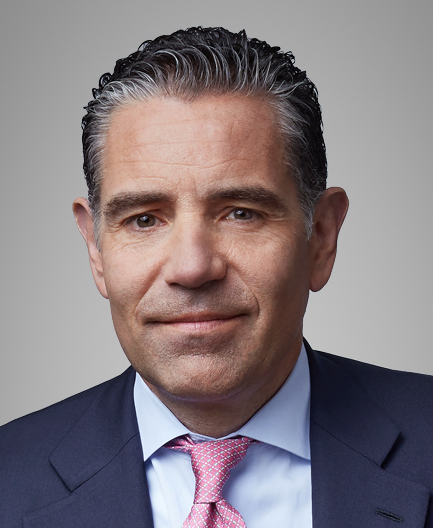 Michael W. Roberge, CFA, is chair of MFS
Investment Management® (MFS®). He helps set the strategic direction of
the firm. He is the chair of the Chairman's Committee, chair of the MFS
Board of Directors, and a trustee on the MFS mutual funds board.
Michael became chair in 2025 after leading the firm as CEO from 2017 to
2024. In addition, he held the role of chief investment officer from
2010 through 2018. He also previously held the roles of president of MFS
from 2010 through 2017 and co-CEO from 2015 through 2016. In 2006, he
was appointed chief investment officer -- US Investments and co-director
of Global Research. Before that, he was senior vice president and
associate director of Fixed Income Research and served as portfolio
manager for several MFS fixed income funds. He joined the firm in 1996
as a credit analyst in the municipal fixed income group. Before joining
MFS, he was a municipal credit analyst and portfolio manager for the
Colonial Group from 1995 to 1996 and a credit analyst with Moody's
Investors Service from 1991 to 1994.
Michael earned a Bachelor of Science degree from Bemidji State (Minn.)
University in 1990 and a Master of Business Administration degree from
Hofstra University in 1992. He is a Chartered Financial Analyst and a
member of the CFA Society Boston. He is also the vice chair of the board
of Horizons for Homeless Children, a Boston-based nonprofit
organization dedicated to combatting the negative impact of homelessness
on children and families.
Michael W. Roberge, CFA, is chair of MFS
Investment Management® (MFS®). He helps set the strategic direction of
the firm. He is the chair of the Chairman's Committee, chair of the MFS
Board of Directors, and a trustee on the MFS mutual funds board.
Michael became chair in 2025 after leading the firm as CEO from 2017 to
2024. In addition, he held the role of chief investment officer from
2010 through 2018. He also previously held the roles of president of MFS
from 2010 through 2017 and co-CEO from 2015 through 2016. In 2006, he
was appointed chief investment officer -- US Investments and co-director
of Global Research. Before that, he was senior vice president and
associate director of Fixed Income Research and served as portfolio
manager for several MFS fixed income funds. He joined the firm in 1996
as a credit analyst in the municipal fixed income group. Before joining
MFS, he was a municipal credit analyst and portfolio manager for the
Colonial Group from 1995 to 1996 and a credit analyst with Moody's
Investors Service from 1991 to 1994.
Michael earned a Bachelor of Science degree from Bemidji State (Minn.)
University in 1990 and a Master of Business Administration degree from
Hofstra University in 1992. He is a Chartered Financial Analyst and a
member of the CFA Society Boston. He is also the vice chair of the board
of Horizons for Homeless Children, a Boston-based nonprofit
organization dedicated to combatting the negative impact of homelessness
on children and families.
MFS Mutual Fund Fraud Litigation
| Court: | United States District Court for the District of Maryland |
| Case Number: | 04-md-15863 |
| Class Period: | 12/15/1998 - 12/08/2003 |
Following a hearing on May 3, 2004 in the massive mutual fund litigation, the United States District Court for the District of Maryland appointed BLB&G client the City of Chicago Deferred Compensation Plan as Lead Plaintiff in the securities fraud class action against Massachusetts Financial Services Company ("MFS"), the investment advisor to the MFS Funds, and others.
On March 1, 2006, the Court sustained the Consolidated Amended Class Action Complaint, allowing the case to move forward against certain defendants.
SUMMARY OF ALLEGATIONS:
The Complaint in this litigation alleges that MFS and certain of its senior executives were aware of, engaged in and facilitated "timing" trades in the MFS Funds: a money-making act involving short-term trading in and out of a mutual fund. The technique is designed to exploit inefficiencies in the way mutual fund companies price their shares by allowing certain customers to trade shares at distorted prices that no longer reflect the true value of the fund. As a result, those few customers permitted to engage in market timing typically reap huge profits, the cost of which are borne primarily by the long-term investors in the relevant fund.
The public filings issued by the Defendants stated that, "MFS funds do not permit market-timing or other excessive trading practices that may disrupt portfolio management strategies and may harm fund performance." In reality, however, the Defendants knew, or recklessly disregarded, the fact that trades were being timed and that these timed trades negatively and materially impacted the MFS Funds, thereby causing significant losses to investors in the MFS Funds.
On February 5, 2004, MFS agreed to entry of a cease and desist order by the Securities and Exchange Commission ("SEC") against MFS and John W. Ballen ("Ballen"), MFS's current chief executive officer, and Kevin R. Parke ("Parke"), MFS's current president and chief investment officer ("Cease and Desist Order"). Specifically, the SEC found that MFS, Ballen and Parke allowed widespread market timing trading in certain MFS Funds from at least late 1999 through October 2003, in contravention of the Funds' public disclosures. In particular, MFS explicitly informed certain select brokers in a written memo that "unrestricted" trading would be permitted in certain MFS funds (known internally at MFS as "Unrestricted Funds"), including the Massachusetts Investors Growth Stock Fund, "even if a pattern of excessive trading has been detected." Not only did MFS selectively enforce its market-timing policies, but executives at MFS facilitated the frequent trading in and out of certain MFS Funds by steering select investors to these "Unrestricted Funds." As the Cease and Desist Order confirms, as much as $2 billion in timing money flowed into MFS Funds during the Class Period.
Internal MFS documents and policies acknowledged that market timing was detrimental to long-term shareholders. In fact, as early as June 2000, an internal presentation entitled "Market Timing Wheel of Terror," warned that "[l]ong term investors are being penalized" by market timing activity. Nevertheless, the market timing activity persisted in the MFS "Unrestricted Funds." Moreover, MFS's select enforcement of its trading policies also included late trading, which alone caused well over $100 million in investor losses. And, as further alleged in the complaint, various brokers and financial institutions also participated in the market timing schemes, to the detriment of ordinary investors.
MFS's policy of allowing market-timing and steering select investors to the "Unrestricted Funds" was adopted as a means to increase profits by luring market timing assets so as to increase funds under management, and, therefore, increase fees paid to MFS for investment advisory services. These additional assets under management also resulted in an increased bonus pool from which MFS employees, including Ballen and Parke, were paid excessive compensation. During this period, none of the above detailed material information was disclosed to the members of the Class. In addition to the profits from their market timing, MFS also profited by charging ordinary investors hundreds of millions of dollars in management fees while breaching their fiduciary duties to those very same investors.
On May 20, 2010, the Court preliminarily approved proposed settlements, totaling $75,042,250, that would resolve this litigation. On October 25, 2010, the Court entered Judgments granting final approval to the settlements and entered separate Orders granting Plaintiffs' Counsel's application for an award of attorneys' fees and expenses and approving the Plan of Allocation of the settlement proceeds.
The claims administration process has concluded and the net settlement fund has been fully disbursed. This matter is considered closed.
FOR THE DISTRICT OF MARYLAND
IN RE MUTUAL FUNDS INVESTMENT
LITIGATION
This Document Relates To:
In re MFS
04-md-15863-04
MDL 1586
Case No. 04-MD-15863
(Judge J. Frederick Motz)
BRUCE RIGGS, et al., Individually and
On Behalf of All Others Similarly Situated,
Plaintiff,
v.
MASSACHUSETTS FINANCIAL
SERVICES COMPANY, et al.
Defendants.
Case No. 04-cv-01162-JFM
CONSOLIDATED AMENDED CLASS ACTION COMPLAINT
Dated: September 29, 2004 BERNSTEIN LITOWITZ BERGER
& GROSSMANN LLP
/s/
ALAN SCHULMAN
ROBERT S. GANS
TIMOTHY A. DeLANGE
JERALD D. BIEN-WILLNER
12544 High Bluff Drive, Suite 150
San Diego, CA 92130
Tel: (858) 793-0070
Fax: (858) 793-0323
-and-
J. ERIK SANDSTEDT
JOSEPH A. FONTI
1285 Avenue of the Americas
New York, New York 10019
Tel: (212) 554-1400
Fax: (212) 554-1444
Lead Counsel
Dated: September 29, 2004 TYDINGS & ROSENBERG LLP
/s/
WILLIAM C. SAMMONS, Fed Bar No. 02366
JOHN B. ISBISTER, Fed Bar No. 00639
100 East Pratt Street, 26th Floor
Baltimore, MD 21202
Tel: (410) 752-9700
Fax: (410) 727-5460
Liaison Counsel

No comments:
Post a Comment