Carney tells Trump Canada is not for sale, president praises PM as a 'very good person'
Canada's new prime minister met face-to-face with Trump at the White House
 Carney meets Trump at White House for 1st time
Prime Minister Mark Carney stepped into the lion's den Tuesday for his first face-to-face with his U.S. counterpart — a high-stakes meeting that seemed to go well with compliments exchanged on both sides as President Donald Trump conceded his dream of annexing Canada is likely off the table.
Carney's goal for this first meeting of his premiership was to turn the page on a fractious few months with Canada-U.S. relations at their lowest point in decades.
Speaking to reporters at the Canadian Embassy after his half-day of talks with Trump, Carney said he feels better about where things stand now than when he arrived in Washington — even if the U.S. president did not yet agree to dismantle the punishing tariff regime on Canadian goods.
What he did secure from Trump was a commitment to negotiate some sort of new Canada-U.S. trade deal, Carney said. He also asked Trump to stop with the 51st state taunts during their private luncheon, he said.
"It was a very constructive meeting. We have a lot more work to do. I'm not trying to suggest we can have one meeting and everything's changed but now we are engaged — very fully engaged," he said. "I feel better about the relations."
 Carney says he feels better 'in many respects' after Trump meeting
The day started with Trump warmly welcoming Carney to the Oval Office, saying there were some "tough points" to discuss while also praising the former central banker as "a very talented, very good person" who deserved to win the recent federal election.
Trump signalled from the start he wasn't going to give Carney a rough ride like he did with Ukrainian President Volodymyr Zelenskyy earlier this year when a similar meeting descended into chaos — a scenario Canadian officials were dreading.
"We had another little blow-up with somebody else," Trump joked as Canadian and American reporters looked on. "That was much different — this is a very friendly conversation."
Asked by reporters if he's still serious about Canada becoming part of the U.S., Trump said he was but acknowledged it's likely a non-starter.
 Trump says he still believes Canada should be 51st state — but adds ‘it takes two to tango’
"It takes two to tango," the president said, adding "as a real estate developer at heart" he would love to see the U.S. span from the Gulf Coast to the Arctic Circle.
"I do feel it's much better for Canada," he said, claiming taxes would be lower and defence would be better if the two countries came together as one.
Carney diplomatically shot down Trump's talk, saying that as a property developer he should know "there are some places that are never for sale."
"Having met with the owners of Canada over the course of the campaign the last several months, it's not for sale and it won't be for sale ever," Carney said.
Still, the president held out hope it might happen one day. He said "never say never," about uniting the two countries.
In response, Carney said: "Never, never, never, never, never," as reporters shouted questions at the president.
 Prime Minister Mark Carney says his discussions with President Donald Trump were 'constructive.' (Mandel Ngan/AFP/Getty Images)
While respectful of Carney, Trump suggested he is not willing to budge on tariffs that have already prompted job losses in Canada and a drop in southbound exports.
Asked why he won't change course, the protectionist president said: "Just the way it is."
The president has imposed fentanyl-related tariffs on goods that are not compliant with the Canada-U.S.-Mexico Agreement (CUSMA) to punish Canada for supposedly lax border security. The country is also grappling with Trump's "Section 232" tariffs on Canadian-made steel, aluminum and autos, with some exceptions.
Carney pushed back at Trump's assertion the tariffs are here to stay, saying the levies are a violation of CUSMA. "Some things are going to have change," Carney said.
Despite some of Trump's past heated rhetoric about Canada, the U.S. president was complimentary of the country throughout the Oval Office event as he sat side-by-side with Carney.
"We're going to be friends with Canada. Canada is a very special place. I love Canada, I have a lot of respect for the Canadians," he said, touting his friendship with hockey great Wayne Gretzky as a sign that he means what he says about the northern neighbour.
 Carney and Trump took questions in the Oval Office before a working lunch in the Roosevelt Room. (Evan Vucci/The Associated Press)
Trump praised Carney's election victory and seemed to take credit for it in part, saying the Liberal Party's turnaround after being down in the polls for the better part of two years was "one of greatest comebacks in the history of politics."
Trump also signalled he's willing to renegotiate CUSMA, saying "it's good for all countries," but there needs to be some unspecified tweaks — or they may have to do away with it altogether.
"We're going to work on some subtle changes, maybe," Trump said, while acknowledging there's nothing concrete on the table at this stage. "We're dealing more with concepts right now."
Carney agreed that the existing trilateral trade deal will "be the basis for a broader negotiation," and those talks will start today.
While the meeting started out on friendly ground, the president drifted into denigrating the Canadian economy with his threats to somehow do away with the country's auto industry.
Trump also repeated his oft-cited falsehood that the U.S. somehow "subsidizes" this country by $200 billion a year.
 Trump greets Carney as the prime minister arrives at the White House. (Evan Vucci/The Associated Press)
The U.S. trade deficit with Canada — which is largely driven by cheap oil imports — is much smaller than that. A trade deficit is not a subsidy. It just means the U.S. buys more goods from Canada than this country does from them.
And despite trade data that shows the U.S. relies on Canadian goods — notably importing some four million barrels of oil a day — Trump said that he doesn't need "anything" from Canada.
At times, it appeared Carney was struggling to interject and he raised his hand to talk as Trump spoke at length about unrelated topics, touching on California Gov. Gavin Newsom, the Washington Capitals, former prime minister Justin Trudeau and teasing some sort of "great" upcoming announcement that's "not necessarily on trade."
After that Oval Office encounter, the two leaders had a working lunch in the storied Roosevelt Room in the West Wing.
Both were accompanied by a cadre of high-level officials.
Beside Trump was Vice-President JD Vance, a critic of Canada like his boss, Secretary of State Marco Rubio, Commerce Secretary Howard Lutnick, — who blasted Canada yesterday as a "socialist regime" — and U.S. Trade Representative Jamieson Greer, among others.
Carney had International Trade Minister Dominic LeBlanc, Foreign Affairs Minister Mélanie Joly, Public Safety Minister David McGuinty and Canada's ambassador to the U.S., Kirsten Hillman, with him along with top bureaucrats.
The prime minister declined to share what was discussed in the closed-door meeting, beyond that there were "wide-ranging and constructive conversations."
ABOUT THE AUTHOR

After Trump vows tariffs on foreign movies, the Canadian film industry says he's lost the plot
No final decisions from White House, but Hollywood North says it would be devastating
 Trump threatens Canadian film industry with 100% foreign movie tariffs
U.S. President Donald Trump says he wants to impose a 100 per cent tariff on movies produced outside the country, a move that could devastate the Canadian film landscape — but experts are scratching their heads over how such a tax would work, given how intertwined the global film industry is.
Trump, in a Truth Social post on Sunday night, said he directed the Department of Commerce and the U.S. Trade Representative to "immediately begin the process" of imposing the tariff. He hasn't signed an executive order, and the White House said on Monday that no final decisions had been made.
Other countries "are offering all sorts of incentives to draw out filmmakers and studios away from the United States," Trump wrote.
"Hollywood, and many other areas within the U.S.A., are being devastated," he went on, framing it as a matter of national security.
Asked if he'd float the issue during his meeting with Prime Minister Mark Carney on Tuesday, Trump responded that Canada is "only one of many countries" that uses tax incentives to lure U.S. film productions.
 B.C. Premier speaks on Trump's threatened tariff on movies made outside U.S.
He offered few details on what this latest plank in his tariff regime would entail, or how it would be executed — including whether it would impact co-productions, or films made entirely abroad and exhibited in the U.S., not to mention those that appear on streaming services and at film festivals.
Greg Denny, a Canadian film producer whose most recent credits include The Apprentice, a biopic about Trump that was partially shot in Toronto, says movies are rarely the product of a single country.
 Ford responds to Trump’s tariff threats on non-U.S. movies
"We're not creating a good here. We're creating a movie. How do you put a tariff on top of that?" he asked. "This is many countries working together at all times, creating footage and content... It's not really something I see you can put a tariff on."
The announcement also drew swift rebukes from the Canadian Media Producers Association (CMPA) and the Alliance of Canadian Cinema, Television and Radio Artists (ACTRA), the actors' union.
B.C. Premier David Eby called the proposal "incredibly hard to understand," while Ontario's Doug Ford lamented that it's "something new with [Trump]" every day.
Why Hollywood goes north
Like other parts of its economy, Canada's film industry is deeply intertwined with that of its southern neighbour. Oscar-winners like Titanic, The Revenant and Juno were all filmed at least partly on Canadian soil; and Hollywood filmmakers from Guillermo Del Toro to Christopher Nolan have shot multiple movies here.
That means Canada is also vulnerable to crises that originate in Hollywood, like the 2023 Writers Guild of America and SAG-AFTRA strikes, which further wounded an industry still recovering from pandemic-related shutdowns.
 Leonardo DiCaprio, right, and Kate Winslet appear in a scene from 1997's Titanic, which was partly shot in Canada. (Paramount Pictures/Associated Press)
Canada is highly appealing to U.S. film producers, according to experts. The filmmaking workforce is highly skilled, but costs less to pay, and Toronto, Montreal, Vancouver, Calgary and Halifax are frequently used as stand-ins for other cities in the U.S., Europe and Asia. U.S. film production creates 30,000 jobs and has a $2.6 billion economic impact in Toronto alone, according to Mayor Olivia Chow.
Most importantly, the federal government offers a 16 per cent refundable tax credit, which is used to attract foreign productions from Hollywood and elsewhere to Canada.
Provinces also have their own tax incentives, some of which — like Ontario's — can be harmonized with the federal credit. B.C., meanwhile, announced just a few months ago that it would up its production tax incentives, and give a 2 per cent bonus to productions that spend big in the province.
 Crew
members prepare to film actor Colin Hanks on the set of the TV series
Fargo in Calgary on March 11, 2014. U.S. President Donald Trump says he
wants to put a 100 per cent tariff on movies produced in other
countries, though the details remain murky. (Todd Korol/Reuters)
Crew
members prepare to film actor Colin Hanks on the set of the TV series
Fargo in Calgary on March 11, 2014. U.S. President Donald Trump says he
wants to put a 100 per cent tariff on movies produced in other
countries, though the details remain murky. (Todd Korol/Reuters)
CBC News reached out to several major U.S. studios for their reaction, but none have responded. Trump said on Monday that he'd meet with the industry to discuss the proposal.
"I'm not looking to hurt the industry. I want to help," he said. "I want to make sure they're happy with it because we're all about jobs."
'The consumer still wants to consume'
Charlie Keil, professor at the University of Toronto's Cinema Studies Institute, says a U.S. film industry exodus from Canada would have a "devastating impact" on the domestic sector.
But it's hard to know how a tariff like the one Trump is proposing would be imposed, and to which movies it would apply.
"There's a whole spectrum here, between films that are primarily made in the U.S. but might have some post-production work done in another country, to films that are entirely made by another country," he said.
 Noah
Segal, the co-founder of Toronto-based film distributor Elevation
Pictures, said major streamers are unlikely to get on board with Trump's
proposal. (Aizick Grimman/CBC)
Noah
Segal, the co-founder of Toronto-based film distributor Elevation
Pictures, said major streamers are unlikely to get on board with Trump's
proposal. (Aizick Grimman/CBC)
There's also the question of who would absorb the cost of the tariff. After years of price hikes and hidden junk fees, a more expensive movie ticket likely wouldn't fly with audiences, says Keil.
That would mean theatre owners would eat the cost themselves or split it with a distributor, which would make production itself more expensive. Retaliatory tariffs would further complicate things, given that the global box office is deeply important to the success of a blockbuster, Keil notes.
And what about U.S. streaming services? Netflix, for example, has seen success with foreign-made content — being the primary distributor for Oscar fare like Spain's Society of the Snow and South Korea's Okja.
Noah Segal, the co-president of the Toronto-based film distributor Elevation Pictures, says major streamers are unlikely to get on board with Trump's proposal.
"I think that they want to get localized content going because they know there's certain [niches] that they can't get through American content," he said.
However, if a U.S. tariff is imposed globally on other filmmaking countries, Segal argues that it could be a boon for Canada's domestic industry.
"If there's less content, the consumer still wants to consume as much as the consumer wants to consume. So therefore, it may be a great opportunity for Canadian content, Canadian culture and Canadian industry," he said.
 Cast
and crew film a scene for the movie Die Alone in Saskatchewan's
Qu'appelle Valley in summer 2023. Many provinces offer tax incentives to
lure film and TV productions. (Die Alone Productions)
Cast
and crew film a scene for the movie Die Alone in Saskatchewan's
Qu'appelle Valley in summer 2023. Many provinces offer tax incentives to
lure film and TV productions. (Die Alone Productions)
ABOUT THE AUTHOR

With files from Jamie Strashin, Shawn Benjamin, Tess Ha and Jessica Chen
The plot thickens bigtime today EH?
Joseph Gordon
Reply to David Amos
It will be a waste of time. :)
Carolen Christie
Reply to Joseph Gordon
Maybe Trump will feel better after meeting our PM Carney today.
Carolen Christie
Reply to Carolen Christie
What is that $200 billion kick anyway? They have more people, they buy more. I don’t understand.
The man who unseated Poilievre: N.B.-raised Bruce Fanjoy had support from Maritimers
Bruce Fanjoy, who grew up in Saint John and Fredericton, has a political family history
When federal Conservative Leader Pierre Poilievre lost his long-held seat last week in the Ottawa-area riding of Carleton, the man who unseated him gained national attention.
Liberal Bruce Fanjoy, who beat Poilievre in an area the Conservative had represented since 2004, says he's feeling great as he transitions into the role.
He said he is "enormously grateful" to everyone who supported his campaign during the federal election, and that includes more than just those in his riding.
Fanjoy, who grew up in New Brunswick and earned two university degrees in Halifax, said he had support from fellow Maritimers during the campaign.
"One of the remarkable things in this campaign was how people from all over that I had grown up with reached out to me, including people from Saint John and Fredericton," he told Information Morning Saint John on Tuesday.
"It's amazing how people were following the campaign and with a name like Fanjoy, people remember … if they met you before."
Fanjoy said his parents met in Saint John and moved to Millidgeville in the north of the city when he was a young boy. He attended elementary school there but when his father took a position with the provincial government, his family moved to Fredericton and then from there to Halifax.
 Conservative
Leader Pierre Poilievre lost in the riding of Carleton, an area he's
represented in the House of Commons since 2004. He wants to get back
into Parliament by running in an Alberta riding. (Amber Bracken/CBC)
Conservative
Leader Pierre Poilievre lost in the riding of Carleton, an area he's
represented in the House of Commons since 2004. He wants to get back
into Parliament by running in an Alberta riding. (Amber Bracken/CBC)
Fanjoy lives in the village of Manotick, where he built a carbon-neutral house. He worked in business and marketing before becoming a full-time parent, according to his campaign materials, and the recent election was his first foray into politics.
But Fanjoy's father, Emery Fanjoy, was secretary to the Council of Maritime Premiers, and his uncle, Harold Fanjoy, was MLA for Kings Centre and a provincial cabinet minister.
Although his father and uncle have died, Fanjoy said, "I did feel that they were watching actively, and had they been here, they would have just been tickled pink with what was happening," he said.
"Our family was one that, you know, you grew up with politics and public service around the dinner table.
"It was, you know, some of that training, which I didn't realize would eventually lead me to this point."
 The Carleton riding had 91 candidates registered to run, including Fanjoy and Poilievre. (Justin Tang/The Canadian Press)
The Carleton riding was the target of a ballot protest for electoral reform, with a whopping 91 candidates registered to run.
And by the time the huge ballots were counted, Fanjoy had garnered about 51 per cent of the vote to Poilievre's 45 per cent.
With Poilievre unseated, Damien Kurek, the MP-elect in the Alberta riding of Battle River-Crowfoot, announced he'll step aside so Poilievre can run in the there, a seat considered one of the safest Conservative seats in the country.
Poilievre has already visited the riding, though he'll have to wait at least 30 days or more for Kurek to legally resign his seat.
It was Poilievre who motivated Fanjoy to take the step into Canadian politics.
"It was never in my plans, but I realized that we were facing an historic election, and in Carleton, we had a unique opportunity," he said.
"I felt a responsibility to mount a strong challenge against [Poilievre].
"We were very present here, traveleld all over the riding lots of times, meeting with people, and I think that we just managed to take advantage of a door that he opened for us."
ABOUT THE AUTHOR

With files from Information Morning Saint John
Obituary of Emery Myles Fanjoy
On May 3rd, 2020, Emery Myles Fanjoy (85) passed away peacefully while holding his daughter's hand and listening to La Bohème. Emery was born and raised in Saint John, New Brunswick –– the eldest son of Newton and Muriel (née Seely) Fanjoy.
He is survived by three children: Stephen (Dawn), Bruce (Donna), and Andrea (David); six grandchildren: Laura (Angel), Sarah, Adrienne, Marcel, Benjamin, and Ryan; and three great–grandchildren: Loren, Alma, and Mayte. Emery is also survived by his brother Paul (Jill), and was predeceased by his brother Harold (Marilyn). Emery was also predeceased by his beloved wife of 59 years, Nan (née Burgess) Fanjoy, with whom he will soon be reunited in Fernhill Cemetery in Saint John, New Brunswick.
Emery graduated from the University of New Brunswick in 1957 with a B.Sc. (Electrical Engineering). He was awarded an Athlone Fellowship and completed a postgraduate diploma from Imperial College in London, England (1958–60). Emery's career began as an engineer with NB Telephone (1957–58), Canadian General Electric (1960–64), and IBM (1964–73). In 1973 Emery embarked on a distinguished career in public service. Emery served as Secretary to the Treasury Board of the Province of New Brunswick (1973–77), Secretary to the Council of Maritime Premiers (1977–95), Co–secretary of the Conference of New England Governors & Eastern Canadian Premiers (1978–95), and Secretary to the Conference of Atlantic Premiers (1990–95). Emery was a member of the Advisory Board of the School of Public Administration, Dalhousie University and served as its Chair from 1983–85. In 1991, Emery was awarded an Honorary Doctor of Laws degree from the University of New Brunswick. He was also awarded the Lieutenant–Governor's Medal for Excellence in Public Administration from the Institute of Public Administration of Canada (IPAC). After his retirement in 1995, Emery was appointed an Adjunct Professor of the School of Public Administration of Dalhousie University –– a role in which he served for many years
Emery pursued a lifelong interest in family history. He traced the Fanjoy family history back as far as 17th century France. France led to England, which led to the American colonies/United States and then to William Fanjoy, a Loyalist, arriving in Saint John. We know this and countless other details of the family thanks to Emery.
One of Emery's greatest accomplishments was the phenomenal care he gave his wife Nan in her later years. It was a role that Emery embraced with characteristic enthusiasm, curiosity, and above all, love.
Emery valued the work of local charitable organizations, particularly the United Way and the Ostomy Halifax Society, and he contributed his energy to them generously.
The family would like to thank Dr. Gina Burgess of Halifax, as well as the staff of Manotick Place Retirement Community, Queensway Carleton Hospital, and Elizabeth Bruyère Hospital in Ottawa for their care and compassion.
In lieu of flowers, the family would be grateful for donations in Emery's memory to Ostomy Halifax Society, the United Way, or a charity of your choice.
Celebrations of Emery's life will take place in Halifax and Saint John, on dates yet to be determined. For messages of condolence please visit www.beechwoodottawa.ca.
Obituary of Harold Newton Fanjoy
Conservative caucus to meet Tuesday as MPs press on after election loss
MPs will decide whether to adopt law that gives them the power to hold secret ballot on Poilievre's future
The Conservative caucus will gather on Parliament Hill Tuesday for a post-election meeting to decide next steps after losing Monday's vote, party sources told CBC News.
Conservative Leader Pierre Poilievre has been busy working the phones in the days since the election as he tries to speak to every member of caucus, and some failed candidates, about the result while also pitching his continued leadership.
A source close to Poilievre told CBC News that the Conservative leader has had a warm reception on these calls and there is a general feeling that the leader should stay on after delivering mixed results — a higher, and even historic, vote share for the party while failing to depose the Liberals and losing his own seat.
That's backed up by what some caucus members have previously told CBC News — there is leadership fatigue in the party after cycling through four leaders in 10 years.
 Poilievre should stay leader, repair provincial relations: N.S. Conservative MP
There is also a general feeling that Poilievre did well in the election despite coming up short overall, because he punched through in key ridings in the Greater Toronto Area and southwestern Ontario in particular, caucus sources said.
Still, MPs will decide Tuesday whether to adopt Reform Act provisions that give caucus the power to hold a leadership review.
If adopted, MPs could oust their leader through a secret ballot. It's the mechanism that was used in the last Parliament to get rid of Poilievre's predecessor, Erin O'Toole.
MPs must also decide on an Official Opposition leader now that Poilievre has lost his seat and cannot serve in the role. By law, the leader must be a sitting MP.
A Conservative source told CBC News that the vote to pick an Opposition leader may not happen at Tuesday's meeting, however.
 Will Poilievre stay on as Conservative leader?
It's not yet clear if Poilievre will throw his support behind a particular candidate — or if it's even necessary to do that as there may be a consensus pick, sources said.
Some names that have been floated by Conservative sources are deputy leader Melissa Lantsman, House leader and former party leader Andrew Scheer and Michael Barrett, the party's ethics critic.
Those three have been trusted Poilievre lieutenants throughout his tenure. They have been given leeway to speak for the party publicly, including during the election — a work assignment given to few other MPs or candidates.
Lantsman, Scheer and Barrett all endorsed Poilievre's continued leadership in social media posts in the hours after the election loss.
In an interview with CBC's Power & Politics on Thursday, Conservative MP Jamil Jivani said Poilievre "has earned the right to continue leading this party" and he has strong support within caucus.
"People believe he can continue to grow this party and grow this coalition. We have built something special," Jivani told host David Cochrane. Jivani said the Conservative base is more urban, suburban, working class and diverse than it's ever been.
"I think we need to continue growing that and Pierre will be able to do that well."
As for whether there should be a change in the staff around Poilievre — his campaign manager Jenni Byrne has faced some criticism within the party — Jivani said that's for the leader to decide.
"I trust his instincts," he said.
 Doug Ford 'undermined' Conservative campaign, says MP Jamil Jivani
ABOUT THE AUTHOR
Premier vows to protect Alberta against 'future hostile acts' from Ottawa after Liberal victory
Danielle Smith urges Mark Carney to ‘reset the relationship’ between Alberta and Ottawa
Alberta Premier Danielle Smith is reacting to the results of the federal election by taking a swipe at the newly elected Liberal government and promising to protect the province against "future hostile acts" from Ottawa.
In a statement Tuesday morning, Smith made her first formal comments since Prime Minister Mark Carney led the Liberals to victory Monday night.
Smith said that many voters in the conservative stronghold of Alberta are frustrated to see a return to red in Ottawa.
As the leader of the United Conservative government, Smith has often railed against how the Liberals have governed the resource-rich province and pushed for Alberta to have more independence and autonomy.
In her statement Tuesday, Smith invited Carney to improve relations between Alberta and the federal government.
"I invite the prime minister to immediately commence working with our government to reset the relationship between Ottawa and Alberta with meaningful action rather than hollow rhetoric," Smith said.
"A large majority of Albertans are deeply frustrated that the same government that overtly attacked our provincial economy almost unabated for the past 10 years has been returned to government."
'Demeaned and demonized'
In her statement, Smith congratulates Carney for his "minority government election victory" before thanking Conservative Party Leader Pierre Poilievre for his "powerful and principled" advocacy for Alberta.
Smith said Poilievre remains a "true friend of Alberta."
While Liberals and New Democrats "demeaned and demonized Albertans" on the campaign trail, Poilievre made empowering Albertans and the province's energy sector a cornerstone of his campaign, Smith said.
"Albertans are proud Canadians that want this nation to be strong, prosperous, and united, but we will no longer tolerate having our industries threatened and our resources landlocked by Ottawa," Smith said.
 Premier Danielle Smith reacts to federal election results
The Liberals are projected to win another term, and as of Tuesday afternoon, the polls were projecting that Carney would lead a minority government.
The Conservative Party earned the support of a large percentage of the population, leaving the Liberals with the prospect of leading a country dealing with political divides.
Conservatives are projected to win almost every one of Alberta's 37 ridings. The outliers are in Edmonton with Heather McPherson projected to win Edmonton Strathcona for the NDP and Eleanor Olszewski projected to win Edmonton Centre for the Liberals.
Liberal candidate Corey Hogan is projected to win over Conservative candidate Jeremy Nixon in the riding of Calgary Confederation.
Elections Canada says it expects to have all the results in by this afternoon.
Smith said her UCP government will hold a special caucus meeting to further discuss next steps. Smith said she would have more details to share following Friday's meeting.
"In the weeks and months ahead, Albertans will have an opportunity to discuss our province's future, assess various options for strengthening and protecting our province against future hostile acts from Ottawa, and to ultimately choose a path forward," Smith said.
"As premier, I will facilitate and lead this discussion and process with the sincere hope of securing a prosperous future for our province within a united Canada that respects our province's constitutional rights, facilitates rather than blocks the development and export of our abundant resources, and treats us as a valued and respected partner within confederation."
Later Tuesday, Smith told reporters that whether strained relations between Alberta and Ottawa can be mended will rely on whether Carney meets her government's demands to address legislation that is "offensive" to Albertans.
She remains skeptical Carney will be any different to former prime minister Justin Trudeau.
She told reporters that she will not push for separation from Canada, but acknowledged some Albertans are growing eager for independence.
"I think Albertans share my view that we want to be able to have Alberta sovereignty within a united Canada. But we would also like Team Canada to be on Team Alberta for once," Smith said.
"I think they [Conservatives] were hoping for a big change and they didn't get it last night, so I will do what I can to work with the current government."
It's not the first time Smith, a longtime critic of former prime minister Justin Trudeau, has struck a defiant tone with Ottawa. Alberta's UCP government has pursued a string of policies and jurisdictional court challenges aimed at strengthening Alberta's sovereignty and resource rights.
Most recently, after a meeting with Carney in Edmonton before his campaign began, Smith made a list of public demands on Alberta's behalf, including calls to kill the proposed greenhouse gas emissions cap. She also wants a guarantee that Alberta can freely build pipelines in every direction — ensuring Alberta full access to oil and gas corridors to the north, east, and west.
Following the March meeting, Smith told reporters that she had warned Carney that her government would no longer tolerate interference from Ottawa, and that national unity hangs in the balance.
Smith said she would strike a panel to poll Albertans on what to do if her list of demands is ignored.
Carney, meanwhile, promised to work with the oil and gas industry, expedite major resource project approvals and strengthen Canada's industrial economy.
In his victory speech Monday night, he alluded to Alberta — as well as Saskatchewan — as a "tough" place for a Liberal politician to court votes.
Carney told his supporters that he campaigned in the west anyway, because he intends to govern for all Canadians, including those who would have hoped for a different election outcome.
"My message to every Canadian is this. No matter where you live, no matter what language you speak, no matter how you voted, I will always do my best to represent everyone who calls Canada home."
Brendan Boyd, an associate professor of political science at MacEwan University, said Smith's statement stands in contrast to the message of unity heard among leadership candidates as election night came to a close.
Boyd said the UCP government has often taken a defiant stance against Ottawa. But Canada's political scene has become increasingly unified in the face of Donald Trump's tariff threats, and that has made Smith's approach to federal relations more of an outlier than ever before.
"The mood around the country has changed in the sense that everyone else is talking about, national unity and facing south," he said.
"This is obviously a different tone. It's different than the mood that's going on elsewhere, maybe even elsewhere in Alberta."
He said pockets of Smith's base view separatism favourably so her "ultimatum" to Carney is not a surprise.
It's a stance she may need to soften in the months ahead, he added.
Carney has indicated he will be more willing to compromise with Alberta than his predecessor, Boyd said. He added that Smith should consider a more conciliatory approach.
"There's been a bit of an olive branch extended by Carney," he said. "I think there's an opportunity for her to take that if she wants to.
"Whether she does or not I think is another question. I guess we're already kind of seeing the answer to that."
ABOUT THE AUTHOR

Danielle Smith says her Alberta government won't advance a separation vote | Power & Politics
 CBC News
 Premiers Ford, Houston criticize Conservatives' election strategy as Poilievre faces murky future
 Global News
 1,866 Comments

N.B. Conservatives say Poilievre must secure caucus support to remain leader
MPs John Williamson and Rob Moore stand by party leader but admit he faces challenges
New Brunswick Conservatives who won their own seats are standing by their leader, Pierre Poilievre, after the party's defeat by the Liberals in the federal election Monday.
But they acknowledge that Poilievre has challenges ahead consolidating support if he wants to lead the party into the next election.
John Williamson, who won in Saint John–St. Croix with more than 50 per cent of the vote, says the party increased its nationwide seat count and popular support, but Poilievre lost his own seat and must win the support of his caucus to stay on as leader.
"[He] obviously has some thinking [to do] and some changes to make," Williamson said Tuesday. "It sounds like he intends to stay on, and that's why I think a caucus meeting will be important for him to find that support as quickly as possible."
Rob Moore, who was re-elected in Fundy Royal, also said Poilievre, who lost his Ottawa-area seat of Carleton, needs to talk to caucus about his future as leader. He deserves credit, however, for a hard-fought campaign and keeping the concerns of voters top-of-mind, Moore said.
"He's going to have to have those conversations with his family and with caucus on the best path forward for all of us," Moore said.
"He's worked tremendously hard to promote the party, to stand up for taxpayers, to fight against the carbon tax. I hope no one is under the illusion that the carbon tax would be gone if it wasn't for Pierre Poilievre."
Williamson and Moore said Poilievre and the Conservative Party were on the right side of many issues, and they believe the Liberal Party changed positions on issues such as resource development and the carbon tax to win over voters.
"It's telling how [the Liberals] adopted Conservative policies," Moore said. 'It's telling that Conservatives did have their finger on the pulse of the issues that Canadians were talking about around the kitchen table and at Tim Hortons and at work.
"They were talking about the issues that we were promoting, and that's probably why the Liberals stole those positions going into the election."
'Trump-esque' rhetoric cost party moderate voters
Don Moore, a past president of the Progressive Conservative Party of New Brunswick and an assistant professor of management at Crandall University, said the "Trump-esque" rhetoric over the last couple of years cost the party moderate votes.
He said there needs to be some kind of review of Poilievre's leadership given that he lost his own seat and failed to win a majority government.
"I'm not saying he has to resign, I'm saying that we need to try to figure out how to recapture that moderate vote, otherwise we're stuck at this 144 [seat count] for several elections," he said. "And that's not where we want to go. As a Conservative, I want to see a Conservative majority, but maybe we need to figure out how to become more 'progressive' Conservative."
Lisa Keenan, a former president of the Progressive Conservative Party of New Brunswick who also sought the party nomination in Saint John–Kennebecasis, said the party faces challenges but is still going to be eager for another election, with Poilievre as the leader.
"Dollars to doughnuts, the Conservatives are going to want an election quite soon, and a readdressing of what happened [Monday] night," Keenan said. "I strongly suspect that Poilievre will stay on. I'm sure there's been phone calls made this morning to various winning candidates in the Conservative Party [asking], 'Would you be willing to step aside for the leader?'
"He'll be here for probably the next election and that will be a very interesting one. I do not think the Conservatives are afraid of a rematch as early as a year from now."
ABOUT THE AUTHOR

With files from Information Morning Moncton and Information Morning Saint John

Lone N.S. Tory to win federal seat says party could have responded faster to Trump turmoil
'They were voting for change. I just don't think there was an agreement on what that change actually was'
 In Nova Scotia, one Conservative hangs on
The only Nova Scotia Conservative to win a seat in the federal election says tariffs, Donald Trump and the collapse of the NDP vote led to losses for his party in his home province.
Chris d'Entremont, who will again represent Acadie-Annapolis in Ottawa, told CBC's As It Happens on Tuesday that the Conservative Party could have had a quicker response to concerns about the U.S. president as "it was really on the minds of electors as we were going door to door."
He also said an earlier visit from party leader Pierre Poilievre also could have made a difference.
"They were voting for change," d'Entremont said. "I just don't think there was an agreement on what that change actually was."
He said he and Liberal candidate Ronnie LeBlanc "pretty much split the vote up the middle."
Conservative incumbents Rick Perkins in South Shore-St. Margarets and Stephen Ellis in Cumberland-Colchester both lost their seats to Liberals.
D'Entremont, who has kept his federal riding blue for the last three elections and was previously a Progressive Conservative MLA, said issues in the fishery are what won his riding for him.

"That far and beyond is the No. 1 issue," he said.
Jack Wright, one of d'Entremont's constituents, told CBC News that d'Entremont represents his riding well.
"Even though he's not in government, he still does his best," Wright said. "He's concerned about the fishery, which is very important here."
D'Entremont said the provincial Progressive Conservatives and the federal Conservatives would be wise to move closer together.
"There just seems to be always that question of whether we're actually the same kind of Conservative," d'Entremont said.
"We're a bigger tent sometimes than what maybe some of the other mainstream parties are — but we all have the same issues at heart and I think we should be working much closer together."
Nova Scotia Premier Tim Houston said he would not campaign for the federal Conservative or Liberal leader. Last November, Houston said there was "no federal equivalent" of the Nova Scotia Progressive Conservative Party.
Meredith Ralston, behind the 1997 documentary Why Women Run — which followed the political race in Halifax between Alexa McDonough and Mary Clancy — told CBC's Maritime Noon on Tuesday she is not surprised by election results in the Maritimes.
She said Houston and Ontario's Progressive Conservative Premier Doug Ford not publicly supporting Poilievre's campaign highlights the split within the Conservative movement.
"And I think that the Progressive Conservatives see themselves as a kinder, gentler kind of Tory and so don't support all the different, what some people kind of call 'mini-Trump' aspect of Conservatives when they're going after so-called woke policies, when they're going after universities," Ralston said.
"Those kinds of things that kind of remind people of Trump, 'Axe the Tax,' the slogans, so I don't think that helped him at all."
Ralston said that Poilievre should have been more responsive to the Trump situation.
"If you can see Canadians are not travelling to the U.S., they're starting to boycott U.S. products, they're booing the national anthem of the United States where usually we don't do stuff like that — to read the room there, you have to pivot [from] what you've been going on about for the last three or four years," she said.
ABOUT THE AUTHOR

With files from As It Happens, Maritime Noon and Taryn Grant
Tensions with N.S. premier simmered as Poilievre made his sole stop in the province
Sources say a top Conservative adviser reprimanded Houston’s team last year
For the
first time this campaign, Conservative Leader Pierre Poilievre made a
stop in Nova Scotia on Thursday — the second province he's visited led
by a Progressive Conservative premier conspicuously absent from the
federal party's events.
Poilievre's sole campaign trip to Nova
Scotia ended without meeting Premier Tim Houston, who did not attend
Poilievre's Trenton, N.S., rally just minutes from Houston's own
provincial riding.
While Houston had previously said he would stay out of the federal campaign, sources say there has been tension between the two leaders for months.
During last year's provincial election, Houston told reporters he would not be inviting Poilievre to campaign with him, saying he's not a member of any federal party.
"There is no federal equivalent," said Houston last November. "I'm the leader of the Nova Scotia Progressive Conservatives. There is a Conservative Party of Canada. It's a completely different party with its own leader."
Frosty call with campaign manager
Four provincial sources, who CBC News is not naming because they weren't authorized to discuss internal party matters, told CBC News that soon after, Houston's staff received a phone call from Conservative national campaign director Jenni Byrne.
The sources claim Byrne told Houston's team that if Poilievre went on to become prime minister, they would not lift a finger to help the provincial party.
The call changed the relationship between the two camps, according to sources.
On the eve of Poilievre's visit, Houston released a campaign-style video on social media, prompting some to wonder whether he was eyeing Poilievre's job.
 Ontario
Premier Doug Ford and Nova Scotia Premier Tim Houston are friends and
allies, and have been working together to reduce interprovincial trade
barriers during the trade war with the United States. (Arlyn McAdorey/The Canadian Press)
Ontario
Premier Doug Ford and Nova Scotia Premier Tim Houston are friends and
allies, and have been working together to reduce interprovincial trade
barriers during the trade war with the United States. (Arlyn McAdorey/The Canadian Press)
The video included a speech Houston gave during the winter session of the Nova Scotia legislature. Houston and opposition leaders all delivered speeches in the face of threats of tariffs from the United States government.
The premier's was in the vein of the "I Am Canadian" beer ad. Houston concludes his speech by saying "I am Nova Scotian."
Speaking to reporters on Thursday, Ontario Premier Doug Ford — a friend and ally of Houston — said he had been "busting [Houston's] chops" over the video.
The video included clips of the two Progressive Conservative premiers together.
"I told him I love it," said Ford, declining to elaborate on what else he said to the Nova Scotia premier.
In a statement, the Conservative Party of Canada did not deny that the phone call with Byrne took place, but said that the two leaders have "communicated about issues of importance to Nova Scotians, both before and after the recent provincial election."
The statement said, if he is elected, Poilievre "looks forward to working closely with Premier Houston."
A statement provided by Houston's communications director, Stephen Moore, said Houston's "main concern is Nova Scotia" and he "will work with whomever forms the next government."
Earlier this year, Houston wrote identical letters to both Liberal Leader Mark Carney and Poilievre outlining what he hoped the next federal government would prioritize for Nova Scotia.
Poilievre's relationship with premiers has been under the microscope during the federal campaign, after Ford declined to endorse the Conservative leader but had breakfast with Prime Minister Mark Carney during the brief pre-campaign window after Carney was sworn in.
Ford defended his former campaign manager's criticisms of Poilievre's campaign, telling reporters "sometimes the truth hurts."
He had said he would stay out of the campaign to focus on his province.
Poilievre has been endorsed by Alberta Premier Danielle Smith and Saskatchewan Premier Scott Moe.
ABOUT THE AUTHOR


Jamil Jivani slams Doug Ford during fiery interview
Ford says 'truth hurts' when asked about criticism of federal Conservative campaign
Premier’s former campaign manager has publicly criticized federal party’s strategy
Ontario Premier Doug Ford is defending his former campaign manager's criticisms of Conservative Leader Pierre Poilievre, telling reporters "sometimes the truth hurts."
Ford's former campaign manager Kory Teneycke has been an outspoken critic of the federal Conservative campaign, suggesting it was headed for disaster and urgently needs to pivot its strategy.
Asked Monday about Teneycke's comments, Ford suggested Poilievre's campaign might be wise to listen to Teneycke's advice.
"I've said right from day one, he's tough as nails, but he's the best campaign manager in the country. And to be very frank, if Kory was running that campaign, I don't think Mr. Poilievre would be in the position he's in right now," Ford said.
"There's still a lot of time left. We still have debates. At the end of the day, the people will decide which way they want this country to move forward. But sometimes the truth hurts."
 'Sometimes the truth hurts': Ford on criticism of Poilievre election campaign
Poilievre's chief strategist is Jenni Byrne, who Teneycke worked with during Stephen Harper's 2015 campaign.
The latest update from CBC's Poll Tracker suggests the Liberals are now most likely to form government, showing Mark Carney's Liberals have a seven-point lead over the Poilievre's Conservatives nationally.
CBC News has reached out to the federal Conservative Party for comment on Ford's remarks.
When asked about his declining poll numbers, Poilievre has previously said Canadians will make their decision on voting day.
 Poilievre dismisses campaign criticism from former Harper strategist
ABOUT THE AUTHOR

Top Conservative strategist says Poilievre needs to urgently pivot or he will lose
Conservative leader is acting too 'Trump-y' and needs to make a change, says strategist
One of the country's top Conservative strategists who just helped Ontario Premier Doug Ford win a sizable majority government says Pierre Poilievre urgently needs to make a pivot and start talking more about the issue voters care about most — the U.S. threat — or he risks losing the federal election.
In an interview with CBC News, Kory Teneycke said only weeks ago Poilievre was on track to win a massive majority government, and now every major pollster in the country says it's the Liberals who are set to win big. If an election were held today, the Conservatives would lose, Teneycke said.
He said it's because of U.S. President Donald Trump — and the Conservative Party's inadequate messaging around what it would do to try and stop his tariffs and annexationist threats.
But it's not just that, Teneycke said, there's also a stylistic issue — the party's leader is just too "Trump-y" and he's got to make a change fast.
Teneycke said Poilievre acts and sounds too much like the president, with his pet names for his political opponents ("Carbon tax Carney") and catchy sloganeering ("big beautiful bring it home tax cut"), and it's off-putting to voters the party needs to win.
"It all sounds too Trump-y for a lot of voters," Teneycke said.
Teneycke, who held senior roles under former prime minister Stephen Harper including director of communications before becoming a strategist at firm Rubicon, said Poilievre is "negative all the time" and it's "hard to be liked by the public" when you're like that.
"There needs to be more of an emphasis on a positive message," he said.
"And I think you have to be a little more direct and more consistent in terms of the message around the U.S."
Asked about his sinking poll numbers Thursday, Poilievre said: "We'll wait for Canadians to make the choice on election day."
 Poilievre says it's election day result that matters, not polling
"After the lost Liberal decade of rising costs and crime and the economy being down under America's thumb, do the Liberals deserve a fourth term in power? Or is it time to put Canada first for a change with a new Conservative government that will axe taxes, build homes, unleash resources and bring home the jobs?" Poilievre said.
Teneycke said Poilievre and his team are also running this campaign as if the main opponent was still former prime minister Justin Trudeau and that the issues that were in focus last year — the cost of living, inflation and the housing crisis — are the ones that matter most when voters are clearly indicating it's Trump who is top of mind.
"I'm not raising this critique out of animus for the Conservative Party," Teneycke said.
"I'm bringing it up as somebody who spent his entire career trying to elect Conservatives and many of them at the federal level. But I think we're just on the wrong track. And I think we need to adjust, refocus the campaign on the one big issue and soften the tone."
Internal Ontario Progressive Conservative polling obtained by CBC News paints a bleak picture for Team Poilievre in Canada's most populous province.
Carney's Liberals are at 48 per cent provincewide and the Conservatives at 33 per cent. The poll, which surveyed 1,902 respondents, was conducted March 24-26. For comparison purposes, a probability sample of a similar size would have a margin of error of +/- 2.2 per cent, 19 times out of 20.
The Toronto Star was first to report the results of the internal polling.
In remarks to the Empire Club in Toronto Wednesday evening, Teneycke said the campaign's current trajectory is concerning.
"I'll make the case tonight and hopefully this will permeate the Conservative Party war room somewhere — you've got to get on the f--king ballot question that is driving votes or you are going to lose," Teneycke said.
Asked about those remarks Thursday, Poilievre said he's the one who can best defend Canada.
"I'm the only one who will stand up to the U.S. president. The president wants the Liberals back in," he said.
Poilievre was critical of Trump in the wake of his latest tariff broadside.
The Conservative leader said Trump is unfairly "attacking his closest neighbour and America's best friend."
"My message to President Trump is knock it off. Stop attacking America's friends," he said.
ABOUT THE AUTHOR
Poilievre is making calls to shore up support as Conservatives take stock of election results
Caucus sources say Poilievre's leadership is on solid ground even after falling short in Monday's vote
Conservative Leader Pierre Poilievre has been on the phone with caucus members and party supporters in the hours since the election, trying to shore up his position after he delivered uneven results, Conservative sources told CBC News.
Poilievre, who has made it clear he intends to stay on as leader, is trying to chart a path forward now that he finds himself outside the House of Commons for the first time in more than 20 years after losing his own Ottawa-area seat, according to sources who spoke on the condition of anonymity to speak freely about internal party discussions.
MPs could try to oust Poilievre, like they did with his predecessor, Erin O'Toole, through provisions of the Reform Act that empower parliamentarians to hold a leadership review. The party's caucus would have to first vote to adopt the act's leadership review powers and then collect enough signatures to prompt that process.
But at this early juncture, there is not a strong desire to replace Poilievre, caucus sources said.
One caucus source, who worked closely with Poilievre in the last Parliament, told CBC News the leader isn't facing any sort of well-organized internal opposition — at least not yet.
Another caucus source said there is some grumbling and disappointment that Poilievre blew what looked like a huge lead earlier this year — and then let 12 Conservative incumbents lose re-election in Monday's vote — but conceded there's no serious movement afoot to get rid of him.
 Canada's Election: Why no model could predict the outcome
A different caucus source said Poilievre is on "very solid ground" after making what this person called "major gains in both seat count and vote share" with important additions in the Greater Toronto Area in particular.
But there are some tensions in the Canadian Conservative family.
Nova Scotia Premier Tim Houston, a Progressive Conservative, said Wednesday he doesn't have any sort of relationship with Poilievre and acknowledged there was a dispute between the two leaders' camps during the last provincial election.
Houston said the federal Conservatives will need to do some "soul-searching" after the party came up short yet again against the Liberals. The party lost two MPs in the province.
Progressive Conservative Ontario Premier Doug Ford has also had a fractious relationship with his federal counterpart. Conservative MP Jamil Jivani, who tore into Ford in a CBC News interview on election night, posted an anti-Ford meme on social media Wednesday suggesting the premier is a Liberal.
Speaking to reporters, Ford said Poilievre and his team never supported the Ontario PCs in the recent provincial election. Ford's party won a massive majority government while voters went in a different direction federally, the premier said.
"The people spoke, and they spoke loud and clear on the provincial election and loud and clear on the federal election. That's democracy. That's who they want," Ford said.
But, for the federal Conservatives, there is considerable "leadership fatigue" among some members given there have already been four leaders in the last 10 years. A race to replace Poilievre would consume valuable time and resources.
Plus, Poilievre has a lot of support among the party's base, as evidenced by the strong turnout at election rallies even in the closing days of the campaign when polls suggested the Conservatives were going to lose again.
There were also brisk merchandise sales of Poilievre-branded gear at those events, a sign the leader enjoys affection among the most loyal.
 Without a seat, Poilievre’s post-election future is unclear
And while some previously held seats slipped away to the Liberals, the party's results were quite strong in some areas.
The Toronto-area breakthrough, especially among South Asian and Chinese Canadian voters in some key ridings, was crucial to holding the Liberals to a minority, party sources said.
They attribute that to suburban frustrations about crime, in particular, but also cost-of-living issues like housing affordability — two issues Poilievre put front and centre in his campaign messaging.
Conservatives making inroads among working-class voters is also a development to celebrate, sources said.
Like Ford, Poilievre courted private-sector union endorsements and dropped past Conservative support for laws widely seen as anti-labour, giving him a boost in areas like Hamilton and Windsor, Ont.
There have been early conversations about who could serve as the party's interim leader of the Official Opposition, a position that, under law, must be held by a sitting MP.
Some names that have been floated by Conservative sources are deputy leader Melissa Lantsman, House leader Andrew Scheer and the party's ethics critic, Michael Barrett.
Those three have been trusted Poilievre lieutenants throughout his tenure. They have been given leeway to speak for the party publicly, including during the election — a work assignment given to few other MPs or candidates.
Lantsman, Scheer and Barrett all endorsed Poilievre's continued leadership in social media posts in the hours after the election loss.
Poilievre will likely ask one of his re-elected MPs to step aside so he can run in a byelection to get back into Parliament — but that could still be months away.
At least one re-elected Conservative MP, Chris D'Entremont, said Tuesday that Poilievre's seat loss is a problem.
"Quite honestly it's going to be difficult to question or hold the government to account," he said in an interview with CBC Radio's As It Happens.
But he questioned whether turfing a Tory MP to help get Poilievre back to the House is the right way to go.
"I don't think that's fair for the person who just ran for a year trying to get elected in their area, but that's a discussion we need to have as a caucus," he said.
Poilievre and his allies' talk about coming back to finish the fight against the Liberals soon is overly optimistic, said one Poilievre staffer.
The Liberals have one of the strongest minority governments in Canadian history — Mark Carney's team is three seats short of a majority — and the NDP is in a very weakened state with few resources, no leader and a miniscule caucus of seven after an electoral drubbing.
The NDP will take time to pick a new leader and it's unlikely that Jagmeet Singh's successor will want to go to an election right away, which means another vote is likely 18 months to two years away, at a minimum, said a Conservative staffer who is looking at the long game.
While Poilievre has been speaking to party bigwigs, some of the staffers who helped deliver Monday's results haven't heard much of anything about what the future holds for them.
ABOUT THE AUTHOR
With files from the CBC's Kate McKenna and Catherine Cullen
Mulcair: Gut feeling is Poilievre will 'win this battle' and hold onto Conservative leadership

Poilievre shores up support to stay on as Conservative leader after election loss | Power & Politics
CBC News Poilievre faces uncertain future after losing his own seat and failing to depose the Liberals
Conservative leader defeated in his Ottawa-area riding while raising party's seat count
Conservative Leader Pierre Poilievre delivered mixed results in Monday's election — boosting his party's vote share to a generational high with breakthroughs among new voting blocs, while at the same time failing to unseat Mark Carney and the Liberals from government and losing his own seat.
Only months ago, Poilievre was poised to lead the Conservatives to a historic majority government, with polls projecting one of the most lopsided seat counts in 30 years.
In the end, former prime minister Justin Trudeau's resignation and U.S. President Donald Trump's trade war scrambled the electoral equation and Poilievre couldn't deliver on his promise of change.
Carney emerges from this election with one of the strongest minority governments in the country's history — just three seats shy of a majority.
 Poilievre was on stage with his wife, Anaida, when he conceded defeat in the early hours Tuesday. (Adrian Wyld/The Canadian Press)
Poilievre vowed to stay on as party leader despite the disappointing final result, telling his supporters in Ottawa early Tuesday that he needs more time to drive a stake through the Liberals once and for all.
"We didn't quite get over the finish line — yet. We know that change is needed, but change is hard to come by. It takes time. It takes work," Poilievre said.
"We have to learn the lessons of tonight so that we can have an even better result the next time Canadians decide the future for the country," he said.
Jamie Ellerton, a Conservative strategist who worked on past leader Andrew Scheer's 2019 election campaign, said Poilievre is likely to hang on to the leadership at this point.
"I think he has rock-solid support among the party membership," Ellerton said in an interview.
Indeed, even as polls suggested the Liberals were poised to pull off a major about-face and win again, Poilievre drew large, adoring crowds of supporters at rallies across the country throughout the campaign.
 FULL SPEECH | Poilievre says he intends to stay on as Conservative leader
Other Conservatives say Poilievre's future is to be determined, given the Liberals will live to see another day and victory slipped through his hands.
"This is a big loss to a tired government that's been in power for 10 years," one senior Conservative source who worked for Poilievre in the past told CBC News.
"The guy couldn't do what needed to be done. He utterly refused to acknowledge that the ballot box question had changed to the bitter end," the source said, referring to the U.S. trade war.
Party achieved some success
Still, Poilievre led the party to gains in areas where the party has struggled in recent federal elections.
Notably, the Liberals have pulled in roughly 49 per cent of the vote counted so far in Ontario, compared to about 45 per cent for the Conservatives — big improvements for both parties after the NDP vote collapsed. That result translated into a 12-seat gain for the Tories in the country's most populous province.
The Conservatives picked up seats in Toronto's suburban 905 region, some with unexpectedly large margins like in Vaughan-Woodbridge.
Party sources say Poilievre's tough-on-crime message had a particular appeal in areas where violent and property crime has been a major concern after a post-COVID spike.
Poilievre's effort to court blue-collar workers, particularly those in private-sector unions, also paid off with a strong Conservative showing in industrial areas like Ontario's Niagara region, and southwestern Ontario locales like London and Windsor.
The party outperformed in some areas of Atlantic Canada, picking up a seat in Newfoundland and Labrador, and benefited from progressive vote splits in B.C.
Poilievre also held off a meaningful Liberal breakthrough in urban Alberta and Saskatchewan, although Carney, the party's first Western leader in a generation, delivered relatively respectable results in the region — particularly in B.C.'s Lower Mainland.
Scheer, a close Poilievre confidant, said in a social media post the party ran "an incredible campaign" and posted "the highest vote percentage in modern Conservative history" and therefore the "inspirational" Poilievre should be given a chance to continue leading the party to "finish the job next time."
But Poilievre lost his own Ottawa-area seat of Carleton — a shocking result given he's held that riding for more than 20 years through successive political waves.
Poilievre will need a new seat
In the end, the result wasn't even particularly close with Poilievre losing by some five percentage points to Liberal candidate Bruce Fanjoy.
Voters in the area told CBC News that Poilievre's past support for the anti-vaccine mandate convoy that overtook Ottawa's downtown during the pandemic and his promise to cut the public service hurt his chances in the riding.
It will be difficult for Poilievre to prosecute the Liberals from outside the House of Commons.
If he does stay on as planned, one of the Conservative MPs elected in Monday's vote will likely resign their seat to give him a chance to run in a byelection and get back into Parliament.
Poilievre's continued use of Stornoway is also in doubt.
By law, that state-owned residence is reserved for the leader of the Official Opposition, a position that can only be held by a sitting MP. But whoever is picked by caucus as the party's interim parliamentary leader may defer to Poilievre and allow him and his young family to stay in the home.
ABOUT THE AUTHOR
Tories left with just 1 N.S. riding as Liberals make gains across province
The Liberals flipped 2 seats from the Conservatives
The Liberals dominated Nova Scotia in Monday's federal election, taking all but one of the province's 11 seats and toppling two Conservative incumbents along the way.
The victories came as CBC News projected the Liberals would form its fourth consecutive federal government, a remarkable win given the party was trailing in the polls mere months ago.
A winner was still not projected in the riding of Cumberland-Colchester as of Tuesday morning, as the race was too close to call with special ballots still to be counted. Later Tuesday, political newcomer Liberal Alana Hirtle was projected to be the winner, beating out Conservative incumbent Stephen Ellis.
"I'm humbled by the response and by the faith that people of Cumberland-Colchester have put in me to represent them in Ottawa," Hirtle told CBC News.
Liberal incumbent Darren Fisher, first elected to Ottawa in the 2015 election, was one of CBC's earliest projected winners, retaining the seat of Dartmouth-Cole Harbour.
A Halifax municipal councillor from 2009 to 2015, Fisher said he's happy to serve the people of his riding, but if he is tapped for Mark Carney's cabinet again, his pick would be for veterans affairs. He served a short few months as the veterans affairs minister before Carney shuffled him out in March.
 Liberals sweep Halifax ridings
Fisher became emotional when discussing the efforts people put into helping him to a projected fourth federal election win and being able to share the moment with his wife, children and mother.
"It never stops being overwhelming," he said at Colleen's Pub in Dartmouth, where about 50 people gathered to celebrate his victory.
Meanwhile, Conservative incumbent Chris d'Entremont was projected to win in Acadie-Annapolis — the party's only remaining seat in Nova Scotia.
Speaking to supporters at a seafood restaurant in Digby, d'Entremont thanked his family, campaign team and volunteers for supporting him and helping to return him to Ottawa.
"We've put thousands of kilometres from one end of Acadie-Annapolis to the other," he said.
 Chris d'Entremont is the Conservative incumbent for Acadie-Annapolis. (Jeorge Sadi/CBC)
D'Entremont said no two issues were bigger than cost of living and the fishery, where concerns have persisted about organized crime infiltrating the lobster fishery and some commercial fishermen have worried about Mi'kmaw fishers exercising their treaty rights to catch lobster outside the commercial season.
"I think we still have a lot of work to do to reel in illegal and unreported fisheries that continue to go on on our shores," he said.
Liberal Shannon Miedema, another first-time candidate, was projected to win in Halifax. Miedema's seat had been vacated by former Liberal MP Andy Fillmore after he announced his bid for the Halifax mayoralty last fall.
A former municipal staffer in the department of environment and climate change, Miedema said voters on the doorstep expressed fear and anxiety over the country's relationship with the U.S., and it's clear they have confidence in Carney to take on President Donald Trump.
"People have been watching the Liberal Party's response to the threats and the tariffs and the negotiations with Trump and have been liking that strong response," said Miedema.
 Shannon Miedema and her family celebrate her win in the riding of Halifax. (Haley Ryan/CBC)
In South Shore-St. Margarets, Liberal Jessica Fancy-Landry — who is also new to politics — was projected to win, unseating Conservative incumbent Rick Perkins.
Fancy-Landry, who has worked as a teacher and principal, won the nomination before Carney took over as Liberal leader at a time when the Conservatives appeared poised to hold on to the seat.
Her win was likely aided by the fact that the NDP did not have a candidate on the ballot in the riding.
 CBC News projects Liberal candidate Jessica Fancy-Landry will win in South Shore-St. Margarets. (CBC)
Speaking to CBC News, Fancy-Landry said the issues on the doorstep that were top of mind for voters included the cost of living and the fishery.
The Liberals lost this seat in 2021, in large part because of the way the government was perceived as ignoring concerns about illegal fishing. Fancy-Landry said she's committed to working toward rebuilding trust between the sector and her party.
She said she's willing to be "that staunch advocate" on the issue, but she said there's something else she's committed to doing for the constituency.
"The thing that we were hearing the most on the phone and on the doors were people were wanting positivity and they were wanting someone to help unite a very divisive riding," she said.
 Liberal Lena Metlege Diab is shown at her headquarters on April 28, 2025. (Mark Crosby/CBC)
Liberal Sean Fraser suffered a scare early in the night as he trailed Conservative Brycen Jenkins, but as advanced polling numbers started rolling in, the former cabinet minister surged ahead to a projected fourth consecutive victory.
Fraser announced late last year he would not re-offer, saying he wanted to spend more time with his family. But Carney personally called him earlier this year and convinced him to throw his hat back in the ring, promising better work-life balance.
Speaking to CBC News, he said the national results are consistent with what he was hearing on the doorstep throughout the campaign.
"People were faced with a very clear choice," he said.
Although the Liberals could be returning a minority Parliament that often faced gridlock due to partisanship, Fraser said there will be opportunities for all MPs to work together to confront the challenges facing the country, even if it is on an issue-by-issue basis.
"Canadians do not want us to continually talk about what's wrong with the other party that we may be competing against, they want us to put our ideas on the table and work together to get things done."
Liberal Braedon Clark, a former MLA who lost his seat in November's provincial election, was projected to win in Sackville-Bedford-Preston. That riding was previously held by Liberal Darrell Samson, who did not re-offer.
Liberal incumbent Kody Blois was projected to win the riding of Kings-Hants, while Liberal incumbent Lena Metlege Diab was projected to win in Halifax West.
Meanwhile, in Cape Breton, Liberal Mike Kelloway was projected to win in Sydney-Glace Bay, while fellow Liberal Jaime Battiste was projected to win Cape Breton-Canso-Antigonish.
A member of the Eskasoni First Nation, Battiste was the first Mi'kmaw MP in Canada.
Following the last election in 2021, the Liberals held eight seats and the Conservatives held three.
With files from Preston Mulligan, Haley Ryan, Taryn Grant and Meig Campbell

Nova Scotia premier blasts Bloc leader for calling Canada 'artificial country'
Houston says Blanchet should take more pride in Canada 'or step aside'
Nova Scotia Premier Tim Houston is stepping into the federal fray, blasting the leader of the Bloc Québécois for calling Canada an "artificial country."
At a campaign stop earlier this week, Yves-François Blanchet said he felt like he was a member of a "foreign parliament."
When asked about those comments on Friday, Blanchet doubled down.
"We are, [whether] we like it or not, part of an artificial country with very little meaning called Canada," he said.
"It's a foreign parliament because this nation is not mine. I don't feel more at ease in the Canadian Parliament than [Alberta Premier Danielle] Smith would feel at ease in the Assemblée nationale du Québec."
In a letter addressed to Blanchet, Houston said he was "dismayed" to see the Bloc leader's comments.
"I find it difficult to find the words to adequately describe how insulting this statement is to all Canadians and to our great nation," Houston wrote in the letter, which was posted on his social media on Friday night.
"I would hope that anyone asking for the honour of representing Canadians would feel that same pride in this country and constantly work to do whatever it takes to make things better for the people and places they serve."
Comments not 'meant as an insult,' Blanchet says
Blanchet defended his comments on Saturday, saying they weren't "meant as an insult," and pointed to former prime minister Justin Trudeau saying Canada is a "post-national state" in a 2015 interview with the New York Times.
"[Canada] has been pulled together through history with the hope of making Quebecers Canadians like any other Canadians and it failed. So maybe this country is a bit artificial," Blanchet said.
"Quebec is anything but a post-national nation; it's a proud nation."
 Blanchet stands by his assertion that Canada is an ‘artificial country’
In his letter, Houston said Blanchet should resign as an MP if he believes Canada is artificial.
"I hope going forward you will reflect on what it means to be Canadian and take more pride and honour in being an elected official in Canada. If you can't do that, I would ask you to step aside in favour of those who put country first," Houston wrote.
Blanchet was asked Saturday if he would consider Houston's suggestion or write back to the premier.
"No and no," he said.
CBC News contacted Houston's office for further comment but has yet to receive a reply.
 Carney rejects Blanchet's assertion that Canada is an ‘artificial country’
Liberal Leader Mark Carney seemed to subtly address Blanchet's "artificial country" comments during a campaign speech on Saturday morning.
"Some people, on both sides of our border, claim that we're not a real country," he said, without specifically mentioning Blanchet. "They couldn't be more wrong.
"Canada is more than a nation. We are a confederation. A sacred set of ideas and ideals built on practical foundations."
During the campaign, Carney has largely tried to position himself as the best person to deal with U.S. President Donald Trump. Since his inauguration, Trump has repeatedly said Canada should become the 51st state and at one point referred to the Canada-U.S. border as an "artificially drawn line."
After Carney's speech on Saturday, reporters asked the Liberal leader to directly respond to Blanchet's comments.
"I reject them completely," he said. "This is an incredible country. I am incredibly proud to be Canadian."
Conservative Leader Pierre Poilievre took to social media on Saturday afternoon to condemn the Bloc leader's remarks.
"Blanchet's comments are insulting and false. Canada is a strong, proud and sovereign country with a rich history," Poilievre wrote in a post on X.
He promised, if elected prime minister, to "defend Canada and make it stronger than ever before."
ABOUT THE AUTHOR

A federal Liberal sweep on P.E.I. is a familiar result, but Conservatives made some big gains
2025 federal election saw some tight races and a landslide on the way to 4 Liberal wins on the Island
All four of Prince Edward Island's ridings staying Liberal red on a federal election night is not an unusual result, but this time it wasn't a guaranteed result by any means.
The Liberal Party of Canada's three Island incumbents, plus one rookie candidate, eventually won seats on Parliament Hill when all the votes were counted Monday night and early Tuesday.
In what ended up being a two-party race between the Liberals and Conservative Party of Canada, a trend that was largely reflected across the country, the blue brand did appear to make some significant gains over the previous election in 2021.
"The popular vote for the Liberal Party is certainly impressive, but it's not so far ahead of the CPC," said Don Desserud, a political science professor at UPEI. "The bigger story… is the strength of the Conservative vote, which is an odd thing to say because it wasn't that long ago that we were looking at a Conservative landslide."
 UPEI
political science professor Don Desserud says the Conservative
candidates on P.E.I. should be pleased with the percentage of the vote
they received, even if it wasn't the landslide that was projected just a
few months ago. (Wayne Thibodeau/CBC)
UPEI
political science professor Don Desserud says the Conservative
candidates on P.E.I. should be pleased with the percentage of the vote
they received, even if it wasn't the landslide that was projected just a
few months ago. (Wayne Thibodeau/CBC)
By 1:30 a.m. AT Tuesday, the Liberals had racked up about 58 per cent of the popular vote on P.E.I., compared to 37 per cent for the Conservatives. Nationally at the same time, the Liberals had 42.8 per cent of the vote and the Conservatives had 41.8 per cent.
With polls still being reported across the country early Tuesday, the CBC Decision Desk was projecting that Mark Carney's Liberals would form the next government, though it remained to be seen whether it would be a majority or minority.
As Desserud remarked, that kind of Liberal victory would have seemed almost impossible just a few months ago.
Canadians had soured on former prime minister Justin Trudeau and poll after poll suggested Conservative Leader Pierre Poilievre would snap up the majority government he'd long been waiting for.
Then came Trudeau's resignation in early January, newly re-elected U.S. President Donald Trump's trade war against his country's traditional allies, and persistent barbs about making Canada the 51st state — flipping the political script.
With Trump announcing, pausing, then re-announcing devastating tariffs on Canadian goods, the campaign largely became a race about who could best steer Canada through global uncertainty. And at the end of the day, Canadians cast ballots in favour of Carney, a former governor of the Bank of Canada and Bank of England.
Egmont
Still, the prospect of two-horse races did provide some drama on P.E.I., particularly in our westernmost riding.
The Egmont riding's incumbent Liberal, Bobby Morrissey, and Conservative candidate Logan McLellan were within 100 votes of each other for most of the first hour of results coming in from Elections Canada.
McLellan even held a slim lead at one point, and the men were tied at another, but Morrissey finally pulled ahead to win by almost 2,000 votes.
Desserud was particularly surprised by how tight that race was, given Egmont was the only riding where the Conservatives did not run a former provincial Progressive Conservative cabinet minister. McLellan is a business owner born and raised in Summerside.
 Liberal
Bobby Morrissey, shown awaiting results Monday night with Miminegash
Mayor Audrey Callaghan, was first elected in Egmont back in 2015. (Cody MacKay/CBC)
Liberal
Bobby Morrissey, shown awaiting results Monday night with Miminegash
Mayor Audrey Callaghan, was first elected in Egmont back in 2015. (Cody MacKay/CBC)
"That was the one that I had the least sense of; I just truly didn't know," Desserud said. "Obviously the Conservative candidate in that riding had a good campaign and did very, very well, but maybe did not have the profile that we saw in the other ridings."
Cardigan
Things were less close down east in Cardigan — a Liberal stronghold for more than 35 years under Lawrence MacAulay, who did not reoffer in this election after 11 straight wins.
Stepping in as a first-time candidate in MacAulay's stead was Kent MacDonald, described on the Liberal website as "a seventh-generation dairy farmer from Little Pond, P.E.I." He faced a challenge from former provincial PC cabinet minister and leader James Aylward.
 Liberal
candidate Kent MacDonald got hugs from supporters after being projected
to win the eastern P.E.I. riding of Cardigan on Monday night. (Wayne Thibodeau/CBC)
Liberal
candidate Kent MacDonald got hugs from supporters after being projected
to win the eastern P.E.I. riding of Cardigan on Monday night. (Wayne Thibodeau/CBC)
"I was never sure… whether in that riding if people were voting for Lawrence MacAulay or voting for a Liberal," Desserud said.
"The one thing I'd wondered about was whether Aylward's base in Stratford would translate to the rest of the riding, particularly as you get further east, and perhaps it did not."
Charlottetown and Malpeque
Things didn't swing as dramatically in the Island's urban and central ridings.
 Heath MacDonald hugged his mother after learning that CBC projected he would hold Malpeque for the Liberals. (Kerry Campbell/CBC)
Liberal Heath MacDonald held Malpeque over another former PC minister, Jamie Fox.
In Charlottetown, Sean Casey defeated Natalie Jameson, who stepped down from her post as P.E.I.'s education minister earlier this year to run federally.
When the Conservatives were favoured in the polls, Desserud said that appeared to boost both Jameson and Fox — particularly when Carney didn't name any cabinet ministers from P.E.I. after he was sworn in as prime minister last month.
"It was not that long ago that both those Conservative candidates were seen as the favourites," Desserud said. "Now we see it went back to a more traditional vote, but I'd be willing to bet that all eyes are going to be on the next cabinet and seeing who's going to get the nod."
Other parties
Of course, the surge in votes for both the Liberals and Conservatives came at the expense of parties like the Greens and NDP.
On P.E.I., the NDP had garnered 2.55 per cent by 1:30 a.m. AT on Tuesday and the Greens had 2.22 per cent.
Desserud expects the New Democrats in particular to rethink their priorities after this election, which led to Leader Jagmeet Singh announcing his resignation early Tuesday morning.
"This is the typical cycle of our system," he said. "It's one of the problems… of the first-past-the-post system where smaller parties like the NDP, like the Greens can do well up to a certain point but can get pushed back down to the smaller numbers and have to start over again."
ABOUT THE AUTHOR

Conservative says win in Miramichi-Grand Lake 'bittersweet' after national loss
Mike Dawson pulled off a victory in New Brunswick’s only tight race against Liberals
While most of New Brunswick's 10 ridings were settled relatively early on election night, one stood out: Miramichi-Grand Lake.
Both Conservative Mike Dawson and Liberal Lisa Harris took the lead at different points during a long night of vote-counting. Harris conceded the race early Tuesday, but even this didn't bring sheer elation to the victor.
Dawson was happy about his win — he got 18,431 votes to Harris's 18,037 — but the failure of the Conservatives to win nationally hurt.
"It's bittersweet," Dawson, a Progressive Conservative MLA since 2022, said in an interview Tuesday.. "We were expecting better results federally across the country.
 Conservative Leader Pierre Poilievre was unable to pull off a
Conservative win, and lost his own seat in Ontario. (Chris
Young/Canadian Press)
Conservative Leader Pierre Poilievre was unable to pull off a
Conservative win, and lost his own seat in Ontario. (Chris
Young/Canadian Press)
"But provincially and locally it turned out well, but federally wasn't what we were expecting."
Dawson's win ensured New Brunswick's electoral map would stay exactly as it was the last time, with six Liberals and four Conservatives winning election.
The riding is large and rural, including downtown Miramichi down to Grand Lake as well as part of the Acadian Peninsula and parts of Kent County.
Canada's dispute with U.S. President Donald Trump over trade was a central issue in the federal election and got credit for helping the Liberals win, but Dawson said he didn't hear much about Trump while out knocking on doors.
"A lot of the stuff we heard, or most of the stuff we heard, was all about cost of living."
WATCH | Mike Dawson reflects on local victory alongside national disappointment:
Despite the national loss, Dawson said, his own focus is the same.
"I'm still going to do the same thing I was doing, whether we were in power or not power. So it doesn't change much."
Dawson jumped into the race after Jake Stewart, who'd held the seat for the Conservatives in the last Parliament, decided not to reoffer. There had been resignations from Stewart's office and speculation he wouldn't be able to win.
Dawson said he and Stewart "have always been fairly close," but there wasn't much mention of the former MP when speaking with voters.
"People were fixated on what's happening federally and with the local issues an,d that was most of the concerns at the door."
Some hope Dawson focuses on local issues
Paddy Vautour of Miramichi said he was glad the Conservatives won the riding, "but I thought it would go a lot better overall."
Vautour said he supported Dawson, who he said didn't knock on his door this election.
"He didn't have to," Autour said. "I'm a purebread Conservative."
 Paddy Vautour says he's a lifelong Conservative and seniors' pensions were the biggest issue for him. (Katelin Belliveau/CBC)
He said seniors' pensions were the biggest election issue for him, and it was disappointing the election emphasis was so heavy on Trump.
"It's not enough to live on, everything's going up. It's not easy to live on 700-some dollars a month, you know?"
Maggie Clark, 18, also lives in Miramichi, and said she would have liked to see the Conservatives win the country as well.
"I wasn't sure who was going to win because it was so tight," she said.
 Maggie Clark says she hopes Dawson focuses on addressing drugs and crime locally. (Katelin Belliveau/CBC)
But with Dawson winning, she said she hopes for more focus on the community.
"I'm hoping that we get, like, just more focus on community and maybe the drugs here, focus on that a bit more, maybe lower the drug crime rates and stuff like that."
Different reactions in Minto
At the other end of the riding, in Minto, reaction from voters who spoke with CBC News was more mixed.
Kevin Murphy, a Liberal voter, said he didn't like former prime minister Justin Trudeau, but with Mark Carney as prime minister, "I think I feel more comfortable going forward for the next four years."
Sebastien Riley, a first-time voter who just turned 18, said affordability was top of mind, and he hoped for a Conservative government.
"I mean, we're graduating in about a month and a half now. So we're kind of thinking about our future and trying to figure out if we're going to be able to afford anywhere to live other than our parent's basement."
Franco Morocco said he was disappointed that third parties took such a hit this election.
"It's rather sad that it's always that way," he said. "We're going to eventually end up probably like the U.S., with a two-party system, and it just never changes.
"I wish there was a way for people to, you know, like, get together and say, like, we need some real change in this country."
ABOUT THE AUTHOR

With files from Katelin Belliveau
David Myles wins for Liberals in Fredericton-Oromocto
Well-known singer-songwriter was endorsed by Premier Susan Holt
The Fredericton-Oromocto federal election results were music to the ears of Liberal newcomer David Myles.
The Juno Award-winning singer-songwriter and former CBC radio host defeated Conservative candidate and former Progressive Conservative MLA Brian Macdonald, with more than 61 per cent of the votes, compared to about 32 per cent, as of around 2:30 a.m. Tuesday, with 173 of 175 polls reported.
"This is entirely surreal, my friends," he told supporters at the Crowne Plaza on Monday night.
"Ottawa is beyond a dream for me," he said as they chanted, "David! David! David!"
Myles, 43, a married father of two, said he decided to join the race because he has travelled across the country for the past 20 years and believes in Canada and the ability of Canadians "to work together in spite of our differences."
 David Myles projected to win Fredericton-Oromocto
After five weeks of knocking on more than 17,000 doors and lots of conversations — "If you know me, you know I love a good chat" — he believes more than ever, he said.
"I'm more filled with hope."
 Myles thanked his more than 250 volunteers. He was 'nervous' and
'scared' and their support meant everything, he said. (Silas Brown/CBC)
Myles thanked his more than 250 volunteers. He was 'nervous' and
'scared' and their support meant everything, he said. (Silas Brown/CBC)
Premier Susan Holt had endorsed Myles, a long-time friend, as the Liberal candidate for the riding, which saw the closest race in the province in the last federal election in 2021.
Previous Liberal MP Jenica Atwin won with 37 per cent of votes, narrowly beating the 35.9 per cent of votes won by Conservative candidate Andrea Johnson.
Atwin, originally elected as a Green MP in 2019, announced in January she wouldn't run again.
The riding covers Fredericton, Oromocto, New Maryland, parts of rural Hanwell and three First Nations.
It includes 5th Canadian Division Support Base Gagetown, which directly employs 6,000 service members and 1,000 civilians.
Liberal Leader Mark Carney has said he'd bring defence spending up to two per cent of Canada's GDP — in line with the NATO benchmark — by 2030.
Myles believes voters in the riding connected with the leadership of Carney.
"In my experience at the doors, people really responded to Mark Carney as being the leader of the party and to negotiate with [U.S. President] Donald Trump. That came up a lot," he said.
"So I think it had a lot to do with the leader and hopefully something to do with me too as a person that people know and they respect."
In addition, Myles thinks Carney was able to win over more moderate Conservative voters in the riding. He believes voters who might traditionally be right of centre were attracted to Carney.
"I think there was a lot of people who would have fallen into the Progressive Conservative category that liked the way that Mark Carney was speaking. But I do think we definitely gained people from the Red Tories, or the Progressive Conservative past that don't really relate to conservatism nationally."
 Fredericton-Oromocto
Green candidate Pam Allen-LeBlanc said many voters told her they felt
they had to vote Liberal because of the situation with the U.S. But she
was pleased with her party's 'momentum' and plans to reoffer in four
years. (Silas Brown/CBC)
Fredericton-Oromocto
Green candidate Pam Allen-LeBlanc said many voters told her they felt
they had to vote Liberal because of the situation with the U.S. But she
was pleased with her party's 'momentum' and plans to reoffer in four
years. (Silas Brown/CBC)
Myles also beat Green Pam Allen-LeBlanc, who ran for the Green Party in Fredericton-York in the 2024 provincial election, New Democrat Nicki Lyons-Macfarlane, who was the NDP candidate for Fredericton South-Silverwood in the 2024 provincial election, and Dominic Cardy of the Canadian Future Party, who was the leader for the New Brunswick NDP in 2014, moved to the Progressive Conservative Party in 2017, where he was elected as Fredericton-Hanwell MLA and served in Blaine Higgs's cabinet, before he resigned in 2022 and served as an Independent until 2024.
Other candidates included June Patterson of the Communist Party, who was the candidate from Fredericton for the Communist Party of Canada in the 2021 federal election, Brandon Ellis of the Centrist Party, and Heather Michaud of the People's Party of Canada.
With files from Silas Brown
These big-name MPs won't be returning to Parliament after Monday's vote
Poilievre, Singh are most notable losses, but other familiar faces won't be back
Two of the major party leaders were unable to retain their seats on Monday, with both the Conservatives' Pierre Poilievre and NDP's Jagmeet Singh falling to Liberal challengers.
Singh placed a distant third in Burnaby Central. But Poilievre's result was a shocking upset, losing the Ottawa-area riding of Carleton after holding it for two decades.
But beyond those two leaders, a number of other notable incumbents also lost their seats. Here's a breakdown of some of the bigger names who won't be returning to the House of Commons.
Niki Ashton
 Niki
Ashton said she and her team hoped to visit 90 per cent of all
communities in the Churchill-Keewatinook Aski riding during the election
campaign. (Sanuda Ranawake/CBC)
Niki
Ashton said she and her team hoped to visit 90 per cent of all
communities in the Churchill-Keewatinook Aski riding during the election
campaign. (Sanuda Ranawake/CBC)
Beyond Singh, Niki Ashton is one of the more notable NDP candidates to lose her seat.
Ashton had been an MP since 2008 when she won the Manitoba riding of Churchill-Keewatinook Aski for the NDP.
She ran for the party's leadership in 2017, finishing third in the contest that Singh ultimately won.
Rebecca Chartrand, who identifies as Anishinaabe, Inninew, Dakota and Métis from Pine Creek First Nation, ousted Ashton after 17 years as an MP.
Peter Julian
 Peter Julian served as the NDP's House leader before the election was called. (Sean Kilpatrick/The Canadian Press)
Peter Julian is a loss that will potentially fuel the leadership vacuum in the NDP after Singh's resignation.
As the NDP's House leader, Julian could have been an easy choice as the party's interim leader, assuming he had no aspirations for the permanent gig.
Julian had been the MP for New Westminster-Burnaby for two decades, first winning the seat in 2004.
Liberal Jake Sawatzky unseated Julian in the redrawn riding of New Westminster-Burnaby-Maillardville.
Kamal Khera
 Prime Minister Mark Carney tapped Kamal Khera to be his health minister
before the election. (Sean Kilpatrick/The Canadian Press)
Prime Minister Mark Carney tapped Kamal Khera to be his health minister
before the election. (Sean Kilpatrick/The Canadian Press)
The Liberals were able to pick up a good number of seats in Quebec, but lost some ground in Ontario — especially in the 905 region surrounding Toronto.
Kamal Khera had held the riding for Brampton West since 2015, but lost to Conservative candidate Amarjeet Gill.
A nurse by training, Khera had been a cabinet minister under both Mark Carney and Justin Trudeau. Before earning her first cabinet post in 2021, Khera was a parliamentary secretary.
Ya'ara Saks
 Ya'ara Saks had been minister of mental health and addictions under
former prime minister Justin Trudeau. (Spencer Colby/Canadian Press)
Ya'ara Saks had been minister of mental health and addictions under
former prime minister Justin Trudeau. (Spencer Colby/Canadian Press)
Ya'ara Saks is another former cabinet minister from the region to fall to a Conservative.
Saks won her seat in a 2020 byelection and was sworn in as minister of mental health and addictions during a cabinet shuffle in 2023. But Carney did not include her in his cabinet when he won the leadership.
Roman Baber, who was kicked out of the Ontario Progressive Conservative caucus and later ran for the federal leadership, won the York Centre riding over Saks.
Chad Collins
 Chad Collins was first elected MP for Hamilton East-Stoney Creek in 2021. (Dan Taekema/CBC)
While Chad Collins had only been an MP since 2021 and largely served as a backbencher, his loss in Hamilton East-Stoney Creek stands out for different reasons.
Since 2004, the riding has largely been a three-way race, but has either gone to the Liberals or NDP. That changed Monday, with Conservative Ned Kuruc topping Collins by just under 1,500 votes. The NDP placed a distant third.
The riding would have been a seat the Liberals needed to hold to get into majority territory.
Collins was one of the Liberal backbenchers publicly calling for Trudeau to step down before the former prime minister decided to leave — but voters appear to have not rewarded Collins for speaking out.
Stephen Ellis
 Stephen Ellis was the Conservative health critic in the last Parliament. (Adrian Wyld/Canadian Press)
Overall the Conservatives had a good election, increasing both their share of seats and the popular vote. But the party's losses extend beyond their leader.
Even though Stephen Ellis lost his seat after only one term, the family doctor was considered a star candidate for the Conservatives in the 2021 pandemic election.
Ellis won back the Nova Scotia riding of Cumberland-Colchester from the Liberals, who held the seat since 2015. He served as Poilievre's health critic in the last Parliament.
Liberal Alana Hirtle defeated Ellis by nearly 1,300 votes.
Tracy Gray
 Conservative MP for Kelowna-Lake Country Tracy Gray lost her riding by about 200 votes. (Adrian Wyld/The Canadian Press)
Dozens of seats were still too close to call when Elections Canada halted the count at 4:30 a.m. ET Tuesday. That included Kelowna, B.C.
The CBC Decision Desk called the race for Liberal Stephen Fuhr on Tuesday afternoon. He beat Conservative incumbent Tracy Gray by 1,077 votes.
Gray was another member of Poilievre's front bench, serving as the employment critic.
A former city councillor, Gray won the seat from Fuhr in 2018.
Michelle Ferreri
 Michelle Ferreri was an outspoken MP during question period. (Adrian Wyld/The Canadian Press)
Conservative Michelle Ferreri also won't be returning to the House, having lost her seat in Peterborough, Ont.
Ferreri's riding — formerly Peterborough-Kawartha — has flipped back and forth between Liberals and Conservatives over the past few decades.
Ferreri won the riding from former Liberal cabinet minister Maryam Monsef in 2021. As Conservative critic for families and social development, she was an extremely vocal member of the Opposition — and occasionally made outlandish claims.
Emma Harrison, a farmer and small business owner, won the seat for the Liberals.
Alain Therrien
 Bloc
Québécois Leader Yves-François Blanchet embraces candidate Alain
Therrien. The leader said Therrien's loss was particularly hard to
swallow. (Adrian Wyld/The Canadian Press)
Bloc
Québécois Leader Yves-François Blanchet embraces candidate Alain
Therrien. The leader said Therrien's loss was particularly hard to
swallow. (Adrian Wyld/The Canadian Press)
Alain Therrien losing in La Prairie-Atateken was just one of about a dozen seats the Bloc Québécois dropped this election.
But Therrien was a notable member of the Bloc caucus, serving as the party's House leader. When leader Yves-François Blanchet was absent from question period, it was usually Therrien grilling the government.
Speaking to reporters Tuesday morning, Blanchet himself singled out Therrien's loss as especially difficult.
"You can't have a greater warrior than Alain. All the other candidates, all the other friends I've lost … Alain had a special closeness," he said in French.
The former Quebec MNA lost his seat to Liberal Jacques Ramsay, a family physician from Montreal's South Shore.
Diane Lebouthillier
 Former cabinet minister Diane Lebouthillier lost her Quebec seat. (Adrian Wyld/The Canadian Press)
While the Liberals were largely able to pick up seats from the Bloc, the sovereignist party was able to take a seat away from a key Liberal player.
Former cabinet minister Diane Lebouthillier lost her seat in the easternmost Quebec riding of Gaspésie-Les Îles-de-la-Madeleine-Listuguj.
Lebouthillier had been a member of Trudeau's front bench since the Liberals won their first election under the former leader in 2015 — though Carney didn't include her in his cabinet.
Bloc Québécois candidate Alexis Deschênes had previously run provincially but had more luck in this federal race. He likely benefited from a redrawn riding and a campaign visit from Blanchet.
Brian Masse
 Brian Masse defeated after 2 decades in office
The Conservatives were able to outperform the polls in Ontario in part by earning blue-collar votes in the southwest region of the province.
A prime example: Brian Masse lost his seat after representing Windsor-West since 2002.
Masse held several critic portfolios for the NDP, including Canada-U.S. border relations — one of the key issues this election. His Windsor riding is also on the front lines of the U.S. trade war.
Harb Gill, a retired police officer, pushed a message of change in his successful bid to unseat Masse.
Lindsay Mathyssen
 Lindsay Mathyssen responds to election loss in London-Fanshawe
Lindsay Mathyssen dropping her London-Fanshawe seat is another example of the Conservatives picking up seats from the NDP in southwestern Ontario.
Mathyssen had represented the riding since 2019. Before that, her mother, Irene Mathyssen, held the same seat from 2006.
Kurt Holman will be the first Conservative to represent the riding in more than two decades.
Mike Morrice
 Green Party MP Mike Morrice's loss brings the Green seat count down to one. (Spencer Colby/The Canadian Press)
With the loss of Mike Morrice, the Green Party caucus has been cut in half.
While co-Leader Elizabeth May held her B.C. seat, Morrice came a close second to Conservative Kelly DeRidder in Ontario's Kitchener Centre.
Morrice won the riding in 2021, though the Liberal candidate in that election had dropped out of the race.
This time around, Morrice appears to have split the vote with the new Liberal candidate Brian Adeba.
ABOUT THE AUTHOR
Liberals projected to win 4th term in remarkable reversal of political fortunes
Victory under Carney's leadership would be major comeback against Conservatives
 Canada Votes 2025: CBC News projects Liberal government
Mark Carney's Liberals are expected to form the next government, CBC News projects, a feat that seemed impossible just a few months ago.
With polls reporting across the country, the CBC Decision Desk is projecting a fourth Liberal term but it's too early to tell whether it will be majority or minority government.
So far, the Liberals have been riding high with more than 50 per cent of the vote while the Conservative vote share stands at 38.6 per cent, which would be an extremely strong showing for the party under other circumstances. Preliminary results suggest Bloc Québécois and NDP support faltered.
Carney, a central banker turned prime minister, reversed his party's fortunes after polling earlier this year suggested defeat was all but guaranteed.
Canadians had soured on former prime minister Justin Trudeau and polls suggested Conservative Leader Pierre Poilievre would snap up the majority government he'd long been waiting for.
Then came Trudeau's early January resignation, U.S. President Donald Trump's trade war and persistent barbs about making Canada the 51st state — flipping the political script.
With Trump announcing, pausing, then re-announcing devastating tariffs on Canadian goods, the campaign largely became a race about who is best to steer Canada through global uncertainty.
Carney focused on Trump
Carney tried to define himself as a steady, mature outsider who is best to deal with the unpredictable president and map out a new economic and security relationship. Heading into the campaign, Carney did not have a seat in the House of Commons. That changed Monday as CBC News projects he's won the Ottawa riding of Nepean.
This is the first time since the 1880s a prime minister has represented a riding in what's now Ottawa. John A. Macdonald represented Carleton, as in the former county of Carleton, from 1882 to 1887.
While criss-crossing the country, the freshly minted leader pointed to his time as the governor of the Bank of Canada during the 2008 global financial crisis and head of the Bank of England during the Brexit years as evidence that Canadians should trust him to steer the country's economy through turbulent times.
 How CBC News makes projections on election night
In one of his most repeated campaign speech lines, Carney argued that "Trump is trying to break us so that America can own us."
"And well, that will never happen," he frequently told crowds that gathered to hear the political newbie speak.
Carney has had a whirlwind 2025 so far. He handily won the Liberal leadership March 9 and was sworn in as prime minister just nine days before triggering an election.
 Supporters react to a CBC News projection of a Liberal government at an election night event in Ottawa. (Evan Mitsui/CBC)
Carney's greatest weakness going into the campaign was expected to be his shaky French, which he graded six out of 10, but he emerged from the French debate and an ever-important interview with the popular show Tout le monde en parle relatively unscathed.
His campaign did hit some snags. He was accused last week of not telling the whole truth about his conversation with Trump after it was revealed the president raised Canada becoming the 51st state on the call. Carney had said immediately after the call that Trump respected Canada's sovereignty.
The last day of the campaign is usually filled with excitement as the parties try to build final momentum and get their message out. Sunday however was tinged by tragedy, following a car-ramming at a Filipino street festival in Vancouver that left 11 dead and more than 20 injured.
While Carney's final push was toned down, he did hit contested areas including Saskatoon and Edmonton, a sign his campaign was confident heading into Monday's vote.
Poilievre pushed for change
Monday's results are obviously not what Poilievre, who has helmed the party since 2022 and very much shaped the party, wanted to see. He spent the last five weeks pushing for a change election while arguing Carney is an extension of the last 10 years of Liberal rule.
"After the lost Liberal decade of rising crime, chaos, drugs and disorder, we cannot risk a fourth Liberal term. We have to reverse the policies that got us into this mess," he said Sunday at a packed rally in Oakville, Ont., in one of his last appeals to voters.
Poilievre spent part of the last week rallying his base with stops in relatively safe regions in Alberta and Saskatchewan and trying to make gains in the Greater Toronto Area.
 Liberal Leader Mark Carney votes with his wife Diana Fox Carney in Ottawa on Monday, April 28, 2025. (Sean Kilpatrick/The Canadian Press)
His final stop Sunday was in his Ottawa riding of Carleton, which the Liberals had been targeting. Poilievre has represented the riding since 2004.
Known for his combative style of politics, Poilievre has tried to offer a more calm — more smiley — image lately. Throughout the campaign he has turned to his own story, born to a teen mom and adopted by teachers, as an example of what's possible in this country while arguing the "promise" of Canada has been broken.
He'd managed to attract levels of support not seen since Stephen Harper's 2011 majority win, but watched his party's 20-plus point lead in the polls nosedive as NDP, Bloc and Green voters turn to Carney's Liberals.
 Conservative
supporters were hoping for a sweeping victory, but the political script
was flipped following Justin Trudeau's resignation. (Adrian Wyld/The Canadian Press)
Conservative
supporters were hoping for a sweeping victory, but the political script
was flipped following Justin Trudeau's resignation. (Adrian Wyld/The Canadian Press)
Poilievre faced criticism that he was too slow to pivot from the ballot box questions he wanted to campaign on — the carbon tax, affordability and Trudeau's unpopularity — to Trump's trade war and revived Canadian patriotism.
He defended his approach, arguing Canadians share his concerns about the housing crisis and illegal drugs.
"I will not stop talking about these problems that predate Donald Trump and that will outlast Donald Trump if we do not fix them," the leader argued.
NDP vote collapsing
With the campaign framed so tightly around Trump, the other two main parties have sometimes found themselves squeezed out of the conversation.
The results so far suggest the NDP vote is collapsing.
 Conservative
Leader Pierre Poilievre looks on as his wife Anaida Poilievre casts her
vote in the federal election Monday April 28, 2025 in Ottawa. (Adrian Wyld/The Canadian Press)
Conservative
Leader Pierre Poilievre looks on as his wife Anaida Poilievre casts her
vote in the federal election Monday April 28, 2025 in Ottawa. (Adrian Wyld/The Canadian Press)
Singh, fronting his third campaign as leader, has been dogged by questions about the NDP's poor polling and his future since the campaign started.
He pushed back, arguing that sending NDP MPs to the House of Commons in a minority government will keep the next government in check and "improve people's lives."
 Key ridings to watch on election night in Canada
 Friday he stood by his decision to not trigger a federal election sooner, even after ripping up the supply-and-confidence agreement he had signed with the Trudeau Liberals.
"I could not stomach the idea of Pierre Poilievre and the Conservatives forming a majority government," Singh said.
"I knew that it was going to be bad because of their cuts, because of the division, because of the things they wanted."
Singh is quick to point out his deal with Trudeau pushed the Liberals to bring in pharmacare and a dental care programs, policies that New Democrats have sought for years.
Singh spent the final days of the campaign shoring up orange support in the border city of Windsor, Ont., and then in British Columbia as the party hopes to maintain official party status.
Bloc leader pitches his party as best for Quebec
Bloc Québécois Leader Yves-François Blanchet, who is projected to be re-elected in Beloeil-Chambly, has also been working to hold the balance of power in the House, with his home province once again proving to be an important battleground for deciding the final outcome. The separatist party only runs candidates in Quebec and its mandate has long been to act as a voice for Quebecers in Ottawa.
During the final days of the campaign, Blanchet courted controversy when he described his role as serving in a "foreign Parliament" and called Canada "an artificial country with very little meaning."
"This nation is not mine," he said.
 NDP
Leader Jagmeet Singh raises his fist during a sign waving campaign
event with Port Moody-Coquitlam NDP candidate Bonita Zarrillo and
volunteers on election day, in Port Moody, B.C., on Monday, April 28,
2025. (Darryl Dyck/The Canadian Press)
NDP
Leader Jagmeet Singh raises his fist during a sign waving campaign
event with Port Moody-Coquitlam NDP candidate Bonita Zarrillo and
volunteers on election day, in Port Moody, B.C., on Monday, April 28,
2025. (Darryl Dyck/The Canadian Press)
Polls suggest the Green Party is at risk of being wiped off Canada's electoral map, but co-Leader Elizabeth May has said she's hopeful the Greens can not only hold their two seats in the House of Commons but grow.
You can check when polling stations in your region close here.
Approximately 7.3 million Canadians already voted in advance polls, according to Elections Canada.
You can watch CBC's special election coverage beginning at 6:30 p.m. ET.
ABOUT THE AUTHOR

- The Liberals are projected to win a fourth consecutive government — a rarity in Canadian politics.
- It is too soon to say whether it will be a minority or majority, but it’s a remarkable win given the party was tanking in the polls just months ago.
- NDP support is collapsing nationwide.
- A party needs to win 172 seats to form a majority government.
- If you’re looking for our map with riding-by-riding counts, check cbc.ca/results.
- CBC News is live now with special coverage.
- Verity Stevenson
A tight race — with 91 candidates — in Carleton
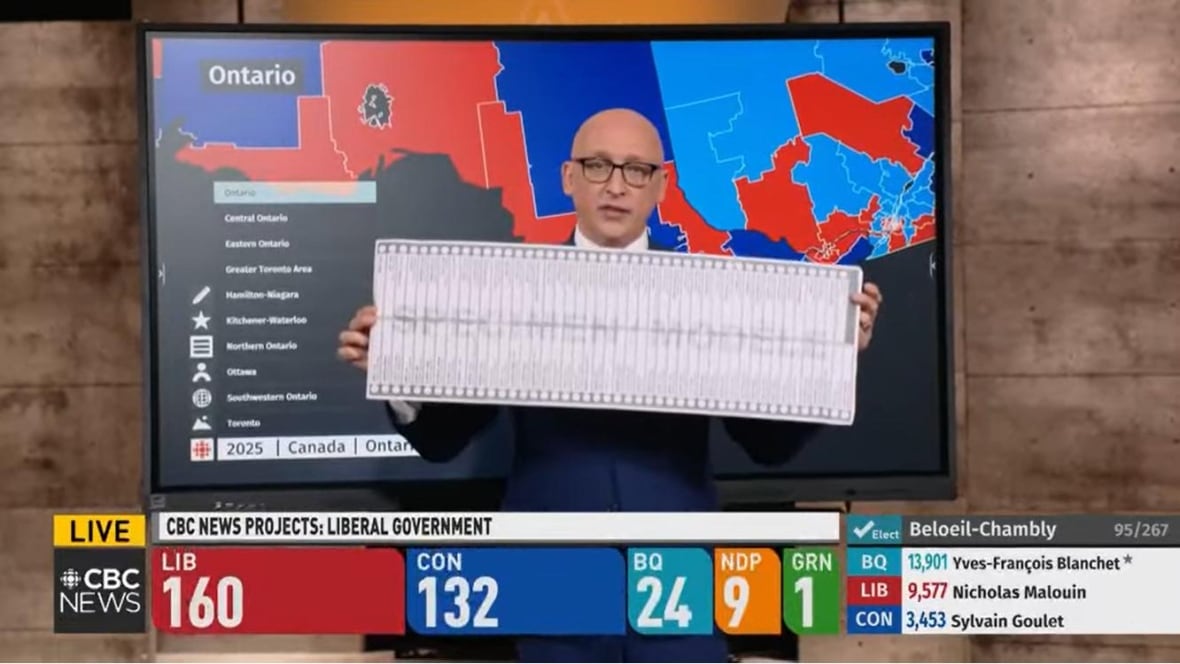
Power & Politics host David Cochrane shows a replica of the ballot for the Ottawa-area riding of Carleton, which lists 91 candidates. (CBC) Poilievre's riding of Carleton in the Ottawa area received special dispensation from Elections Canada to begin counting ballots early tonight because of its 91 candidates.
CBC Power & Politics host David Cochrane presented a replica of one of the printed ballots on CBC’s election special.
“Just look at the sheer girth of this thing,” Cochrane said, while holding it unfolded with outstretched arms.
As we mentioned earlier this afternoon, most of the candidates are linked to a protest movement called the Longest Ballot that has been targeting that riding for more than two decades, as a way to call for electoral reform in Canada.
It'll take some time to count those votes, but early results showed Liberal Bruce Fanjoy with a narrow lead. That could change throughout the night, but the race has been tighter than Conservatives may have liked.
Share - Holly Cabrera
Some uplifted spirits at the Bloc HQ
Clusters of Bloc supporters at Le National in Montreal erupted into cheers at the sight of the announcement that candidate Caroline Desbiens was projected to win in Montmorency-Charlevoix.
The last time the crowd chanted so passionately tonight was when the projected election of Alexis Deschênes, candidate in Gaspésie-Îles-de-la-Madeleine-Listuguj, was announced.
Deschênes, who was competing against the Liberals’ Diane Lebouthillier, said he still hasn’t processed the expected win.
“Our riding is as big as a country,” Deschênes said in an interview, adding that voters he spoke to who were initially undecided told him they were torn between voting for the Liberals or the Bloc.
It’s been a trying evening so far for Bloc supporters, with many of the early results showing ridings in the province turning red.
The volume at Bloc headquarters dropped the moment Radio-Canada anchor Patrice Roy announced the Liberals are projected to form government.
Share - Jenna Benchetrit
Star Liberal candidate and Polytechnique survivor projected to win seat
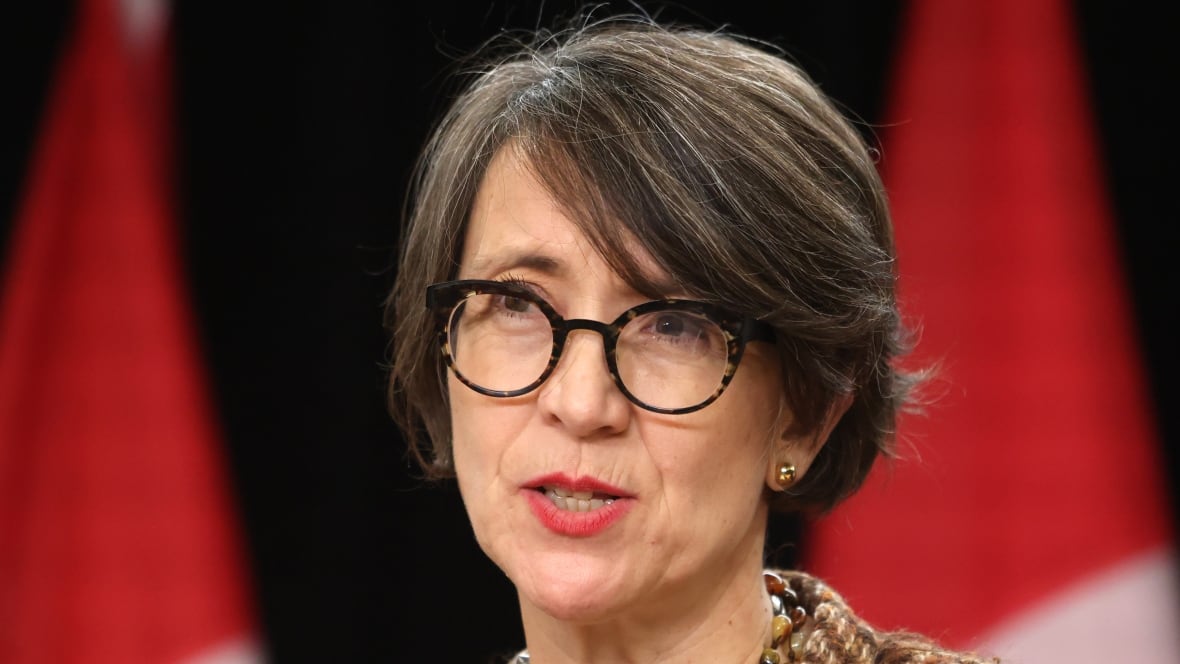
Provost speaks at a press conference in Ottawa in December 2024. (Patrick Doyle/The Canadian Press) Nathalie Provost, a star Liberal candidate whose name was caught at the centre of an early gaffe by Carney, is projected to win her seat in Quebec’s Châteauguay-Les Jardins-de-Napierville riding.
Provost is an engineer and gun control advocate who survived the 1989 massacre at Montreal’s École Polytechnique, when she and other female classmates were targeted by a gunman.
While campaigning in Quebec a few weeks ago, Carney referred to Provost as “Nathalie Pronovost,” and mistakenly said the shooting took place at Concordia University. She forgave the flub on her name, calling it a mistake.
Her pitch to voters leaned on her advocacy experience and Carney’s leadership.
Canada election: Liberals projected to form next government
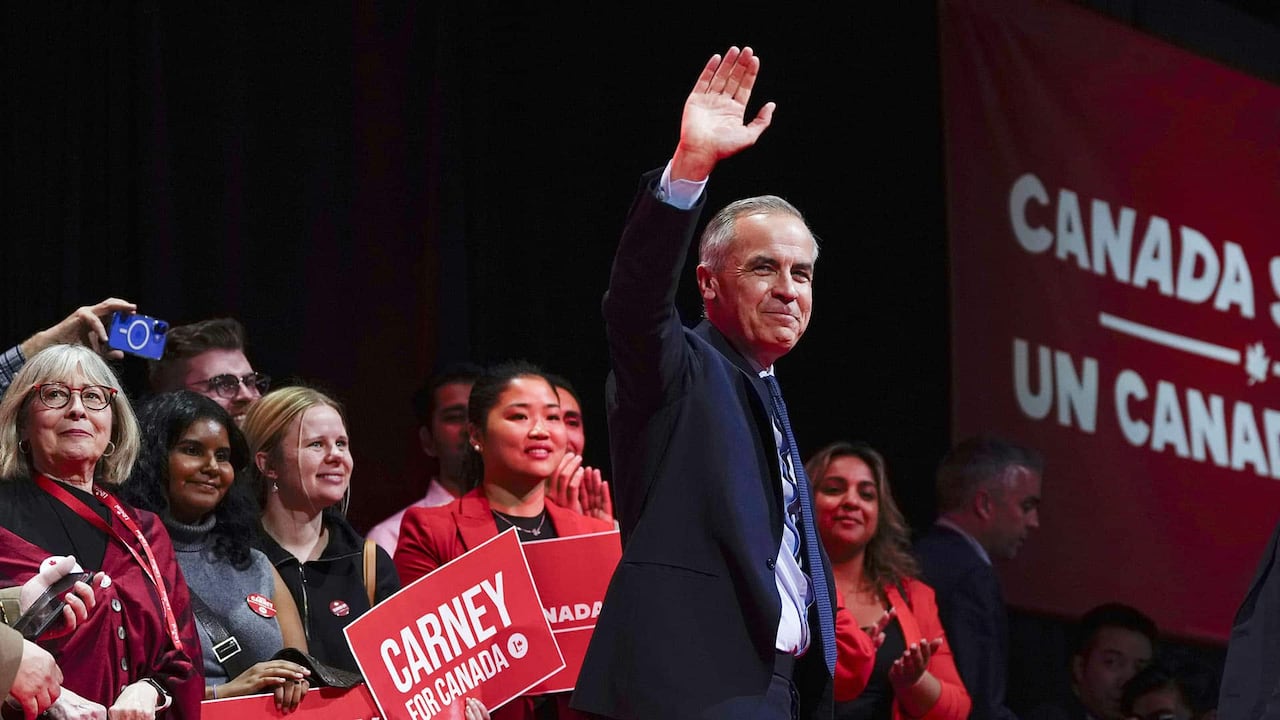
The Latest
Featured Media
Updates
April 29
RECAP | Everything that unfolded on Canada’s election night (and the day after)

The Latest
- The next Liberal government is projected to be another minority, which means Parliament will have to find a way to work together across party lines.
- It’s not the strong mandate the Liberals wanted, but it’s still a major reversal of political fortunes.
- Prime Minister Mark Carney spoke with U.S. President Donald Trump by phone after the win.
- Carney’s office said the leaders agreed to work together as “independent, sovereign nations,” while the White House made another 51st state comment earlier today.
- Conservative Leader Pierre Poilievre is projected to lose the Ontario seat he’s held for more than 20 years.
- The NDP will have to rebuild itself without Jagmeet Singh, who will be stepping down as leader after party support dropped to its lowest level since 1993.
Featured Media
Updates
April 29
- Rhianna Schmunk
Here's what comes next

Carney arrives at the Office of the Prime Minister and Privy Council this morning. (Justin Tang/The Canadian Press) Now that we're able to project that the next government will be a minority, here's how next steps might look.
Carney remains prime minister and doesn't need to be sworn in again. He will likely start assembling a new cabinet and developing plans to implement his main campaign promises, including a promised tax cut for the middle class and removing interprovincial trade barriers.
The Conservative Party will have to figure out how to move forward, with Poilievre as a leader with no seat of his own. The NDP are looking at a complete overhaul after dropping down to a single-digit seat count for the first time in more than 30 years, and their leader Singh losing his own seat.
We’re finishing our live updates for today. If you’re still looking for our riding-by-riding vote map, you can find that page at cbc.ca/results.
Share
Bruce Fanjoy, the Liberal MP-elect in the Ottawa-area riding of Carleton, joins Power & Politics to discuss what led to his projected victory over Conservative Leader Pierre Poilievre, who had long held the riding. Fanjoy says he ‘personally just felt that [Poilievre] needed to be challenged.’
The Liberals’ Bruce Fanjoy got more than 50 per cent of the vote in the Ottawa-area riding of Carleton — in which he was up against none other than Poilievre.
Poilievre had held the riding for more than 20 years, winning seven consecutive elections.
Speaking to Power & Politics host David Cochrane, Fanjoy said he worked in the riding for two years, "knocked on thousands of doors, [and] had thousands and thousands of conversations" with constituents there.
"And I got a good sense as to the mood of the riding," Fanjoy said. "In that time, Pierre was largely absent … and people felt taken for granted."
Poilievre is known to have been campaigning tirelessly across the country since he won the Conservative leadership in 2022.
While the Conservatives made big gains on election last night, including 12 new seats in Ontario, Conservative Leader Pierre Poilievre lost the vote in his Ottawa-area riding. Ontario Conservative MP-elect Scott Aitchison tells Power & Politics he doesn't believe Poilievre should step down despite the loss. Plus, we hear from David McLaughlin, former chief of staff to prime minister Brian Mulroney, and Peter MacKay, former deputy leader of the Conservatives, about the future of the party.
Some prominent Conservatives MPs have been talking about the next election last night and again today. Scott Aitchison, who represents Ontario’s Parry-Sound Muskoka, just said on CBC’s Power & Politics he doesn’t think another Liberal minority will last.
"It'd be wishful thinking if I said I hope it doesn't last much longer than two months, but I don't know how long it will last. Minority parliaments don't generally last that long … I think history has taught us we should be ready to go very quickly,” said Aitchison, who once ran for party leadership.
“I think that in a couple years, you could see that Pierre Poilievre is the next prime minister of Canada.”
Former party leader Andrew Scheer said something similar after he was re-elected in Saskatchewan’s Regina Qu’Appelle riding last night.
“There’s a very good chance we’re going to be doing this again very shortly,” he said, per Adam Hunter, our colleague in Regina.
CBC News projects Mark Carney's Liberals will form a minority government as Elections Canada finishes counting special ballots. The party won enough seats to lead the country but fell short of a decisive majority.
Carney’s Liberals are projected to form a minority government, winning enough seats to lead the country but falling short of a decisive majority.
Prime Minister Mark Carney briefly stopped to speak with reporters, mostly in French, as he walked up the steps to his office in Ottawa, the day after the federal election that's expected to return another Liberal government.
The prime minister briefly stopped to speak with reporters today. Asked when he’d speak to Donald Trump, and if he’d call a byelection so that Poilievre could run for a seat in Parliament, he was vague.
“We’ll see,” he said to both questions. On the second, he said that the results are still coming in.
As Carney walked up the steps to his office, a reporter asked how his night was.
“It was fun. Not a lot of sleep!”
B.C. Premier David Eby says he isn't interested in making a run for the leadership of the federal NDP. Jagmeet Singh announced he will step aside after projected results showed the New Democrats losing party status.
B.C. Premier David Eby congratulated Carney and outlined a few issues he hopes the prime minister will address, post-election.
Those include getting rid of Canada’s interprovincial trade barriers, which Eby called a “critical priority,” as well as supporting industries and workers impacted by the global trade war, and highlighting B.C.’s role in diversifying Canada’s economy.
Eby, who leads B.C.’s provincial NDP, said he does not have any interest in leading the federal party now that Singh has stepped down. Eby said he hopes whoever steps up is committed to rebuilding the party and bringing Canadians together.
“It was a tough night for our federal cousins. There’s no question about it,” he said.
“What I’m hearing from British Columbians is they are all in for Canada.”
Bloc Québécois Leader Yves-François Blanchet, speaking the day after a federal election that's expected to return another Liberal government, said if his party was to work with the Liberals he'd want to see Mark Carney's government refrain from being 'offensive' on key issues to Quebec including language, secularism, immigration and oil.
Asked about the issue of Quebec sovereignty during a period when Canadians are rallying around the flag and coming together in a show of national unity against Donald Trump’s threats, Blanchet had this to say:
“I believe what we need right now is a sort of truce on sovereignty, but not for any extended period of time,” the Bloc leader said in French.
Bloc Québécois Leader Yves-François Blanchet, speaking through a translator after Monday's election, says he thinks party leaders should meet, adding that he thinks voters expect a stable and responsible House during talks with the U.S.
Blanchet is speaking now in French. Calling it an “unusual election,” he said supporters should accept the Bloc’s performance with humility. The party’s projected seat count has, so far, dropped from 35 to 23.
“An election result, whatever it is, reminds us that it’s not up to us to make the decision,” the Bloc Québécois leader said.
“I think that the key word that the people of Quebec want to hear is stability,” he added, but not stability with compromises, which is “not in our nature.”
There’s already been some contact between federal leaders, Blanchet said. The results make it clear that voters want to see the federal parties form a kind of alliance in the name of bringing the country together, he added.
That means showing restraint in partisan commentary, he said. Blanchet is known for his sometimes incendiary approach to political rhetoric.
He reiterated his intention to stay on as leader and said he’d spend the next few days calling candidates who lost their ridings. “There are wounds that have to heal, and I will spend the next hours and days trying to heal.”
Jamil Jivani, the Conservative incumbent for Bowmanville-Oshawa North who is known for his friendship with U.S. Vice President JD Vance, is projected to win his seat. During an interview with CBC’s David Common, Jivani made some sharp remarks about Ontario Premier Doug Ford, saying that he’s 'not doing anything particularly well.'
Speaking to reporters this morning, Ontario Premier Doug Ford threw some cold water on the ongoing spat between provincial and federal conservatives.
“I’m focusing on unity right across this country. We have to bring this country together like we never have before,” he said.
On election night, Conservative MP Jamil Jivani had harsh words for Ford, saying he turned the provincial party into something “hollow.” It was the latest exchange in a very public feud between the federal Conservatives and Ford’s camp.
Ford brushed off Jivani’s comments. “I’m focused on whoever is going to help Ontario. That’s who I want to work with,” the Progressive Conservative premier said. “I don’t give two hoots about political stripes.”
He was also asked whether he’d consider running for leadership of the federal Conservatives. Ford said it’s up to Poilievre and the party to figure out their future, but was mum on his own aspirations. “I love my job. I have the best job in the entire world.”
CBC's Rosemary Barton, speaking in the 10 a.m. ET hour on Tuesday, breaks down what's happening in several close races, and explains why, with thousands of special ballots yet to be counted, those ridings have not yet been declared.
Hello, I’m an editor with the live page team. My colleagues at the CBC Decision Desk are watching 11 ridings in particular before making a call on a majority or minority government.
They are all ridings where the Liberals are currently in second place. Last night, they went from 163 projected seats to 168 as advance and special ballots were counted, in some cases making up several hundred or even 1,000-vote deficits — so these could flip. The Liberals need four of the following 11 ridings to do that.
Terrebonne in Quebec: It is the closest race in the country right now, where the Bloc is leading the Liberals by 28 votes. Two polls are left to report, which could be 880 votes.
Nunavut: There is a 54-vote margin with at least 647 votes to come.
Vancouver Kingsway: The NDP's Don Davies is leading the Liberals by 308 votes.
Windsor-Tecumseh-Lakeshore (Ontario): The Liberals are trailing by 359 votes and we are expecting at least 3,500 special ballots there.
Miramichi Grand Lake (New Brunswick): There is a 394-vote margin here. One of the two special ballot polls has reported, where at least 2,700 special ballots were cast.
Milton East Halton Hills South (Ontario): Former Ontario Progressive Conservative cabinet minister Parm Gill is leading the Liberal candidate by 556 votes. Again, one of the two special ballot polls reported and at least 2,800 special ballots were cast.
Shefford (Quebec): Here, there is a 651-vote margin for the Bloc. The Liberals were in the lead for part of last night. Again, one of the two special ballot polls reported and there were at least 1,800 special ballots cast.
Cloverdale Langley City (B.C.): This is a large margin, at 923 votes. But neither of the special polls have reported and there are at least 5,500 votes in those polls.
Kitchener South Hespeler (Ontario): Conservatives are leading the Liberals by a little more than 1,100 votes with one of the special polls having reported — and 3,000 special ballots were cast.
Pitt Meadows-Maple Ridge (B.C.): Right now the Liberals are trailing by 1,400 votes, but they were trailing by 2,500 votes last night and there are still eight polls yet to report.
Hamilton East Stoney Creek (Ontario): The incumbent Liberal is trailing right now by 1,500 votes. At one point last night, the Liberals were trailing by 3,000 votes. They've now cut that in half, and there are still six polls left to report, including a minimum of 4,800 special ballots.
The Liberals also need to hold the two races where they have a close lead — Kelowna and Terra Nova The Peninsulas, in Newfoundland and Labrador.
Bruce Fanjoy, MP-elect for the Ottawa-area riding of Carleton, says he wasn't surprised by his win over Conservative Party Leader Pierre Poilievre, saying he and his team have been working on the ground for two years for this result.
Bruce Fanjoy, the Liberal challenger who — in a major upset — unseated Poilievre in Ottawa’s Carleton riding last night, said he wasn’t surprised by his win.
Fanjoy said he spoke to thousands of Carleton residents over two years and knew the Liberals “had a great deal of support,” adding that Donald Trump and his tariffs became a sticking point for those voters.
“The people of Carleton were looking for serious leadership,” he said, arguing that voters felt Carney and the Liberals were the best qualified to deal with those issues.
Fanjoy added that he doesn’t think the longest ballot protest in his riding impacted the outcome of the vote, though he said he was disappointed for people who may have been “disenfranchised” by it.
As for defeating the Conservative leader, who was a longtime popular MP, Fanjoy said he “never saw this through the lens of being a giant killer.”
“I recognized that history had an appointment with Carleton many years ago and I wanted to stand up and provide a positive alternative to Pierre Poilievre, because I think that it was very important that we don’t import divisive American-style politics to Canada,” Fanjoy said, echoing a Liberal talking point about the Conservative leader.
White House press secretary Karoline Leavitt didn't provide any details on what, precisely, will be in the executive order about auto tariffs that U.S. President Donald Trump is expected to sign later Tuesday.
Good morning, I’m a producer based in Toronto and I’ll be curating your live page updates this morning.
In news south of the border, White House press secretary Karoline Leavitt says Donald Trump will sign an executive order on auto tariffs later today. Leavitt didn’t provide any details about what the order might include.
Trump’s repeated threats aimed at the Canadian auto sector were a major theme on the campaign trail.
The CBC Decision Desk is a critical component to election night coverage — but how does it actually work? CBC’s Julia Knope went behind the scenes to find out.
Good morning, Canada! I'm Jenna, a senior writer based in Toronto.
CBC's Decision Desk — a group of journalists who specialize in projecting election results — is back to work this morning to make the remaining calls on ridings where vote counting was paused by Elections Canada overnight.
Some of these stragglers could move the overall seat count, so the Decision Desk hasn't yet called a minority or majority government. We'll let you know as soon as they do.
RECAP | Everything that unfolded on Canada’s election night (and the day after)
Liberals will form minority government, CBC News projectsThe Latest
- The next Liberal government is projected to be another minority, which means Parliament will have to find a way to work together across party lines.
- It’s not the strong mandate the Liberals wanted, but it’s still a major reversal of political fortunes.
- Prime Minister Mark Carney spoke with U.S. President Donald Trump by phone after the win.
- Carney’s office said the leaders agreed to work together as “independent, sovereign nations,” while the White House made another 51st state comment earlier today.
- Conservative Leader Pierre Poilievre is projected to lose the Ontario seat he’s held for more than 20 years.
- The NDP will have to rebuild itself without Jagmeet Singh, who will be stepping down as leader after party support dropped to its lowest level since 1993.
Updates
April 29
Here's what comes next
Now that we're able to project that the next government will be a minority, here's how next steps might look.
Carney remains prime minister and doesn't need to be sworn in again. He will likely start assembling a new cabinet and developing plans to implement his main campaign promises, including a promised tax cut for the middle class and removing interprovincial trade barriers.
The Conservative Party will have to figure out how to move forward, with Poilievre as a leader with no seat of his own. The NDP are looking at a complete overhaul after dropping down to a single-digit seat count for the first time in more than 30 years, and their leader Singh losing his own seat.
We’re finishing our live updates for today. If you’re still looking for our riding-by-riding vote map, you can find that page at cbc.ca/results.
Pitt Meadows-Maple Ridge is the 343rd election call

Nearly 24 hours after the first polls in the country closed, CBC’s Decision Desk is making its final results call from the very last riding.
Conservative Marc Dalton is projected to win with 47 per cent of the vote in B.C. riding Pitt Meadows-Maple Ridge over the Liberals' Angie Rowel, who came in second with 45 per cent.
Poilievre grew Conservative movement, should stay on as leader: commentator

In his speech last night, Poilievre highlighted Conservative wins from the election, then strongly implied he'd stay on as leader of the party.
But losing his seat in the House of Commons has raised questions about whether he'd change his mind — or whether the party would push him out.
Kate Harrison, a conservative panellist on Power & Politics and the vice chair of PR company Summa Strategies, said it’s “not the right call” for the Conservatives to hold a leadership race in the midst of a Liberal minority government.
Though Poilievre losing his seat has cast a "dark, stormy cloud," the Conservatives this election grew their proportion of the popular vote, and made inroads in Ontario with 44 per cent of the vote there.
Poilievre helped create "the new Conservative voting coalition in this country," which includes blue-collar workers and young people, Harrison said.
"I think he's right to stay at the helm and I suspect the caucus will be unified around that.”
Liberal MP-elect says he knew beating Poilievre ‘was possible’

Liberal MP-elect says he knew defeating Poilievre in Carleton ‘was possible for a long time’


Carney was put on the spot during the campaign last week when Radio-Canada revealed Trump had in fact mentioned his 51st state idea during their March 28 phone call.
The prime minister had said after the call that Trump respected Canadian sovereignty, leading many to assume the president hadn't threatened to annex Canada in that conversation.
Carney defended his depiction of the call, saying Trump had addressed him as an equal and hadn't made jokes about him being a state "governor" as he'd done with former prime minister Justin Trudeau.
During that call, Trump and Carney made plans for a renegotiation of the Canada-U.S.-Mexico Agreement on trade (CUSMA) between the prime minister — whoever it would happen to be after the election — and the president.
Carney and Trump spoke on the phone

A statement from the prime minister’s office said the U.S. president congratulated Carney and that the two leaders agreed they look forward to working together as “independent, sovereign nations.”
That contradicts a statement the White House issued earlier today. Spokesperson Anna Kelly said the election result "does not affect President Trump's plan to make Canada America's cherished 51st state.”
The Canadian statement said the two leaders agreed to meet in person “in the near future.”
Trump softening auto tariffs blow

After auto tariffs were a central part of the Canadian federal election campaign, Trump is signing an executive order today to soften the blow of some of his 25 per cent tariffs on autos and auto parts, according to Reuters.
The changes will provide auto companies with credits for up to 15 per cent of the value of vehicles assembled domestically. These could be applied against the value of imported parts, allowing time to bring supply chains back home, a senior administration official said.
Autos and parts subject to those tariffs would no longer be subject to Trump's other tariffs, including 25 per cent duties on Canadian and Mexican goods (which are on, but don't apply to Canada-U.S.-Mexico Agreement-compliant goods), 25 per cent levies on steel and aluminum, as well as 10 per cent duties applied to most other countries.
The change also extends a duty-free exemption for North American parts that comply with the U.S. rules of origin.
A tough day for the NDP

Heather McPherson may be hot on the heels of victory, but she's still having a really rough day.
The NDP candidate held onto her seat in Edmonton Strathcona, making her the lone New Democrat elected in Alberta. But she says her success feels bittersweet as her party crumbles around her.
"It's very hard today," McPherson told host As It Happens host Nil Köksal. “I'm grieving the loss of some really remarkable members of Parliament."
McPherson blamed her party’s losses on strategic voting, the first-past-the-post electoral system, and an election she says centred on fear of U.S. President Donald Trump. She issued dire warnings about the country sliding towards an "American-style two-party system" that breeds division.
“In the long run, I think that New Democrats will come back. We always do. We'll keep fighting,” she said. “You don't become a New Democrat in Alberta because you wanted the easy way.”
Asked if she would seek her party’s leadership when Singh steps down, she said it’s “too early to tell.”
“I think that history will remember Jagmeet Singh as bringing forward the biggest expansion of our health-care system in a generation," she said, referring to him as her mentor. "I am so proud of what he was able to achieve."
The best voter turnout since 2015

Elections Canada is estimating the voter turnout in this election to be over 67 per cent of the eligible voter population. At 19.2 million ballots cast, that number is the best it's been since 2015.
There were also a record number of advance polls, at 7.3 million, as we've previously reported.
According to The Canadian Press, the record for voter turnout in Canada was set in March 1958, when 79.4 per cent of eligible electors — 7,357,139 people — voted.
The last federal election, in 2021, saw 62.6 per cent of eligible voters head to the polls.
With votes still being counted, voter turnout still has some room to climb.
2 tight Liberal wins will go to a recount
We've got two automatic judicial recounts so far.
The result in Terra Nova-The Peninsulas in Newfoundland and Labrador has just been called with a win for Liberal candidate Anthony Germain, who won by just 12 votes.
As Jenna said, Terrebonne in Quebec — won by 24-year-old Liberal Tatiana Auguste by 35 votes — will also be recounted.
Automatic recounts occur when the vote difference between top candidates is 0.1 per cent or less.
Ontario is where Carney’s bid for a majority government fell short

His Liberals lost a string of ridings in parts of the Greater Toronto Area that they had held for the past three straight elections.
In fact, you could pinpoint the Liberal shortfall to its very epicentre: York Region, the suburban cities immediately north of Toronto.
This is where the Conservatives flipped five previously red seats blue: Vaughan-Woodbridge, Markham-Unionville, Richmond Hill South, Aurora-Oak Ridges-Richmond Hill and Newmarket-Aurora.
Elsewhere in Ontario, Liberal incumbents were defeated in ridings with significant working-class populations, including Hamilton East-Stoney Creek, Windsor-Tecumseh-Lakeshore, and Sudbury East-Manitoulin-Nickel Belt. The results suggest Poilievre successfully improved his party’s appeal to union members and trades workers.
A big win, but challenges lie ahead

There’s no question that the Liberal minority win marks a remarkable comeback for a party that polls suggested was facing political annihilation just months ago.
These results show that even though Carney’s pitch that he’s the best candidate to deal with Trump broke through, there were plenty of voters who didn’t feel comfortable handing the Liberals a majority.
Poilievre’s closing campaign argument was that the Liberals couldn’t be trusted with another mandate, while the NDP and Bloc made the case that checks and balances were critical for whichever party formed government. It seems those arguments made an impression, after the Liberals’ lead over the Conservatives narrowed in the final days of the race.
The question now: will the Liberals be able to govern? As mentioned, they’re going to need support from other parties to move ahead with an agenda, and beyond a trade deal with the U.S., there is a host of pressing domestic issues that need attention.
CBC’s chief political correspondent Rosemary Barton said the minority result is a clear message from voters that this Parliament will have to work together and that Carney will have to figure out how to manage a sizable Conservative caucus that may not want to cooperate with his party.
A quick primer on minority governments

In Canada, a federal party needs to win at least half the seats in Parliament (172 of 343) to form a majority government. Majority governments are a powerful mandate that allow the ruling party to push through legislation, for example, without the need for votes from other parties’ MPs.
Minority governments happen when no party wins the majority of seats. The party that won the most seats typically forms government, but needs support from opposition members of Parliament to move their agenda forward. In the last Parliament, for example, Singh’s NDP propped up Justin Trudeau’s Liberals.
This projection means Carney will need to figure out how to manage a minority Parliament.
Liberals projected to form minority government
Liberals will form minority government, CBC News projects
How do recounts work?

Many ridings were too close to call last night and finished with tight margins between candidates. That could result in recounts and delays in knowing who won in those ridings for days.
Contested or unclear election results can lead to recounts. According to the Canada Elections Act, there are three main ways results can be reviewed:
Automatic recounts occur when the vote difference between top candidates is 0.1 per cent or less. Elections Canada requests a judge to oversee the recount within four days.
A candidate may request a recount, even when the margin isn’t that close. But they have to request it within four days of validated results, file an affidavit alleging an error, and pay a $250 deposit. If approved by a judge, the recount starts within four days.
Both of those types are called judicial recounts and can only begin after official results are validated (which can take up to a week). Judges may count all ballots, just valid ones, or check a sample.
Contested results are more serious and rare. They involve claims of fraud, corruption, or candidate ineligibility. Anyone in the riding can file a challenge within 30 days ofallegedly discovering wrongdoing and the official results being published. A $1,000 deposit is required, and the case goes to Federal Court or a provincial superior court. These cases can take days or weeks.
Lone Conservative in N.S. says Poilievre shouldn't take someone else's seat
Ruth Davenport
In a day-after interview with CBC Radio’s As It Happens, the lone Conservative MP in Nova Scotia says the party failed to get its message out to voters in the province.
Chris d'Entremont is projected to win in Acadie-Annapolis while Liberal candidates are projected in the province's 10 remaining ridings.
D'Entremont said the cost of living issues touted by the Conservatives were important to voters in Nova Scotia but he felt the party could have responded more quickly with "better, easier messaging" when the trade war with the U.S. started to dominate the conversation.
"They were voting for change, I just don't think there was an agreement on what that change actually was," said d'Entremont.
He also noted that Poilievre didn't visit the province until the last week of the election, suggesting an earlier visit could have helped Nova Scotians understand the importance of the region for the party.
Although he said he'd like to see Poilievre stay on as leader, he added it wouldn't be fair to have him take another party member's seat to maintain his position.
Can Poilievre stay leader of the Official Opposition after losing his seat? And will he have to move?

With the Conservative leader projected to lose his seat in Carleton, it presents some logistical challenges.
To get a seat in the House of Commons, Poilievre would need one of his MPs to step down so he could run in a byelection. But in the meantime, constitutional lawyer Lyle Skinner points out on X that the job of being leader of the Official Opposition is a parliamentary office, for which you need to be a sitting member. It’s spelled out in the House of Commons Procedure and Practice.
So until then, Poilievre may have to appoint an interim replacement. My colleague Aaron Wherry points out that there is precedent for this.
Jean Chrétien and Brian Mulroney, when they won their respective party leaderships, didn’t have seats in the House of Commons. Both parties had acting leaders of the opposition (Herb Gray for the Liberals in 1990, Erik Nielsen for the Progressive Conservatives in 1983) until they became MPs.
There’s also the matter of housing. Poilievre and his family live at Stornoway, but you need to be the recognized leader of the Official Opposition to live there, according to the Official Residences Act.
However, the interim opposition leader presumably wouldn’t tell Poilievre to pack his bags once they take the job.
Terrebonne flips to Liberals
CBC’s Decision Desk is projecting that Liberal candidate Tatiana Auguste will be elected in the Quebec riding of Terrebonne, bringing the party’s projected seat count to 169. But it will go to a recount because the margin — 35 votes — is very small.
The incumbent is Bloc MP Nathalie Sinclair-Desgagné.
Legault says Carney has impressed him in their meetings
I’m Matt Lapierre reporting from Montreal.
Quebec Premier François Legault struck an optimistic tone today after Carney’s Liberals won at least 42 seats in Quebec, the party’s strongest showing in the province in decades.
Legault stressed that the federal and provincial governments need to work together in coming trade negotiations with the United States.
“We need to work hard, Ottawa and Quebec, to protect businesses, to protect jobs, and I’m happy also that during the campaign, Carney promised not to compromise on Quebec’s interests,” he said.
Legault said he was happy that Canada had a prime minister with an economic background, saying Carney — a former governor of both the Bank of Canada and the Bank of England — had impressed him in their encounters. He said they shared a desire to invest in the development of clean energy, critical minerals and artificial intelligence.
The ball is in your court, Sask. premier says to Carney

Saskatchewan Premier Scott Moe is speaking in Regina, where he had a message for the prime minister.
“While you had very strong support in some parts of Canada, there are many Canadians — including most of us in Saskatchewan — who voted for a degree of change,” said Moe.
“Now, it’s up to you to show that you have heard that message and to deliver change.”
Moe, who supported Poilievre in the federal race, said it was “great to hear” Carney say last night that he wants to work with Saskatchewan and Alberta, and turn Canada into a global energy superpower.
“But those are nothing but words,” he added. Some federal policies “are simply going to need to change in order to achieve that goal.”
Like other Canadian leaders, Moe ultimately stressed unity. “What does Saskatchewan bring to the table? A willingness to work with the federal government.”
First order of business? A call with the French president
Carney spoke today with French President Emmanuel Macron, who called it an “excellent discussion.”
“I congratulated him on his election, and we reviewed the joint projects between Canada and France, as well as the challenges ahead of the G7 Summit in Kananaskis this June,” Macron wrote on social media.
Other world leaders have also congratulated Carney, including European Commission President Ursula von der Leyen, British Prime Minister Keir Starmer, Ukrainian President Volodymyr Zelenskyy, Indian Prime Minister Narendra Modi, and former U.S. president Joe Biden.
A split household in Napanee, Ont.

Hi, I’m Evan Mitsui, a photojournalist with CBC.
Gayle Furr, 65 and Robin Lee Alkenbrack, 63, are a semi-retired couple in Napanee, Ont. We connected on a story about food insecurity and have stayed in touch. They’re a split household when it comes to politics — Robin trending Conservative and Gayle NDP/Liberal — and, when we spoke on Sunday on my drive to Ottawa, they predicted the outcome we are seeing play out today.
The incumbent in their riding, Conservative Shelby Kramp-Newman, is projected to win for the third time. Robin (who has voted Conservative his whole life save for that one time he sided with Bob Rae) voted early and for Kramp-Newman.
Gayle, who likes Kramp-Newman and had a lengthy chat with her in their living room, voted for Liberal Tracey Sweeney Schenk because she couldn’t get behind Poilievre. Both Gayle and Robin agree that the Conservative leader, who is projected to lose his seat, needs to step aside so the party can return to a more centrist place under new leadership.
The couple have medical bills and, after groceries and gas, have to supplement their pension and disability earnings by driving a cab and doing clerical work. They heat with propane and have a septic system — and they cite the carbon tax as the single biggest worry they have heading into this fourth Liberal government.
“If [the carbon tax] comes back in any form,” Gayle said, they’re in trouble. They both agree that Trump, and how the Carney government handles the trade war, will be the defining issue of these initial days.
Carney on his way to work

Carney arrives at the Office of the Prime Minister and Privy Council
‘A tough night for our federal cousins’

B.C. premier rules out run for federal NDP leader
Blue wall beats back red wave in Sask.

There is one lone Liberal from Saskatchewan heading to Ottawa, with Buckley Belanger projected to win the large northern riding Desnethé-Missinippi-Churchill River, my colleague Jeremy Warren is reporting.
Conservatives won the 13 other ridings without much competition. The NDP ran third in every riding in what was a “really bad night” for the party, said Daniel Westlake, an assistant professor of political studies at the University of Saskatchewan.
Outside of the cities and the northern riding, Conservatives won handily in most other constituencies. Conservative candidates won by more than 75 per cent in five ridings, including Souris-Moose Mountain, which had the largest margin of victory in the province at 83.9 per cent, as of this morning.
Strategic voting was a hot topic this election. It factored into the final results nationally, if not making much of an impact in Saskatchewan — though it likely contributed to the collapse of the NDP vote in some ridings in the province, Westlake said.
"Some of that was strategic voting, some of that was about who was going to deal better with Donald Trump," he said. "It was very clear that the NDP were not going to be elected and so the answer to that question was not Jagmeet Singh."
Conservatives made gains in some new areas
Poilievre led the party to gains in areas where the party has struggled in recent federal elections. Notably, the Liberals pulled in roughly 49 per cent of the vote counted so far compared to about 45 per cent for the Conservatives — big improvements for both parties after the NDP vote collapsed.
As Mike Crawley noted earlier, the Conservatives picked up seats in Toronto's suburban 905 region. Party sources say Poilievre's tough-on-crime message had a particular appeal in areas where violent crimes and property crimes have been a major concern.
Poilievre's effort to court blue-collar workers, particularly those in private sector unions, also paid off with a strong Conservative showing in industrial areas like Ontario's Niagara region and southwestern Ontario locales like London and Windsor.
The party outperformed in some areas of Atlantic Canada, picking up a seat in Newfoundland and Labrador, and benefited from progressive vote splits in B.C.
Poilievre also held off a meaningful Liberal breakthrough in urban Alberta and Saskatchewan, although Carney, the party's first western leader in a generation, delivered relatively respectable results in the West — particularly in B.C.'s Lower Mainland.
But Poilievre lost his own Ottawa-area seat of Carleton — a shocking result given he's held that riding for more than 20 years through successive political waves. It's that loss in particular that makes his future so uncertain. He has huge party support but he will have to prosecute the Liberals from outside the House of Commons, at least for now.
Poilievre’s future uncertain

Good morning! I'm a senior reporter in the CBC Parliamentary Bureau who has been covering the Conservatives throughout this campaign.
Poilievre delivered mixed results for his party in Monday's election, boosting the Conservative vote share to a generational high with breakthroughs among new voting blocs, while at the same time failing to unseat Carney and the Liberals from government — and losing his own seat.
Poilievre vowed to stay on as party leader despite the disappointing final result, telling his supporters in his election speech that he needs more time to drive a stake through the Liberals once and for all.
But some Conservatives tell me Poilievre's future is yet to be determined, given the Liberals will live on to see another day and victory slipped through his hands.
"This is a big loss to a tired government that's been in power for 10 years," said one senior Conservative source who worked for Poilievre in the past.
"The guy couldn't do what needed to be done. He utterly refused to acknowledge that the ballot box question had changed to the bitter end," the source said, referencing the U.S. trade war.
Expect full results by afternoon
Elections Canada says it expects to have all the results in by this afternoon.
It’s still too soon for CBC’s Decision Desk to project whether the Liberals will form a minority or majority government.
‘A truce on sovereignty’

Blanchet asked how he would approach a Liberal government
People of Quebec want ‘stability,’ says Blanchet

Blanchet calls for collaboration between parties during negotiations with U.S.
What happens if a party leader loses their own riding?

With CBC News projecting that Poilievre has lost his seat in Carleton, usually, party leaders who don’t manage to win their own seats face pressure to step down. But it is possible to lead a party without a place in the House of Commons.
Former prime minister Stephen Harper did not have a seat when he won the leadership of the Canadian Alliance party in 2002. Jean Chrétien was also seatless when he won the Liberal leadership in 1990. Both men went on to win seats in byelections.
And of course, Mark Carney also didn’t have a seat when he won the Liberal leadership and became prime minister, and he is projected to win in his Nepean riding now.
In his speech last night, Poilievre suggested he intends to stay on. But we don’t know yet what he has planned seat-wise.
Liberal surge in east Winnipeg seals Conservative win

A rookie NDP MP defeated in Monday’s election said vote-splitting likely contributed to her loss.
Leila Dance, who represented Elmwood-Transcona in east Winnipeg, was elected to office in last year’s byelection, thanks in part to the Liberals receiving just five per cent support.
But this time around, Liberal Ian MacIntyre got the backing of around 22 per cent of voters, creating an opening for Conservative Colin Reynolds.
“Strategic voting, it doesn’t always work for everybody. It has changed this and probably realistically did cost me this election,” Dance told reporters.
The media wasn’t allowed inside Reynolds’s victory party to hear his speech.
He has refused all interview requests, dating back to the byelection.
Conservatives make crucial inroads in the 905
I’m a senior reporter covering politics in Ontario. The party that won the most seats in this province has won every federal election but one over the past 50 years, and that trend continues. As I write, the Liberals are elected or leading in 69 Ontario ridings and the Conservatives in 53. (Those numbers could shift, as 13 ridings in the province remain too close to call.)
Those Ontario numbers really tell the story of this election nationally: the Liberals not taking enough seats to make their victory resounding; the Conservatives making gains but not enough to win; and the NDP losing all five seats it previously held.
The conventional wisdom in Canadian elections is that the path to victory goes through the 905 — the suburban cities surrounding Toronto. It’s been dominated by the Liberals for the past three elections. This time, the Conservatives flipped six previously red seats to blue.
Ford criticized how the Poilievre campaign was being run. From the seat count, he could make an argument he was right. On the other hand, the Conservatives pulled 44.5 per cent of the vote in Ontario. Just two months ago in the provincial election, Ford’s Progressive Conservatives won a majority with 43 per cent.
You can read more about how the election is unfolding in the 905 region here.
Ford brushes off Conservative MP’s insults

Jamil Jivani slams Doug Ford during fiery interview
Why it’s too close to call

Canada Votes: What's happening in several close ridings Tuesday morning?
‘History had an appointment with Carleton’

Fanjoy credits volunteers who 'worked their behinds off' for upset win over Poilievre
More auto tariff news coming today

Trump to sign executive order around auto tariffs, White House says
Where things stand
As of 10 a.m. ET, here's where the projected seat count stands:
- Liberals: 168.
- Conservatives: 144.
- Bloc Québécois: 23.
- NDP: 7.
- Green Party: 1.
The threshold for a majority government is 172 seats.
Restarting our engines

No comments:
Post a Comment