Government tables legislation targeting hate symbols, protecting places of worship
Bill to add 4 new Criminal Code offences

Justice Minister Sean Fraser tabled new legislation Friday introducing four Criminal Code offences, including one that would make it a crime to intentionally promote hatred against identifiable groups in public using certain hate- or terrorism-related symbols.
If passed, the Combatting Hate Act would target symbols used during the Holocaust, such as the swastika and SS lightning bolts, or associated with the government's list of terrorist entities, which includes the Proud Boys, Hamas and Iran's Islamic Revolutionary Guard Corps.
It would, for instance, make it a crime to promote hatred against Jewish people using Hamas flags or swastika signs outside a synagogue.
It would also make hate-motivated crime a specific offence and crack down on willfully intimidating and obstructing people outside places of worship and other sensitive institutions.
Multiple Canadian municipalities are currently grappling with the issue through the use of "bubble" bylaws that allow for buffer zones around certain locations, and Fraser stressed that the authority for regulating spaces "in general terms" falls with local councils — not the federal government.
The legislation also adds two further measures that would make it easier to prosecute individuals found to have wilfully promoted hatred: adding a definition of "hatred" to the Criminal Code; and removing a requirement for the consent of the provincial attorney general to prosecute a hate crime.
"This behaviour is not just morally culpable, the impact has reverberations through the entirety of the community. And, I would argue, tears at the seams of the social fabric of the nation," Fraser said in a Friday afternoon news conference.
The government had promised to address a recent rise in hate incidents in Canada, including acts of antisemitism and Islamophobia.
The total number of police-reported hate crimes across the country increased to 4,882 incidents last year, up from 2,646 in 2020, according to Statistics Canada.
The Conservatives, who have hammered the Liberals on crime early in the fall parliamentary sitting, have criticized the government for taking too long to act on the issue.
Likewise, Jewish and Muslim groups say a federal response to acts of violence, vandalism and hate is long overdue.
Concerns over the right to protest
Now that the government's response has been tabled, some organizations are raising concerns over whether the bill could be used to infringe on the right to peaceful protest.
The Canadian Civil Liberties Association (CCLA) takes issue with the use of the Criminal Code, referring to it as a "blunt instrument" that may not be best suited to addressing the goal of protecting identifiable groups.
Fraser said the bill includes specific language exempting peaceful protest from persecution and would only apply to conduct where the "motivation" is to intimidate or prevent someone from practising their faith.
"We have included specific provisions to exempt peaceful protest," Fraser said.
Stephen Brown, CEO of the National Council of Canadian Muslims, said he is broadly supportive of the legislation.
He said it addresses long-standing requests from the Muslim community, such as the specific "free-standing" provision for hate crimes, but added that success moving forward will hinge on whether the bill can protect minority groups while preserving civil liberties.
"Finding the right balance is what's important," Brown said.
The council does, however, have lingering concerns over how the law will be applied and whether law enforcement will properly distinguish between what does and does not count as a hate symbol.
The law as currently written explicitly targets symbols used by Nazis and listed terrorist entities, but also covers anything that "so nearly resembles" those symbols it could be confused for one of them.
Fraser said that language helps to "protect against counterfeits."
Richard Marceau, vice-president of external affairs with the Centre for Israel and Jewish Affairs, said he would have liked to see hate symbols banned outright, rather than merely when they are used to promote hate in public.
Marceau nonetheless called the bill a "step in the right direction," following two years in which Jewish community centres, schools and synagogues have been "under siege."
"Having this [legislation] is an important message that this will not stand."
"The Canadian Civil Liberties Association (CCLA) takes issue with the use of the Criminal Code, referring to it as a "blunt instrument" that may not be best suited to addressing the goal of protecting identifiable groups.
MONTREAL — The Canadian Civil Liberties Association (CCLA) denounces Quebec’s Bill 9, tabled today, as yet another assault on religious freedoms, equality, and basic human dignity.
In a clear and alarming infringement of freedom of religion, expression, peaceful assembly and equality, this sweeping piece of legislation almost completely prohibits collective religious practice in public.
“State secularism means the separation of religion from government institutions and the neutrality of the state towards religions,” said Anaïs Bussieres McNicoll, Director of the Fundamental Freedoms Program at the CCLA. “This does not give the government license to suppress manifestations of religion in public spaces.”
“Public spaces belong to everyone,” continued Bussières McNicoll. “The freedom to express one’s thoughts, opinions and beliefs in public, including through prayer, is a cornerstone of any democratic society.”
Bill 9 also prohibits people from hindering or disturbing any religious practice taking place in a place of worship. This would undermine the democratic freedoms of all Quebecers.
“Prohibiting disturbances near places of worship directly infringe freedom of expression and freedom of peaceful assembly,” added Bussières McNicoll. “Protesters should not be fined for having participated in peaceful demonstrations in public spaces such as streets, just because they happened to cause disruption near places of worship.”
Bill 9 expands the existing ban on the wearing of religious symbols to daycare workers and to staff of subsidized private educational institutions. It also bans people from wearing religious face coverings while receiving educational services. This bill also restricts religious accommodations in the public sector.
“These harmful bans disproportionately target and marginalize religious and racialized minorities, especially Muslim women,” said Harini Sivalingam, Director of the Equality program at the CCLA. “Stripping people of their right to learn or to work because of their faith has no place in a democracy, ” Sivalingam continued. “Bill 9 will deprive generation of Quebecers from competent and passionate workers.”
“Bill 9 deepens the shameful legacy of exclusion set in motion by Bill 21 – legislation that we are currently challenging at the Supreme Court of Canada,” Sivalingam added. “We call on the Quebec government to abandon this divisive scheme immediately and to stop weaponizing a distorted view of secularism as a political tool.”
“Once again, the Quebec government is using the notwithstanding clauses in an attempt to prevent Quebecers from challenging a law that blatantly violates their fundamental rights,” said Howard Sapers, CCLA’s Executive Director. “If the Quebec government truly believes that its legislation is justified, it should have the courage to defend it before the courts. Instead, the government is bypassing the democratic dialogue with courts that is essential in a free and democratic society,” he concluded.
About the Canadian Civil Liberties Association
The CCLA is an independent, non-profit organization with supporters from across the country. Founded in 1964, the CCLA is a national human rights organization committed to defending the rights, dignity, safety, and freedoms of all people in Canada.
For the Media
For further comments, please contact us at media@ccla.org.
For Live Updates

Toronto, ON M4S 2Z2
(416) 363-0321
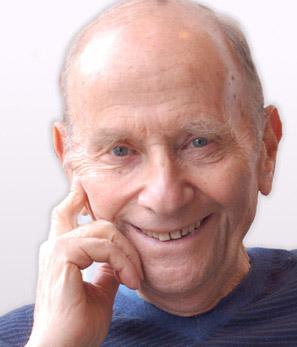
March 17, 1932 - May 11, 2015
A. Alan Borovoy
General Counsel, Emeritus
Alan Borovoy was General Counsel of the Canadian Civil Liberties Association from May, 1968 until June, 2009. Prior to coming to CCLA, Alan worked with other human rights and civil liberties organizations such as the National Committee for Human Rights of the Canadian Labour Congress, the Ontario Labour Committee for Human Rights, and the Toronto & District Labour Committee for Human Rights.
As General Counsel of CCLA, Alan made presentations to public inquiries and gave testimony before parliamentary committees on issues such as mandatory drug-testing in the workplace, wiretapping, and police race-relations. His community organizing activities included delegations to the federal and provincial governments on issues of capital punishment, religious education in the public schools, the War Measures Act, campus speech codes, and national security and intelligence.In addition to his work as General Counsel, Alan was a fortnightly columnist for the Toronto Star from 1992-1996. Other media work included appearances on many public affairs programs, and on open-line television and radio programs. He is published widely across Canada, and is the author of several books, including The New Anti-Liberals, Uncivil Obedience: The Tactics and Tales of a Democratic Agitator and When Freedoms Collide: The Case for Our Civil Liberties, which was nominated for the Governor General’s Award in 1988. His memoir, At the Barricades, was published in 2013.
Alan gave lectures and public addresses to students, human rights organizations, and policing agencies in Canada and abroad. He was a visiting professor at the faculties of law at Dalhousie University and the University of Windsor, and a part-time lecturer at the University of Toronto Faculty of Social Work and York University’s political science department. Alan received his B.A. from the University of Toronto in 1953, and his LL.B. from the University of Toronto in 1956. He was admitted to the Ontario Bar in 1958. He received four Honorary Doctor of Laws Degrees, the Law Society Medal from the Law Society of Upper Canada in 1989, an Award of Merit from the City of Toronto in 1982, and was inscribed in the Honour Roll of the aboriginal people of Treaty Number 3 in 1991. He was made an Officer of the Order of Canada in 1982. A. Alan Borovoy was actively involved in CCLA until his passing in May, 2015.
https://cfe.torontomu.ca/people/anais-bussieres-mcnicoll
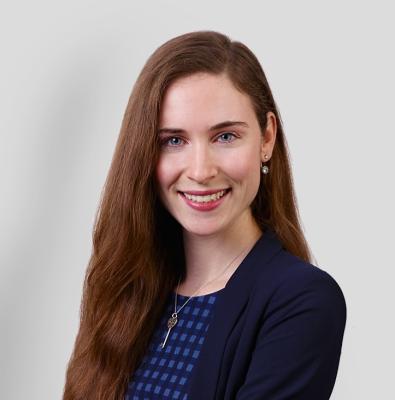
Anaïs Bussières McNicoll
Anaïs Bussières McNicoll is the director of the Fundamental Freedoms Program at the Canadian Civil Liberties Association (CCLA).
As part of her role at CCLA, Anaïs develops and manages strategic litigation in which the CCLA, as a party or intervener, endeavors to advance the law on fundamental freedoms, democratic rights and mobility rights. She also advocates for fundamental rights and freedoms in various forums, including parliamentary committees and the media. She is deeply involved in CCLA's opposition to the increasing use of the notwithstanding clause to override basic human rights. Anaïs believes that a society cannot be truly free and democratic without a transparent, accountable state that respects the rule of law and upholds Charter-protected rights. She is honored to dedicate her professional career to defending these principles.
Prior to joining the CCLA, Anaïs was a partner at a national law firm, where she practiced litigation, with a focus on public and constitutional law, as well as civil law. She was particularly sought after for her contributions to complex cases at the appellate stage, especially before the Supreme Court of Canada.
Anaïs was called to the Quebec Bar in 2015 after earning her law degree with honors from the University of Montreal. She then completed a two-year clerkship at the Quebec Court of Appeal.
https://cfe.torontomu.ca/people/tim-mcsorley
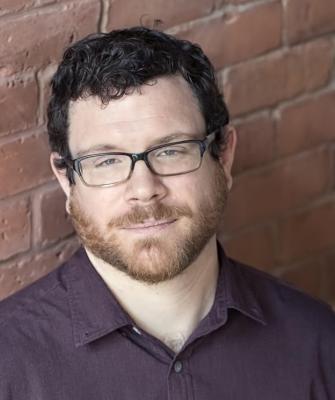
Tim McSorley
Tim McSorley is the National Coordinator of the International Civil Liberties Monitoring Group (ICLMG) coalition. His work focuses on advancing the coalition’s mandate to defend civil liberties in Canada from the impact of national security and anti-terrorism laws. This includes publishing research reports and policy briefs, engaging with the public, and advocating with lawmakers. Current priorities include transparency and accountability in national security activities; emerging forms of surveillance; religious, racial and political profiling; and rights concerns around the use of secret evidence. Tim holds a BA in Journalism and Political Science from Concordia University in Montreal, and is the former coordinator of both the Media Co-operative and the Voices-Voix Coalition. He currently resides in Ottawa.
Media Contacts
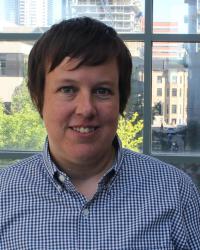
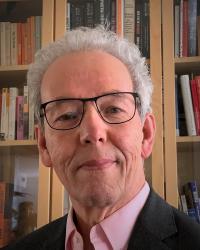

Richard Marceau
Richard is a former Member of Parliament, a lawyer, a published author, a human rights activist, and a person passionate about the Jewish story.
https://www.cija.ca/cija_responds_to_introduction_of_bill9_quebec
CIJA Responds to the Introduction of Bill 9, “Loi sur le renforcement de la laïcité au Québec”

Montreal, QC - November 27, 2025 - The Quebec government today tabled Bill 9, "Loi sur le renforcement de la laïcité au Québec".
In response, Eta Yudin, CIJA's Senior Vice President (Quebec) issued the following statement:
"As you know, Quebec's Jewish community fully supports the defense of our shared values in Québec.
"For more than two years now, following the barbaric attacks carried out by Hamas terrorists in Israel, the importation of this conflict into our own society has revealed the dangers of Islamism and demonstrated that the legislative framework surrounding secularism meant to protect our society from antisemitism and entryism - as seen in the case of Bedford Public School-must be strengthened.
"Premier Legault himself underscored the threat posed by radical Islamists in his opening speech to the legislative session last September, describing them as 'a group of people who attempt, by every means, to impose their values, to challenge our values, and in particular women's right to equality.'
"We are therefore pleased to see that the government has followed our recommendations regarding the ban on street-blocking prayers. These prayers, used by radical Islamists to spread hatred and glorify terrorists, have no place in Quebec. We nevertheless hope that municipalities-which will now be tasked with authorizing or refusing such demonstrations-will show the same discernment as the Quebec government.
"The ban on the full-face veil in higher-education institutions must also be welcomed and has long been expected. The issue at stake is not religious freedom, but one intrinsically linked to gender equality and, above all, to safety and the fight against radicalization.
"In addition, we are pleased to see that the bill sanctions individuals who seek to prohibit, restrict, obstruct, or disrupt access to a place of worship and the exercise of religious practice within it-another long-standing request of our community. This is a very meaningful step forward.
"Nevertheless, we are dismayed to see Minister Roberge lose sight of the objective by using this bill to target subsidized private schools, which are not the source of the issues identified in the Bedford case and similar situations.
"This incomprehensible about-face is all the more troubling given that Premier François Legault himself described, in 2022, the network of Jewish private schools as a model for the rest of Quebec society.
"Walking back a government commitment repeatedly reaffirmed in public not to touch subsidized private schools-by adopting measures that affect institutions that comply with the law, restricting non-proselytizing religious symbols in these environments, and undermining freedom of choice to address problems that do not originate from them-is precisely what it means to lose sight of the objective.
"As always, we will work with the government to address the concerns of our community and advance the interests of all Quebecers."
Media Contacts
-
 For national requests
Nicole Amiel
Director, Media Relations and Communications -
 For Quebec and additional French language requests
Julien Corona
Director of Strategic Communications and Public Relations, Quebec -
 For Ontario requests
Danielle Keenan
Director of Strategic Communications, Ontario
Please note that, as a Jewish organization, CIJA observes Shabbat and High Holidays. This means that CIJA staff are not permitted to work on either Shabbat (the team is usually ‘pens down’ by 2:30 p.m. local time on Fridays) or the High Holidays, including Rosh Hashanah, Yom Kippur, the first two and last two days of Sukkot, first two and last two days of Passover, and Shavuot (offices close at 1 p.m. local time on the Erev / first night of the holiday). Our staff therefore do not answer emails or phone calls and, as an organization, we do not participate in interviews or provide comment on those days. However, in the case of an active threat or other extreme circumstance, one of our non-Jewish team members will be available.

Stephen started his career as a continual improvement professional in the manufacturing sector. He returned to university to earn his Commerce degree in business technology management at Concordia University in Montreal, where he joined the student movement and became the director of the Concordia Student Union Advocacy Centre. There he founded the office for graduate students, managed operations, and advised student leaders on student rights and academic issues.
After starting his own tech start-up that he ran for a number of years, Stephen went on to become an organizer for one of the largest labour unions in Canada, where he dealt with accreditation cases and organized tens of thousands of workers where he managed labour relations, negotiated collective agreements, and took on grievances and health & safety cases. Stephen held consecutive mandates as the head labour representative for large locals in the healthcare and municipal sectors where he led teams of litigators, lawyers, and pension fund specialists.
Stephen comes from an Afro-Canadian family that was active during the civil rights movement.
Stephen has been a long-standing leader within the Quebec Muslim community, working to promote human rights, interfaith dialogue, and Muslim youth initiatives as well as helping community groups to develop various advocacy initiatives and implement best practices. A prolific speaker, his writings have been published in various news media and he has been a commentator on public policy matters including Bill 21, civil liberties and Islamophobia, and Muslims in Quebec.

Call Us
+1866-524-0004

PO Box 77062, Markham ON, L3P 0C8, Canada

Info@nccm.ca
The International Civil Liberties Monitoring Group
The International Civil Liberties Monitoring Group (ICLMG) is a national coalition of Canadian civil society organizations that was established after the adoption of the Anti-Terrorism Act of 2001 in order to protect and promote human rights and civil liberties in the context of the so-called “war on terror.” The coalition brings together 45 NGOs, unions, professional associations, faith groups, environmental organizations, human rights and civil liberties advocates, as well as groups representing immigrant and refugee communities in Canada.
Our mandate is to defend the civil liberties and human rights set out in the Canadian Charter of Rights and Freedoms, federal and provincial laws (such as the Canadian Bill of Rights, the Canadian Human Rights Act, provincial charters of human rights or privacy legislation), and international human rights instruments (such as the Universal Declaration of Human Rights, the International Covenant on Civil and Political Rights, the Convention against Torture and Other Cruel, Inhuman or Degrading Treatment or Punishment).
Concerns
Active in the promotion and defense of rights within their own respective sectors of Canadian society, ICLMG members have come together within this coalition to share their concerns about national and international anti-terrorism legislation, and other national security measures, and their impact on civil liberties, human rights, refugee protection, minority groups, political dissent, governance of charities, international cooperation and humanitarian assistance.
ICLMG member organizations are deeply concerned with the impact of contemporary violence, including all forms of political violence, and the use of terror, whether by states or non-state elements. Such violence and tactics of terror are a threat to the deepening of democratic and open societies and governments worldwide. Consequently, we support all legitimate efforts to combat terrorism which is in itself a serious attack on human rights, but argue that these efforts must always respect human rights norms.
At the same time, while we recognize the obligation of states to protect citizens and others on their territories from violence, we regret the way in which most states are interpreting this obligation by restricting democratic freedoms. We do not properly defend democracy, the rule of law and a culture of human rights by abdicating these very principles. Security and freedom are not opposites. Respect for fundamental rights is an essential condition, a vital component of security.
In particular the ICLMG has raised concerns about:
- Canada’s anti-terrorism legislation and other counter-terrorism measures;
- the harmonization of Canada’s security policies and practices with those of the United States, especially with regards to border controls and the creation of “terrorist” watchlists and no-fly lists;
- the dynamics and problematics of information sharing between states;
- the need for rigorous independent and integrated oversight mechanisms over national security operations of the RCMP and other security/intelligence agencies, including among others CSIS, CSE, CBSA and Transport Canada;
- the lack of due process, transparency and accountability in the use of security certificates and secret trials to deport landed immigrants and refugees suspected of terrorist links;
- the rapid deployment of a global infrastructure of mass surveillance and the erosion of privacy rights, civil liberties and freedoms;
- the treatment of Maher Arar, Abdullah Almaki, Ahmad Abou-Elmaati, Muayed Nureddin and others detained and tortured abroad;
- the Guantanamo Bay detention centre, the treatment of Omar Khadr and the growing disregard for the rule of law and international covenants in the context of the U.S. led “war on terror.”
Areas of intervention
The areas of intervention of the coalition include:
- Monitoring the evolution and the application of Canada’s security and “anti-terrorist” agenda and its impact on civil society organizations and communities;
- Disseminating information to ICLMG members as well as to interested and affected organizations and communities;
- Developing joint and concerted responses to ensure transparency and due process where specific organizations and/or vulnerable communities are affected;
- Promoting public awareness of the implications of the laws and other anti-terrorist measures;
- Lobbying and carrying out advocacy work with policy makers, members of Parliament, Parliamentary committees, etc.; and
- Working with international partners and coalitions, as well as intervening at international bodies such as the United Nations.
Since its inception, ICLMG has served as a round-table for strategic exchange — including international and North/South exchange — among organizations and communities affected by the application, internationally, of new national security (“anti-terrorist”) laws. ICLMG has provided a forum for reflection, joint analysis and cooperative action in response to Canada’s own anti-terrorist measures and their effects, and the risk to persons and groups flowing from the burgeoning national security state and its obsession with the control and movement of people.
An important aspect of the role of the ICLMG is the dissemination of information related to human rights in the context of counter-terrorism and the expanding – and largely unaccountable – national security apparatus. This information is distributed to members of the coalition who in turn broadcast it to their own networks.
Finally, further to its mandate, the ICLMG has intervened in individual cases where there have been allegations of serious violation of civil liberties and human rights. The ICLMG has also intervened to contest proposed legislation, regulations and practices that contravene the Canadian Constitution, other Canadian laws and international human rights standards.
Members and partners
Member organisations
- Amnesty International
- Association québécoise des organismes de coopération internationale
- B.C. Freedom of Information and Privacy Association
- Canadian Arab Federation
- Canadian Association of University Teachers
- Canadian Council for Refugees
- Canadian Ethnocultural Council
- Canadian Federation of Students
- Canadian Friends Service Committee
- Canadian Labour Congress
- Canadian Muslim Forum
- Canadian Muslim Lawyers Association
- Canadian Muslim Public Affairs Council
- Canadian Union of Postal Workers
- Canadian Union of Public Employees
- Canadian Unitarians for Social Justice
- Canadian Voice of Women for Peace
- Canadians for Justice and Peace in the Middle East
- CARE Canada
- Confederation of Canadian Unions
- Cooperation Canada
- COPE – Canadian Office and Professional Employees Union
- Council of Canadians
- CUSO
- David Suzuki Foundation
- Development and Peace
- ETC Group
- Fédération nationale des enseignantes et des enseignants du Québec
- Greenpeace
- Human Concern International
- Independent Jewish Voices
- International Development and Relief Foundation
- Inter Pares
- Islamic Relief Canada
- Lawyers Rights Watch Canada
- Ligue des droits et libertés
- National Council of Canadian Muslims
- National Union of Public and General Employees
- Ontario Council of Agencies Serving Immigrants
- Mining Watch Canada
- PEN Canada
- Primate’s World Relief and Development Fund
- Public Service Alliance of Canada
- Unifor
- United Steelworkers
Gerry Barr; Senior Adviser Public Affairs, Directors Guild of Canada, and former President and CEO of the Canadian Council for International Cooperation.
Hon. Edward Broadbent; former leader of Canada’s New Democratic Party and first president of the International Centre for Human Rights and Democratic Development.
Hon. David MacDonald; former Canadian Secretary of State and former minister of Communications.
Kevin Malseed; former Inter Pares representative for ICLMG.
Brian Murphy; independent writer, policy analyst and human rights advocate.
Roch Tassé; political analyst with special focus on human rights, civil liberties and national security, and former National Coordinator of ICLMG (2002-2015).
James L. Turk; Distinguished Visiting Professor, Ryerson University, and former Executive Director, Canadian Association of University Teachers.
The Very Rev. Lois Wilson; former moderator of the United Church of Canada and retired senator.
The late Hon. Warren Allmand (September 19, 1932 – December 7, 2016); former Solicitor General of Canada and a past president of the International Centre for Human Rights and Democratic Development (Rights & Democracy).
The late Hon. Flora MacDonald (June 3, 1926 – July 26, 2015); former minister of Foreign Affairs and former minister of Communications.
Partners and Collaborators
Staff
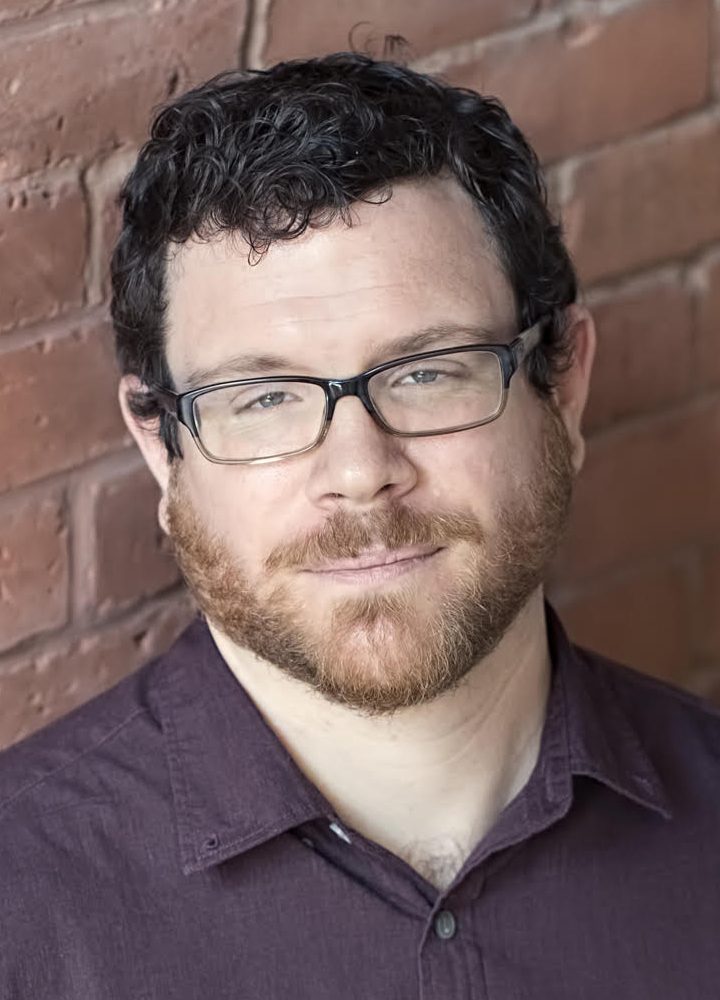
Tim McSorley (he/him) joined the International Civil Liberties Monitoring Group as the coalition’s National Coordinator in November 2016. Combining his passion for civil liberties and social justice with his background in journalism, policy analysis and communications, Tim digs into the impact of government policies and works with allies and partners to fight for change. Previously, Tim was the coordinator for the Media Co-op independent media network and The Dominion magazine. He also served as coordinator for the Voices-Voix Coalition, defending the right to dissent and protecting democratic rights in Canada. He is a graduate of Concordia University in Montreal, with a degree in journalism and political science.
national.coordination[at]iclmg.ca
613-241-5298
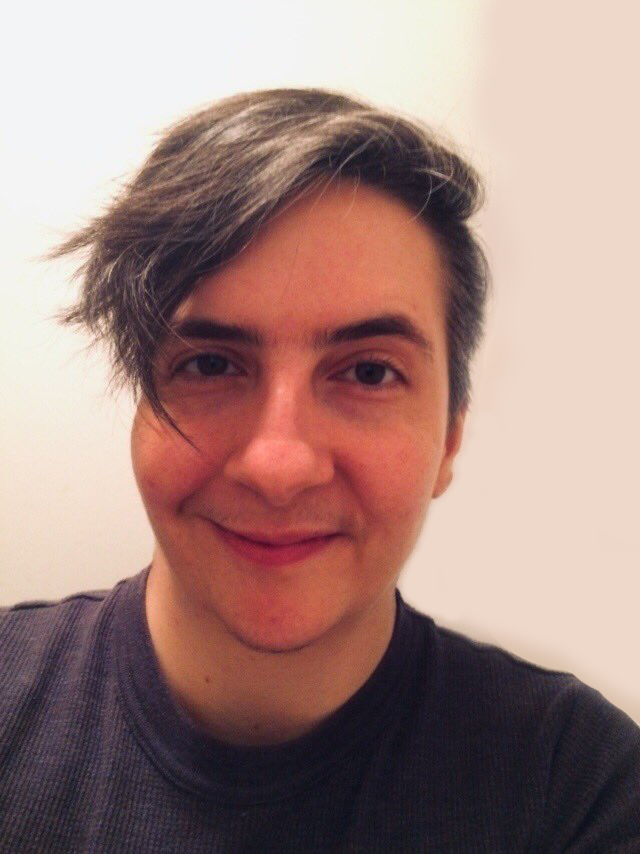
Xan Dagenais (they/them) is the Communications and Research Coordinator of the International Civil Liberties Monitoring Group. They completed a Masters’ degree in Law and Social Justice at the University of Ottawa, a certificate in Women’s Studies at Concordia University, and a Bachelor in International Studies at the University of Montreal. Prior to working at ICLMG, they worked as a teaching and research assistant at the Human Rights Research and Education Center of the University of Ottawa.
communications[at]iclmg.ca
613-241-5298
Deja Vu Anyone???
Standing Committee on Justice and Human Rights
|
l |
|
l |
|
EVIDENCE
Thursday, November 24, 2022
[Recorded by Electronic Apparatus]
[English]

No comments:
Post a Comment