Conservative MP Matt Jeneroux announces resignation from Parliament
Decision comes after rumours swirled that he was considering joining Liberals

Conservative MP Matt Jeneroux announced Thursday he is resigning from the House of Commons, according to statement shared with CBC News.
The decision comes after rumours swirled this week that the Alberta member was considering crossing the floor to the Liberals. Conservative sources say Jeneroux was under pressure from some in the party over fears he was going to defect.
Jeneroux's resignation is the second announced departure from the Conservative caucus this week after Nova Scotia MP Chris d'Entremont joined the Liberals on Tuesday.
It would also prompt a byelection for his Edmonton seat, which he won by a relatively narrow margin of five percentage points over his Liberal opponent in April.
Jeneroux, who was first elected in 2015, said he spoke with Chris Warkentin, the party's whip, earlier Thursday to tell him of his intention to resign.
"I hope to have the opportunity to address the House one final time in the future. For now, my focus must turn entirely to my family and to the responsibilities that come with that," Jeneroux said.
The MP said he was "deeply grateful" for those who have reached out to him in recent days while also urging people to "please not attempt to contact my family during this time."
Jeneroux said he ran in the last election "hopeful that Canadians would put their faith in a team led by Pierre Poilievre's Conservatives," and he "wanted desperately to play a role in that vision" but "the outcome was not what I anticipated."
Party brass working to stop possible floor-crossings
Once news of d'Entremont's floor-crossing broke, Conservatives moved to quickly quell any more departures, sources told CBC News.
The d'Entremont defection prompted panic inside the party that more MPs were poised to leave for the Liberals, possibly giving the government at least two more seats and a majority in the House of Commons, Conservative sources said.
In the hours since d'Entremont's decision to resign, Conservative party brass have been trying to persuade potential floor-crossers to drop their plans, sources said.
Former Conservative campaign manager Jenni Byrne, who is still an adviser to the party, has been involved in the party's efforts to quell possible floor-crossings, sources said.
Senior Conservatives feel that these efforts to staunch the bleeding have worked — at least for now, a source said.
 Conservative MPs react to Chris d’Entremont crossing the floor
A number of MPs who were rumoured to be leaving the party have said they are, in fact, not going to the Liberals.
Quebec MP Dominique Vien posted a video on social media reaffirming she is a Conservative.
"I have no intention of crossing the floor of the House," she said in French.
Even with public denials and private pressure, senior Liberals still believe there could be further defections, Liberal sources said.
The Liberals have had discussions with multiple Conservative MPs about crossing the floor, sources said.
Prime Minister Mark Carney was asked Wednesday if he is having those discussions and said: "We'll speak to anyone publicly or otherwise who can support us."
D'Entremont told reporters he knows of some former Conservative caucus mates who "are in the same boat" as him — they are feeling disaffected with Poilievre's leadership style — and they could follow him to the Liberals.
It's in that context that Warkentin urged the caucus to stick together at the party's Wednesday meeting on Parliament Hill, Conservative sources said.
One of those sources described Warkentin's pep talk as a "kumbaya" moment where he talked about the value of party unity.
ABOUT THE AUTHOR


621 Comments


Canadian history is dotted with floor-crossers. Voters haven't always been thrilled
Floor-crossing often met with outrage, but nothing in the rules to stop it
Traitor, shameful, brave, principled.
There’s a spectrum of terms used to describe MPs who cross the floor. But history shows us there’s one word that doesn’t always stick when Canadian politicians shed one party affiliation for another: re-electable.
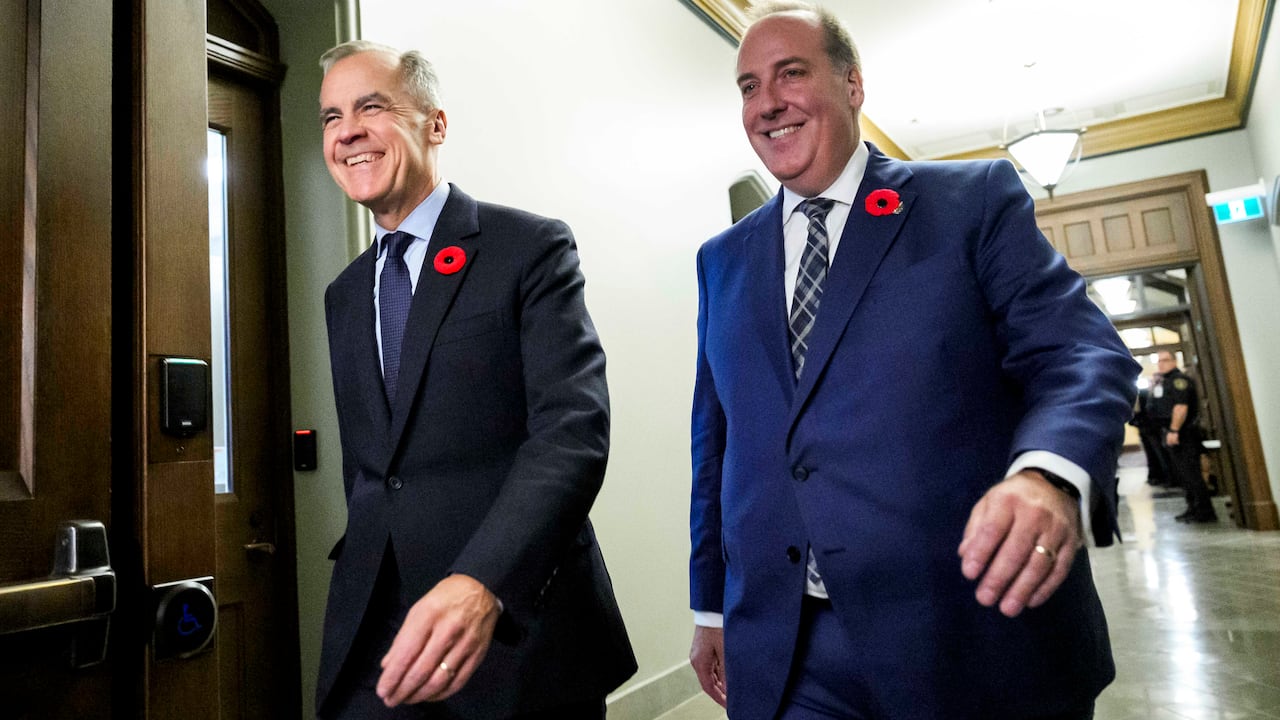
Jaws dropped in Ottawa following the revelation that longtime Conservative Chris d'Entremont is joining the federal Liberal caucus — with Prime Minister Mark Carney hinting others could follow.
Floor-crossing is a political phenomenon dating back to Confederation. But a dive into the record books shows it has increasingly come at an electoral price.
“Switching parties is an extremely risky move that almost always hurts a politician's chances of re-election,” said Semra Sevi, assistant professor in the University of Toronto’s political science department.
She tracked every MP who switched parties from Confederation to 2015. The paper found that up until the mid-20th century, floor-crossers received nearly the same vote share in the election immediately after they changed parties as the one before.
But since the 1970s, their fortunes have declined, she said.
“As parties become institutionalized, the electoral cost of switching has rose dramatically. So that makes political survival outside of one's party increasingly unlikely,” Sevi said.
“There are rare instances of success. So time will tell if this will be one of them."
Over the years, hundreds of MPs have changed affiliations — some sit as an Independent or start their own party, while some of the most memorable cases involve joining their former rivals.
Switches labelled as 'opportunistic'
Sevi said an MP's chances of getting re-elected after changing parties often depend on whether voters buy their reasons.
D'Entremont said he no longer felt represented in Conservative Leader Pierre Poilievre's party and pointed to his "negative" approach to politics.
“Switching is often seen as opportunistic, so it harms credibility,” Sevi said.
“This is a switch that is happening about seven months after the election was held. So it really depends if the voters in his constituency agree or not [with] his reasons.”
 Chris d'Entremont's constituents react to floor crossing
As a more progressive conservative, d'Entremont might be able to sell his decision to constituents in Acadie-Annapolis without rebuff at the ballot box. The riding, previously West Nova, has voted red and blue over the years. D’Entremont squeezed out re-election in April by just 533 votes.
While there may be political consequences (and name calling) for changing party affiliation, there's nothing to prevent it.
There have been unsuccessful attempts to force a floor-crossing MP to seek re-election under the new party banner through a byelection, but those bills failed to become law.
Notable floor-crossings through the years
Jenica Atwin became the first Green MP to be elected outside of British Columbia during the 2019 election and helped grow the party’s footprint in the House.
Two years later she crossed to sit with Justin Trudeau’s Liberals, pointing to party infighting including over issues like the Israeli-Palestinian conflict. Bucking Sevi's trend, she was re-elected as a Liberal that same year. Atwin did not reoffer in this year’s general election.
In 2018 Leona Alleslev left the Liberals to join the Opposition benches, condemning Trudeau’s leadership. She was re-elected the next year but was defeated in the 2021 election.
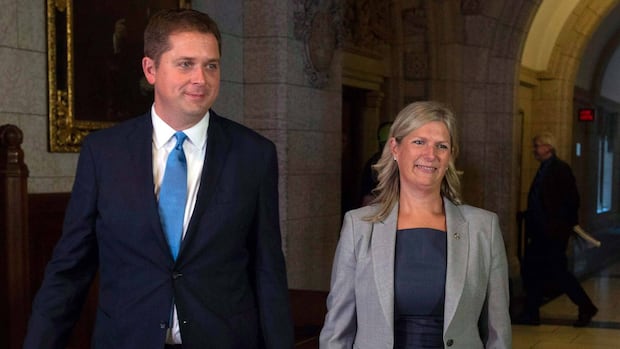 Liberal MP Leona Alleslev defects to Conservative Party
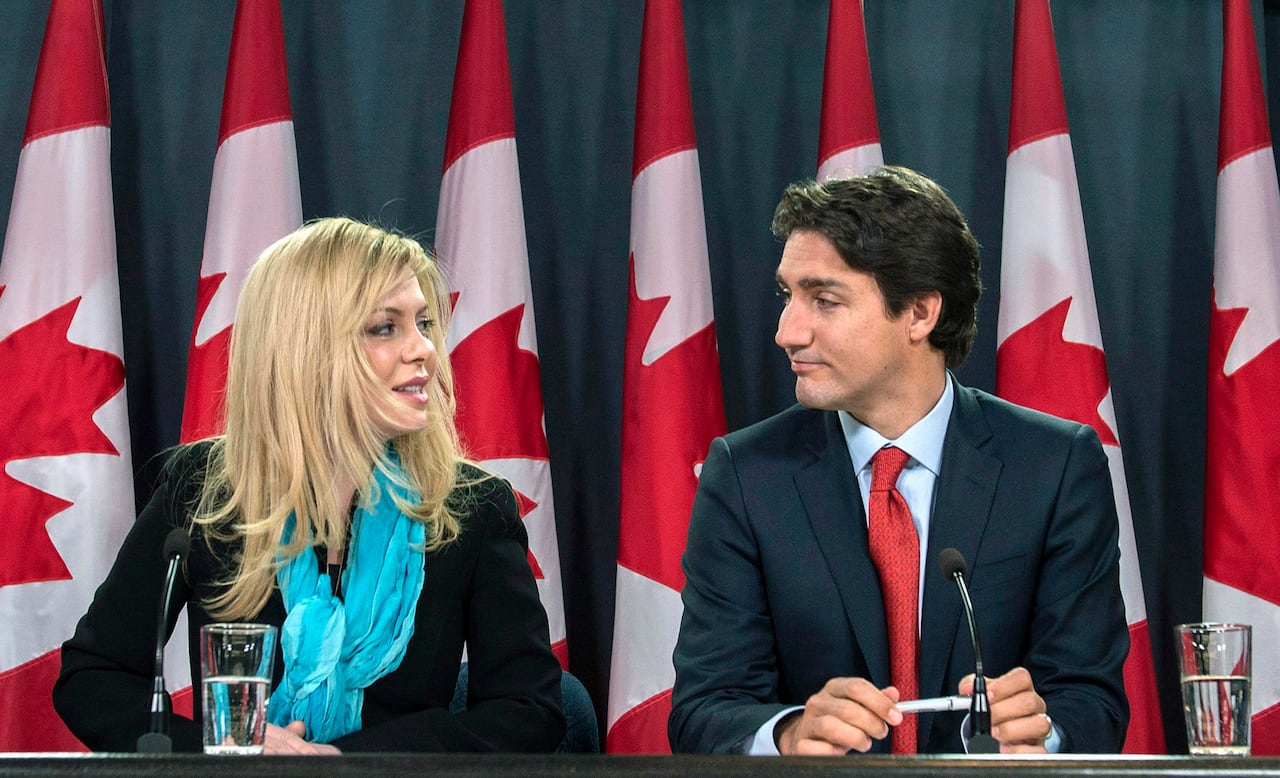
Eve Adams left the governing Conservatives to join the Liberal Party in early 2015, citing "mean-spirited leadership" as her motive. Adams’s time as a Liberal was relatively short-lived. She ultimately lost the Liberal nomination to run in the 2015 election to Marco Mendicino.
The early 2000s saw a number of defections, including a mass exodus from the Stockwell Day-led Canadian Alliance. MPs had grown increasingly disgruntled with Day’s leadership and the party's disappointing election results.
Over the span of a few months 13, of the party’s 66 MPs left or were suspended from the right-wing party. Some eventually rejoined while others went on to form the Democratic Representative Caucus.
The schism ultimately led to Day’s resignation and spurred a merger with the Progressive Conservative Party to create the modern Conservative Party.
If d’Entremont wants to return to the House after the next election he may want to take notes from fellow Nova Scotian Scott Brison, who just days after the merger on the right crossed the floor to sit with the Liberals. He defended the move saying he wanted to work with “a party fuelled by bold ideas, not rigid ideologies.”
Voters in Kings-Hants returned him to the House election after election, often with large margins.

Perhaps the most dramatic floor-crossing in Canadian history belongs to Belinda Stronach, who not only joined the Liberals in 2005, a year after vying for the Conservative leadership, but ended a relationship in the process.
Stronach had been dating Conservative Peter MacKay for a few months, before shocking the country when she revealed she’d be joining then prime minister Paul Martin’s cabinet. The additional vote allowed his minority government to hang on for a few more months before they were ultimately defeated.
In an infamous interview, MacKay returned to his father's farm in Lorne, N.S., declaring his heart was "a little banged up."
The Liberals would lose in the 2006 election, but Stronach won re-election in Newmarket-Aurora as a Liberal candidate by a greater margin than she had as a Conservative.
That 2006 election saw another highly controversial switch.

Just days after winning the riding of Vancouver-Kingsway as a Liberal, David Emerson switched parties and joined Stephen Harper’s Conservative cabinet.
Emerson argued joining government was the best way to serve his constituents. But the decision lead to chorus of outrage from Liberals who had worked on his campaign and allegations Harper had offered an "inducement" to Emerson, contrary to the Conflict of Interest Act.
It sparked outrage and triggered an ethics investigation. Both Harper and Emerson were cleared by the ethics commissioner. Emerson did not run in the 2008 election.

No comments:
Post a Comment