Why a cull has been ordered at Universal Ostrich Farm in Edgewood, B.C., and how the farm has responded
From cull order to convoy to Kennedy Jr., Universal Ostrich farm refuses to give up its birds
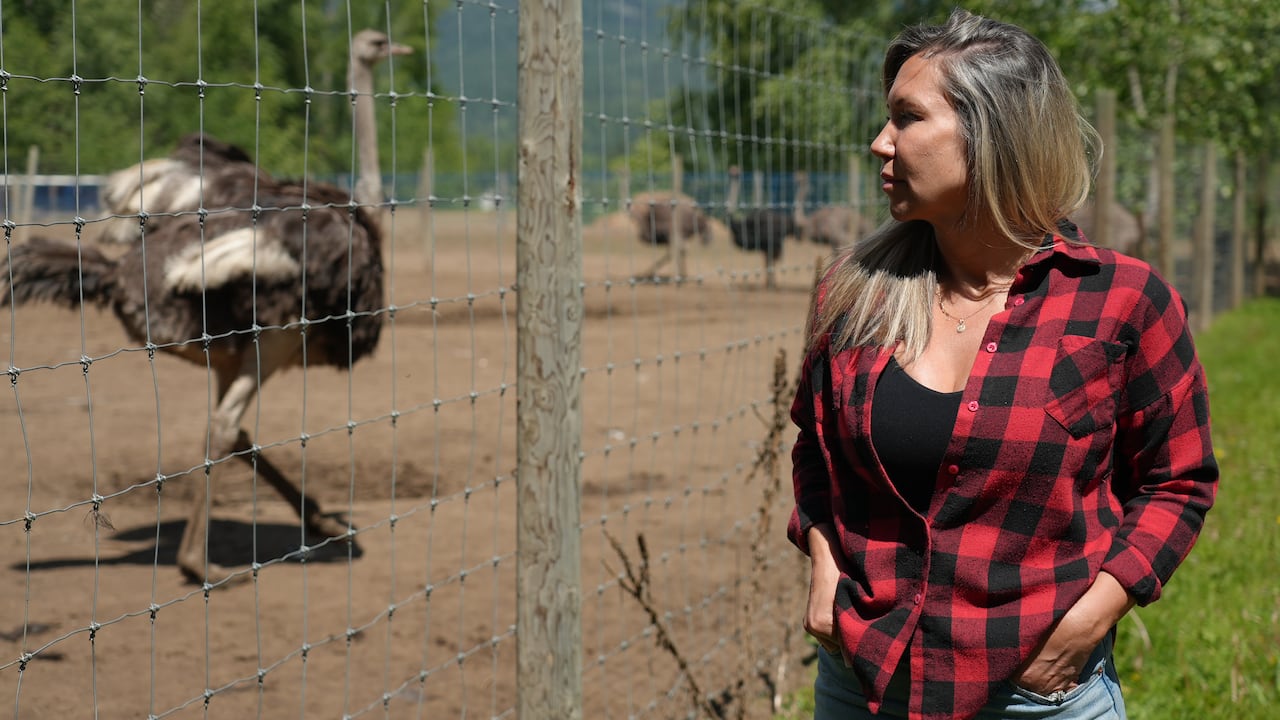
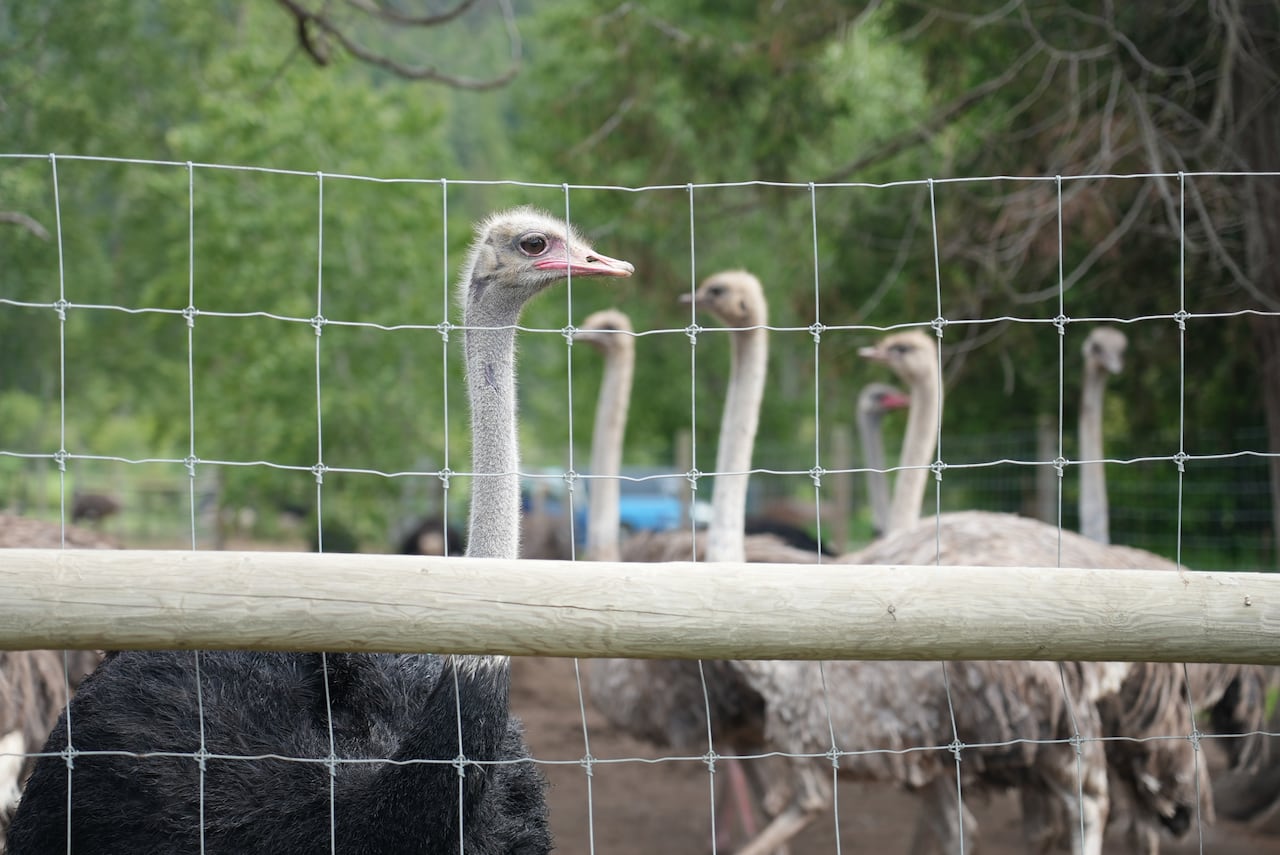
Edgewood, B.C., isn't usually the sort of place that would be on the radar of high-ranking White House officials.
On the west shore of Lower Arrow Lake and surrounded by the Monashee Mountains, it's a roughly 200-kilometre drive from Kelowna, B.C., on a winding road. An unincorporated community, the latest census put it at a population of 235 people working in farming, forestry and tourism.
But
since December 2024, it's been making international headlines over the
fate of a group of ostriches living on one particular farm near the end
of a rural road: Universal Ostrich, owned by Karen Espersen and Dave
Bilinski and whose spokesperson is Katie Pasitney, Espersen's daughter.
In December, Canadian Food Inspection Agency (CFIA) officials were
tipped off that some of the large birds on the farm had died, with tests
confirming the presence of avian flu. That resulted in a cull order,
which the farm has fought, picking up high-profile allies along the way
and a court ruling allowing the cull to move forward.
 Dr. Oz, U.S. billionaire offer to take B.C. ostriches ordered killed
Meanwhile, the CFIA argues that as difficult as the decision is, the cull must move forward to protect public health and Canada's agriculture industry.
On May 30, the agency said the farm has been fined $20,000 for its failure to report the initial infection and deaths of birds, and for its later failure to adhere to quarantine and cull orders.
And at the centre of it is a farm full of ostriches in a tucked-away part of the province.
"We've
taken years to be able to pet these guys, walk among these guys,"
Espersen said in a Facebook video, surrounded by her birds, in early
May.
"If we don't stand for this … then what kind of world have we become?"
Here's what you need to know about this story, so far:
The avian flu context
The government of Canada, as well as other governments worldwide, are currently monitoring an outbreak of a strain of highly pathogenic avian influenza (HPAI) known as H5N1. Though it mainly infects birds, it can spread to other animals and humans, which typically happens through direct contact with infected birds or contaminated environments, the government says.
While human infection is rare, the fatality rate is "approximately 52 per cent", the government says, though it cautions that number may be an overestimate "given that mild infections can go undetected and under-reported."
The first human case of H5N1 contracted in Canada was reported in B.C. in November 2024.
Avian
flu's primary impact has been seen among domestic birds, particularly
chickens. Because poultry live together in close quarters, the virus can
spread quickly among the flock, leading to high mortality rates and
potential mutations. The disease has been blamed as a primary factor for
high egg prices in the United States as laying hens were killed.
In response to the virus, the CFIA has a "stamping out" policy which
requires all domestic birds in a flock to be killed even if the virus is
detected in just one bird. Thousands of birds have been culled under
this policy.
 What you should know about the H5N1 strain of avian flu
"A human case of H5N1 in B.C. earlier this year required critical care, and an extended hospital stay for the patient, and there have been a number of human cases in the United States, including a fatality."
Disease detected at Universal Ostrich
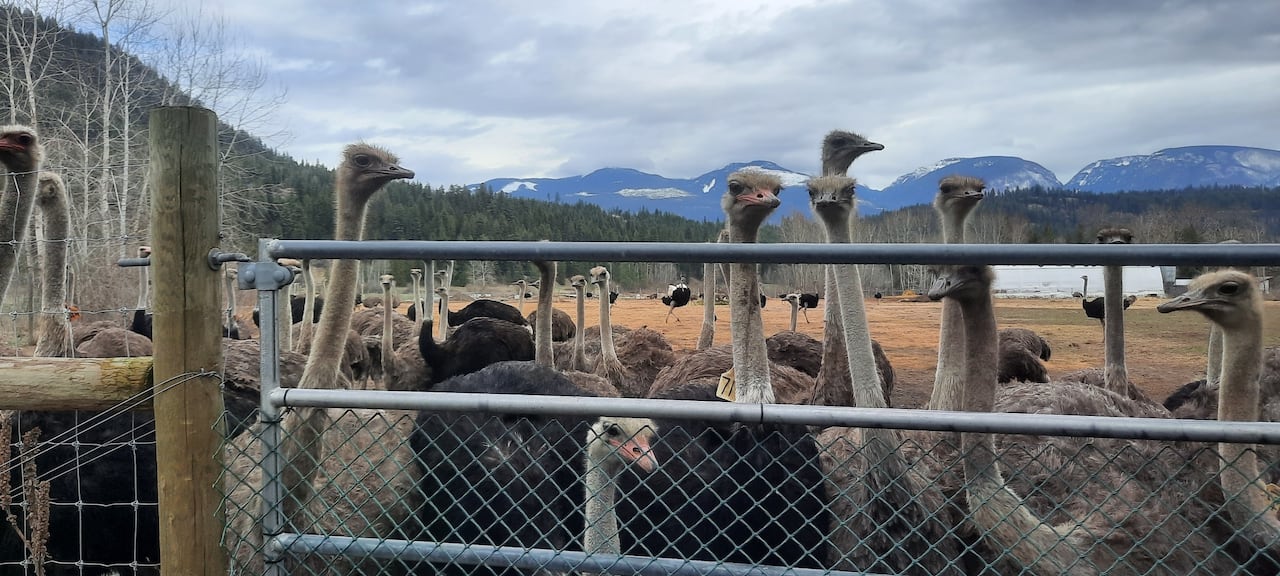
According to court documents, in early December 2024 the farm was home to about 450 ostriches, some more than three decades old. Partway through the month, several ostriches on the farm developed "flu-like" symptoms, which started about a week after 300-500 ducks landed on the premises.
The farm says that from Dec. 14, 2024 to Jan. 14, 2025, "69 young male and female breeders died, most of them under four years old."
On Dec. 28, the CFIA investigated following an "anonymous report of multiple ostrich deaths" at the farm, the court document says, and a quarantine was ordered the same day four more ostriches died.
Samples were collected from two of the dead ostriches and by Dec. 31 they had tested positive for avian flu at the Canadian Animal Health Surveillance Network laboratory in Abbotsford, B.C.. On Jan. 3 the National Centre for Foreign Animal Disease in Winnipeg confirmed H5N1.
The order to cull the flock was given on Dec. 31.
Quarantine orders not followed
Inspectors also noted the ostriches were in open pens, allowing for free access by wild birds and animals, and that staff at the farm shared equipment and "moved freely among open pens", posing a biosecurity hazard when the disease was present.
Even in January, after quarantine orders were in place, inspectors noted wild animals were still freely interacting with the ostriches and other safety measures weren't being followed.
"The record also shows that the Applicant's farm also exhibited sick ostriches being moved to treatment pens in contravention of quarantine requirements, dead ostriches dragged through pens populated with living ones without robust separation measures, and unauthorized individuals walking inside the infected zone," the judge wrote.
In its May 30 statement, the CFIA wrote that the farm's failure to quarantine its birds increased the chance of transmission and "reflect a disregard for regulatory compliance and animal health standards."
It also said that the strain of avian flu detected on the farm had not previously been seen, though it did not provide information on the details of the strain nor its potential impacts.
Claims of herd immunity
When the cull order was given on Dec. 31, 2024, the farm was given a compliance deadline of Feb. 1, 2025.
They used that time to try and build a case for the ostriches to be spared.
According to the court case, the farm's operators began raising the ostriches in the mid-1990s, and Espersen and Bilinski say they incorporated Universal Ostrich Farms, Inc. in 2001 with a focus on "ethical breeding and care."
In court, the farm's lawyer says that the farm's operations include selling breeding stock, raising birds for slaughter and meat and agri-tourism.
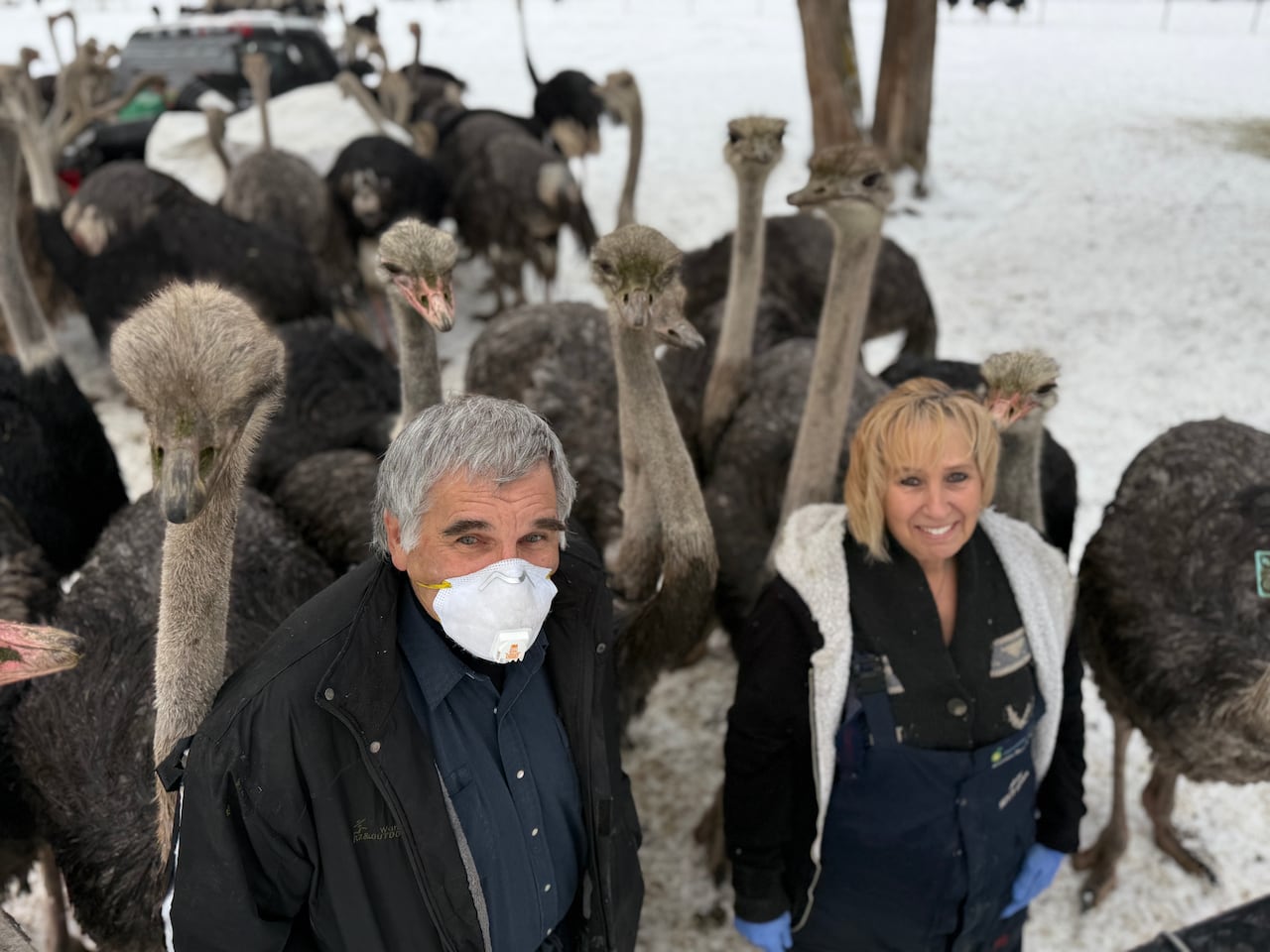
However, the farm also says it pivoted during the COVID-19 pandemic
to focus instead on research, specifically on trying to use ostrich
eggs to produce antibodies for COVID-19 or other viruses. "Meat
processing ceased in the summer of 2019," it said in a statement.
The farm says it partnered with Yasuhiro Tsukamoto of Kyoto Prefectural University in Japan for this work.
Neither Tsukamoto nor the university have responded to CBC News in relation to the story but the researcher, known in some circles as "Dr. Ostrich," has previously made headlines for his work with ostrich eggs and COVID-19.
CBC News also heard from a researcher who has confirmed his work with Universal Ostrich.
"Dr. Yasuhiro Tsukamoto and I are Co-CEOs of Ostrich Pharma USA (OPUSA)," said Stuart Greenberg in an email.
"Our focus has been on the
production of antibodies against human digestive enzymes to produce a
dietary supplement for weight loss."
Tsukamoto has not confirmed his work in this area.
Additionally, Universal Ostrich maintains that all of the birds that died due to avian flu were acquired "after 2020."
This is important to them because they say that in March 2020, a flu-like disease infected their herd which they believe gave the survivors "natural and eventual herd immunity," and say that since January the remainder of the ostriches are "happy and healthy" showing no sign of sickness.
Exemption denied
According to the court case, the farm first raised the possibility that its ostriches had developed immunity to avian flu during a Jan. 2 phone call with a CFIA case officer, who explained the process for receiving an exemption to the cull order.
In followup emails, the officer provided the forms and
documentation that would be needed to make the case that the birds
should not be killed, and the farm made its application.
However, by Jan. 10 the exemption was rejected.
According to the courts, the CFIA concluded the farm "failed to
demonstrate the existence of any distinct epidemiological unit," that
was not likely to be exposed to avian flu, nor had it submitted
"sufficient evidence to support its claims of genetic rarity and value
qualifying the flock for an exemption," the latter of which could be
proven through breeding books, recognition from breed associations, or
genomic testing.

The May 30 statement from the CFIA also said the farm failed to provide "research documentation" and that the farm lacks facilities "suitable for controlled research activity or trials."
The court case also noted that there has only been one exemption to the "stamping out" policy granted in Canada during the current H5N1 outbreak, in the case of a turkey farm infected in 2022 that was able to demonstrate the complete separation, including biosecurity measures, of turkey flocks where some birds had been infected.
Not only were the spared birds kept in separate barns from the infected animals with distinct ventilation and a "shower in/shower out" procedure, but the facility was also able to demonstrate the birds had "rare and valuable genetics" used for "high value pedigree birds."
The CFIA also refused the ostrich farm's request that it do follow-up testing on its surviving birds.
Legal courts and court of public opinion
The farm went public with its plight early, with Pasitney first speaking to CBC News on Jan. 9.
The story was also covered by local outlets and was later picked up as a
campaign by the Ezra Levant-owned website the Rebel, which in a Jan. 24
post encouraged readers to begin emailing the CFIA and other officials,
claiming the cull was in part because of the influence of major
pharmaceutical companies.
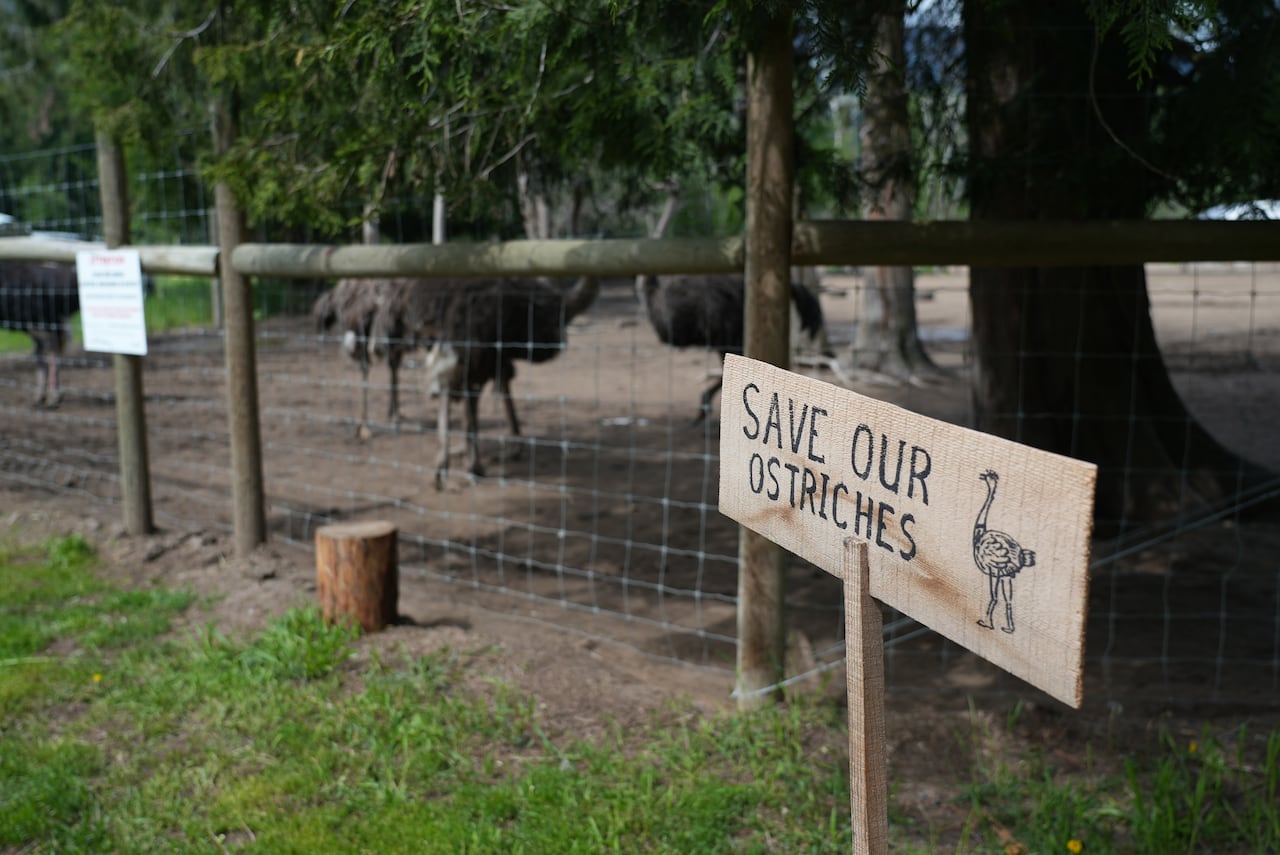
The site now has a section titled "Save Our Ostriches" and helped organize a "convoy" of people to visit the farm and show their opposition to the kill order.

The farm welcomed supporters, while also posting a disclaimer stating it did not necessarily agree with all of the material being circulated by those who had taken up the cause of saving the ostriches.
"We're just trying to do what's right," Pasitney said.
In
the meantime, the farm contracted a lawyer to apply for the cull to be
stayed until the case could be heard by the courts, arguing Universal
Ostrich would suffer "irreparable harm" should it move ahead.
That stay was granted, and the case went to federal court for two days of hearings on April 14 and 15.
Legal and scientific debate
During the hearings, Universal Ostrich pleaded its case for an exemption, reiterating many of its previous claims about herd immunity and the scientific value of its birds.
It also called on three individuals who argued that the stamping-out policy used by the CFIA was not required, at least in the case of the ostriches.
Those individuals were Steven Pelech, a UBC professor and biochemist with training in immunology and virology, Byram Brindle, an immunologist at the University of Guelph and Jeff Wilson, a former senior epidemiologist and manager at the Public Heath Agency of Canada.
Collectively, the trio made the case that ostriches should be treated as different from hens or other poultry due to a combination of their long lifespan (three to five decades) and the fact that they don't live in as densely populated conditions as hens.
They also argued that the
CFIA should have been open to further testing of the surviving birds
after the initial deaths occurred.
But the CFIA pushed back.

"That concern also includes the potential for the mutation of the virus among healthy birds.... an infection in birds could be a precursor to a human flu pandemic. Regardless of how likely that is, once it happens, it's happened, so that is a concern motivating the CFIA's response."
The CFIA also relied on a report from Shannon French, a veterinary epidemiologist trained in epidemiology, virology and poultry health management, outlining the international scientific standards that inform its decision-making.
The agency's legal team also attacked the trio of scientists put forward by the farm, stating none have ever worked with ostriches, and that much of their testimony was "speculative" and "well outside mainstream peer-reviewed literature."
Likewise, the farm's lawyers attacked French for not being impartial given her professional association with the CFIA.
"Unsurprisingly, each side seeks to narrow the evidentiary footprint of
the other, and asks this Court to rely on the opinion of their experts
should opinions diverge," Justice Russel Zinn wrote, ultimately
declaring it would be inappropriate for him or any other judge to do so.
Instead, he focused on the fact that the CFIA was the agency in Canada tasked with managing the complex scientific and technical decisions in relation to avian flu.
"When Parliament leaves technical or scientific assessments to specialized administrative bodies, it signals that those bodies, not the courts, are best positioned to make judgments on complex, expertise-driven matters," he wrote, allowing the cull to proceed.
A difficult decision
Both Zinn and the CFIA noted the emotional and economic toll any cull takes on farmers.
They also noted that the cull is not punishment but instead based on the public good, which is also why farms receive financial compensation when they take place — up to $3,000 per animal in the case of the ostriches.
"While
compensation may not offset the emotional toll of depopulation, it can
provide resources to recover and reestablish operations," CFIA said.
But that's not feasible for Universal Ostrich, Pasitney said. Her
mother is in her 60s, her business partner in his 70s, and they don't
feel they can start over with a new set of birds, especially ones as
finicky as ostriches.

Scientists not involved in the court case say the CFIA and Universal Ostrich are trying to navigate a difficult position.
Jean-Pierre Vaillancourt, a professor at the University of Montreal's veterinary school, says Canada has signed a treaty with the World Organisation for Animal Health, which means it has agreed on certain specific measures, like culls, when it comes to controlling avian flu.
"We try to extinguish the fire — so essentially the virus can't feed and replicate if it has other birds around," he said.
J. Scott Weese, a professor at the Ontario Veterinary College, told CBC News in an email that a decision to cull animals at a farm is a cost-benefit decision, where the costs and benefits can't be quantified easily.
"In general, culling makes more sense when there's widespread infection, risk to people around the animals, limited other exposure risk, where disease is more severe and where there's less value — economic, conservation, human-animal bond — of the animals," he said.
But Weese added that H5N1 is now well established in Canada, and there may be less justification for culling from the standpoint of controlling disease.
"An individual group of birds is a drop in the bucket now," he said. "Culling probably has little population benefit."
He added, though, that from a "risk aversion standpoint," a cull is the "easiest thing" to do.

And Fiona Brinkman, a professor at Simon Fraser University's department of molecular biology and biochemistry called the spread of avian flu "a tragedy," saying that she had hoped the CFIA would conduct new tests of the ostriches while she also recognized the worry that they could be reinfected or asymptomatic, passing the flu back and forth with wild birds.
And rights group Animal Justice has
become involved, arguing that rather than mass culls, Canada should
focus on improving conditions at large-scale poultry farms where birds
are kept in more confined conditions.

Political pushback
Despite the ruling, B.C.'s premier has expressed frustration with the CFIA for not showing more "flexibility" in its decision making.
"We understand the importance of containing the bird flu and the important role that agency plays," he said following the court ruling. "What's hard to watch is a lack of discretion and ability to evaluate case-by-case scenarios."
He said putting the specifics of the ostrich case aside, it's a "consistent experience the province has had with federal agencies."
Conservative MP Scott Anderson has visited the farm, which is in his riding, and says he has asked the CFIA to "hold off" on the cull and be open to other solutions.
Another politician to visit is independent MLA Jordan Kealey of Peace River North, who is a farmer himself.
He told CBC News the case had struck fear into many independent farmers
who worry that with avian flu so prevalent among wild birds, it will be
nearly impossible to avoid exposure and, ultimately, will lead to the
loss of animals.
Meanwhile, the Regional District of Central Kootenay voted to not accept the carcasses of any killed ostriches at local landfills unless followup testing of the birds was done, and the results made public. That meeting was attended by nearly 300 supporters of the farm via Zoom.
Threats, deaths and RCMP involvement
Since the ruling, a few dozen supporters have camped out at the farm, at the encouragement of its owners, with Espersen encouraging them to "come surround the farm" and "don't let them do this to these beautiful animals."
 Supporters back ostrich farm fighting cull despite past cases of avian flu
The farm has urged its supporters to be peaceful and spoken out against threats of violence that have been made by some opposed to the cull.
The union representing CFIA workers says it has fears over some of the rhetoric being posted online, including death threats against members.
In its May 30 statement, the CFIA said the farm owners and supporters had gathered in "an apparent attempt to prevent the CFIA from carrying out its operations at the infected premises.
"This has delayed a timely and appropriate response to the HPAI infected premises, resulting in ongoing health risks to animals and humans," the statement read.
On the other side, Universal Ostrich says two of its birds have been shot, one on the night of March 21 and the other on the night of May 23.
RCMP has not confirmed the cause of the deaths but says it is investigating both instances.
RCMP liason officers have also been paying regular visits to the farm in what they describe as an effort to maintain safety for everyone involved.
Universal Ostrich says it supports the RCMP's presence.
RFK Jr. and Dr. Oz weigh in
In the meantime, word of the ostriches' fate has continued to grow through dedicated coverage from independent streamers and websites dedicated to pushing back against what they view as government overreach.
One of the most high-profile supporters to jump on the cause has been U.S. billionaire John Catsimatidis, who told CBC News he had been following the story through a website called Broken Truth.

That website, published through the Substack platform, describes itself as a network aimed at "exposing fraud and corruption, particularly in medicine and beyond," and says it has its roots in pushing back against public health policies stemming from the COVID-19 pandemic.
Catsimatidis then used his platform, which includes a radio show on a New York-based station he owns, to bring the topic up to other leaders, including Kennedy. During an April episode of his program with the health secretary, Catsimatidis claimed the ostriches were being killed because of corruption and pharmaceutical companies, with Kennedy responding that it was a "huge mistake."
The U.S. health secretary has previously suggested in interviews that farmers should allow avian flu to "run through" their flocks in order to "preserve the birds that are immune to it" — a significant departure from Canadian, U.S. and international health guidelines that has received widespread criticism from those tasked with controlling the disease.
Additionally, former TV host Dr. Mehmet Oz, who is now the administrator for the U.S. Centers for Medicare and Medicaid Services, has offered to take the ostriches in at his ranch.
The farm has rejected the offer but said it appreciates the support.
"They see the science, they see the potential," Pasitney said in an interview with CBC News.
Fate unknown
Through all this, the CFIA has remained steadfast in its policy to have the flock culled, saying stamping out is a necessary policy needed to protect public health and Canada's argriculture industry.
It says the cull will be done humanely, and under veterinary supervision, but that it will not be sharing details of the operation — including when it might take place — in advance.
But on May 28, Canada's minister of agriculture indicated the birds will "not necessarily" be killed.
"We're in a process," Heath MacDonald, the minister of agriculture and agri-food, said. "We're taking all facts into consideration. And we'll move forward on the best possible solution for everybody involved."
Asked directly if the birds would be killed, he said, "The process is in place. And not necessarily."
According to the Canadian Press, the farm's appeal claims the court made "multiple reversible errors" in its earlier ruling upholding the cull order, and that its own lawyers provided "ineffective assistance" that "amounted to incompetence, and resulted in a miscarriage of justice."
The farm's appeal says "prior counsel had a financial stake in the destruction of the appellant's ostriches, resulting in a blatant conflict of interest."
Lee Turner, one of the farm's former lawyers, told The Canadian Press he "certainly did not" have a conflict of interest, and his co-counsel Michael Carter did a "a remarkable job with the short window of time that he had."
The appeal has not yet been accepted.
UPDATE — Aug. 21, 2025: Since this story was first published, the case has been reviewed by the Federal Court of Appeal, which upheld the original ruling. Read more below:
- Federal Appeal Court grants pause of B.C. ostrich cull pending review
- Judge refuses to allow more avian flu tests on ostriches at B.C. farm
- Appeal court reserves decision on fate of B.C. ostrich farm as spokesperson thanks RFK Jr.
- B.C. ostrich farm loses appeal to save birds from cull in case that attracted White House attention
With files from Brady Strachan, Akshay Kulkarni, Chris Walker, Sarah Penton and the Canadian Press


 .
.
BREAKING: Shooting sounds are occurring in the ostrich pen, CFIA & RCMP are on scene
Shots ring out at B.C. ostrich farm as CFIA uses marksmen to carry out cull
A cull was ordered after avian flu was detected in some of the ostriches late last year

UPDATE — Oct. 7, 2025: The CFIA confirmed on Oct. 7 that it had completed a cull of the Universal Ostrich Farms ostriches.
Shots were heard at Universal Ostrich Farms in Edgewood, B.C., on Thursday evening, coming from a straw bale enclosure that the farm's flock had earlier been herded into.
Over a 30-minute period at 6:10 p.m. PT, CBC News reporters on the scene reported hearing about five rounds of about a dozen shots each.
It happened the same day the Supreme Court of Canada declined to hear an appeal to save the flock at Universal Ostrich from a cull ordered by the Canadian Food Inspection Agency (CFIA).
That lifted any legal impediment to the killing of the flock that the CFIA says includes 300 to 330 birds.
- For a full account of the story that unfolded at Universal Ostrich Farms after the country's top court declined to hear the farm's appeal, read CBC News' live coverage here.
The cull was ordered after avian flu was detected at the farm last December.
The shots came from inside an enclosure made of straw bales where the CFIA had herded scores of the ostriches earlier in the day.
On Friday, the CFIA announced that it had used professional marksmen to carry out the cull, under CFIA veterinarian supervision.
The agency said that method was consistent with Canadian Veterinary Medical Association and American Veterinary Medical Association recommendations.

Supporters yelled Thursday night from about a dozen cars parked along the road that leads to the farm as the shots rang out.
They shouted "Stop!" and "Murderers!" amid the shots, which came after darkness fell.
The operation followed a statement from the CFIA saying it was moving ahead with the "complete depopulation and disposal" of the ostriches.

Shortly before the shots were heard, CBC reporters saw field lights turn on that illuminated the straw bale enclosure that was set up by the CFIA to pen in the ostriches.
- Read more about the background of this case: How the fate of a herd of ostriches on a small B.C. farm caught the attention of the Trump administration.
Reporters also heard a drone flying above.
With files from Lauren Vanderdeen, Brady Strachan, Anne Levasseur and Francis Plourde of Radio-Canada and The Canadian Press




How the son of Russian spies paved the legal path for B.C. ostrich cull
Alexander Vavilov set the Supreme Court of Canada precedent for 'reasonableness' at heart of ostrich case

In his battle for Canadian citizenship, Alexander Vavilov got an opportunity denied to the owners of B.C.'s Universal Ostrich Farms on Thursday — a chance to argue his case before Canada's top court.
In the process, the son of Russian spies set a legal threshold for decision-making "reasonableness" that would doom the B.C. birds six years later.
That threshold — and Vavilov's name — are plastered all over the lower court decisions the Supreme Court of Canada refused to reconsider this week, providing justification for the Canadian Food Inspection Agency's (CFIA) decision to order a cull of hundreds of ostriches last December.
 Sombre mood at B.C. ostrich farm after Supreme Court dismisses appeal to stay cull
'Coherent and unified approach to judicial review'
Although the top court never gives reasons for dismissing a case, the Federal Court of Appeal made clear in September that the ostrich farm's owners were unlikely to succeed before the Supreme Court of Canada with arguments that failed to raise "a serious or arguable issue."
Vavilov was born in Toronto in 1994 to Russian spies posing as Canadians under assumed names — who would later be arrested in the U.S. and charged with espionage. Their story formed the basis for the hit TV series The Americans.

In 2014, the Canadian Registrar of Citizenship cancelled Vavilov's citizenship — after concluding that the rule granting Canadian citizenship to individuals born in Canada exempted children of diplomats, and other representatives or employees for foreign governments.
He challenged the decision in Federal Court, sparking a fight with Canada's Minister of Citizenship and Immigration that continued all the way to the Supreme Court of Canada.
On the surface, those facts may appear to be a million miles removed from the plight of more than 300 ostriches on a farm in Edgewood, B.C., facing destruction because of the threat of avian flu.
But the issue underlying both cases is the role of the courts in reviewing discretionary policy decisions.
"The Supreme Court’s objective, in [Vavilov's case], was to develop a coherent and unified approach to judicial review that applies to a spectrum of administrative decision-makers," Federal Appeal Court Judge Gerald Heckman wrote last September.
"This includes the CFIA decisions reviewed by the Court."
'Experts in law, not in public health'
The CFIA ordered a cull of the birds on Dec. 31, 2024 — within 41 minutes of receiving positive avian flu results from carcasses of two of some 25 to 30 ostriches which had died over the previous three weeks at Universal Ostrich Farm.
Universal Ostrich's owners applied for an exemption from the CFIA's so-called "stamping-out" policy — which aims to counteract the spread of viruses with the potential to harm Canada's animal health, human health and international trade through "swift elimination of infected populations."

The agency rejected the exemption application, which was grounded in the birds' allegedly "rare and valuable genetics" and the farm's claims that affected ostriches had been separated from the flock.
Universal Ostrich's owners asked the Federal Court for a judicial review of both the original notice to dispose of the birds and the later refusal to exempt them from the cull.
From there, the case made its way to the Federal Court of Appeal and the Supreme Court of Canada.

The standard set by Vavilov's case asks whether a decision "exhibits justification, transparency and intelligibility and is justified in relation to the relevant factual and legal constraints."
The first Federal Court decision on the ostriches cites that standard — stressing that judges "need to stay out of scientific debates and focus on whether the decision-makers used their expertise to make reasonable and procedurally fair decisions."
"Judges are experts in law, not in public health, virology, epidemiology, or veterinary medicine," Judge Russel Zinn wrote in the first decision ruling against the farm's owners.
"Reasonableness asks whether the CFIA’s explanation of its decisions tells a compelling story of how it reached them ... Procedural fairness is about the decision-making process itself, not the outcome."
Not the court's job to argue science
Debates over animal rights, the lethality of the disease and claims the surviving ostriches might hold a key to fighting avian flu attracted significant attention — but the arguments outside the court were different to the ones taking place inside.
Zinn said it wasn't his job to decide "whose science on the virus in question is 'better.'"
"To decide a winner in this contest will cause this Court to commit two cardinal sins in reasonableness review," he wrote.
"First, it will prompt this Court to reach beyond the legitimate scope of reasonableness review of a broad policy decision. Second, it will effectively make this Court an academy of science and an arbiter of truth in immunology and animal and public health."
To that end, Zinn cautioned against arguments purporting to favour "common sense" decision making.
"Common sense in decision-making only becomes truly 'common' and 'sensible' when ordinary individuals are familiar with or routinely exposed to the type of decision being made," he wrote.
"That is not the case here. The complex, science-driven, and high-stakes decisions involved in managing the spread of avian influenza fall well outside the realm of commonly shared lived experience."
'Judges don’t have hearts of stone'
In Vavilov's case, the Supreme Court of Canada found the decision to strip him of his citizenship unreasonable.
The court said the decision-maker in that situation failed to justify her interpretation of a law that did clearly not apply to the children of foreigners who have not been granted diplomatic immunity — even if they were spies.
But the reasonableness standard went the other way for the ostrich farmers, who are regulated by an agency mandated with ensuring the health of animals and humans and "safeguarding the agricultural industry on which Canadians depend for their livelihood and food security."
The Supreme Court of Canada apparently saw nothing to suggest the decision to order a cull — or any of the decisions by the judges who later reviewed the CFIA's ruling — were unreasonable.
"Judges don’t have hearts of stone. Like all people, we understand the emotional bonds that grow between people and the animals they care for," Heckman wrote.
"Both levels of court determined that the CFIA had reasonably exercised its authority in the circumstances of this case and that its policy was lawful."
ABOUT THE AUTHOR

Gruesome cull manual shows feds' preferred methods after ostriches gunned down

'They were murdered by cowards': Ostrich farmer remembers her slain flock
Chris Dacey alleges RCMP 'drone harassment' at ostrich farm


Summary
Keywords
Administrative law — Judicial review — Standard of review — Discretionary policy decision — When an appellate court states the legal framework for reviewing discretionary administrative decisions “requires reformulation” post-Vavilov, what is the proper approach to reviewing policy-based exercises of statutory discretion? — Can an administrative body maintain that “no discretion” exists under permissive statutory language (“may”) when exercising emergency powers, that results in mandatory outcomes once criteria are met while at the same time operating an exemption process that calls for case-by-case discretionary assessment and how should courts assess allegations of fettering in that structure? — What mechanism exists for reconsidering emergency orders when circumstances transform from active outbreak to extended stability with asserted immunity markers, and what are the legal parameters? — Whether emergency orders that typically operate on compressed timelines, and have arisen hundreds of times in the ongoing HPAI outbreak, fall within the “capable of repetition yet evading review” exception?
Summary
Case summaries are prepared by the Office of the Registrar of the Supreme Court of Canada (Law Branch). Please note that summaries are not provided to the Judges of the Court. They are placed on the Court file and website for information purposes only.
The Federal Court dismissed the applications for judicial
review, brought by the applicant, Universal Ostrich Farms Inc., of two
related decisions of the respondent, the Canadian Food Inspection Agency
(“CFIA”). The first decision, a Notice to Dispose issued on December
31, 2024, required the applicant to dispose of all the ostriches on its
farm by February 1, 2025, after laboratory testing confirmed infection
of two dead ostriches with the H5N1 strain of highly pathogenic avian
influenza. The second decision, an Exemption Denial dated January 10,
2025, denied the applicant’s request to exempt at least some of its
ostrich flock from destruction. The two decisions were made under s. 48
of the Health of Animals Act, S.C. 1990, c. 21, and in accordance with
the CFIA’s Stamping-Out Policy, which is operationalized through the
CFIA’s Highly Pathogenic Avian Influenza 2022 Event Response Plan.
The
Notice to Dispose had not been complied with because the Federal Court
stayed that decision pending determination of the judicial review
application in the Federal Court, and then a single judge of the Federal
Court of Appeal stayed the decision pending disposition of the
applicant’s appeal before the Federal Court of Appeal.
The
Federal Court of Appeal unanimously dismissed the applicant’s motion for
new evidence and dismissed the applicant’s appeal, finding that the
Stamping-Out Policy, the Notice to Dispose and the Exemption Denial were
all reasonable in accordance with the applicable case law.
Lower court rulings
Applications for judicial review dismissed
Applicant’s motion to adduce fresh evidence dismissed;
Appeal dismissed
Application for stay of proceedings dismissed
Counsel
Party: Universal Ostrich Farms Inc.
Counsel
Umar Sheikh Personal Law Corporation
PO Box 24062 Broadmead RPO
Victoria, British Columbia
V8X 0B2
Telephone: (250) 413-7497
Email: usheikh@sheikhlaw.ca
Party: Canadian Food Inspection Agency
Counsel
Banafsheh Sokhansanj
Paul Saunders
British Columbia Region- (National Litigation Sector)
900 – 840 Howe Street
Vancouver, British Columbia
V6Z 2S9
Telephone: (604) 666-2061
FAX: (604) 666-2760
Email: Aileen.Jones@justice.gc.ca
Agent
Department of Justice Canada, Civil Litigation Sector
50 O’Connor Street, Suite 500
Ottawa, Ontario
K1A 0H8
Telephone: (613) 295-0765
FAX: (613) 954-1920
Email: SCCAgentCorrespondentCSC@justice.gc.ca
Case information
Conduct a refined search of the Supreme Court of Canada database to obtain details on the status of a matter before the Court.
41992
Universal Ostrich Farms Inc. v. Canadian Food Inspection Agency
(Federal) (Civil) (By Leave)
Docket
Judgments on applications for leave to appeal are rendered by the Court, but are not necessarily unanimous.

No comments:
Post a Comment