Date: Tue, Oct 14, 2025 at 2:07 PM
Subject: Voting day is here, and polls are open for N.L.'s provincial election
To: premier <premier@gov.nl.ca>, <Francois.Legault.ASSO@assnat.qc.ca>, pm <pm@pm.gc.ca>, <francois-philippe.champagne@parl.gc.ca>, fin.minfinance-financemin.fin <fin.minfinance-financemin.fin@canada.ca>, Nathalie.G.Drouin <Nathalie.G.Drouin@pco-bcp.gc.ca>, <ps.ministerofpublicsafety-ministredelasecuritepublique.sp@ps-sp.gc.ca>, mcu <mcu@justice.gc.ca>, Sean.Fraser <Sean.Fraser@parl.gc.ca>, <melanie.joly@ised-isde.gc.ca>, rob.moore <rob.moore@parl.gc.ca>, pierre.poilievre <pierre.poilievre@parl.gc.ca>, Yves-Francois.Blanchet <Yves-Francois.Blanchet@parl.gc.ca>, Frank.McKenna <Frank.McKenna@td.com>, John.Williamson <John.Williamson@parl.gc.ca>, <join@tonywakeham.ca>, <info@nlliberals.ca>, <jimdinn@nlndp.ca>, <info@nlndp.ca>, <info@pcnl.ca>, <info@alisoncoffin2025.com>, <darianvincent@nlndp.ca>, <walteryetman2024@gmail.com>, <capitalclips@hotmail.com>, <eric.grenier@thewrit.ca>, <pamparsonscampaign@gmail.com>, <madison.ryan@cbc.ca>, <malone.mullin@cbc.ca>, <xgarryleyte@gmail.com>, <clifford.small@parl.gc.ca>, <jonathan.rowe@parl.gc.ca>, <carol.anstey@parl.gc.ca>, <charlespendercb@gmail.com>, <info@jimparsons.ca>, <jeangraham@nlndp.ca>, <TheSignal@cbc.ca>, <joanne.thompson@parl.gc.ca>, <tom.osborne@parl.gc.ca>, <philip.earle@parl.gc.ca>, <paul.connors@parl.gc.ca>, <kblidook@mun.ca>, <Sarah.Smellie@cbc.ca>, <abittner@mun.ca>, premier <premier@gov.ab.ca>, premier <premier@leg.gov.mb.ca>, Office of the Premier <scott.moe@gov.sk.ca>, premier <premier@gov.nt.ca>, premier <premier@gnb.ca>, premier <premier@ontario.ca>, premier <premier@gov.pe.ca>, premier <premier@gov.bc.ca>, premier <premier@gov.yk.ca>, Premier <PREMIER@novascotia.ca>
Cc: <jim.quinn@sen.parl.gc.ca>, Gregory Marquis <gmarquis@unb.ca>, <lyle.skinner@sen.parl.gc.ca>
Tuesday, 14 October 2025
Methinks its funny that Lyle Skinner the know it all constitutional lawyer and the not so wise UNBSJ professor Greg Marquis failed to mention that New Brunswick still does not have a constitution to this very day N'esy Pas?
240 years ago this week, New Brunswick launched a 'rowdy' 1st election campaign
New Brunswick elections aren’t usually raucous events; 1785 was an exception

When it comes to democracy, New Brunswick's first ride was more than a little bumpy.
It was 240 years ago this week that politicians first hit the campaign trail in the newly established British colony.
Greg Marquis, a history professor at the University of New Brunswick Saint John, said two words sum up the 1785 campaign: “contested” and “rowdy.”
“I think a lot of these colonial-era elections were rowdy,” said Marquis. But as for New Brunswick's first one, he added, "It's a little over the top even by the standards of the 18th century."
The making of New Brunswick
Before 1884, the land that makes up modern New Brunswick was a part of Nova Scotia. That quickly changed at the conclusion of the American Revolution.
An influx of United Empire Loyalists, who had sided with the British in the conflict, caused the British North American colony’s population to swell, to the point that it was thought best to split Nova Scotia into two pieces.

Thomas Carleton, the new colony’s first lieutenant-governor, got to work organizing things, but at a leisurely pace.
“One of his instructions … was to call upon an assembly and the necessary election when he thought it would be suitable,” said Lyle Skinner, a constitutional lawyer. “Although New Brunswick was created in 1784, he only found it suitable for that to happen in 1785.”
A looming election
The election was called on Oct. 15 so that members could be elected on Nov. 7, in time for the opening of the colony's first 26-seat legislative assembly in Saint John early the following year.
The process looked a lot different than elections do today.
“There was no Elections New Brunswick. There was no law you could read that would outline how an election would be conducted,” said Skinner.
There were no ridings, so multiple representatives were elected in each of the colony’s eight counties.

Only white men 21 years or older could vote, but the traditional requirement at the time for voters to own land was waived. Instead, voters merely needed to have lived in the area for three months.
“That influx of Loyalists caused a problem; nobody in 1785 really owned land,” said Skinner. "When the first election laws were created a few years later, that shrunk back down to… men who owned property.”
Polls were held wherever the sheriff felt like holding them, and they were open until the sheriff felt he’d received all the local votes before moving the poll somewhere else.
There were no political parties and no secret ballot. A voter would verbally say who he was voting for, in front of everyone.
“You went to the polling station, declared your support for Candidate X, and Candidate Y might have 10 guys with clubs, you know, standing outside,” said Marquis.
Best-laid plans
The new lieutenant-governor had envisioned a form of democracy in New Brunswick that would be subdued and deferential.
“Carleton hoped to get a house of ‘worthy’ members, men who would corroborate the decisions he had taken,” wrote historian W.S. MacNutt in his book New Brunswick, A History.
But there was a hitch in Carleton’s plan when it came to the colony's biggest community at the time.
Saint John was divided into two groups of people: the Upper Covers and the Lower Covers.

“The Upper Cove people were more around… what later became Market Slip, King Street … They were a bit wealthier, a bit better connected,” said Marquis.
“You had the Lower Covers a bit further down the harbour … They were more small business and workers.”
Carleton had planned on Upper Covers being elected to fill Saint John County’s six seats, but the Lower Covers fought back.
“It was government men against those who had not been admitted to privilege… patricians against plebeians, Upper Covers against Lower Covers,” wrote McNutt.
The dispute between the Upper and Lower Covers would soon turn violent.

After a poll was held at McPherson’s Tavern, the de facto Lower Cove headquarters, the poll was moved to another tavern in the Upper Cove’s stomping grounds, Mallard House.
An altercation at McPherson’s had fired up a mob that made the short hike to Mallard House, where a riot soon broke out.
Historian David Bell, in his book Loyalist Rebellion in New Brunswick, quoted an eyewitness of the event: “The mob … made a general attack upon the house with stones and brick-bats, and soon demolished all the windows.”
Troops from the nearby Fort Howe soon restored order.
Contentious scrutiny
The result of the vote was a blow to Carleton and the Upper Cove. Lower Covers handily defeated the Upper Covers, taking all six seats.
The Upper Covers demanded a “scrutiny” — essentially a recount in which the eligibility of individual voters was scrutinized.
It turns out that the sheriff, the appointed scrutineer and an Upper Cover, managed to find many ineligible Lower Cove voters, but not surprisingly, no ineligible Upper Cove voters.

The Lower Covers petitioned the government about the injustice but the assembly, friendly to the Upper Cove, rejected the plea.
Unfortunately, this was not the only miscarriage of justice in the election. Many Acadians were disenfranchised because of their religion.
The local sheriff didn't really follow the paperwork.
- Lyle Skinner, constitutional lawyer
There was a law saying that Roman Catholics had a right to vote as long as they swore allegiance to the King, but in the end, it didn’t matter.
“[The vote] was administered by the local sheriff, so the local sheriff didn't really follow the paperwork,” said Skinner.
Democracy evolving
New Brunswick's 1785 election wasn’t exactly democracy’s finest hour, but Skinner said there were some important takeaways.
“It's sort of a historical footnote, but it does show an evolution towards democracy being more accessible,” he said.

“Unfortunately, it was a blip on the radar as opposed to an immediate trend towards a more fair voting process.”
Marquis said the election also challenges the traditional view many historians have of the United Empire Loyalists.
“That older view that we might have had of the Loyalists being sedate, law-abiding, civilized people who didn't agree with all this American Revolution stuff … very refined and sedate … it shows that, no, they were very human,” said Marquis.
ABOUT THE AUTHOR

Greg Marquis
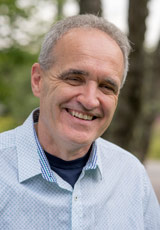
UNB Research Scholar (2018-20)
PhD
Hazen Hall 325A
Saint John
Senator Jim Quinn
- Province: New Brunswick
- Affiliation: Canadian Senators Group
- Telephone: 613-944-1050
- Email: jim.quinn@sen.parl.gc.ca Electronic card
- Staff: Skinner, Lyle; Auer, James
https://www.linkedin.com/in/lyle-skinner-0789a613/?originalSubdomain=ca

https://www.canadianlawyermag.com/news/general/unb-law-school-in-turmoil-following-departures/273027
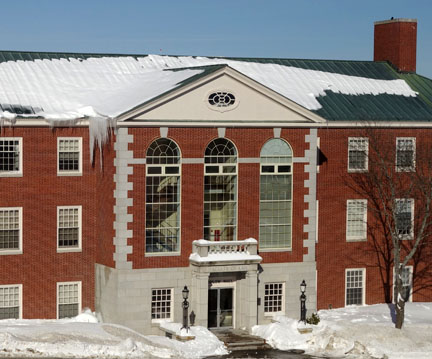
UNB law school in turmoil following departures


 Levitt’s
not the only faculty member to have decamped from “Canada’s great small
law school.” After Levitt’s leave of absence was announced, associate
dean Janet Austin resigned from that position but is still a professor
at the law school. In addition, three other law profs have taken medical
leave.
Levitt’s
not the only faculty member to have decamped from “Canada’s great small
law school.” After Levitt’s leave of absence was announced, associate
dean Janet Austin resigned from that position but is still a professor
at the law school. In addition, three other law profs have taken medical
leave.Retired Supreme Court of Canada justice Gérard La Forest also recently resigned as scholar-in-residence.
“Not everyone is comfortable with the change that I represent,” Levitt told the Fredricton newspaper The Daily Gleaner on Monday.
He noted that even though he is currently on leave, he remains dean of the school.
There have been reports from students about tension between Levitt, who came to UNB from Florida A & M, and the law school faculty members. Some suggest Levitt wants the law school to become an international boutique law school with increased enrolment. The school currently admits just 90 students a year with a total student body of about 230.
In his bio on the school web site, it says: “During his term as dean, Dr. Levitt will be working to increase enrolment, foster the faculty’s reputation, develop a strategic plan for academic programming and research and work with UNB’s development office in raising funds for the faculty of law.”
For its part, the university is citing “sensitive personnel issues” as the reason it has remained tight-lipped on Levitt’s absence and the faculty departures.
Former acting dean John Williamson is now serving as interim associate dean. However calls to Williamson and other staff at UNB were not returned today.
“We’re focused on helping our students, faculty, dean, and staff at the law school. As you can appreciate, the privacy of our employees is important. Indeed, we are not only morally but also legally obliged to protect it. So we will not be commenting in any detail on the issue right now,” says senior manager of communications David Stonehouse.
In addition, Stonehouse said the university is “actively engaged with students and acting on issues as they bring them to our attention as soon as we can.”
Stonehouse referred to a meeting Jan. 29 in which UNB president Eddy Campbell and vice president of academic affairs Tony Secco spoke with students. However some students said it was not helpful to those anxious about what all the upheaval means to the reputation of the school in the eyes of law firms looking to hire students.
Some students at the law school are waiting for grades from some of the professors who are on leave and wondering what will happen with the balance of the year. Some are concerned it will affect their ability to apply for jobs with law firms for the summer.
With a faculty of 17, and with five now absent, students have concerns about the gap that has left and the impact it could have on their studies.
Lyle Skinner, a UNB law student and representative on the UNB Senate, wrote a letter to administration asking them to “improve the relationship between the Dean and faculty” if Levitt returns.
"The university administration should be more willing to communicate and engage with students on the vision of what the Faculty of Law should be. I appreciate the administration cannot comment on employment matters but they should be willing to foster a public discussion on the future of the law school and its role in the larger legal community," says 3L Skinner.
Skinner pointed out the law school has had four deans in two and a half years and UNB experienced a faculty strike in early 2014.
Meanwhile, the Law Students Society has urged students not discuss the matter with the media. While many students grate at the idea of having their free speech curtailed, most of them aren’t willing to speak on the record about what’s happening.
Levitt arrived at the school in the fall from Florida A&M with big plans, some say, to expand it to be more international in terms of study. However, documents obtained by the Daily Gleaner from Florida A&M show Levitt’s move to UNB was to be a temporary two-year posting with plans to return to Florida.
Some say it’s not uncommon for academics who are looking to move on to seek a leave of absence from their current role while they take up the new job and ensure they want to pursue the position before they quit their current job.
Levitt is considered one of the world’s foremost authorities in the area of the law of the use of force, international human rights law, humanitarian law, peace studies, and African politics. He also holds the title of vice-chancellor’s chair in the faculty of law.
At Florida A&M University he served as professor of international law, associate dean for international programs, founding director of the Center for International Law and Justice and special assistant to the provost. He formerly served as a professor of law at Florida International University and DePaul University. He holds a PhD from the University of Cambridge, a JD from the University of Wisconsin-Madison and a BA from Arizona State University.
Update 5:40 pm: Comments from Skinner added.

No comments:
Post a Comment