The Quebec premier said the asking price didn't reflect the assets the utility was going to acquire.
"The deal didn't work out, and that's too bad. We hoped it would, and I think we all were in this with good faith," Charest said.
"This won't prevent [Quebec from working with New Brunswick], and Hydro-Quebec will continue to deploy its energy strategy, including exporting."
Quebec, N.B. strike $4.8B deal for NB Power
New Brunswick Premier Shawn Graham and Quebec Premier Jean Charest announced the historic deal in Fredericton on Thursday, concluding a week of speculation.
The deal is contingent on legislative approval in New Brunswick.
It stipulates that Hydro-Québec would take over the majority of New Brunswick's generating stations for $4.8 billion, which represents the equivalent of NB Power's debt.
Additionally, Hydro-Québec would freeze residential power rates in New Brunswick for five years. During the same time, large industrial rates would be lowered to the power prices offered to the same customers in Quebec, but they would not be frozen. That component of the deal is worth an estimated $5 billion to NB Power customers.
'Big winners'

"And ratepayers would see reduced rates to an extent that would have been impossible for NB Power as a stand-alone entity."
Charest said at the news conference that the region's geography made the deal make sense considering the desire to tap into the power-starved U.S. market.
Both premiers used the news conference to address the criticism of Newfoundland and Labrador Premier Danny Williams, who said the deal could hinder his province's ability to transmit its hydro power into the United States.
Charest said he supports open markets and Quebec is eager to work with other provinces.
"The real question for Canadians is this, it isn't whether or not one [province] is succeeding better than the other," he said. "The real issue, if we have our eyes on the ball, is to the south of us, that is where things are going to happen.
"The Americans need clean, renewable energy and they need a lot of it. And guess what? We in Canada are the ones that can supply it. And by doing that, we can make our environment better and we can enrich our respective societies by doing so. There is a condition though: We have to learn to work together."
Now that the proposed deal with New Brunswick has been struck, Charest said his province is negotiating with Prince Edward Island to sign a similar agreement.
Charest said there is no timeline on obtaining a deal with P.E.I.
No impact on Quebec power rates
After the five-year rate freeze is lifted, rates would rise based on New Brunswick's consumer price index. However, the price of any new generation needed in the province could be added by Hydro-Québec.
Under the agreement, Hydro-Québec gains access to more than 370,000 customers and expects a return on equity of more than 10 per cent starting in the first year. The proposed deal will not have any impact on Quebec's power rates.
The proposed deal will wipe out NB Power's $4.8-billion debt, which is 40 per cent of the province's total debt. That debt will stand at $8.2 billion after the deal is approved.
New Brunswick will have to make legislative changes early in the new year as the agreement is designed to take effect on March 31, 2010.
Graham said if the deal is not concluded by March 31, 2010, then NB Power will boost electricity rates by three per cent as originally planned.
Opposition Leader David Alward is demanding Graham call an election over the proposed NB Power sale.
3 stations retained by NB Power

The Dalhousie Generating Station will be shut down next year under the agreement, a decision that will be another blow to the northern town that has been reeling after a series of other closures in recent years.
"It's also very important for me to speak to the community of Dalhousie, which will see its generating station phased out," Graham said.
"We will stand by your community and we are already hard at work to find a variety of new opportunities for you."
David Hay, the president and chief executive officer of NB Power, is expected to be in Dalhousie later on Thursday to discuss the impact of the deal with workers in the northern community.
New Brunswick will retain control of Coleson Cove and Belledune, and will sell the power back to Hydro-Québec.
Under the proposed agreement, the Point Lepreau nuclear generating station, Atlantic Canada's only nuclear reactor, will remain under NB Power's control until its $1.4-billion refurbishment project is concluded in February 2011.
The reactor refurbishment project is 16 months behind schedule. However, if the energy pact is approved, it could lessen the financial burden.
Instead of purchasing replacement power on the open market, Hydro-Québec will supply cheaper hydro power to the province.
Also under the proposed agreement, New Brunswick's Independent System Operation will be rolled into Hydro-Québec. That will give control over the transmission lines in New Brunswick to Hydro-Québec.
However, any utility or company that wants to use the transmission lines must bid for it in an open auction.
Quebec balked at NB Power sale costs
Premier says door still open to comprehensive environmental review of gas plant project near Centre Village

Premier Susan Holt speaking at her news conference today
Premier Holt says her government has not ruled out a comprehensive environmental impact assessment of the proposed PROENERGY 500 MW gas/diesel plant on the Chignecto Isthmus.
“We have a lot of questions that the provincial government continues to ask of the proponent as we go through the EIA process which includes the consideration of a comprehensive review,” she said today during a news conference in Fredericton.
“So we don’t have a final decision on that point, at this time,” she added.
At its meeting last week, Tantramar Town Council approved sending a letter to various officials, including the premier, asking for a comprehensive environmental impact assessment as well as continued engagement on the project.
Holt said she is aware of concerns of the Tantramar community adding that she’s met with residents and talked to members of town council to understand what’s been happening.
Mi’kmaq involvement
Holt spoke generally when asked what she’s been hearing from members of Mi’kmaq First Nations communities about the gas plant project.
“We’ve been hearing that there has been quite a bit of conversation between MTI and the North Shore Mi’kmaq Tribal Council as well as the Chiefs directly involved,” she said mentioning Chief Rebecca Knockwood of Fort Folly First Nation by name.
 Mi’gmawe’l Tplu’taqnn Inc. (MTI) is the non-profit organization that represents the nine Mi’gmaq First Nations in the province.
In August, the Chiefs who lead MTI said the gas plant could not proceed until it undergoes a rigorous, Mi’kmaq-led, rights impact assessment.
In its September update on the project, PROENERGY said it was supporting a Mi’gmaq Rights Impact Assessment to gauge potential effects on Mi’gmaq Aboriginal and Treaty Rights.
“This allowed the MTI technical team to visually see and walk the grounds as well as have the Elder conduct a tobacco offering while at the site,” the US company’s update added.
Earlier, both PROENERGY and NB Power had claimed that the North Shore Mi’kmaq Tribal Council had invested in the project, but it emerged later that no such partnership actually existed.
The Tribal Council, which represents seven of the nine Mi’kmaq First Nations, has a newly created Indigenous Sovereign Wealth Fund that works with industry on clean energy projects to create economic independence for its member First Nations.
“There’s actually a number of projects that both MTI and NSMTC (North Shore Mi’kmaq Tribal Counci)l have been working on,” Holt said today.
“I think this one [the gas plant project] has prompted some pretty good conversation and we’re available and listening to see what decisions are coming out of these groups as they work through it,” she concluded.
PEI co-op opposing proposal for 2 PROENERGY gas/diesel turbines in Charlottetown
 A
community-based advocacy co-op on Prince Edward Island is speaking out
against plans to install two PROENERGY combustion turbines in
Charlottetown at a cost of $334 million.
A
community-based advocacy co-op on Prince Edward Island is speaking out
against plans to install two PROENERGY combustion turbines in
Charlottetown at a cost of $334 million.
The co-op, Energy Democracy Now, was responding to the privately owned power company Maritime Electric’s proposal to install two 50 MW turbines in addition to the 10 that NB Power wants built on the Chignecto Isthmus near Centre Village.
Maritime Electric applied for approval to install the turbines to the PEI commission that regulates electricity in August.
In its application, the company said it had received a “time-sensitive” opportunity to join with NB Power in ordering the turbines to meet rising electricity demand on the Island.
The company says that in a meeting with PROENERGY, the US company said it typically does not pursue projects of less than 300 MW, but that it could consider a 100 MW project with Maritime Electric if the schedule aligned with NB Power’s project so that resources and costs could be shared between the two.
Maritime Electric says it intends to install two additional two-million litre ultra-low sulfur diesel storage tanks at the Charlottetown Generating Station site. “This amount of fuel storage ensures that all three combustion turbines located at the Charlottetown Generating Station can operate at full load for a minimum of seven days without additional fuel deliveries,” its application says.
Town hall
On October 6th, Energy Democracy Now, held a town hall at the Charlottetown Library to express opposition to the project.
“First of all, P.E.I. has made a firm commitment to get to net zero by 2040. You don’t get to net zero by putting in two gigantic jet engines on your waterfront to make electricity,” Darcie Lanthier told the CBC during the meeting.
According to her Facebook page, Lanthier is president of Solar Island Electric Inc. She also serves on the board of Energy Democracy Now which says on its website that “the climate crisis demands more than small fixes — it requires a bold shift from corporate control of fossil fuels to renewable energy that is owned, governed, and guided by local communities.”
At the town hall, attended by about 30 people, Lanthier told the CBC that alternatives such as batteries, smart meters and prices that encourage the use of electricity during off-peak hours would be better than burning gas and diesel.
“We’ve spent millions and millions of dollars getting homeowners to get off oil and electrify their systems, and that’s the correct step. But then we cannot turn around and add fossil fuels to our electricity mix. It just defeats the whole purpose,” she said.
Maritime Electric says the generating capacity that would be supplied by the PROENERGY turbines is needed to meet peak demand in the most cost-effective way by 2028 and to avoid the risk of grid failures.
“Solution represents the only viable and cost-effective path to mitigate this risk within the required time frame,” its application for approval states.
To read the Maritime Electric application to the Island Regulatory and Appeals Commission (IRAC), click here.
For CBC coverage, click here and here.

Facebook slide posted by PEI group Energy Democracy Now
NS pursuing gas plant
Meantime, Nova Scotia’s new independent energy system operator (IESO) announced last week that it is seeking expressions of interest from organizations that “would build, own and operate at least 300 megawatts of fast acting gas fired electricity generation.”
In a news release, the IESO said it has identified two possible locations in Pictou County near a natural gas pipeline.
The release quotes Johnny Johnston, President and CEO of IESO Nova Scotia:
“Under Nova Scotia’s Clean Power Plan, coal plants are soon closing and renewable energy is significantly increasing. To ensure the province’s ambitious clean energy goals for 2030 and beyond are met, Nova Scotia needs fast acting generation that acts as a counterbalance to changing winds and is ultimately there to provide stable, reliable and affordable electricity at those rare times when the wind isn’t blowing and the sun isn’t shining.”
To read the IESO news release, click here.
For CBC coverage, click here.
Is debt-laden NB Power heading for a bailout?
By: John Chilibeck, Local Journalism Initiative Reporter. Source: The Daily Gleaner
October 12, 2025

Duncan Hawthorne. Photo: NB government
Lost in some of the news about big electricity price hikes in New Brunswick is a severe and growing financial problem.
NB Power, the Crown corporation that provides electricity to 393,000 residential and business customers, has a ballooning debt load that will only get heavier as it swallows more money for capital projects.
And now one expert is musing that the provincial government will have to step in to take on some of that debt burden, what some would decry as a bailout.
“There are lots of ways you can restructure the debt,” said Duncan Hawthorne in an interview with Brunswick News.
“There’s a question about how much debt should the utility hold versus how much debt should the government bear? And that’s a conversation between the taxpayer and ratepayer. We will be looking at that.”
Hawthorne, an engineer from Scotland, has been an executive in the electricity business for four decades, including 16 years as the CEO of Bruce Power in Ontario, running eight nuclear reactors on Lake Huron for a profit.
More recently, he was one of three experts hired by the Holt Liberal government to do a comprehensive review of NB Power.
Speaking from the United Kingdom in a recent interview, Hawthorne said NB Power would likely have to spend $20 billion to $30 billion by 2040 to keep up with growing electrical demand.
As part of the push for more electricity, utility officials want to refurbish aging power plants such as the Mactaquac Generating Station near Fredericton, at a cost of billions.
“When you look at some of these big capital investments, like Mactaquac and other things, is that a ratepayer burden or a taxpayer burden? Obviously, you could argue it’s part of each. Yes, it’s about the supply of electricity, but it’s also about infrastructure that plays a critical role. We will be commenting on the debt structure and how it might be handled.”

NB Power CEO Lori Clark testifying at the legislature’s public accounts committee on October 10
Earlier this month, when CEO Lori Clark announced the public utility would be seeking a 4.75 per cent rate increase next year for electricity prices, after raising rates by 24 per cent over the previous three years, she also told reporters that it would ramp up spending to improve its generating stations and replace aging powerlines.
“We’re going into a period at NB Power where we’ll have significant capital investment,” she said at the press conference.
“We actually have $1 billion in capital investment coming on in the next year or so that we’ll have to fund through a combination of earnings and debt.”
During a technical briefing, utility officials said they’d hike capital spending for big projects such as a re-tooling at the Point Lepreau Nuclear Generating Station near Saint John from around $600 million a year to $1.1 billion next year, with annual spending of $1.5 billion in subsequent years, more than double than normal.
As it stands, NB Power carries a net debt burden of close to $5.7 billion, according to its latest quarterly report released in June, or about $14,500 on average for each of its customers.
The high debt is backstopped by NB Power’s only shareholder, the provincial government, which helps the utility get a lower rate of interest when it borrows money.
The Alward Progressive Conservative administration was so concerned about NB Power’s debt load 14 years ago, it instructed the utility to reach a debt-to-equity ratio of 80 per cent to 20 per cent. Notably, it came without any pressing deadline.
Such a ratio gives a sense of how financially secure a company might be. It’s calculated by dividing its total liabilities by its shareholder’s equity, showing how much debt is used to finance assets compared to the amount invested.
A higher figure up front suggests heavier debt dependency and more financial risk. And on this metric, NB Power has been going in the wrong direction. Most recently, its debt-to-equity ratio crept up to 93-7.
The Higgs Progressive Conservative government in 2019 tried to clamp down, demanding NB Power hit the lower 80 per cent target by 2027.
When NB Power officials warned such a deadline would propel rates to skyrocket, the Higgs government backed down and extended the payback period to 2029.

Susan Holt and her gov’t lifted the deadline for NB Power to improve its debt-to-equity ratio. Photo: Wikipedia
Soon after the Liberals came to power last October, NB Power warned the rates next year would have to climb substantially without extending the deadline further. Indeed, Clark told reporters earlier this month the rates would have had to have moved 15 per cent higher next year without a reprieve.
Sensing the public had no appetite to swallow such an enormously higher price for electricity, the Holt Liberal government got rid of the deadline, but nevertheless said it wanted to see meaningful progress on the ratio.
Clark suggested to reporters on Oct. 1 it may no longer make sense just to look at that one financial metric.
“When the debt-equity target was set we were in a period where we didn’t actually have a large capital investment portfolio ahead of us,” the CEO said.
“And now we have Mactaquac and the investments we’ve made in Lepreau. So, the timing now is such that it’s probably not the most appropriate measure going forward.”
For his part, Hawthorne said it was normal for a public utility to have a lot of debt because it needs to borrow to build expensive power stations, power lines and the like.
But he said the real issue is whether enough money is made from selling electricity to ensure it can pay the debt back.
And as the businessman has told people who have come to the review panel’s public consultation sessions, the real challenge is for NB Power to perform better, particularly at its nuclear generator.
Point Lepreau has rated near the bottom of performance for any similar nuclear plant in North America.
“Even if the debt is forgiven, how do we know it’s not going to come back again? You just cleared the slate for five years, and in five years, you have another debt burden. So, part of this is recognizing that everything is connected and that strong-performing assets generate revenue. That revenue can be used to keep rates low and pay down debt.”
More public sessions
The review panel is scheduled to hear people at public engagement sessions in Miramichi, Caraquet, Bathurst, Edmundston and Woodstock in the last week of October.
Most people in previous sessions have worried about high electricity bills, or talked about the need to get to a net-zero electricity system, free of fossil fuels that harm the planet through greenhouse gas emissions.
But Hawthorne will keep repeating the same message: if you make job number one maximizing the performance of existing power plants, ratepayers will benefit.
“It will negate the need to buy power from other places, it will allow you to keep rates down for consumers. For me, when you have a lot of assets, you have to start with optimizing the performance of them.”
How will all the repairs and improvements at NB Power’s fleet of 12 power plants, several hydro stations and nuclear generator be funded?
Hawthorne suggested that besides the provincial government stepping in, there could be a role for Ottawa, through the Canada Infrastructure Bank or other means. He admitted that a $30-billion to $40-billion tab over the next 15 years was enormous.
“Those are big numbers. There are lots of ways to get it. You have to decide if there are alliances and partnerships with the private sector, will some of the large industrials be able to self-generate.
“Could we have better ties with neighbouring jurisdictions? Because ultimately, these things are coming whether you like it or not. The assets are aging and have to be replaced.”
This story from Brunswick News was written by Local Journalism Initiative Reporter John Chilibeck.
Opponents of NB Power gas/diesel plant applaud EUB ruling

Tantramar MLA Megan Mitton
Tantramar MLA Megan Mitton says she’s relieved that the province’s Energy and Utilities Board has ruled that it does have jurisdiction to review NB Power’s plan to build a 500 MW gas and diesel plant near Centre Village.
“I’m certainly relieved that there is another process NB Power has to go through and that the EUB will be reviewing it and ideally see what a terrible plan it is,” she adds.
“This isn’t a charity project and it’s going to be very expensive for New Brunswickers who are going to be on the hook for more than a billion dollars.”
Under the provincial electricity act, NB Power is required to apply to the EUB for review and approval of capital projects over $50 million.
But, during EUB hearings last month, NB Power lawyer John Furey said that the law doesn’t apply because the American company PROENERGY would be taking on the financial risks of building and operating the plant.
Therefore, he argued, the plant would be PROENERGY’s capital project, not NB Power’s.
Today, the EUB firmly rejected his argument, ruling that the proposed gas plant would be an NB Power capital project and therefore, the board has jurisdiction to satisfy itself that the project is financially prudent before approving it.
Moe Qureshi of the Conservation Council of New Brunswick says he’s pleased with the EUB ruling.
“I feel good about it because the project will be getting a review and there’s going to be more transparency and more discussion about the financial prudence of this project,” he said in a telephone interview.
“So for us, you know, this is a win for accountability. NB Power rates are going up again and we want to make sure that any project that’s being proposed, whether we agree with it or not, needs to be reviewed.”

Moe Qureshi testifying before a legislative commitee in 2023
At the same time he says, it’s too bad that the EUB will only be looking at finances and not the potential environmental effects of a fossil-fuel-burning generating plant on the Chignecto Isthmus.
He points out that, under new legislation, Nova Scotia’s Energy Board is required to consider environmental effects and climate change in its decisions.
Megan Mitton agrees that the EUB should be doing that too.
“We actually had experts come to hearings two years ago and some of them gave really great recommendations about legislative changes we could make including improving the mandate of the EUB,” she says.
Meantime, John Chilibeck, local journalism initiative reporter for Brunswick News writes that an NB Power spokeswoman said the utility respected the EUB decision.
“We are prepared to file evidence in support of this project,” Elizabeth Fraser wrote in an email to Brunswick News.
For CBC coverage, click here.
Town councillors say they don’t trust US company proposing to build gas/diesel plant in Tantramar

PROENERGY Canada President John MacIsaac answering questions last night at Tantramar Town Council
About 70 people crowded into the council chamber at Tantramar Town Hall on Tuesday to hear PROENERGY Canada President John MacIsaac make a five-minute presentation and respond to questions and comments from members of council.
“We have spent considerable time with New Brunswick skilled trades in ensuring that the benefits happen here first,” MacIssac said referring to the 500 MW gas/diesel plant that PROENERGY is planning to build on the Chignecto Isthmus near Centre Village.
“We’ve taken New Brunswick skilled trade entities to both Sedalia, Missouri and to some of our plants in Houston, Texas as well,” he added.
As he spoke, MacIsaac showed a slide that also mentioned his company’s collaboration with Mi’kmaq First Nations, but he did not refer to it verbally.
Later, Councillor Allison Butcher did.

Councillor Allison Butcher asked about the apparent lack of Indigenous participation
“There are no Indigenous groups backing this right now. We were told there was,” she said.
Butcher was referring to PROENERGY’s claims in documents filed with federal regulators and in community open houses last summer that the Mi’kmaq North Shore Tribal Council had invested in the gas plant project and would be co-owners of it.
“I feel like I’ve already been told things that weren’t completely true,” she added.
“So when I hear these great new things about how it will work, I can’t in good faith believe it because I’ve been told things before that weren’t true from you.”
MacIsaac responded that he stood by his former statements about Indigenous participation.
“I would invite you to fact-check me,” he told Butcher, adding that she should submit an access to information request for the supporting documents PROENERGY submitted to NB Power in response to the utility’s request for proposals (RFP) from companies interested in building and operating a gas/diesel generating plant.
“From an Indigenous participation perspective, what I said, and I stand by what I said,” MacIsaac told Butcher.
“What I said was from the outset, when we started proactively very early with Indigenous conversation back in 2024, and I would invite you to fact-check me…by going back and submitting an access to information (request) for the supporting documents that accompanied our response to the RFP.
“And then, I’m more than happy to come back and have the conversation over again,” MacIsaac said.
He gave the same “fact-check me” advice to Councillors Bruce Phinney and Michael Tower when they, too, raised what they saw as PROENERGY’s false claims about Mi’kmaq participation in the project.
Goguen questions location

Councillor Josh Goguen
Councillor Josh Goguen complained that council and the community did not receive proper notice of the gas plant project.
“We only got the notice on Facebook, of all places, before it even came out to council to say there was something coming in the area,” he said.
“For all this time, it was set up to be in Scoudouc and all of a sudden, it’s not in Scoudouc anymore.”
MacIsaac responded that NB Power looked at eight separate locations before narrowing it down to two, Scoudouc and Centre Village.
“At the end of the day, the impacts to the site were less, materially less, in Centre Village than they were in Scoudouc,” he said as members of the audience murmured in disbelief.
MacIsaac urged members of council to ask for more information from NB Power on how the sites were chosen.
“I asked them to put together an executive summary on the siting process,” he said,
“They now have that ready and it’s going through peer review internal to NB Power. So, I’d encourage you to go and ask them for it.”
Goguen also questioned whether the gas/diesel plant would burn fuel only 6-7% of the time as MacIsaac had claimed.
The councillor said he had heard that PEI and Nova Scotia had signed agreements to take some power from the plant.
MacIsaac replied that if you read what has been publicly posted, PEI is pursuing its own power solutions.
He added that as far as Nova Scotia is concerned, “that’s a question for NB Power.”
Tower questions emissions

Councillor Michael Tower
Councillor Michael Tower said he was “disheartened” at how the community learned about the project on social media.
“So, nothing there leads to trust and I’d like to be able to trust people we deal with,” he said.
“You have a lot of stairs to climb to get to where I want to have faith in you,” Tower added.
“I’m committed to that work,” MacIsaac responded.
Tower noted that PROENERGY had declared at open houses that it would be fully open and transparent, yet spokesman Chris Evans had refused to comment when Warktimes e-mailed to ask about errors in calculating greenhouse gas emissions that Professors Jean Philippe Sapinski and Patrick Faubert found in the document that the company submitted to regulators.
MacIsaac replied that in refusing to comment, Evans was trying not to interfere in the ongoing environmental review and consultation process.
“Us commenting could be seen as us influencing or attempting to influence what is supposed to be an independent process,” he said.
MacIsaac then promised to get a response from Evans, adding that NB Power is also working on a detailed response.
Mitton unimpressed

MLA Megan Mitton
Tantramar MLA Megan Mitton, who attended last night’s council meeting, said she was “kind of floored” by how little information MacIsaac provided.
She pointed out, for example, that he had not seemed willing to comment on mistakes found in the PROENERGY environmental impact assessment document.
“I’ve been arguing that there are problems with the EIA submission, so it should be disqualified,” Mitton said.
“It’s really frustrating to see the lack of transparency when that’s one of the key things the community is demanding,” she added.
“It’s really disappointing to have elected officials asking questions on behalf of the people who elected them and to get such non-answers that barely tell us anything.”
Note: Warktimes has asked NB Power for the RFP documents that MacIsaac suggested would support his claims about Indigenous participation in the gas plant project.
Warktimes has also asked NB Power for the executive summary that MacIsaac said would provide information on how the Centre Village site was chosen.
So far, NB Power has not responded.
Expert questions NB Power plan for gas/diesel plant near Centre Village

Queen’s University Professor Warren Mabee. Photo: CONTRIBUTED
An expert on renewable energy at Queen’s University says he would need answers to a number of key questions before determining whether the proposed 500 MW gas/diesel generating plant near Centre Village makes sense.
“A lot of jurisdictions have gone to using gas plants because a gas plant can ramp up and down very quickly,” Warren Mabee, professor of geography and planning and former Canada Research Chair in Renewable Energy told Warktimes during a telephone interview last week.
“So you can get power onto the grid very fast if the wind happens to drop or if the sun goes behind the clouds and your output drops,” he said, adding that he has questions about how heavily NB Power would rely on the proposed gas/diesel plant.
“There are compelling reasons to reduce fossil fuels where possible and to utilize cleaner sources of energy. And, you know, one of the big questions about a 500 megawatt gas plant is how much of it is really going to be used as a backup,” he said.
“It sort of sounds like New Brunswick Power is planning to use this facility not only to back up the wind and solar, but really to meet growing demand.”
During a committee hearing at the New Brunswick legislature last week, Brad Coady, NB Power’s vice president of business development, said that without the PROENERGY gas plant, the province risks running out of electricity within three years.
‘Cart before the horse’
“So how much new wind and solar will be added to the grid?” Mabee asks.
He says at the moment, there aren’t enough of those renewables deployed in New Brunswick and across the Atlantic region to require a huge generator to back them up if they go offline.
“And that’s one of the questions that I would have. I think actually that’s the real pertinent question.
“To propose building the backup before the calls have been issued to build all of that wind and solar power, puts the cart before the horse,” Mabee says.
“You’re building something because you’re anticipating other power coming on, but we don’t know when that other power will come into the grid,” he adds.
“If this is going to be a backup facility for other types of energy, I’d like to know more about the other types of energy because then I’d know better whether this plant makes sense.
“Right now it seems pretty large and it seems like it’s going to be taking on more of a primary role rather than a backup role.”
Other options
Mabee said NB Power could be exploring other options.
He says, for example, Germany burns biogas to back up renewable sources.
“They run their grid almost like a series of smaller grids, where they’ve done a really good job of figuring out how to balance loads on a regional basis mostly with biogas that can be matched against wind and solar,” he says.
“In the case of New Brunswick or Nova Scotia, most of the biogas would probably come from livestock farms. You collect the manure, put it into a biogas digester, and then collect the gas and burn it to run a turbine,” he adds.
“It’s off-the-shelf technology.”
Mabee says that instead of a single, 500 MW generating plant, NB Power could rely on smaller, local biogas facilities.
“And again, if you look at the German example, that’s really the way that they’ve gone.”
‘Science fiction’

Warren Mabee. Photo: Queen’s University
Mabee says electrical generating and storage technologies are moving very rapidly and in 10 years, NB Power may regret locking itself into an expensive, 25-year contract.
“Ten years ago if you had asked me if there was a potential that we could harness the battery storage capacity of an automobile fleet to store power overnight or deliver it during the day, I would have said, ‘No, there’s absolutely no way that will ever happen.'”
Yet, he says Ford’s lightning truck already does it and the technology is rapidly advancing in China.
“The way that people use their cars is often very predictable,” he says.
“You get up in the morning, you go out, you start your car, you drive to work, or you drive to the stores or whatever, you park for a while, and then you come out.
“Now, what’s needed if you want to use that storage capacity are essentially charging stations that operate in two directions all over the place, in parking lots, at malls, at offices, at homes.”
Mabee acknowledges that technology is not available yet and there are many engineering problems left to solve.
“It sounds a bit like science fiction, and it sounds maybe a little bit like I’m reaching, but the point here is that in 10 years, the technological solutions available may look very different than what’s available right now.
“And committing to building a very large backup generating station at this point may not make as much sense a decade out as it may seem to make on paper right now,” he says.
NB Power warns province at risk of electricity shortage in 3 years
Executives at public utility argue they must forge ahead with gas plant that will emit greenhouse gases
By: John Chilibeck, Local Journalism Initiative Reporter. Source: Telegraph-Journal
October 10, 2025

Brad Coady, a vice president at NB Power, speaks to New Brunswick politicians Friday as CEO lori Clark and chief financial officer Darren Mruphy look on. SCREENSHOT
NB Power has asked an American firm to build a controversial natural gas-diesel plant at a cost of more than $1 billion because without it, the province risks running out of electricity within three years, says an executive.
Brad Coady, the vice president of business development at NB Power, laid out the possibility of a bleak future to a group of politicians on Friday who represent a province where three-quarters of people still depend on electricity for heat in the bone-chilling winter.
He told the standing committee on public accounts at the legislature that he discovered the problem during an NB Power executive meeting in the fall of 2023, when he learned the public utility had already blown through its budget for connecting new customers only halfway through the fiscal year.
NB Power had already increased that budget from the previous year by 30 per cent.
Coady said he immediately asked his colleagues in the load forecasting team to assess some figures – predictions on gross domestic product and population growth, which had spiked that year as people flooded in from other places.
Population growth
New Brunswick had its biggest surge in population growth in 2023, up nearly 24,000 or 3.1 per cent, a record in recent decades.
“When they ran the numbers through their model, the light bulb went off that we’re very quickly running out of electricity in New Brunswick,” he warned.
Without doing anything, the executive said he realized, “we are going to be short not in the 2030s, like we were originally predicting. It’s going to be in the late 2020s, 2028 to be precise. So it was at that moment that triggered a bunch of activities.”
Keeping the grid running and reliable was a major theme during the committee session Friday, as concerned politicians from all three parties asked questions for more than four hours about the utility’s ballooning, nearly $6-billion debt, and electricity rates that have gone up 24 per cent over the last three years.
NB Power also plans to boost them another 4.75 per cent next year, and possibly another 6.5 per cent in each of the following two years.
The higher costs have fuelled a public backlash.
Terms of deal remain secret
CEO Lori Clark warned them that without big spending, NB Power wouldn’t be able to keep its plants going, making the system unreliable.
Faced with the possibility of an electricity shortage in 2028, Coady said NB Power quickly put a request for proposals together in 2024 for a plant they knew could be built quickly – a gas turbine plant.
Since then, NB Power has forged a deal with the American firm PROENERGY to build it in Tantramar in southeastern New Brunswick, where the greatest population and business growth has been in the province, enough for 400 to 500 megawatts of energy that could be easily turned on whenever there isn’t enough wind to turn turbines or enough sun to reflect off solar panels.
The terms of the deal remain secret, for proprietary reasons, but NB Power wants to sign a 25-year agreement to purchase power from PROENERGY, which would own and run the plant.
Megan Mitton, the Green MLA whose riding includes Tantramar, opposes the plan because she says burning more fossil fuels would increase greenhouses gases in the atmosphere, warming the planet. Tantramar is part of the narrow strip of land between New Brunswick and Nova Scotia called the Chignecto Isthmus and is particularly vulnerable to climate change and flooding.

Green MLA Megan Mitton doesn’t want NB Power to build a gas plant in her riding in
southeastern New Brunswick. PHOTO BY JOHN CHILIBECK/ BRUNSWICK NEWS
She asked repeatedly at the meeting how much the plant and power purchase agreement would cost New Brunswick ratepayers.
Coady said he couldn’t disclose those costs for legal reasons but tried to reassure her by stating that the province’s regulator, the New Brunswick Energy and Utilities Board, and the public intervener for the energy sector, had access to the details of the secret agreement.
However, when Mitton pointed out that the same firm was building a much smaller gas plant in Prince Edward Island for about $300 million, she said it was obvious the New Brunswick version would cost more than $1 billion.
Coady agreed.
The Green politician then questioned why NB Power would forge a deal with a firm that had misrepresented its project in its environmental impact assessment. She insisted it had overlooked Tantramar as an important wildlife corridor, including fish in its brooks, and also questioned why the firm had said early on that First Nations had an equity stake in the business.
Those Mi’kmaq First Nations have since said the announcement of their partnership was premature.
“They’ve misrepresented themselves,” Mitton said. “They’ve said New Brunswick First Nations were equity partners, and they’re not. They’re putting out inaccuracies. I’d argue they’re lying.”
Brunswick News asked the firm about Mitton’s accusations, but spokesman Chris Evans said in an email, “PROENERGY will not comment at this time.”
Backup batteries
Instead of a gas plant, Mitton has demanded backup batteries be used, pointing to similar projects in Maine and Vermont, nearby states with a similar climate.
NB Power has rejected the idea, arguing it would be too costly to put batteries in for such a large amount of electricity – the CEO said it would be billions of dollars.
They also say the technology would only guarantee backup power for up to four hours.
Coady said there were times in New Brunswick in the winter when a high-pressure system moved in for up to a week with little wind, and NB Power needed a plant that was more reliable to back up wind energy.
Liberal MLA Natacha Vautour asked why an American firm had been selected, given that U.S. President Donald Trump has imposed punishing tariffs on Canadian products and has mused about turning the country into the 51st state.
The executive replied that when NB Power put out requests for expressions of interest, the political landscape was totally different.
“At that time, we had Joe Biden as the president of the United States and Justin Trudeau as prime minister of Canada. And we had very good relations between the countries,” Coady said. “The last few months, relations really started to sour with tariffs and trade wars and all these different things that NB Power has no direct control over.”
Coady said PROENERGY was selected over Canadian firms that sent in proposals because it was the only firm that could deliver the project on time. And he said the Canadian firms would have used American technology anyway.
Mitton told reporters afterward she couldn’t trust what NB Power was saying.
“They’re saying, ‘we can’t do batteries, but we should burn fracked gas and diesel in Tantramar,’ and I can’t get on board with that. I have concerns about air pollution, water usage, and obviously the climate, but also the cost.
“A 25-year contract with an American company? I’m extremely concerned. Talking about energy security! I’m really worried signing contracts with companies in the States right now.”
This story from Brunswick News was written by Local Journalism Initiative Reporter John Chilibeck.
Moncton prof questions ‘credibility’ of PROENERGY environmental summary because of ‘obvious mistakes’

Environmental Studies Professor Jean Philippe Sapinski. Photo: Université de Moncton
A professor of environmental studies at the Université de Moncton says PROENERGY, the US company that is proposing to build a fossil-fuel-burning generating plant on the Chignecto Isthmus, has grossly underestimated its greenhouse gas (GHG) emissions from burning backup diesel oil.
“The emissions that are projected for diesel are close to zero in its project summary which is absolute nonsense,” Jean Philippe Sapinski told Warktimes in a telephone interview on Monday.
“They should be at least 65,000 tonnes of carbon dioxide equivalent per year.”
PROENERGY submitted its project summary to federal regulators on July 4 as it sought environmental approval for the project.
Sapinski says that he checked with Dr. Patrick Faubert, Chaire en éco-conseil (Chair in environmental consulting) at the Université du Québec in Chicoutimi.
In an e-mail to Warktimes, Faubert said he calculated that the company underestimated the emissions from burning light diesel oil by a factor of about one million, although it also overestimated GHG emissions from burning natural gas.
In any case, he says the company’s project summary does not provide the figures needed to support its calculations.
“Sources for emission factors and heat values should be shown to judge if the calculations are realistic,” Faubert writes.
Sapinski says the total GHG emissions presented in a table on page 44 should be closer to 700,000 tonnes of carbon dioxide equivalent rather than the 910,825 figure that is shown.
 “700,000 tonnes is just as bad and as dangerous as 900,000. Right now, we can’t afford any
increase in greenhouse gas emissions,” he says pointing to record
numbers of destructive wildfires and increasingly violent hurricanes as
the climate changes.
“700,000 tonnes is just as bad and as dangerous as 900,000. Right now, we can’t afford any
increase in greenhouse gas emissions,” he says pointing to record
numbers of destructive wildfires and increasingly violent hurricanes as
the climate changes.
He adds that with “such obvious mistakes,” the PROENERGY document has little scientific credibility and he wonders if there are also mistakes in the calculations on the effects the gas plant would have on air, soil and water.
“What these calculation errors show is that, for me, the report was put together very rapidly.”
He also wonders why officials at the Impact Assessment Agency of Canada (IAAC) didn’t spot the errors before giving the gas plant project their quick approval.
“They probably didn’t read it over in any kind of detail,” he says. “Otherwise they would have spotted these problems.”
In response to a request for comment on the professors’ findings, Chris Evans, PROENERGY’s, vice-president of marketing based in Houston, Texas wrote in an e-mail:
“PROENERGY will not comment at this time.”
IAAC Communications Advisor Gina Pennesi responded to my e-mailed request for comment at 5:42 p.m. today, but did not address the questions raised by Professors Sapinski and Faubert. To read her response and my October 6th e-mail to her, click here.

Security presence visible as access road construction off Rte. 940 near Centre Village continued on Tuesday. Photo: Kristen Nicole LeBlanc, Facebook group, Stop the Tantramar Gas Plant!
‘Dismissing our Mi’kmaw voices’: Passage of Bill angers Nova Scotia Mi’kmaw leaders
By: Rosemary Godin, Local Journalism Initiative Reporter, Source: Cape Breton Post
October 5, 2025

Eskasoni First Nation Chief Leroy Denny – seen in this file photo – joined other Mi’kmaw leaders last week in condemning the action of Premier Tim Houston and L’nu Affairs Minister Leah Martin for supporting the passage of Bill 127. Denny says the government is making unilateral decisions and passing legislation with hidden agendas. Photo: CONTRIBUTED
In a strongly worded news release sent out late Friday afternoon, the Assembly of Nova Scotia Mi’kmaw Chiefs expressed anger with the Nova Scotia government over its lack of attention to environmental matters and treaty rights.
The assembly spoke out quickly Friday when the Nova Scotia Legislature wrapped up its fall session after sitting for only eight days. The session ended with the passing of Bill 127, which, among other things, makes way to criminalize Mi’kmaw land protectors and others seeking to save the environment from logging practices.
Premier Tim Houston defended the short sitting, saying the government was “efficient and productive” in bringing forward several pieces of legislation he says will benefit the public.
Members of the Assembly of Chiefs are outraged at what they perceive as the lack of consideration and respect for traditional treaties and understandings. They are calling for a meeting with Houston as soon as possible. They also expressed disappointment with the Minister of L’nu Affairs, Leah Martin.
Sipekne’katik First Nation in Shubenacadie even called for Martin to resign.
“Minister Leah Martin’s support for this legislation demonstrates a fundamental disregard for Mi’kmaq rights and a failure to uphold the province’s legal and moral obligation,” said Sipekne’katik First Nation Chief Michelle Glasgow in a statement.

Port Hawkesbury Paper suspended logging operations a month ago after Mi’kmaw protesters began setting up camps on Hunter’s Mountain in Cape Breton. Conversations are continuing among the Mi’kmaq, provincial government and the logging company. Photo: Aaron Beswick/Saltwire
Bill 127
Glasgow echoed the assembly’s press release in strongly opposing legislation to criminalize Mi’kmaw who gather to protect their Treaty lands by blocking logging roads.
The assembly’s press release also took aim at Martin, who was an executive assistant to the premier in 2023 and became the first Mi’kmaq MLA less than a year ago in 2024. She serves the constituency of Cole Harbour and is the Minister of L’nu (Mi’qmaw) Affairs.
The press release from the Mi’kmaw Chiefs expressed their concern about the minister and bureaucrats “believing they can speak on behalf of the Mi’kmaw Nation, and how Premier Houston and his government are changing things for the convenience of government, yet ignores processes long-established with the Mi’kmaq of Nova Scotia.”

Nova Scotia’s L’nu Affairs Minister Leah Martin has angered the Assembly of Nova Scotia Mi’kmaw Chiefs by her support of a bill that could criminalize people taking part in Mi’kmaw protests against logging and other environmental concerns. Photo: CONTRIBUTED
Bill 127 now makes it illegal to block access to logging roads on Crown land. It comes at a time when Mi’kmaw from across the province have travelled to Unama’ki (Cape Breton) to support those gathered at camps set up on Hunter’s Mountain, where logging companies have long provided lumber for Port Hawkesbury Paper and other companies.
Cape Breton MLA and Interim Liberal Leader Derek Mombourquette said the decision to bundle several amendments into single legislation — called omnibus bills — was nothing but an attempt to limit full debate and confuse the public.

We not only hold Treaty Rights, but also Aboriginal Rights, Jurisdictions and Title, as we never ceded or surrendered our lands, waters and resources,” said Chief Terrance Paul of Membertou First Nation. Photo: CONTRIBUTED
Rightful owners
Eskasoni Chief Leroy Denny, co-chair of the assembly, said: “We were gathered for the past two days at a Treaty Education Conference, talking about our rights and our rightful place on these lands and waters, while Nova Scotia was making unilateral decisions and pushing through legislation with hidden agendas to stifle the voices of our Nation.”
In its release, the assembly – which is made up of 13 chiefs of each of Nova Scotia’s First Nation communities – said it wants to make clear that “as the Rightful owners of these lands and resources, other levels of government need to understand that the Mi’kmaq also have a jurisdiction over how their territory is used.”
The assembly said Nova Scotians should be frustrated with a government they feel is circumventing systems built with the Mi’kmaq to push through changes – legislative or otherwise – to make things easier for themselves, yet ignores responsibility to the environment.
“Premier Houston and his government need to know that they are not the only ones calling the shots here in Mi’kma’ki. We not only hold Treaty Rights, but also Aboriginal Rights, Jurisdictions and Title, as we never ceded or surrendered our lands, waters and resources,” said Chief Terrance Paul of Membertou First Nation. “Making decisions without us is unconstitutional and wrong.”
Meeting sought
The assembly wants to meet with Houston immediately.
“He must be reminded that his government is bound by Peace and Friendship Treaties with the Mi’kmaq,” the press release says. It calls on the premier to live up to and respect the nation-to-nation obligation reconciliation efforts call for.
The historic Peace and Friendship treaties were signed in the Maritimes and Gaspé among the Mi’kmaq, Wolastoqey, and Passamaquoddy Nations before 1779. Those treaties said nothing about the surrender of lands and resources. Rather, they recognized Mi’kmaq and Wolastoqiyik (Maliseet) title and established the rules for what was intended to be an ongoing relationship between nations.
According to an initiative in PEI called “L’nuey,” the Peace and Friendship treaties guarantee the Mi’kmaq right to hunt, fish, gather, and earn a reasonable living, and still stand today.’
“While these treaties sought to achieve a peaceful coexistence, the Mi’kmaq were never conquered and never surrendered, gave up or ceded their land. Mi’kma’ki is still Mi’kmaq territory.”
Against historic treaties
Chief Sidney Peters of Glooscap First Nation and also co-chair of the assembly expressed frustration at the provincial government’s speed of this last sitting and says it goes against the historic treaties.
“Making decisions at this speed, while clearly dismissing our Mi’kmaw voices and concerns, is not peace and friendship. Premier Houston and his government need to build a better understanding of what it really means to be Treaty partners,” said Peters.
In its statement, the Assembly of Nova Scotia Mi’qmaw Chiefs said that as the Chiefs continue to push to meet with Premier Houston, they will also be looking into all possible legal remedies and mechanisms that can be taken to ensure they can protect Mi’kmaw people, communities and collective rights.
In the meantime, the gathering on Hunter’s Mountain has been ongoing since Sept. 4. Daily prayers and ceremonies have been held at camps set up on the side of the road by Mi’kmaw who say they are prepared to stay for the winter or “as long as it takes.”
IN A NUTSHELL
Mi’kmaw concerns
Mi’kmaq land protectors are against the clear-cutting of forests on Hunter’s Mountain, asserting that it harms crucial moose habitat, disrupts water flow, and is occurring without the “full, prior and informed consent” of the Mi’kmaq people, as required by the treaties.
Logging company concerns
Port Hawkesbury Paper directly employs approximately 325 people, with a total of nearly 700 additional indirect jobs created in related businesses and services. The facility is a significant economic contributor to Cape Breton.
It suspended its operations on Hunter’s Mountain at the beginning of the Mi’kmaq protest as it remains open to discussions about environmental safeguards with the Mi’kmaq leadership.
To read the Assembly of Nova Scotia Mi’kmaw Chiefs news release, click here.
This story from the Cape Breton Post was written by Local Journalism Initiative Reporter Rosemary Godin.
Provincial utility seeks another steep rate hike as electrical bills continue to soar
By: John Chilibeck, Local Journalism Initiative Reporter, Source: The Daily Gleaner
October 2, 2025

Transmission lines near the Point Lepreau generating station. Photo: Number Six (bill lapp), Wikimedia Commons
NB Power is seeking a 4.75 per cent hike to electricity rates next year for all its customers, a move that would add a little over $130 annually to the average residential bill alone.
In filings to the New Brunswick Energy and Utilities Board on Wednesday, NB Power seeks permission for the big rate hike next April following three punishing years of even higher increases.
And the financial pain for residential and business consumers could get even worse in the years ahead.
A three-year plan put forth by the public utility to the independent regulator suggests that in 2027, NB Power will seek a 6.5 per cent hike, and in 2028 another 6.5 per cent increase for its 393,000 customers.
“What I want customers to know is we will do everything we can to minimize that rate increase,” NB Power CEO and President Lori Clark told reporters in Fredericton about the potential hikes of 6.5 per cent.
Using a chart, the executive showed that since 2011, the annual rate hikes had been “very low. In fact, lower than the consumer price index, lower than inflation, and as a result, we’re at a place where we need to make infrastructure investments in our system.
“We always try to keep rates low and it’s always a last resort before we raise rates for customers, but we are at a place where in order to continue to provide secure, safe and reliable electricity for New Brunswickers now and into the future, we need to deal with the infrastructure deficit that we have and the new assets we need to bring onto the system to deal with the increasing load in the province.”
Public backlash
The last time that NB Power applied for and received higher rates from the independent regulator, it fuelled a public backlash.
 Over
the last three years, NB Power has hiked rates on average by 5.68 per
cent (2023), 9.14 per cent (2024) and 9.14 per cent (2025). That 24 per
cent increase was much more than inflation in New Brunswick leading up
to those years of closer to 13 per cent.
Over
the last three years, NB Power has hiked rates on average by 5.68 per
cent (2023), 9.14 per cent (2024) and 9.14 per cent (2025). That 24 per
cent increase was much more than inflation in New Brunswick leading up
to those years of closer to 13 per cent.
This year’s April 1 rate hike alone will cost the average residential customer about $244 more annually.
But Clark argued that NB Power was suffering from years of provincial government meddling in the rate setting process, forcing freezes or limits to price increases, when costs were steadily going up.
The chart she had showed that over the last 15 years, NB Power either was forced by the provincial government to keep rates artificially low or was routinely told by the regulator it couldn’t have exactly what the utility wanted.
It resulted in an average annual rate increase of 1.35 per cent over the first 12 years, lower than the annual inflation rate over the period of 2.2 per cent.
She said the insufficient rate increases meant NB Power couldn’t pay off about $1.5 billion in debt.
Competitive rates
NB Power executives insist local rates remain competitive with neighbouring provinces, other than hydro-rich Quebec and Newfoundland and Labrador, and point out that many places in Canada have recently asked for rate increases higher than 4.75 per cent.
Anti-poverty critics, such as the Human Development Council, say this overlooks the fact that the sting of bills is felt greater in New Brunswick because so many consumers depend on electric baseboard heating, and their incomes are relatively lower.
Energy Minister René Legacy released a statement to the media on Wednesday about the proposed rate hike, which still needs to be examined in detail by the regulator before it’s approved.
The board is expected to hold public hearings in early 2026, with a decision sometime before April 1, when bills would rise.
“NB Power’s rate application to New Brunswick’s Energy and Utilities Board is a normal process for the utility,” he said. “It is an opportunity for customers, industry, and others to participate and offer feedback. Government will be following the proceedings as they unfold over the months ahead.”
Political reaction
Other politicians were more willing to assign blame.
Kris Austin, the energy critic for the Progressive Conservatives, the biggest opposition party in the house, pointed the finger at the Liberal government.
“New Brunswickers who are already strapped and struggling are asking where and when this will end,” he wrote in an email. “What we have heard is more and more rate hikes are coming. The government has a few months left on their NB Power review exercise but what we have learned so far does not sound encouraging for ratepayers.”

Green leader David Coon. Photo: Warktimes
David Coon, leader of the small opposition Green party, said NB Power’s fiscal woes stemmed from the Point Lepreau nuclear station, whose refurbishment in 2012 went more than $1-billion overbudget and has been plagued with breakdowns, making it one of the poorest performing plants of its kind in North America.
Before the refurbishment, the regulator warned that a revamp of Point Lepreau would create too much cost uncertainty, a recommendation the provincial government ignored.
When working, Lepreau provides a huge amount of baseload power – about one-fifth of NB Power’s total generation. NB Power just signed a support services agreement with Ontario Power Generation, which runs Canada’s biggest nuclear fleet, on Sept. 1 for $26 million, with the aim of improving the plant’s performance.
“The higher rates speaks to the unreliability of the nuclear plant,” Coon told Brunswick News in an interview. “It’s been down for quite awhile again, and the cost of repairs keeps driving up to keep it running. That’s been what’s driving the increase in power rates.”
Lepreau was down much of last year, a chunk of it unplanned, and is under a planned maintenance shutdown right now, about 80 days into a 140-day outage.
Coon argued that NB Power should wean itself off of Point Lepreau and plan to replace it with wind energy, backed up by massive batteries, and integrated with neighbouring utilities, such as Hydro- Québec.
“The onus is on the premier to significantly increase the energy efficiency budget and implement the solar retrofit program they’ve been promising,” the leader said, referring to Liberal Premier Susan Holt. “It would help ratepayers get their overall costs down in the face of increasing rates.”
Energy efficiency
NB Power plans to spend $51 million this year on energy efficiency programs, that, combined with provincial and federal programs, will be worth about $170 million. It’s supposed to help about 35,000 customers find savings.
But Coon said that was hardly enough, pointing out that next door, far more was being spent by Efficiency Nova Scotia.

Smart meter. Photo: NB Power
Rate hikes over the last two years took place while the public utility installed smart meters, a process that’s expected to wrap up by the end of this year, at a cost of more than $100 million.
For people who don’t like advanced meters, as they are called, NB Power is offering to keep them on traditional meters, but at a cost: It is proposing an opt-out fee of $4.65 a month, basically the cost of sending meter readers to a customer’s door every second month. This change too must be approved by the regulator before it goes ahead.
And for people who want clean energy, NB Power wants to offer a net-zero rate that will be about 15 per cent higher than regular rates, what the utility estimates is the cost of providing wind energy that’s already on the grid. If too many customers ask for the green rate, it will be capped at the amount of electricity being produced by non-polluting sources.
NB Power says there are several pressures forcing it to spend more.
“With aging infrastructure, increased demand for electricity, stronger weather systems due to climate change, and a government-mandated transition to net-zero, rate increases continue to be necessary,” states its rate application to the board.
Gas/diesel plant on Isthmus
To keep up with demand, NB Power wants to build more hydro lines and replace aging ones from the 1960s and 1970s, construct a natural gas-diesel plant near Sackville, convert the Belledune Generating Station from coal to wood pellets, refurbish the Mactaquac Generating Station near Fredericton, and make more repairs and upgrades to Point Lepreau.
It even wants to increase spending on tree trimming to reduce the number of branches that take out power lines and cause outages, up from $17 million this year to $25 million next year.
Overall, it plans on ramping up capital spending for big projects from around $600 million a year to $1.1 billion this year, with spending of $1.5 billion in subsequent years.
But it also plans to find nearly $29 million in operational savings next year.
Meanwhile, the monopoly electrical provider is under pressure to reduce its net debt, which, according to the latest quarterly report, stood at close to $5.7 billion as of June 30.
This story from Brunswick News was written by Local Journalism Initiative Reporter John Chilibeck.
Citing rising costs and need, Maritime Electric amends its $427M fossil fuel generator plan
Critics say there are cheaper alternatives that won’t increase P.E.I.’s emissions


Maritime Electric has amended an application before the Island Regulatory and Appeals Commission to spend close to half a billion dollars to boost electricity generation on Prince Edward Island.
The utility says prices have risen since it prepared its initial cost estimate, submitted last December, while the need to boost the supply of electricity available to power Island homes and businesses through the winter has become even more urgent.
Initially the utility said it wanted to spend $427 million to build 150 MW of generating capacity on P.E.I., most of that powered by fossil fuels rather than renewable sources of energy.
But in a filing on Aug. 14, the utility told IRAC it had received a "time-sensitive" offer to join with NB Power to secure two 50 MW combustion turbines to be installed in Charlottetown at a cost of $334 million.

The utility said it would still need to build a further 50 MW of generation capacity, meaning the total bill would in all likelihood exceed the initial $427-million estimate.
The company has said that initial cost would push up electricity rates by 10 per cent, although detailed information on the impact on rates has been kept confidential so far. It was submitted to IRAC but not made public.
Customer load topped maximum 6 times so far this year
In an April filing with IRAC, Maritime Electric highlighted what it called the "urgent need" to move forward with the project.

Before 2025, the filing said, there was only a single day on which the utility's customer load exceeded 326 MW. That's the maximum the company says it can supply without having to rely on wind, solar or additional non-firm energy from NB Power that might not always be available when it's needed.
That peak of 359 MW occurred during a polar vortex in 2023, when the temperature dropped to –23.8 C.
So far in 2025, the utility said in April, peak load exceeded 326 MW six times, and at significantly warmer temperatures than that 2023 level. Maritime Electric says a polar vortex this winter similar to the one in 2023 would result in peak demand of 391 MW, which it would be unable to satisfy.
This urgency is driven by the increasing customer reliance on electricity for space heating.
— Maritime Electric
Part of the reason: the province's push to have more Islanders switch from oil furnaces to heat pumps.
"This urgency is driven by the increasing customer reliance on electricity for space heating, which exposes them to health and safety risks should Maritime Electric be unable to supply sufficient energy during system peak periods," the utility wrote in its submission.
In his own comments submitted to IRAC, Roger King, who chaired a commission a decade ago looking at P.E.I.'s electrical grid, called Maritime Electric's application "a major 'wake-up' call… a clear signal and a warning statement that P.E.I. electricity demand is exceeding supply."
King called on the province to end incentive programs for electrification as one of the steps required to bring supply and demand back into balance.

The P.E.I. government has for years been providing incentives for Islanders to switch from oil-based heat sources to electric heat pumps, in some cases providing free heat pumps to households with a combined income of up to $129,000.
Most of P.E.I.'s electricity comes from off-Island via four undersea cables in the Northumberland Strait. Two of those were built in 1977, and the federal government said in 2015 that those were nearing the end of their life cycle. Two additional cables came into service in 2017.
Company asked to negotiate with government
Before amending its application to include the joint procurement proposal with NB Power, Maritime Electric asked IRAC for permission to begin settlement negotiations with the province, through the P.E.I. Energy Corporation.
But that provincial Crown corporation responded by saying it doesn't believe a negotiated settlement is the way forward, and that it wants to see an analysis to consider other options.
An agreement between the two sides, like one reached on electricity rates in 2023, would lead to a new joint proposal being put forward for approval by IRAC.

A negotiated settlement could also lead to the province picking up some of the cost. Even without a negotiated settlement, the province has said it may foot part of the bill.
The P.E.I. Energy Corporation didn't provide details on what types of alternatives it wants Maritime Electric to consider before moving ahead. In a statement, the corporation told CBC News it has "encouraged Maritime Electric to amend their application to include any potential solutions that would be in the best interest for Island ratepayers."
When asked if the latest proposal meets that bar, the corporation responded that it's "committed to supporting reliable power for all Islanders while trying to balance the impact on the ratepayers. We will let the regulator do its job and will be ready to intervene when appropriate."
Another group seeking to intervene on the file has been more clear about the kinds of alternatives it wants to see.
"The facts we intend to present relate to alternatives to diesel peaker plants, including grid scale battery storage, overbuilding of wind energy assets, and additional demand response programs" to encourage Islanders to reduce their electricity consumption, the group wrote in its submission.
IRAC denied EAC's application for intervenor status, saying the group had missed the application deadline.
Winter heating 'will be increasingly difficult,' utility says
Last December Maritime Electric provided a timeline of three to five years to bring the new power online. Now the company says this new proposal amounts to the only way to add electrical capacity before 2030. The two 50 MW turbines are scheduled to be operational by the summer of 2028.
"Without the support of this fast-acting generation, meeting winter peak requirements, including this upcoming season, will be increasingly difficult," the utility wrote to Energy Minister Gilles Arsenault in a letter dated July 17.
"The risk of rotating power outages is very high as winter temperatures will not have to drop to the levels of the 2023 polar vortex to experience the same system loading."
ABOUT THE AUTHOR

Group gathering support against Maritime Electric's plan to add combustion turbines
Energy Democracy Now! wants a renewable solution to P.E.I.’s electrical issues
Members of a community-based advocacy group on P.E.I. want to look at more renewable energy options when it comes to providing reliable electricity across the province.
Energy Democracy Now! has applied for intervener status with the Island Regulatory and Appeals Commission in Maritime Electric's application to spend close to half a billion dollars to boost electricity generation on Prince Edward Island.
This summer the utility submitted an application to IRAC to add two 50 megawatt combustion turbines.
"First of all, P.E.I. has made a firm commitment to get to net zero by 2040. You don't get to net zero by putting in two gigantic jet engines on your waterfront to make electricity," says Darcie Lanthier, who is a director on the board of Energy Democracy Now! The group is a community advocacy group aimed at giving Islanders more say in how power is generated in the province.
Just over 30 people attended the group's first town hall at the Charlottetown Library on Monday night.
"It's going to cost more than twice as much to go with fossil fuel generators as it would to go with nice, clean batteries, for example. So we're spending more, we're getting less," Lanthier said.
 Advocates want more sustainable solutions for P.E.I.’s electrical grid expansion
Initially the utility said it wanted to spend $427 million to build 150 MW of generating capacity on P.E.I., most of that powered by fossil fuels rather than renewable sources of energy.
Back in August, the utility told IRAC it had received a "time-sensitive" offer to secure two 50 MW combustion turbines to be installed in Charlottetown at a cost of $334 million.
The utility has been insisting it needs to spend money on generating more power locally or risk the grid being over capacity when Islanders need it the most.
Lanthier believes there is a better way, she said.
"We've spent millions and millions of dollars getting homeowners to get off oil and electrify their systems, and that's the correct step. But then we cannot turn around and add fossil fuels to our electricity mix. It just defeats the whole purpose," she said, adding that smart meters with pricing fixed to specific times of day with renewable energy backing that up is a better way to go.
"So batteries, battery storage, battery backup, time of use pricing, which will bring down the peak demand because that's all these generators support. They're not going to make power during a storm."

Green MLA Peter Bevan-Baker, who also applied for intervener status on the utility's application, was also at Monday's meeting.
Officials with Maritime Electric have said grid capacity needs to be increased quickly, partly due to people shifting from furnace oil to heat pumps, and if trends continue there's a risk of rolling power outages if it gets too cold in the winter.
Bevan-Baker said he understands there are issues with grid capacity, but he doesn't believe more diesel is the answer.
"There are lots of other ways of providing that dispatchable capacity energy for Islanders that are cheaper, that are more reliable and that provide us with an opportunity to create a system that is far more energy independent than this," Bevan-Baker said.
That initial cost of Maritime Electric's plan would push up electricity rates by 10 per cent, according to the company.
That number didn't sit well with some people at the meeting.

"I have Maritime Electric as everyone else on the Island aside from the City of Summerside is forced to. It's not OK. I think we have seen so many costs over the last few years downloaded onto consumers," said Jill MacIntyre who lives in Charlottetown.
Fortis, who owns Maritime Electric, is also one of the most profitable corporations across the country, she said.
"It seems a bit strange that consumers are consistently bearing the burden of their transitions and their political choices. And I'm definitely also just not looking forward to a 10% increase in my bills."
The next steps for Energy Democracy Now! are to have more town halls to engage Islanders. The group will also be launching an ad campaign soon, Lanthier said.
ABOUT THE AUTHOR

D. Spencer Campbell
https://www.sargentlundy.com/about/
Matthew Thibodeau
Senior Vice President
Corporate Profile
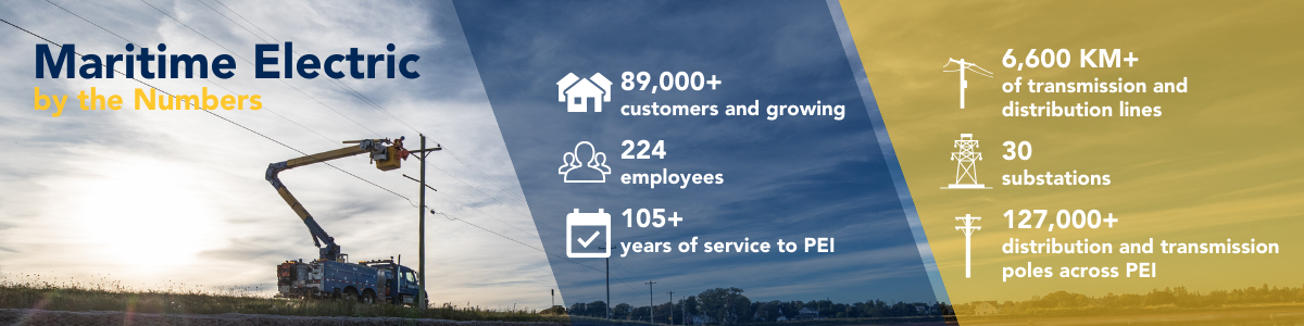
Since 1918 Maritime Electric has delivered electricity in
Prince Edward Island, providing reliable service at a reasonable cost in
a safe and environmentally responsible manner. Maritime Electric is an
Electricity Canada Sustainable Electricity Leader™.
Maritime Electric Company Limited is an indirect wholly-owned subsidiary of Fortis Inc. and operates under the provisions of the Prince Edward Island Electric Power Act and the Renewable Energy Act.
For information about Fortis Inc. and the Fortis Group of Companies, please visit www.fortisinc.com.
Maritime
Electric owns and operates a fully integrated system providing for the
generation, transmission and distribution of electricity to customers
throughout Prince Edward Island.
Leadership Team
Board of Directors
 |
Doug Newson |
Charlottetown Airport Authority Limited |
 |
Dr. Ajoy Biswas |
Queen Elizabeth Hospital |
 |
Maureen Gallant |
Royal Star Foods Limited |
 |
Katherine Arsenault |
Island Capital Partners |
 |
Vernon McQuillan |
Fitzgerald & Snow (2010) Ltd. |
 |
Gary Murray |
Newfoundland Power |
 |
Kathy O'Rourke |
Chartered Professional Accountant (Retired) |
 |
Jason Roberts |
Maritime Electric |
 |
Gretha Rose |
Cellar Door Productions and 4th Floor Productions Inc. |
 |
Karen McCarthy |
Fortis Inc. |
Management Team
|
Jason Roberts |
President & Chief Executive Officer |
 |
Michelle Francis | Vice President, Finance & Chief Financial Officer |
 |
Angus Orford |
Vice President, Corporate Planning & Energy Supply |
 |
Enrique Riveroll |
Vice President, Sustainability & Customer Operations |
 |
Gloria Crockett |
Director, Regulatory & Financial Planning |
 |
Kim Griffin |
Director, Sustainability & Corporate Affairs |
 |
Maureen Mix |
Director, Human Resources |
 |
Greg MacPhail |
Director, Information Technology |
 |
Kent Nicholson |
Director, Production and Energy Control Operations |
 |
Feng Liang |
Director, T&D Engineering |
 |
Ken Sampson |
Director, Customer Service & Operations |
 |
Mark Victor |
Director, Corporate and Capital Planning |
 |
Rolland Young |
Director, Financial Reporting |
 |
Robert Younker |
Senior Director, Strategic & Corporate Planning |
ttps://www.fortisinc.com/news/news-releases/detail?id=9706
September 30, 2025
Fortis Inc. to Hold Teleconference on November 4 to Discuss Third Quarter 2025 Results and New Five-Year Capital Outlook
ST. JOHN'S, Newfoundland and Labrador, Sept. 30, 2025 (GLOBE NEWSWIRE) -- Fortis Inc. ("Fortis" or the "Corporation") (TSX/NYSE: FTS) will release its third quarter 2025 financial results and new five-year capital outlook for the period 2026-2030 on Tuesday, November 4, 2025. A teleconference and webcast will be held the same day at 8:30 a.m. (Eastern). David Hutchens, President and Chief Executive Officer and Jocelyn Perry, Executive Vice President and Chief Financial Officer will discuss the Corporation's third quarter financial results and five-year capital outlook.
Shareholders, analysts, members of the media and other interested parties are invited to listen to the teleconference via the live webcast on the Corporation's website, www.fortisinc.com/investors/events-and-presentations.
Those members of the financial community in North America wishing to ask questions during the call are invited to participate toll free by calling 1.833.821.0229 while those outside of North America can participate by calling 1.647.846.2371. Please dial in 10 minutes prior to the start of the call. No access code is required. Alternatively, individuals may pre-register for the call by visiting www.fortisinc.com/investors/events-and-presentations. Upon registering, individuals will receive a calendar invite by email with dial in details and a unique access code enabling them to bypass the teleconference operator queue. Registration will remain open until the end of the teleconference.
A live and archived audio webcast of the teleconference will be available on the Corporation's website, www.fortisinc.com. A replay of the teleconference will be available two hours after the conclusion of the call until December 4, 2025. Please call 1.855.669.9658 or 1.412.317.0088 and enter access code 1925124#.
About Fortis
Fortis
is a diversified leader in the North American regulated electric and
gas utility industry with 2024 revenue of $12 billion and total assets
of $73 billion as at June 30, 2025. The Corporation's 9,700 employees
serve utility customers in five Canadian provinces, ten U.S. states and
the Caribbean.
Fortis shares are listed on the TSX and NYSE and trade under the symbol FTS. Additional information can be accessed at www.fortisinc.com, www.sedarplus.ca, or www.sec.gov.
A .pdf version of this press release is available at: http://ml.globenewswire.com/Resource/Download/e274679d-0512-444c-9ca5-b2c5d5d19f2f.
For further information contact
| Investor Enquiries: Ms. Stephanie Amaimo Vice President, Investor Relations Fortis Inc. 248.946.3572 investorrelations@fortisinc.com | Media Enquiries: Ms. Karen McCarthy Vice President, Communications & Government Relations Fortis Inc. 709.737.5323 media@fortisinc.com |
