As N.B. mulls signing on to national pharmacare, concerns linger about diabetes drug coverage
Province worries national coverage plan falls short for diabetes patients

The Canadian Health Coalition is hopeful New Brunswick will become the fifth jurisdiction to sign on to a national pharmacare program, but the provincial government is signalling it has some reservations about switching to new coverage for diabetes drugs.
"We continue to be interested in finding a solution with Ottawa on diabetes support ... without disrupting the stability of coverage people rely on today," said an emailed statement from Health Minister John Dornan.
To launch the pharmacare program, the federal government is offering agreements to cover the cost of contraceptives and some diabetes medications.
So far, only P.E.I., Manitoba, the Yukon and B.C. have signed on. Prime Minister Mark Carney confirmed last week that his government is committed to getting the other provinces and territories on board.
"We were pleased to hear Prime Minister Carney recommit to funding pharmacare," said Dornan.
"We share the calls from many groups for greater affordability and access to medications."
Dornan's statement indicated New Brunswick is all for federally funded universal contraception access. He said the provincial government requested that from Ottawa before the federal election and it would fulfil a commitment the Holt Liberals made in the provincial election.
When it comes to diabetes coverage, however, he suggested the national plan would fall short.
"We believe the best way forward is for the federal government to invest alongside our government into the strengths of our existing system, rather than replace it with a one-size-fits-all model," Dornan said.
Part of the problem is that some diabetes drugs, including Ozempic, would not be on the list of federally covered medications, said Steve Staples, national director of policy and advocacy for the Canadian Health Coalition.

The coalition is a group of about 20 organizations, mostly funded by front-line health care worker unions, he said. It's in favour of pharmacare, and Staples met yesterday with Dornan and other Liberal MLAs from the Saint John area.
"I think that the New Brunswick government … is worried that the insurance companies will also reduce their coverage of things like Ozempic, forcing New Brunswickers to move over to the public plan for their Ozempic. And that would increase the costs to the provincial government."
Staples isn't convinced that New Brunswick's diabetes coverage is better than what the federal government is offering. More medications may be covered, he said, but only to those who meet certain criteria.
Even if the coverage doesn't go as far for certain drugs, the province would still be getting more funding that could free up room in its health budget, he added.
"I think New Brunswick can get a good deal," said Staples, suggesting there may be some wiggle room when negotiating for coverage of certain drugs.
In B.C., which had prior provincial coverage for contraception, an agreement was reached that allowed for the additional funding of hormone replacement therapy, he pointed out.
Staples is adamant, though, that the agreement should be for universal coverage.
"It's not a national program if we just create a patchwork," he said.

New Brunswick's drug plan has annual premiums of $60 to $2,700 dollars, plus co-pays, depending on a person's income, said Jean-Claude Basque, co-chair of the New Brunswick Health Coalition.
A number of people don't have any coverage, he said, making an example of a couple who both have diabetes and are self-employed.
They pay about $5,000 a year for Blue Cross insurance, he said, and they have additional costs for test strips and monitoring devices.
A survey by the Canadian Health Coalition found one in four people were not filling or renewing their prescriptions because of the cost, said Basque.
If people get the medications they need, it will save money in the health-care system on hospital visits, he said.
Diabetes Canada projects cases of the disease will increase by 30 per cent in the next 10 years, he noted.
"We need to sign this deal," said Basque.
Blood donors surprised Canadian plasma products being sold abroad
Spanish drugmaker Grifols using donated plasma byproducts to manufacture albumin

Peter Johnson walks into his Canadian Blood Services donation centre in Saint John every week to give plasma.
As a child, Johnson suffered from idiopathic thrombocytopenic purpura, which leads to bruising and bleeding. He was treated with steroids, but today, one of the treatments is intravenous immunoglobulin, made from plasma.
That's why he has been giving plasma ever since he was old enough to donate.
The two-hour process pulls whole blood from Johnson's arm, separating out the yellow plasma and returning the rest back into his body. He knows the value of his donations.
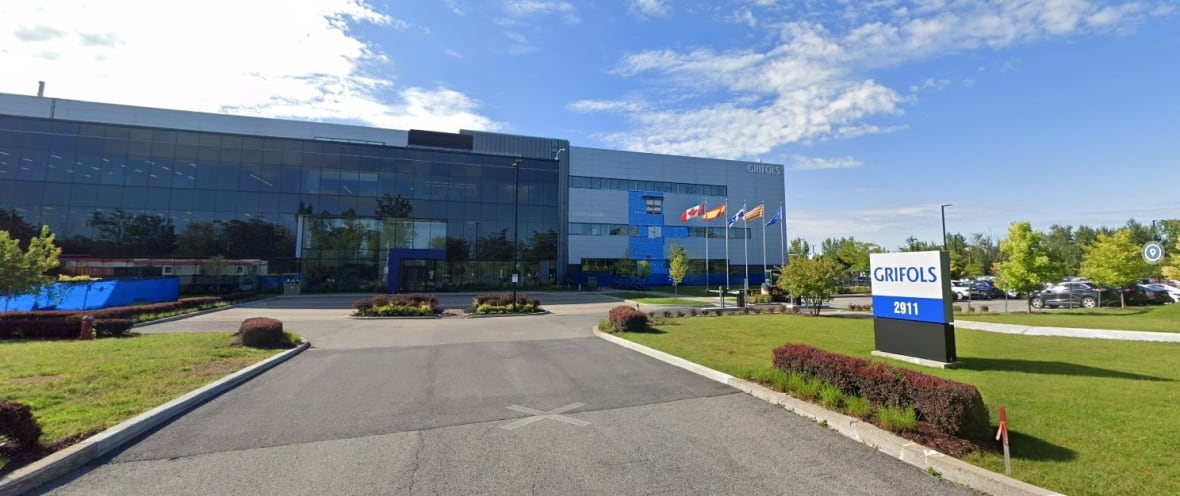
What he didn't know was that Canadian Blood Services sells Canadian blood donation byproducts to the multinational pharmaceutical company Grifols SA, based in Barcelona, Spain. That company is now using Canadian plasma to make medications in Grifols's Montreal plant for sale abroad.
Johnson said he has a "fundamental problem" with donations being used for profit.
"My preference would be that it be maintained in a not-for-profit type of an environment," he said. "I think that's the intent of the donor."
Johnson said he believes others would agree, if they knew donations were being turned into profit.
"I think so, because I just learned today, and I like to think I'm quite well-informed and connected to the system and how it works," he said. "And most would be interested in knowing that, I would think."
Canadian Blood Services manages Canada's blood supply everywhere except Quebec, where it's run by Héma-Québec, and in 2022 it entered into an agreement with Grifols to help collect plasma on its behalf.
 Canadian blood products being sold abroad
Plasma makes up more than half of a person's blood and is rich in protein. It can be transfused directly into patients during major surgery and to treat trauma, or it can be used to make medications.
Grifols has been using plasma to make immunoglobulins in the form of a product called Gamunex, exclusively for patients in Canada. But that process results in valuable byproducts that could be used to produce other medications.
When CBC News asked in January what was being done with those byproducts, Canadian Blood Services said they were being thrown out.

"Our first Canadian-made albumin, manufactured at our facility in Montreal, has successfully reached our patients," Abia said.
"At this point, it's only producing albumin. The plan is in the future it will also fractionate products. … And we don't provide the specific numbers about this project, but, essentially, I think we are becoming a very solid partner with the health-care system in Canada."
Canadian Blood Services later confirmed that a deal to sell those byproducts was reached in February.
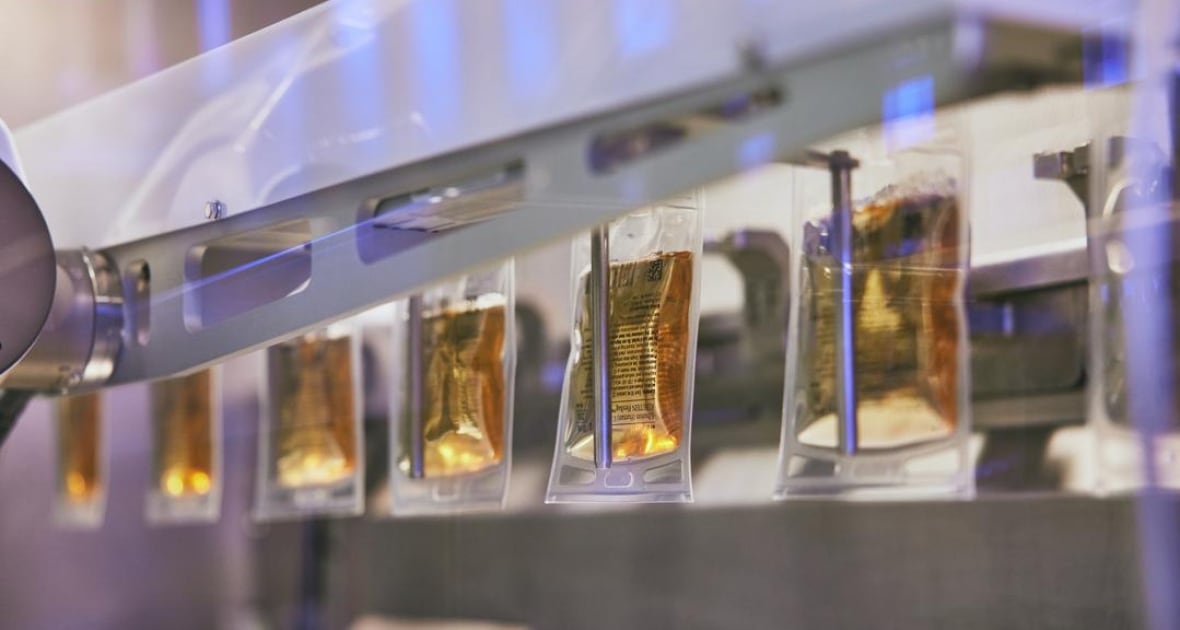
The non-profit wouldn't say how much it earns from the sale of the plasma. It said the proceeds offset the cost of buying immunoglobulins for Canadians.
'A recipe for disaster'
"The whole thing doesn't pass the smell test," said Steve Staples of the Canadian Health Coalition, a non-profit that advocates for the public health-care system.
He said the February agreement with Grifols was a significant departure from the commitments patients and legislators were given when the partnership with the company was announced in 2022.
"This arrangement is becoming more and more complicated and the longer it goes on, the more difficult it will be to extricate ourselves from this if we find that there is a problem."

Canadian Blood Services got its origins in the wake of the tainted blood crisis in the 1980s, when more than 30,000 Canadians were infected with HIV or hepatitis C from poorly screened blood products.
Justice Horace Krever led a public inquiry and recommended the establishment of a new voluntary blood collection system — which led to the establishment of Canadian Blood Services — to mitigate the risks that can come when private companies pay people to donate their blood.
Staples said he fears Canada is now losing control of its blood supply, and the lack of transparency and accountability has made it one of his top concerns.
"We actually have two parallel systems growing now," he said. "We have a non-profit Canadian Blood Services collection system going Canada-wide and … we've got this for-profit company that's kind of in bed with Canadian Blood Services also setting up operations. It's a real mishmash, and I think it could be a recipe for disaster."
Staples said it's time for the federal government to intervene and get a good look at the terms of the contracts being signed.
"We may find ourselves in a system where we've lost our ability to run this in a way that puts patients first instead of profits first," he said.
Complicating the matter of plasma collection on behalf of Canadian Blood Services is the fact that Grifols also has its own collection centres, where it pays people for plasma donations.
The company now has 17 paid plasma centres in Canada — outside of B.C. and Quebec, where payment for plasma is prohibited — and in June it posted new payment rates for new donors.

Johnson said paying for plasma should be the exception — not the rule.
"If you ever got to the point where there was a crunch and in order to encourage people to donate to come up with the necessary supply you needed to pay them, well, then that's one thing," he said when asked his opinion on banning paid plasma clinics.
"But if that's not the case, you can get your supply voluntarily, then I think it would be a good idea for the government to do that."
Donors unaware of Grifols agreement
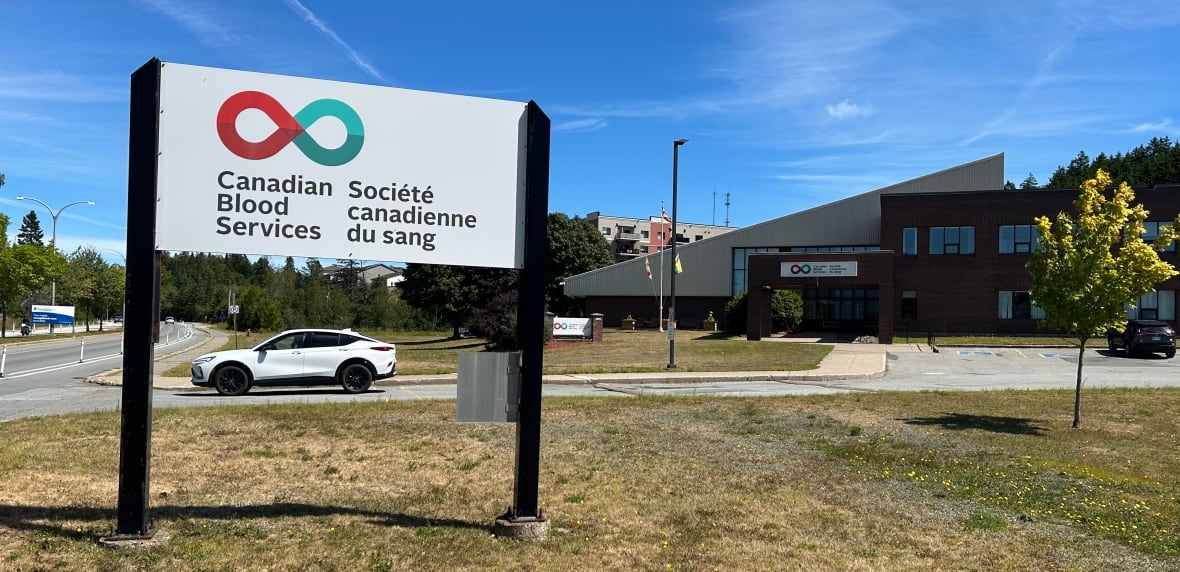
Tom Frankish, who lives in Ottawa, rolls up his sleeves every week to donate plasma at a Canadian Blood Services collection centre. While vacationing in New Brunswick last month, he made that weekly appointment in Saint John.
When asked if it concerned him that donated blood is being used by a private company for profit, he said, "Yes, that would bother me a little bit. Yes, absolutely."
Longtime donor Mike Horgan doesn't like the fact that Canadian plasma products are being sold abroad.
"Yeah, that's not right," he said. "Definitely shouldn't be allowed."
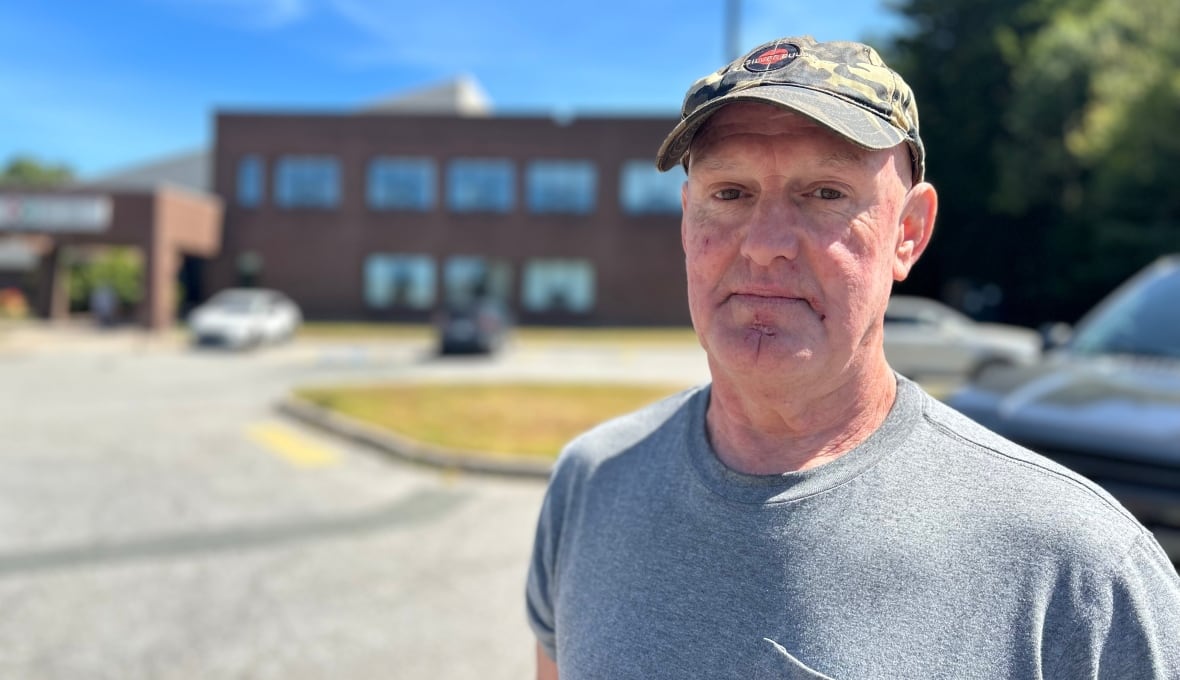
Horgan has more than 1,000 donations marked on his Canadian Blood Services donor card. It's been his weekly ritual for decades, missing only the two weeks at Christmas when blood collection closes down.
The retired police officer said he doesn't agree with a private company "trying to cash in … and make money off other people."
But he still supports Canadian Blood Services and will continue with his weekly plasma donations.
"It still goes to a good cause."
If you have more information on this story, please contact allyson.mccormack@cbc.ca.
ABOUT THE AUTHOR

Canadian Health Coalition
Mailing address:
2841 Riverside Dr.
Ottawa, Ontario K1V 8X7
Email: hello@healthcoalition.ca
Phone: 343-558-1788
Steven Staples
National Director of Policy and Advocacy
Email: policy@healthcoalition.ca
Phone: 343-777-6283

No comments:
Post a Comment