
| admin@fcpp.org | |||
Marco Navarro-Genie
- Calgary, Alberta, Canada
Marco Navarro-Genie
About
Marco Navarro-Génie, BA (Concordia University), MA, PhD (University of Calgary), is Frontier’s Vice President of Research and Policy.
Dr. Navarro-Génie was born in Nicaragua and grew up as an adolescent in Montreal, where he fled the communist regime that strangles his native country to this day. In search of broader horizons, he moved to Alberta in 1990. After two decades in academe, he joined the free-market public policy world.
Dr. Navarro-Génie was Frontier’s Research VP (2010-2013) and the fourth Atlantic Institute for Market Studies (AIMS) president based in Halifax, Nova Scotia. He is the co-founder and director of Nurses for Sustainable Care (NFSC) and the founder of the Haultain Research Institute. He is a former director of the International Centre for Human Rights and Democratic Development (Rights and Democracy), served on the board of the Justice Centre for Constitutional Freedom (2012-2018), and was a board member, vice president and president of CIVITAS (2013-2019). He is the recipient of a King Charles III Coronation Medal for exemplary public service.
Dr. Navarro-Génie’s academic work focuses on radical revolutionary movements and cultural and political identity. He regularly comments on government, politics, and public policy issues in local, national, and international media. He is the author of hundreds of articles, several policy reports, and three books. His latest book, co-written with Barry Cooper, is Canada’s COVID: The Story of a Pandemic Moral Panic (2023).
POLICY FOCUS
Economy
Taxation
Foreign Affairs
RESOURCES
Research by Marco Navarro-Genie

- Marco Navarro-Genie, VP of Research at Frontier Centre
- Robert-Falcon Ouellette, Former Liberal MP
- Dan McTeague, Former Liberal MP

Fundy Royal, New Brunswick Debate – Federal Elections 2015 - The Local Campaign, Rogers TV

Wednesday, 14 May 2025
Lets see if Mark Carney and Warren Buffet deny knowing about my concerns now EH Jimmy Flaherty?

2,106 Comments

Daniel P. McTeague | |
|---|---|
| Member of Parliament for Pickering—Scarborough East (Pickering—Ajax—Uxbridge; 1997–2004) (Ontario; 1993–1997) | |
| In office October 25, 1993 – May 2, 2011 | |
| Preceded by | René Soetens |
| Succeeded by | Corneliu Chisu |
| Personal details | |
| Born | October 16, 1962 Winnipeg, Manitoba |
| Political party | Liberal (former) |
| Spouse | Daniela Rossi[1] |
| Children | 5 |
| Residence | Oakville |
| Profession | Policy advisor, Public relations advisor |
Daniel P. McTeague, PC (born October 16, 1962) is a Canadian businessman and former politician. McTeague served for eighteen years as Member of Parliament for the Ontario riding of Pickering—Scarborough East.
Early life
Fluently bilingual, McTeague graduated from the University of Toronto and worked as an intern in Ottawa to Paul Cosgrove, then Minister of Public Works and Canada Mortgage and Housing and later with the Royal Bank. After graduation he worked as an assistant to Alvin Curling, Ontario Minister of Housing. From 1989 to 1993, he worked as a public relations specialist with Toyota Canada.
Political career (1993–2011)
McTeague was first elected to Parliament in the 1993 federal election and was re-elected in 1997, 2000, 2004, 2006 and 2008. He was a member of the Liberal Party of Canada and was the Parliamentary Secretary to the Minister of Foreign Affairs tasked with protecting Canadians abroad, until the Liberals lost the 2006 election. He served as the vice-chair of the Standing Committee on Industry.
McTeague helped free William Sampson from prison in Saudi Arabia by obtaining a letter of forgiveness from Justin Rodway, the eldest son of the victim of Sampson's alleged crime.[2] McTeague also aided in securing the release of other Canadians from detention abroad, including Abdullah Al-Malki, Muyadad Nureddin and Al-Matti.[3]
His earlier legislative achievements included a bill passing into law the recognition of the third week in April as the Annual Donor Organ Week and setting Parliamentary precedent as the first backbench MP to successfully amend the Criminal Code and see his bill making fleeing a peace officer using a vehicle unlawful. So rare was this feat, that upon passing of third reading in the Senate, his Bill, C-202, was promulgated into law before one judge on the Supreme Court of Canada, without the normal requirement of waiting the several months of publication in the Canada Gazette. His Act, now section 249.1 of the Criminal Code of Canada, took effect on February 7, 2000.
In 2001, he criticized Canada's restrictive drug patent laws and pushed the Chrétien government from within to relax those laws to help address the African AIDS pandemic.[4]
On November 22, 2005, McTeague asked Immigration Minister Joe Volpe to restrict rapper 50 Cent from entering Canada, citing the death of a constituent at the performer's previous concert in Toronto in 2004.[5] 50 Cent's tour went on as scheduled but McTeague's intervention succeeded in seeing at least half of the accompanying members of the rapper's troupe, the G-Unit, banned in Canada as a result of the objections.[6]
With Canadian troops facing casualties in Afghanistan, McTeague criticized the government practice of docking injured soldier's "operational pay" once out of theatre.[7] In May 2007, he supported the Dinnings family in their public dispute with the federal Conservative government, which led to an increase of the funeral stipend to families of fallen Canadian soldiers.[8]
Registered Education Savings Plan
McTeague tabled a private member bill that proposed to give parents substantial tax breaks for saving education money; taxpayers who deposited $5,000 into a Registered Education Savings Plan (RESP) for their children's post-secondary education would earn a $5,000 tax deduction, similar to the deduction allowed for contributions to a Registered Retirement Savings Plan (RRSP). Under the Tax-Free Savings Account (TFSA), introduced in Finance Minister Jim Flaherty's 2008 budget, there was no deduction for annual contributions. The benefit to TFSAs is withdrawals can be done at any time, for any reason, with no tax consequences. Withdrawals from RRSPs are taxed and there are restrictions on annual withdrawals from RESPs. [9]
Ted Menzies, Conservative Parliamentary Secretary to the Minister of Finance, lashed out at the proposal and suggested McTeague explain how the government would pay for his proposal,[10] while Garth Turner strongly supported McTeague's bill and called it "the greatest financial tool in a generation."[11] The Green Party said the government should have ceased threats to trigger an election over the RESP private member’s bill.[12] McTeague's bill passed through the House of Commons of Canada on March 5, 2008, after Speaker of the House, Liberal Peter Milliken, ruled the bill in order as it did not require a royal recommendation, given that it did not contemplate spending money, only reducing revenue.[13] Flaherty introduced a ways and means motion which nullified McTeague's bill.[14]
Rising energy costs
From January 2015 to June 2019, McTeague was a gas price analyst at GasBuddy.com. Since then, he has continued to publish his views on that topic on Twitter.[15]
Support for the abolition of usage based billing
McTeague, along with Jack Layton of the NDP, on February 4, 2011 attended a rally in Toronto organized by Calvin Tennant against an internet usage based billing decision by the Canadian Radio-television and Telecommunications Commission (CRTC). He vowed to fight to reverse the CRTC decision, calling it the "Giga-Tax".[16][17][18]
Order of Canada criticism
McTeague criticized the induction into the Order of Canada of Dr. Henry Morgentaler, saying that the Advisory Council of the Order of Canada strayed into social comment with its "provocative" choice, and argued that it was not the mandate of the ten-person panel.[19]
After politics
In 2019, he became President of Canadians for Affordable Energy after the group's founder John Williamson returned to Parliament.[20][21]
Criticism of the Liberal Party
Despite being a member of the Liberal Party for the entirety of his tenure as an MP, McTeague has been vocal in his criticism of the party under the leadership of Justin Trudeau. In a 2024 interview with NowMedia, McTeague argued the Liberals were no longer a centrist party, and said that he had left the party. McTeague also criticized the Liberals' implementation of the carbon tax, spending policies during the COVID-19 pandemic, and natural resource policies.[22]
What is the future of Canada's Oil and Gas industry? | Dan McTeague | Bridge City News

Former Liberal MP warns of what a Mark Carney-led future may hold | Dan McTeague | Bridge City News
From: David Amos <david.raymond.amos333@gmail.com>
Date: Mon, May 12, 2025 at 4:15 AM
Subject: Fwd: Fw: A One-Time Email from Jason Lavigne, PPC Candidate for Parkland
To: <rathco@rathandcompany.com>, <covidclassaction@rathandcompany.com>, <support@americafund.ca>, <tim@timhoven.com>, <info@bridgecitynews.ca>, <ezra@forcanada.ca>, djtjr <djtjr@trumporg.com>, <jwakefield@postmedia.com>, Dana-lee Melfi <dana_lee_ca@hotmail.com>, <jasonlavigne@outlook.com>, <perreaultj@ottawapolice.ca>, <LECA.Accommodation@ontario.ca>, pm <pm@pm.gc.ca>, <ps.ministerofpublicsafety-ministredelasecuritepublique.sp@ps-sp.gc.ca>, mcu <mcu@justice.gc.ca>, prontoman1 <prontoman1@protonmail.com>, Marco.Mendicino <Marco.Mendicino@parl.gc.ca>, fin.minfinance-financemin.fin <fin.minfinance-financemin.fin@canada.ca>, dominic.leblanc <dominic.leblanc@parl.gc.ca>, info@lawyers4truth.ca <info@lawyers4truth.ca>, kkowalchuk@getzcollins.com <kkowalchuk@getzcollins.com>, info@1905committee.ca <info@1905committee.ca>
Cc: <media.medias@fintrac-canafe.gc.ca>, premier <premier@ontario.ca>, premier <premier@gov.ab.ca>, PREMIER <PREMIER@gov.ns.ca>, Office of the Premier <scott.moe@gov.sk.ca>, premier <premier@gov.pe.ca>, premier <premier@gov.nl.ca>, premier <premier@leg.gov.mb.ca>, premier <premier@gov.bc.ca>, <jcooper@torontolegalresearch.com>, ministryofjustice <ministryofjustice@gov.ab.ca>, czwibel <czwibel@ccla.org>, <contact@fedsforfreedom.ca>, ian <ian@mccuaiglaw.ca>, <mjackson@fieldlaw.com>, freedomreport.ca <freedomreport.ca@gmail.com>, Christopher Scott <chris.scott@whistlestoptruckstop.ca>, sheilagunnreid <sheilagunnreid@gmail.com>, stefanos.karatopis <stefanos.karatopis@gmail.com>, <ted@vaccinechoicecanada.com>, <canadacitizensinquiry@mail.mailchimpapp.com>, Susan.Holt <Susan.Holt@gnb.ca>, prontoman1 <prontoman1@protonmail.com>, <vincent.gircys@gmail.com>, waynenarvey <waynenarvey@hotmail.com>, lgrey <LGrey@gwsllp.ca>, <info@lawyers4truth.ca>, <brianpeckford@gmail.com>, <benitapedersen@hotmail.com>, KMartin <KMartin@postmedia.com>, mcu <mcu@justice.gc.ca>, fin.minfinance-financemin.fin <fin.minfinance-financemin.fin@canada.ca>, kingpatrick278 <kingpatrick278@gmail.com>, Michael.Duheme <Michael.Duheme@rcmp-grc.gc.ca>, <Denis.Beaudoin@rcmp-grc.gc.ca>, <ngroot@investigationcounsel.com>, <tim.wilbur@keymedia.com>, <bkofman@ksvadvisory.com>, National Citizens Inquiry <info@nationalcitizensinquiry.ca>, jcarpay <jcarpay@jccf.ca>
From: David Amos <david.raymond.amos333@gmail.
Date: Mon, Sep 4, 2023 at 10:50 AM
Subject: Fwd: YO Christopher Scott Are you still playing dumb?
To: <jason@yellowhead.vote>
Cc: <sheilagunnreid@gmail.com>
---------- Forwarded message ----------
From: David Amos <david.raymond.amos333@gmail.
Date: Mon, 4 Sep 2023 10:47:02 -0300
Subject: Fwd: YO Christopher Scott Are you still playing dumb?
To: info@donaldbest.ca
Cc: DonaldBestOnline@proton.me
---------- Forwarded message ----------
From: David Amos <david.raymond.amos333@gmail.
Date: Mon, 28 Aug 2023 19:40:40 -0300
Subject: YO Christopher Scott Are you still playing dumb?
To: Christopher Scott <chris.scott@
Cc: April LaJune <april@aprillajune.com>, "aaron@montanatalks.com"
<aaron@montanatalks.com>, "aaron.flint@townsquaremedia.
<aaron.flint@townsquaremedia.
<mdcohen212@gmail.com>, "contact@win.donaldjtrump.com"
<contact@win.donaldjtrump.com>
<donjr@email.donjr.com>, "stefanos.karatopis@gmail.com"
<stefanos.karatopis@gmail.com>
"erin.otoole" <erin.otoole@parl.gc.ca>, oldmaison
<oldmaison@yahoo.com>, ministryofjustice
<ministryofjustice@gov.ab.ca>, "Kaycee.Madu" <Kaycee.Madu@gov.ab.ca>,
"jcarpay@jccf.ca" <jcarpay@jccf.ca>, "premier@ontario.ca"
<premier@ontario.ca>, "Frank.McKenna" <Frank.McKenna@td.com>,
votemaxime <votemaxime@gmail.com>, Viva Frei <david@vivafrei.com>,
"kingpatrick278@gmail.com" <kingpatrick278@gmail.com>,
"art@streetchurch.ca" <art@streetchurch.ca>,
"martha.oconnor@gov.ab.ca" <martha.oconnor@gov.ab.ca>,
"lmichelin@reddeeradvocate.com
"lmichelin@bprda.wpengine.com" <lmichelin@bprda.wpengine.com>
sheilagunnreid <sheilagunnreid@gmail.com>, "premier@gov.ab.ca"
<premier@gov.ab.ca>, "Newsroom@globeandmail.com"
<Newsroom@globeandmail.com>, "gertjan@shaw.ca" <gertjan@shaw.ca>, mcu
<mcu@justice.gc.ca>, "David.Lametti@parl.gc.ca"
<David.Lametti@parl.gc.ca>, Norman Traversy <traversy.n@gmail.com>,
motomaniac333 <motomaniac333@gmail.com>, "freedomreport.ca"
<freedomreport.ca@gmail.com>, "fin.minfinance-financemin.
<fin.minfinance-financemin.
"marc-etienne.bernard@rcmp-
<marc-etienne.bernard@rcmp-
"Holland, Mike (LEG)" <mike.holland@gnb.ca>, "blaine.higgs"
<blaine.higgs@gnb.ca>, "dominic.leblanc.c1"
<dominic.leblanc.c1@parl.gc.ca
<Dominic.Cardy@gnb.ca>, "jeff.carr" <jeff.carr@gnb.ca>, andre
<andre@jafaust.com>, "Ginette.PetitpasTaylor"
<Ginette.PetitpasTaylor@parl.
<Sherry.Wilson@gnb.ca>, "Ross.Wetmore" <Ross.Wetmore@gnb.ca>, pm
<pm@pm.gc.ca>, "Katie.Telford" <Katie.Telford@pmo-cpm.gc.ca>,
"Brenda.Lucki" <Brenda.Lucki@rcmp-grc.gc.ca>, "barbara.massey"
<barbara.massey@rcmp-grc.gc.ca
<Larry.Tremblay@rcmp-grc.gc.ca
<cps@calgarypolice.ca>, washington field
<washington.field@ic.fbi.gov>, "info@libertarian.on.ca"
<info@libertarian.on.ca>
https://davidraymondamos3.
Monday, 28 August 2023
'You're free to go': Alberta judge acquits restaurant owner on trial
for breaking law during pandemic
Former MP Robert-Falcon Ouellette to become Canadian military's 1st Indigenous Knowledge Keeper
'I see myself supporting all soldiers,' says Robert-Falcon Ouellette

A former Cree member of Parliament and a longtime military member has been named the Canadian Armed Forces' first Indigenous Knowledge Keeper.
Warrant Officer Robert-Falcon Ouellette is set to be promoted to captain in a ceremony hosted by the military in Winnipeg on Thursday evening.
"It's about the inclusion of Indigenous Peoples fully within the institutions of our nation," Ouellette said in an interview ahead of the ceremony.
"We've moved in such a way with reconciliation that we have this opportunity to really demonstrate what the Canadian Forces can be."
Ouellette said he is a fourth-generation military member with nearly three decades of service. He started with the Navy League and Sea Cadet program and is currently with the Royal Winnipeg Rifles unit.
From 2015 to 2019, Ouellette represented the riding of Winnipeg Centre as a Liberal MP. He ran to become mayor of Winnipeg in both 2014 and 2022.
He is currently an associate professor of education at the University of Ottawa.

The military said the new position is part of its effort to embrace Indigenous spirituality. The Forces offer spiritual and religious care to members and their families through the Royal Canadian Chaplain Services.
There have been Indigenous chaplains in the past, including Lt.-Col. Catherine Askew, but this is the first time someone has been designated to provide spiritual teachings from an Indigenous point of view instead of a Christian one. Before this, chaplains would have to rely on a network of Indigenous representatives for spiritual and emotional support.
For many years, Indigenous Peoples were banned from practising their spirituality.
Ouellette can remember a time when he faced harassment for being Cree.
"There were times when I had terrible discussions with commanding officers and others within my unit. I have long hair and sometimes that would upset people who are older military members," he recalled.
"Today it's much different. People are much more accepting."
Indigenous soldiers have built their own network within the military, meeting for drum groups and traditional ceremonies, said Ouellette.
Indigenous people made up 2.9 per cent of the Canadian Armed Forces as of November 2022. Approximately 23 per cent of Canadian Rangers self-identify as First Nations, Inuit or Métis.
Ouellette said his role not only supports Indigenous people, but educates non-Indigenous members as well.
"I see myself supporting all soldiers — there's something much larger than this."
ABOUT THE AUTHOR

With files from CBC
Canadian Reaction to Trump Assassination Attempt | Conrad Black
17 Comments

Trump grants full pardon to former media baron Conrad Black
Black was convicted in 2007 of fraud and obstruction of justice

U.S. President Donald Trump has signed a full pardon for former media mogul Conrad Black, who was convicted in 2007 of fraud and obstruction of justice.
Black, 74, spent almost 3½ years in a Florida prison before being released and deported back to Canada. He had originally been sentenced to 78 months in jail, but his sentence was reduced after the U.S. Supreme Court struck down several of his initial convictions.
A statement from the White House on Wednesday said Black has made "tremendous contributions to business, as well as to political and historical thought."
It also cites several prominent individuals who "have vigorously vouched for [Black's] exceptional character." They include former secretary of state Henry Kissinger, Elton John, Rush Limbaugh and the late William F. Buckley Jr.
In a statement late Wednesday, Black called his legal ordeal "nonsense," adding "there was never a word of truth to any of it. And now it is over, after 16 years, including three years and two weeks in U.S. federal prisons."
Black, a Canadian-born British citizen, once ran an international newspaper empire that included National Post, the Chicago Sun-Times, Britain's Daily Telegraph and the Jerusalem Post.

He was appointed to the Order of Canada in 1990. He renounced his Canadian citizenship in 2001 so he could become a British Lord.
In 2011, Rideau Hall began a review of his position in the Order of Canada due to his criminal convictions. Despite Black's many attempts to fight being kicked out, including in Federal Court, Governor General David Johnston removed Black from the order in January 2014.
He remains Lord of Crossharbour, though he has been on a leave of absence from the British House of Lords since June 2012.
Thought White House call was a prank
Black was found guilty in the United States in 2007 of scheming to siphon off millions of dollars from the sale of newspapers owned by Hollinger Inc., where he was chief executive and chairman.
Two of his three fraud convictions were later voided, and his sentence was shortened.
Black has remained steadfast in declaring his innocence on all of the U.S. charges and in his belief that he was subjected to unfair prosecution in the United States.
In 2018 Black published Donald J. Trump: A President Like No Other.
In his long statement, which recounts in detail the events of the past decade or so, Black says he has not spoken to Trump since he took office. Black said he thought the call he got Wednesday from the White House might have been a prank, but that he recognized Trump's voice.
"He could not have been more gracious and quickly got to his point, that he was granting me a full pardon."
Black has been living in Toronto since 2012.
With files from Reuters and The Associated Press

1 Comment
Fundy Royal campaign targets middle class with focus on jobs
Fundy Royal voters have elected Conservatives all but 1 time in 28 elections over 101 years

Candidates running in Fundy Royal are appealing to the middle class in the typically Tory-dominant riding, with a focus on jobs and the economy.
The Conservatives have strong roots in the southern New Brunswick riding — this area has given its support to the Conservatives in every election for the past century, save for 1993, when Liberal Paul Zed won office.
In 2011, Conservative incumbent Rob Moore captured nearly 60 per cent of the vote.
Moore said he hopes the party's record, with its focus on the economy and direct benefits to people, will earn him another term in office.
- AUDIO: Green candidate: Stephanie Coburn
- AUDIO: Liberal candidate Alaina Lockhart
- AUDIO: NDP candidate Jennifer McKenzie
- AUDIO: Conservative candidate Rob Moore
The Tory incumbent pointed to programs, such as the Universal Childcare Benefit, as well as family income splitting and pension income splitting, that has left more money in the pockets of Canadians.
But, he said, he has also delivered on bringing federal cash to his ridinng.
Moore says the biggest question he's heard at the door is how the next government will move the regions's economy forward.
He says the answer lies in TransCanada Corp.'s proposed Energy East pipeline.
"The [Irving Oil] refinery is employing many people in our region, there's a lot of spinoff benefits, and if we can bring that resource from Alberta to New Brunswick to be refined and sold from our port, that is a great economic opportunity," said Moore.
Liberals focus on seniors, middle class

Liberal candidate Alaina Lockhart said she is trying to appeal her campaign to the middle class.
"That's the majority of Fundy Royal," said Lockhart, who has owned Lockhart's Weddings and Special Occasions Inc. since 2004.
"People working everyday to make ends meet and the fact that we have a national campaign focused on strengthening the middle class to put more money in their pockets to then stimulate the economy, I'm encouraged by that," she said.
Lockhart says her party's focus on seniors through initiatives like affordable housing, strengthening the Canada Pension Plan and guaranteed income supplement would benefit the region.
"They worked hard their whole lives and we need to make sure they have secure retirements," she said.
Hopeful for change
NDP candidate Jennifer McKenzie says she's sensing an eagerness for change in the large riding.
McKenzie, an electrical engineer living in St. Martins, threw her name in after becoming "discouraged and disillusioned by the current government."
People want our youth back, we want to have reasons to stay here.
- NDP candidate Jennifer McKenzie
The region has lost a lot of its youth because of the Harper government's lack of focus on the economy, she said.
" be part of the economy and have jobs," she asid.
"The current government's focus on the prairie provinces in the oil and gas industry left New Brunswick and the Atlantic provinces neglected, and we actually had a three year recession here."
McKenzie says the NDP's focus on small business would better serve the area's economy.
"Our agricultural industry should be flourishing, we have to make sure we protect the family farm, there's fishing, forestry, I'm proud of our tourism initiatives, so much is a good fit to the NDP," she said.
Lost youth

The proposed Energy East pipeline is popular in many parts of the southern New Brunswick riding, but the Green candidate said it is the wrong way to attract investment.
Stephanie Coburn, the Green Party candidate for Fundy Royal, says the promise of 14,000 direct and indirect full-time jobs across Canada is "hugely exaggerated."
"The pipeline is a bad idea for people locally and we heard about the pipeline spills in northern Alberta and Michigan, and that ... oil they hope to bring in through the pipeline is impossible to cleanup," Coburn said.
"It's a bad idea nationally because it's all going to be exported … And it's going to contribute so much to the greenhouse gases we're trying to avoid to the globe, and exacerbate global warming terribly."
Coburn says she has heard encouragement for her party at the door, a big turnaround from when she first stepped into the political arena in 2010.
"Now I feel I'm finally not talking into the wind as I have been a long time about environmental issues," said Coburn.
"People are aware of the environmental problems we experience, and we're going to experience if we don't make some changes. That's a positive change from when I first ran."
Fundy Royal contains parts of the counties of Albert, Kings, Queens, Saint John and Westmorland and includes St. Martins, Salisbury, Sussex and Petitcodiac, as well as part of Quispamsis.
FactsCan plans to test political claims during election
Founders of new group want to 'lay out the truth, as truly as possible, with no BS or alternative agenda'

Tall tale-telling politicos, take heed: You could soon find your claims put through the truth grinder by the folks at FactsCan, a newly launched website that aims to provide an independent, non-partisan fact-checking service during the upcoming federal election.
According to co-founder Dana Wagner, who also works as a researcher at Ryerson University in Toronto, the team behind the site wants to help voters "separate out the truth from spin, distortion, omission, error and lies."
"Our goal is to enable Canadians to critically engage in political-speak, and to encourage politicians to be honest and accurate with their words," she told CBC News via email.
Unlike many countries, she noted, Canada does not have a major fact-checking outlet — and FactsCan is hoping to change that before the next election.
Site aims to raise awareness of 'deception in politics'
Wagner says a dedicated, stand-alone fact-check site offers some advantages over traditional media coverage.
"Since we're off the 24/7 cycle, and not simultaneously covering news, there's a depth of analysis we can bring that might not be found on other media outlets," she told CBC News.
The team will also "be looking beyond the major candidates' ridings to see what's happening in off-the-radar ridings and on social media, so there's an added breadth of coverage."
She hopes the presence of a new player on the field could also force media outlets to "up their game" by challenging them to produce their own high-quality fact checks.
Finally, she says, the very existence of the site could bring about a "new level of awareness on deception in politics."
They'll also be providing tips to readers on how to spot fibs on the ground, which, she says, will "heighten that awareness."
Other team members include Democracy Watch co-ordinator and federal civil servant Tyler Sommers and Jacob Schroeder, who works for a Vancouver-based social housing group and has a background in cognitive systems and analytics.
In a video promoting the site, Schroeder explains the origins of the project.
"We realized that we wanted a resource that tracked what politicians are saying, and could sort out whatever facts are in there — a place that wouldn't tell people how to vote, or what to value, but lay out the truth, as truly as possible, with no BS or alternative agenda."
Harper, Mulcair already fact-checked — and found wanting
The site, which went live last week, has already posted its verdict on statements by NDP Leader Tom Mulcair and Prime Minister Stephen Harper — neither of whom, it's worth noting, garnered passing grades on the FactsCan meter.
Mulcair's claim that the Islamic State (ISIS) is "literally the same as the insurgent group that U.S. forces have been battling for over a decade" is deemed "misleading."
Meanwhile Harper's suggestion that "nobody in the world is regulating their oil and gas sector" emissions is simply "false."
According to the methodology posted to the site, scores range from "true" for "verifiably accurate" statements to "farcical" for a claim that is not simply "verifiably inaccurate," but " an egregious lapse of logic, almost indifferent to believability."
The group has launched an Indiegogo campaign to raise sufficient startup funds to deliver fact checks throughout the upcoming federal election, which it estimates will cost $5,000.
Donor levels range from "The Minimalist," which requires a $10 donation, to a "Guardian of Truth," who, for a one-time gift of $1,000, can look forward to postcards, shout-outs on the site and a dinner with one of the founders in Vancouver, Toronto or Ottawa.
"The dinner is optional," the campaign website notes, "but we promise, we're fun company."
FactsCan has also issued an open call for volunteers willing to share their expertise, whether in "digging up the details" to "spotting logical errors" to managing online communities.
"Your contributions will get FactsCan off the ground, helping improve the quality of political discussions in our country," the pitch points out.
"There's a lot of good stuff to argue about without having to argue about facts."
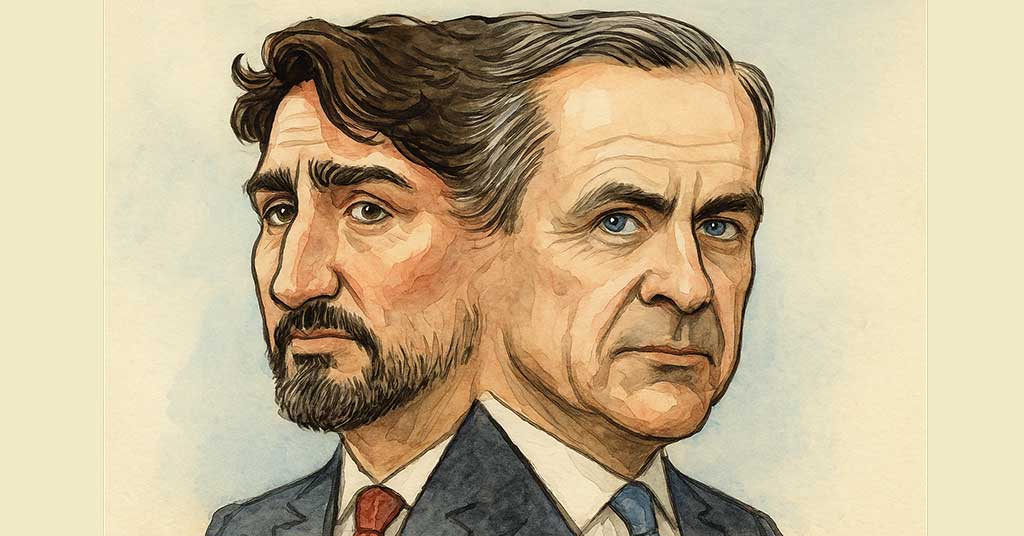 Was it real change or just a new mask on the old status quo?
 Mark Carney’s leadership looks a lot like the last guy’s
Carney was supposed to herald change, but housing and affordability pressures are still hitting Canadians hard

Canadians voted for change in April 2025, choosing Mark Carney as prime minister. But months into his leadership, the same old problems—unaffordable housing, rising debt, stagnating wages—remain. Carney, once hailed as a financial saviour, now looks more like a polished steward of the status quo than a reformer.
His background as a former governor of the Bank of Canada and the Bank of England earned him a reputation as a steady hand during turbulent times. His global profile and polished demeanour offered the promise of competence and credibility. However, his approach so far suggests continuity rather than change. Many of the policies shaping the current landscape appear to build on, rather than depart from, the Trudeau years.
While his arrival was greeted by many in the political and economic establishment as a new chapter, for everyday Canadians grappling with affordability and access to services, the gap between expectations and outcomes remains wide. The question is no longer whether Carney can bring order to complex systems—it’s whether he understands the urgency of tackling structural barriers that weigh down Canadians’ economic prospects.
These concerns became especially clear in a recent conversation I had with Bruce Pardy, professor at Queen’s University, and Dan McTeague, former Liberal MP and president of Canadians for Affordable Energy, about the June 2 First Ministers’ Meeting in Saskatoon, a gathering of the prime minister and provincial premiers to discuss national priorities. Both voiced concerns about the summit’s impact. Both suggested the gathering leaned more toward symbolism than substantive economic reform.
Carney’s technocratic style, emphasizing top-down economic management, reflects a belief that prosperity can be orchestrated through expert planning. But as Pardy put it, “Whatever you heard at the Saskatchewan meetings doesn’t matter a hill of beans. Governments don’t build economies. People do.”
Government-led initiatives—such as national energy strategies and net-zero mandates—may be well-intentioned, but critics argue they risk overlooking the importance of local innovation, market freedom and individual enterprise. Too often, these programs are rolled out without proper coordination with the provinces or attention to regional economic differences.
McTeague was equally blunt, describing the summit as “more theatre than it is, in fact, practical or necessary.” He observed that while premiers issued joint statements, core structural issues like interprovincial trade barriers and regulatory overlap remained unaddressed.
Beyond the lack of substantive reform, even the summit’s slogan, “building one Canadian economy,” a phrase intended to signal unity and collaboration across provinces, sparked debate. For some, it highlighted long-standing barriers that fragment the national market, such as labour mobility and transportation hurdles. These complications continue to frustrate efforts to create seamless economic integration.
This frustration is especially acute in provinces like Alberta and Saskatchewan. “Alberta, in a sense, is the cash cow of Confederation,” said Pardy. “And the people who have power in Confederation are not going to be open to the idea that the arrangement has to be fixed.” Calls for greater autonomy for Western provinces are not rooted in ideology but in years of perceived inequity and exclusion from decision-making in Ottawa.
Stepping back from the summit itself, the challenges Canada faces, including housing affordability, immigration pressures and health care delays, are real and pressing. Carney did not create these issues, but his government has yet to offer bold departures from the status quo. A clearer vision for tackling affordability, economic growth and service delivery is still awaited.
Canadians don’t just want refined messaging or polished leadership—they want results. And while new leadership always brings hope, what matters most is whether long-standing issues are being meaningfully addressed.
So far, for many, that change still feels out of reach.
David Leis is President and CEO of the Frontier Centre for Public Policy and host of the Leaders on the Frontier podcast.
Explore more on Carney government, Federal politics, Canadian economy, Federal-provincial relations
The views, opinions, and positions expressed by our columnists and contributors are solely their own and do not necessarily reflect those of our publication.
Troy Media empowers Canadian community news outlets by providing independent, insightful analysis and commentary. Our mission is to support local media in helping Canadians stay informed and engaged by delivering reliable content that strengthens community connections and deepens understanding across the country.
About Us
Your community. Your voice. Your source for trusted news.
At the Kirkland Lake Voice, we’re proud to be part of the Troy Media family—a growing network dedicated to supporting local journalism, delivering trusted reporting and keeping Canadians informed on the issues that matter most.
In an era of shrinking newsrooms and growing noise, our mission is simple: ensure quality journalism stays accessible, resilient and rooted in our communities. We believe strong communities begin with strong, independent journalism that listens, informs and empowers.
Stronger together
Troy Media isn’t just a news service—it’s a mission-driven platform built to strengthen Canadian journalism from the ground up. Each of our subsites, including the Kirkland Lake Voice, plays a vital role by:
- Amplifying local voices and independent perspectives
- Providing clear, trusted reporting that puts facts first
- Covering the stories that matter to Canadians
- Connecting with experts, thought leaders and columnists from across the country
- Equipping community news outlets with the tools to thrive in the digital age
We hold ourselves to the highest editorial standards because journalism should always serve people first. From breaking down complex policy debates to sharing practical advice for daily life, our goal is to inform, engage and build lasting trust with our readers.
Why it matters
If you’re a reader, thank you for trusting us to keep you informed.
If you’re a journalist, columnist or community publisher, we invite you to join our growing network. Troy Media supports local publishers like the Kirkland Lake Voice with full-text editorial feeds, stronger audience connections and tools to rebuild their role as trusted local news hubs.
A platform for local business and government, too
We also invite local businesses, industry leaders and all levels of government to share their stories with our growing network of communities across Canada. Whether it’s highlighting new initiatives, sharing successes, or engaging directly with Canadians, we provide a trusted platform to build relationships, increase visibility and contribute to the conversations shaping our country.
We’re builders at heart—of platforms, partnerships and public trust. Together, we’re helping Canadian journalism not just survive but thrive.
Because the future of media isn’t about chasing trends—it’s about serving people, telling the truth and leaving a legacy that lasts.
Frontier Centre for Public Policy Names David Leis as New President and CEO
 | |||||||||
 |  | ||||||||
November 20, 2024 – TheNewswire - Winnipeg, MB – The Frontier Centre for Public Policy is pleased to announce the appointment of David Leis as its new President and CEO. Previously serving as the Centre’s Vice President of Development and Engagement, Mr. Leis brings a wealth of leadership experience and an enduring commitment to Frontier’s mission of promoting public policy that empowers Canadians and strengthens their prosperity.
Wayne Anderson, Chair of the Frontier Centre Board, expressed enthusiasm about the Board’s decision: “David Leis is a principled and talented leader. We are confident he will usher in a new era of growth and prosperity for Frontier.”
David Leis shared his excitement for this new role: “I am delighted with the opportunity to continue the essential work of Frontier with our talented team and partners. Especially, at a time when Canada is at a crossroads. Through evidence-based research and public outreach, we will increase our efforts to educate Canadians on the benefits of a free and prosperous society. I am deeply committed to building a stronger national community supporting Frontier’s vision.” Mr. Leis expressed his appreciation for Frontier’s Founding President, Peter Holle, for his past leadership and support.
David Leis’s distinguished background spans roles across the public, private, and education sectors. His early career included a historic achievement: at only nineteen, Leis became the youngest elected official in Waterloo Region, serving as a Councillor and a Mayor for nearly a decade. In the following years, he held senior positions, including CEO of the Greater Kitchener-Waterloo Chamber of Commerce, Senior Vice President at Red River College Polytechnic in Manitoba, and executive roles with British Columbia and Ontario universities. He also served as an executive with one of Canada’s largest automation engineering firms and led successful organizational restructures, such as the reorganization of the Regional Municipality of Waterloo.
Leis’s educational background further reinforces his commitment to informed and principled public policy. He studied at the University of Waterloo, Ryerson University, and the University of Toronto. He holds a master’s degree in public policy from Queen’s University and was awarded the prestigious Norman Rogers Prize. His expertise in policy, governance, and economic development has prepared him to lead the Frontier Centre in its mission of promoting sound governance principles and advancing market-driven solutions to Canada’s economic and social challenges.
Mr. Leis, who hosts Frontier’s popular “Leaders on the Frontier” program, has amplified the Centre’s mission, reaching a national and international audience with meaningful policy discussions on Canada’s most pressing issues.
Frontier’s mission is to improve awareness of the principles that form the bedrock of a free society in addressing Canada’s economic and social challenges from a Western Canadian perspective. In the year ahead, Frontier will continue to expand its impact by providing action-oriented solutions to policymakers, supported by our national network of partners, donors, and supporters.
For more information about the Frontier Centre for Public Policy and its work, please visit [www.fcpp.org](http://www.fcpp.org).
About the Frontier Centre for Public Policy
The Frontier Centre for Public Policy is a non-partisan think tank dedicated to promoting the principles of a free society. Through research, events, media, and public engagement, Frontier fosters a better understanding of the value of free markets, limited government, and individual freedoms, contributing to a more prosperous Canada.
Contact:
David Leis
President and CEO
Frontier Centre for Public Policy
david.leis@fcpp.org
Marco Navarro-Genie
Director of Research
Frontier Centre for Public Policy
mng@fcpp.org
Copyright (c) 2024 TheNewswire - All rights reserved.
https://www.youtube.com/watch?v=gz_JurwYWcs
Trump’s Tariff Threat on Canada, What Does it Mean?
Groundbreaking paper explores the forces molding Canada's future
 | |||||||||
 |  | ||||||||
WINNIPEG – TheNewswire - March 21, 2024 – The Frontier Centre for Public Policy has released a groundbreaking paper titled Canada 2024: A Confident Resilient Nation or a Fearful Fractured Country? The paper was written by David Redman, an officer in the Canadian Army for 27 years, retiring as a Lieutenant Colonel. The paper delves deep into the shifting socio-political landscape of Canada, examining the dichotomy between confidence and fear shaping the nation’s future.
According to the paper, a successful nation is characterized by a unified populace sharing common values and defended borders. Until Canadians and their elected leaders align on the country’s national interests, the country will continue to lack unity, stumbling from one crisis to another. If the politicization of minor issues persists, attention will be diverted from critical national concerns.
Furthermore, Redman writes that the concept of a “post-national state” espoused by Canadian Prime Minister Justin Trudeau is dangerous and misleading. The paper emphasizes the importance of national governments in dealing with emergencies, reaffirming that nations must prioritize their own crises before relying on external aid.
Identifying Canadian national interests is just the initial step. The paper advocates breaking down these interests into clear and attainable objectives, accompanied by measurable performance indicators. Policies should undergo public debate before finalization, ensuring alignment with national priorities and effective implementation strategies.
“Canada stands at a critical juncture after eight years of embracing “post-national” and “socialist” ideals,” Redman says. The nation has transitioned from a confident society with a thriving economy to one characterized by apologies and internal divisions. To secure its future, Canada must foster national pride among its citizens and prioritize the country’s interests over divisive wedge issues.
Redman concludes by urging Canadian teenagers to take pride in their nation and actively contribute to securing its future prosperity. “By working together towards a shared vision of a thriving Canada,” Redman says, “the promise of 1967 can be realized and sustained for generations to come.”
Click here to download the Paper.
https://fcpp.org/2024/03/21/policy-series-canada-2024-a-confident-resilient-nation-or-a-fearful-fractured-country/
For more information:
Author
David Redman
dnredman1@outlook.com
David Leis
VP Development and Engagement
david.leis@fcpp.org
604-864-1275
or
204 957 1567
About David Redman
David Redman served as an officer in the Canadian Army for 27 years, retiring as a Lieutenant Colonel. He was posted 19 times to operations in Germany, Egypt, the Former Republic of Yugoslavia, the U.S., and across Canada. In 2000, he joined what is now the Alberta Emergency Management Agency (EMA). Following September 11, 2001, he led the development and implementation of the Alberta Crisis Management Counter-Terrorism Plan.
He became the head of EMA in 2004 and led the Alberta response to the devastating floods of June 2005. He also led the development of the 2005 Provincial Pandemic Influenza Plan. He retired from EMA in December 2005, continuing to work as an expert in Emergency Management provincially, nationally and internationally until 2013, when he fully retired.
Redman has a Bachelor’s Degree in Electrical Engineering from the Royal Military College of Canada and a Master’s Degree in Electrical Engineering from the United States Naval Postgraduate School. He is also a graduate of the Canadian Land Forces Command and Staff College in Kingston, Ontario, and the Canadian Forces Command and Staff College in Toronto, Ontario.
About the Frontier Centre for Public Policy
The Frontier Centre for Public Policy is an independent, non-partisan think tank that conducts research and analysis on a wide range of public policy issues. Committed to promoting economic freedom, individual liberty, and responsible governance, the Centre aims to contribute to informed public debates and shape effective policies that benefit Canadians.
https://fcpp.org/wp-content/uploads/FC-PS243-E_Canada2024_MR1524_F1-1.pdf
FRONTIER CENTRE FOR PUBLIC POLICY
I d e a s t h a t c h a n g e y o u r w o r l d / w w w . f c p p . o r g
Policy Series No. 243 • Date of First Issue: March 2024.
Reproduced here with permission of the author(s). Any errors or omissions and the accuracy
and completeness of this paper remain the responsibility of the author(s).
DAVID REDMAN
David Redman was an officer in the Canadian Army for 27 years, retiring as a Lieutenant Colonel. He was posted 19 times to operations in Germany, Egypt, the Former Republic of Yugoslavia, the USA, and across Canada. In 2000 he became a part of what is now called the Alberta Emergency Management Agency. Following September 11, 2001, he led the development and
implementation of the Alberta Crisis Management Counter-Terrorism Plan. He became the Head of EMA in 2004 and led the Provincial response to the devastating floods of June 2005. He also led the development of the 2005 Provincial Pandemic Influenza Plan. He retired from EMA in December 2005,
continuing to work as an expert in Emergency Management provincially, nationally and internationally until 2013 when he fully retired.
David Redman has a Bachelor’s Degree in Electrical Engineering from the Royal Military College of Canada, and a Master’s Degree in Electrical Engineering from the United States Naval Postgraduate School. He is a graduate of both the Canadian Land Forces Command and Staff College, in Kingston, Ontario a
FRONTIER CENTRE FOR PUBLIC POLICY
203-2727 Portage Avenue, Winnipeg, Manitoba Canada R3J 0R2
Tel: 204-957-1567
Email: newideas@fcpp.org
The Frontier Centre for Public Policy is an independent, non-profit organization that undertakes research and education in support of economic growth and social outcomes that will enhance the quality of life in our communities. Through a variety of publications and public forums, Frontier explores policy innovations required to make the prairie region a winner in the open economy. It also provides new insights into solving important issues facing our cities, towns and provinces. These include improving the performance of public expenditures in important areas such as local government,
education, health and social policy. The author(s) of this study have worked independently and the opinions expressed are therefore their own, and do not necessarily reflect the opinions of the board of the Frontier Centre for Public Policy.
Copyright © 2024 by the Frontier Centre for Public Policy.
What Mainstream Media Won’t Tell You—They Will. Meet the Couple Behind Northern Perspective.
466 Comments
Charlie Kirk's Alleged Assassin ARRESTED - Canadian Politicians and Professors INCITING VIOLENCE?!


33 Comments
Assassination of Charlie Kirk sparks calls for revenge | If You're Listening


The Flamethrowers
Previously Aired
White nationalism and right-wing extremism aren’t new to Canada
White supremacists, anti-immigrant organizers, and Holocaust deniers in Canada have been actively organizing here for decades.
“Old wine, new labels.” When it comes to the alt-right, that’s the
phrase that comes to mind for Dr. Barbara Perry. A hate crime researcher
for almost 20 years, she’s found little difference in the views held by
right-wing extremists active in Canada now and those of years past.
With white nationalist rallies and
hate-motivated violence appearing to run rampant in the U.S., the
existence of hate groups in Canada may come as news to some.
National hate crime data from both countries are on par. A 2015 Statistics Canada hate crime report reveals an overall rise by five percent from the previous year. The 2016 FBI report on hate crimes finds that reports also rose by five percent. Almost 60 percent of these crimes were racially motivated.
It’s Perry’s opinion that the explicit dismissal of hate-based violence
in Canada is a case of national denial. “It's embedded in our psyche, I
think, that we are the best example of the success of multiculturalism.
There's still failure or unwillingness to acknowledge our flaws, the
chinks in our armour,” Perry says.
Right-Wing Extremism In Canada
Contrary to belief, white supremacists, anti-immigrant groups, and
Holocaust deniers in Canada have been actively organizing for decades.
In a research project conducted from 2013 to 2015, Perry and academic Ryan Scrivens concluded there are at least 100 white supremacist groups across Canada. Perry estimates that since then, there’s been a 20 to 25 percent increase.
Perry’s studies reveal that right-wing extremism takes a different from
north of the border: more loosely organized and less focused on gun
rights. And groups like the Three Percenters, Soldiers of Odin, and
Storm Alliance have started to form coalitions.
However, that doesn’t make them any less dangerous. The U.S. political climate has valorized the activity of these groups.
“They're heavily armed, they're trained in military tactics and have
very rigorous training. That really worries me,” Perry says. “You
combine that with the street patrols they're engaging in, and that's
just a recipe for disaster.”
While examples of hate-motivated violence are more well-known south of the border, Canada has its cases too.
Anti-Black Hate: In the 1910s, The U.S. KKK spread to several provinces across Canada in the 1920s. Torontoist notes
how in 1930, Klansmen terrorized a black war veteran in Oakville,
erecting burning crosses in town to condemn his interracial marriage.
Although their numbers have drastically dwindled since then, their presence is still felt. Last year, a Klansmen recruitment drive was discovered on B.C. doorsteps.
Holocaust denial: Anti-Semitic views became a concern Canada in the 1980s and 1990s when landmark cases against a wave of Holocaust deniers like James Keegstra became national news.
The dissemination of hate ideology can trace its roots to Canada too. Holocaust denier and Toronto publisher Ernst Zündel’s website in the nineties was a precursor to many right-wing extremism forums.
Anti-Muslim Violence: A national tragedy took place in January after six were gunned down in the Quebec City mosque shooting.
Statistics Canada reports that hate incidents against Muslims up by 60
percent. Non-Muslims have also faced Islamophobia; Sikh NDP leader
Jagmeet Singh endured anti-Muslim heckling while on the campaign trail.
Race-based Xenophobia: Several videos posted online
have documented individuals yelling ethnic slurs and anti-immigrant
rhetoric at people of colour this year, including verbal abuse against
employees in a Toronto grocery store, a taxi driver in Saskatoon, an elderly couple in Markham, and on public transit in Vancouver.
Rallies And Protests: Far-right demonstrations have been held in Toronto, Quebec, and Vancouver. A Canadian faction of the alt-right Proud Boys disrupted an Indigenous protest of Canada Day celebrations in Halifax.
Challenging Hate: How Canadians Are Resisting
Like in the U.S., Perry notes that hate incidents in Canada tend to spike after a targeted group is visible in the news, political campaigns, or local happenings.
- MORE
- Watch Skinhead
- Why I Joined — And Left — Canada's Organized Hate Group Movement
- Skinhead: What This Word Really Means
- Former Skinhead Now Helps Others Leave Hate Groups
These incidents are countered by resistance. When far-right rallies have taken place in major cities, they’ve been outnumbered by counter-protesters.
In August 2017, supporters of an anti-Muslim rally in Vancouver were outnumbered by thousands of counter-protesters, CBC reports.
Perry commends counter-rally protesters, as well as journalists and researchers who use their platforms to engage the public on issues involving far-right radicalization.
And in Perry’s experience, you’re never too young to challenge hate. “Youth are most vulnerable to recruitment, but they're also more likely to listen to one another. I think the youth voice can be so powerful in that respect,” she says.

No comments:
Post a Comment