From: Forsætisráðuneytið <for@for.is>
Date: Wed, Jun 11, 2025 at 3:33 AM
Subject: Forsætisráðuneytið hefur móttekið tölvupóst þinn / Prime Minister's Office hereby confirms the receipt of your email.
To: David Amos <david.raymond.amos333@gmail.com>
Forsætisráðuneytið hefur móttekið tölvupóst þinn / Prime Minister's Office hereby confirms the receipt of your email.
Vinsamlega ekki svara þessum tölvupósti, hafið samband í gegnum for@for.is / Please do not reply to this email, contact via for@for.is.
Athygli er vakin á að skv. 2. mgr. 13. gr. upplýsingalaga nr. 140/2012
er ráðuneyti í Stjórnarráði Íslands skylt að birta upplýsingar úr
málaskrám sínum með rafrænum hætti/
Note that, pursuant to art. 13., para. 2, of act no. 140/2012, a
Government Ministry in Iceland is obliged to publish electronically
information from its case files.
Með bestu kveðju / Best regards
------------------------------
Forsætisráðuneytið / Prime Minister's Office
Stjórnarráðshúsinu, IS - 101 Reykjavík, Sími/Tel. +354 545 8400
www.stjornarradid.is - Fyrirva
From: David Amos <david.raymond.amos333@gmail.com>
Date: Wed, Jun 11, 2025 at 3:33 AM
Subject: Re: Fw: Urgent Bums in Seats NEEDED - Municipal Uranium Mining Meeting Tomorrow - Tuesday June 10th
To: SRField <rpm77nsbc@protonmail.com>, <chad.pothier@pothier.ns.ca>, PREMIER <PREMIER@gov.ns.ca>, justmin <justmin@gov.ns.ca>, <frances.willick@cbc.ca>, Sean.Fraser <Sean.Fraser@parl.gc.ca>, mcu <mcu@justice.gc.ca>, robert.mckee <robert.mckee@gnb.ca>, pm <pm@pm.gc.ca>, Mitton, Megan (LEG) <megan.mitton@gnb.ca>, heath.macdonald <heath.macdonald@parl.gc.ca>, Marco.Mendicino <Marco.Mendicino@parl.gc.ca>, fin.minfinance-financemin.fin <fin.minfinance-financemin.fin@canada.ca>, <ps.ministerofpublicsafety-ministredelasecuritepublique.sp@ps-sp.gc.ca>, <ezra@forcanada.ca>, premier <premier@gnb.ca>, premier <premier@gov.nt.ca>, Office of the Premier <scott.moe@gov.sk.ca>, premier <premier@gov.bc.ca>, premier <premier@ontario.ca>, premier <premier@leg.gov.mb.ca>, premier <premier@gov.pe.ca>, premier <premier@gov.nl.ca>, premier <premier@gov.yk.ca>, premier <premier@gov.ab.ca>, <premier@gov.nu.ca>, melissa.lantsman <melissa.lantsman@parl.gc.ca>, <alexis.deschenes@parl.gc.ca>, <Alexis.Brunelle-Duceppe@parl.gc.ca>, Alexandre.Boulerice <Alexandre.Boulerice@parl.gc.ca>, Michael.Duheme <Michael.Duheme@rcmp-grc.gc.ca>, washington field <washington.field@ic.fbi.gov>, djtjr <djtjr@trumporg.com>, ragingdissident <ragingdissident@protonmail.com>, <peyman.askari@prilyx.com>, <jasonlavigne@outlook.com>, jan.jensen <jan.jensen@justice.gc.ca>, Dana-lee Melfi <Dana_lee_ca@hotmail.com>, Jacques.Poitras <Jacques.Poitras@cbc.ca>, David.Akin <David.Akin@globalnews.ca>, <vicki.hogarth@chco.tv>, <NIA_IG@navy.mil>, NightTimePodcast <NightTimePodcast@gmail.com>, Frank.McKenna <Frank.McKenna@td.com>, postur <postur@for.is>, birgittajoy <birgittajoy@gmail.com>
Cc: Bayatfard, Ali <Ali.Bayatfard@novascotia.ca>, candice@brownsautosalvage.ca <candice@brownsautosalvage.ca>, chrispalmermla@gmail.com <chrispalmermla@gmail.com>, CivisAdmin@civis4reform.org <CivisAdmin@civis4reform.org>, councillor.harding@countyofkings.ca <councillor.harding@countyofkings.ca>, david.menzies@rebelnews.com <david.menzies@rebelnews.com>, david@mblcpa.ca <david@mblcpa.ca>, Dawne Macleod <dawnemacleod12@protonmail.com>, Derek Sloan <dereknsloan@gmail.com>, Devin Millner <d.millner@rigl.ca>, Dupuis, Bruce <bdupuis@napacanada.com>, emily.nsu@protonmail.com <emily.nsu@protonmail.com>, faulknertj@gmail.com <faulknertj@gmail.com>, freekschep@icloud.com <freekschep@icloud.com>, J.shaw@valleycreditunion.com <J.shaw@valleycreditunion.com>, Jacob Meisner <jmeisner@bruceautogroup.com>, Kelly Riome <sweepingbeauties@gmail.com>, Kody.Blois@parl.gc.ca <Kody.Blois@parl.gc.ca>, larry_bent@hotmail.com <larry_bent@hotmail.com>, Michel Palmer <openeyeswider@gmail.com>, Patricia Norton <patricianorton@protonmail.com>, roop@ns.sympatico.ca <roop@ns.sympatico.ca>, Ross & Lorraine <rlmacpherson1416@gmail.com>, slongmire@bruceautogroup.com <slongmire@bruceautogroup.com>, Tammy Levy <TammyLevy@green-diamond.ca>, Weiherstrucking@eastlink.ca <Weiherstrucking@eastlink.ca>, Zoe Parsons <zparsons@24webster.com>, <melanie.joly@ised-isde.gc.ca>, Steven.MacKinnon <Steven.MacKinnon@parl.gc.ca>, Anita.Anand <Anita.Anand@parl.gc.ca>, <chrystia.freeland@canada.ca>, <shafqat.ali@parl.gc.ca>, <rebecca.alty@parl.gc.ca>, <gary.anand@parl.gc.ca>, <rebecca.chartrand@parl.gc.ca>, <julie.dabrusin@parl.gc.ca>, Sean.Fraser <Sean.Fraser@parl.gc.ca>, mcu <mcu@justice.gc.ca>, Steven.Guilbeault <Steven.Guilbeault@parl.gc.ca>, <mandy.gull-masty@parl.gc.ca>, <patty.hajdu@parl.gc.ca>, <tim.hodgson@parl.gc.ca>, Joel.Lightbound <Joel.Lightbound@parl.gc.ca>, heath.macdonald <heath.macdonald@parl.gc.ca>, <david.mcguinty@parl.gc.ca>, Bill.Blair <Bill.Blair@parl.gc.ca>, <jill.mcknight@parl.gc.ca>, <lenametlege.diab@parl.gc.ca>, <marjorie.michel@parl.gc.ca>, <eleanor.olszewski@parl.gc.ca>, <gregor.robertson@parl.gc.ca>, <Maninder.Sidhu@parl.gc.ca>, <evan.solomon@parl.gc.ca>, <joanne.thompson@parl.gc.ca>, <rechie.valdez@parl.gc.ca>, <buckley.belanger@parl.gc.ca>, Wayne.Long <Wayne.Long@parl.gc.ca>, <stephen.fuhr@parl.gc.ca>, <anna.gainey@parl.gc.ca>, <stephanie.mclean@parl.gc.ca>, <nathalie.provost@parl.gc.ca>, <ruby.sahota@parl.gc.ca>, <randeep.sarai@parl.gc.ca>, <Adam.vanKoeverden@parl.gc.ca>, <john.zerucelli@parl.gc.ca>, <philip.jennings@ised-isde.gc.ca>, <sony.perron@ised-isde.gc.ca>, <francis.bilodeau@ised-isde.gc.ca>, <natalie.giassa@ised-isde.gc.ca>, <joshua.chambers@justice.gc.ca>, <Lorri.Warner@justice.gc.ca>, <alain.vauclair@justice.gc.ca>
From: Robert F. Kennedy Jr. <info@teamkennedy.com>
Date: Thu, Oct 3, 2024 at 7:11 PM
Subject: I have Trump's solid backing
To: David Amos <david.raymond.amos333@gmail.
|




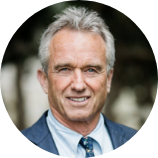



Deja Vu Anyone???
Sunday, 28 April 2024
Kennedy family endorses Biden over RFK Jr.
From: David Amos <david.raymond.amos333@gmail.
Date: Sun, Apr 28, 2024 at 3:21 PM
Subject: Fwd: Nicole Shanahan Fights for Us!
To: Team Kennedy <info@teamkennedy.com>

Elon Musk Interviews RFK Jr.
Trudeau’s Brother Speaks Out, “Justin Is Not a Free Man”
 Tucker Carlson
 12,050 Comments

Justin Trudeau's Brother Is Driving a RFK Jr. Campaign Bus
The antivax bus is coming. Everybody's jumping.


“Anyone have a clue why,” Toronto Star columnist Susan Delacourt tweeted Sunday. “A @RobertKennedyJr bus, blaring ‘Stop Children What's That Sound’1, is circling Ottawa's New Edinburgh neighbourhood?”
It was a great question. Because, sure enough, a bus emblazoned with Robert F. Kennedy Jr’s face, proclaiming “the remedy is Kennedy,” was driving around the Canadian capital blaring, arguably, the anthem of the 1960s counter-culture.2
The fact that the bus (ok, actually, it’s an RV) was in Canada isn’t even in the interesting part: It’s who was driving it.
Behind the wheel with his wife and two children by his side, was and is Kyle Kemper: An anti-vaccine conspiracy theorist and activist in his own right, and Prime Minister Justin Trudeau’s half-brother.
This week, on a very special Bug-eyed and Shameless, I've got something to tell ya. I've got news for you: RFK Jr. is comin’ through.
When Margaret Trudeau’s marriage to her late husband, Pierre Elliott (Prime Minister of Canada 1968-1979, 1980-1984), was in the process of falling apart, she went off on the romp of a lifetime.
Much has been written and said about Margaret, and I couldn’t begin to do her life story justice here. But suffice it to say that she was rubbing elbows with — and often attached romantically to — Mick Jagger, Ronnie Woods, Lou Rawls, Jack Nicholson3, amongst others. (Her ex-husband the prime minister, was not much different, having dallied with Barbara Streisand before their marriage.) The romance that properly marked an endpoint to her marriage was, strangely enough, with Ted Kennedy: RFK Jr’s uncle. By the early 1980s, she was separated from Pierre Elliot and without custody of her kids and, without alimony, broke.
Then she met Fried Kemper, an Ottawa real estate developer, and settled down. The two would spend the next 15 years married and would have two children, Alicia and Kyle.
When Justin Trudeau — Pierre Elliot’s son, Kyle Kemper’s half-brother — became prime minister in 2015, the Trudeau family baggage was relegated to, mostly, curiosity. Best I can tell, nobody thought to ask Kemper’s opinion about the state of politics in Canada and Kemper didn’t seem terribly keen to offer it. Canada is, beyond a superficial curiosity, not terribly interested in the lives of politicians’ families. And that’s for the better.
In relative anonymity, Kemper became an early Bitcoin evangelist. Which was well enough because, as we know, being a Bitcoin evangelist is a full-time job.
He became a lobbyist, calling on the government to keep their hands off Bitcoin altogether. (Related: Kemper once told a magazine that the worst day of his life was “February 28, 2014, when Mt. Gox, a major platform, filed for bankruptcy.” Maybe a bit of regulation would have prevented that!)
It really wasn’t until 2020, and the COVID-19 pandemic, that Kemper stepped into the limelight. In a rambling video, Kemper endorsed the increasingly paranoid politics that was infecting the right — and converting some on the paranoid left. “The real battle is not simply left or right. It is authoritarianism versus libertarianism,” Kemper explained. Kemper phrased his new turn to politics as an “affectionate” chiding of his brother.
Over the past few years, he’s popped up at the world premiere of the Plandemic “documentary.” (It was fiction.) He became a huge booster of the so-called Freedom Convoy, and joined Alex Jones on Infowars to explain how the occupation of Ottawa should push his half-brother to resign and trigger the “great awakening.” He endorsed the idea that the 2020 U.S. election was stolen.
And now, Kemper has joined the Robert F. Kennedy Jr bandwagon.
“One of the major concerns for many nations, including Canada, is the erosion of sovereignty under the influence of a globalist oligarchy,” Kemper wrote on Twitter. “But fear not, for Bobby Kennedy is here to champion our cause!”
Kemper is, unsurprisingly, big into the ‘wellness’ community: A hotbed of conspiracy theories and misinformation these days. RFK Jr., Kemper writes, is an “icon for health and wellness.”
The Florida-based Kempers weren’t happy with just endorsing Kennedy. They decided they had to roll up their sleeves and actively help out.
 Tiktok failed to load.
Enable 3rd party cookies or use another browser
Which brings us to the bus RV.
RFK Jr. joined the Kempers in Hyannis Port, Massachusetts to send off the Kennedy-mobile as it headed through Montreal, Ottawa — then, New York to San Francisco, intercity disinfo.
The unveiling of the project came, technically, via Gavin McInnes — ex-VICE, ex-Proud Boy leader, current dirtbag4 — on his poorly-watched streaming platform. McInnes showed up in a parking lot where the RFKbus was parked, and stumbled upon Kemper sporting a MAKE AMERICA GREAT AGAIN tshirt.
“So you did this all by yourself just for a laugh?” McInnes asks.
“Uhhh,” Kemper starts. “It's been a kind of evolving bus moving kind of art car. And originally it was as blockchain across America bus. My friend ran from Miami to Santa Monica, to raise awareness for blockchain and the homeless epidemic in America.” (Woof.)
As a purely DIY project, the Kennedywagon would be a strange and eccentric use of Kemper’s time, but he would be well within his rights to drive a camper up-and-down the U.S. spreading the gospel of a man who thinks poppers cause AIDS. (Dispatch #59)
But on the side of the RV is a URL: Healthedivide.com. That corresponds to the website of the first major pro-RFK Jr. superPAC.
Heal the Divide, Inc is registered with the Federal Election Commission through a pro-Trump political consultancy firm. The actual leadership of the PAC isn’t listen on their website or FEC filings. (Their first campaign statements are not yet due.) But Heal the Divide was incorporated in Indiana as a non-profit in April by James Heckman. (He is not, for you nerds out there, the Nobel Prize-winning economist.)
Heckman made his money in the sports publishing world: Starting his own sports news website, being acquired by Fox, joining Yahoo, and eventually founding publishing company Maven. His company would strike a licensing deal to operate famed publication Sports Illustrated, and a few other titles. And by all accounts, it went badly: “Heckman and [business partner Ross] Levinsohn are like morticians who drop a corpse while carrying it to the coffin and then trash the deceased in the funeral program,” the Ringer wrote in 2020. Later that year, Heckman was turfed and replaced with Levinsohn.
Since then, Heckman has gone down the anti-vax route: Sharing a declaration from a bunch of quack doctors proclaiming COVID-19 vaccines “experimental genetic therapy injections.” He tweeted last year that there are “over 20 million extra dead” due to Pfizer’s vaccines: “A crime against humanity.”
And now, it seems, he’s running a pro-RFK Jr. superPAC.
I messaged Kemper to ask about his involvement in the campaign. “I believe Kennedy is the Remedy,” he replied. Later, after multiple invites to join him on his podcast, Kemper said he had no formal role on the campaign.
I asked if he had any role wth the Heal the Divide. But, after several more podcast invitations, he did not reply.
Heal the Divide is big on accepting Bitcoin donations, which lines up with Kemper’s love of crypto. Kemper was also the second person to tweet out the link to Heal the Divide’s website, shortly after Heckman himself.
Kemper, for what it’s worth, is running his own quasi-campaign. He’s selling merch over at kennedy.party. His website reads that it “is an independent production not affiliated with the official campaign or it's committee. Every sale helps to grow the movement; ensuring that the campaign's message of unity and hope reaches as many people as possible.” (Which sounds to me like a political action committee, and therefore governed by campaign finance law, but what do I know.)
Whether Kemper’s Kennedy barnstorming is in service of Heckman’s superPAC or his own half-baked effort, it is both a strange tale and a sign of things to come.
Because, here’s the thing about Kemper: His core rhetorical message, of a constructive post-partisanship, in contrast to division and anger, is actually a really welcome one. And I do believe that it is genuine. It was a common refrain during the anti-vaccine occupation of Ottawa: We’re here fighting for your freedom was a common rallying cry. Most people, of course, see that emotionally manipulative language for what it is: A fanatical belief that their cause is right and just, and everyone who fails to follow is indoctrinated, a sheeple. Folks like Kemper profess, often earnestly, to believe in compromise and understanding, but are so enmeshed in their disinformation networks that any discussion is really just a debate that will eventually collapse.
This is a frustrating paradox: The people most emphatic about political reconciliation are also the ones making the problem worse. Still, we should hold out some hope that we can get back on the same page, especially as the brainworm-inducing memories of the pandemic fade.
Yes, anti-vaxxers have done actual, measurable harm: RFK Jr. in particular, thanks to his proselytizing and snake oil selling, particularly in communities without adequate healthcare. And it’s not hard to see that his campaign is a stalking horse for the Republicans, as they try to thwart Joe Biden. And RFK Jr. may not wade into the same kind of hateful anti-trans rhetoric as Ron DeSantis, say, but he does frequently suggest that Big Pharma is to blame for the existence of trans people. But it’s hard to ignore the fact that RFK Jr.’s — admittedly vague — platform does read like a thoughtful effort to start talking about issues instead of running politics-as-bloodsport. (Minus the anti-vaccine stuff, of course.)
It’s not enough to point at Kemper and RFK Jr. and say: They’re wrong, don’t listen to them. Because they have tapped into a very real current of grievance, particularly on the left. It is a space also occupied by other professional agitators and longtime polemicists like Glenn Greenwald, Matt Taibbi, Bill Maher, and a handful of others. Their underlying complaints, such as the excessive power of big corporations or the the United States’ penchant for starting expeditionary wars, have become rather unassailable. Indeed, I myself agree with them on a huge swath of things. Their skepticism and contrarianism, however, has gone off the rails. It has linked up with hard-right anti-institutionalism. Some call this horseshoe theory. I call it paranoia manifest.
As people grow disenchanted with the political establishment, RFK Jr. may yet become a welcome home. And Justin Trudeau’s half-brother may welcome them in.
How the fate of a herd of ostriches on a small B.C. farm caught the attention of the Trump administration
From cull order to convoy to Kennedy Jr., Universal Ostrich farm refuses to give up its birds
Sunday, 1 June 2025
Carney aims to have 'free trade by Canada Day' between provinces and territories
Premiers express optimism after pitching major projects to Carney
Request for a pipeline through northern B.C. could be a continued point of contention
 Prime
Minister Mark Carney, left, speaks to media following meeting in
Saskatoon with the premiers. He said the projects his government would
prioritize are on a 'living list.' (Liam Richards/The Canadian Press)
Prime
Minister Mark Carney, left, speaks to media following meeting in
Saskatoon with the premiers. He said the projects his government would
prioritize are on a 'living list.' (Liam Richards/The Canadian Press)Tuesday, 10 June 2025
The Nova Scotia Progressive Conservative government lifted a long-standing ban on uranium exploration and extraction

From: Premier <PREMIER@novascotia.ca>
Date: Tue, Jun 10, 2025 at 3:26 PM
Subject: Thank you for your email
To: David Amos <david.raymond.amos333@gmail.
Thank you for contacting the Office of the Premier. This is an automatic confirmation that your message has been received.
Please note that the Premier receives a tremendous volume of e-mails and letters every week. If your message requires an answer, we will get back to you as soon as possible.
To get you the best answer possible and ensure accurate information, your message may be shared with other Ministers or appropriate government officials to respond on the Premier’s behalf. We appreciate your patience and understanding.
Here are some helpful resources:
- For more information on Nova Scotia’s response to
U.S. economic tariffs and to share your questions and ideas, please visit https://novascotia.ca/
tariffs/ or call our toll-free tariff hotline at 1-800-670-4357. - To discover Nova Scotia Loyal and learn how to identify, buy, and support local Nova Scotian products, please visit: https://nsloyal.ca/
- To book health services, get secure access to your own health records, or find the right care option for you, please download the YourHealthNS app or visit: https://yourhealthns.ca/
- For more information about the new Nova Scotia School Lunch Program and to order an affordable, nutritious lunch for your public school student, please visit: https://nslunch.ca/
- To learn more and sign up for the Nova Scotia Guard to rise to the occasion in the wake of an emergency, please visit: https://nsguard.ca/
For the most up-to-date information from the Government of Nova Scotia, please visit: https://novascotia.ca/.
Thank you,
The Premier’s Correspondence Team
Date: Tue, Jun 10, 2025 at 3:26 PM
Subject: Kings West Constituency Office Re: Fw: Urgent Bums in Seats NEEDED - Municipal Uranium Mining Meeting Tomorrow - Tuesday June 10th
To: <david.raymond.amos333@gmail.
--
From: Bayatfard, Ali <Ali.Bayatfard@novascotia.ca>
Date: Tue, Jun 10, 2025 at 3:29 PM
Subject: Automatic reply: Fw: Urgent Bums in Seats NEEDED - Municipal Uranium Mining Meeting Tomorrow - Tuesday June 10th
To: David Amos <david.raymond.amos333@gmail.
Thank you for your email. I am currently away from my position and will not be available to respond at this time.
From: Chad Pothier <chad.pothier@pothier.ns.ca>
Date: Tue, Jun 10, 2025 at 8:45 PM
Subject: Re: Urgent Bums in Seats NEEDED - Municipal Uranium Mining Meeting Tomorrow - Tuesday June 10th
To: David Amos <david.raymond.amos333@gmail.
Thanks David!
Thanks!
Chad Pothier, BBA
Owner/Dealer Principal
Pothier Motors Chrysler Dodge Jeep Ram Fiat
Old Hickory Buildings Of Nova Scotia
Canada Trailer Atlantic
4-Star Atlantic
(w)1-902-798-9584
(c) 1-902-799-0088
(f) 1-902-798-4358
(e) chad.pothier@pothier.ns.
(web) www.pothiermotors.com
Like us on Facebook and Twitter!
www.facebook.com/pothiermotors
www.twitter.com/pothiermotors
Pothier Motors Ltd. is committed to protecting client’s privacy by practicing in accordance to the "PIPEDA" Personal Information Protection and Electronic Document Act which governs the handling, including collection, use, disclosure and disposal of personal information. Personal information shall not be used or disclosed for purposes other than those for which it was collected, except with the consent of the individual or as required by law. Personal information shall be retained only as long as necessary for the fulfillment of those purposes. This email and any documents sent with it are confidential and are intended solely for the individual named above. If you are not the intended recipient, you are notified that disclosing, copying, distributing or taking any action in reliance on the contents of this information is strictly prohibited. If you have received this email in error, please delete it immediately. If you wish to be removed from any future communications and/or updates via email from Pothier Motors Ltd. please call toll free 1-877-286-0154.
From: David Amos <david.raymond.amos333@gmail.
Date: Tue, Jun 10, 2025 at 3:26 PM
Subject: Re: Fw: Urgent Bums in Seats NEEDED - Municipal Uranium Mining Meeting Tomorrow - Tuesday June 10th
To: SRField <rpm77nsbc@protonmail.com>, <chad.pothier@pothier.ns.ca>, PREMIER <PREMIER@gov.ns.ca>, justmin <justmin@gov.ns.ca>
Cc: Bayatfard, Ali <Ali.Bayatfard@novascotia.ca>, candice@brownsautosalvage.ca <candice@brownsautosalvage.ca>

Premiers express optimism after pitching major projects to Carney
Request for a pipeline through northern B.C. could be a continued point of contention
Unity was a recurring theme coming out of the first ministers' meeting in Saskatoon on Monday.
Premiers met with Prime Minister Mark Carney to pitch their ideas for "nation-building projects" and mostly seemed pleased with the progress that was made.
"I'm going to be very blunt here — this has been the best meeting we've had in 10 years," Ontario Premier Doug Ford said during a news conference following the meeting.
"Great collaboration, great communication and we all walked out of that room united."
 ‘This has been the best meeting we’ve had in 10 years,’ Ford says
Carney's government is preparing to table legislation that would fast-track projects deemed to be in the national interest. A list of projects wasn't finalized on Monday but the prime minister said he will "move quickly" to start getting projects approved.
"More projects will come forward. The gate doesn't come down all of a sudden. Projects will also fall by the wayside because they won't necessarily meet all the criteria," Carney said during Monday's news conference.
"It's a living list."
Carney did list a number of projects that were discussed, mostly focused on trade, energy infrastructure and critical minerals.
"I described him today as Santa Claus," Ford said of Carney.
"He's coming and his sled was full of all sorts of stuff. Now he's taking off back to the North Pole. He's going to sort it out and then he's going to call us."
New Brunswick Premier Susan Holt picked up on Ford's joke to emphasize the feeling of unity coming out of the meeting.
"On Christmas morning at my house, my kids are pretty excited and not fighting each other over their toys," she said.
"We're not going to be in competition with each other because we're in support of every province here."
Monday's meeting was the first time Carney met with the premiers since this spring's election and Alberta Premier Danielle Smith and Saskatchewan Premier Scott Moe — who had generally butted heads with Ottawa when Justin Trudeau was prime minister — seemed encouraged.
"Today was a very positive meeting and I hope that Canadians feel very positive with their provincial, territorial and federal leaders coming out of here today in agreement," Moe told reporters.
Moe said earlier Monday that he thinks Carney so far has done a better job of addressing western alienation than Trudeau. Smith echoed that point during Monday's news conference.
 Carney addressing western alienation better than Trudeau, Sask. premier says
"I would say I'm encouraged by the immediate change of tone that we've seen from recent months," Smith said.
Western premiers met last month to discuss a range of issues that included energy, Arctic security and economic corridors. When asked Monday if he would be supportive of those proposed economic corridors, including more oil pipelines to tidewater, Carney suggested he would be if there is a way to reduce carbon emissions of oil production at the same time.
"Within the broader context of national interest … decarbonized barrels [of oil], working alongside forms of decarbonization — that is absolutely in our interest," Carney said.
"Let's call it the grand bargain," Smith said.
 Carney says there is ‘real potential’ for pipeline after first ministers' meeting
One potential sticking point coming out of Monday's meeting could be Smith's request for a pipeline that brings western oil to the northern coast of B.C. A previously proposed pipeline met resistance from communities along the project's route and was effectively killed when the federal government announced the tanker moratorium in 2016.
Niki Sharma, B.C.'s deputy premier, said Monday morning that her province has "differences of opinion" on a pipeline through northern B.C.
"We're focused on where we can find alignment," Sharma told reporters. "With [a northern B.C. pipeline] project, there's no proponent at this stage. We're going to be focused on really shovel-ready projects."
But Smith told reporters that proponents for a pipeline through northern B.C. will come forward if the regulatory system changes.
 Prime Minister Mark Carney, centre, and the premiers of Canada spoke to media following the first ministers’ meeting. (Liam Richards/The Canadian Press)
The Alberta premier had sent a letter to Carney in mid-May, saying there are several preconditions necessary to make his nation-building ambitions a success: Include an oil pipeline on the initial list of projects, abandon the "unconstitutional" oil and gas emissions cap, overhaul the Impact Assessment Act and repeal Canada's industrial carbon tax, as well as clean electricity regulations.
Smith said Monday evening that talks on those sticking points can be reserved for a "future conversation."
First Nations concerned about pending legislation
In the coming weeks, the Liberal government is expected to table "one Canadian economy" legislation that would provide up-front approvals for major projects.
But some First Nations are raising concerns about the pending bill.
Assembly of First Nations National Chief Cindy Woodhouse Nepinak said Monday that she is worried about how the legislation could impact First Nations' rights.
"While we support efforts to protect Canada from geopolitical and economic uncertainty, First Nations are very concerned that this federal proposal has the potential to violate many collective rights of First Nations respecting lands, water, resources, inherent title, rights, jurisdiction and treaty," Woodhouse said in a statement.
"First Nations will require clarification regarding the design of Crown-First Nations engagement and consultation, timelines and how rights holders will be invited to respond to the Crown on this matter."
ABOUT THE AUTHOR

With files from The Canadian Press
'Love is in the air': Cautious optimism as premiers pitch major projects to Carney
Request for a pipeline through northern B.C. could be a point of contention
There was cautious optimism in the air as provincial and territorial premiers began arriving in Saskatoon to meet with Prime Minister Mark Carney.
The first ministers are meeting on Monday, and Carney has said he wants to hear provincial ideas for "nation-building projects."
The prime minister struck an optimistic tone as he spoke to the premiers in front of reporters at the meeting table on Monday.
"The coming weeks and months will be critical, really, to turn the momentum that's been created by you around this table — that the federal government is looking to add to — to translate that momentum, those ideas into action," Carney said.
"But I'm very confident with the experience, the expertise, the goodwill and the support of Canadians, that we will do just that."
 Ford serenades cameras as premiers, PM meet
Ontario Premier Doug Ford playfully sang "love is in the air" as he walked by reporters into Monday's meeting.
The premiers — and other stakeholders — joined Carney for a reception Sunday night and the tone also seemed fairly optimistic.
Alberta Premier Danielle Smith — who has been pushing for Ottawa to meet a number of her government's conditions to move projects forward — met with Carney during the Sunday night event.
"I'm looking forward to finding some common ground. We had a couple nice texts and a couple of nice phone calls, and I think that there's a spirit of collaboration," Smith said on her way into the reception.
The Alberta premier had sent a letter to Carney in mid-May, saying there are several preconditions necessary to make his nation-building ambitions a success: Include an oil pipeline on the initial list of projects, abandon the "unconstitutional" oil and gas emissions cap, overhaul the Impact Assessment Act and repeal Canada's industrial carbon tax, as well as clean electricity regulations.
In a social media post on Monday morning, Smith indicated that her meeting with Carney went well, but said she wants to see more of a commitment to roll back the policies she outlined in her May letter.
"While there appears to be a desire to move forward with new projects, including a West Coast bitumen pipeline, a clear commitment is needed to act on barriers that have held back private investment," Smith wrote in a post on X.
Pipelines could be point of contention
One potential sticking point in Monday's meeting could be Smith's request for a pipeline that brings western oil to the northern coast of B.C. A previously proposed pipeline met resistance from communities along the project's route and was effectively killed when the federal government announced the tanker moratorium in 2016.
Niki Sharma, B.C.'s deputy premier, said Monday morning that her province has "differences of opinion" on a pipeline through northern B.C.
"We're focused on where we can find alignment," Sharma told reporters on her way into Monday's meeting. "With [a northern B.C. pipeline] project, there's no proponent at this stage. We're going to be focused on really shovel-ready projects."
But Smith told reporters that proponents for a pipeline through northern B.C. will come forward if the regulatory system changes.
"Unless we address the terrible policies that have damaged investor confidence, we're not going to get the proponents coming forward," Smith said before heading into the meeting.
Quebec has historically been opposed to pipeline projects in its jurisdiction. But Premier François Legault recently opened the door to pipeline development in the province, saying Quebecers recognize the importance of reducing the country's dependence on energy exports to the United States.
"If there's a project, we're ready to look at it, if it goes through Quebec territory. But we'll need to have economic impact — positive ones — for Quebec," Legault said Sunday evening.
When asked about a potential pipeline through Quebec on Monday morning, Legault again suggested that he would be willing to look at any proposals — but he dismissed the suggestion that one is on the table at this meeting.
"I've been invited here by Mr. Carney not by Danielle [Smith] or whoever," he told reporters.
Smith seemed less interested in a potential pipeline through eastern Canada and more in favour of one that runs to Hudson's Bay.
"I'm interested in working with partners who want to work with me," she said Monday morning.
Carney addressing western alienation better than Trudeau, Sask. premier saysSaskatchewan Premier Scott Moe told reporters that he thinks Carney so far has done a better job of addressing western alienation than former prime minister Justin Trudeau.
"The words I'm hearing from the prime minister, I think, are encouraging and I hope are encouraging for all Canadians.… But policies do matter so we are going to need a shift in policy," Moe said.
Carney told CBC's Power & Politics last week that he's seeking to have projects compete for federal approval, with the best ideas winning out.
"In effect, we're going to have a competition with projects. Some projects are good ideas, but they're not ready. Others are ready, but they're bad ideas," he told host David Cochrane.
When asked by reporters about his expectations for Monday's meeting, Northwest Territories Premier R.J. Simpson said he was a little worried about smaller provinces and the territories getting overlooked.
"The Northwest Territories, and the North in general, has not received a lot of infrastructure investment over the past number of years," Simpson said. "But there's been a lot of attention on the North this past year — even the last six months. So I'm hopeful that's going to result in some major infrastructure investments."
 What types of 'nation-building’ projects do provinces want to see?
P.E.I. Premier Rob Lantz said he and the other Atlantic premiers are taking a "regional approach" to Monday's meeting with Carney.
"I think anything we advance is probably not gonna rise to the level of a national interest project. But we've been discussing a regional project with the other Atlantic provinces around energy security," Lantz said Monday morning.
Ford said he hopes Monday's meeting is less about certain projects winning out over others and that the focus remains on pursuing projects that benefit Canada as a whole.
"I think we're here for a message of unity, making sure we do the right things for all of Canada — not just parts of Canada," he said.
First Nations concerned about pending legislation
In the coming weeks, the Liberal government is expected to table "one Canadian economy" legislation that would provide up-front approvals for major projects.
But some First Nations are raising concerns about the pending bill.
Assembly of First Nations National Chief Cindy Woodhouse Nepinak said Monday that she is worried about how the legislation could impact First Nations' rights.
"While we support efforts to protect Canada from geopolitical and economic uncertainty, First Nations are very concerned that this federal proposal has the potential to violate many collective rights of First Nations respecting lands, water, resources, inherent title, rights, jurisdiction and treaty," Woodhouse said in a statement.
"First Nations will require clarification regarding the design of Crown-First Nations engagement and consultation, timelines and how rights holders will be invited to respond to the Crown on this matter."
ABOUT THE AUTHOR
With files from The Canadian Press
Premiers seem cautiously optimistic as they prepare to pitch major projects to Carney
PM wants provinces to compete for federal approval of 'nation-building projects'
 Premiers to pitch major infrastructure projects to Carney
There was cautious optimism in the air as provincial and territorial premiers began arriving in Saskatoon to meet with Prime Minister Mark Carney.
The first ministers are meeting on Monday, and Carney has said he wants to hear provincial ideas for "nation-building projects." The premiers and other stakeholders joined Carney for a reception on Sunday night, and the tone ahead of the event seemed fairly optimistic.
Alberta Premier Danielle Smith — who has been pushing for Ottawa to meet a number of her government's conditions to move projects forward — met with Carney during the Sunday night event.
"I'm looking forward to finding some common ground. We had a couple nice texts and a couple of nice phone calls, and I think that there's a spirit of collaboration," Smith said on her way into the reception.
The Alberta premier had sent a letter to Carney in mid-May, saying there are several preconditions necessary to make his nation-building ambitions a success: Include an oil pipeline on the initial list of nation-building projects, abandon the "unconstitutional" oil and gas emissions cap, overhaul the Impact Assessment Act and repeal Canada's industrial carbon tax, as well as clean electricity regulations.
Quebec has historically been opposed to pipeline projects in its jurisdiction. But Premier François Legault has recently opened the door to pipeline development in the province, saying Quebecers recognize the importance of reducing the country's dependence on energy exports to the United States.
 Carney,
centre, speaks as he is flanked by Ontario Premier Doug Ford and Quebec
Premier François Legault, during a first ministers' meeting in Ottawa
on March 21. (Sean Kilpatrick/The Canadian Press)
Carney,
centre, speaks as he is flanked by Ontario Premier Doug Ford and Quebec
Premier François Legault, during a first ministers' meeting in Ottawa
on March 21. (Sean Kilpatrick/The Canadian Press)
"If there's a project, we're ready to look at it, if it goes through Quebec territory. But we'll need to have economic impact — positive ones — for Quebec," Legault said Sunday evening.
Carney told CBC News Network's Power & Politics last week that he's seeking to have projects compete for federal approval, with the best ideas winning out.
"In effect, we're going to have a competition with projects. Some projects are good ideas, but they're not ready. Others are ready, but they're bad ideas," he told host David Cochrane.
What types of 'nation-building’ projects do provinces want to see?When asked by reporters about his expectations for Monday's meeting, Northwest Territories Premier R.J. Simpson said he was a little worried about smaller provinces getting overlooked.
"The Northwest Territories, and the North in general, has not received a lot of infrastructure investment over the past number of years," Simpson said. "But there's been a lot of attention on the North this past year — even the last six months. So I'm hopeful that's going to result in some major infrastructure investments."
Ontario Premier Doug Ford said he hopes Monday's meeting is less about certain projects winning out over others and that the focus remains on pursuing projects that benefit Canada as a whole.
"I think we're here for a message of unity, making sure we do the right things for all of Canada — not just parts of Canada," he said.
ABOUT THE AUTHOR
With files from The Canadian Press
Carney has 'nation-building projects' on his mind as he meets with premiers in Saskatoon
Prime minister says he wants projects to ‘compete’ for federal approvals
 Prime Minister Mark Carney meets with Canadian energy leaders
Prime Minister Mark Carney's main focus will be on project development as he sits down with provincial and territorial premiers this week.
First ministers are gathering in Saskatoon Monday for the first time since the April 28 federal election.
Carney told CBC's Power & Politics in an exclusive interview last week that "major projects" will be his main agenda item for Monday's meeting.
 Carney talks U.S. relations, his government’s ambitions in exclusive interview | Power & Politics
"We need to move on these nation-building projects. So projects that bring Canada together, projects that diversify our economy, projects that help us export to new markets and really move this economy forward," Carney told host David Cochrane.
"The ask of provinces, the ask of the private sector is: Which projects do you have that reach those criteria? What we're going to do is fast-track the approval, truly fast-track the approval, of those projects."
Project approval was a significant part of last week's throne speech read by King Charles. The speech promised to "unleash a new era of growth" by creating a federal project review office and reducing regulatory reviews "from five years to two."
The Liberals are aiming to introduce legislation this month that would introduce "up-front regulatory approvals" to major projects in the national interest, according to a federal document CBC News obtained.
Premiers pitch their project ideas
A number of provinces and territories have already begun floating ideas for major economic projects that they'd like to see happen.
N.W.T. Premier R.J. Simpson said his region has "not had the same type of investment in infrastructure that the rest of Canada has seen" during an interview on Rosemary Barton Live that aired Sunday.
Simpson said his territory and Nunavut are pursuing a road through the Slave Geological Province, which would connect western Nunavut and an area in the Northwest Territories believed to be rich in minerals.
- Cross Country Checkup is asking: Does Canada need another energy pipeline? Leave your comment here and we may read it or call you back for our show today.
"That's a project that's been talked about for generations, for decades, [but] hasn't advanced yet. So that is one I'm really excited about," Simpson told host Rosemary Barton.
Saskatchewan Premier Scott Moe said on Rosemary Barton Live he hopes discussions begin "on what a regulatory process would be moving forward that would provide certainty for the investment into industries that are creating value and provide us as Canadians with that opportunity to become the strongest economy in the G7."
 Prime
Minister Mark Carney, front left, is meeting with Canada's premiers
this week in Saskatchewan. Major projects to boost the country's economy
are expected to be the focus. (Sean Kilpatrick/The Canadian Press)
Prime
Minister Mark Carney, front left, is meeting with Canada's premiers
this week in Saskatchewan. Major projects to boost the country's economy
are expected to be the focus. (Sean Kilpatrick/The Canadian Press)
"In the meantime, if we have to prioritize projects, that is what it is, but that in itself is an admission that the current regulatory processes need changes and I think that is the broader goal that I would have coming out of this tomorrow and over the next couple of months," he said.
Western premiers met last month to discuss a range of issues that included energy, Arctic security and economic corridors.
Specifically, the premiers called for Carney's "full support for the development of an economic corridor connecting ports on the northwest coast and Hudson's Bay."
Manitoba Premier Wab Kinew wrote to Carney shortly after the election, voicing his support for a similar economic corridor that includes Manitoba's Port of Churchill. He said such a corridor could help western provinces get resources to international markets.
 Premier Kinew says Carney must 'signal seriousness to Western Canada' through investment
"If we sit around talking about politics, it's going to be like the family dinner table. We're always going to be arguing. But if we get down to work and we choose some economic projects to build the country — that's how we bring people together," Kinew said in a separate interview on Power & Politics last week.
"When we get together for our formal first ministers' meeting with the prime minister, I think you're going to see a unity of purpose."
Like Kinew, Ontario Premier Doug Ford wrote to Carney laying out his ideas for major projects that he would like to see developed, including critical mineral deposits in Ontario's Ring of Fire. Moe also sent a list of priorities to the prime minister that included the expansion of pipeline projects.
Alberta Premier Danielle Smith sent a letter to Carney in mid-May and said the prime minister has "the opportunity to address serious issues plaguing Canada's economic well-being — and the very real sense of alienation felt across the west."
Smith said there are several preconditions necessary to make Carney's nation-building ambitions a success: Include an oil pipeline on the initial list of nation-building projects, abandon the "unconstitutional" oil and gas emissions cap, overhaul the Impact Assessment Act and repeal Canada's industrial carbon tax as well as clean electricity regulations.
 Saskatchewan
Premier Scott Moe speaks during a media interview on the sidelines of
the Canada Strong and Free Network annual conference in Ottawa, on
Friday, April 11, 2025. (Spencer Colby/The Canadian Press)
Saskatchewan
Premier Scott Moe speaks during a media interview on the sidelines of
the Canada Strong and Free Network annual conference in Ottawa, on
Friday, April 11, 2025. (Spencer Colby/The Canadian Press)
The Alberta premier also said she's appointed a provincial negotiating team and called on Carney and B.C. Premier David Eby to do the same.
"A collaborative approach between the relevant federal departments and the Governments of Alberta and British Columbia that enables a common understanding of project economics, barriers and opportunities will be critical to reaching a positive outcome," Smith said.
Carney told Power & Politics that he's seeking to have projects compete for federal approval, with the best ideas winning out.
"In effect, we're going to have a competition with projects. Some projects are good ideas, but they're not ready. Others are ready, but they're bad ideas," he said.
Carney had previously met with premiers in March and committed to removing internal trade barriers by July 1.
Carney has 'nation-building projects' on his mind as he meets with premiers in Saskatoon
Prime minister says he wants projects to ‘compete’ for federal approvals
Prime Minister Mark Carney's main focus will be on project development as he sits down with provincial and territorial premiers this week.
First ministers are gathering in Saskatoon Monday for the first time since the April 28 federal election.
Carney told CBC's Power & Politics in an exclusive interview last week that "major projects" will be his main agenda item for Monday's meeting.
Carney talks U.S. relations, his government’s ambitions in exclusive interview | Power & Politics"We need to move on these nation-building projects. So projects that bring Canada together, projects that diversify our economy, projects that help us export to new markets and really move this economy forward," Carney told host David Cochrane.
"The ask of provinces, the ask of the private sector is: Which projects do you have that reach those criteria? What we're going to do is fast-track the approval, truly fast-track the approval, of those projects."
Project approval was a significant part of last week's throne speech read by King Charles. The speech promised to "unleash a new era of growth" by creating a federal project review office and reducing regulatory reviews "from five years to two."
The Liberals are aiming to introduce legislation this month that would introduce "up-front regulatory approvals" to major projects in the national interest, according to a federal document CBC News obtained.
Premiers pitch their project ideas
A number of provinces and territories have already begun floating ideas for major economic projects that they'd like to see happen.
N.W.T. Premier R.J. Simpson said his region has "not had the same type of investment in infrastructure that the rest of Canada has seen" during an interview on Rosemary Barton Live that aired Sunday.
Simpson said his territory and Nunavut are pursuing a road through the Slave Geological Province, which would connect western Nunavut and an area in the Northwest Territories believed to be rich in minerals.
- Cross Country Checkup is asking: Does Canada need another energy pipeline? Leave your comment here and we may read it or call you back for our show today.
"That's a project that's been talked about for generations, for decades, [but] hasn't advanced yet. So that is one I'm really excited about," Simpson told host Rosemary Barton.
Western premiers met last month to discuss a range of issues that included energy, Arctic security and economic corridors.
Specifically, the premiers called for Carney's "full support for the development of an economic corridor connecting ports on the northwest coast and Hudson's Bay."
Manitoba Premier Wab Kinew wrote to Carney shortly after the election, voicing his support for a similar economic corridor that includes Manitoba's Port of Churchill. He said such a corridor could help western provinces get resources to international markets.
Premier Kinew says Carney must 'signal seriousness to Western Canada' through investment"If we sit around talking about politics, it's going to be like the family dinner table. We're always going to be arguing. But if we get down to work and we choose some economic projects to build the country — that's how we bring people together," Kinew said in a separate interview on Power & Politics last week.
"When we get together for our formal first ministers' meeting with the prime minister, I think you're going to see a unity of purpose."
Like Kinew, Ontario Premier Doug Ford wrote to Carney laying out his ideas for major projects that he would like to see developed, including critical mineral deposits in Ontario's Ring of Fire. Saskatchewan Premier Scott Moe also sent a list of priorities to the prime minister that included the expansion of pipeline projects.
Alberta Premier Danielle Smith sent a letter to Carney in mid-May and said the prime minister has "the opportunity to address serious issues plaguing Canada's economic well-being — and the very real sense of alienation felt across the west."
Smith said there are several preconditions necessary to make Carney's nation-building ambitions a success: Include an oil pipeline on the initial list of nation-building projects, abandon the "unconstitutional" oil and gas emissions cap, overhaul the Impact Assessment Act and repeal Canada's industrial carbon tax as well as clean electricity regulations.
 Alberta Premier Danielle Smith speaks during a news conference in Edmonton on May 6. (Jason Franson/The Canadian Press)
The Alberta premier also said she's appointed a provincial negotiating team and called on Carney and B.C. Premier David Eby to do the same.
"A collaborative approach between the relevant federal departments and the Governments of Alberta and British Columbia that enables a common understanding of project economics, barriers and opportunities will be critical to reaching a positive outcome," Smith said.
Carney told Power & Politics that he's seeking to have projects compete for federal approval, with the best ideas winning out.
"In effect, we're going to have a competition with projects. Some projects are good ideas, but they're not ready. Others are ready, but they're bad ideas," he said.
Carney had previously met with premiers in March and committed to removing internal trade barriers by July 1.
ABOUT THE AUTHOR
Ontario MPPs to get raises after 16-year freeze; bill to establish new pension plan
Base pay for Ontario's elected officials has been frozen since 2009
Ontario members of provincial parliament are getting big raises and access to a pension plan, under legislation introduced by Finance Minister Peter Bethlenfalvy and passed with the support of all parties at breakneck speed.
Shortly after members sent the pay raise bill barrelling through the legislative process — it spent about 13 minutes from tabling to passage — representatives from all parties stood shoulder-to-shoulder outside the chamber in rare agreement.
"When we're looking for other candidates, qualified people, to actually direct the future of this province, for most of them, they have to take a huge pay cut to come here and give up, in many cases, pensions," said NDP Opposition house leader John Vanthof.
"We're not going to build the future of this province by excluding the people who have the qualifications and have the knowledge to move us forward. So we're fully in support and I'd like to thank Premier (Doug) Ford and his government for, quite frankly, having the guts to do this."
The base pay for Ontario's elected officials has been frozen since 2009 at $116,550, and the changes would boost the salary to $157,350, which is 75 per cent of what federal MPs make. That will still be less than what city councillors in Toronto earn.
 Premier Doug Ford's salary would rise from about $209,000 to about $282,000. (Laura Proctor/The Canadian Press)
Premier Doug Ford's salary would rise from about $209,000 to about $282,000 and cabinet ministers would see their pay increase from about $166,000 to about $224,000.
The bill would also resurrect a pension plan for the members of provincial parliament, 30 years after the previous one was abolished by former premier Mike Harris' government.
Increase 'fair and reasonable,' finance minister says
The new plan would see members enrolled in the existing Public Service Pension Plan, and they would then be entitled to supplemental benefits for MPPs who serve at least six years.
Representatives of the Liberals, Greens and the lone Independent member also said it was time for the pay freeze to end.
"I want to thank the premier," said Bobbi Ann Brady, who represents Haldimand-Norfolk as an Independent.
"I want to thank the minister and the government house leader for righting what I feel is almost a 16-year wrong," she said. "I continually talk about the spirit of co-operation amongst us all and I think today there is a nice spirit of co operation here."
Bethlenfalvy said it is the right thing to do.
"I know that many people across the province work tirelessly each day to put food on the table and pay the rent," he said.
"It's
fair and reasonable. It'll be at 75 per cent of the federal
compensation. It's still less than a Toronto city councillor will be
paid or a Mississauga city councillor and we're going to work tirelessly
each and every day, sometimes in different ways, to help all
Ontarians."
New Brunswick facing lowest GDP growth in Canada this year, Deloitte forecast warns
New economic outlook predicts two negative quarters of GDP growth for Canada
A new report projects that New Brunswick will lag behind the rest of Canada this year on gross domestic product growth in 2025.
Deloitte Canada's latest economic outlook forecasts a 0.6 per cent change in GDP for the province in 2025 — tied with Quebec for last in the country.
That figure also slashes the last provincial projection nearly in half. In March, the province tabled its own outlook alongside the budget, and it forecast growth of 1.1 per cent this year.
The report also projects Canada's economy will see a downturn over two consecutive quarters this year. This would meet the conventional definition of a recession, although the report does not use that term.
New Brunswick Finance Minister René Legacy says the forecast is concerning, but he hopes infrastructure projects to begin this year will help offset the estimate.
"There's still some major projects that are supposed to begin in New Brunswick this year that potentially could have a positive impact," Legacy said Monday. "I'm not sure if Deloitte factored any of these in, or if they're just looking at the macroeconomic factors.
"There's the transmission corridor between Nova Scotia and New Brunswick, we are starting to prep for the Isthmus ... hopefully we'll see these infrastructure projects move the needle."
 Province still confident, despite report’s forecast of economic downturn
Construction on the transmission line is to begin this year, while a news release from the province estimates work on the Chignecto Isthmus will take about a decade. Preliminary engineering studies, design and land acquisition are expected over the first five years, with construction to follow after that.
Legacy noted the Department of Finance and Treasury Board will soon be preparing the economic update for the quarter that ends in June.
Chief economist Dawn Desjardins said in a statement that Deloitte's forecast draws on the current trade environment and economic data.
"New Brunswick is highly exposed to trade and not only at risk of being impacted by U.S. tariffs but [it] also exports seafood to China, with much of those goods facing 25 per cent Chinese tariffs," Desjardins said in a statement.
"N.B. also faces U.S. duties on its softwood lumber exports."
Desjardins noted that aside from tariff concerns, New Brunswick is also seeing weaker immigration and lower sales in the housing market.
Consumers showing caution
Louis-Philippe Gauthier, Atlantic vice-president of the Canadian Federation of Independent Business, said small and medium-sized business owners are feeling the impact.
"When you look at consumers being more careful with their dollars, small businesses not necessarily in the mood to invest their money, to grow their business, because of all the uncertainty, what we're seeing is potentially a slowdown on the horizon," Gauthier said in an interview.
"It's a time of pressures, it's a time of uncertainty, and unfortunately that's the moment in time."
He said it's too soon to know what government interventions might help businesses weather the storm.
"Over the last few years, business owners have lived ups and downs like never before," Gauthier said. "So unfortunately, it's more of that."
ABOUT THE AUTHOR

Carney aims to have 'free trade by Canada Day' between provinces and territories
Ontario premier says hiking energy tax on U.S. still on the table
 Carney pushes for free trade in 1st meeting with premiers
What you need to know:
- Canada to develop national trade strategy, PM says.
- Carney says he'll keep carbon emissions cap.
- Ottawa to set up 'one project, one review' system to speed approval of major projects.
- Government will temporarily remove one-week waiting period for employment insurance.
Prime Minister Mark Carney says he and Canada's premiers have agreed to develop a national trade strategy and promised a slew of support for workers and businesses.
"We intend from a federal level to have free trade by Canada Day," he said, noting that the plan would be directed at easing transportation, energy, critical minerals and digital connectivity restrictions across the country.
The announcement comes after his meeting with premiers at the Canadian War Museum in Ottawa on Friday, with some calling for trade barriers within the country to be swiftly removed in order to make Canada's economy more resilient.
"The agreement is to turn what has been a concept into a reality that will diversify and strengthen our economy… We are committing to removing all federal exemptions under the Canada free-trade agreement," Carney said.
The gathering between Carney and the provincial and territorial leaders ran about 40 minutes longer than expected — and comes two days before a federal election is likely to be called.
 Carney asked whether he thinks Trump is interfering in Canadian election
U.S. President Donald Trump's trade war escalated last week as the country imposed 25 per cent tariffs on all steel and aluminum imports entering the country, prompting Canada to effectively double its retaliatory tariffs on U.S. goods.
Trump has also repeatedly suggested that Canada should become the 51st state.
"We have to do things that we hadn't imagined possible before at a speed that we haven't moved before," Carney said in his remarks before the meeting. "One aspect of that is we need builders and it's part of the reason why earlier today we've brought back the level of the capital gains so that those who take those risks get the rewards."
New measures announced:
- Temporarily waiving the one-week employment insurance waiting period.
- Temporarily allowing businesses to defer corporate income-tax payments and GST and HST remittances.
- Deploying a new financing facility (the Large Enterprise Economic and National Security Facility).
- Implementing a "one window" approval process to speed up major projects.
- Doubling the Indigenous Loan Guarantee to $10 billion, unlocking access to capital for First Nations, Inuit and Métis.
- Providing more funding for regional development agencies.
- Removing any mobility restrictions for federally regulated professions.
Carney said removing barriers to the free movement of workers, goods and services would increase the size of Canada's economy by $250 billion — equivalent to more than $6,000 for every Canadian.
He said he is proud the federal government moved on a number of projects today, such as the Cedar LNG and LNG Canada in B.C. and Port of Churchill in northern Manitoba.
"It's high time to build," Carney said.
 Ontario Premier Doug Ford said most premiers agree that interprovincial trade barriers must be removed. (Adrian Wyld/The Canadian Press)
'Focused on action'
Carney
told reporters he would maintain a carbon emissions cap, but that
legislation isn't enough to reduce emissions, which is why, he said, he
is "focused on action."
"One of the projects, I firmly believe
this, of national significance is major investments in carbon capture
and storage," he said.
"We have the opportunity not just to get emissions down but very importantly to create an entirely new industry that will serve Canadians well but will create exports and jobs and opportunities for many decades."
The Conservative Party later alleged Carney was lying about his support of Canada's oil and gas industry.
"If Carney was sincere, he would immediately commit to the full repeal of the Liberals' C-69, the 'No More Pipelines' Act, C-48, the West Coast Tanker Ban, and the production cap," the party said in a statement. "Instead he doubled down on capping Canadian energy production."
Carney's announcement about a national development strategy is also reminiscent of Conservative campaign promises.
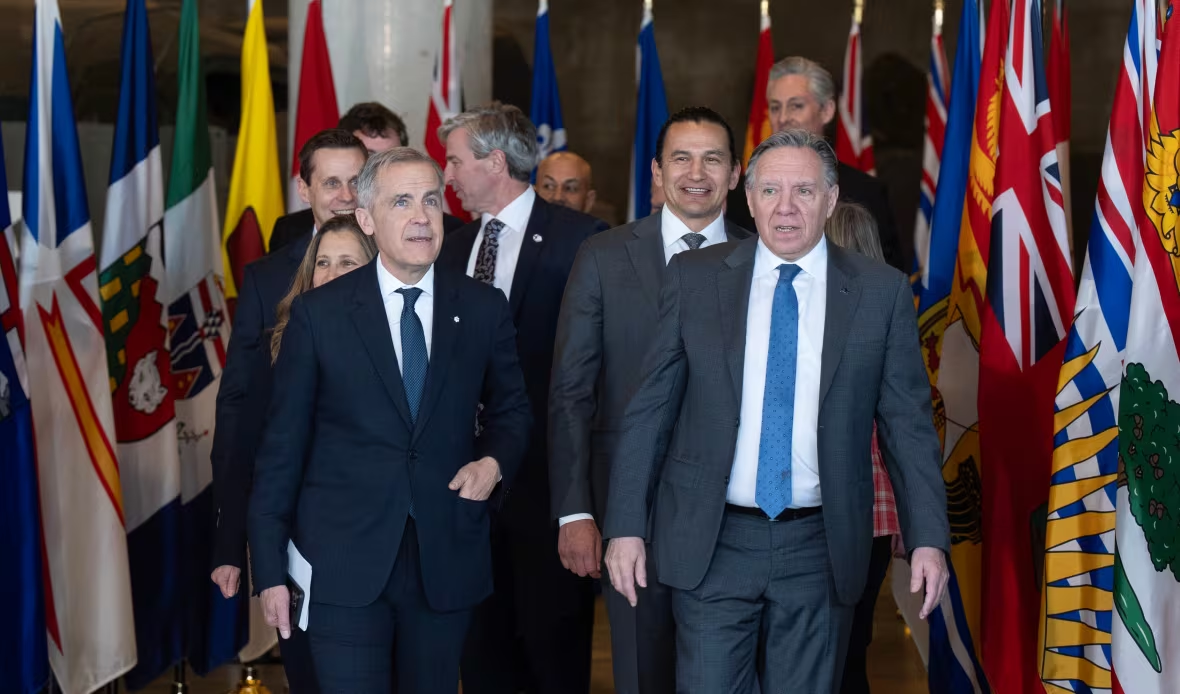 Carney, front left, walks alongside Quebec Premier François Legault and other premiers as they arrive for the meeting. (Adrian Wyld/The Canadian Press)
Just yesterday, Conservative Leader Pierre Poilievre said in Jonquière, Que., that he plans to create "shovel-ready zones" with pre-approved construction permits for major resource or energy projects if elected.
In 2019, Conservative Andrew Scheer, leader of the Official Opposition at the time, pledged that if elected, his government would build a single coast-to-coast energy corridor to transport natural resources.
Most premiers in agreement: Ford
In a scrum with reporters following the meeting, Ontario Premier Doug Ford said most premiers agreed about eliminating trade barriers, with he and the federal government intending to clear all exemptions.
"Nova Scotia is clearing all exemptions. As we move across the country, eventually everyone is going to hop on," he said. "They'll have no choice but to hop on board. Not forced, but there will be so much pressure within their territory or their province."
Ford repeated that all options remain on the table, including potentially increasing an energy tax on the U.S. despite Alberta Premier Danielle Smith's opposition to that approach.
 Carney outlines national trade strategy after meeting with premiers
"Ontario will decide that. No other jurisdiction," he said. "I don't worry about her oil and she doesn't have to worry about my energy."
Smith and Saskatchewan's Scott Moe and B.C.'s David Eby attended virtually, as did Newfoundland and Labrador Premier Andrew Furey who is in Japan for a trade mission.
Ford reiterated that he would work with anyone as long as it's in Ontario's best interest.
New Brunswick Premier Susan Holt voiced support for Carney, saying in French that she is "very happy" to have him as prime minister while Canada is under tariff threats.
"From what I've seen of Mr. Carney and the conversations we have had, his passion for Canada shines through, his intelligence shines through," she said.
She said she has yet to meet with Poilievre and doesn't have a comparison point.
 Have fun navigating the trade barriers in this city
Legault wants 'global negotiation'
Shortly after arriving for the meeting, Quebec Premier François Legault told reporters that he wants the next prime minister to ask Trump for a "global" negotiation of a trade agreement rather than one that is piecemeal.
"Right now, Mr. Trump doesn't respect the agreement between Canada, the U.S. and Mexico, especially on steel and aluminum. So it's important we renegotiate all the agreement," he said.
He said premiers and the prime minister need to be careful about counter-tariffs and "eventual" counter-tariffs to maximize the negative impact on U.S. businesses but minimize the impact on Canadian ones.
The Quebec premier said his province would be "open" to pipeline projects, due to Trump's threats, but there needs to be social acceptability.
Yukon Premier Ranj Pillai acknowledged that, with increased focus on the North and the Arctic, it's important to hear the plans of all political parties for the region, especially in light of the rhetoric south of the border.
Pillai said he wants to make sure the prime minister is aware that it is a "special moment in time for us" and that his visit to Iqaluit, the first domestic trip of his leadership of Canada, was "important and set a tone."
"Other people are focusing on the North and we sure need to do the same," Pillai said. "In the first week, personally, I'm very impressed with what I've seen."
 Carney, centre, Ford, left, and Legault, right, are seen at Friday's meeting. (Adrian Wyld/The Canadian Press)
Nunavut Premier P.J. Akeeagok agreed, saying it was great to see Carney underline "how important the North is and how much incredible of an opportunity we have to provide the country with an opportunity to diversify."
Manitoba Premier Wab Kinew emphasized the need for a "solid plan for Canada's economy" because the country is "fighting a trade war on two fronts."
"Trump tariffs certainly attract so much attention, but in Manitoba and in Western Canada, the tariffs from the People's Republic of China on canola and pork are having a major impact already," Kinew said.
With files from CBC's Olivia Stefanovich, Lisa Mayor, Meagan Fitzpatrick, Kate McKenna, Raffy Boudjikanian
Date: Mon, Jun 2, 2025 at 12:15 AM
Subject: Automatic reply: Methinks Carney thinks that Joly and her Deputies know how to herd cats N'esy Pas?
To: David Amos <david.raymond.amos333@gmail.com>
Hello,
Thank you for taking the time to write. Due to the volume of incoming messages, this is an automated response to let you know that your email has been received and will be reviewed at the earliest opportunity.
If your inquiry can be more appropriately and fully responded to by a Ministry or other area of government, staff will refer your email for review and consideration.
If you are requesting a meeting with the Premier for a matter that falls under a specific Ministry’s mandate, staff may refer your request to that Ministry.
Sincerely,
Office of the Premier
From: Premier of Manitoba <premier@manitoba.ca>
Date: Mon, Jun 2, 2025 at 12:16 AM
Subject: Premier’s Automatic Acknowledgment
To: David Amos <david.raymond.amos333@gmail.com>
On behalf of The Honourable Wab Kinew, Premier of Manitoba, we would like to acknowledge the receipt of your email. Please note that this is an automated response to let you know that your email has been received.
Thank you for taking the time to write.
Premier’s Correspondence Team
******************************
Au nom de Wab Kinew, premier ministre du Manitoba, nous accusons réception de votre courriel. Veuillez noter qu’il s’agit d’un message automatique qui confirme que nous avons bien reçu votre message.
Nous vous remercions d’avoir pris le temps de nous écrire.
L’Équipe chargée de la correspondance du premier ministre
From: Office of the Premier <scott.moe@gov.sk.ca>
Date: Mon, Jun 2, 2025 at 12:15 AM
Subject: Thank you for your email
To: David Amos <david.raymond.amos333@gmail.com>
This is to acknowledge that your email has been received by the Office of the Premier.
We appreciate the time you have taken to write.
NOTICE: This e-mail was intended for a specific person. If it has reached you by mistake, please delete it and advise me by return e-mail. Any privilege associated with this information is not waived. Thank you for your cooperation and assistance.
Avis: Ce
message est confidentiel, peut être protégé par le secret professionnel
et est à l'usage exclusif de son destinataire. Il est strictement
interdit à toute autre personne de le diffuser, le
distribuer ou le reproduire. Si le destinataire ne peut être joint ou
vous est inconnu, veuillez informer l'expéditeur par courrier
électronique immédiatement et effacer ce message et en détruire toute
copie.
Merci de votre cooperation.
From: Premier <PREMIER@novascotia.ca>
Date: Mon, Jun 2, 2025 at 12:15 AM
Subject: Thank you for your email
To: David Amos <david.raymond.amos333@gmail.com>
Thank you for contacting the Office of the Premier. This is an automatic confirmation that your message has been received.
Please note that the Premier receives a tremendous volume of e-mails and letters every week. If your message requires an answer, we will get back to you as soon as possible.
To get you the best answer possible and ensure accurate information, your message may be shared with other Ministers or appropriate government officials to respond on the Premier’s behalf. We appreciate your patience and understanding.
Here are some helpful resources:
- For more information on Nova Scotia’s response to
U.S. economic tariffs and to share your questions and ideas, please visit https://novascotia.ca/
tariffs/ or call our toll-free tariff hotline at 1-800-670-4357. - To discover Nova Scotia Loyal and learn how to identify, buy, and support local Nova Scotian products, please visit: https://nsloyal.ca/
- To book health services, get secure access to your own health records, or find the right care option for you, please download the YourHealthNS app or visit: https://yourhealthns.ca/
- For more information about the new Nova Scotia School Lunch Program and to order an affordable, nutritious lunch for your public school student, please visit: https://nslunch.ca/
- To learn more and sign up for the Nova Scotia Guard to rise to the occasion in the wake of an emergency, please visit: https://nsguard.ca/
For the most up-to-date information from the Government of Nova Scotia, please visit: https://novascotia.ca/.
Thank you,
The Premier’s Correspondence Team
From: Forsætisráðuneytið <for@for.is>
Date: Mon, Jun 2, 2025 at 12:15 AM
Subject: Forsætisráðuneytið hefur móttekið tölvupóst þinn / Prime Minister's Office hereby confirms the receipt of your email.
To: David Amos <david.raymond.amos333@gmail.com>
Forsætisráðuneytið hefur móttekið tölvupóst þinn / Prime Minister's Office hereby confirms the receipt of your email.
Vinsamlega ekki svara þessum tölvupósti, hafið samband í gegnum for@for.is / Please do not reply to this email, contact via for@for.is.
Athygli er vakin á að skv. 2. mgr. 13. gr. upplýsingalaga nr. 140/2012
er ráðuneyti í Stjórnarráði Íslands skylt að birta upplýsingar úr
málaskrám sínum með rafrænum hætti/
Note that, pursuant to art. 13., para. 2, of act no. 140/2012, a
Government Ministry in Iceland is obliged to publish electronically
information from its case files.
Með bestu kveðju / Best regards
------------------------------
Forsætisráðuneytið / Prime Minister's Office
Stjórnarráðshúsinu, IS - 101 Reykjavík, Sími/Tel. +354 545 8400
www.stjornarradid.is - Fyrirva
Date: Mon, Jun 2, 2025 at 12:16 AM
Subject: Automatic reply: Methinks Carney thinks that Joly and her Deputies know how to herd cats N'esy Pas?
To: David Amos <david.raymond.amos333@gmail.com>
From: Ministerial Correspondence Unit - Justice Canada <mcu@justice.gc.ca>
Date: Mon, Jun 2, 2025 at 12:16 AM
Subject: Automatic Reply
To: David Amos <david.raymond.amos333@gmail.com>
Thank you for writing to the Minister of Justice and Attorney General of Canada.
Due to the volume of correspondence addressed to the Minister, please note that there may be a delay in processing your email. Rest assured that your message will be carefully reviewed.
We do not respond to correspondence that contains offensive language.
-------------------
Merci d'avoir écrit au ministre de la Justice et procureur général du Canada.
En raison du volume de correspondance adressée au ministre, veuillez
prendre note qu'il pourrait y avoir un retard dans le traitement de
votre courriel. Nous tenons à vous assurer que votre message sera lu
avec soin.
Nous ne répondons pas à la correspondance contenant un langage offensant.
Date: Mon, Jun 2, 2025 at 12:16 AM
Subject: Réponse automatique - Automatic reply: Methinks Carney thinks that Joly and her Deputies know how to herd cats N'esy Pas?
To: David Amos <david.raymond.amos333@gmail.com>
I am out of the office and will return on Monday, June 2, 2025.
Should you require immediate assistance please contact Annette Hartlen at Annette.Hartlen@justice.gc.ca
Otherwise, I will reply to your email upon my return.
Date: Mon, Jun 2, 2025 at 12:15 AM
Subject: Methinks Carney thinks that Joly and her Deputies know how to herd cats N'esy Pas?
To: <melanie.joly@ised-isde.gc.ca>, Steven.MacKinnon <Steven.MacKinnon@parl.gc.ca>, Anita.Anand <Anita.Anand@parl.gc.ca>, <chrystia.freeland@canada.ca>, <shafqat.ali@parl.gc.ca>, <rebecca.alty@parl.gc.ca>, <gary.anand@parl.gc.ca>, <rebecca.chartrand@parl.gc.ca>, <julie.dabrusin@parl.gc.ca>, Sean.Fraser <Sean.Fraser@parl.gc.ca>, mcu <mcu@justice.gc.ca>, Steven.Guilbeault <Steven.Guilbeault@parl.gc.ca>, <mandy.gull-masty@parl.gc.ca>, <patty.hajdu@parl.gc.ca>, <tim.hodgson@parl.gc.ca>, Joel.Lightbound <Joel.Lightbound@parl.gc.ca>, heath.macdonald <heath.macdonald@parl.gc.ca>, <david.mcguinty@parl.gc.ca>, Bill.Blair <Bill.Blair@parl.gc.ca>, <jill.mcknight@parl.gc.ca>, <lenametlege.diab@parl.gc.ca>, <marjorie.michel@parl.gc.ca>, <eleanor.olszewski@parl.gc.ca>, <gregor.robertson@parl.gc.ca>, <Maninder.Sidhu@parl.gc.ca>, <evan.solomon@parl.gc.ca>, <joanne.thompson@parl.gc.ca>, <rechie.valdez@parl.gc.ca>, <buckley.belanger@parl.gc.ca>, Wayne.Long <Wayne.Long@parl.gc.ca>, <stephen.fuhr@parl.gc.ca>, <anna.gainey@parl.gc.ca>, <stephanie.mclean@parl.gc.ca>, <nathalie.provost@parl.gc.ca>, <ruby.sahota@parl.gc.ca>, <randeep.sarai@parl.gc.ca>, <Adam.vanKoeverden@parl.gc.ca>, <john.zerucelli@parl.gc.ca>, <philip.jennings@ised-isde.gc.ca>, <sony.perron@ised-isde.gc.ca>, <francis.bilodeau@ised-isde.gc.ca>, <natalie.giassa@ised-isde.gc.ca>, <joshua.chambers@justice.gc.ca>, <Lorri.Warner@justice.gc.ca>, <alain.vauclair@justice.gc.ca>
Cc: premier.ministre <premier.ministre@cex.gouv.qc.ca>, premier <premier@gnb.ca>, premier <premier@gov.nt.ca>, Office of the Premier <scott.moe@gov.sk.ca>, premier <premier@gov.bc.ca>, premier <premier@ontario.ca>, premier <premier@leg.gov.mb.ca>, premier <premier@gov.pe.ca>, premier <premier@gov.nl.ca>, premier <premier@gov.yk.ca>, PREMIER <PREMIER@gov.ns.ca>, premier <premier@gov.ab.ca>, <premier@gov.nu.ca>, melissa.lantsman <melissa.lantsman@parl.gc.ca>, <alexis.deschenes@parl.gc.ca>, <Alexis.Brunelle-Duceppe@parl.gc.ca>, Alexandre.Boulerice <Alexandre.Boulerice@parl.gc.ca>, Michael.Duheme <Michael.Duheme@rcmp-grc.gc.ca>, washington field <washington.field@ic.fbi.gov>, djtjr <djtjr@trumporg.com>, ragingdissident <ragingdissident@protonmail.com>, <peyman.askari@prilyx.com>, <jasonlavigne@outlook.com>, jan.jensen <jan.jensen@justice.gc.ca>, Dana-lee Melfi <Dana_lee_ca@hotmail.com>, <ezra@forcanada.ca>, Jacques.Poitras <Jacques.Poitras@cbc.ca>, David.Akin <David.Akin@globalnews.ca>, <vicki.hogarth@chco.tv>, <NIA_IG@navy.mil>, NightTimePodcast <NightTimePodcast@gmail.com>, Frank.McKenna <Frank.McKenna@td.com>, postur <postur@for.is>, birgittajoy <birgittajoy@gmail.com>
ISED's Legislative FrameworksISED's enabling legislation is the Department of Industry Act, which outlines the powers, duties, and functions of the Minister, with the department responsible for administering a variety of associated acts and regulations, and for implementing government-wide regulatory initiatives. ISED has undertaken significant legislative reforms to Competition, Privacy, Cyber and national-security legislation, including, for example, C-26, An Act Respecting Cyber Security and Implementation, C-27, Digital Charter Implementation Act. Marketplace and Trade LegislationAgreement on Internal Trade Implementation Act Bankruptcy and Insolvency Act Boards of Trade Act Canada Business Corporations Canada Cooperatives Canada Corporations Act Canada Not-for-profit Corporations Act Canada Small Business Financing Act Companies' Creditors Arrangement Act Competition Act Government Corporations Operation Act Investment Canada Act Winding-up and Restructuring Act Intellectual Property LegislationCopyright Act Industrial Design Act Integrated Circuit Topography Act Olympic and Paralympic Marks Act Patent Act Public Servants Inventions Act Trade-marks Act Telecommunications LegislationRadiocommunication Act Telecommunications Act Consumer LegislationBills of Exchange Act Consumer Packaging and Labelling Act Electricity and Gas Inspection Act Personal Information Protection and Electronic Documents Act Precious Metals Marking Act Textile Labelling Act Weights and Measures Act ISED's Key Priorities for 2024-25Support trust and confidence in Canada's marketplace by ensuring framework laws are modern, foster innovation, and ensure effective consumer protection and modernize and update the Competition Act to promote and strengthen competitive markets. Develop a sustainable battery innovation and industrial ecosystem, establishing Canada as a leader in battery manufacturing, recycling and reuse. Advance the Biomanufacturing and Life Sciences Strategy through strategic investments to strengthen Canada's domestic biomanufacturing capacity. Advance broadband delivery by connecting more households, including those in rural and remote regions across Canada, to achieve Canada's target of connecting 98% of Canadians to high-speed internet by 2026 and all Canadians by 2030. Help Canadians improve digital literacy skills, and support Canadian businesses in adopting digital technologies, to ensure all Canadians can thrive in the digital economy. Modernize the support system for Canada's science and research ecosystem through research grants, implementing an advisory Council to guide scientific priorities, and create a new capstone research funding organization. Make Canada's entrepreneurial ecosystem more accessible by providing opportunities and support for individuals from under-represented groups to start, scale, grow and maintain their businesses. Capitalize on Canada's first mover Artificial Intelligence (AI) advantage through investments in technology infrastructure and funds to commercialization and accelerate AI adoption in the Canadian economy. Supporting Canadian Sectors and InnovationKey sectors of the Canadian economy
Through its micro-economic policy and regulatory agenda, ISED supports Canada's industrial sectors by:
ISED is works to create the conditions for business investment in the Canadian economy, including via the administration of the Investment Canada Act, and works with other departments on investment attraction to encourage foreign firms to invest in Canada to bring new jobs, adopt advanced technologies, and boost our economy. The Portfolio delivers a broad suite of industry-focused programs to support business needs—from helping businesses access skilled talent to grow and innovate, through building innovation ecosystems, to exporting and scaling up globally. For example, the National Research Council Canada labs through the Industrial Research Assistance Program works with businesses on research and commercialization needs, and the Canadian Space Agency supports the growth of the space industry and encourages the transfer and commercialization of space technology throughout Canadian industry. Innovation and R&DSupporting the Canadian economy through strategic actions and investments to build Canada's innovation advantage in growing technology and promote digital adoption across all industries. Sustainability and emissions reductionSupporting the decarbonization of Canadian industries and the economy to accelerate the transition to sustainability and net-zero through expertise in clean technology capabilities and research to support new policies and programs enabling clean technologies. Emergency readinessSupporting domestic capabilities for the development and production of medical countermeasures to address Canada's health security needs. Supply chain resiliency and tradeSupporting efforts to shape a more resilient and inclusive economy reinvesting in domestic manufacturing expertise and capacity, stabilizing global supply chains, and expanding trade relationships. Skills and talentDelivering skills programming focused on driving innovation and
helping ensure that Canada's workforce meets industry needs by inspiring
youth toward future careers and supporting
Program supports for Canadian innovationISED supports industry sectors by providing a one-stop shop for financing and expert advice and by driving new collaborations to help businesses innovate, create jobs, and grow Canada's economy. Strategic Innovation Fund invests in innovative businesses, collaborative projects to support scale-up and research, develop, commercialize cutting-edge ideas, and collaborate in new ways (e.g. Net-Zero Accelerator supports clean technology development, adoption). Five Global Innovation Clusters (Digital Technology, Protein Industries, Advanced Manufacturing, Scale AI, and Ocean), bring together entrepreneurs, researchers, accelerators, small and medium-size enterprises, global firms to consolidate Canada's technology strengths in areas of global advantage. Innovative Solutions Canada is helping Canadian innovators who want to start, grow, and get to market by funding R&D and testing prototypes in real-life settings. Canada Digital Adoption Program helps SMEs with access to programs and services to digitize their businesses toward resilience and growth. Accelerated Growth Service, BizPaL, and Business Benefits Finder aim to help Canadian businesses grow from start-up to scale-up to global brand. ExploreIP, Canada's IP Marketplace, and associated online tools help Canadian businesses access valuable publicly owned IP to licence, collaborate, and commercialize. Digital Infrastructure and TelecommunicationsCanadian businesses rely on digital infrastructure to connect to a larger market and grow globally. Canadians, particularly in remote areas, rely on digital infrastructure, such as broadband Internet access and wireless service provided through spectrum, to connect to vital services, educational resources, and economic opportunities. ISED and Portfolio partners have a role to play in enabling digital infrastructure, alongside other government departments, by:
ISED is responsible for the Telecommunications Act and leads telecommunications policy for the government to promote sector competition, investment, affordability, and access to high-quality services. ISED is responsible under the Radiocommunication Act to govern the use of spectrum in Canada, a public resource that is essential for the country's wide range of wireless services. This includes authorizing its use, setting standards, certifying equipment, and holding auctions. The Canadian Radio-television and Telecommunications Commission (CRTC) is an independent tribunal that regulates telecommunications and broadcasting in the public interest. The CRTC currently reports to Parliament via the Minister of Canadian Heritage and works to implement the policy objectives in the Telecommunications Act and Canada's Anti-Spam Legislation (currently the responsibility of the Minister of Innovation, Science and Industry) and the Broadcasting Act (currently the responsibility of the Minister of Heritage). This includes implementing measures to encourage greater competition in telecommunications services, enable digital infrastructure, and promote compliance with and enforcement of regulations that advance consumer interests. Helping Small Businesses and EntrepreneursSmall businesses make up nearly 98% of businesses in Canada and are important to Canada's economy, employing 68% of workers. While Canada generally excels at creating new businesses, maximizing export potential and creating high-growth and large anchor firms remains a challenge. A current function of the Portfolio is to support small businesses through access to financing. This includes direct funding through grants and loans, as well as support in raising capital. Many of the Portfolio financing programs include mentorship and capacity building, offering knowledge sharing, resources, and expert advice direct to entrepreneurs and small-business owners. The Portfolio works to encourage market diversification and global market access by promoting key trade and investment agreements, advancing negotiations on new agreements, and helping entrepreneurs expand globally. The Portfolio also supports the small-business ecosystem more broadly through its role in supporting effective regulation and access to talent pipelines, and through direct business-facing services, such as the Canada Business App, to help small businesses better access government services and programs. A suite of entrepreneurship programs serve to support a wide range of entrepreneurs to start a business, and small and medium-sized enterprises to grow in Canada and globally, including underrepresented groups via, for example, the Women Entrepreneurship Strategy, Black Entrepreneurship Program, Futurpreneur program. Other programs include the Canada Digital Adoption Program, which helps SMEs get online and use technology to build their business, and the Canada Small Business Financing Program, which enhances access to capital by working with Canadian financial institutions to risk share small business loans. ISED further complements these SME supports through its business innovation programming:
Marketplace Frameworks and Consumer ConfidenceISED and the Portfolio are responsible for laws, regulations, and policies in key areas that establish a framework for business activity in Canada, including to:
ISED and the Portfolio work to ensure Canada's marketplace frameworks are effective in promoting competitive markets and instilling confidence and trust through a variety of functions, including the development and coordination of policy and legislative frameworks of general application within the marketplace:
Marketplace frameworks: law and policyA wide range of reforms have been implemented to enhance competition and protect consumers in the marketplace. These include generational reforms to the Competition Act, which bolster the Competition Bureau's capacity to safeguard marketplace competition through enhanced merger control, regulations against deceptive marketing, and anti-competitive agreements, as well as the introduction of the Grocery Code of Conduct to improve transparency in food pricing. Further changes are being implemented to promote competition, stabilize prices, and ensure a fair marketplace for Canadians across multiple sectors. The Portfolio has a role in protecting Canadians and empowering consumers through: federal policy, legal, and regulatory levers; research, education, and awareness efforts; enforcement actions; and, coordination with the provinces and territories. ISED regularly assesses and advises on marketplace policies and laws to ensure that they remain fit for purpose and are effective, and leads the development of legislative, policy, and some regulatory proposals. ISED also participates in international fora and negotiations of importance to the Portfolio, including issues related to governance of a data-driven economy. This includes advancing Canada's leadership with the Global Partnership on AI and developing a new framework to regulate AI systems in alignment with Canada's National AI Strategy. To remain proactive, the Portfolio monitors domestic and international developments to leverage best practices and maintain interoperability where necessary. Marketplace frameworks: policy/regulatory entitiesCanadian Intellectual Property Office, a special operating agency, administers Canada's system of intellectual property rights such as patents, trademarks, copyrights, industrial designs, and geographical indications. Competition Bureau, an independent federal law enforcement agency with competition law and consumer welfare responsibilities, works to enable trust and innovation in markets, including combatting cartels, deceptive marketing, reviewing mergers, preventing abuse by dominant firms. Office of the Superintendent of Bankruptcy ensures the proper functioning of the insolvency system in support of creditor and investor confidence in the Canadian economy, helping to protect consumers through compliance promotion, monitoring/enforcement, tools and information to help debtors find the right solution for their serious financial challenges. Corporations Canada helps Canadians incorporate businesses, not-for-profit corporations, and other corporate entities according to Canada's laws and regulations and provides a regulatory climate that maintains order and fairness in the corporate law arena. Copyright Board of Canada establishes the royalties to be paid for the use of some copyrighted works when entrusted to a copyright collective society, setting royalties which are fair and equitable to both copyright owners and users of copyrighted works. National Research Council Canada is Canada's international metrology and measurement authority, and collaborates with provinces and territories to develop the model Canadian Building Code. Measurement Canada maintains domestic and worldwide confidence in the accuracy of goods and services bought and sold on the basis of measurement to advance economic growth and a fair and competitive marketplace. Office of Consumer Affairs acts as a focal point for consumers seeking access to information to make informed decisions in the marketplace or seek redress, including facilitating collaboration across all levels of government with respect to consumer protection and awareness, and supporting consumer organizations in Canada to advance research and policy analysis on emerging issues. Standards Council of Canada is a federal Crown corporation responsible for promoting efficient and effective standardization to strengthen Canada's competitiveness while protecting consumers and protecting the health, safety, and welfare of Canadians. Statistics Canada is Canada's national statistical agency, providing data and analysis on important macroeconomic measures, such as the consumer price index, gross domestic product, trade and other measures on innovation, productivity, and digital, and the Census of Population, which provides important information on demographic trends, insights that inform domestic and international government and business decisions. Science and ResearchCanada has a history of strong scientific performance on the world stage. For example, years of investment in artificial intelligence-related research has led to Canadian leadership in this area. Recent progress on securing Canada's AI advantage has been driven by key initiatives such as the Pan-Canadian Artificial Intelligence Strategy (PCAIS), establishment of an AI Data Commissioner, and the Canadian AI Safety Institute, and the Canadian Institute for Advanced Research (CIFAR) is advancing AI research and its application to areas that can benefit society and drive economic growth. The Portfolio supports fundamental research by ensuring researchers have the necessary resources to pursue bold questions and train new generations of students while optimizing federal investments in science and research. It guides Canada's science ecosystem by modernizing research practices, managing contribution agreements, implementing research programming, and fostering partnerships between businesses and research institutions. This includes the Strategic Science Fund, which aims to mobilize the expertise and resources of independent science organizations to enhance Canada's excellence in science, technology, and innovation. Direct funding is currently used to support fundamental science, delivered through various mechanisms, including the two granting agencies under the ISED Portfolio. The Natural Sciences and Engineering Research Council of Canada and the Social Sciences and Humanities Research Council of Canada both provide funding to support students, promote and support discovery research, and encourage greater collaboration between industry and academia. (The Canadian Institutes of Health Research, the third granting council, is under the purview of the Minister of Health.) Efforts are underway to consolidate the granting councils under a new capstone research funding organization, to provide better coordination across the federally funded research ecosystem. Other funding initiatives within the Portfolio focus on building skills through the promotion of science, technology, engineering, and mathematics; on strengthening Canada's research infrastructure; on enhancing areas of strength; and on supporting business in the development and deployment of research. The National Research Council is Canada's largest federal R&D organization, which partners with industry to help bring research and new advanced technologies to market, and invests in strategic R&D programming to apply to economic and societal challenges. The Canadian Genomics Strategy (CGS) is driving further innovation in genomics through Genome Canada to advance commercialization programming. Established in 2024, Health Emergency Readiness Canada (HERC) is the focal point for domestic and international stakeholders to advance health emergency preparedness by strengthening scientific, industrial and technological capabilities and growing a competitive, innovative and prosperous life sciences and biomanufacturing ecosystem. Finally, the Portfolio also works with global partners to strengthen best practices and contribute to large-scale discovery projects. The Canadian Space Agency works collaboratively with members of the global space community, including NASA and the European Space Agency. In this role, Canada has contributed to a number of scientific missions, delivering critical technology and scientific expertise. Regional DevelopmentISED engages regionally via three principal avenues:
Rural Economic DevelopmentThe Rural Economic Development Strategy, released in June 2019, takes a regional and place-based approach to enhancing economic and social opportunities in rural and remote Canada. Overseen by ISED's Centre for Rural Economic Development (CenRED), a division of the Strategy and Innovation Policy Sector (SIPS), it outlines a whole-of-government approach to meet the economic, social development and sustainability needs of rural Canada, with contributions from 20+ federal departments and agencies, built on three themes: places, people, and partnerships. PlacesBuilding Rural Communities
PeopleSupporting Rural Canadians
PartnershipsWorking Together, Better
Overview of sector heads and mandateDepartmental sectorsStrategy and Innovation Policy Sector
Spectrum and Telecommunications Sector
Audit and Evaluation Branch
Industry Sector
Digital Transformation Service Sector
Legal Services
Small Business, Tourism and Marketplace Services
Innovation Canada
Canadian Intellectual Property Office
Science and Research Sector
Corporate Management Sector
Competition Bureau
Health Emergency Readiness Canada
Strategic Communications and Marketing Sector
Ombudsman for Mental Health and Employee Well-Being
Corporate Secretary
Chief Equity and Inclusion Officer
Strategy and Innovation Policy Sector (SIPS)SIPS plays a key role in implementing the Government's microeconomic policy agenda and in supporting departmental alignment. It develops and supports the Department's horizontal policy and strategy by ensuring robust marketplace frameworks and by deepening international and regional relations and promoting trade. It also coordinates for the federal budget and is responsible for telecommunications and digital policy. Also within SIPS are the regional offices, which gather intelligence in the regions and act as the Portfolio's public face with regional stakeholders, as well as the Centre for Rural Economic Development, which takes a federal oversight role for rural affairs and federal responses. The sector is responsible for policy and coordination on the trade and international fronts, as well as regulatory coordination. Finally, the sector is responsible for the administration of the Investment Canada Act. Alix Dostal
Alexandra is the Senior Assistant Deputy Minister, Strategic Innovation Policy Sector, at Innovation, Science and Economic Development Canada. Previously, she has held positions with Government of Canada at Fisheries and Oceans Canada, Treasury Board Secretariat, Finance Canada and Global Affairs Canada. Before joining the Canadian federal public service, she worked with the Government of Ontario and as a lawyer in private practice. Kasi McKicking
Kasi has served as Associate Assistant Deputy Minister of SIPS since April 2023. In this role she has special responsibility for rural and regional economic development. Prior to assuming this role, Kasi held senior executive positions at ISED's Industry Sector, the Privy Council Office, Treasury Board Secretariat, Health Canada, the Public Health Agency of Canada, and the Atlantic Canada Opportunities Agency. Kasi hails from rural New Brunswick, and earned her BA (Honours) from St. Francis Xavier University in Political Science. Spectrum and Telecommunications Sector (STS)STS is responsible for regulating telecommunications equipment, extending and enhancing broadband service in rural and remote regions of Canada, and working with other organizations on the safety and security of existing and future telecommunications infrastructure. The sector's objective is to maximize the economic and social benefits that Canadians derive from the use of the radio frequency spectrum. The sector works across the Department, with other federal government departments, at the international level and with our stakeholders to support a competitive wireless industry, strong investment, cyber-resilience, and economic growth. Ray Edwards
Ray Edwards is currently the acting Senior Assistant Deputy Minister, Spectrum and Telecommunications Sector and ISED's Chief Equity and Inclusion Officer (CEIO). He was appointed as the Associate Assistant Deputy Minister with STS in 2023 with special responsibility for broadband and digital programming. As CEIO, he provides strategic leadership to drive department-wide inclusion, antiracism, equity, diversity and accessibility initiatives and championing the transformation to break down systemic barriers to the full representation and participation of equity-seeking communities within the workforce and in the Canadian marketplace. His career has encompassed executive leadership roles in policy coordination and program delivery at Health Canada, the Public Health Agency and Agriculture Canada. Susan Hart
Susan Hart is currently acting Associate Assistant Deputy Minister, Spectrum and Telecommunications Sector, covering radio and spectrum policy and licensing, compliance and enforcement, tower siting, emergency telecommunications response along with enhancements to the spectrum management program. Sue has held several senior-level positions including the new Connecting Canadians Branch, the DG of Audit and Evaluation and DG of the Spectrum Management Operations Branch, and leading the Strategic Review for the Department in 2010 and the Deficit Reduction Action Plan proposals. Sue holds a Master's in Public Policy and Public Administration and a Bachelor of Business Administration, both from Concordia University. Industry Sector (IS)IS is the centre for the provision of advice on the Government's industrial policy, based on economic and technological expertise and industry outreach. In this capacity, the sector is responsible for the following industries: automotive, manufacturing, digital technologies, clean technologies, aerospace, space, marine, and defence. The sector also supports the Government's delivery of industry-focused programs, and supports the advancement of a skills agenda aligned with industry needs. IS undertakes investment attraction work in collaboration with other departments and the Invest in Canada Hub, including the Government's industry promotion efforts. The sector is also responsible for the management of the Industrial and Technological Benefits Policy. Charles Vincent
Charles Vincent was appointed SADM in January 2024 and has been working in the Department since February 2012. He served previously as A/Senior Assistant Deputy Minister of the Industry Sector, Assistant Deputy Minister at the Small Business, Tourism And Marketplace Services (SBTMS), and as Assistant Deputy Minister within Industry Sector from October 2020 to October 2021. Prior to that role, he held other executive positions in the Department, including being responsible for the Made-in-Canada industry mobilization initiative during the COVID-19 pandemic, and being the Director General of the Automotive, Transportation and Digital Technologies Branch. Before joining ISED, Charles served as an executive at the Treasury Board of Canada Secretariat. Mary Gregory
Mary Gregory has been working in the department since March 2012. Prior to this position, she held various senior leadership roles in the organization, including Director General of the Aerospace, Defence and Marine Branch and Executive Director of the Industrial and Regional Benefits Directorate. Before joining ISED, Mary held executive positions with the Treasury Board of Canada Secretariat and Health Canada. Innovation Canada Sector (ICS)ICS is a sector formed in 2017 that serves as a collaborative platform to make it easier and faster for Canada's innovators and entrepreneurs to find and access government programs and services. Through ICS, ISED supports various industry sectors across the Canadian economy by providing funding and expert advice, and driving new collaborations. As part of this role, ICS's flagship programs and services are designed to help businesses innovate, create jobs, and grow Canada's economy. These include: the Global Innovation Clusters; the Strategic Innovation Fund; Innovative Solutions Canada; the Canada Digital Adoption Program; ExploreIP (Canada's intellectual property marketplace); BizPal; Business Benefits Finder; and the Accelerated Growth Service. Andrea Johnston
Andrea Johnston was appointed Assistant Deputy Minister of ICS in July 2018. She first joined the Department in May 2017 as the Director General of the Economic Strategy Tables and Skills Branch. Prior to joining the Department, Andrea had an extensive career at Agriculture and Agri-Food Canada. Stephanie Tanton
Stephanie Tanton was appointed ADM responsible for the Strategic Innovation Fund in 2024. Stephanie joined ISED in 2016 and was previously the Director General of the Aerospace, Defence and Marine Branch in the Industry Sector. Previously, she held the positions of Director General and Senior Director of the Industrial and Technological Benefits Branch. Stephanie has over 23 years in the federal public service, during which she also held executive positions at Infrastructure Canada. Science and Research Sector (SRS)SRS leads the development and implementation of the Government of Canada's science and technology policy agenda to optimize federal investments in science and research, foster an innovative economy, and improve the wealth and well-being of Canadians. SRS provides advice on external research, relationships with post-secondary institutions, granting agency policy, programs, and operations; and advises on and manages contribution agreements with a variety of external organizations. SRS provides advice on a range of science policy issues, including the broader intramural science enterprise, international science co-operation, and leads the development of strategies to enhance the translation of Canada's research leadership in key disruptive technology areas into commercial and societal benefits for the country (e.g. quantum, AI, genomics). Nipun Vats
Before his role in SRS, Nipun Vats held a variety of positions within the federal government, including in the Priorities and Planning Secretariat of the Privy Council Office, and in the policy and administration of the major transfer payment programs to the provinces and territories at the Department of Finance. He has also served as Secretary to a National Advisory Panel on Energy Science and Technology. Nipun also served as the lead federal official in the successful negotiation of the Canadian Free Trade Agreement. Small Business, Tourism and Marketplace Services (SBTMS)SBTMS is responsible for small business, entrepreneurship, and tourism policy, programs and services. SBTMS undertakes financing and venture capital policy development and coordination, oversight of the Business Development Bank of Canada, and delivery of the Canada Small Business Financing Program. SBTMS supports entrepreneurship ecosystems through tourism industry supports, the Women Entrepreneurship Strategy, the Black Entrepreneurship Program, the Canada Digital Adoption Program, the 2SLGBTQI+ Entrepreneurship Program, and Indigenous economic development policy. SBTMS is active on consumer policy coordination, protecting and promoting the interests of consumers. SBTMS is responsible for tourism policy and oversight of Destination Canada, which is mandated to market Canada overseas as a tourism destination. Measurement Canada, Corporations Canada, and the Office of the Superintendent of Bankruptcy Canada are all part of SBTMS, which all play strong regulatory management roles in the areas of trade measurement, insolvency, and federal incorporation, supporting the integrity of the marketplace and providing a competitive environment that contributes to Canada's innovation performance. Étienne-René Massie
Étienne-René Massie was appointed Assistant Deputy Minister in 2023 after being Associate Assistant Deputy Minister. He previously held the role of DG in the Small Business Branch, leading the creation of the Black Entrepreneurship Program, the Women Entrepreneurship Program, and the Canada Digital Adoption Program, as well as increased support through the Venture Capital Catalyst Initiative, and youth and Indigenous entrepreneur support. Before joining ISED, Etienne served as Senior Director at Employment and Social Development Canada. Digital Transformation Service Sector (DTSS)DTSS drives ISED's digital transformation agenda to create innovative data and digital services for stakeholders. DTSS improves the digital experience for Canadian businesses and citizens in their interactions with government. DTSS develops a strong data foundation to support decision-making, program/policy advice, and artificial intelligence adoption by leveraging digital skills, training, and technology. DTSS is also responsible for modernizing IT operations with a focus on digital technologies platforms, cloud computing, and big data architecture, as well as strengthening the governance and procurement practices of digital projects. Shaifa Kanji
Shaifa Kanji assumed her role as Assistant Deputy Minister and Chief Digital Officer in August 2021. She began her career in public service in 2011 and has led digital transformations in municipal government (Region of Peel) and not-for-profit (Toronto and Region Conservation Authority) organizations. Prior to joining the public sector, Shaifa worked in multiple sectors, such as telecommunications, finance, and consulting. Shaifa holds an Executive MBA from the Ivey Business School and a computer science degree from York University. Corporate Management Sector (CMS)CMS is responsible for the comptrollership of the Department's finances, the management of human resources, the stewardship of facilities and assets, and the provision of physical and personnel security services. CMS also oversees the Department's corporate planning and accountability reporting regimes and provides strategic advice on performance measurement, risk management, the affordability of program proposals, and the integrity of grants and contributions. In addition, CMS leads the Department's efforts on the Return to the Workplace and the Future of Work. Douglas McConnachie
Doug McConnachie joined ISED in October 2019 as Assistant Deputy Minister and Chief Financial Officer, Corporate Management. He has 25 years of experience in public sector management and corporate finance and has served in senior management roles at Environment and Climate Change Canada, Public Safety Canada, and Public Services and Procurement Canada. Strategic Communications and Marketing Sector (SCMS)SCMS has a mandate to deliver high-impact communications and marketing initiatives that effectively support Government of Canada priorities across the entire ISED portfolio, in order to reach Canadians and build public trust in government. SCMS reaches national, regional, local, and commercial audiences through a variety of channels, including web and social media, television, radio, and print. The sector actively seeks to break through a competitive environment with proactive, targeted media, marketing, and online strategies. The team of 200+ professionals is responsible for media relations, ministerial communications and events, marketing and advertising, social media, issues management, and corporate communications with ISED employees. Kendal Hembroff
Kendal Hembroff was appointed as Assistant Deputy Minister, Strategic Communications and Marketing, in May 2023. Prior to this role, she was Director General of the Clean Technologies and Clean Growth Branch at ISED. Prior to joining ISED, Kendal spent 22+ years in various roles at Global Affairs Canada, overseeing the negotiation of Canada's bilateral and regional free trade agreements and multilateral trade negotiations, and was Canada's Chief Negotiator for negotiations with India, ASEAN, Indonesia, Ukraine and the Pacific Alliance. She served abroad as Consul and Senior Trade Commissioner from 2011 to 2014 at Canada's Consulate in Hong Kong, providing support to Canadian companies in the Greater China Region. Health Emergency Readiness Canada (HERC)Health Emergency Readiness Canada (HERC) is a new special operating agency within ISED that was announced in September 2024. Formerly ISED's Office of Life Sciences and Biomanufacturing Readiness, HERC is responsible for providing policy analysis and leadership to build domestic capabilities for the development and production of medical countermeasures (MCMs) to address Canada's health security needs. To do this, HERC will rely on an integrated threat and risk assessment function to consider industrial readiness. It aims to be a funding agency once operationalized and will maintain an industrial emergency response game plan. While HERC reports to the Minister of Innovation, Science and Industry, it will also support the Minister of Health, especially in times of crisis. Ritu Banerjee
Ritu Banerjee, joined ISED in 2023 and is currently the interim Head of the HERC. Prior to that she was the Executive Director of the Results Division, Expenditure Management Sector at the Treasury Board Secretariat. Ritu has also worked at Employment and Social Development Canada on youth policy and has held various executive positions at Public Safety Canada, primarily working on national security policy issues. She started her career in the federal government at the Department of Justice. In addition to a Bachelor of Arts degree from McGill University, she has a Master of Arts in Political Science from the School of Oriental and African Studies, University of London and a Law degree from the University of Ottawa. She has been a member of Ontario Bar since 2000. Canadian Intellectual Property Office (CIPO)CIPO, a special operating agency of the Department, is responsible for administering Canada's system of intellectual property (IP) rights: patents, trademarks, copyrights, industrial designs, and geographical indications. CIPO is also an international searching authority and international preliminary examining authority under the Patent Cooperation Treaty administered by the World Intellectual Property Organization. CIPO's mandate is to deliver high quality and timely IP products and services to clients, and to increase awareness, knowledge, and effective use of IP by Canadians. This mandate, along with the directions outlined in CIPO's business strategy, contributes to the strategic outcomes of the organization. Konstantinos Georgaras
Konstantinos Georgaras joined CIPO in 2010 and was appointed as Chief Executive Officer in fall 2020. He also represents Canada at the World Intellectual Property Organization, one of the specialized agencies of the United Nations. He began his career in the public service in 1984 and has held strategic and executive positions within the departments of Innovation, Science and Economic Development Canada and Human Resources and Skills Development Canada, and within the Science, Technology and Innovation Council. He has extensive experience spanning strategic, economic, and legislative policy, with direct responsibilities for IP, innovation, insolvency, and industrial and labour market policies. Konstantinos holds a Master of Arts in Public Administration from Carleton University and an Executive Certificate in Public Leadership from the John F. Kennedy School of Government at Harvard University. Competition Bureau (CB)CB, as an independent law enforcement agency, ensures that Canadian businesses and consumers prosper in a competitive and innovative marketplace. The Bureau is responsible for: administering and enforcing the Competition Act, the Consumer Packaging and Labelling Act, the Textile Labelling Act, and the Precious Metals Marking Act; advocating for competition at all levels of government; and promoting corporate compliance and consumer awareness through outreach. Competition leads to lower prices, higher quality goods and services, and higher levels of innovation and business efficiency, and is thus a key driver of broad-based economic growth. The Bureau continues to set a course to tackle the emerging challenges of the digital economy, and ensure that competition can underpin a strong post-pandemic recovery. Matthew Boswell
Matthew Boswell was appointed Commissioner of Competition on March 5, 2019, for a five-year term. Prior to his appointment, he served as a Senior Deputy Commissioner. Before joining CB, he was Senior Litigation Counsel in the Enforcement Branch at the Ontario Securities Commission (OSC), where he prosecuted securities fraud and other white-collar crimes. Prior to his work at the OSC, Matthew was an Assistant Crown Attorney in Toronto with the Ministry of the Attorney General of Ontario. Audit and Evaluation Branch (AEB)AEB provides independent, professional, and quality audit, evaluation, and practice management services founded on sound values and ethics to support informed decision-making and enhanced performance and accountability. It also fulfills the Department's obligations under the Treasury Board of Canada Secretariat's policies, directives, and standards on internal audit and evaluations, as well as conformance with the Institute of Internal Auditors international standards. Kimberley Accardi
Kimberley Accardi was appointed the Chief Audit Executive and Director General, Audit and Evaluation, in September 2022. Prior to this, she was the Deputy Director General of the department's People Operations Branch where she was responsible for large scale operations and policy expertise in classification, compensation and staffing and program areas in learning, talent management and awards. Kimberley was responsible for the design and implementation of a multi-faceted HR-to-Pay stabilization strategy. Prior to joining the department in 2018, Kimberley held positions at Immigration, Refugees and Citizenship Canada and the Canada Border Services Agency. Legal Services (LS)ISED's LS is a departmental legal services unit that is a part of the Business and Regulatory Law Portfolio of the Department of Justice. LS strives to deliver timely and effective professional legal services to all sectors of ISED, as well as to other government departments and agencies of the ISED Portfolio, according to the service agreements and standards set by the Department of Justice. Alain Vauclair
Alain Vauclair has been Senior General Counsel and Executive Director for the Portfolio's Legal Services (Department of Justice) since September 2018. From 2013 to 2018, he was the Senior General Counsel and Executive Director for the Public Services and Procurement Canada and Shared Services Canada LS. He was also responsible for the creation and launch of Department of Justice's Centre of Expertise in Procurement Law in 2017. Portfolio heads and mandates
Office of the Chief Science AdvisorA Chief Science Advisor was appointed to advise on science issues and ways for the government to better support quality scientific research within the federal system. Dr. Mona Nemer
Dr. Mona Nemer was appointed for a three-year term as Canada's Chief Science Advisor in September 2017, and reappointed in 2020, 2022, and 2024. Before taking on this role, Dr. Nemer was Professor and Vice-President of Research at the University of Ottawa and Director of the school's Molecular Genetics and Cardiac Regeneration Laboratory. She holds a PhD in Chemistry from McGill University and did post-doctoral training in molecular biology at the Montreal Clinical Research Institute and Columbia University. Dr. Nemer is a member of the Order of Canada, a fellow of the Academy of Sciences of the Royal Society of Canada, a knight of the Ordre national du Québec, and a Knight of the French Republic's Ordre national du Mérite. She is also a fellow of the American Association for the Advancement of Science and a member of the American Academy of Arts and Sciences. In 2018, Dr. Nemer was awarded the Arthur Wynne Gold Medal by the Canadian Society for Molecular Biosciences. Canadian economic snapshotEconomic overviewGDPSize of the economy: $2.2 trillion (July 2024) 9th largest economy in the world 25% of GDP comes from rural areas Share of industries in Canada's economy Text description
Source: Statistics Canada. Gross domestic product (GDP) at basic prices, by industry, monthly, July 2024 Labour marketEmployed people: 20.6M (Sept 2024) Unemployment rate: 6.5% Job vacancies: 526,900 jobs (July 2024) Av. wage: $35.59/hr (Sept 2024) The unemployment rate has been steadily increasing Unemployment rate, monthly, percentage Text description
Source: Statistics Canada. Labour force characteristics by sex and age group, monthly, unadjusted for seasonality, September 2024 FirmsNumber of firms: 1.2M (Dec 2023) SMEs represent nearly 50% of Canada's GDP, compared with 43% in the US SMEs make 99.8% of Canada's firms Share of firms by number of employees Text description
Source: ISED, Key Small Business Statistics, 2023, and Statistics Canada, GDP, income and expenditure, Q2 2024 TradeTotal exports: $81.2 billion (Aug 2024) Top export:
Top import:
Top merchandise import partners ($billions) Text description
Source: Statistics Canada. International merchandise trade for all countries and by Principal Trading Partners, monthly Top merchandise export partners ($billions) Text description
Source: Statistics Canada. International merchandise trade for all countries and by Principal Trading Partners, monthly The Canadian economy remains resilientCanada's economy has been generally outperforming expectationsGDP growth, GDP per capita growth, percentage, quarterly, annualized Text description
Source: Statistics Canada. Table 36-10-0104-01 Quarterly gross domestic product, expenditure-based, Canada, Table 17-10-0009-01 Population estimates, quarterly. Canada's GDP growth continues to surprise on the upside, but this is largely attributable to record population growth (+8.5% since January 2021). Canada's strong economic fundamentals have helped the economy weather the impacts of higher interest rates. That said, Canadian GDP per capita has declined in four consecutive quarters. 2.1% GDP growth in Q2 2024 -0.6% GDP per capita growth in Q2 2024 Canada's economic outlook is relatively strongCanada's GDP growth is expected to outperform other G7 countries in 2025 OECD Forecast of annual GDP growth (percent) Text description
Source: OECD, Economic Outlook (September 2024). What has changed post-pandemic?
Inflationary pressures have created affordability concernsShelter costs makes up the bulk of today's inflation Components of Canada's headwind inflation, monthly, year-over-year, percentage Text description
Source: Statistics Canada, Consumer Price Index, monthly, non-seasonally adjusted Canada's inflation trend has followed closely that of its G7 peers Monthly inflation, year-over-year, for selected countries, percentage Text description
Source: OECD Inflation rose sharply in Canada following the pandemic, similar to other G7 countries. It reached a peak of 8.1% in June 2022. Since then, inflation has been decelerating and now sits at 2% - the Bank of Canada's target. Shelter costs remain a key concern. Canadian households are devoting more than 50% of their income towards housing-related expenses, compared with 35% before the Pandemic. 18% Total cumulative price increases since February 2020 33% Increase in the average price of built homes since February 2020 Source: Statistics Canada, Bank of Canada, and the Canadian Real Estate Association Productivity growth is vital for Canada's economic strengthOut of the past fifteen quarters, only two have had positive productivity growthQuarterly growth of labour productivity, percentage Text description
Source: Statistics Canada, Indexes of business sector labour productivity, unit labour cost and related measures, seasonally adjusted Canada ranks second to last among its G7 peers in terms of productivity levelsGDP per hour worked, USD, Current dollars, 2023 Text description
Source: OECD Canada, like the rest of the world, has been grappling with weak productivity growth for decades. Canada was among the best productivity performers in the G7 from 2008-2019. Following the pandemic, there has been a pronounced downshift in labour productivity. Several key sectors of the economy have seen negative productivity growth since the pandemic including energy (-0.8% per year), manufacturing (-0.4% per year), transportation and warehousing (-2.5% per year), and construction (-2.6% per year). Business investment is a key source of innovationCanadian businesses are not investing at the pace of their US counterpartsBusiness Investment per worker (thousands of 2017 USD)Includes: non-residential structures, machinery and equipment, and intellectual property products Excludes: residential structures.  Text description
Source: OECD; Statistics Canada; US Bureau of Economic Analysis. R&D investment has stagnated in Canada while rising rapidly in other OECD countriesBusiness Expenditures on R&D as a percentage of GDP Text description
Source: OECD; Statistics Canada; US Bureau of Economic Analysis. Investments in equipment, software, and R&D are crucial components of business innovation and productivity growth. Canadian businesses invest less per worker compared to other G7 countries. Canadian firms invest the most in dwellings and non-residential structures (e.g., plants and warehouses) and the least in machinery & equipment and intellectual property products (e.g., data, software, R&D).
Businesses continue to be cautiously optimistic about the economyCanadian Survey on Business Conditions – Q3 2024
Business Outlook: Over the next 12 months, firms…
Source: Canadian Survey on Business Conditions Q3 2024 for the remaining statistics. Businesses with < 20 employees, Tourism-related industries:
| ||||||||||||||||||||||||||||||||||||||||||||||||||||||||||||||||||||||||||||


 Text description

No comments:
Post a Comment