Contact Info
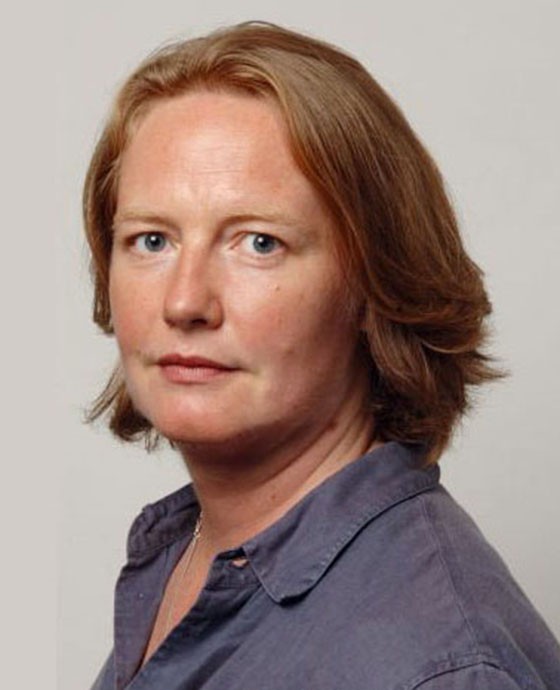
Emily Bell is founding director of the Tow Center for Digital Journalism at Columbia Journalism School and a leading thinker, commentator and strategist on digital journalism.
Established in 2010, the Tow Center has rapidly built an international reputation for research into the intersection of technology and journalism. The majority of Bell’s career was spent at Guardian News and Media in London working as an award-winning writer and editor both in print and online. As editor-in-chief across Guardian websites and director of digital content for Guardian News and Media, Bell led the web team in pioneering live blogging, multimedia formats, data and social media, making the Guardian a recognized pioneer in the field.
She is co-author of “Post Industrial Journalism: Adapting to the Present” (2012) with CW Anderson and Clay Shirky. Bell is a trustee on the board of the Scott Trust, the owners of The Guardian, a member of Columbia Journalism Review’s board of overseers, an adviser to Tamedia Group in Switzerland, has served as chair of the World Economic Forum’s Global Advisory Council on social media, and has served as a member of Poynter’s National Advisory Board.
She delivered the Reuters Memorial Lecture in 2014, the Hugh Cudlipp Lecture in 2015, and was the 2016 Humanitas Visiting Professor in Media at the University of Cambridge.
She lives in New York City with her husband and children.Update on Research Funding
Dear members of our research community,
We wish to update you on work that is moving forward, continuing the
path we embarked on when we first received notices of federally
terminated research awards.
At the institutional level, the University continues to pursue all
available channels to restore federal funding. In parallel, the Office
of the Provost, joined with teams from Research and Finance, and working
with the deans in each of our affected schools, developed processes to
receive feedback from our principal investigators on the impact of the
award terminations on research activity at the University. Specifically,
we asked each principal investigator to develop a Research Action Plan
(RAP) for review at the school level and to inform a school-based
approach.
This process was designed to help us collectively understand the impact
of award terminations on our scientific progress, our research officers
and staff, and our research subjects, data, and equipment. We asked
that schools minimize non-personnel expenditures on affected research,
and to maintain a modest level of research continuity to preserve years
of accumulated work and preserve optionality with respect to next steps.
Centrally, we committed to fund those individuals whose salaries and
stipends were previously funded with federal support on now-terminated
awards, using institutional funds, while we undertake the review.
Our message to you today is one of thanks, for your professionalism and
dedication while we undertake this process. This work is ongoing, and in
our estimation about 75% complete. We have met with affected schools
and institutes, as a group and individually, and will continue this
process as we finalize plans for the affected areas, including decisions
regarding term appointments. What has emerged, even as we are in the
midst of this review, is the intense commitment across the institution
to navigate this moment with care, on an individual and institutional
level. We share this deep commitment and recognize that it will be
critical to maintain communication as we move forward.
We appreciate your patience as we manage this terrain together. As always, please refer to the Federal Research Updates 2025 website for the most recent updates on federal research funding.
Best,
Angela Olinto, Provost
Anne Sullivan, EVP for Finance
Jeannette Wing, EVP for Research
provost@columbia.edu
irboffice@columbia.edu
https://research.columbia.edu/news/temporary-restraining-order-barring-doe
Temporary Restraining Order Barring the DOE
On Wednesday, April 16, a federal court in Massachusetts issued a temporary restraining order (TRO) barring the DOE from implementing the 15% rate cap on DOE awards and/or terminating any grants based on a grantee's refusal to accept an indirect cost rate less than its negotiated rate. The TRO applies to all DOE awards impacted by the proposed rate cap, including Columbia's DOE awards. Accordingly, in the absence of any other type of communication from DOE, PIs with DOE awards should continue their research activities as usual, and the University's negotiated indirect cost will apply. As with other TROs, this is a temporary measure. The court will have a hearing at the end of April to determine next steps. The University will be watching this matter.
Anne R. Sullivan
https://research.columbia.edu/directory/jeannette-m-wing

Jeannette M. Wing
Jeannette M. Wing is the Executive Vice President for Research and Professor of Computer Science at Columbia University. She joined Columbia in 2017 as the inaugural Avanessians Director of the Data Science Institute. From 2013 to 2017, she was a Corporate Vice President of Microsoft Research. She is Adjunct Professor of Computer Science at Carnegie Mellon where she twice served as the Head of the Computer Science Department and had been on the faculty since 1985. From 2007-2010 she was the Assistant Director of the Computer and Information Science and Engineering Directorate at the National Science Foundation. She received her S.B., S.M., and Ph.D. degrees in Computer Science, all from the Massachusetts Institute of Technology She holds an honorary doctorate of technology from Linkoping University, Sweden.
Professor Wing's current research focus is on trustworthy AI. Her general research interests are in the areas of trustworthy computing, security and privacy, specification and verification, concurrent and distributed systems, programming languages, and software engineering. She is known for her work on linearizability, behavioral subtyping, attack graphs, and privacy-compliance checkers. Her 2006 seminal essay, titled "Computational Thinking," is credited with helping to establish the centrality of computer science to problem-solving in fields where previously it had not been embraced.
She is currently a member of the American Academy for Arts and Sciences Board of Directors and Council; Computing Research Association Board; American Association of Universities, Senior Research Officers Steering Committee; the Advisory Board for the Association for Women in Mathematics; the Chan-Zuckerberg New York Biohub Steering Committee; and the Empire AI, Inc. Board of Directors. She has been chair and/or a member of many other academic, government, industry, and professional society advisory boards. She was or is on the editorial board of twelve journals, including the Journal of the ACM, the Communications of the ACM, and the Harvard Data Science Review. She received the CRA Distinguished Service Award in 2011 and the ACM Distinguished Service Award in 2014. She is a Fellow of the American Academy of Arts and Sciences, American Association for the Advancement of Science, Association for Computing Machinery (ACM), Institute of Electrical and Electronic Engineers (IEEE), and National Academy of Innovators. She is a member of the National Academy of Engineering and the MIT Corporation.

No comments:
Post a Comment